bp and Worley have formed a new strategic alliance focused on enhancing efficiency, continuous improvement and value creation across bp’s Global site projects organisation.
This alliance builds upon a successful, decade-long collaboration between the two companies. The alliance will improve capital efficiency in site projects saving an initial estimated US$40 million over two years in locations where Worley holds a services contract; Gulf of Mexico, Oman, Mauritania and Senegal oil and gas producing regions and the Cherry Point, Whiting, Rotterdam, Gelsenkirchen, and Lingen refineries.
Together, bp and Worley will deepen collaboration across a portfolio of site projects by leveraging digital capability and global scale to further drive efficiency across engineering, materials selection and procurement, construction development and management.
The alliance formalises a long-standing relationship built on shared objectives, trust and commitment to excellence. It brings together and ring fences world-class technical expertise in a tight resource market.
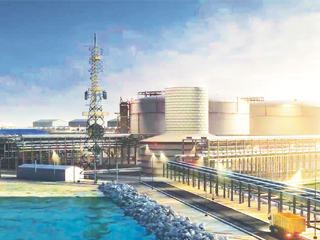
The Ruwais LNG project, currently being developed in Al Ruwais Industrial City, Abu Dhabi, will be the first LNG export facility in the Middle East and Africa region to operate on clean power. The low-carbon facility will leverage AI, digitalisation, and the most cutting-edge technology to boost efficiency and safety throughout the plant.
Ruwais LNG, which comprises two LNG liquefaction trains with a total export capacity of 9.6 mmtpa, will more than double ADNOC’s LNG production output, and help meet the growing global demand for natural gas. In a year, the facility will produce enough LNG to power every home in the City of London for more than two years.
Paris, June 7th, 2024 – TotalEnergies and Air Products have signed a 15-year agreement for the annual supply in Europe of 70,000 tons of green hydrogen starting in 2030. This first long-term deal follows TotalEnergies’ call for tenders for the supply of 500,000 tons per year of green hydrogen to decarbonise TotalEnergies’ European refineries.
Under the agreement, Air Products will deliver at TotalEnergies’ Northern European refineries’ doorstep, green hydrogen from Air Products’ global supply network. This hydrogen will avoid around 700,000 tons of CO2 each year. The contract awarded to Air Products is a first step towards achieving TotalEnergies’ objective of reducing net greenhouse gas emissions from its operated oil and gas operations (Scope 1+2) by 40% by 2030 compared to 2015 levels.
Antonella Sardinella and Mariaenrica Frigione of University of Salento have provided an overview of the bio-based/sustainable materials proposed for the development of original coatings to protect concrete works in their recent review.
Traditional coatings involve the use of synthetic materials that are often toxic for human beings and the environment. Research is going on around the world for the development of new sustainable coatings made with bio-based or non-toxic materials using green technologies.
Following are qualities of a good coating:
Chemical inertness against substrates.
Good stability against acids, alkalis, UV radiations, heat, and oxidation.
Permeability to water vapor (the underlying concrete must still “breathe”).
Adequate adhesion to the substrate.
Non-toxic and non-dangerous to the environment and human beings.
In the field of construction, the sustainable products proposed as potential protective coatings for concrete substrates can be divided into: (i) geopolymers and (ii) natural bio-based substances, such as agricultural waste, oil, wax, cellulose and others.
GeopolymersThe low curing temperatures of geopolymers and their ability to be produced from a wide range of raw materials, including industrial waste (also known as secondary raw materials, or SRM), make them sustainable materials. Reusing (or recycling) solid waste, such as fly ash (FA), slag, and other active byproducts, can actually produce geopolymers by the alkaline activation of aluminosilicate precursors.
Coatings Based on Agricultural WasteAgricultural organic waste, i.e., products that are constantly generated, can be profitably exploited for different purposes, giving an economic value to the waste and reducing the costs of its disposal.
Vegetable Oil and Fatty AcidsRecently, vegetable oils have been used in technologies meant to preserve a substrate (like concrete), which can be a viable substitute for synthetic materials and a sustainable approach. The chemical structure and film-forming properties of oil and its derivatives actually make them useful in this field.
ProteinsVery recently, proteins have been proposed to develop coatings with good hydrophobic characteristics. Lysozyme, for instance, is composed of a microfiber network containing amyloid which, when applied to the surface of a metal, adheres to it and increases its resistance to corrosion.
CelluloseCellulose, the most abundant natural polymer on earth, is a low-cost renewable resource: it is generally recognised as a potential candidate for the production of green superhydrophobic coatings.
Plant-Based Wax CoatingsStarting from materials of vegetable origin dispersed in water, Morrissette et al. developed superhydrophobic self-cleaning coatings for different applications.
Advantages of These CoatingsThese are harmless to humans and the environment. They can be applied using the same techniques and methods as for traditional coatings, without additional costs. Waste materials can be used. Additionally, the studies carried out so far have especially highlighted the excellent protective properties offered by these materials, not considering any difficulties in the production processes and possible increased costs.
Challenges in Commercial ApplicationHigher production costs, scale-up problems, demand for high quantities of bio-based raw materials, competition with food and feed for the supply of raw materials, technological barriers, and including industrial conversion for new productions are some of the barriers that slow down the introduction of these materials to the market.
You can refer below article for more details:
Antonella Sarcinella and Mariaenrica Frigione, Sustainable and Bio-Based Coatings as Actual or Potential Treatments to Protect and PreserveConcrete, Coatings 2023, 13(1), 44;https://doi.org/10.3390/coatings13010044
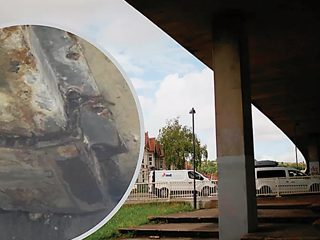
IMAGE FROM: The Concrete Beneath the M32 Flyover, Inset, Some of the Corrosion Found During Safety Checks.
Under the UK’s Network Rails ‘Access for All’ programme, ongoing over the last 15-20 years, we now have step-free, accessible routes at more than 200 railway stations across Britain to provide an obstacle free, accessible route to and between railway platforms. The improvements have been funded by the Department of Transport, which also selects the stations. In Scotland, ministers recommended stations for inclusion to the Secretary of State for Transport.
In 2006, the DfT published the Railways for All Strategy, outlining the UK government’s intention to improve access to the rail network for disabled people across Britain. A key part of this strategy was the Access for All Fund. The Access for All programme was launched in 2006 to deliver accessible routes at stations. The standard design included new lift shafts and footbridges. Examples of rail inclusivity and accessibility improvements include:
Lifts that are automatic and give an audible tone when the doors open and close.
Staircases and platform edges that have tactile warning surfaces.
New ramps and footbridges with lowered handrails.
Often, these are replacing well maintained historic railway footbridges that have been in place for over 150 years without significant corrosion issues. Dumfries Station is a fine, well-detailed example of a mid-19th century station, built in the Italianate style, a listed structure since 1981.
Refer: Access for All – Improving Accessibility at Railway Stations Nationwide – Network Rail
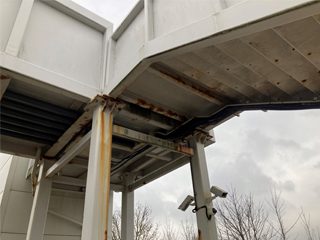
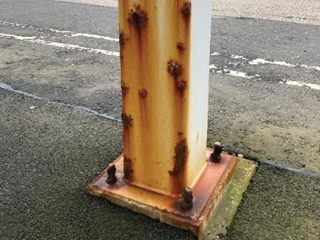
Unfortunately, many new structures are seen to be failing prematurely due to poor design detailing, e.g. water traps, a lack of water drainage points, inferior coatings, and poor material selection. Winter de-icing programmes are accelerating structural damage. The salt attracts moisture from the environment to the carbon steel substrate, which speeds up the oxidation (rusting) process.
Photo 1: Typical Original Non-Accessible Footbridge without Lifts.
Photo 3: Corrosion Around Us – Network Rail Footbridge, Dyce, Aberdeenshire (a) Footbridge Stairs, (b) Support Stanchion and (c) Underside of Footbridge – Credit Stephen Tate.
Algeria and Germany have recently signed, a joint declaration of intent establishing a bilateral task force on hydrogen recently, with a view to strengthening and supporting investments in all the economic sectors (private and public), concerned by the development of hydrogen in the two countries.
The declaration signed by the two ministries plans to strengthen joint cooperation in the field of feasibility studies, production, processing, employment, transportation, storage and marketing of hydrogen, as well as its derivatives produced from renewable energies, beneficial to both countries, especially since the two parties plan to create an Algerian-German Task Force on hydrogen within the framework of the energy partnership, with a view to contributing to the creation of economic opportunities, while promoting the achievement of the goals of the Paris Climate Agreement (year 2015).
Energy sustainability and climate change are major issues in present era, and hydrogen, a clean and adaptable energy source, has drawn a lot of interest as a potential solution for specific situations, e.g. Transportation. The effectiveness of hydrogen production systems depends critically on materials, which also affect system durability, catalyst performance, and reaction kinetics. It will take sustained progress in materials science and engineering to realise large-scale, sustainable hydrogen production systems.
Hydrogen has potential as a medium for storing energy. The effective and secure storage and release of hydrogen for a range of applications is made possible by advancements in materials for hydrogen storage, such as metal hydrides, chemical hydrides, and porous materials. Ensuring the materials’ long-term stability and endurance under harsh operating conditions is one of the major issues in the field of hydrogen production. High temperatures, corrosive surroundings, and cycling between reducing and oxidising atmospheres are all part of many hydrogen production processes, which over time can deteriorate materials. Investigating novel materials and coatings with enhanced mechanical strength, thermal stability, and corrosion resistance have been the main focus of research to date. Furthermore, enhanced characterization approaches and expedited testing protocols have been utilised to assess and forecast material deterioration mechanisms, permitting the development of stronger materials for hydrogen generation.
Source: https://embmoscow.mfa.gov.dz/
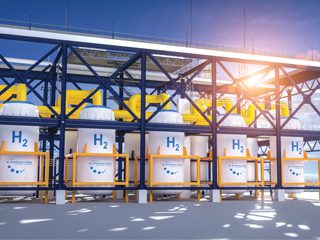
Hydrogen Renewable Energy Production – Hydrogen Gas for Clean Electricity Solar and Wind Turbine Facility.
We use cookies to optimize our website and our service.
Functional
Always active
The technical storage or access is strictly necessary for the legitimate purpose of enabling the use of a specific service explicitly requested by the subscriber or user, or for the sole purpose of carrying out the transmission of a communication over an electronic communications network.
Preferences
The technical storage or access is necessary for the legitimate purpose of storing preferences that are not requested by the subscriber or user.
Statistics
The technical storage or access that is used exclusively for statistical purposes.The technical storage or access that is used exclusively for anonymous statistical purposes. Without a subpoena, voluntary compliance on the part of your Internet Service Provider, or additional records from a third party, information stored or retrieved for this purpose alone cannot usually be used to identify you.
Marketing
The technical storage or access is required to create user profiles to send advertising, or to track the user on a website or across several websites for similar marketing purposes.