

Meet The Author
Neil M Cowin, MSc, CEng
Neil M Cowin is an experienced Integrity Manager specialising in topsides facilities, pipelines and subsea engineering, with a strong focus on corrosion and HSE management. An innovative thinker with extensive experience delivering strategic, operational and technical integrity services for large-scale offshore and onshore assets. Possesses in-depth expertise in process and operational integrity, inspection, maintenance, corrosion engineering, materials selection and integrity consultancy for pressurised systems, including subsea facilities, pipelines and topsides.
Highly skilled in technical data acquisition for integrity, inspection and maintenance planning, and in the development and consolidation of equipment databases. Demonstrates strong knowledge of inspection policies, procedures, scopes and methodologies, including risk-based inspection systems and written schemes of examination. Acts as Technical Authority for pressure systems and provides specialist input to EPC design reviews. Experienced in CP design and retrofit programmes, defect assessment, fracture mechanics, remaining life assessments and repairs in accordance with API 579, PD 5500 and ASME VIII.
Introduction
Subsea inspection has developed NDE equipment from those techniques developed for the inspection of pipelines and piping for topside oil and gas service. Especially techniques such as automated UT, ACFM, Eddy Current, Pulsed eddy current, radiography, Acoustic Resonance [ART], now CT – radiation scanning Tomography for deepwater pipelines at 3000m water depths even was utilised subsea to some extent. New developing techniques, per thermography and CT tomography, are also now employed to achieve data for inspection of pipelines and have been useful for inspection of bundles for subsea service. These techniques have also been developing to allow inspection of flexibles to some degree of success, and this is ongoing.
The issues have also related to the factor that external coatings are to be removed to allow such inspection for certain techniques especially that for automated UT. This is because UT cannot define defects below insulative coatings and FBE. The power requirements for ultrasound are the main restriction for not allowing signals to be received from the substrate below coatings such as 3 layer or cement clad pipelines with carbon steel ROD reinforcement cages within the cement cladding upon the pipelines.
All techniques have to be developed and managed via a surface vessel and supported by ROV’s in the main to allow inspection below water. The depths range but presently inspection can bemanaged up to 250 m depth pipelines for the majority of the techniques and for ‘CT-Scanning radiation Topography’ the equipment is viable to 3000 m water depth at significant cost. Thus, analysis is called upon to enable definition of the NDE techniques which will lend themselves to allow inspection of pipelines subsea as a screening approach without removal of external coatings and allow inspection of the WET through FBE, 3-layer coatings and also cement clad weight coated pipelines.
It is to be recognised that 80% of pipelines are non piggable and thus ILI as a method for inspection on many occasions is not viable subsea without expensive modifications, e.g. temporary pig traps (subsea or portable constructed on topsides).
Methodology Outlining the Status of Subsea NDE and Further Requirements
The initial trial inspections were based upon NDE techniques as stated surrounding topside and onshore piping inspections. These being based upon ASME section V standards capabilities and API 571.
These were ‘UT’, ACFM, Eddy Current then moving forwards to Pulsed Eddy Current, Automated UT arrays, Eddy Current arrays, development of a radiography tool then recent periods have witnessed ‘CT- radiation Tomography’ and also developing Thermography being utilised as a subsea inspection. The other advancements has been ‘ART’ the Acoustic resonance UT array technology.
It began with use of divers and moved forwards to the use of ROV’s and surface vessel management and scope developments. The stated crux is that external coatings mainly have to be removed, which often causes concern. Techniques have advanced with ‘ACFM’ and ‘Eddy Current’ and specialistic Pulsed Eddy current and newer developed CT- radiation Tomography which has allowed WT of the pipelines to be assessed without the removal of coatings.
It has to be stated that the goal is to achieve a screening protocol of investigation of subsea pipelines without coatings removal in the
long term. The development of ‘ACFM’ (alternating current field measurement) has been born from its usage with structures inspection for defining flooded members for offshore jackets which is a standard inspection undertaken at defined frequencies with the assistance of ROV’s and an inspection vessel. Initial inspections using automated ‘UT’ again are defined by assessment by RBI across the seabed review of the most likely sites where coatings can be removed in 3m sections to allow a ‘UT’ array tool to be attached and rotated around the pipeline up to 3 or 5m sections is the normal status.
Pulsed Eddy Current (PEC)
PEC subsea inspection is used to detect and map corrosion and general wall thinning in ferrous metal assets, such as offshore risers, pipelines, and submerged structures.A probe with a coil is placed on the surface of the asset being inspected.
The coil creates a magnetic field that passes through any layers of coating, insulation, or marine growth to the metal component. The current is then quickly shut off, causing a sharp drop in the magnetic field. This sudden change creates eddy currents within the pipe wall. The eddy currents spread inward and decay. The rate at which they decay is measured by the probe. A thinner wall (due to corrosion) will cause the eddy currents to decay faster, while a thicker wall will cause them to decay more slowly. This provides a reliable estimate of the remaining wall thickness.
The benefits and features that make PEC a developing NDE technique for subsea pipelines and structures inspections includes No surface preparation: The technique can penetrate concrete weight coatings, thick insulation, and marine growth, eliminating the need for costly and time-consuming cleaning.
• Automation and accuracy: Automated systems and array technology enable consistent performance, improved probability of detection, and highly accurate positioning.
• Efficiency: It allows for rapid, quantitative screening and corrosion mapping of large areas without shutting down production. • Remote deployment: Subsea PEC systems are often mounted on remotely operated vehicles (ROVs) for deep offshore inspections, reducing the need for divers.
• Versatility: The method is effective for a wide range of underwater assets, including pipelines, risers, caissons, and underwater storage tanks.
As an example of pulsed Eddy current underwater probe capabilities. Underwater probes can tackle offshore inspection applications, even through marine growth requiring no surface preparation. The standard underwater PEC probes are watertight to 100m (330 ft) deep and feature a long cable. These probes are operated with the proven PEC system.
The status LEDs embedded in the probes ensure better control and synchronisation of the diver with the topside inspection team. Diver deployed inspectors can scan components as thick as 100 mm (4 in) as well as insulation and marine growth as thick as 300 mm (12 in).
It is understood the critical importance of maintaining the integrity of underwater assets. That’s why underwater pulsed eddy current probes are designed and built to the highest standards of quality and reliability. With advancing ‘PEC’ inspection solutions,’ PEC’ can detect corrosion and defects in underwater structures quickly and accurately, ensuring the safety and longevity of subsea structures and assets. There are now viable ‘PEC’ Technologies for the most advanced, effective, and dependable inspection challenges available in underwater environments.
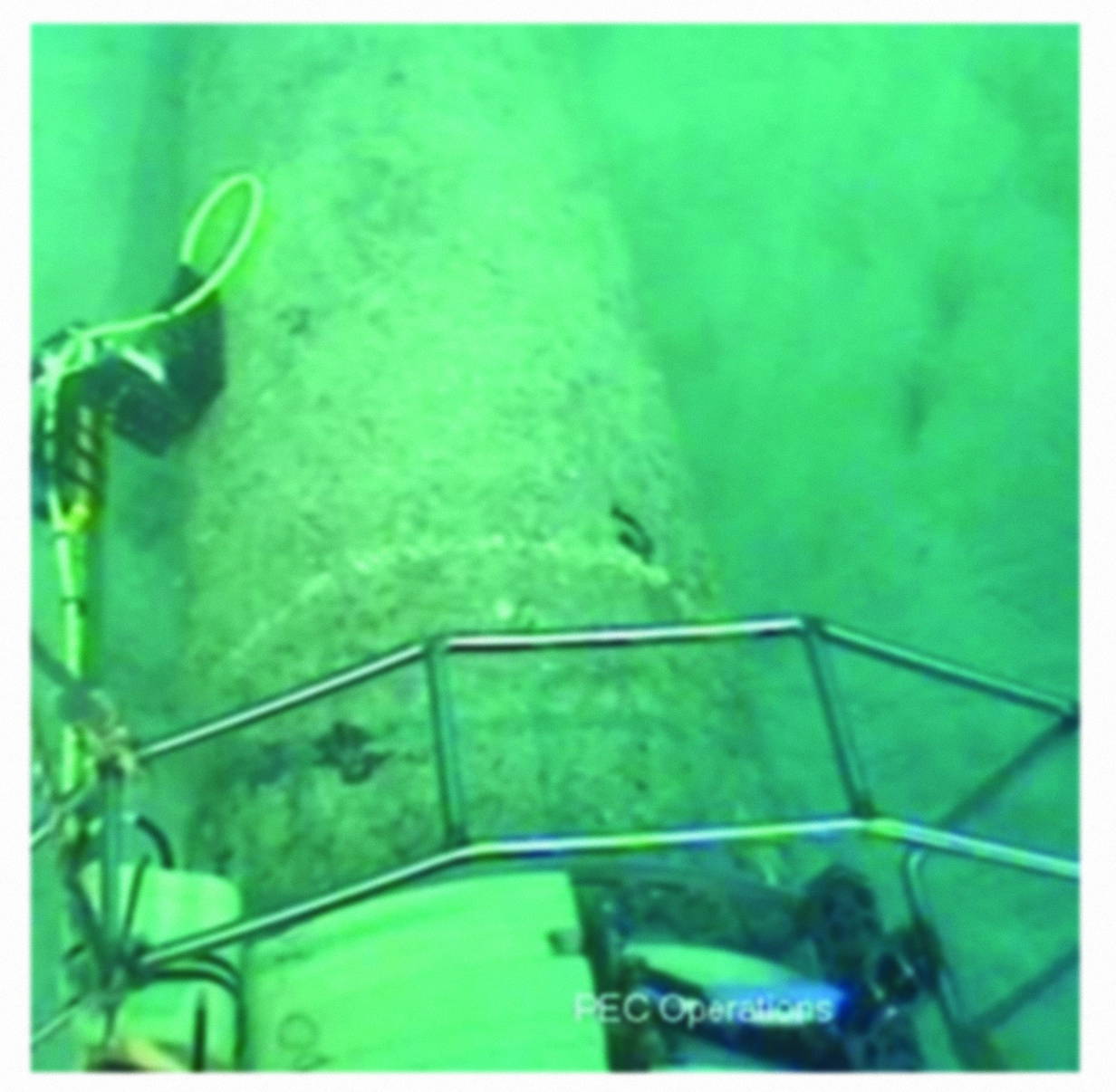
Figure 1: Example of ROV Conducting a PEC NDE Inspection on the External Surface of a Cement Clad Pipeline.
The ACFM (Alternating Current Field Measurement) subsea crawlers offer smart deployment and operation:
– Motorised mechanisms allow the probe to be deployed accurately over the weld to be inspected.
– Can be deployed by ROV or via deck launch
– Can be deployed with ACFM, ART, or PEC
– Has typical inspection speeds of 30mm/s (1.18ins/s), with a multiple pass inspection being 15 mins/m
– Is rated for water depths up to 150m (493ft)
-Can easily manoeuvre on diameters greater than 760mm (30 ins)
– Uses a closed-loop feedback motor control for accurate weld tracking and a uniform scan speed
– Can inspect through paint and other coatings – Is tolerant of residual marine growth.
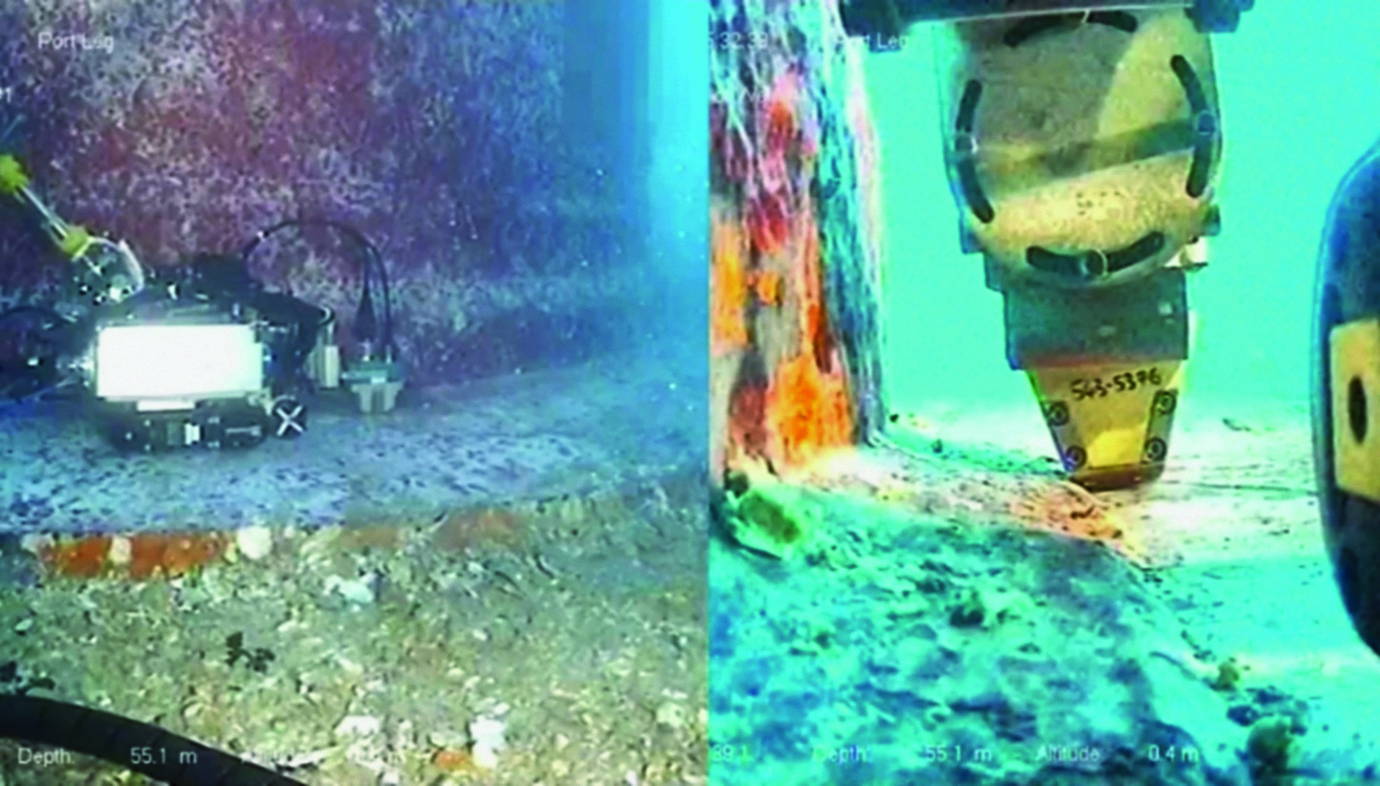
Figure 2: Example of ACFM Around a Seam Weld Subsea.
Acoustic Resonance – Subsea Operability
Subsea’s ART is its patented, ultra-wideband acoustic inspection technology, which offers penetration and measurement capabilities through coatings, exceeding those of existing inspection technologies. In addition to analysing the material resonances (frequency domain), the technology uses time-of-flight measurements (time domain), which provides accurate external geometry measurements for ovality and dents. ART uses a transducer shooting a broadband (multiple frequency) sound signal toward a target such as a pipe wall. The signal duration is sufficiently long to generate oscillations in the target. As the oscillating target continues to be struck by the sound signal, the resonance greatly amplifies the oscillations. The resonating frequencies (frequency domain) are characteristic of the thickness and material of the target. Attaining accurate data with direct measurement of thickness makes it possible to calculate corrosion rates more effectively and cuts down on the number of inspections that are ultimately required.
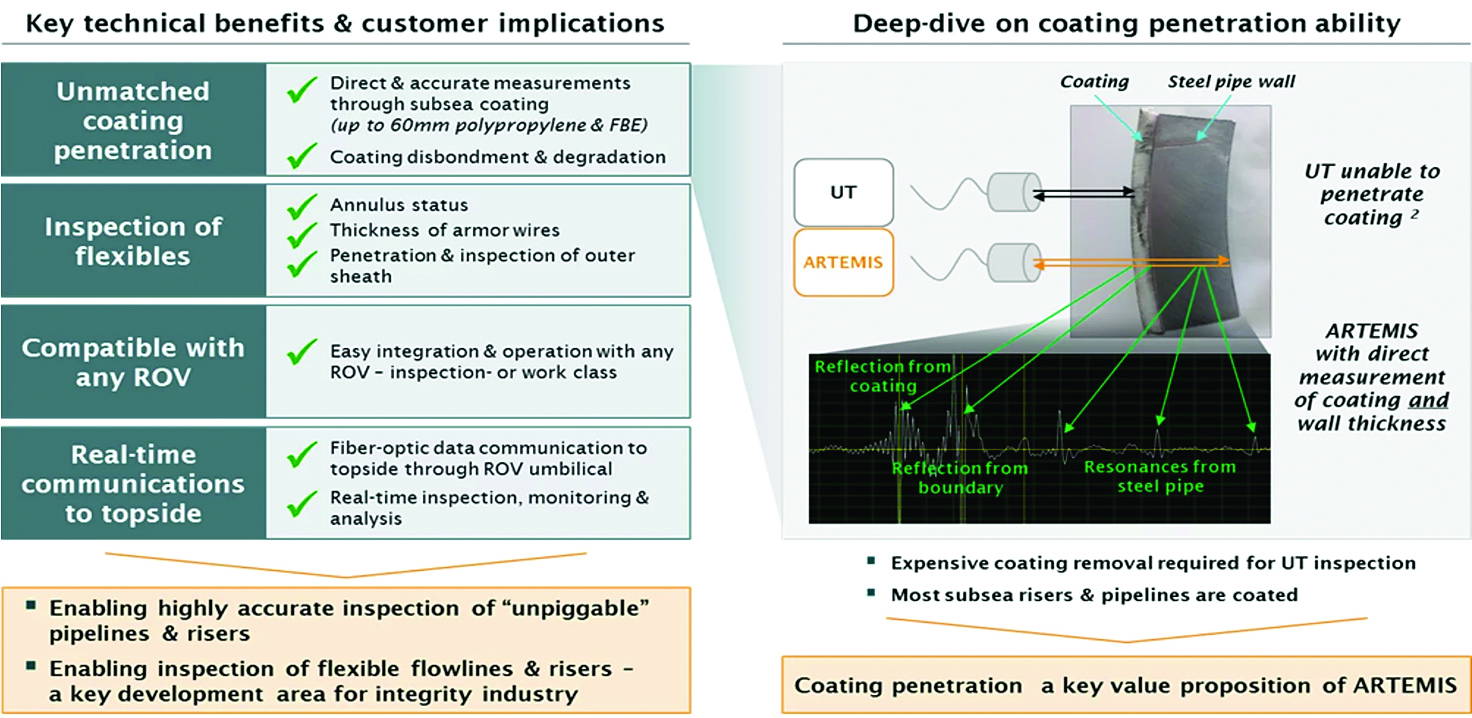
Figure 3: Summary of Proficiency of Acoustic AUT Subsea and Capabilities.
CT – Scanning or Computed Tomography by Radiation Scanning Data.
A major development in deepwater pipeline inspection methodology in recent years has been the integration of subsea CT scanning technology. This enables the delivery of critical flow assurance and integrity data without the need to remove the pipeline’s coating. Subsea CT scanning technology offers operators an enhanced understanding of their pipeline, its coating and its process fluids—while allowing the asset to remain fully operational. Using CT technology, an external scan and detailed high-resolution images of the pipe wall can determine precise sizing of wall thicknesses in minutes. Tomographic imaging can identify flaws within a pipe’s walls, pinpoint the location, and assess the volume and density of any material or deposits in the pipe.
A major development for the industry has been the introduction of methodologies and technologies that enable the online inspection of piggable and unpiggable deepwater pipes from the outside without the need to remove protective coatings or shut down production. Usually deployed using an ROV on a variety of pipeline designs, advanced deepwater inspection systems can provide insights on both internal and external corrosion, detect blockages and ascertain flow issues. They offer the industry a solution for pipelines that simply cannot be inspected by traditional means and can avoid intrusion and loss of production while providing a significant reduction in campaign costs.
An example is given below of the CT radiation tomography scanner developed by the vendor for up to 3000 m operations depth, thus 10,000 ft capabilities for placement onto a pipeline and viability through coatings for developing pictures through the cross section noted below. Deployed by ROV and operated by umbilicals for power supply.
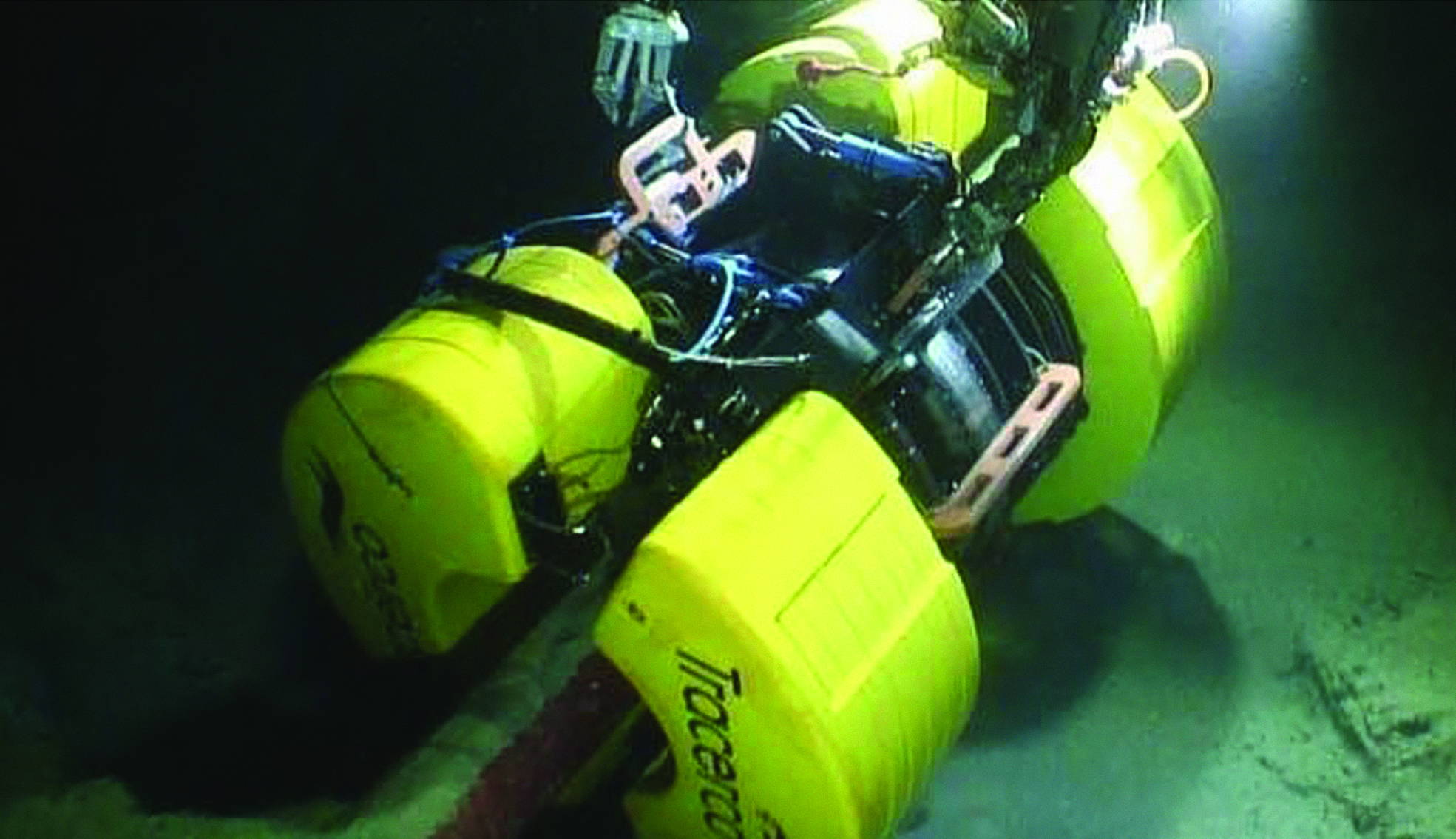
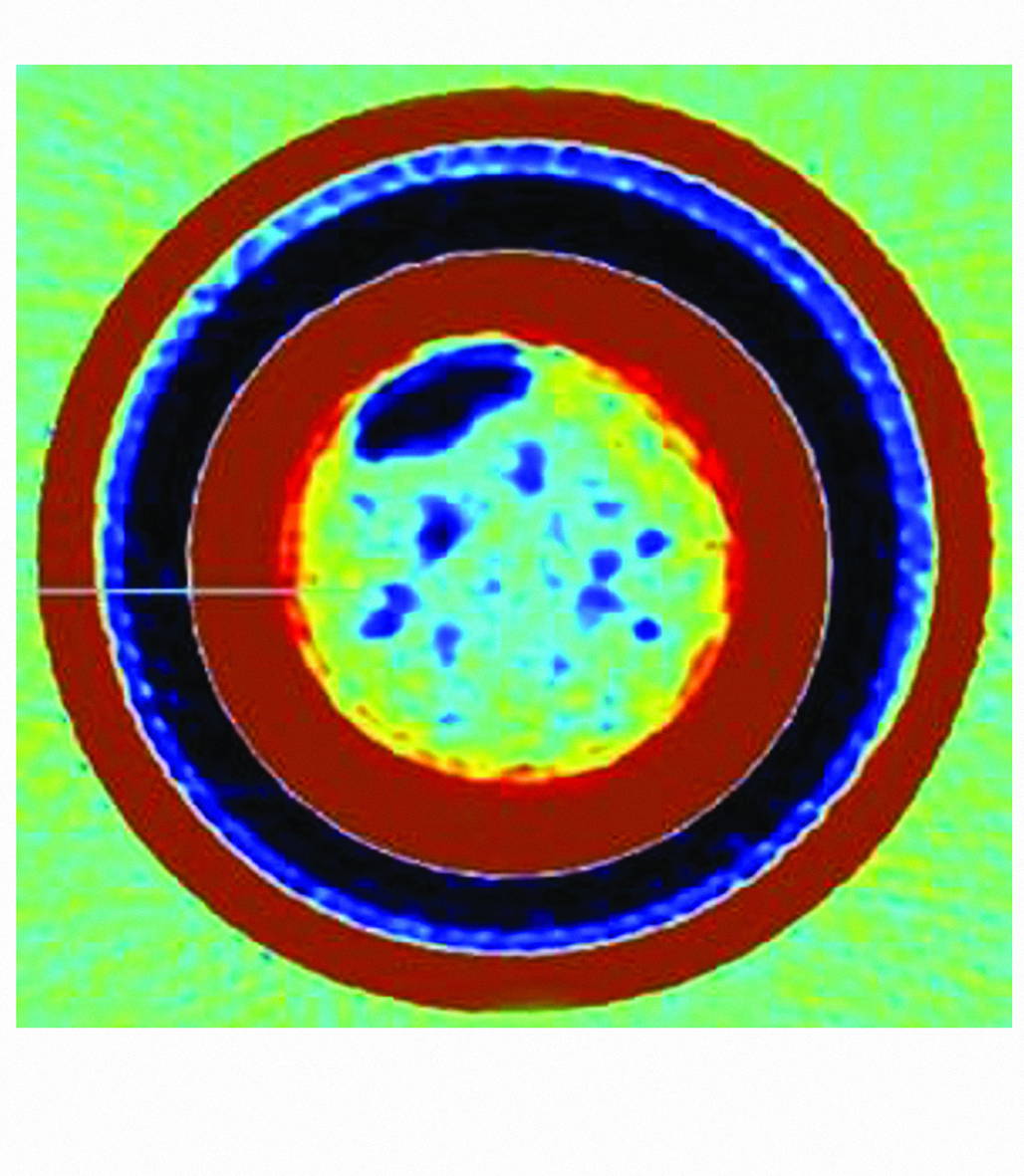
Figures 4 and 5 (Inset): CT Thermography Show Extent of Deposit Inside the Pipeline
This subsea pipeline inspection system was designed to deliver accurate material results and distinguish between wax, sand, hydrate, asphaltene or scale deposition within a density differential as low as 0.03 g/cm3. By gathering real-time data on a variety of pipeline integrity issues, including pipeline corrosion, erosion, pitting and wall thinning, modern inspection technologies enable operators to effectively determine the length of time a pipeline can be extended past its original design life. This can help eliminate the operating costs associated with designing a new section of pipeline, recommissioning, pipeline modification, and the time and risks associated with coating removal/reapplication and long and expensive vessel hire.The introduction of advanced fast screening technology can reduce overall scan time by up to 80% in some cases, which means operators can capture more data from a single pipeline inspection to help them improve and enhance the efficiency of existing pipeline models.
Deepwater pipeline inspection systems are often deployed in conjunction with pipeline screening technology to locate blockages
in subsea pipelines, which can be many miles in length. Accurately detecting the location of blockages caused by a buildup of deposits
is an ongoing issue within pipeline operations. Modern technologies can offer flow assurance screening capabilities to identify areas for further investigation and are often deployed as a pre-cursor to the pipeline inspection system. Advanced screening technologies, such as CT Radiation tomography, allow the rapid screening of pipelines
for content and deposit buildup and can provide the capability to screen several kilometres of line at typical speeds of up to 100m
per hour without interruption to production. Non-intrusive with no requirement for pipeline preparations, these technologies can measure flow assurance from the outside of the pipeline, avoiding the need to remove protective coatings. The most advanced screening systems are capable of being deployed at depths of up to 3,000m (10,000 ft) and have been deployed to inspect a wide range of pipe diameters and systems including rigid coated or uncoated pipe, pipe-in-pipe, bundles and flexibles. They can provide a detailed pipeline profile by identifying the mean densities of contents and the volume of material based on measured densities, detecting the location of deposit buildup, measuring the density profile of the pipeline, and analysing any detected anomalies. Once the screening system has located any suspected blockage, the Discovery inspection system can be deployed to accurately characterize the precise type and scope.
Corrosion Types and Threats in Coated Pipelines
Coating Types
• 3-Layer Systems + Cathodic Protection (CP)
• Cement CladdingCoating Tupes
• Fusion-Bonded Epoxy (FBE)
• Primary Corrosion Drivers:
• Produced water retention (with CO2, H2S, scales, and deposits)
Corrosion Threats
Exacerbation by CO2, H2S, and chloride salts.
Microbiologically Influenced Corrosion (MIC): Anaerobic bacteria in risers insulated for waxy crudes Vapor-phase & condensation effects.
Integrity Risks
Cracking risk in 40 c –120 °C temperature range
Damage to outer coatings → ingress of water/salts
High corrosion rates observed on carbon steel (CS) and alloy pipelines and 316L ,plus martensitic and 400 series Cr alloys
Reduced CP protection effectiveness
Inspection History
• Alloy pipeline threats not fully assessed for SCC/CSCC under coatings and insulation
• Early inspections limited (partial UT with sampling boxes in the 1980s–1990s; partial ROV coverage)
Pipelines coated to FBE specs before cement/3-layer systems
NDT Strategies for Non-piggable Pipelines
Objective: Inspect 40-year-old coated subsea lines where pigging is not feasible. Scope: Pipelines, risers, flexibles, bundles
Prioritisation
- Focus on insulated systems (dew point, wax control)
- High-risk streams first (gas & HC production)
- Then secondary streams & utilities
Available NDE Techniques
Automated UT arrays by subsea collars – The external coatings have to be removed for UT automated arrays to be operable.
- Pulsed Eddy Current (PEC) – wall loss through coatings, average 250m water depths are viable.
- Guided Wave UT (LRUT) – long-range screening, coatings have to be removed for access of the array collet to the
- ACFM – crack detection at welds, ROV-deployable, 150m water depths and viable for deeper
- EMAT – corrosion under supports, no NDT couplant needed
- CT- Radiation Topography- deepwater use up to 3000m depth is viable through coatings.
- CP Surveys by ROV inspection vessels – voltage potentials & potential gradients to assess external pipeline coating and anode condition and longevity.
- Flexibles & Bundles: Annulus testing to 30 m depth maximum, fatigue/curvature monitoring over the arch buoys for structural integrity in water depths up to
- Process Data Correlation: Inhibitor performance, water cut, salts, Fe counts, bacteria.
General Guidance and API Standards
Recommended guidance includes:
A Guideline framework for the integrity assessment of offshore pipelines. DNV Technical Report number 44811520 was part of regulator – HSE KP 3 key performance, type 3 assessment circa 2009 onwards. Especially for Riser integrity management and inspections refer DNV-RP-206.
The CRUX of the matter is to design out the threats by ‘process review’ and replace by inspection equipment especially deepwater subsea production to ensure internal pigging requirements. API 571-Damage mechanism affecting fixed equipment It covers ‘NDE’ and specifications. Technically it does cover onshore facilities more so than offshore.
Way Forwards
It is important to develop a progressive R&D program for screening subsea, coated, non-piggable pipelines.
Discussion
Some key outcomes in these processes to date have been:
- Assessment by a topography review of the seabed profile did not always define defects present. For non- piggable pipelines it has proved verys difficult to satisfy all requirements.
- Design basis has generally been to rely on internal inhibition and coatings and core ‘CP’ for
- Flexibles have been difficult to inspect effectively, due to polymer Focus has been on cracking of armour wires. Assessment of flooding of the annular gap is was achieved via a defined vacuum test period inspection technique in standards (note max 30 m depth viability below water).
- Latterly CT-Tomography and recently subsea Thermography has been more valued, as has ‘ACFM’, ‘ECI’ and ‘PEC’ because of its capabilities through % It has advanced even further since.
- Subsea engineers and integrity managers have Utilised ‘ECI’ and ‘UT’ crawlers but removed % coatings from pipelines in majority of cases to obtain a % inspection.
- The ‘NDE’ focus over the last 20 years has been partially
As the oil and gas industry considers exposure to more challenging and deeper environments, the continuous development of innovative technology will be essential in supporting performance improvements.
As exploration and production go deeper, pipelines will likely have to overcome even greater issues than at present when it comes to integrity and flow assurance. Being able to scan and inspect these assets as accurately and as quickly as possible while allowing production to continue will enable operators to make critical informed decisions, safely and efficiently. Great strides have been made in the screening and inspection of deepwater pipelines, making what may have once been regarded as impossible now possible. However, the industry must
continue to push the boundaries of products and services in the pipeline inspection sector to solve the seemingly impossible problems of the future.
Develop ‘NDE’ Technology for screening the ‘WT’ below the external of subsea coated pipelinesesepcially cement coated pipelines.
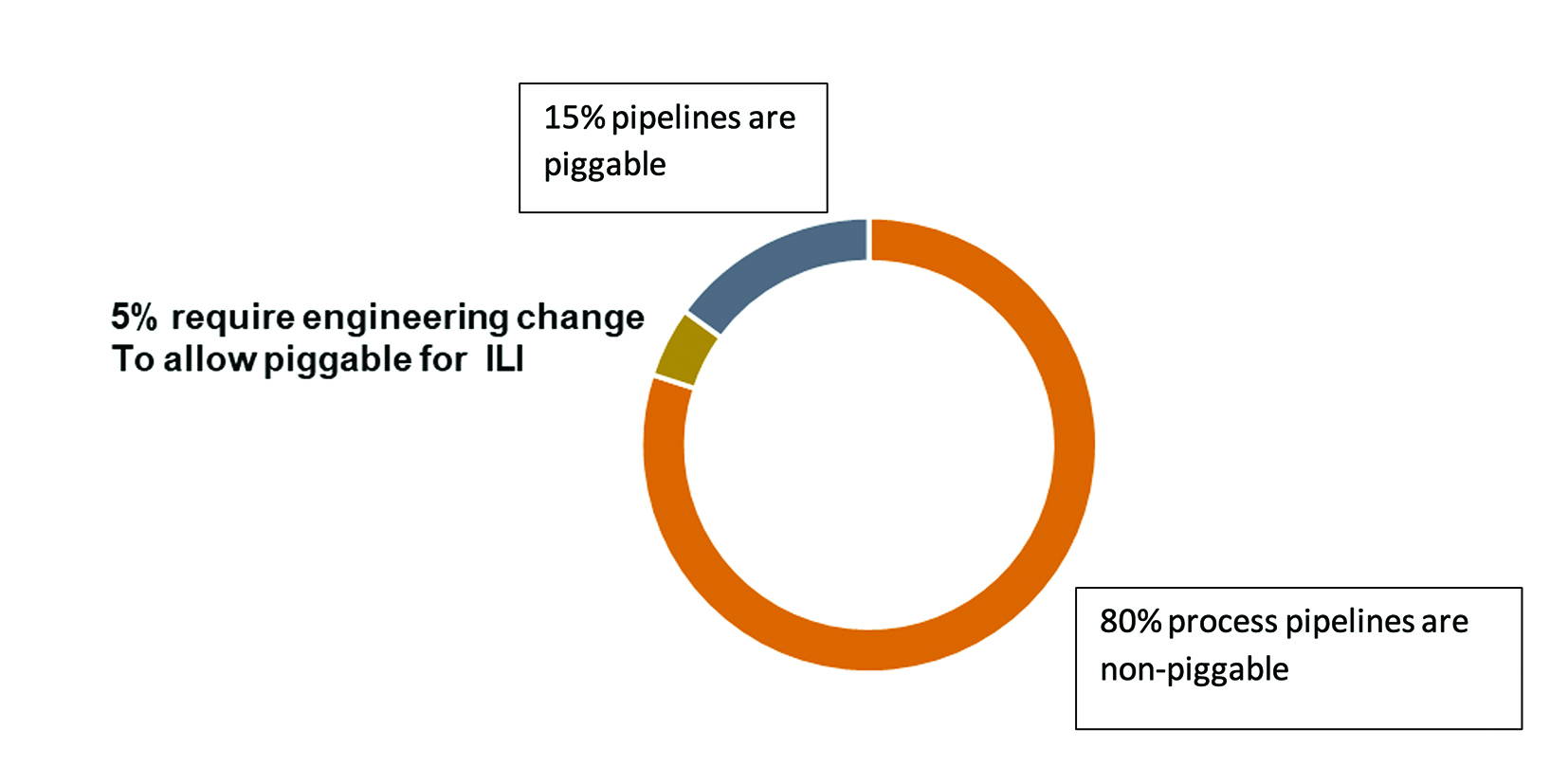
Figure 7: Project Consideration’s
Conclusions
Subsea Inspection of Non-Piggable Pipelines: Key Challenges & Future Needs: The development of integrity for subsea pipelines external inspection and especially Risers to facilities are core Major threat for gas leaks or oil leaks within the North Sea (onshore & offshore) and other international zones. Developing techniques for NDE have been derived from what is traditional corrosion management inspection techniques from API 571 approach. These techniques noted AUT, Eddy current, PEC and ACFM were utilised on subsea structures for assessment of corrosion and flooded member detection. They were also extensively utilised for inspection of caissons for utilities (sea water lift for fire mains water for deluge) and injection of disposal water. 40 years of data gained mainly by the removal of coatings subsea and inspection by UT arrays or other techniques such as Eddy Current PEC, even percentage of radiography has often been the best solution’ noting that:
- Current practice: is to remove circa 3m to 5 m width bands of external coating in low-lying areas, analyse WT% by NDE mainly automated UT arrays.
- This principally has been applied mainly to 6”–10” flowlines size ranges especially in the Gulf
- Thus, the weight coated pipelines of Cement cladding up to 150mm (5.9”) thick has created
The noted subsea Failures have been linked to process variations, material selection, and limited NDE capability subsea and also requirements for
a screening approach for pipelines coated with 3 layers (polyethylene, polypropylene, PVC and FBE) or more so cement clad pipelines.
Future Needs
Industry requirements continue to develop at a rapid pace.
- Advanced ‘CT-Topography’, Thermography & ‘ACFM’ (beyond welds) have the current viable capabilities for subsea equipment enclosures for 3000 m water depths
- Automated NDE for thicker coatings is a real focus for inspections subsea both for the depths noted and deeper pipelines projects without external coatings removal especially cement clad weight coated
- High frequency ‘PEC’ pulsed eddy current & ‘ECI’ Eddy Current probes, to enable definition and higher accuracy for pipeline ‘WT’ below cement especially and Also to develop subsea equipment enclosures for PEC and ACFM to equally deepwater depths presently 250 m operability and require developed to 3000 m (10,000 ft) water depths.
- Need to explore the viability of Electro-Magnetic Resonance (EMR) for subsea inspections of external coated pipelines as a screening tool to analyse pipeline ‘WT’.
It is ongoing techniques such as Electromagnetics and acoustic resonance and ‘ACFM’ that will require to be advancing with vendors and technologists in the ‘NDE’ forum and certainly the subsea engineering forum can supply these advancements to the required pipelines and structures to enable a higher definition of screening NDE equipment subsea for the oil and gas industry to enhance and ensure reliability and integrity of pipelines and structures.
References
- API 571, Recommended Practice for Identifying and Evaluating Damage Mechanisms Affecting Fixed Equipment in the Refining Industry, American Petroleum Institute.
- ASME Section V, Non-Destructive Examination of Pressure Systems,
- DNV, Technical Report 44811520: Integrity Assessment of Offshore Pipelines, DNV.
- DNV-RP-F103, Cathodic Protection of Submarine Pipelines,
- DNV-RP-F113, Repair Strategy for Subsea Pipelines,
- DNV-RP-F116, Integrity Management of Submarine Pipeline Systems,
- PD 8010, Subsea Pipelines, Part 2 and Part 4: Design and Integrity Management of Subsea Pipelines,
- Practical NDE knowledge from project experience and
- Presentations and technical details from NDE suppliers within the
- Technical knowledge of subsea NDE scopes gained over 35