Kawasaki Successfully Completes Joint
Offshore Verification Test with TotalEnergies
for Measurement of Electrical Potential of Subsea Pipelines Using an AUV
According to Kawasaki, the AUV is the world’s first with a robot arm for subsea pipeline inspections. The development was carried out in response to the growing demand for subsea pipeline maintenance in offshore oil and gas fields. The vehicle is named SPICE, or Subsea Precise Inspector with Close Eyes.
Overall, SPICE has a length of approximately 5.6 metres, a width of 1.4 metres and a height of 1.1. metres. In the air, it weighs approximately 2,500 kilograms, and it can reach a maximum depth of 3,000 metres at a max speed of 4 knots. SPICE features a main propulsion propeller, two side thrusters and two vertical thrusters. It uses an inertial navigation system and sonar for its navigation equipment, as well as ballast release equipment and an iridium beacon for safety.
A 2020 verification test reportedly achieved stable pipe-tracking performance, demonstrating high capability as a platform for close-range subsea pipeline inspections. This was conducted under the “Joint Technological Development Support Program for Offshore Oil and Natural Gas Fields” of DeepStar, and The Nippon Foundation Ocean Innovation Consortium.
Afterwards, Kawasaki began a joint research project with TotalEnergies to integrate the energy company’s electrical potential measurement technology Light Touch Cathodic Protection (LTCP) with SPICE. This was anticipated to make the AUV capable of measuring the electrical potential gradient of a pipeline allowing the detection of potential coating defects.
After more detailed design and modifications of SPICE in order to incorporate TotalEnergies’ LTCP, between October 2020 and February 2021, the most recent verification test off Awaji Island (Japan) ran from Aug. 30, 2022 to Sept. 2, 2022, and according to the company, resulted in the successful measurement by LTCP integrated with SPICE of the electrical potential of subsea pipelines. For the offshore test, simulated pipes and a corrosion protection system were placed on the seabed under the supervision of TotalEnergies. Using the time-tested, pipe-tracking capability and precise autonomous control of the robot arm, SPICE then successfully performed measurements of electrical potential using the robot arm with its newly integrated measurement device to check the pipelines’ state of protection against corrosion inferred by the measurement of the
electrical potential.
The Engineering Council has announced the appointment of Prof John Chudley CEng FIMarEST to the position of Chair of the Engineering Council’s Board of Trustees. John will take up the role in June 2023 at the Engineering Council’s Annual General Meeting (AGM), at which Professor Chris Atkin CEng FRAeS FREng formally completes his term as Chair.
John has served on the Engineering Council’s Board of Trustees since 2017 and chairs the Registration Standards Committee. He was appointed as Vice-Chair of the Engineering Council in 2021, including supporting the implementation of the Engineering Council’s 2025 Strategy. He has also worked with the Civil Service, including serving as Director of the Learning and Skills Council and the National Apprenticeship Service, where he was instrumental in the development of Higher Apprenticeships and Degree Apprenticeships.
The following documents have obtained substantial support
during the past two months, and have been submitted to the ISO member bodies for voting, or formal approval.
ISO/FDIS 1518-1 Paints and varnishes — Determination of scratch resistance — Part 1: Constant-loading method (Revision of 2019 standard)
ISO/DIS 3882 Metallic and other inorganic coatings — Review of methods of measurement of thickness (Revision of ISO 2003 standard)
ISO/FDIS 4212 Corrosion of Metals and Alloys— Method of oxalic acid etching test for intergranular corrosion of austenitic stainless steel
ISO/DIS 19735 Corrosion of metals and alloys — Corrosivity of atmospheres —Mapping areas of increased risk of corrosion
New International standards published in the past two months.
ISO 1522:2022 Paints and varnishes — Pendulum damping test
ISO 3079:2022 Two-electrode method using acetic acid to measure pitting potential of aluminium and aluminium alloys in chloride solutions
ISO 4628-5:2022 Paints and varnishes — Evaluation of quantity and size of defects, and of intensity of uniform changes in appearance — Part 5: Assessment of degree of flaking
ISO 9227:2022 Corrosion tests in artificial atmospheres— Salt spray tests
ISO 10062:2022 Corrosion tests in artificial atmosphere at very low concentrations of polluting gas(es)
ISO 11127-7:2022 Preparation of steel substrates before application of paints and related products — Test methods for non-metallic blast-cleaning abrasives — Part 7: Determination of water-soluble chlorides
ISO 23669:2022 Corrosion of metals and alloys — Requirements for localised corrosion and environmentally assisted cracking testing of additively manufactured metals and alloys
ISO 24239:2022 Corrosion control engineering life cycle in fossil fuel power plants — General requirements
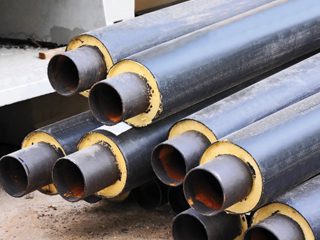
Corrosion under insulation (CUI) is a long-time problem in petrochemical, refinery, and marine environments, and is estimated to be 40-60% of piping maintenance costs in the oil and gas industry, in addition undetected CUI on pipes carrying hazardous liquids may lead to leaks and potential explosions. To tackle this dangerous and costly problem, Cortec® Corporation has developed CorroLogic® CUI Inhibitor Injection, a new vapor phase Corrosion Inhibitor technology that simplifies protection for insulated pipes covering a high range of temperatures.
CUI happens when moisture and other corrosive media enter insulation after wraps or jackets are compromised, or when condensation builds up, often unnoticed, beneath the insulation. This is especially a problem for piping that undergoes wet-dry, or high-low temperature, cycling. The threat of CUI is potentially even greater on offshore platforms, or in other marine environments where chloride-rich sea spray can infiltrate the insulation. According to the company, CorroLogic® CUI Inhibitor Injection, a new high-temperature 100% Vapor phase Corrosion Inhibitor (VCI/VpCI®) is available to protect against corrosion under insulation (CUI). As its name implies, CorroLogic® CUI Inhibitor can be injected directly into insulating material.
The corrosion inhibiting vapour migrates from the injection point along the pipe to form a hydrophobic protective layer on metal surfaces beneath the insulation. This passive layer is long-lasting, and could protect the surface in the presence of chloride-containing moisture, and withstand high temperatures up to 350 °C, concluded the company. In addition to preventing CUI, the company also claims the technology can also be used for the corrosion protection of aboveground storage tanks, and void space protection.
A recent article describes the effects of epoxy binder, curing agent, filler, initial solvent concentration, curing temperature, and relative humidity, on the curing-induced internal stress in epoxy coatings.
According to the report, curing-induced internal stresses in epoxy coatings are highly influenced by the type and concentration of their ingredients, and the conditions applied. In this new work, the effects on the internal stress development of the epoxy/crosslinker chemistry, curing temperature, relative humidity, filler conditions, and initial solvent concentration, were studied. An elevated curing temperature (35 or 45 °C) resulted in a smaller elastic modulus and, despite an accelerated curing reaction and a higher final reactant conversion, only a slight increase, around 0.2 MPa, in the average internal stress. An increased relative humidity (from 35 to 60 %), also resulted in a smaller elastic modulus and less volumetric shrinkage and internal stress. However, at 90 % relative humidity, the internal stress, due to an enhanced final reactant conversion, was higher than observed at 60 % RH.
The study noted that the presence of either BaSO4 or CaCO3 filler in the formulation reduced the final reactant conversion and volumetric shrinkage, but resulted in a higher elastic modulus and internal stress. 0.6 MPa.
The study presents guidelines to optimise coating formulations and curing conditions to avoid internal stress.
The study was published in Progress in Organic Coatings, Volume 173, December 2022.
The World Coatings Council has announced the publication of its inaugural report on “Sustainability in the Global Paint & Coatings Industry.”
The report highlights the global industry’s ongoing sustainability efforts to advance technologies in coating science and manufacturing, while minimising impacts on human health and the environment. The report emphasises the critical role coatings and the global industry play in contributing to the United Nations’ Sustainable Development Goals (SDGs).
The report also emphasises that coatings are essential to making products and our built infrastructure more sustainable by providing resistance and durability; providing critical performance properties for safe and healthy communities; and serving a critical role for applications in the health and food sectors, among many others. It also highlights the industry’s efforts to achieve resource efficiency in production processes, consideration of raw material consumption, and implementation of health and safety measures to ensure decent work and economic growth.
The report can be found at the Website of the World Coatings Council, https://worldcoatingscouncil.org/WCC-Sustainability-Report/#page=1
We use cookies to optimize our website and our service.
Functional
Always active
The technical storage or access is strictly necessary for the legitimate purpose of enabling the use of a specific service explicitly requested by the subscriber or user, or for the sole purpose of carrying out the transmission of a communication over an electronic communications network.
Preferences
The technical storage or access is necessary for the legitimate purpose of storing preferences that are not requested by the subscriber or user.
Statistics
The technical storage or access that is used exclusively for statistical purposes.The technical storage or access that is used exclusively for anonymous statistical purposes. Without a subpoena, voluntary compliance on the part of your Internet Service Provider, or additional records from a third party, information stored or retrieved for this purpose alone cannot usually be used to identify you.
Marketing
The technical storage or access is required to create user profiles to send advertising, or to track the user on a website or across several websites for similar marketing purposes.