By Birit Buhr, FICorr, Chief Corrosion Engineer, Europeanenergy
A new Joint working group (JWG6) have been created between two technical committees (TC) of ISO.
The two technical committees are:
ISO TC 107: Metallisation and inorganic coatings (project lead)
ISO TC 35—organic coating, but also
ISO TC 156 WG10 (cathodic protection) as a liaison partner to the JWG6
Five projects have been approved, and five draft documents circulated:
25249-1 Corrosion protection of offshore wind structures, design considerations
25249-2 Corrosion protection of offshore wind structures, primary steel components—general requirements for thermal spraying and painting
25249-3 Corrosion protection of offshore wind structures, primary steel components—supplementary requirements for foundations
25249-4 Corrosion protection of offshore wind structures, primary steel components—supplementary requirements for towers
25249-5 Corrosion protection of offshore wind structures, Supplementary requirements for primary structural steel components—structural steel and cast components for nacelles
They are planning for 5 more for secondary steel components, qualification of metallisation and paint systems, repair of surface protection systems, composite structures, and last but not least, environmental impact considerations, including life cycle assessment (LCA).
Offshore wind was born in Denmark in 1992 with the project Vindeby, and therefore it has only been natural that the project initiative comes from Danish Standards and the offshore wind industry here.
ISO support industrial needs and offshore wind is a global industry. The standardisation works will be truly international, with already the following countries supporting the work and the joint working group: Australia, China, Czech Republic, Denmark, Ethiopia, Finland, France, Germany, Ghana, Iran, Italy, Japan, Jordan, Korea, Netherlands, Norway, Poland, Portugal, Russian federation, Spain, Sweden, Switzerland, United Kingdom.
The purpose of the NWIPs is to have overall industry-based ISO standard for the corrosion protection of offshore wind turbine structures to enable these structures to reach their intended service life.
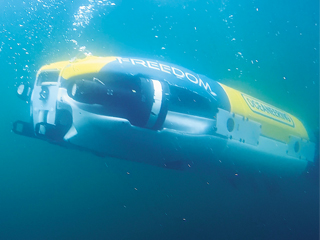
Houston, Texas – Oceaneering International, Inc. announces today that its Subsea Robotics and Aerospace and Defense Technologies segments were awarded a multi-million-dollar contract by the Defense Innovation Unit (DIU) of the U.S. Department of Defense to build a Freedom™ Autonomous Underwater Vehicle (AUV) and establish an Onshore Remote Operations Center (OROC) for the U.S. Navy.
The award highlights Oceaneering’s ability to leverage technology originally developed to support the offshore energy industry into other markets.The vehicle will be manufactured at Oceaneering’s Morgan City, Louisiana facility.
Oceaneering has conducted remote operations of commercial subsea robotic systems from OROCs since 2015 and has performed over 120,000 hours of remote operations to date.
On 7th October 2024, AUTOMA reached a significant milestone in its journey towards sustainability, receiving the prestigious ESG certification with an ‘A-Excellent’ score from the Synesgy platform. This recognition demonstrates the company’s ongoing commitment to environmental, social, and governance sustainability.
Synesgy is a global reference platform for companies wishing to assess and improve their ESG performance. Through a self-assessment system, companies can measure their performance and obtain certifications attesting their compliance with international environmental, social, and governance sustainability requirements. Moreover, the platform promotes transparency within supply chains, allowing companies to monitor and audit their suppliers against ESG criteria.
bp an ICorr Corporate member, and Iberdrola have given the green light for the construction of a 25 MW green hydrogen project at bp’s Castellón refinery, which is expected to be operational in the second half of 2026. This is the first hydrogen project jointly undertaken by bp and Iberdrola through Castellón Green Hydrogen S.L., a joint venture equally owned by both companies.
This initiative, which includes the participation of the Technology Institute of Energy (ITE), has been awarded funding of 15 million euros from the Innovative Value Chain and Renewable Hydrogen Knowledge call of the Spanish Recovery, Transformation, and Resilience Plan, with funding allocated by NextGenerationEU of the European Union. This plant could create up to 500 new direct jobs during its construction.
The 25 MW electrolyser will be powered by renewable electricity through a power purchase agreement (PPA) signed with Iberdrola that will supply 200 GWh/year coming from Iberdrola’s photovoltaic and wind projects. The electrolyser will include 5 modules of 5 MW containerised proton exchange membrane (PEM) technology, which will be supplied by Plug Power, a leading manufacturer of green hydrogen solutions. The green hydrogen produced by the electrolysis of water powered by renewable electricity will comply with European requirements to produce green hydrogen (Renewable Fuels of Non-Biological Origin, RFNBO) and will support the transition of bp’s Castellón refinery into an integrated energy hub. It’s expected around 2,800 annual tonnes of green hydrogen could substitute part of the grey hydrogen currently used by the refinery—currently produced from natural gas—and as such is expected to result in avoiding the emission of 23,000 tonnes of CO2 per year, equivalent to the emissions of 5,000 cars over the same period. This plant could create up to 500 new direct jobs during its construction.
This month, as part of our new Corrosion Management Journal Tutor feature, we are profiling Chris Wozencroft, CP Level 1, 2 and 3 Concrete Tutor.
Chris WozencroftBSc, CEng MICE, MCIOB, MICorr, BS EN ISO 15257, Level 4 Senior Cathodic Protection Specialist and Principal Engineer – Corrosion Engineering Solutions Ltd
Unit S1, 64-66 Akeman StreetTring, Hertfordshire, HP23 6AF
chris.wozencroft@corrosionengineering.co.uk
www.corrosionengineering.co.uk
Chris Wozencroft is an experienced Forensic Civil Engineer, with a focus on corrosion problems and is a leading expert in the diagnosis and treatment of Regent Street Disease – the corrosion of the steel frames within masonry clad buildings. These steel frames were at their most popular from the late 1890s to around 1950, when construction methods changed.
He graduated from Loughborough University in 2007 where he gained a Bachelor of Science (BSc) in Construction Engineering Management and prior to working in consulting, Chris was engaged at the hard end of the industry as a site engineer on heavy civil engineering projects.
His current employment is Corrosion Engineering Solutions Ltd where he works as a Technical Director. He has expertise in investigating and diagnosing defects in structures and buildings and has designed cathodic protection systems to protect many buildings and bridges in the UK [including Grade 1/A, Grade II* historic structures].
Chris is a dedicated technical tutor with extensive experience of training graduates, apprentices and placement students – including delivering many Level 1, 2 and Level 3 cathodic protection courses for ICorr. He is extremely passionate about making technical training available to all, with an energetic and uncompromising style.
Chris has been teaching ICorr courses since 2016 after gaining his ICorr Level 4 Certification in 2014. He finds the opportunity to improve the knowledge and skills of those working in CP in the construction industry immensely rewarding and enjoys meeting new people and nurturing new talent. For him, the best part is seeing someone discover a new path they had not previously considered and then helping them realise their potential.
ICorr is always interested in hearing from CP Level 4 professionals who are ready to take the opportunity to help progress their industry colleagues. Would you be able to join us? If yes, please contact: Cathodic Protection Scheme Manager Email: cpsm@icorr.org
Photo 2: Building Steel Frame Corrosion – Image Courtesy of CPA (Corrosion Prevention Association).
Photo 3: Concrete CP Installation at ICorr Telford Training Centre.
World Environment Day, organised by the UN Environment Programme (UNEP), is the biggest worldwide environmental event, having been established by the UN General Assembly in 1973. Every year, millions of individuals from governmental bodies, corporations, civil society organisations, and academic institutions take part in environmental awareness campaigns and action plans with the goal of safeguarding the planet’s future.
The theme for 2024, “Our Land, Our Future. We are #Generation Restoration,” emphasises the importance of restoring land, combating desertification, and enhancing resilience to drought. Due to desertification, up to 40% of the world’s land is currently damaged, affecting about 3.2 billion people worldwide. Furthermore, estimates indicate that drought will affect more than three-quarters of the world’s population by 2050.
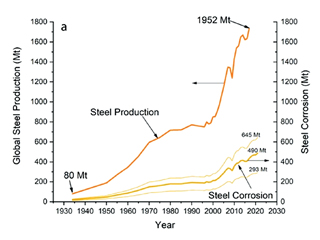
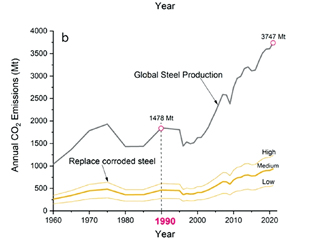
Corrosion and CO2 Emissions: Corrosion of metals, particularly steel, leads to significant CO2 emissions due to the need for replacement and maintenance of corroded structures. Maintenance due to corrosion accounts for an estimated 3.2% of global CO2 emissions (C. Hoffmann, 2020).
Synergy Between Land Restoration and Corrosion Technology
Reducing Environmental Footprint: Use of advanced sustainable ecofriendly corrosion protection solutions helps reduce the environmental impact of industrial activities by:
Lowering greenhouse gas emissions.
Decreasing the need for raw material extraction and processing.
Reducing toxic waste and contamination from traditional corrosion prevention methods.
Supporting Sustainable Development Goals (SDGs): By minimising the environmental impact of industrial maintenance and extending the lifecycle of infrastructure, corrosion technology contributes to:
SDG 9: Building resilient infrastructure, promoting inclusive and sustainable industrialisation and fostering innovation.
SDG 11: Making cities and human settlements inclusive, safe, resilient and more sustainable.
SDG 12 : Ensuring sustainable consumption and production patterns.
SDG 13 : Taking urgent action to combat climate change and its impacts.
Promoting Circular Economy: Utilising recycled materials in production of corrosion protective products (coating/corrosion inhibitors) aligning with circular economy principles, enhancing resource efficiency and reducing waste.
Enhancing Land Restoration Efforts: Reducing industrial emissions and waste, supports broader environmental restoration initiatives by:
Improving soil and water quality.
Mitigating climate change impacts.
Reducing air pollution.
Call to Action
Adoption of Sustainable Technologies: Industries should integrate advanced, sustainable corrosion technologies to reduce their environmental footprint and support global restoration efforts.
Alignment: By aligning the goals of World Environment Day with advancements in corrosion technology, we can make significant strides towards a sustainable and resilient future. This integrated approach not only addresses immediate environmental challenges but also sets a foundation for lasting positive impacts on our planet.
Invest in Research and Development: Continued investment in R&D for innovative corrosion prevention solutions is crucial for achieving long-term environmental and economic benefits.
Promote Awareness and Collaboration: On World Environment Day and beyond, stakeholders should raise awareness about the importance of corrosion technology in environmental sustainability and collaborate to implement best practices.
Sources
https://impact.nace.org/economic-impact.aspx NACE International. (2016, March 1st). Economic Impact.
https://sdgs.un.org.
https://www.mckinsey.com/industries/metals-and-mining/our-insights/decarbonization-challenge-for-steel C. Hoffmann, M. V. (2020, June 3rd). Decarbonisation challenge for steel. Retrieved from McKinsey & Company.
https://www.nature.com/articles/ . The carbon footprint of steel corrosion.
We use cookies to optimize our website and our service.
Functional
Always active
The technical storage or access is strictly necessary for the legitimate purpose of enabling the use of a specific service explicitly requested by the subscriber or user, or for the sole purpose of carrying out the transmission of a communication over an electronic communications network.
Preferences
The technical storage or access is necessary for the legitimate purpose of storing preferences that are not requested by the subscriber or user.
Statistics
The technical storage or access that is used exclusively for statistical purposes.The technical storage or access that is used exclusively for anonymous statistical purposes. Without a subpoena, voluntary compliance on the part of your Internet Service Provider, or additional records from a third party, information stored or retrieved for this purpose alone cannot usually be used to identify you.
Marketing
The technical storage or access is required to create user profiles to send advertising, or to track the user on a website or across several websites for similar marketing purposes.