
The very first UK-China Corrosion Summit, jointly organised by the Institute of Corrosion (ICorr) and the Chinese Society for Corrosion and Protection (CSCP), was held in Manchester on 3–4 September 2025. The meeting gathered leading academics, practitioners, and industry representatives from both countries under the theme – ‘AI Impacts to Corrosion Management within UK-China Energy Industry’.
Opening and Awards
The summit opened with welcoming remarks from ICorr President Dr Yunnan Gao, CSCP President Professor Xiaogang Li and EFC (European Federation of Corrosion) President, Professor Gareth Hinds, who highlighted the importance of international collaboration in tackling corrosion challenges.
An award ceremony followed when the ICorr President Dr Yunnan Gao presented the following ICorr Institute certificates to the recipients:
- FICorr Certificates were presented to newly elected Fellows, Professor Xuequn Cheng and Professor Dake Xu.
- TICorr Certificate was presented to newly elected Technician Member, Mr Jianjun Hu.
- ICorr Scholarship Certificate was presented to Miss Xinyu Zhang, a Chinese student at the University of Manchester studying for an MSc in Corrosion Control under the Institute scheme.
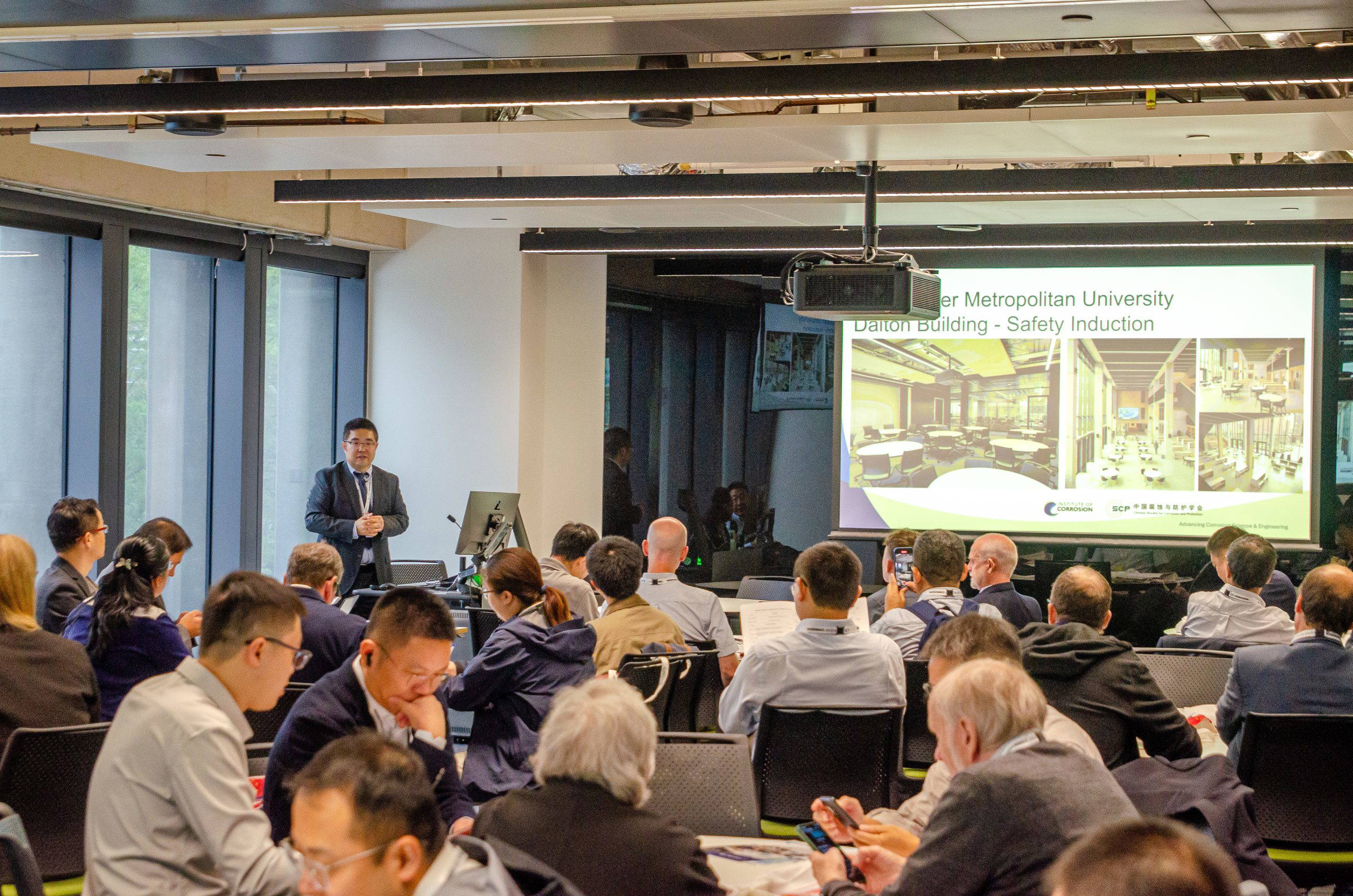
Photo: ICorr President Dr Yunnan Gao Chairing the Opening Ceremony of the 1st UK-China Corrosion Summit in Manchester on 3rd September 2025
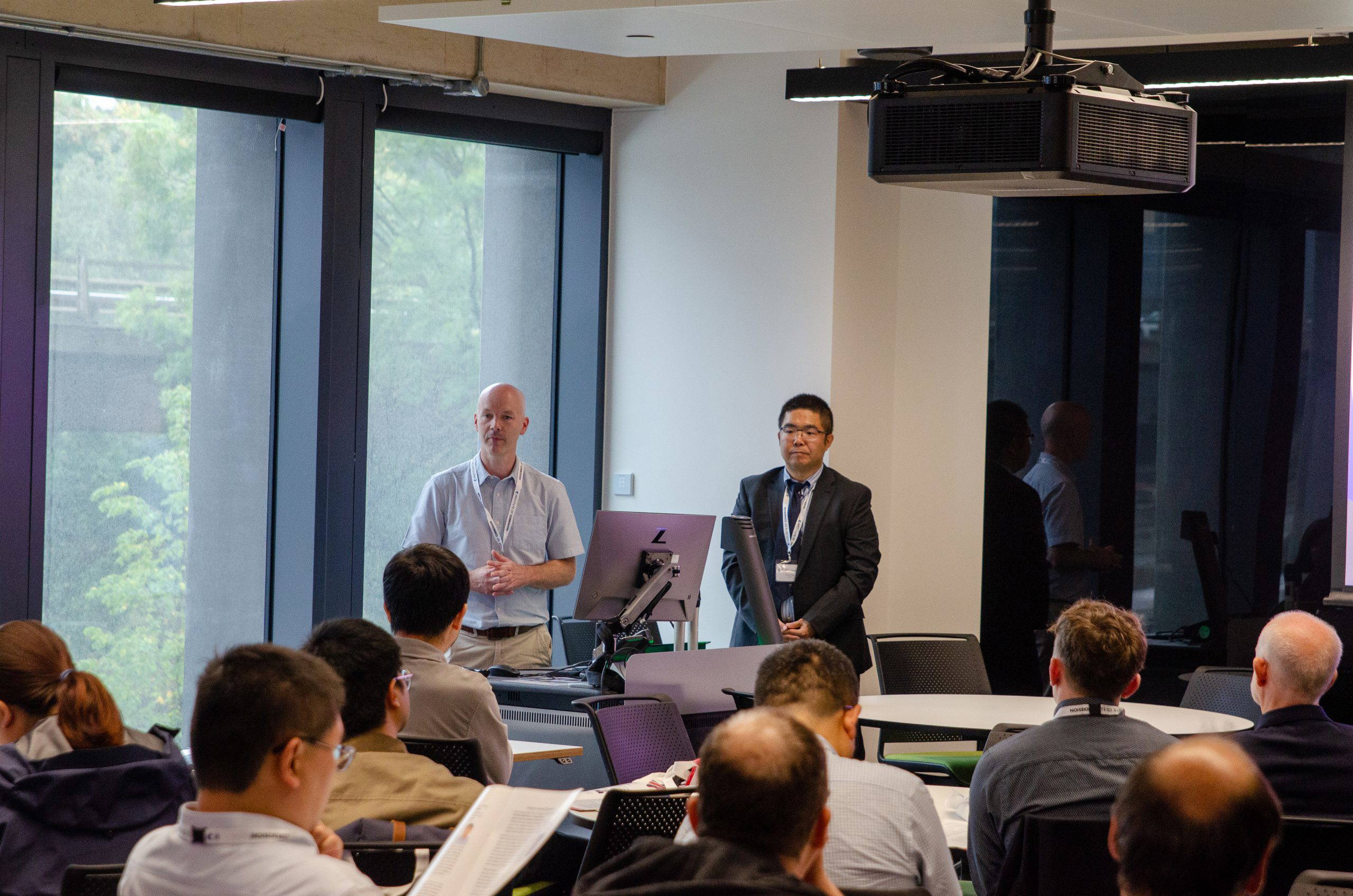
Photo: The President of EFC, Professor Gareth Hinds, Left, Giving the Opening Remarks During the Opening Ceremony of the 1st UK-China Corrosion Summit
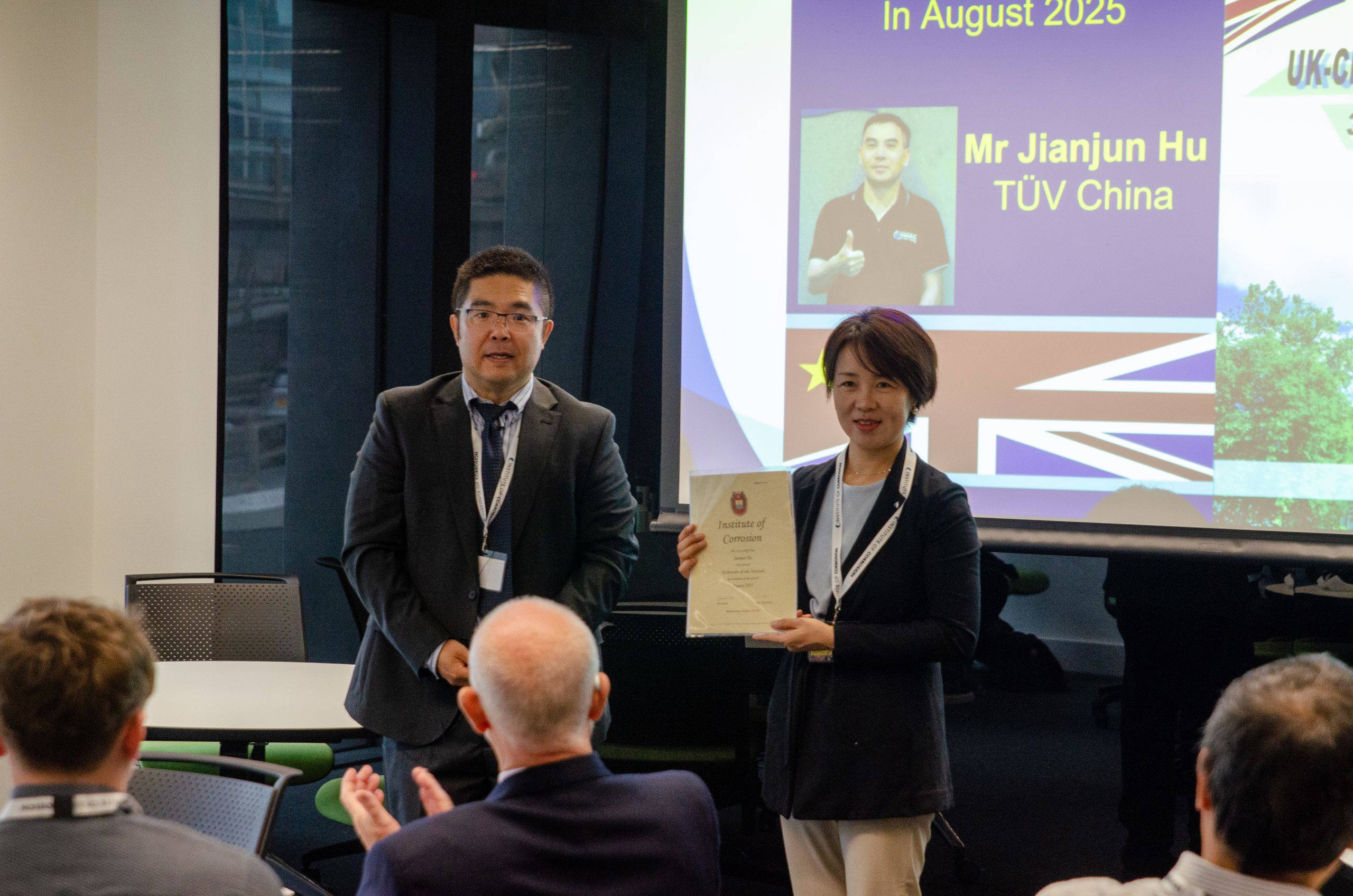
Photo: ICorr President Dr Yunnan Gao Presenting ICorr Certificate to the Recipient (Deputised by Mrs Jing Fang, ICorr Training Partner, China) during the Opening Ceremony
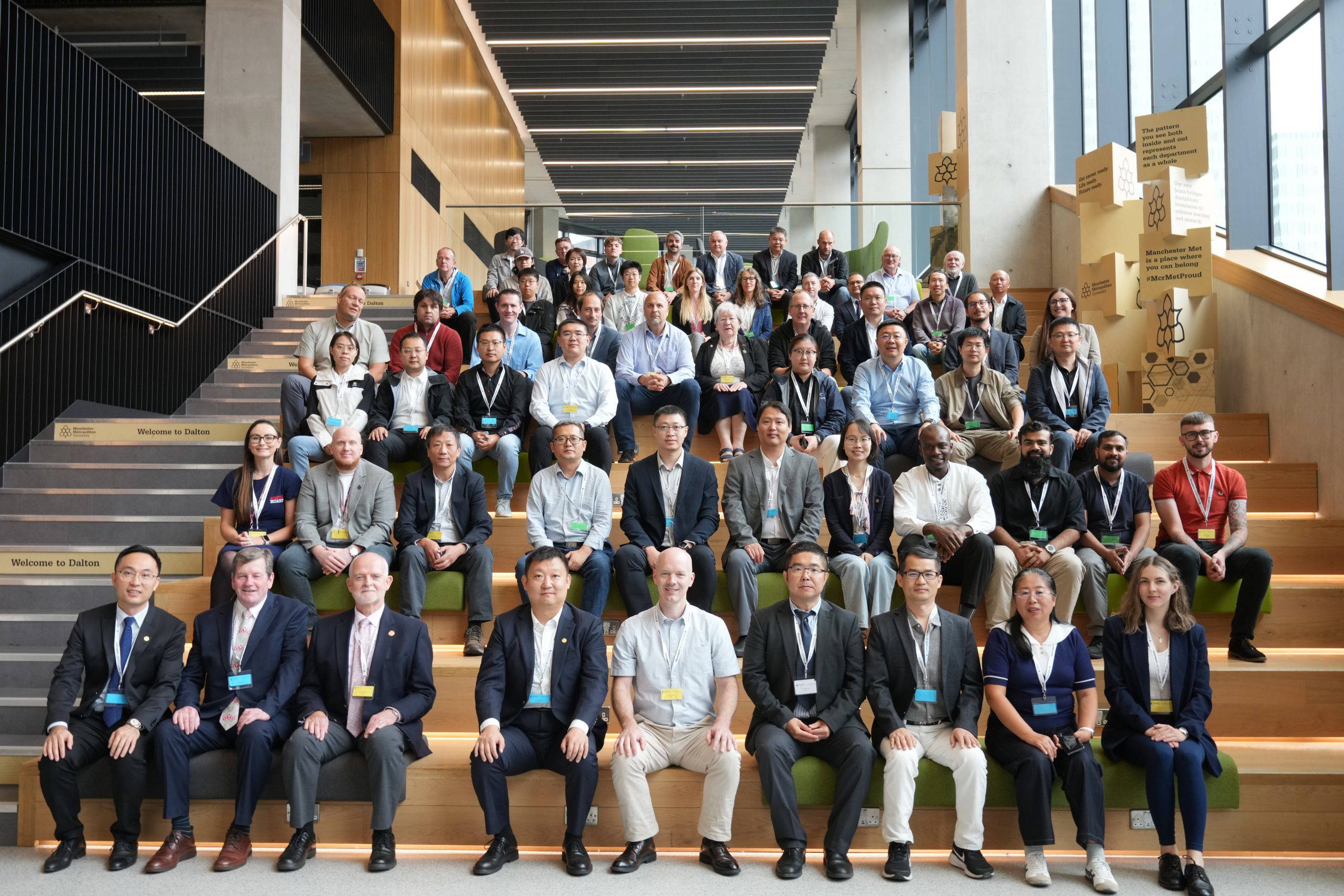
Photo: All Delegates of the 1st UK-China Corrosion Summit
Day One – Technical Presentations
Over the course of the first day, a dense programme featured keynote lectures and technical talks from both UK and Chinese experts tackled frontier topics at the intersection of corrosion science and digital technologies.
Keynotes
- Prof. Xiaogang Li (China, University Science and Technology Beijing) introduced the concept of “corrosion big data,” demonstrating how multi-scale data mining links microalloying, microstructure, environment, and corrosion rate to design new low-alloy steels with improved resistance.
- Andrew Duncan & Dan Lester (UK, Intertek CAPCIS) debated whether AI is a “benefit or threat.” Duncan warned against over-reliance on algorithms in early-career training, while Lester argued that AI can reduce errors and improve decision-making when used with oversight.
Technical Presentations
- Prof. Dake Xu (China, Northeastern University) explained how extracellular electron transfer drives microbiologically influenced corrosion (MIC). He described biofilm processes at the genetic and interfacial level, and how this understanding can inform MIC-resistant materials and sensors.
- Dr Henry Tan (UK, Aberdeen University) presented an AI-enabled framework combining Bayesian decision models with digital twins for subsea pipelines, offering real-time risk-informed maintenance planning.
- Dr Wei Rong (China, China National Petroleum Corporation) described novel inhibitors for acidizing operations on non-magnetic steels. Her formulation using quinoline ammonium salt with thiocyanate showed strong performance in high-temperature HCl-HF solutions.
- Dr Vincenzo Bongiorno (UK, University of Manchester) demonstrated machine learning for electrochemical impedance and noise data, automating model selection and surface damage classification for coatings and corroding systems.
- Dr Yu-You Wu (China, Ningo Zhonghe) highlighted AI-powered inspections of offshore wind turbines, stressing the gap between promising academic results and limited industrial adoption, and calling for UK-China collaboration in this fast-growing sector.
- Dr Prafull Sharma (UK, CorrosionRADAR) showed how predictive maintenance for corrosion under insulation can combine remote sensor data with AI analytics to forecast failure likelihood and optimise inspection schedules.
- Prof. Lingwei Ma (China, University Science and Technology Beijing) presented a two-stage machine learning approach linking environmental factors, physical properties, and coating performance. The method improved prediction accuracy for degradation across diverse climates.
- Dr Yifeng Zhang (UK, Imperial College London) outlined a hybrid inspection framework using reconfigurable sensors and robotics. His model improves detection reliability while reducing inspection frequency and cost.
- Mr Xinpeng Lu (China, Shenzhen Coais Technology) described how AI agent technology can support corrosion integrity management. His system employs multi-agent data collection and reinforcement learning to enhance anomaly detection and optimise maintenance.
- Dr Kevin McDonald (UK, Sonomatic) shared early applications of machine learning on ultrasonic inspection signals. His case studies showed potential efficiency gains in data classification and highlighted barriers such as dataset balance and industry acceptance.
The day concluded with an open forum, where speakers and delegates from both sides reflected on key themes. Discussions focused on the importance of high-quality data, the challenges of model transparency and interpretability, and the need for international collaboration to harmonise standards for AI-driven corrosion tools.
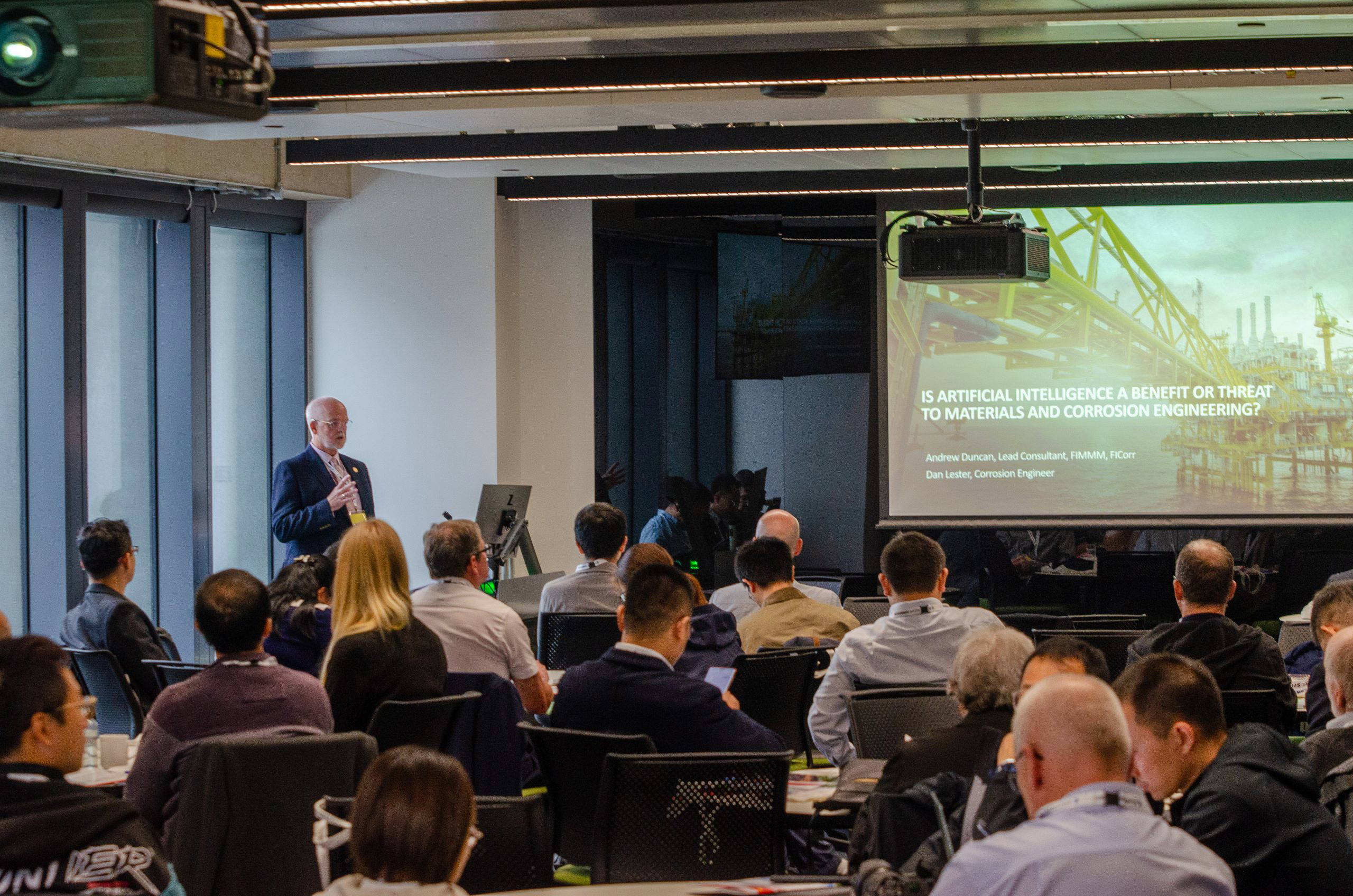
Photo: Andrew Duncan of Intertek CAPCIS Giving the UK Keynote Speech on Is Artificial Intelligence A Benefit or A Threat to Materials and Corrosion Engineering?
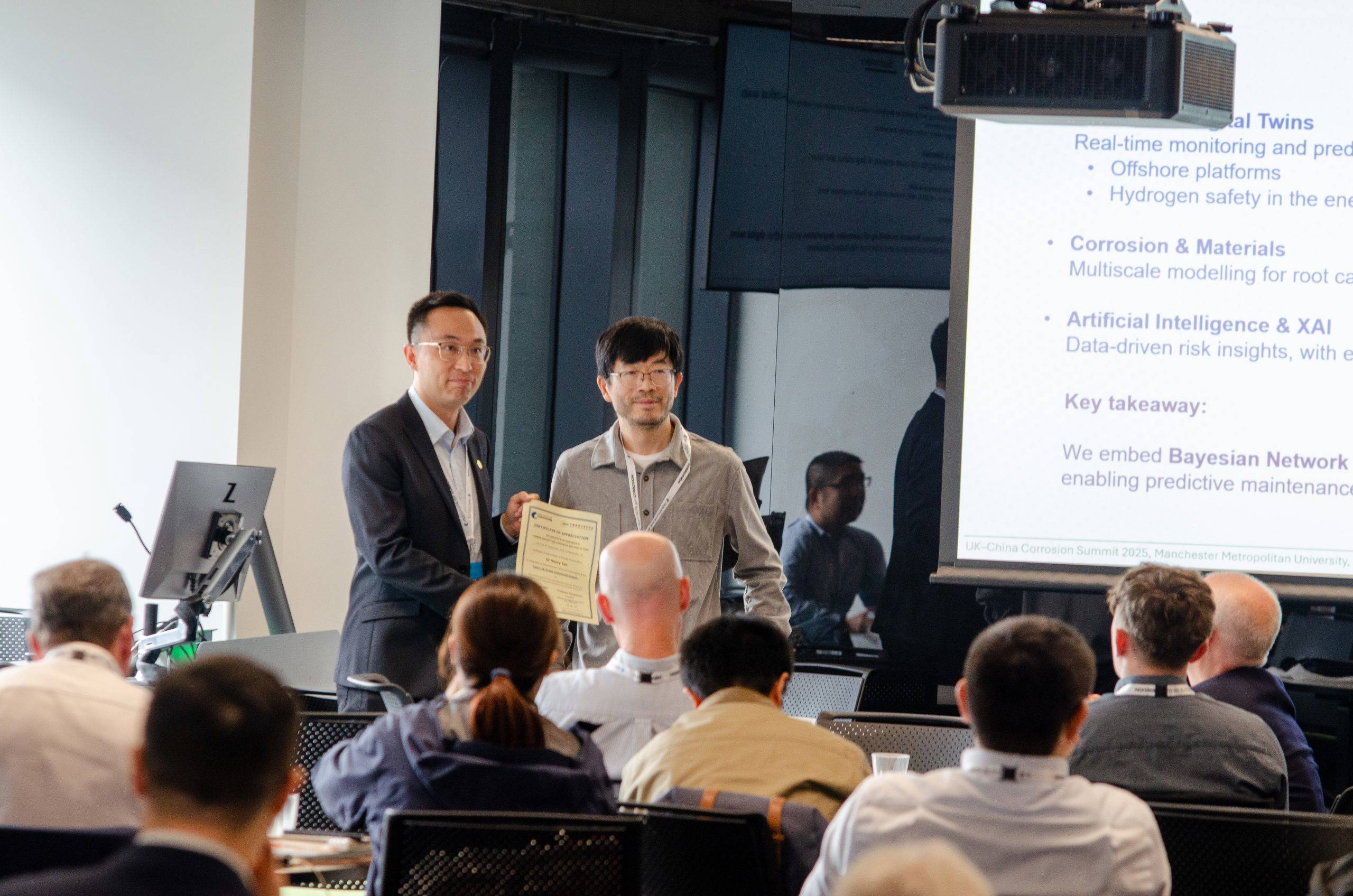
Photo: Session Chair, Professor Bowei Zhang of CSCP, Left, Presenting the Certificate of Appreciation to the Presenter of the Technical Presentation (Dr Henry Tan)
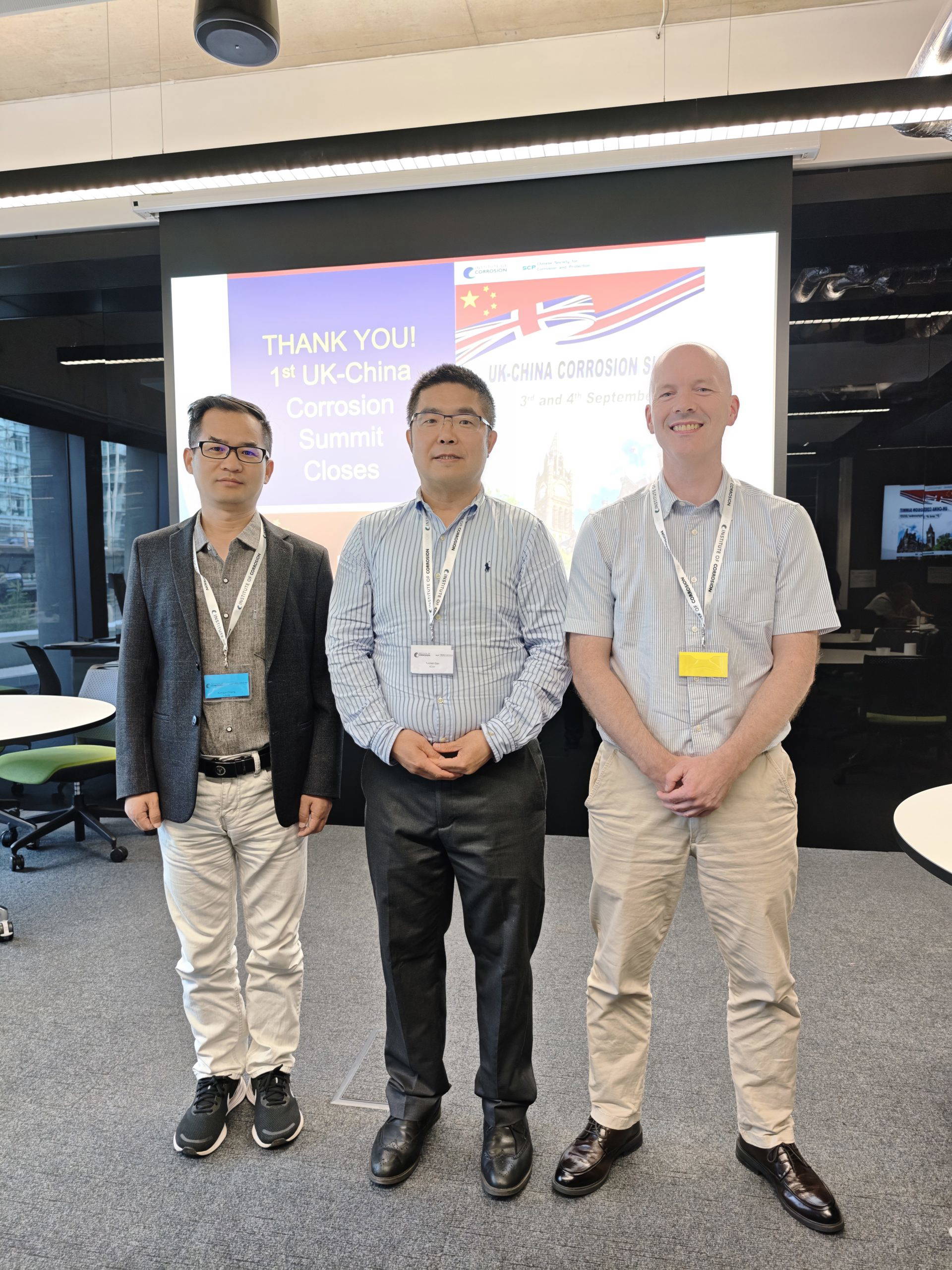
Photo: L-R, CSCP General Secretary Professor Xuequn Cheng, ICorr President Dr Yunnan Gao and EFC President Professor Gareth Hinds at the Closing Ceremony of the Day One Conference of the 1st UK-China Corrosion Summit
Day Two – Visits and Engagement
The second day of the summit, 4th September 2025, was dedicated to institutional and industrial visits for the Chinese delegation with ICorr Training Partners.
In the morning, at the University of Manchester, delegates toured laboratories in corrosion and materials science, including imaging and advanced characterisation facilities. The visit highlighted the university’s ongoing work in combining experimental and digital approaches.
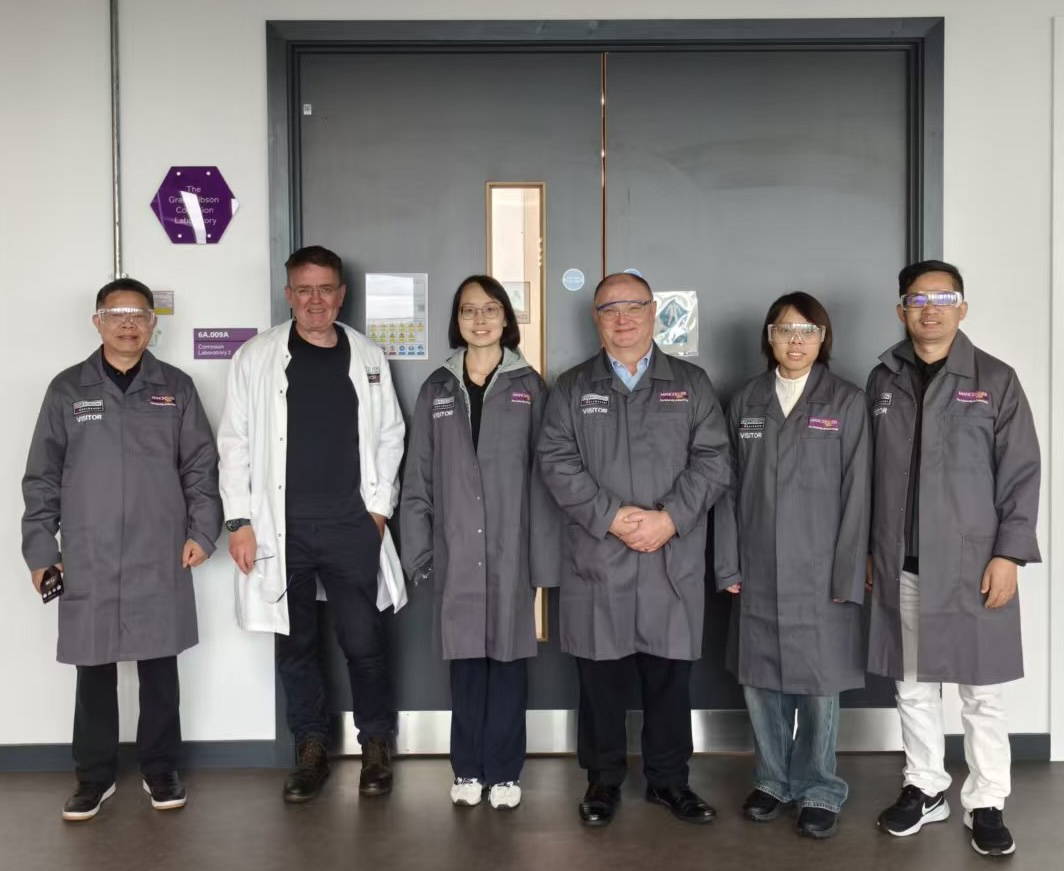
Photo: One of the Four Groups of the China Delegation Visiting the Materials Laboratories of the University of Manchester on 4th September 2025
In the afternoon of 4th September 2025, the delegation travelled to Sheffield to visit Argyll Ruane, where they were given demonstrations in coating science, coating inspection, and non-destructive testing training – areas where ICorr certification and industry practice intersect closely.
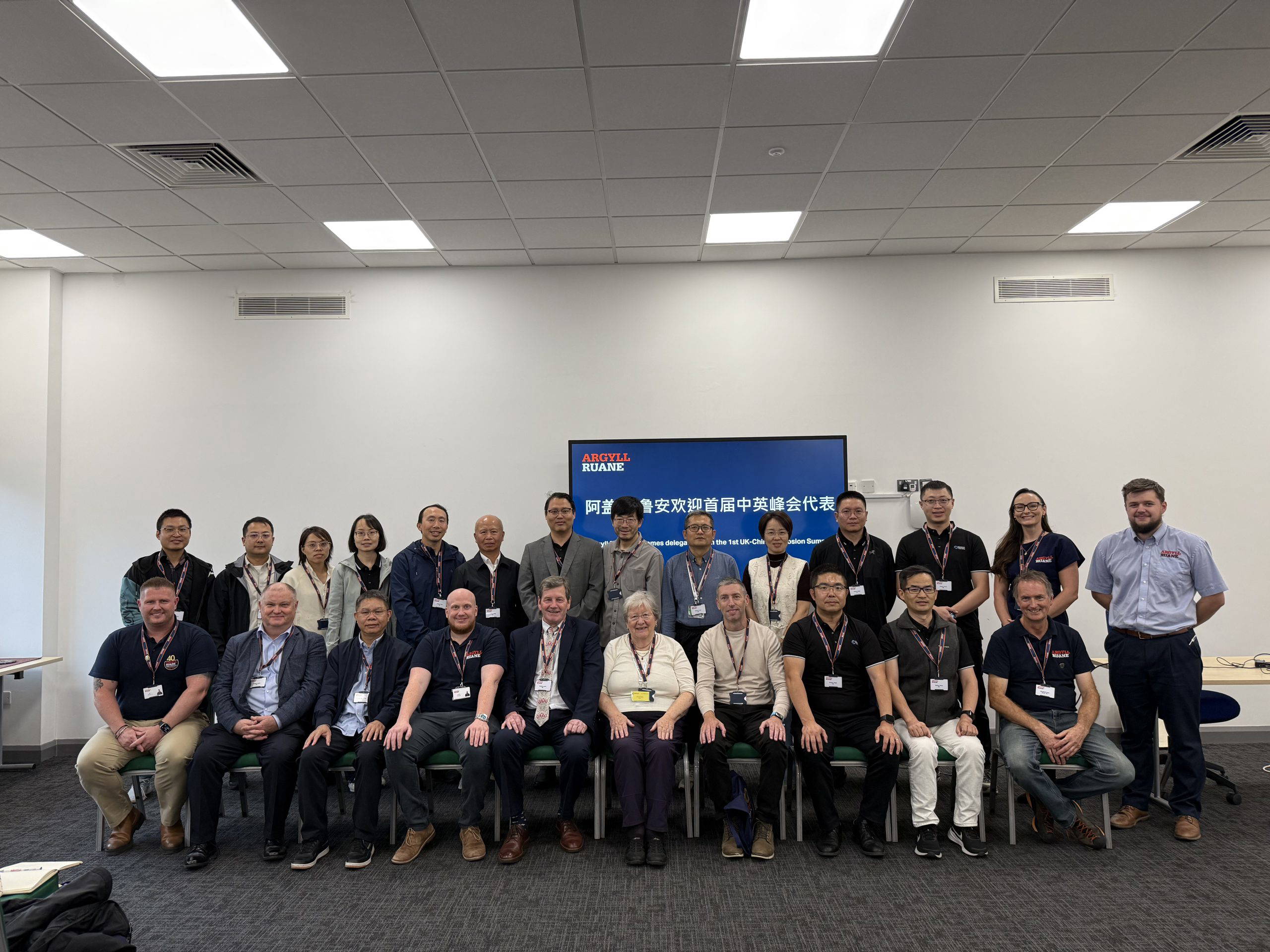
Photo: China Delegation Visiting the Premises of Argyll Ruane (ICorr Training Partner, UK) in Sheffield
Conclusion
The inaugural UK-China Corrosion Summit successfully combined technical exchange with academic, industrial, and training engagement. By bringing together researchers, students, and industry practitioners from both countries, the event created a platform for knowledge sharing and laid the groundwork for continued collaboration between the corrosion communities of the UK and China.
Appreciation and Future Plan
ICorr extends its sincere thanks to the summit’s UK sponsors: exclusive Platinum Sponsor Argyll Ruane, Silver Sponsor – ICR Integrity, and Bronze Sponsors – Beasy, Corrodere, and Corrpro Europe, whose support made this whole event possible.
We now look forward to the 2nd China-UK Corrosion Summit, to be hosted in China in 2026, continuing the spirit of collaboration and knowledge exchange established so well in Manchester.