CorrosionRADAR has launched StarterPACK™ which allows industry to try out predictive moisture and corrosion monitoring in a specially designed evaluation project. It is a quick and easy way for companies to weigh up the benefits of Predictive Corrosion Management (PCM) in tackling the challenges of Corrosion Under
Insulation (CUI).
It enables:
• Continuous CUI detection, localisation and monitoring
• Understanding on how data is transmitted, integrated and visualised
• Understanding on how data is analysed for effective decision support
• Reporting on business cases and ROI calculations
And at the end of the project, companies will have generated, a system performance report, a business case and a recommended field deployment plan for scale-up, concluded the company.
Global coatings manufacturer Hempel has launched Hempafire Pro 400, a new passive fire protection coating that maintains the stability of steel structures in the event of a fire for up to 120 minutes and has been optimised for maximum efficiency in the loadings for a 90-minute duration.
Passive fire protection (PFP) coatings insulate steel during a fire, which extends the steel’s load-bearing capacity and gives valuable extra time for evacuation and emergency response. According to the company, their Hempafire Pro intumescent PFP coatings are known for their low loadings, which can improve project efficiency.These coatings can be used for all steel profile types – for both in-shop and on-site applications. They can be used in exterior conditions and corrosion environments up to C4 according ISO 12944. The Hempafire Pro 400 is available in two versions, standard and fast drying. Other attributes according to the company are, excellent aesthetic appearance when correctly applied, excellent application properties – designed with applicators in mind, and it can be applied up to 1,600 microns DFT in one coat to minimise the number of coats required.
According to coatings manufacturer Hempel, they have acquired a ground-breaking technology that will change the market for insulation coatings, whilst enhancing workers’ safety and lowering their customers’ environmental footprint.
The new technology was developed by Das Lack Enertherm (DLE), a German-English company. When this is combined with their in-house expertise, the technology will enable Hempel to develop and launch coating products with insulating properties within the next year, according to the company.
By offering customers better insulation choices, Hempel can also help to reduce the ever-present risk associated with CUI, in addition, the new insulation coatings will also lower the customers’ carbon footprint and will reduce heat loss significantly compared to current insulation coatings – both of which mean helping customers deliver on their sustainability agendas, concluded the company.
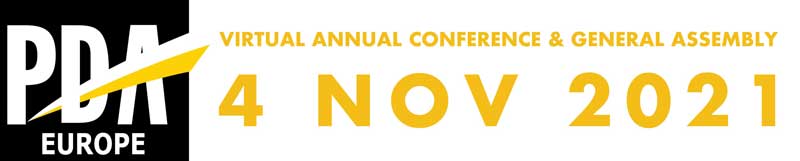
The new date of the virtual annual conference is 4 November 2021.
The programme will be a mix of learning and networking sessions designed to maximise the engagement for the entire audience. More details on the programme and registration will be posted on their website as they become available.
For further information, contact the PDA Europe secretariat at info@pda-europe.org
According to cathodic protection specialist Omniflex, they have partnered with Malaysian company IEV Group to supply remotely monitored and controlled cathodic protection (CP) systems to the South East Asia region. The first product available through the partnership is PowerView CP, a system that can be installed to monitor the performance of new or existing impressed current and galvanic CP installations.
It is common for CP systems to be used to protect steel and concrete structures such as tanks, bridges, wharves and industrial pipelines from corrosion. However, asset managers have traditionally relied on physical site inspections to check the performance of equipment that can be located in dangerous or difficult-to-access locations. This is a costly and inefficient approach and businesses looking to increase their efficiency while reducing costs, are opting for remotely monitored CP systems instead.
David Celine, MD of Omniflex, noted that with the widespread adoption of the Internet of Things (IoT), the benefits of remotely monitoring cathodic protection systems are becoming more compelling than ever, and with data accessibility and transparency becoming more important than ever, remote monitoring platforms offer a single, easy-to-access, repository for all live and historical CP data.
According to Christopher Do, CEO of IEV, there are a lot of ageing assets in South East Asia, so the importance of corrosion control technology has soared in recent years, so remote monitoring represents the most convenient and cost-effective.
We use cookies to optimize our website and our service.
Functional
Always active
The technical storage or access is strictly necessary for the legitimate purpose of enabling the use of a specific service explicitly requested by the subscriber or user, or for the sole purpose of carrying out the transmission of a communication over an electronic communications network.
Preferences
The technical storage or access is necessary for the legitimate purpose of storing preferences that are not requested by the subscriber or user.
Statistics
The technical storage or access that is used exclusively for statistical purposes.The technical storage or access that is used exclusively for anonymous statistical purposes. Without a subpoena, voluntary compliance on the part of your Internet Service Provider, or additional records from a third party, information stored or retrieved for this purpose alone cannot usually be used to identify you.
Marketing
The technical storage or access is required to create user profiles to send advertising, or to track the user on a website or across several websites for similar marketing purposes.