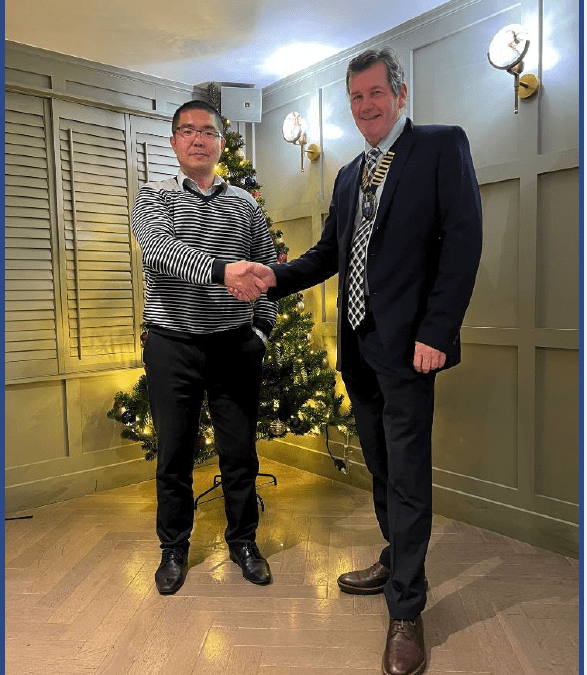
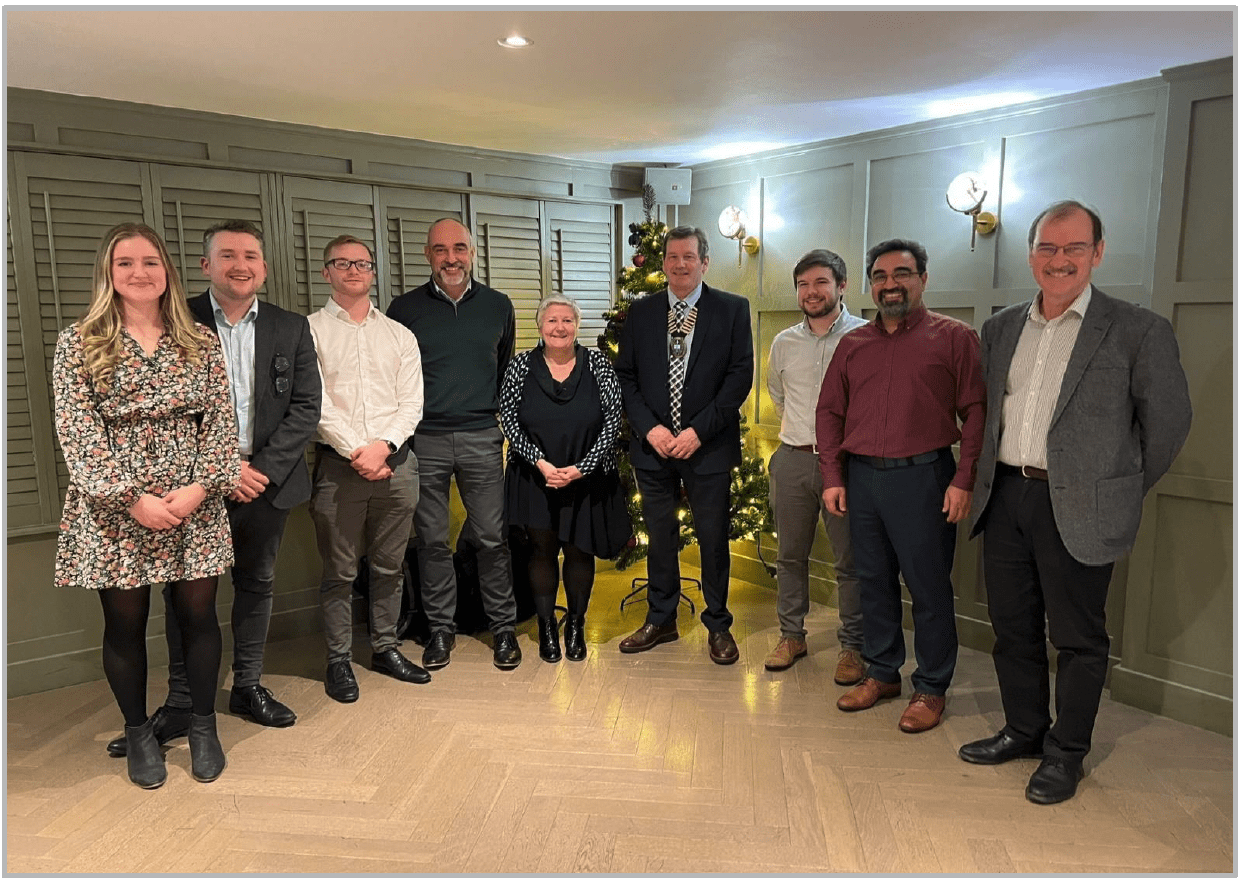
Yunnan and l would like to thank everyone who has supported us on our journey to date. The November AGM was a very proud moment for us both and we look forward to working with you all over the next 2 years.
Your New VP
Together, Yunnan Gao and myself will make a great Team, ready for the challenge with ICorr.
CEng, CSci, FIMMM, FICorr
Active Aberdeen Branch
2 x Branch Chair
Extensive Energy Experience
UK and Overseas
Working for BP Solutions
Sunbury, UK
ICorr has a very Active Programme. Several Key Events have already taken place showing the strength of ICorr nationally.
Our magnificent YEP Competition of 24th November and supporting Programme was brilliantly managed by Hooman Takhtechian and the Aberdeen Branch Committee.
With special thanks to our Key Sponsor (BP), all our YEP Mentors, Judges, Case Study Lead and Huge congratulations to our Winning Team 5!
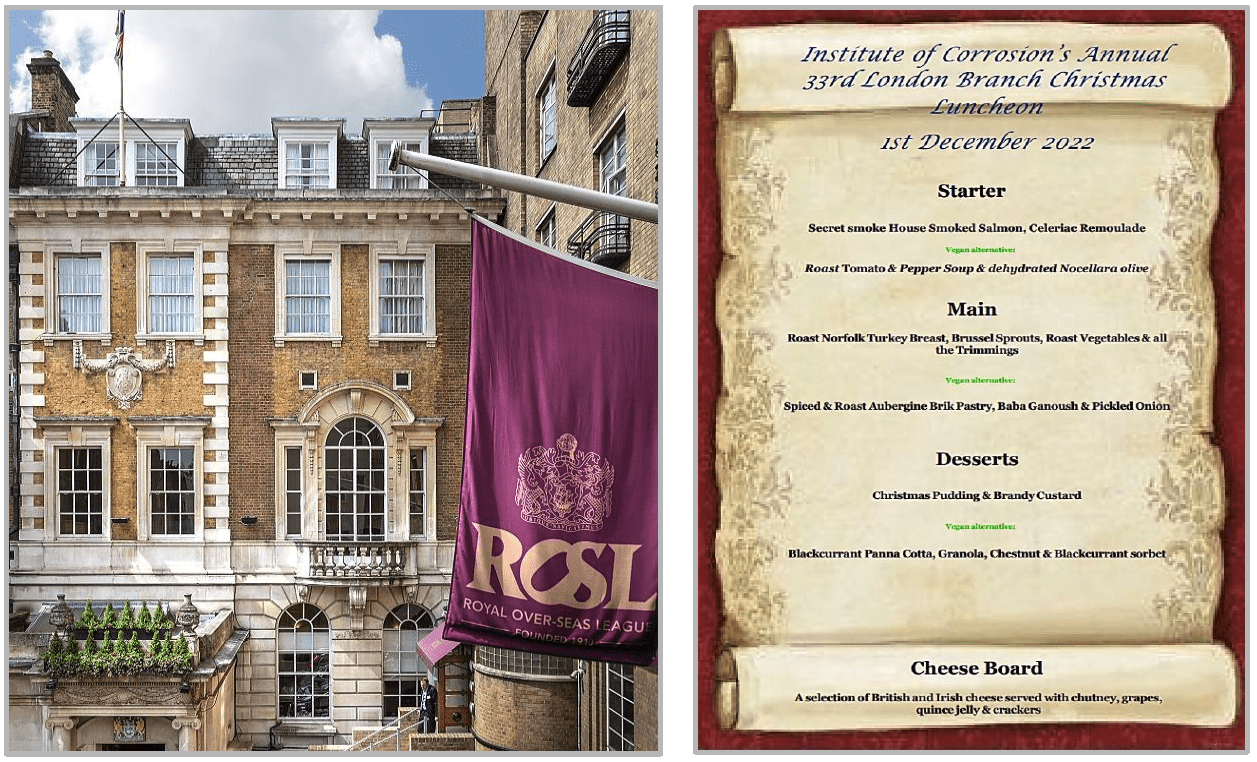
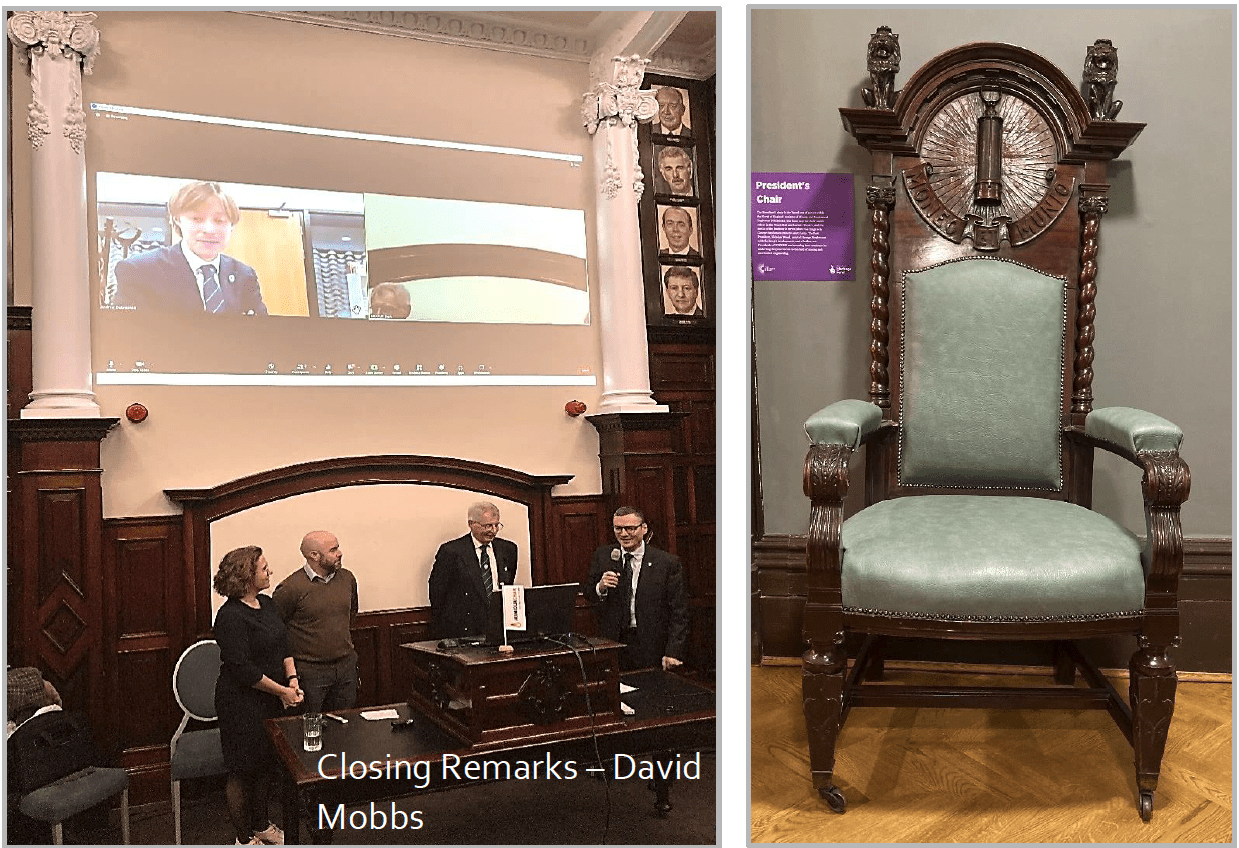
The London Branch Dinner of 1st December, now in its 33rd Year was greatly oversubscribed this time around. Those that were able to attend enjoyed a Fantastic Event in fabulous surroundings and company. Special thanks are due to Steve Barke and Polina Zabelina.
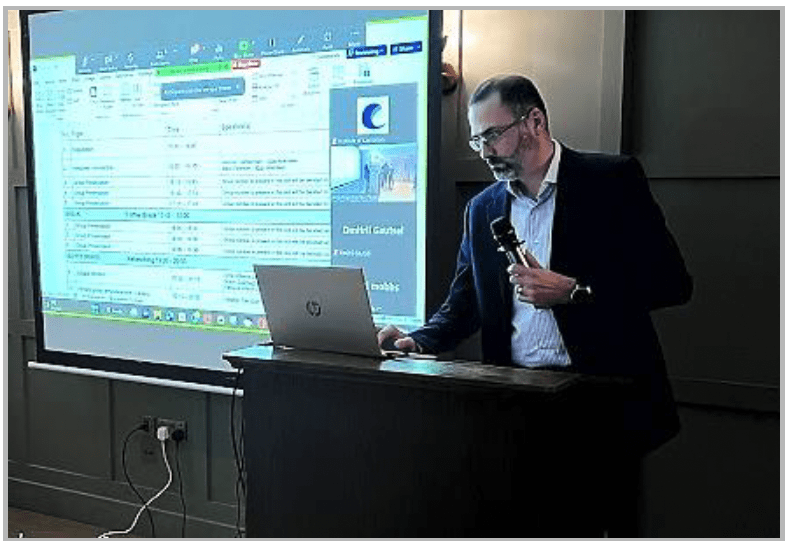
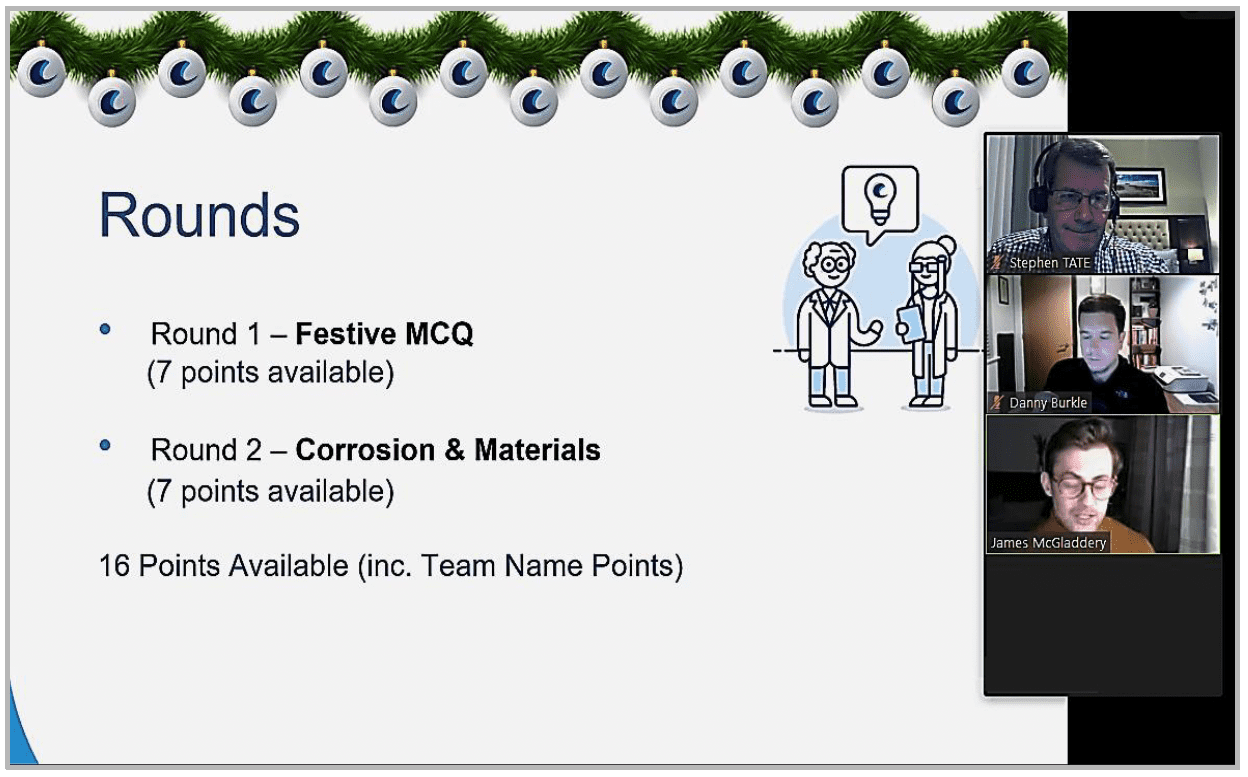
Into the Christmas Spirit were also our Young ICorr Team. A very enjoyable Quiz ably organised by Danny and James followed by the Annual Presidents Talk covering 42yrs in the Energy sector by Stephen. The work of Young ICorr continues to impress us now under its New Chair James McGladdery.
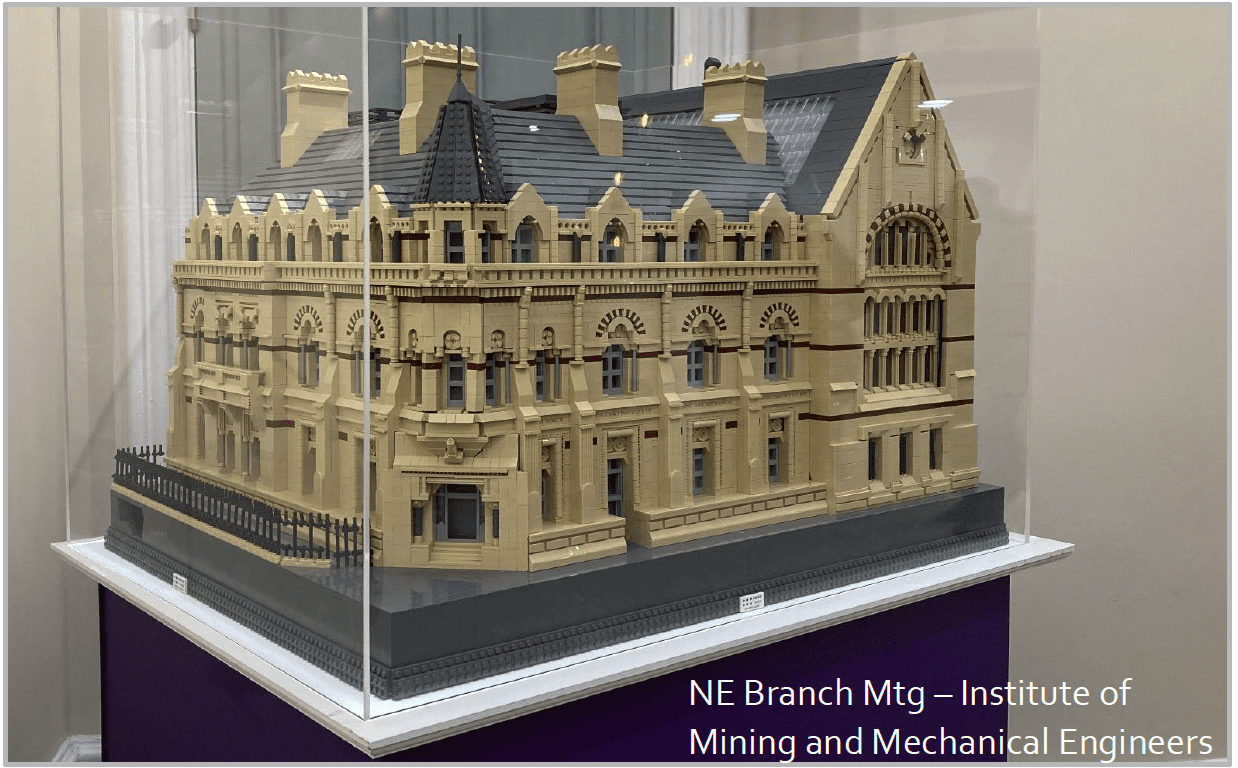
At Newcastle last week, our North-East Branch relaunched with a very well attended Event at the Institute of Mining Building on 15th December which was greatly enjoyed by all. Many thanks are due to the New NE Branch Committee, and we look forward to their June 2023 Conference – “INTEGRITY ENGINEERING FOR A SUSTAINABLE FUTURE”.
The Institute of Corrosion has changed in many ways since our Foundation in 1959. What has not changed is the dedication of its members to the cause and work of ICorr, which is operated almost exclusively operated by Volunteers. We have grown recently to nearly 1600 Members with an active Overseas involvement in Technical Programmes.
We want to pay tribute especially at this time to Bill Hedges our retiring President who has taken us on a very difficult journey over the past 2 years through the Pandemic. Bill will continue to support us through Trustees alongside Chris Williams on our Quality Assurance Systems and Engineering Course Development. We are both very grateful for this. That ICorr is now recovering is due in much part to intense efforts in the reorganisation and expansion of our Training Services across many different areas under the guidance of our CPGB / STGB leads, David Mobbs, the respective ICorr Training Scheme Managers – John Fletcher and Bill Whittaker and the tremendous work by Correx / ICATS under Kevin Harold and Lucia Fullalove with ABRACO.
We must also thank all our HQ Staff and Council, our Team of Trustees and Gareth Hinds and Paul Lambert for their continuing support guiding the Membership and PAC Committees with much hard work behind the scenes. During Covid our ICorr Branch Chairs pulled out all the stops, adapting to our new situation and offering very polished Technical Programmes Online. These were very well attended and greatly appreciated by our Overseas Members. Our Corrosion Science and Engineering Divisions have put on some tremendous Events in 2022 in Edinburgh and York. With special thanks to Julian Wharton and Brenda Peters, alongside our new Chairs in CED – Danny Burkle from Young ICorr and Steve Paterson from the YEP Programme.
As we go forward now, let us remember all that have gone before us and the good Foundations they have laid for us. We are saying goodbye shortly to Brian Goldie who has served us extremely well as our Magazine Editor and taken it to new heights with some great Technical Articles and Features. Many thanks also to Trevor Osbourne, Past President and initiator of our New Headquarters and David Horrocks, who will unfortunately be stepping down at Year end. Last but not least’ Tony Collins our Honorary Treasurer for an amazing 30 years!
Further challenges will arise of course, but provided we continue to work together the Institute can only grow stronger.
ICorr’s relevance to the World has never been stronger as we look to protect our existing Infrastructure and make our new Infrastructure more sustainable.
Please all have a Great, Safe and Enjoyable Holiday, away from your normal duties, wherever you may be with your Family and Friends.
Key Duties – The Editor has to collates and edits all Magazine copy from all ICorr sources, e.g. Division/Branch/Working Group, plus any industry news from our Sustaining members or editorial services.
The Magazine Editor must regularly recruit technical articles to meet the editorial calendar and review them for technical accuracy and edit to fit available space alongside any Advertising or other Notices.
Please apply to: President president@icorr.org with your CV and a covering letter saying why you would like to undertake this partially remunerated position.
The question in this issue features the type of coating needed for the internal protection of an above ground storage tank.
Question:
What type of generic coating is required to protect the inside of a tank containing a liquid with pH ranging from 2-13, and operating at between 65-80 C? PS PS
Answer:
The range of possible conditions covered make this a fairly difficult question to answer. When responding to queries where all the information required has not been provided, the specifier will need to err on the side of caution and generally ends up in the proposal being over specified in an attempt to cover the unknowns, in this case, in the tank. Over-specified linings generally increase cost and complicate application requirements. It is also the case that the more expensive a system is, does not necessarily make it a more suitable solution, as every lining has its own strengths and weaknesses.
The first question should always be what is the existing coating solution? If this is maintenance, what was previously used and was it successful? If it failed, do we know how and why?
Details of the chemicals involved, and their concentrations are required before a specification can be given, including durations in the different states (acidic and alkaline). Is the temperature a genuine continuous service temperature or are there short-term spikes to these maximums, or is the higher a design temperature (if achieved the lining is the least of the operator’s worries) and the lower the actual service temperature? What is the tank substrate, steel or concrete? All these will affect the lining selection.
With the wide range of pH quoted, this could be a neutralisation tank or pit and this type of aggressive service conditions often require a high build reinforced vinyl ester system. These systems are made up of a number of layers, including a trowel applied screed and glass fibre reinforcement mat to create a robust chemical resistant system, but the system cannot be confirmed until full details are known.
This series of articles is intended to highlight industry wide engineering experiences, practical opinions, guidance, and focused advice to practising technologists. The series is written by experts who have made significant contributions to the field of corrosion management. The article in this issue features a contribution from Alan Denney, who discusses weld corrosion problems.
Preferential corrosion of welds – an introduction
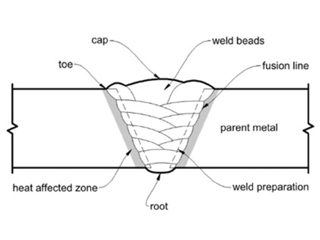
Welding of a metal results in a range of different metallurgical structures in the heat affected zone (HAZ); that part of the parent material adjacent to the weld which has not been melted and fused into the weld itself. Where a filler metal is used in welding (in the form of a welding rod or wire), such as in manual metal arc welding (MMAW), metal inert gas/metal active gas welding (MIG/MAG welding), flux cored arc welding (FCAW) or submerged arc welding (SAW) the weld metal will have an inherently different chemical analysis to the parent metal. This is because the parent metal has a wrought structure, with properties coming from mechanical working and heat treatment whereas the weld metal has a cast structure which achieves its strength mainly due to its additions of alloying elements.
When a weldment is exposed to an electrolyte (a conductive corrosive medium) one part of the weldment may corrode preferentially over another part, resulting in the weld being preferentially attacked. In real life situations the preferential attack may be in another discrete area such as the heat affected zone or even some distinct part of the heat affected zone which has a particular metallurgical structure. Where preferential attack occurs it can be rapid, difficult to detect by conventional monitoring methods, and potentially dangerous.
Galvanic corrosion
The corrosion may be caused or enhanced by galvanic action, galvanic corrosion being the electrochemical process where there is a different natural electrical potential between two metals or two different metallurgical structures, resulting in one part of the weldment being the cathode and another the anode of a corrosion cell. It is the anodic area which corrodes, but the cathodic reaction drives the corrosion process. The potential difference may be relatively small but if the parent metal is the cathode and the weld is the anode then there is a large cathodic area to drive the corrosion reactions and rapid weld metal dissolution can result.
Galvanic corrosion is a clear risk where a weld is made between significantly different metals, such as in welds between carbon-manganese steels and duplex stainless steel when exposed to a corrosive environment, but problems can also occur where there is less obvious difference in materials.
Preferential corrosion of welds in seawater lines
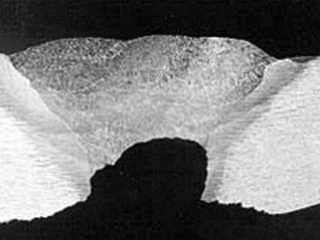
One well-known example of preferential corrosion is internal corrosion of pipelines transporting seawater. These are commonly used for water injection into oil wells. The corrosion occurs within the welds at the pipe joints made of carbon-manganese steel welded using welding consumables which would be considered as ‘matching’ in properties (albeit there are the wrought/cast structural differences mentioned above). One means of avoiding the corrosion is to reduce the oxygen level of the seawater to low levels of parts per million (which is extremely challenging) and/or to control the as-deposited composition of the weld metal to increase its cathodic potential thus minimising galvanic potential differences. This involves careful selection of the welding consumables, based on consideration of composition, but also the results of sophisticated corrosion testing of trial welds. A further solution is to install the line with a continuous internal plastic liner in the pipe, thus preventing seawater contact with the pipe or welds surfaces.
Preferential attack in welds in stainless steel
Stainless steels are cathodic when in combination with other metals such as carbon steels or aluminium alloys and hence unaffected by corrosion when in combination in a corrosive environment, but they are not immune to preferential corrosion effects. One example is when austenitic stainless steels are welded (to themselves), and exposed in a corrosive environment. They may then suffer from what is commonly termed ‘weld decay’. If this occurs in current times it is a consequence of an error in not selecting a modern resistant grade of stainless steel.
Stainless steels owe their corrosion resistance to a layer of chromium oxide a few microns thick which forms a passive protection layer. If breached and in a corrosive environment this layer does not repair itself and localised corrosion will occur. In their original form the austenitic stainless steels (the familiar 300 series of stainless steels) contained carbon up at levels of up to 0.08%. This carbon content and its distribution in the matrix becomes significant in welding the steel when ‘sensitisation’ can occur.
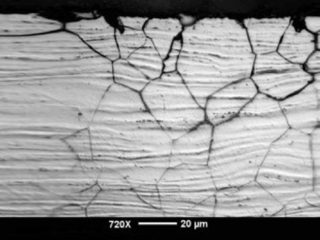
Sensitisation is due to the carbon preferentially combining with the all-important chromium to form chromium carbide which forms along the grain boundaries. This depletes the areas adjacent to the grain boundary of the chromium and this is no longer available to form the passive protection layer. In a corrosive environment, local corrosion cells will form, corrosion occurs around the grains and they can detach from the surface (Figure 3). This situation occurs within a range of temperatures experienced in the heat affected zone of the weldment.
This problem is readily avoided by selecting the low carbon stainless steels denoted by the L designation (e.g. 304L or 316L) which use modern steelmaking techniques to achieve carbon contents of less than 0.03%. There is a further material selection option which is to use the so-called stabilised grades of stainless steel, such as type 347, in which the carbon is ‘stabilised’ (i.e. chemically combined) by the addition of niobium.
In a component already fabricated from the higher carbon (unstabilised) grades it can be prevented by suitable post weld heat treatment.
In conclusion, there are numerous other examples of preferential corrosion of welds and this topic is well covered in web articles and technical papers which the reader can discover by performing online searches.
Welcome to the world of the welding engineer who has to select the welding and heat treatment parameters based on the materials and their application.
Alan Denney, Consultant.
References
1. Corrosion of welded components in marine environments (April 2003). Stuart Bond, TWI Ltd. Prevention and Management of Marine Corrosion, London, 2-3 April 2003. Lloyds List Events. (available on the TWI website https://www.twi-global.com/technical-knowledge/published-papers/)
2. Good welding practices for stainless steel. Presentation by Glenn Allen, TWI Ltd. Available to members on the TWI website.
Figure 1: An example fusion weld showing the heat affected zone.
Figure 2: Preferential weld metal corrosion in carbon steel (copyright TWI Ltd reproduced with permission). Source: Reference 1.
Ten leading paint manufacturers in the Middle East, Akzo Nobel, Altakamol, Asian Paints, Axalta, Caparol Paints, Hempel, Jotun, National Paints, PPG and RAR Holding, have agreed to launch the Middle East Paints & Coatings Association (MEPCA), with the backing and support from the World Coatings Council and
Vincentz Network.
Abukaker Sheibani, Group CEO, Sheibini Group/ Altakamol International commented “At long last, we have a joint platform for our industry in the region. We will collaborate for the benefit of all members and the coatings sector in general. Over time, we strive to grow our membership to include all relevant paints and coatings manufacturers in the Middle East”, and who was elected Chairman at the launch meeting held in Dubai on September 13th . He will be supported by Vice Chairman Martin Rosocha, Managing Director ME & Africa, Caparol Paints, and Treasurer Jasbir Gill, Regional Director Middle East and Africa, Akzo Nobel.
According to the report, the formation of MEPCA, made up of the most senior leaders in each company, was prepared and driven by the World Coatings Council (WCC) and Vincentz Network. President, Tom Bowtell, and global business director coatings, Jürgen Nowak, had held exploratory meetings in February, which were followed by a formal joint meeting with the group of companies in May and the launch meeting in September. Both
Vincentz Network as a company and Tom Bowtell as WCC President have been made Honorary Members of MEPCA.
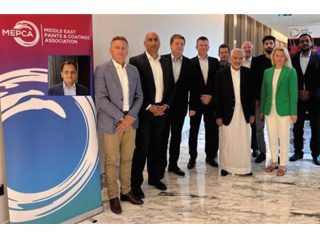
The founding members of the new Middle East Paint and Coatings Association, after signing the launch document in Dubai on September 13. From left to right, Joseph Eapen (inset) (Asian Paints), Franck Derouen (Axalta), Jasbir Gill (Akzo Nobel), Martin Rosocha (Caparol Paints), Laurence Brown (Hempel), Tom Bowtell (World Coatings Council), Abubaker Sheibani (Al Takamol International), Jürgen Nowak (Vincentz Network), Anthony Reaidy (RAR Holding), Olga Kolevatova (PPG), Samer Sayegh (National Paints) and Esben Hersve (Jotun).
We use cookies to optimize our website and our service.
Functional
Always active
The technical storage or access is strictly necessary for the legitimate purpose of enabling the use of a specific service explicitly requested by the subscriber or user, or for the sole purpose of carrying out the transmission of a communication over an electronic communications network.
Preferences
The technical storage or access is necessary for the legitimate purpose of storing preferences that are not requested by the subscriber or user.
Statistics
The technical storage or access that is used exclusively for statistical purposes.The technical storage or access that is used exclusively for anonymous statistical purposes. Without a subpoena, voluntary compliance on the part of your Internet Service Provider, or additional records from a third party, information stored or retrieved for this purpose alone cannot usually be used to identify you.
Marketing
The technical storage or access is required to create user profiles to send advertising, or to track the user on a website or across several websites for similar marketing purposes.