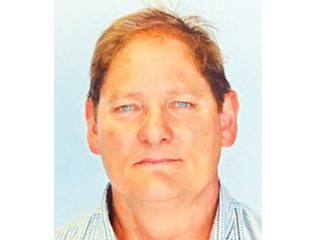
John Scully was born in Fulham (London, United Kingdom) to Anne and Christopher Scully, a nurse and carpenter, respectively. Both were of Irish Catholic descent. They encouraged John to look for opportunities further afield. After school, he joined the army for two years’ National Service, following which he was awarded a scholarship to Downing College, Cambridge. During his six years in Cambridge (1955-1961), he gained a degree in Metallurgy and a Ph.D. in corrosion, the latter mentored by Dr T P Hoar. After defending his PhD, he worked for two years at the Olin Mathieson Corporation in New Haven, Connecticut, USA. He then returned to the UK to join the academic staff of the University of Leeds as a Lecturer in Metallurgy. He spent the remainder of his life based in Leeds.
Coming from a working class background, John was the only person from his school to receive a university education. That he then went on to become a university lecturer and an internationally recognised research scientist was a huge accomplishment.
While at Cambridge, John married Celia (née Shopland), a graduate in Physics from the University of Oxford and longstanding friend. The two met in London while members of the Labour Party in Fulham, which in those days was a working class part of London. Their marriage lasted more than 60 happy years. Celia passed away
in 2019.
John’s early years were spent in Fulham during and after the Second World War. He credits the League of Youth (the youth organisation of the British Labour Party) for providing the major opportunities and encouragement for intellectual growth during his teenage years. As a teenager, he escaped from the influence of the Catholic Church into full-blooded atheism—a world view from which he never wavered. As he approached the end of his school years, he considered spending the next years of his life working for the Labour Party, instead of attending university. An influential older mentor at the League of Youth insisted that a person of John’s talents must attend university. Fortunately, John followed that advice. He remained a member of the Labour Party all his life.
John’s field of expertise in corrosion gained him global recognition. His work on corrosion is familiar to generations of metallurgists and corrosion technologists worldwide, thanks to his exceptional research efforts and supervisory role educating many undergraduate and postgraduate students. His scientific contributions have been captured by numerous technical articles and educational books, including The Fundamentals of Corrosion, The Theory of Stress Corrosion Cracking and Corrosion: Aqueous Processes and Passive Films. His publications are highly cited, influential as educational texts and still used by many practicing corrosion engineers. He was appointed Editor in Chief of Corrosion Science Journal, a leading publication of the field. He held this role successfully and effectively for many years.
In 1989, John Scully was presented with the U.R. Evans Award from the UK Institute of Corrosion – the pinnacle of accolades in corrosion, made for outstanding international achievements in pure or applied corrosion science, and for service to the corrosion community worldwide.
John had a lifelong devotion to literature, which began early in his life and flourished throughout his later years. He also had an avid lifelong interest in theatre and opera. After retiring from academic life in 2001, John turned his talent to writing. He wrote an autobiographical memoir, “Memories from Fulham”, and several novels, which were published privately. The memoir evokes his youth in Fulham and the influences that shaped his world view. Reflecting on his time in Fulham, he said: “you can take a boy out of Fulham but you cannot take Fulham out of a boy”. The book reflects his passionate belief in democracy, social change and the potential of politics to improve people’s lives.
John’s easy manner and love of life endeared him to the whole of his academic family, one of which was myself during the 1970s. He was an exceptional person, kind, considerate, always generous with his time and very willing to respond to anyone who asked. His hospitable nature went a long way as he and Celia entertained his PhD students who came from far afield, to summer garden parties with croquet and Christmas dinners at their beautiful house in Bramhope near Leeds.
He will be truly missed by all who knew him and also by the broader community for his technical knowledge that in some areas was unique.
I would like to thank John’s sons, Christopher and Ralph, who have helped me with some of the details of John’s life described here.
The branch held its AGM on 29th June at Heyrose Golf Club, Knutsford, Cheshire. Representatives from Taziker, Wood Group, Analysis Scientific, Intertek and Mott MacDonald, were in attendance at the AGM, and began the process of planning events for the Autumn programme, and beyond.
At the golf day, despite the odd shower (not a description of anyone playing), the players enjoyed the challenge of Heyrose GC, and some (occasional) fine shots peppered the pins.
Anyone wishing to become involved with the NW Branch or the committee should contact greg.brown@mottmac.com, or brenda.peters@analysis-scientific.co.uk
The branch has arranged a technical talk in December, to be held in the IMME offices in Newcastle, from Ing. Britt Gevaert, Acotec, Belgium, on their Humidur® brand of Passive Fire Protection coatings.
The branch is also organising a two day “Sustainability Conference “in 2023, in collaboration with IMME.
Continuing with the introduction of the committee members of the newly reformed branch announced in the last issue.
Treasurer: Josie Terri Watson, is a Project engineer at Metec Cathodic Protection. She works in the technical department generating engineering documents such as manufacturing drawings and inspection test plans. She will be a great asset to the Committee and demonstrates the wide span in experience to the branch. Josie hopes to raise awareness with the youth and female members, and she will be the Young ICorr.
Events: Matt Fletcher is currently Global Linings Product Manager at International Paint. In addition to his masters degree in Mechanical Engineering from Newcastle University he is Diplom-Ingenieur (FH), SSPC Concrete Coatings Inspector Level 2, and has a Professional Diploma from the Chartered Institute of Marketing.
Patrick Johnson is currently Technical Marketing Manager with Carboline Europe and has extensive experience in the coatings industry R&D, business development, sales management and marketing.
Secretary: Chris Langley has been working in the Coatings industry for 35 Years, and most of his career has been in the energy sector and chemical industry, focussed on corrosion inspection, and project managing fabric maintenance projects. He is currently a Field Consultant with the Safinah-Group, working in the energy and offshore sectors.
Barry Turner has also joined the committee. He is a very experience technical, sales and marketing professional with almost 40 years experience in industrial coatings. He is a recognised expert in pipe coatings and sits as a representative of the UK on ISO standards development groups for pipe line coatings, and is now working as an independent consultant.
The branch committee has been strengthened by some younger ICorr members, and the new committee met over the summer to discuss how best they can meet the needs of members, and developed the following mission statement.
The Branch’s mission is to promote the understanding of corrosion, its impact, and how to mitigate it, in the various industries, through community knowledge sharing and transfer. The Branch also aims to meet the needs, and provide networking opportunities, for local ICorr members and the greater engineering community in London and beyond.
Following on from this, a questionnaire was sent out to the branch members asking for their views on how we can fulfil this statement, and these are being analysed. The branch is also looking for new committee members, so if you are interested, please get in touch.
The first meeting of the 2022/2023 season will be on 13th October at the usual venue, The Lancaster Hall Hotel, Bayswater, when Anthony Setiadi, Wood Thilsted Partners, will present “Corrosion protection considerations for offshore wind foundations”. This presentation will primarily focus on monopile foundations, and the design considerations that would need to be taken onboard.
Details of future branch technical meeting can be found on the diary page of the magazine.
The May meeting of the branch was a hybrid presentation from the Palm Court Hotel by Martin Worth, Director, Plant Integrity Management (PIM), entitled: SECEs: It’s time for a rethink!
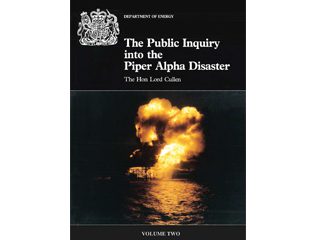
The recent anniversary of the Piper Alpha disaster reminds us all of the need for effective safety controls. Our UK Oil and Gas industry was shaken to its core on 6th July 1988, when 167 people perished in the fire and explosions, and many others were traumatised and injured.
The subsequent Cullen inquiry, which took 2 years to complete, led to the Safety Case Regulations* being established, and the Offshore Industry thereafter moved to a goal setting safety regime, characterised by the introduction of PFEER (Prevention of Fire and Explosion, and emergency Response on Offshore Installations), and DCR (Design and Construction Regulations) – put in place to ensure that duty holders of offshore installations dealt appropriately with the requirements to provide measures to prevent, mitigate and respond to major accidents. * See, HSE website:
The Offshore Installations (Safety Case) Regulations 2005 – SPC/ENF/158 (hse.gov.uk)
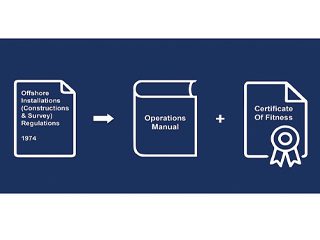
Prior to the Safety Case Regulations there was the 1974 Offshore Installations Regulations, which required that there was an Operations Manual and a Certificate of Fitness. These were prescriptive regulations, and were all about certification. These documents were essentially ‘How to build and operate an offshore platform’ and specified six organisations that you needed to use to certify your platform operation.
Piper Alpha Incident 6 July 1988
Lord Cullen Enquiry Report.
However, during the Cullen enquiry there was the immediate introduction of the “Forthwith Studies”, in advance of, and in preparation for, the Safety Case requirement for each asset by UK Operators. These identified areas requiring priority attention:
• Emergency Systems Review (ESR)
• Smoke and Gas Ingress (SGI)
• Fire Risk Analysis (FRA)
• Evacuation, Escape & Rescue (EER)
This was put together by large teams within the industry, but was second guessing what might be required when the Safety Case regulations came out.
These new Safety Case Regulations involved a formal Safety Assessment process, based on goal setting.
1. Identify Major Accident Hazards (MAH)
2. Identify all Mitigation Measures and Barriers
3. Specify Measures (SECEs and Performance Standard Criteria)
4. Apply the Performance Standards Process (Maintain/Assure/Verify)
Performance standards based around Functionality, Availability, Reliability and Survivability became the norm. Today, these are referred to as the “Safety and Environmental Critical Elements (SECE)”, and according to the regulations, can be either hardware or software based, including management systems.
Setting performance standards for certain types of hardware can be very challenging. For example, a performance standard for a pipe or vessel may state that it shouldn’t leak, but in practice we shouldn’t be waiting for items to leak before we consider them to have failed as SECEs.
Martin debated that any hardware-based system shouldn’t be the principal SECE, and that while many operators today claimed to be carrying out assurance, in practice some were doing little more than performing inspections, incorrectly leaving the assurance elements of the process to the verifier.
Following on from this, Martin suggested that changing the emphasis of SECEs to focus on Management Systems and Integrity Management Systems (IMS) would deliver increased efficiency and reduced costs. As, if it can be demonstrated that the IMS is well formulated and correctly implemented, this will automatically confirm that the elements it covers are inspected, their functionality confirmed, anomalies managed, repairs carried out, backlogs controlled, planning addressed, and their condition endorsed. Thus, removing the need for the specific assurance of individual items.
Martin’s presentation was very thought provoking and again featured significant international attendance with a comprehensive Q&A following the event.
The Presenter
Martin graduated from the University of Liverpool in 1988 with a First-Class Honours degree in Physics, and has had over 30 years of experience within the field of safety management in the oil and gas industry, and was one of PIM’s founding Directors. As an established figure within the oil and gas industry, his breadth and depth of experience has been gained through a variety of technical safety roles within both operator and consultancy environments, specialising in safety management but having particular interests in the linked fields of: risk management, process safety and risk-based decision making.
Upcoming Events
The branch is now looking forward to its AGM planned for September 2022, ahead of the start of the new technical sessions at which a new committee will be elected.
The next event of the 2022-2023 calendar after the Annual
Corrosion Forum in August, will be a joint one with TWI. This will be given by Neil Gallon, Principal Engineer of Rosen, with a talk on “Re-purposing of Pipelines for Energy transition” – Thursday 22nd September 2022 at 6pm. Abstracts of potential papers for its Technical Programme are always welcome, and anyone wishing to join committee should correspond with: Hooman Takhtechian, htakhtechian@oceaneering.com
We use cookies to optimize our website and our service.
Functional
Always active
The technical storage or access is strictly necessary for the legitimate purpose of enabling the use of a specific service explicitly requested by the subscriber or user, or for the sole purpose of carrying out the transmission of a communication over an electronic communications network.
Preferences
The technical storage or access is necessary for the legitimate purpose of storing preferences that are not requested by the subscriber or user.
Statistics
The technical storage or access that is used exclusively for statistical purposes.The technical storage or access that is used exclusively for anonymous statistical purposes. Without a subpoena, voluntary compliance on the part of your Internet Service Provider, or additional records from a third party, information stored or retrieved for this purpose alone cannot usually be used to identify you.
Marketing
The technical storage or access is required to create user profiles to send advertising, or to track the user on a website or across several websites for similar marketing purposes.