Article by Stephen Tate, Immediate Past President of ICorr
Introduction
It is not very often that such a well-documented corrosion repair project becomes available, but this key infrastructure link has made national news due to the extent of repairs required and, of course, its huge cost!
On this same theme – ‘Reuse, Renew, or Replace?’ – Corrosion Management recently published several infrastructure-related articles presented to the Parliamentary and Science Committee, refer to https://www.icorr.org/wp-content/uploads/2025/03/CORROSION_MANAGEMENT_Issue183_48-pgs_LowRes.pdf
Photo 1:The North Bridge in Edinburgh c. 1905.
.Background
It is one of Edinburgh’s most historically significant structures, a key transport link connecting the Old and New Towns and a vantage point to take in views of the capital’s iconic skyline – but for more than seven years now the North Bridge has been something of an eyesore, surrounded in scaffolding.
The North Bridge was originally constructed by Sir William Arrol between 1894 and 1897 after he completed both the Forth Bridge and Tower Bridge in London.
Since 2018 bridge has been concealed by over 300km of scaffolding tubes and partially closed to traffic and pedestrians after the Victorian structure was found to require significant corrosion-related repairs to ensure its continued use for future generations.
A repair project was initiated as a response to cast iron, spalled concrete and masonry falling onto the railway lines and the street below.
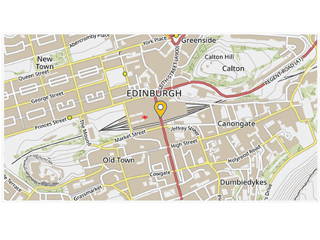
Map: Location of North Bridge by Edinburgh Waverley Railway Station.
Structural Investigations
The bridge has three spans, each approximately 53 metres, with each span comprising six steel main arch girders with a reinforced concrete deck, masonry piers and abutments, and a decorative cast iron façade.
Photo 2: After Removal of Cast Iron Non-Structural Fascia.
Main contractor Balfour Beatty worked with Atkins Realis, who created a dynamic 3D model of the structure to assist all work scopes.
It became clear as the work progressed that more repairs and work were required. The paint on the bridge designed and constructed by Sir William Arrol, who created Forth Bridge and Tower Bridge, has been grit blasted and repainted – a job which has not been done since 1933, except for repainting of the decorative facings in the early 1990s.
Photo 3: Steel Under-Structure with Areas of Localised Corrosion Requiring Repair.
Investigations identified lots of Bimetallic Corrosion, Corrosion Traps between components, Water ingress and general Inadequate corrosion protection.
The huge complexity of bringing a Victorian structure up to 21st Century standards, without compromising its historic integrity, has proven challenging, technically and logistically.
Photo 4: Examples of Steelwork Repairs.
Costs
The work was supposed to take around two years and cost an estimated £22m, but as engineers took a closer look, often at sections not properly inspected in over 100 years, it became clear the job would be even more of a mammoth task than was first envisaged.
It is now expected to be finally completed in 2026 – six years behind schedule – and with an expected cost of £86m, nearly four times the initial estimate, but now magnificently restored!
Photo 5: Localised Reinforced Concrete Inspection/Repairs Including CP Installation and Structural Health Monitoring System – Reinforced Concrete Supports.
Photo 6: Cathodic Protection Junction Box and Site Connections.
Repairs Completed
There are 6,300 steel sections under the bridge, many of which were corroded, but now behind the extensive scaffolding have been repaired or replaced, approximately 2,000 components in total at a cost of £10m, due to complex logistics.
The wide scope of work has included:
•Contained wet blast/removal of existing coating – bituminous asbestos paint with arsenic, chromium and lead contaminants by licensed contractor. Asbestos was added to enhance durability, heat resistance, and fire resistance. The risks associated with asbestos exposure/removal are well-documented.
•Profile grit blasting and repainting of all structural steelwork, last renovated in 1933, 150 sqm to ST3 standard with 7-stage coating.
•Repairing and refurbishing structural steelwork and cast-iron springer bearings.
•Refurbishing historic cast iron bridge façades, including the redesign of façade fixings, allowing for sectional movement and easier future repairs.
• Grit blasting, repair, sealing and repainting of parapets.
•Repairing the bridge’s concrete deck and installing cathodic protection and structural health monitoring systems.
o 6,500 Galvashield XP2 Anodes – subcontractor (Freyssinet)
o 40,778 Continuity Wires and Checks
• Repair and improve pavements and drainage.
• New waterproof membrane on bridge deck.
• New lighting and road surface.
•Remove all redundant utility pipes and ducts and rationalise those services that remain.
•Repair and repoint masonry in areas most susceptible to deterioration.
•Restore and repair the King’s Own Scottish Borderers War Memorial.
•Installing permanent platforms to improve access for future inspection and minor maintenance.
Photo 7: Process of Façade Reassembly.
Photo 7: Process of Façade Reassembly.
Photo 8: Reinstated North Bridge Façade and Final Touches.
Very complex scaffolding was required. Traditional scaffolding that relies on ground support could not be used and due to the interface with Edinburgh’s key railway station (Waverley) and the low capacity of the roof, scaffolding had to be suspended from the bridge itself. This required multiple stages of design and checks.
Photo 9: Steel Under-Structure After Repair / Recoating.
Reopening Plans
Major work is expected to be completed by spring 2026 with full completion in summer 2026.
Summary
This was a reactive project due to ongoing safety concerns and dropped objects from the decaying bridge that was mostly inaccessible for regular inspection, despite being directly above a busy main railway station.
A range of corrosion mechanisms was identified and eliminated by different corrosion prevention techniques.
A key part of the renovation was providing permanent access for future inspection by bridge engineers.
The need for removal of original toxic coatings complicated the repair and recoating processes.
Novel solutions, including widespread use of galvanic anodes, were incorporated into the refurbishment of reinforced concrete components.
An advanced Structural Health Monitoring System has been now been installed.
A critical piece of infrastructure has now been rescued for future generations to enjoy.
12.Thesis Jan.2024 – A Critical Review of Cathodic Protection as a Repair Strategy for the Edinburgh North Bridge Refurbishment by Zaynah Khalil, MEng Student at University of Glasgow and Graduate Civil Engineer at Balfour Beatty.
This complex project will be further presented at the forthcoming Aberdeen Branch 2025 Corrosion Awareness Day: An Introduction to Corrosion and Cathodic Protection at the Palm Court Hotel, Aberdeen on 26th August 2025.
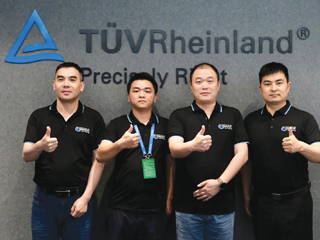
On 4th June 2025, TÜV Rheinland, Shanghai, successfully hosted multiple sessions of ICorr PCI (Protective Coating Inspector) Level 2 and Level 3 training courses, providing Chinese professionals with advanced knowledge in coating and corrosion protection.
These internationally recognised certification programs equipped participants with critical skills to excel in industries such as oil & gas, marine and infrastructure.
The intensive training covered key topics including coating inspection standards, failure analysis, and quality control, enabling attendees to enhance their technical expertise and career prospects.
Two participants, who were voted as outstanding candidates in 2025 H1, shared their experiences.
•“The trainer combined theory with real-world case studies, making complex concepts easy to understand. Earning this Level 3 certification has significantly boosted my credibility in the industry. Beyond the course content, TÜV Rheinland’s training organisation was impeccable—from venue facility to accommodation arrangement. Their team provided seamless support throughout the program” — Qianwei Zhu, Technical Service Supervisor, Jotun, China.
•“L2 course gave me a solid foundation. The hands-on practice and detailed feedback from instructors were invaluable. I now feel confident to take on more responsibilities at work.” — Lu Taijin, Quality Assurance Department Manager, Guangxi Jingdian Steel Structure Co., Ltd.
Contact
TÜV Rheinland, Shanghai offers a wide range of ICorr approved training courses and maybe contacted at:
The Institute of Corrosion (ICorr) is steadily advancing preparations to establish its China Branch, with several crucial administrative and engagement steps now complete.
Key milestones achieved include engagement with regulatory authorities, completion of the Hague Apostille and document notarisation, and submission of the Application to Establish a Foreign NGO Representative Office to the official bureau.
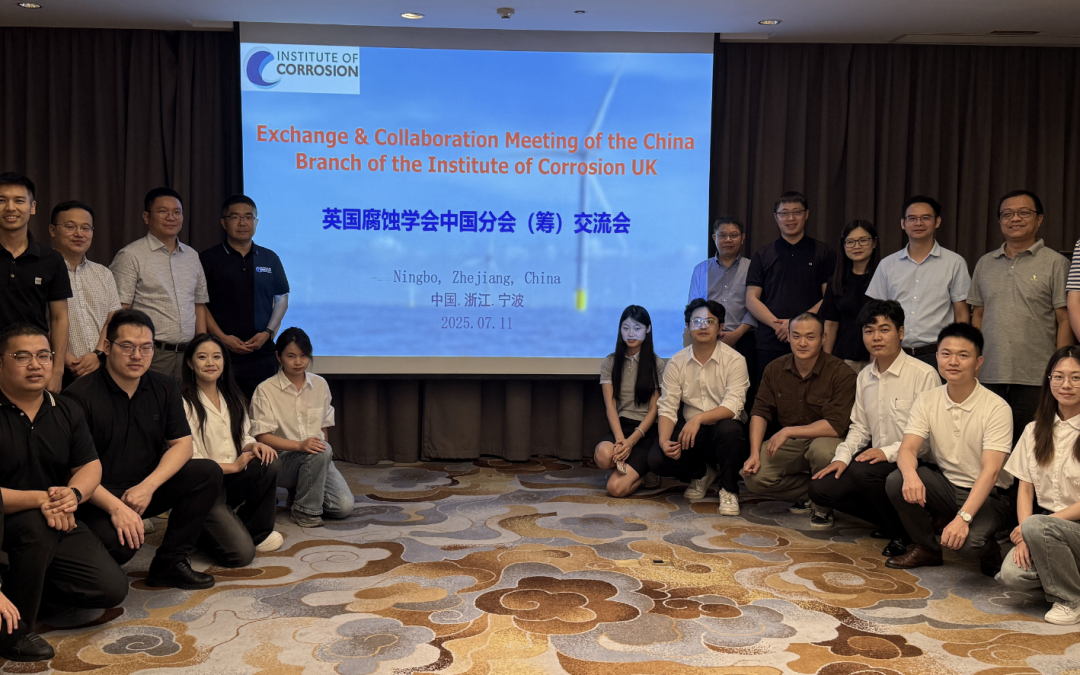
As part of its outreach and networking efforts, ICorr hosted a one-day In-Person Exchange and Collaboration Meeting on 11th July 2025 in Ningbo, Zhejiang Province. The event brought together dozens of academics and industry experts to share the latest developments in corrosion research and to explore practical strategies for how the ICorr China Branch can best serve and support the corrosion community in China.
Exchange and Collaboration Meeting of ICorr China Branch Held on 11th July in Ningbo, China
ICorr President Dr. Yunnan Gao attended the event in person, delivering a keynote presentation introducing ICorr and outlining his vision and expectations for the China Branch. Discussions covered not only the organisational framework for the new branch but also opportunities to foster international collaboration, promote best practices, and support innovation in corrosion prevention and control.
Under the lead initiator, Dr Yuyou Wu, FICorr, individuals from both corrosion academia and industry have been identified from across China and inducted to develop the first ICorr China Branch Committee, ensuring broad regional representation. The new branch to be headquartered in Ningbo, Zhejiang Province aims to strengthen collaboration and support the corrosion community across China.
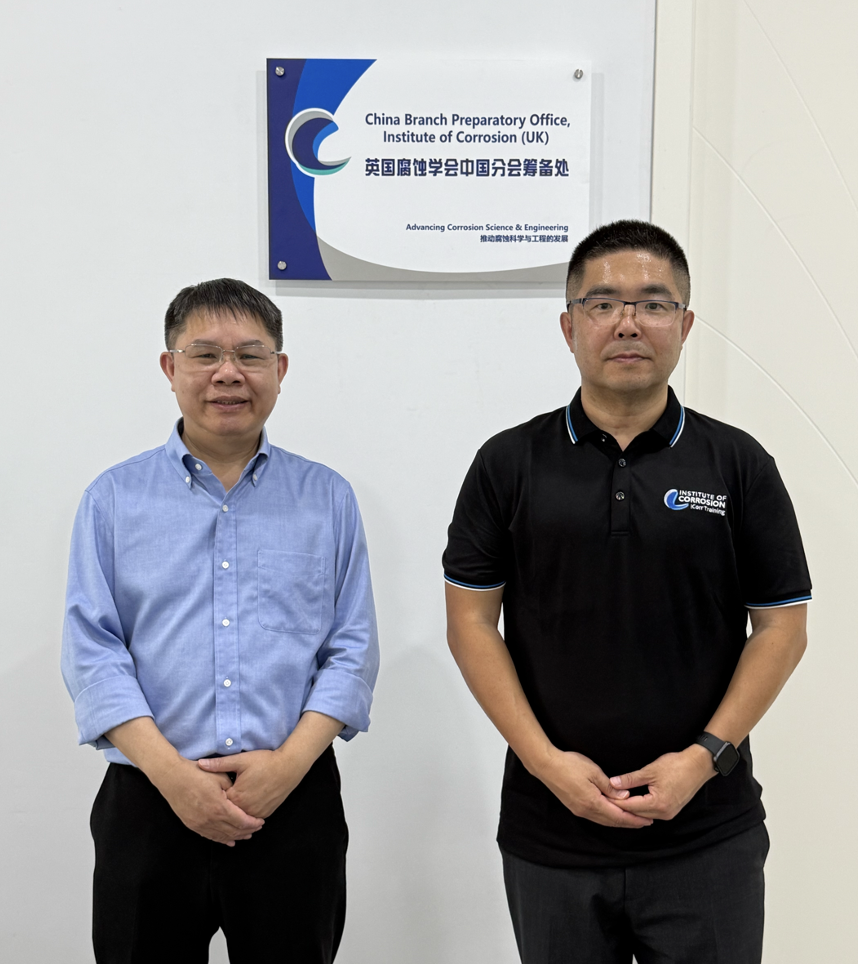
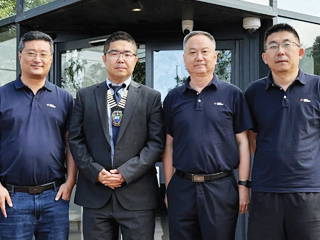
ICorr President, Dr Yunnan Gao and the ICorr UK China Branch Initiator, Dr Yuyou Wu, FICorr, in front of the Preparatory Office of ICorr China Branch, Located in Ningbo, Zhejiang.
ICorr President Dr Yunnan Gao and Some Onboard ICorr Branch Committee Members
The establishment of the ICorr China Branch represents a significant step forward in connecting the global corrosion community with China’s vibrant network of researchers, engineers, and industry professionals, paving the way for greater knowledge exchange and collaborative progress. Legal processes are still underway, but it is hoped to hold a local branch Annual General Meeting in the near future.
Dr Prafull Sharma, Chief Technology Officer, Corrosion RADAR
Dr Prafull Sharma, our ICorr Midlands Chair, currently serves as Chief Technology Officer of UK-based CorrosionRADAR Ltd., which is bringing innovative corrosion monitoring technologies using the Industrial Internet of Things (IOT). CorrosionRADAR invented a predictive CUI monitoring system, which is gaining global traction, addressing a big issue for the industry. Dr. Prafull Sharma brings vast industrial experience, especially in the digitalisation of corrosion management, on which there are several inventions to his credit. Dr. Prafull did his PhD at Cranfield University, UK. He is also credited with over fifteen international patents and innovations.
For decades, corrosion has been one of the most significant risks to asset integrity. Across the globe, maintenance teams inspect as high a percentage as they can with the available resources. But many assets remain unchecked, leaving the potential for nasty (and costly) consequences.
Therefore, it’s no surprise that businesses have become interested in entering the era of Industry 4.0 while harnessing the potential of Industrial Internet of Things (IoT) and advancing digitalisation to control the global corrosion problem. Indeed, leading organisations are now embedding IOT methods into their processes.
Could developments in new sensing methods, device connectivity, and enhanced predictive data insights pave the way for a smarter approach to mitigating or optimising expensive corrosion and inspection management programs?
The Global Corrosion Challenge
The most recent AMPP (NACE) Impact Study of 2016 highlighted what the industry is up against. The annual global cost of corrosion across all sectors is 2.5 trillion US dollars (Impact Study) . Meanwhile, corrosion under insulation (CUI) is estimated to be responsible for 60%of pipeline failures (Swift, 2019).
As assets age and portfolios widen, relying on traditional manual inspection processes can feel overwhelming. With numerous surfaces to inspect for signs of corrosion, asset deterioration can develop undetected.
What’s more, many assets are hard to reach without addressing additional safety issues and installing extensive scaffolding. And that’s before you know whether there’s something to remediate.
Asset inspection remains crucial, though. The cost of downtime due to failure or the need to make significant repairs can be eye-watering.
The industry has been stuck in this scenario for too long. However, digitalisation and industrial advances in IOT may provide an answer.
What is Industry 4.0?
Industry 4.0 represents the fourth industrial revolution, characterised by the integration of digital technologies, automation, and data-driven decision-making in manufacturing and industrial processes. It leverages advancements such as the Industrial Internet of Things (IOT), artificial intelligence (AI), big data analytics, and cloud computing to create smarter, more connected systems. In the context of predictive corrosion management, Industry 4.0 enables continuous monitoring of assets, predictive analytics for early detection of corrosion risks, and automated responses to mitigate failures, ultimately enhancing efficiency, safety, and cost savings in industries such as oil, gas, petrochemical, chemical processing, and infrastructure maintenance. In the context of predictive corrosion management, Industry 4.0 enables continuous data collection from sensors, advanced analytics to predict corrosion trends, and automated maintenance strategies—helping industries proactively manage asset integrity, reduce downtime, and extend equipment lifespan.
What is the Industrial Internet of Things (IoT)?
The Industrial Internet of Things (IoT) is a key pillar of Industry 4.0. It refers to the network of connected sensors, devices, and systems that collect, transmit, and analyse industrial data continuously. IOT enables smarter decision-making by integrating operational technology (OT) with information technology (IT), allowing industries to optimise processes, enhance efficiency, and improve asset reliability. In the context of predictive corrosion management, IOT plays a crucial role in monitoring environmental and material conditions, predicting corrosion rates, and enabling proactive maintenance. By leveraging IOT, industries can shift from reactive to predictive strategies, minimising failures and optimising asset performance.
Key Components of IOT in Predictive Corrosion Management for the Energy Industry
In energy industries such as oil, gas, and petrochemicals, IoT-driven predictive corrosion management is essential for maintaining asset integrity, minimising downtime, and ensuring operational safety. Below are the key components of IoT, along with best practices tailored to the energy sector.
Types of Sensors Used in Industries
1. Smart Sensors
Smart sensors are the foundation of IoT-driven predictive corrosion management, enabling continuous monitoring of asset integrity. These sensors measure critical parameters that influence corrosion, providing actionable insights for early detection and mitigation.
Examples of Smart Sensors in Corrosion Management
• Cathodic Protection (CP) Sensors: Monitor CP system performance by measuring current, voltage, and potential shifts in buried or submerged structures.
• Coating Integrity Sensors: Detect coating degradation, disbondment, or permeability issues that could accelerate corrosion.
• Corrosion Rate Sensors: Measure corrosion rates using electrochemical techniques such as linear polarisation resistance (LPR) or electrical resistance (ER).
• Corrosion Under Insulation Risk Monitors: Use of wire sensors to monitor and locate high-risk locations of CUI.
• Environmental Sensors: Measure predictive parameters, such as humidity, temperature, pH, chloride, and oxygen levels, to assess corrosion risk factors.
•Wall Thickness Monitors: These devices utilise ultrasonic or electromagnetic techniques to detect metal loss in pipelines, tanks, and other structural components.
The following are some examples of best practices when deploying sensors:
•Deploy multi-sensor arrays at high-risk locations, such as weld joints, bends, and submerged structures.
•Integrate sensor data with predictive analytics to detect early warning signs and optimise maintenance schedules.
•Use wireless and low-power sensors for remote and hard-to-access assets.
By leveraging a combination of these smart sensors, industries can gain a comprehensive understanding of corrosion dynamics and transition from reactive maintenance to predictive asset management.
2. Edge Computing
Edge devices process data locally near the sensor, reducing latency and enabling continuous decision-making.
•Apply AI-based edge analytics to filter noise and detect meaningful corrosion trends.
•Implement decentralised processing to reduce reliance on cloud connectivity in offshore and remote sites.
•Utilise ruggedised edge computing devices that can withstand extreme environmental conditions.
3. Connectivity and Communication Protocols
Reliable data transmission is crucial for IOT performance, especially in harsh environments such as offshore platforms and refineries.
Common Communication Protocols
• 5G and Private LTE Networks: Enable high-speed, low-latency communication for continuous monitoring.
• Choose communication protocols based on environmental constraints (e.g., use satellite-based IoT for offshore rigs).
• Ensure cybersecurity protocols such as VPNs and encryption for secure data transmission.
• Implement redundant communication pathways to prevent data loss in case of network failures.
• Industrial Ethernet and Modbus TCP/IP: Used in SCADA systems for secure and stable data transmission.
• LoRaWAN and NB-IoT: Ideal for long-range, low-power transmission in remote pipeline monitoring.
4. Cloud Computing and Data Storages
Cloud platforms aggregate and analyse data from multiple assets, providing a holistic view of corrosion risks across operations.
• Ensure compliance with industry standards (e.g., ISO 27001, NIST) for data security and regulatory requirements.
• Implement AI and Machine Learning (ML) models in the cloud to refine predictive maintenance strategies.
• Use cloud-based asset management platforms to centralise corrosion monitoring across multiple facilities.
5. Artificial Intelligence and Machine Learning (AI/ML)
AI-driven analytics enhance predictive capabilities by identifying patterns of corrosion and forecasting potential failure risks.
• Deploy AI-driven root cause analysis to identify and mitigate corrosion sources before they lead to failures.
• Train ML models using historical and continuous corrosion data to improve prediction accuracy.
• Use AI-powered digital twins to simulate corrosion scenarios and optimise maintenance planning.
6. Cybersecurity and Data Protection
With increased connectivity, securing IOT infrastructure against cyber threats is critical.
•Implement end-to-end encryption for sensor-to-cloud data transmission.
•Regularly conduct vulnerability assessments and apply firmware updates to IOT devices.
• Use multi-factor authentication and access controls for critical systems.
By integrating these IOT components effectively, oil, gas and petrochemical companies can transition from reactive corrosion management to predictive strategies, reducing unplanned downtime, improving asset longevity, and ensuring operational safety.
IOT Presents New Opportunities for Corrosion Management
Wherever you look, IOT appears to be the future. Smart cities, smart health, and digitalised education are a few examples. It’s the future for industry too. And for some sectors, it’s rapidly becoming the present:
•Advanced CUI monitoring methods using IOT also reduce the environmental impact of many assets. Catching problems early reduces the risk of deadly substances such as Methane leaking into the local environment (Environmental Defence Fund) , so digitalisation supports ESG strategies as well.
•Data-informed decision-making improves, and the risk of unexpected damage from corrosion significantly falls.
•Industry 4.0 has evolved IOT quickly, allowing remote connections to gather data for decision-making. This technological advancement is transforming how industries operate, providing benefits that many have yet to experience.
•Remote monitoring also improves personnel safety. With less need for routine inspections, maintenance teams can rely on data-based decisions to access locations where the data suggests a corrosion risk. Therefore, time in the field is smarter and safer.
•So, IOT enables wireless connectivity with devices attached to industrial assets. Devices that can continuously collect data 24/7 without the need for physical inspection. Using a central software platform to collate every piece of insight, assets can be remotely monitored from anywhere in the world.
•The power of this development is extensive. Organisations can utilise the technology to reach all their assets, regardless of location.
•While it’s hard to deny that new technology is an investment, it’s balanced against the typically high physical inspection and repair costs when people are restricted to a manual process. Given the unpredictability of CUI, you’re far more likely to encounter more significant damage when you lack access to remote monitoring.
IOT-Based Predictive Corrosion Management in Action
Several technologies have developed to support remote monitoring and control of asset corrosion. Some are in their infancy, while large organisations use others daily. Many relate to internal corrosion as well as recent advancements in external corrosion, such as corrosion under insulation.
Ultrasonic Wall Thickness: Ultrasonic Testing (UT) thickness monitors are a key IOT-enabled tool for non-intrusive corrosion monitoring. These sensors utilise high-frequency sound waves to measure the remaining wall thickness of pipelines, vessels, and structural components, detecting metal loss caused by internal corrosion. Traditional UT inspections require manual measurements, but IOT-based UT monitors provide continuousdata without the need for shutdowns or physical access. By integrating with wireless networks and cloud platforms, these systems allow remote monitoring, automated trend analysis, and predictive maintenance planning — reducing inspection costs and minimising the risk of unexpected failures.
External Corrosion – Corrosion Under Insulation (CUI) Risk Monitoring
CUI is unpredictable and ‘hidden’, which is a huge concern for the oil, gas, and petrochemical industries.
• Damage doesn’t always develop near a damaged section of insulation. Instead, water from rain or humidity can ingress further, making it challenging to predict where corrosion might take hold.
• Many plants operate in locations that experience extreme heat or cold, making insulation necessary to maintain the temperature of liquids passing through pipes and tanks. Yet, insulation can trap moisture.
• Physical inspections require the removal of insulation and the installation of significant scaffolding to gain access, limiting what maintenance teams can see.
• The advance of IOT technology has now enabled oil, gas and petrochemical plants to install remote sensors that report early signs of asset deterioration due to CUI. Wirelessly connected, these smart sensors are embedded along the insulated structure and transmit data to an analytics dashboard. For example, they can monitor temperature gradients, humidity, and moisture ingress under insulation.
• With in-depth data insight from a wide range of assets—even those hard to reach—maintenance teams can make informed and prioritised decisions about where remedial work should be carried out. In this way, they mitigate problems before the damage spreads further and focus their physical activity on the areas at highest risk.
Cathodic Protection Remote Monitoring
Cathodic Protection (CP) remote monitoring is a crucial IOT application for managing external corrosion in buried pipelines, offshore structures, and storage tanks. CP systems utilise impressed current or sacrificial anodes to protect metal surfaces from corrosion; however, their effectiveness depends on maintaining proper voltage and current levels. IOT-enabled CP monitoring systems continuously track key parameters such as pipe-to-soil potential, current flow, and anode performance, transmitting continuous data to centralised platforms. This eliminates the need for manual site visits, ensures compliance with corrosion protection standards, and enables early detection of CP failures, thereby reducing the risk of costly asset degradation.
The Era of Predictive Monitoring
Remote corrosion monitoring, enabled by the advancement of IOT, presents a further benefit to managing asset integrity: prediction.
•Being able to monitor and predict where corrosion is likely to occur presents asset-intensive organisations with a significant opportunity to better control this primary operational risk. Thanks to IOT, embracing the capability of new industry technology will reduce maintenance costs and mitigate potential failures.
•By installing IOT remote monitoring systems with environmental sensors across your assets, you collect a huge amount of relevant and timely data. Using predictive analytics to spot patterns in the data, you can highlight risk areas before visible damage occurs.
•For example, CorrosionRADAR’s Clarity Dashboard provides data-driven insights into historical data, environmental factors, moisture, and corrosivity rate to predict corrosion progression. As data continues to populate the dashboard, the picture only becomes more apparent.
•Maintenance teams can then use risk maps and actionable insights to prioritise areas for physical inspection and repair. This optimises resource allocation and ensures the effectiveness of their corrosion management process.
Why Digital Twins Help in Corrosion Management?
As technology advances further, digital twins have become helpful in detecting and managing corrosion.
•By visualising your assets virtually, even when they’re out of easy reach, you can ensure optimum safety and maximise the service life of each piece of equipment. Digital twins can also help with compliance with safety and regulatory requirements, enhancing your reputation as a responsible operator.
•Digital twins are virtual replicas of physical assets, processes, or systems that mirror their real-world counterparts. Remote sensors, simulations, and machine learning can help create an interactive ‘twin’ that enhances monitoring and enables deeper analysis. It is worth noting that there are several definitions and connotations of Digital Twins in the industry, and the above is just one of them.
•Digital twins can enable detection at the earliest opportunity, making monitoring and maintenance more proactive. Analysing data from various sources, this holistic approach provides the most data-informed decision-making currently possible.
IOT is Shaping Future Corrosion Management
•IOT is rapidly paving the way for more effective corrosion control—a challenge that many industries have struggled to overcome for decades. Being able to remotely monitor your assets, wherever they are in the world, offers levels of insight many would welcome.
•More comprehensive data insight, available without physically inspecting assets, is transforming maintenance programmes for organisations worldwide. Not only does it help spot (and predict) corrosion earlier, but such insight also reduces maintenance costs and enhances safety.
•The moment you install remote IOT monitors to help control corrosion, your risk levels reduce as you collect widespread data. And this is only the beginning. As technology advances further, there’s no end to how it can help mitigate the incredibly costly risk of corrosion.
References
[1] NACE International, 2016. IMPACT breaks new ground in the study of corrosion management.Materials Performance, [online] Association for Materials Protection and Performance. Available at: https://impact.nace.org/documents/MP0316-Impact.pdf
[2] NACE International, 2014. Corrosion under insulation on industrial piping – a holistic approach to insulation system design. In: CORROSION 2014 Conference & Expo, 9–13 March, San Antonio, Texas. NACE International. Available at: https://www.onepetro.org/conference-paper/NACE-2014-4084
[3]Environmental Defence Fund, n.d. Methane: A crucial opportunity in the climate fight. [online] EDF. Available at: https://www.edf.org/climate/methane-crucial-opportunity-climate-fight
As part of our growing international collaboration efforts, The Institute of Corrosion (ICorr) President, Dr Yunnan Gao, was pleased to host a senior delegation from the Chinese Society for Corrosion and Protection (CSCP), led by their Vice President, Mr Bing Han, during a recent visit to the UK in June 2025. The visit marks another step forward in the strategic partnership between ICorr and CSCP.
This engagement follows the Memorandum of Understanding (MoU) signed between ICorr and CSCP in October 2024, which formalised our shared commitment to fostering innovation, technical exchange, and best practices in corrosion protection on a global scale. During the visit, the delegation had the opportunity to tour two of the UK’s forward-thinking technology companies:
Inductosense is a Bristol-based company developing compact ultrasonic sensors that provide non-intrusive, repeatable measurements for monitoring internal corrosion and erosion. Their technology is enabling industries to move toward safer, more cost-effective, and data-driven integrity management. Inductosense is a new ICorr sustaining company member.
QLM Technology Ltd is a UK photonics company pioneering LiDAR-based methane detection. Their cutting-edge camera systems can detect, locate, and quantify methane emissions, enabling faster mitigation of leaks — critical for both safety and environmental protection.
ICorr President, Dr Yunnan Gao, commented:
“It was a pleasure to host our colleagues from CSCP, led by the Vice President, Bin Han, and share some of the UK’s most innovative advancements in corrosion monitoring and environmental sensing. Our collaboration is rooted in shared values and mutual expertise, and this visit sets a strong foundation for what lies ahead.”
Looking ahead, we are excited to announce that ICorr and CSCP will co-host the 1st UK-China Corrosion Summit in Manchester on 3rd-4th September 2025. This landmark event will bring together researchers and industry leaders from both countries to discuss new challenges and solutions in corrosion science, technology, and sustainability.
Stay tuned for further updates on the Summit and other international initiatives. Together, ICorr and CSCP are helping to drive the global corrosion community forward.
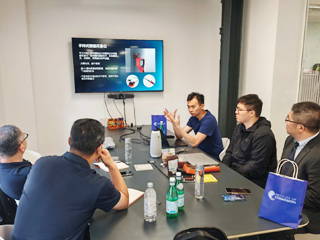
Photo: CTO of Inductosense, Dr Bamboo Zhong, Giving a Presentation to the CSCP Delegation.
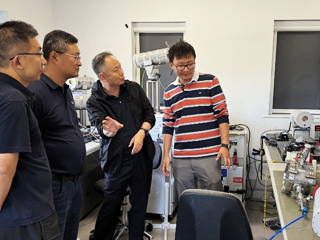
Photo: CTO of QLM, Dr Xiao Ai, Demonstrating Their Product to the CSCP Delegation in the Laboratory.
We use cookies to optimize our website and our service.
Functional
Always active
The technical storage or access is strictly necessary for the legitimate purpose of enabling the use of a specific service explicitly requested by the subscriber or user, or for the sole purpose of carrying out the transmission of a communication over an electronic communications network.
Preferences
The technical storage or access is necessary for the legitimate purpose of storing preferences that are not requested by the subscriber or user.
Statistics
The technical storage or access that is used exclusively for statistical purposes.The technical storage or access that is used exclusively for anonymous statistical purposes. Without a subpoena, voluntary compliance on the part of your Internet Service Provider, or additional records from a third party, information stored or retrieved for this purpose alone cannot usually be used to identify you.
Marketing
The technical storage or access is required to create user profiles to send advertising, or to track the user on a website or across several websites for similar marketing purposes.






 Map: Location of North Bridge by Edinburgh Waverley Railway Station.
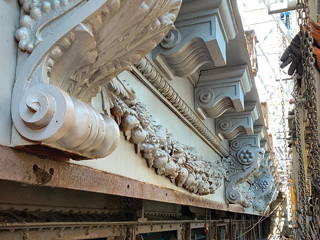 Photo 2: After Removal of Cast Iron Non-Structural Fascia.
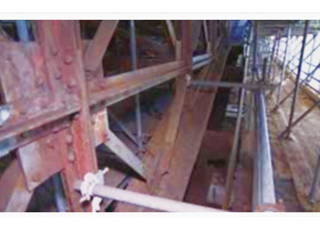 Photo 3: Steel Under-Structure with Areas of Localised Corrosion Requiring Repair.
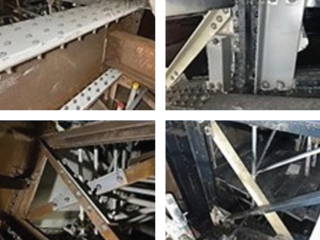 Photo 4: Examples of Steelwork Repairs.
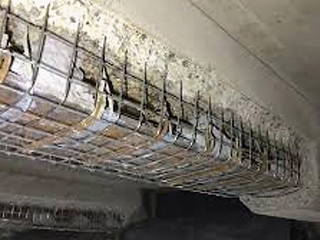 Photo 5: Localised Reinforced Concrete Inspection/Repairs Including CP Installation and Structural Health Monitoring System – Reinforced Concrete Supports.
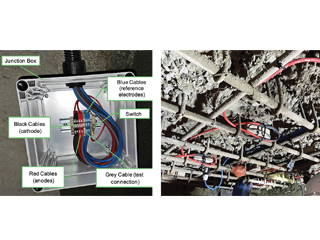 Photo 6: Cathodic Protection Junction Box and Site Connections.
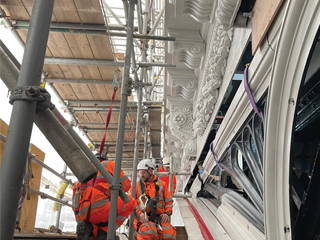 Photo 7: Process of Façade Reassembly.
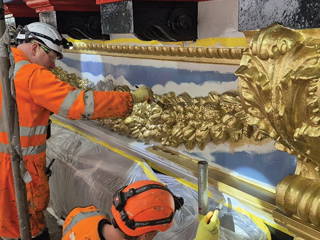 Photo 7: Process of Façade Reassembly.
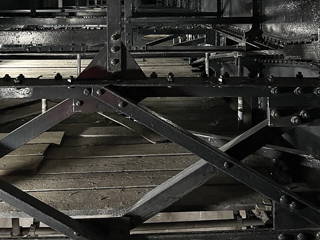 Photo 8: Reinstated North Bridge Façade and Final Touches.
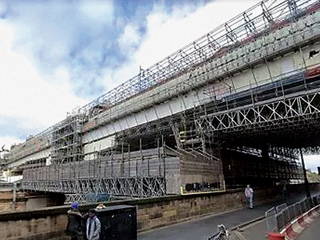 Photo 9: Steel Under-Structure After Repair / Recoating.