


The cart is empty!
Fellow’s Corner
This series of articles is intended to highlight industry-wide engineering experience, guidance and focussed advice to practising technologists. It is written by ICorr Fellows who have made significant contributions to the field of Corrosion Management.
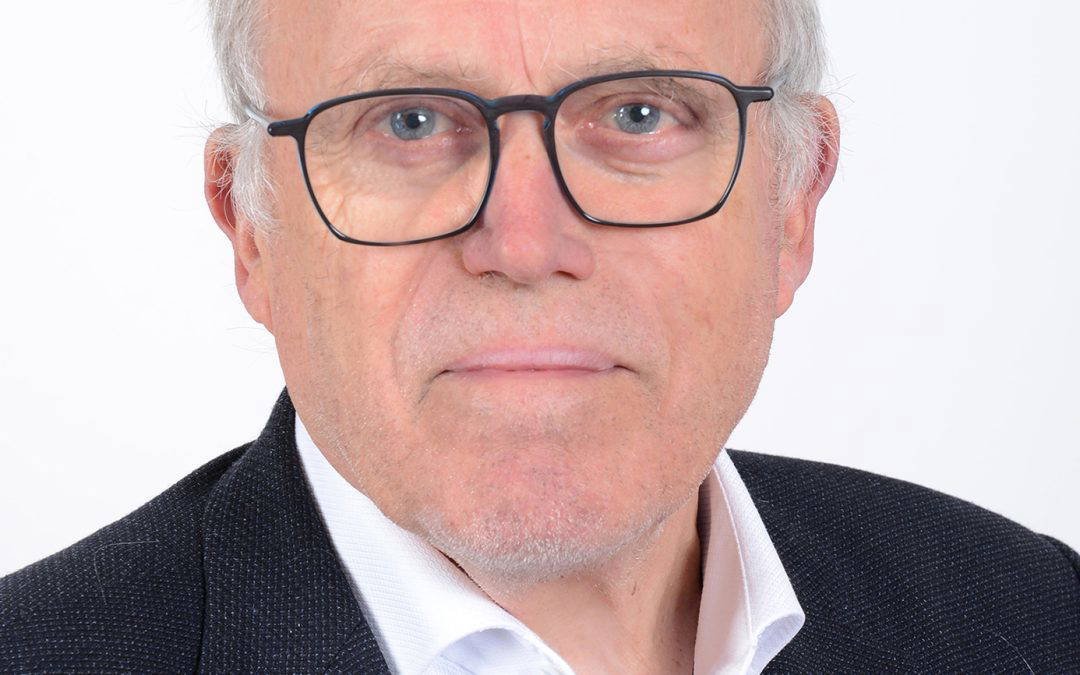
B S Wyatt is an ICorr Past President, a member of the CP Governing Board (CPGB) and CEOCOR Immediate Past President. Brian is an independent Consulting Corrosion Engineer, a CP specialist in applications for steel in soils, waters and concrete. Experienced in design, performance assessment, detailed survey techniques and remedial work for:
• Onshore buried and offshore pipelines
• Offshore new build and retrofit CP for oil, gas and renewables structures
• Internal and external surfaces
• Coastal and port/harbour structures
• Steel in concrete for bridges, tunnels and buildings.
Brian is an expert witness in multiple sectors of CP, he has carried out technical consulting and project management of large and complex CP systems. He is a UK Nominated Expert by BSI for CEN/TC219 and ISO TC156/WG10. He is active in the ICorr Training, Examination and Certification of CP personnel in accordance with BS EN ISO 15257. Brian has competence Certification to ISO 15257 Level 4 in all 4 Sectors: Buried, Steel in Concrete, Marine and Internals and Certification to Level 5.
The Role of an Expert Witness
Introduction
I have been requested by the Editor to submit a paper on the role of an expert witness. For reasons I will explain below, this is quite a difficult task, but I will do my best within the necessary confidentiality of cases in which I have been appointed to this role.
There are several other Fellows of ICorr working as expert witnesses. Some, like me, only occasionally undertake such work, others have chosen this activity as a major part of their fee earning activities. One is resident in and very active in the USA.
I explain below, how I assess approaches from legal teams and determine if I think I am suitable for, and if I am prepared to act as an expert, in the case in which they are involved.
For those readers who have not experienced technical or construction disputes, and whose exposure to the actions of expert witnesses may be limited to newspaper reports of criticisms of expert witnesses, or the reported inadequate understanding of expert witness testimony by the courts, for example in UK medical negligence cases, or to fictional US cases in criminal cases, please be ready to be disabused.
General Rules
Firstly, the rules for expert witnesses are quite different in the UK and the USA. I have taken guidance in the summary below from the Global Arbitration Review1 and from Bond Salon2.
England and Wales have established the Civil Procedure Rules: Rules and Directions, Part 35 (CPR Part 35)3, which set out the requirements for expert evidence, specifically requiring that an expert witness has an overriding duty to the court to be independent and impartial. As a result, ‘experts should constantly remind themselves through the litigation process that they are not part of the Claimant’s or Defendant’s “team” with their role being the securing and maximising, or avoiding or minimising, a claim for damages. Although experts always owe a duty to exercise reasonable skill and care to those instructing them, and to comply with any relevant professional code, as CPR 35.3 expressly states, the experts have at all times, an overriding duty to help the court on matters within their expertise. That they have a particular expertise and the court and parties do not (save in some professional negligence claims) mean that significant reliance may be placed on their analysis, which must be objective and non-partisan if a just outcome is to be achieved in the litigation.4
From Ref 1 ‘The UK judiciary has made criticisms of expert evidence in, for example, ICI v. Merit,[15] Riva v. Fosters,[16] Energy Solutions v. NDA[17] and Russell and Anor v. Stone,[18] which highlighted that a ‘hired gun’ who pretends to be independent is of little help to a tribunal and may damage the position of the instructing party. It may cause the parties to incur higher expenses in the whole proceedings, prevent any settlements or render the expert evidence of little assistance to the tribunal. An expert must maintain objectivity and independence. The English courts have given many judgments regarding the bias of experts; for instance, in Jones v. Kaney,[19] the Supreme Court of the United Kingdom removed the immunity of an expert witness from lawsuits for negligence.’
Expert witness reports are required to contain a ‘statement of truth’ which would typically be in the following form:
‘I confirm that I have made clear which facts and matters referred to in this report are within my own knowledge and which are not. Those that are within my own knowledge I confirm to be true.
The opinions I have expressed represent my true and complete professional opinions on the matters to which they refer.
I understand that proceedings for contempt of court may be brought against anyone who makes, or causes to be made, a false statement in a document verified by a statement of truth without an honest belief in its truth.’
In one case in which I was involved, I was asked to attend chambers of the leading barrister who would be putting the case for the party who had appointed me. One of the expert witnesses for the other party had made claims that I considered to be spurious and that were directly contradicted by a published document that the expert had previously written; I had identified this in my opinion report. The barrister [many of whom can be quite robust] described the expert as a ‘man of straw’ and said that he would ‘enjoy picking the wings off this fly’. The case was settled before the hearing.
In the United States, Federal Rules of Evidence (US FRE) Article VII sets out the requirements governing the rules for opinion and expert testimony, which are less prescriptive. The conduct of expert witnesses, and their overriding duty to serve and assist the court, is not established under the US FRE. I am advised by my expert fellow colleague that there are differing rules in different states.
Corrosion expert witnesses in the USA and elsewhere, must be experienced and have specialized knowledge or skills to offer unbiased opinions to help attorneys, judges, mediators and juries understand complex corrosion issues. The Daubert Standard5 is now the law in federal court and in other courts over half of the states. Related to Daubert, attorneys may question expert witnesses if they are knowledgeable in the Scientific Principle6 7, which is intended to eliminate bias.
In the USA, a corrosion expert – before testifying – must stipulate that their scientific or engineering knowledge will assist the court or tribunal understand the facts in issue. These responsibilities should ensure that expert witnesses are able to play a crucial role in ensuring fair and informed decision making in legal cases.
In international disputes the contract terms will normally have defined the rules and jurisdiction under which any dispute will be subject to arbitration or settlement, if the latter, often by an expert tribunal. In all in which I have been involved the CPR Part 35.3 rules have been applied either formally as these rules by name or by direct copying of their requirements. In large international construction contracts, the parties may have agreed to use a particular form of arbitration to address any disputes; one such is prepared by the United Nations Commission on International Trade Law (UNCITRAL).
With all this being said, the reality is that once appointed, all the information related to the case that the expert requires to properly execute his or her work comes from the instructing party’s legal team, and it is normal for there to be meetings with the legal team and with the instructing party’s personnel who have information on the matters in dispute. Eventually, some of these personnel with intimate knowledge of the matters in dispute will present their own witness statements. During the process there will be a need for legal advice for the expert in respect of procedures for the hearings in court or before a tribunal. Draft expert reports may be commented on by the instructing party’s legal team and barrister(s); however, at no time should the expert be prepared to receive or act on instruction to change his or her expressed opinion. During a long preparation for a hearing there is a risk that a ‘team spirit’ is developed, particularly if there are multiple experts with interlocking expertise; hence the emphasis in Ref. 4 above: ‘Experts should constantly remind themselves through the litigation process that they are not part of the claimant’s or defendant’s “team”, with their role being the securing and maximising, or avoiding or minimising, a claim for damages.’
In all of the expert witness cases in which I have been involved, before tribunals or an arbitration expert, the evidence and the outcome, where it has become known to me, have been strictly confidential. The details remain so. Therefore, my description of the process is necessarily restricted. In cases that are heard in the Technology and Construction Courts , the CPR Part 35 rules apply, however, the judgements are published.
In my experience a typical process has been:
1. The Initial Contact
A phone call or e-mail, out of the blue, often from a legal professional, but occasionally from a technical or scientific professional with expertise in a related or unrelated field, typically asking guarded
questions regarding expertise, availability and, very soon, regarding conflicts of interests.
This might proceed to the exchange of limited documents regarding the dispute and the parties, under a confidentiality agreement. It is at this point where, historically, I have sometimes declined to be involved, either because I am not comfortable acting for the ‘instructing party’, or I think from the limited information available the instructing party’s case is likely ill-founded or indefensible, or I consider that my expertise is not appropriate for the scope of the case. Where I can, I have pointed the enquirer towards people, often also Fellows of ICorr, who I think are either more competent than I am in that field or more likely to wish to work on the particular case.
If I am interested and available and the key issues are within my expertise and still under confidentiality agreements, there are exchanges of more technical details, sometimes preliminary timetables and suggested fees. It is at this stage, before any appointment that I detail, that I describe, I hope honestly and self-critically, my relevant technical strengths and weaknesses.
2. The Appointment
Typically, quite quickly, a draft engagement letter will be sent by the instructing legal team, detailing who they act for, who are the parties to the dispute, and the jurisdiction which will hear the details of the dispute by way of the claims and counter claims, which may be an Arbitration Board, Tribunal or a Court. The engagement letter may also detail other experts already appointed, providing other expertise [e.g., coating, testing, etc.], and it may outline in more detail the provisional timetable. The legal team will have obtained approval from the court or tribunal for the appointment of experts and their anticipated costs.
The engagement letter will require confidentiality and ‘legal privilege’; likely all documents to and from the expert will be marked ‘Privileged and Confidential – prepared for use in XYZ proceedings. It will require disclosure of any conflicts of interest [which will likely exclude the expert from the proceedings] and either directly or indirectly, compliance with the CPR Part 35 rules. In all such cases, the workload and the attention to detail required are abnormal. I have had multiple boxes of small print A5 files of evidence arrive by courier on a Friday evening with a requirement for initial comments the following Monday morning. Every word on the page of an expert witness report, or ppt. presentation to be used in evidence should be 100% accurate and impossible to be misinterpreted.
In one of the largest cases in which I was involved, I gave evidence for a day and a half and ‘suffered interrogation’ from the most aggressive barrister I have ever met. My expert technical report, which I had worked on for many, many hours, was hardly addressed. I was advised afterwards that he could find nothing of substance in it to challenge, and his challenges were primarily of me and my expertise. Before this long tribunal hearing, I was grateful to have taken part in some expert training in how to deal with such questioning and how to react in front of the tribunal.
3. The Work Process
The overall Work scope typically falls into 4 stages:
• Outline and Scheduling
• Assessment
• Review and Final presentation
• Proceedings
Outline and Scheduling
Initially the expert will be presented with the claims and counter claims from the parties in the dispute, the claimant and the respondent.
At a relatively early stage in the process a draft timetable will be published advising when expert reports are to be submitted, if an ‘experts meeting’ is required, and when court or tribunal hearings are planned. At around the same time a list of experts will be exchanged between the claimant and respondent. This may result in an
assessment of particular areas of expertise being brought to bear on the evidence by one party and the need for the other party to strengthen the expert witness team in this area. It is critical at this time for any appointed experts to be realistic in respect of the limits of their expertise and experience. I have advised a legal team that a particular expert in the team for the other party had expertise beyond mine in what could be a relevant sector, and that the legal team should consider adding another expert in order to competently address matters within this sector.
Assessment
Then the real work begins, with a thorough review of all the available evidence, possibly requesting additional information if any is available, or suggesting additional testing in order to better inform if there is any ‘fault’ or to better determine the impact of any such fault on the required performance of the asset at the core of the dispute. All such requests and any additional data or site visits and their outcomes must be openly shared between all of the parties.
Depending upon the complexity of the dispute there may be many hundreds of relevant documents. Different legal firms have different methods of presenting these to experts, some largely in hard copy bound documents, some in well-constructed and easy to access electronic systems and some in less easy to use systems.
Review and Final presentation
I have been involved in a number of cases as an expert where I have been required to prepare power point presentations for the tribunal or arbitration board. The purpose is to present an accurate summary of the previously prepared expert opinion report which can be presented before the tribunal. Draft expert reports or opinions are presented, and questions can be submitted between claimant and respondent, in order to seek clarity.
It may also be required that experts appointed by both claimant and respondent meet, in what is termed an ‘experts meeting’ with the intention of determining what, if any, matters in dispute can be agreed between the experts, and thus to be removed from, or closed off in, the later revisions of the expert opinion reports and the eventual proceedings. The intention is to simplify and reduce the costs of the process, whilst retaining the key issues in the dispute to be assessed by the court or tribunal without the distraction of matters that can be agreed. These meetings between experts are normally ‘without prejudice’ and the legal teams for the claimant and respondent may determine not to accept removing the agreed items from the dispute.
Proceedings
Experts should be prepared for the parties to a dispute to reach a compromise agreement in the weeks or even days before the planned court or tribunal hearing. This has happened to me in several cases.In one particularly complex overseas case I had been to the job site for some weeks, collecting more information and, in parallel, preparing the final version of my expert opinion report, along with a power point presentation to be used in the hearing. On the day before my planned time before the tribunal, for which I considered I was well prepared, I was phoned and told to go home; the matter had been settled. At the time I was disappointed, thinking that part of my work was incomplete; on reflection on this and other disputes settled before the planned court or tribunal hearing, the appropriate conclusion is that the expert has, to the best of his or her’s ability, clarified the matters in dispute for the parties and the court/tribunal in order to facilitate an agreed settlement. Job done.
Personal Experiences
Over the years I have been appointed as an expert in cases related to CP failures on sheet steel piles in seawater and saline infills, hot oil pipelines, to district heating schemes, to pipelines in swamps with disputed field joint coating quality, a buried pipeline with disputed field joint coating quality and disputed CP system adequacy, offshore wind farm monopile foundations, ship hull coatings and related CP performance and others. The Figures to the right are NOT from expert witness cases in which I have been appointed [due to confidentiality issues] but examples of some of the sectors in which I work.
External Corrosion on Buried Gas Transmission Pipeline:
The Thames Barrier London (not a dispute but a success where independent experts were assessing the corrosion protection performance)
A project on which I was involved for many hours alongside another Past President of ICorr, David Deacon. David was a respected coating expert, but not a believer in CP. He was persuaded of the efficacy of CP on this project, which was well designed by our mutual expert predecessors and we had the pleasure of assessing their success:
In my non-dispute related experience, often with colleagues, I have investigated and assisted in developing and executing remedies for failed corrosion protection schemes [CP, coatings and other related matters] or as independent technical expert(s) advising employers in complex CP related schemes being designed and executed by others. Much of the same rigour and obligations mandated to be applied in technical or construction dispute resolution outlined above are applicable to these activities. From my personal experience, expert witness work can be significantly disruptive to other professional activities and to personal life, but I have enjoyed the intellectual challenge of attempting to make the evidence to the court, or tribunal, complete, clear, detailed and as far as possible, difficult for a barrister whose role is to demolish my evidence or credibility to the benefit of his or her client, to misinterpret. In all of this, the evidence is not for the barristers, it is for the judge or tribunal panel and is intended to make what can be quite complex and subtle technical matters clear to all.
References
1. https://globalarbitrationreview.com/guide/the-guide-construction-arbitration-archived/fifth-edition/article/expert-evidence-in-construction-disputes-expert-witness-perspective .
2. https://www.bondsolon.com/expert-witness/expert-witness-training/
3. https://www.justice.gov.uk/courts/procedure-rules/civil/rules/part35
Quotation from a Bond Salon briefing note regarding a 2022 dispute.
4. https://www.bailii.org/ew/cases/EWHC/KB/2022/2648.html
5. https://www.law.cornell.edu/wex/daubert_standard.
6. https://legalclarity.org/what-is-an-example-of-the-frye-standard-in-court/
7. Scientific principles give foundation to definitive expert opinions evaluating hypotheses for causation and feasibility for extraordinary claims.
8. https://www.judiciary.uk/courts-and-tribunals/high-court/technology-and-construction-court/