Level 4 Certification of Competence is a requirement for the design of Cathodic Protection (CP) systems in all the BS, EN and ISO Cathodic Protection Standards. See the attached brochure on the ICorr CP Scheme and the Standards for more details.
It is expected that Candidates will already have Certification for Level 3 in the Sector in which they are applying and the requisite experience (see Preliminaries item 8 below). They must have passed the L3 Examination in that Sector, there is no dispensation.
Examinations:
All Level 4 examinations are presently held in Northampton at the Institute of Corrosion HQ, Corrosion House; see https://www.icorr.org They will be held typically 4 times per year; the facility is spacious, complies with UK Governments rules and guidance related to C-19. It is a short walk from the station; there is a modern budget hotel and parking nearby. Candidates are required to book one of the dates below; no other dates will be available. If one date does not suit you, choose another from the list. If there is limited demand for a particular date, we may cancel that from the programme and allocate your booking to the next examination date, whilst advising you. We will strive to avoid delaying your examination by more than 3-4 months. The examination is closed book, desk based, handwritten, with no practical element (this is in the mandatory L3) and is expected to take some 6.5 Hours, in 3 sessions with breaks between. A simple calculator, a Casio FX-991EX) will be provided; you will not be permitted access to any other electronic device. IF you are sitting the examination for more than one Sector (Buried, Steel in Concrete, Marine, Internals) you will need to sit for more than one date of those below:
Thursdays: 2026: 26 February, 4 June, 10 September, 26 November
Examination arrangements are:
Book and pay for the Examination at least 1 month before the date you plan to attend. Do not attend unless you have confirmation of your place from Corrosion House.
Start 0900 Hrs: Book in, identification (passport or driving licence with picture), remove mobiles, laptops, smart watches, calculators to locked facility. No access to these during the day. Tea or coffee.
Expect to start examination at 0930 Hrs
Core: Applies to all Sectors: 2.5 Hours, 0930 to 1200 Hrs If you have previously passed the Core Examination, you may, after notifying Corrosion House, plan to arrive no later than 1215 Hrs to book in as above and be ready to commence as below, or you can arrive during the morning and finish early:
Break for lunch (provided)
Design Sector Specific: 2 Hrs, 1245 to 1445 Hrs
Break for tea or coffee
Performance Assessment: Sector Specific: 2 Hrs, 1500 to 1700 Hrs
Collect mobiles, laptops, calculators etc and depart building 1715 Hrs
Preliminaries:
It is expected that candidates will only be sitting the Level 4 ISO 12527 examination if they are planning to apply to ICorr for certification for Level 4. This is an entirely separate process. It requires a separate application form and a certification fee; it involves an independent assessment of the candidate’s work experience, a refereed Application and a Dossier detailing completed complex projects.
All Candidates must be competent in all the key tasks and knowledge required at Level 3 in the CP Sector for which you are applying at Level 4. Accordingly, you must have a valid Level 3 Examination pass in all parts of the examination, the Core, the Sector Specific and the Sector Specific Practical Examination; there is no dispensation available to avoid this.
If you do not already have Level 3 certification and your cv clearly shows that it is likely that you do meet the experience requirements for Level 4, you can sit the Level 3 examination without attending the Level 3 Course. This includes the Level 3 Practical examination in the Sector(s) applicable to your intended Level 4 application(s). If you pass the examinations, you may choose to obtain L3 certification, but need not delay your application for L4, but if you fail the certification for L3 you will fail for L4.
At present there are no ICorr Level 4 Courses; you are expected to have learned the skills and gained the competence by working alongside CP Engineers or Specialists more experienced than you, preferably Certificated to Level 4, and by personal study and attending conferences and courses. This is expected to have taken some years of supervised design and other challenging CP work after your Level 3 certification.
The main difference between L3 and L4 is that the latter requires the competence and the experience of undertaking, without guidance, complicated and detailed CP designs. The full requirements are summarised as being competent in the of design cathodic protection systems, to establish and validate cathodic protection criteria and testing procedures, to interpret standards, codes, specifications and procedures, to designate the particular cathodic protection test methods and procedures to be used, to interpret the reported results of cathodic protection testing and use them in performance verification, to determine any remedial actions and to carry out and supervise all Level 1,2 and 3 duties.
Level 4 personnel shall have a detailed knowledge of corrosion theory, cathodic protection design, installation, commissioning, testing and performance evaluation including safety in at least one application sector, competence to undertake without supervision the design of complex cathodic protection systems in at least one application sector, sufficient theoretical knowledge and practical experience of cathodic protection to select cathodic protection testing methods, survey requirements and performance criteria. They shall have competence to evaluate and interpret results of cathodic protection performance in accordance with existing standards, codes and specifications, competence to assist in establishing testing and performance criteria where none are otherwise available and a general familiarity with cathodic protection in other application sectors.
The examination is designed to test these abilities. It will be challenging; some candidates will fail.
The separate certification procedure will more rigorously assess these by way of your experience and what you can document in terms of projects, including complex CP designs. Certification to L4 requires 3 to 8 years’ CP experience [dependent on qualifications] if progressing from full Certification at Level 3, or 5 to 12 years’ experience if applying directly for Level 4 after only passing the L3 examination. You may sit the L4 examination early, but the above experience requirements will be used in your certification assessment after you pass the examination. You will need to prepare a detailed dossier detailing more than one and ideally 3 detailed designs in each Sector. You will not achieve certification until your experience has been assessed and you are likely to be interviewed by the ICorr Professional Assessment Committee during this process.
The Corrosion Engineering Division (CED) of the Institute of Corrosion is delighted to announce that Professor Damien Féron will receive the Paul McIntyre Award at the 2025 ICorr Annual General Meeting (AGM), to be held at the Henry Royce Institute in Manchester on Tuesday, 4th November 2025.
The Paul McIntyre Award is the highest honour presented by ICorr CED. It recognises a senior corrosion engineer who has not only made significant technical contributions, but has also championed European collaboration and international standards – reflecting the values and legacy of the late Professor Paul McIntyre.
Professor Féron has had a distinguished career at the French Alternative Energies and Atomic Energy Commission (CEA) and continues to serve as Scientific Adviser and Professor at INSTN, the National Institute for Nuclear Science and Technology. His work spans nuclear corrosion, marine corrosion, biocorrosion, and long-term prediction of corrosion damage, with wide-ranging applications in both civil and nuclear industries.
A globally recognised leader in corrosion science, Damien has authored or edited more than 25 books and special issues, delivered over 100 invited lectures, and participated in numerous international advisory boards. His international standing is matched by an unwavering commitment to collaborative science – evident in his leadership roles across the European Federation of Corrosion (EFC), where he served as Chairman of the Science and Technology Advisory Committee (2007-2013) and as President from 2017-18, and the World Corrosion Organization (WCO, President from 2019–2022)
Professor Féron was also instrumental in establishing and leading major educational and technical initiatives, such as the Nuclear Corrosion Summer School (NuCoSS) and the long-running LTC Workshops on corrosion prediction in nuclear waste systems. Through these and many other efforts, he has mentored a generation of corrosion scientists and engineers across Europe and beyond.
The Paul McIntyre Award is a fitting recognition of Professor Féron’s remarkable contributions to corrosion science, education, and international cooperation.
The award will be formally presented during the ICorr AGM in Manchester, jointly hosted by ICorr Northwest Branch and the Henry Royce Institute. Professor Féron will also be invited to contribute an article to Corrosion Management magazine.
The Institute is delighted to announce that Brian Wyatt will be presented with the H.G. Cole Award at the 2025 ICorr Annual General Meeting (AGM), which will be held at the Henry Royce Institute in Manchester on Tuesday 4th November.
The H.G. Cole Award is the highest honour that ICorr can bestow on an individual for their contribution to the success of its activities. It is awarded on an infrequent basis for exceptional services to the development of the Institute.
Brian is a long-standing senior figure within ICorr, having served as a Council member for several decades prior to stepping down in 2024. He was President of the Institute from 1987 to 1989. Very few people have made a more significant contribution to the success and financial sustainability of the Institute over such an extended period of time.
Brian has made important and wide-ranging contributions to the Institute in many areas, but perhaps most significantly in the training and accreditation of cathodic protection (CP) personnel. He was the driving force behind ICorr’s CP Training, Assessment and Certification Scheme, which has been instrumental in upskilling and certifying CP technicians, engineers and specialists in compliance with international standards.
Brian showed great vision in advocating for the establishment of an in-house CP training offering, which has led to a step-change in revenue streams for the Institute. He has also been influential in establishing hands-on training facilities in support of course delivery, including for marine CP at Blyth and buried CP in Sheffield.
Brian’s long standing commitment to the Institute has been second to none. His passion, energy and vision have made a major contribution to supporting the objectives of the Institute and securing its financial sustainability. The H.G. Cole Award is fitting recognition of these efforts.
Presentation of the award will take place at the ICorr AGM, which will be jointly hosted by ICorr Northwest Branch and the Henry Royce Institute. The AGM will be preceded by a series of technical presentations from renowned corrosion professionals in the region. If you would like to attend, please register here as places are limited.
The H.G. Cole Award is named after Henry George Cole, who was Chief Materials Engineer at the UK Ministry of Defence and a former ICorr President. For more information on the award, including previous recipients, please click here.
The very first UK-China Corrosion Summit, jointly organised by the Institute of Corrosion (ICorr) and the Chinese Society for Corrosion and Protection (CSCP), was held in Manchester on 3–4 September 2025. The meeting gathered leading academics, practitioners, and industry representatives from both countries under the theme – ‘AI Impacts to Corrosion Management within UK-China Energy Industry’.
Opening and Awards
The summit opened with welcoming remarks from ICorr President Dr Yunnan Gao, CSCP President Professor Xiaogang Li and EFC (European Federation of Corrosion) President, Professor Gareth Hinds, who highlighted the importance of international collaboration in tackling corrosion challenges.
An award ceremony followed when the ICorr President Dr Yunnan Gao presented the following ICorr Institute certificates to the recipients:
FICorr Certificates were presented to newly elected Fellows, Professor Xuequn Cheng and Professor Dake Xu.
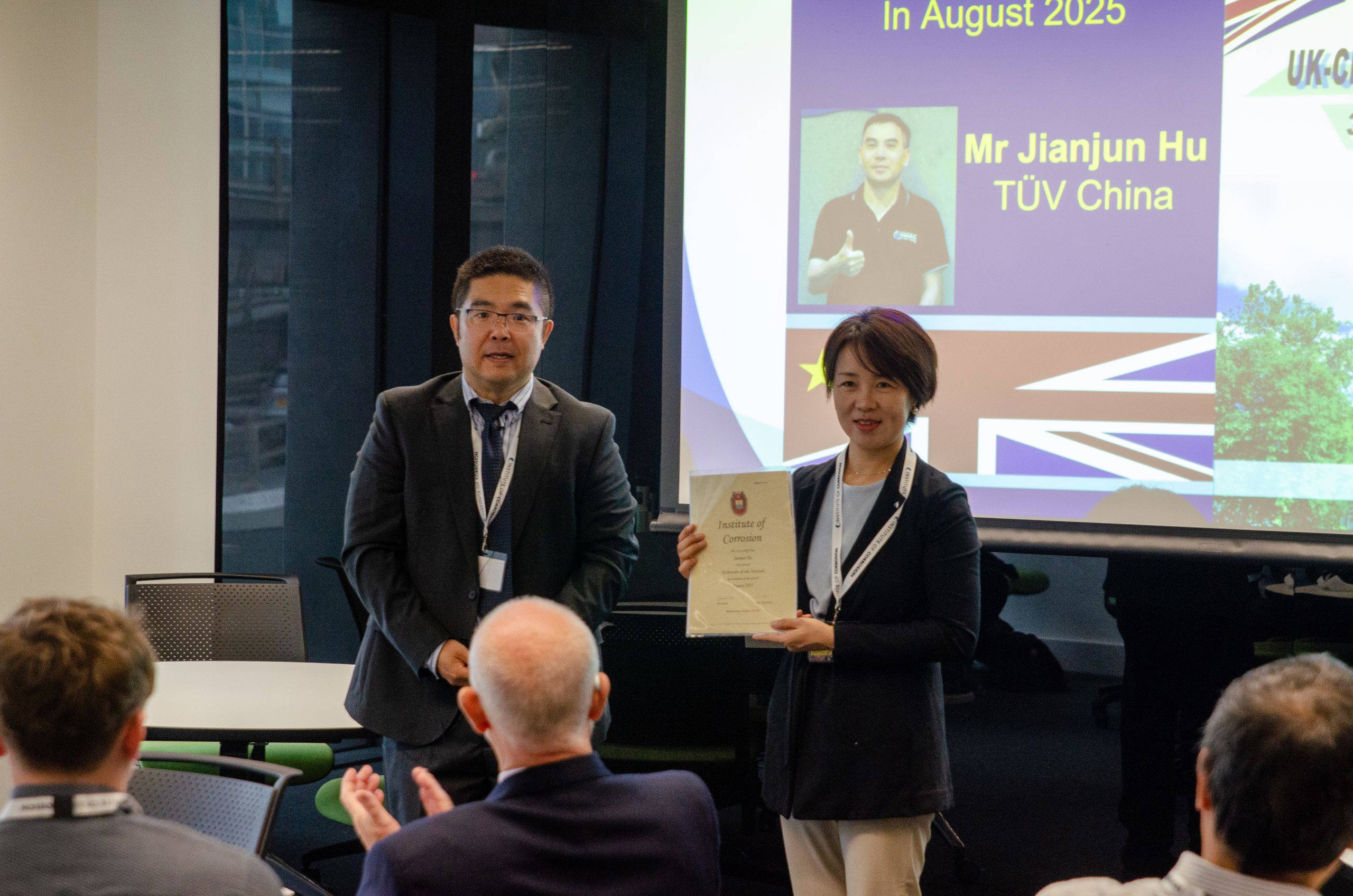
TICorr Certificate was presented to newly elected Technician Member, Mr Jianjun Hu.
ICorr Scholarship Certificate was presented to Miss Xinyu Zhang, a Chinese student at the University of Manchester studying for an MSc in Corrosion Control under the Institute scheme.
Photo: ICorr President Dr Yunnan Gao Chairing the Opening Ceremony of the 1st UK-China Corrosion Summit in Manchester on 3rd September 2025
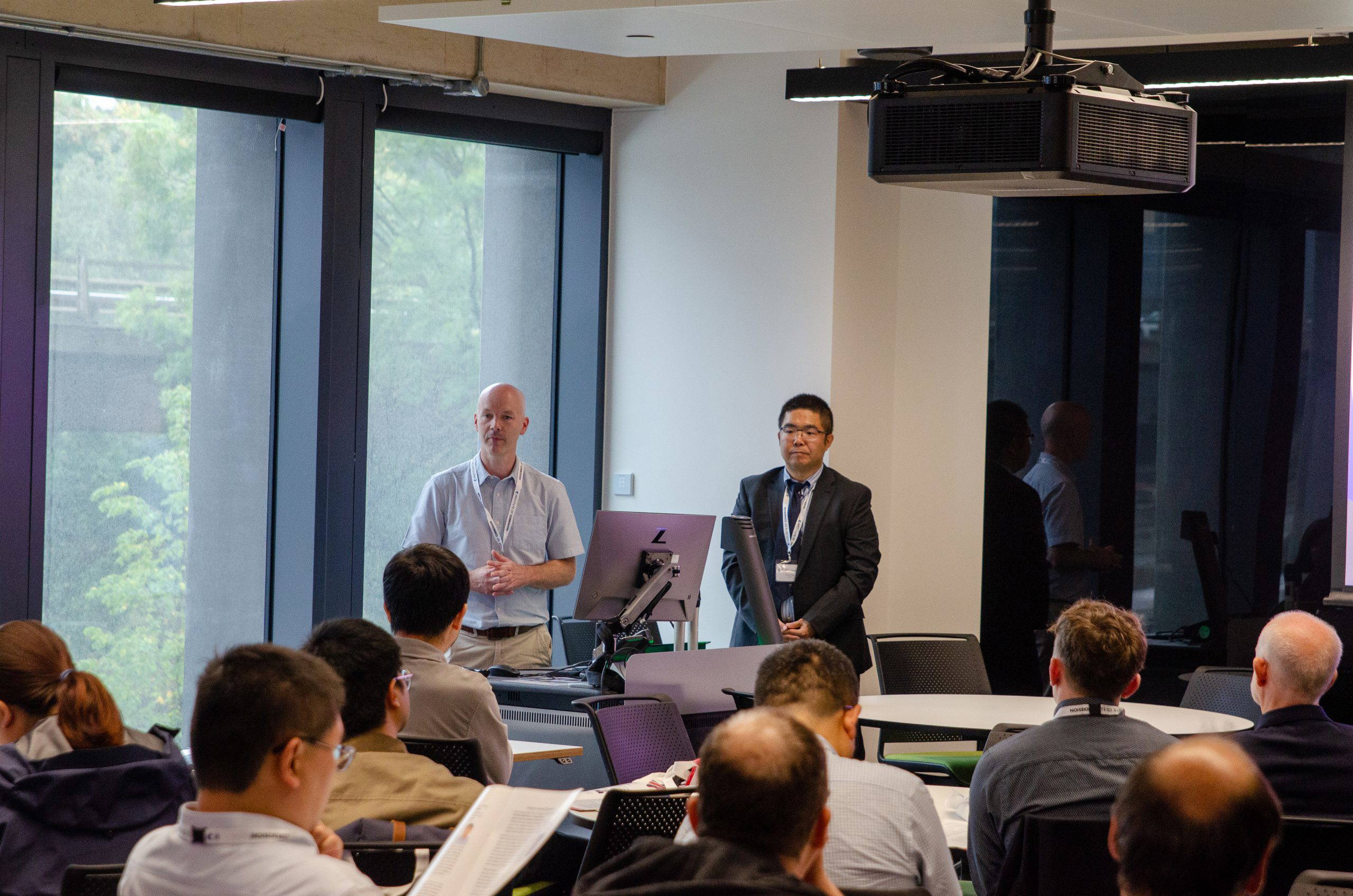
Photo: The President of EFC, Professor Gareth Hinds, Left, Giving the Opening Remarks During the Opening Ceremony of the 1st UK-China Corrosion Summit
Photo: ICorr President Dr Yunnan Gao Presenting ICorr Certificate to the Recipient (Deputised by Mrs Jing Fang, ICorr Training Partner, China) during the Opening Ceremony
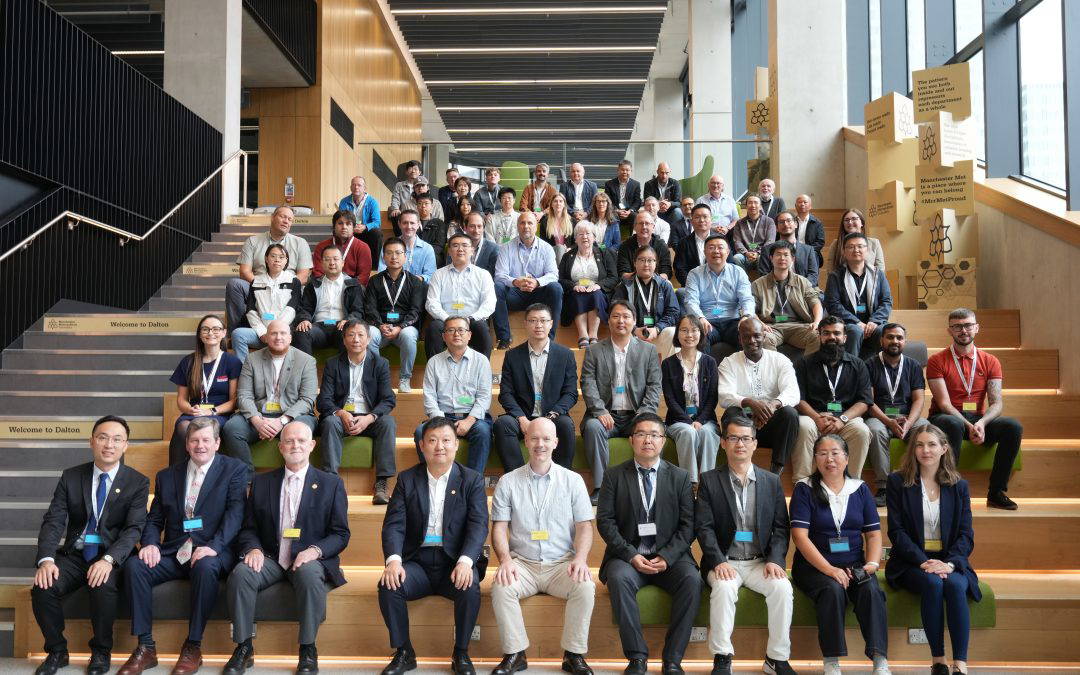
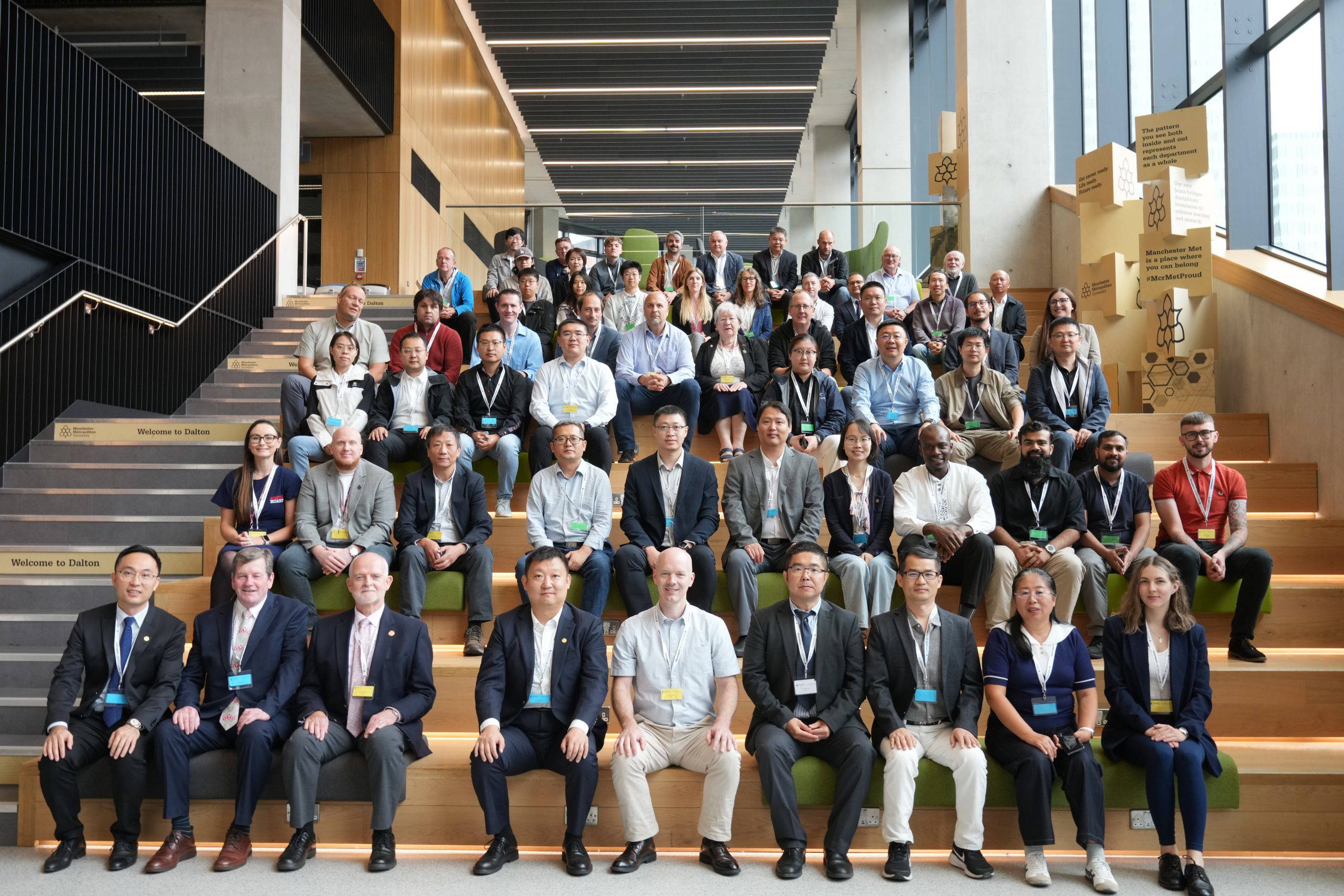
Photo: All Delegates of the 1st UK-China Corrosion Summit
Day One – Technical Presentations
Over the course of the first day, a dense programme featured keynote lectures and technical talks from both UK and Chinese experts tackled frontier topics at the intersection of corrosion science and digital technologies.
Keynotes
Prof. Xiaogang Li (China, University Science and Technology Beijing) introduced the concept of “corrosion big data,” demonstrating how multi-scale data mining links microalloying, microstructure, environment, and corrosion rate to design new low-alloy steels with improved resistance.
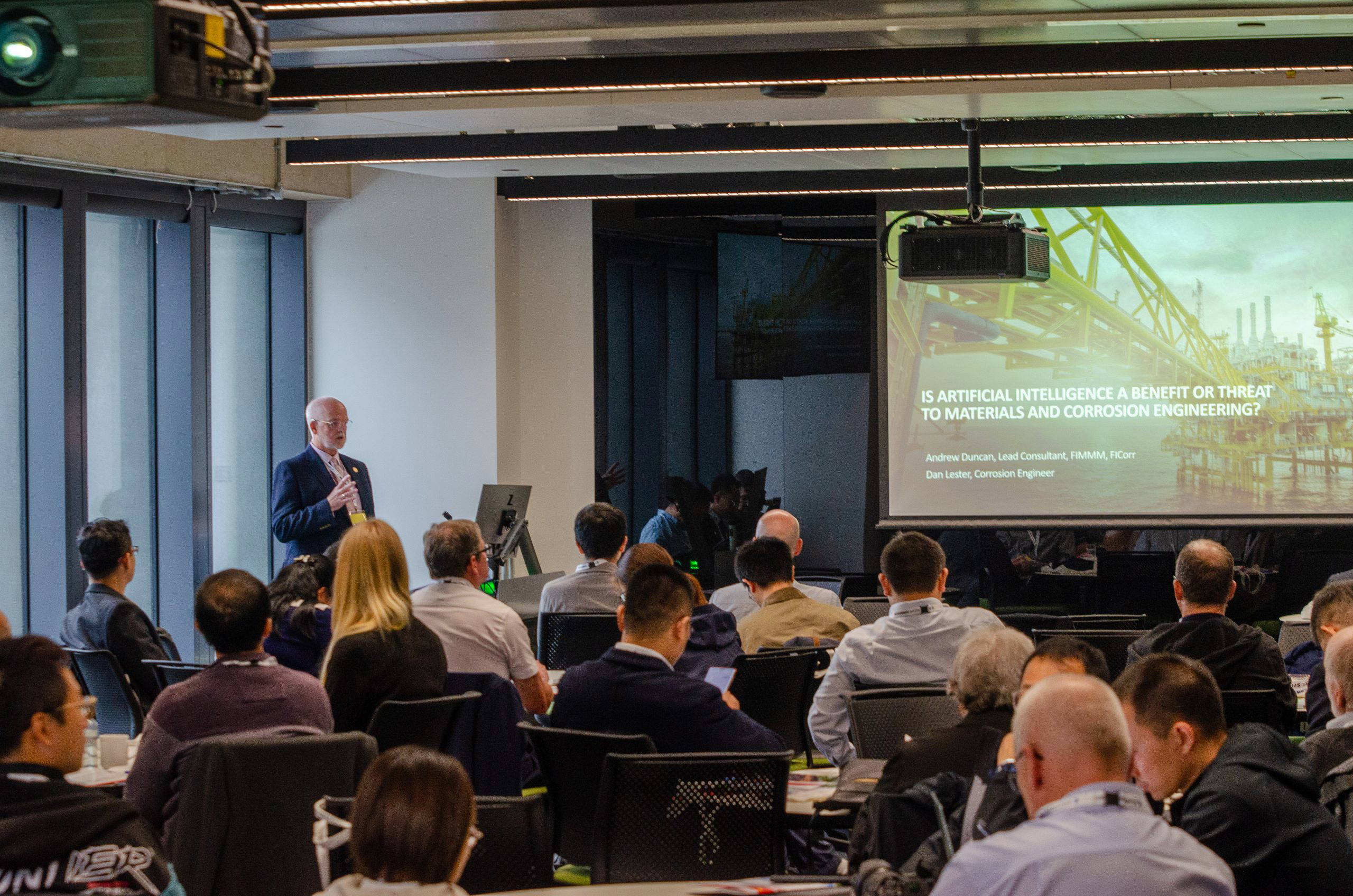
Andrew Duncan & Dan Lester (UK, Intertek CAPCIS) debated whether AI is a “benefit or threat.” Duncan warned against over-reliance on algorithms in early-career training, while Lester argued that AI can reduce errors and improve decision-making when used with oversight.
Technical Presentations
Prof. Dake Xu (China, Northeastern University) explained how extracellular electron transfer drives microbiologically influenced corrosion (MIC). He described biofilm processes at the genetic and interfacial level, and how this understanding can inform MIC-resistant materials and sensors.
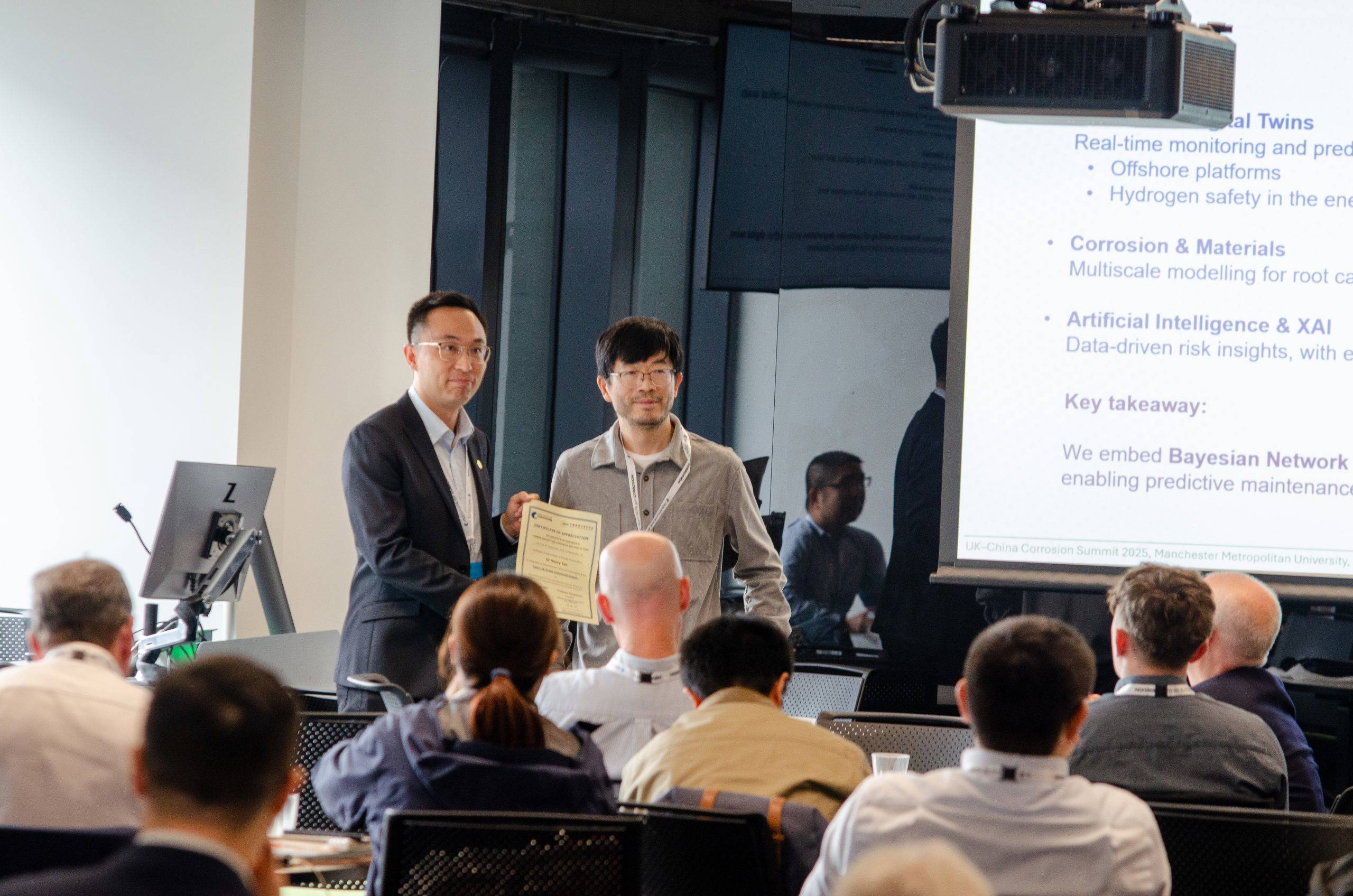
Dr Henry Tan (UK, Aberdeen University) presented an AI-enabled framework combining Bayesian decision models with digital twins for subsea pipelines, offering real-time risk-informed maintenance planning.
Dr Wei Rong (China, China National Petroleum Corporation) described novel inhibitors for acidizing operations on non-magnetic steels. Her formulation using quinoline ammonium salt with thiocyanate showed strong performance in high-temperature HCl-HF solutions.
Dr Vincenzo Bongiorno (UK, University of Manchester) demonstrated machine learning for electrochemical impedance and noise data, automating model selection and surface damage classification for coatings and corroding systems.
Dr Yu-You Wu (China, Ningo Zhonghe) highlighted AI-powered inspections of offshore wind turbines, stressing the gap between promising academic results and limited industrial adoption, and calling for UK-China collaboration in this fast-growing sector.
Dr Prafull Sharma (UK, CorrosionRADAR) showed how predictive maintenance for corrosion under insulation can combine remote sensor data with AI analytics to forecast failure likelihood and optimise inspection schedules.
Prof. Lingwei Ma (China, University Science and Technology Beijing) presented a two-stage machine learning approach linking environmental factors, physical properties, and coating performance. The method improved prediction accuracy for degradation across diverse climates.
Dr Yifeng Zhang (UK, Imperial College London) outlined a hybrid inspection framework using reconfigurable sensors and robotics. His model improves detection reliability while reducing inspection frequency and cost.
Mr Xinpeng Lu (China,Shenzhen Coais Technology) described how AI agent technology can support corrosion integrity management. His system employs multi-agent data collection and reinforcement learning to enhance anomaly detection and optimise maintenance.
Dr Kevin McDonald (UK, Sonomatic) shared early applications of machine learning on ultrasonic inspection signals. His case studies showed potential efficiency gains in data classification and highlighted barriers such as dataset balance and industry acceptance.
The day concluded with an open forum, where speakers and delegates from both sides reflected on key themes. Discussions focused on the importance of high-quality data, the challenges of model transparency and interpretability, and the need for international collaboration to harmonise standards for AI-driven corrosion tools.
Photo: Andrew Duncan of Intertek CAPCIS Giving the UK Keynote Speech on Is Artificial Intelligence A Benefit or A Threat to Materials and Corrosion Engineering?
Photo: Session Chair, Professor Bowei Zhang of CSCP, Left, Presenting the Certificate of Appreciation to the Presenter of the Technical Presentation (Dr Henry Tan)
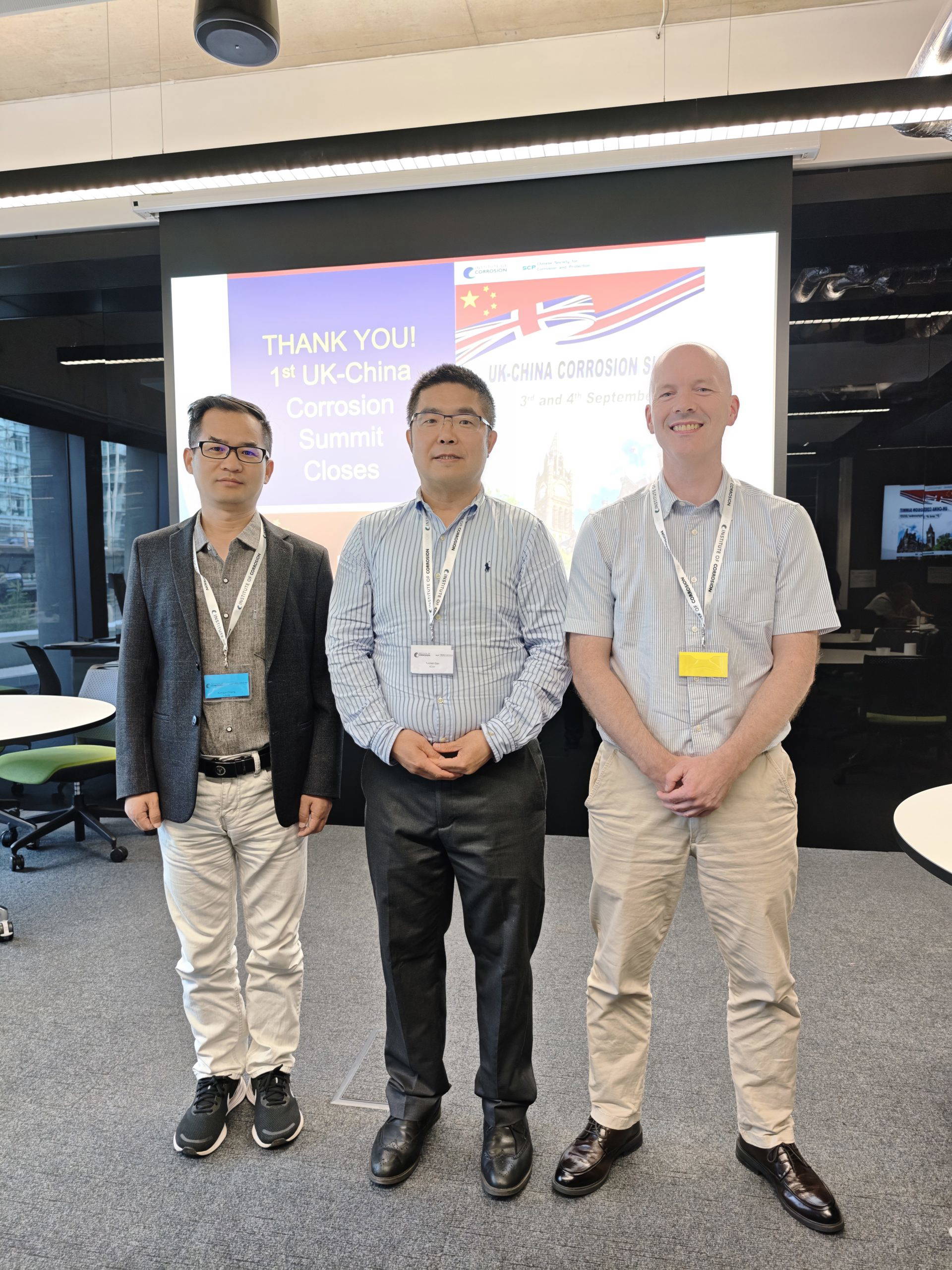
Photo: L-R, CSCP General Secretary Professor Xuequn Cheng, ICorr President Dr Yunnan Gao and EFC President Professor Gareth Hinds at the Closing Ceremony of the Day One Conference of the 1st UK-China Corrosion Summit
Day Two – Visits and Engagement
The second day of the summit, 4th September 2025, was dedicated to institutional and industrial visits for the Chinese delegation with ICorr Training Partners.
In the morning, at the University of Manchester, delegates toured laboratories in corrosion and materials science, including imaging and advanced characterisation facilities. The visit highlighted the university’s ongoing work in combining experimental and digital approaches.
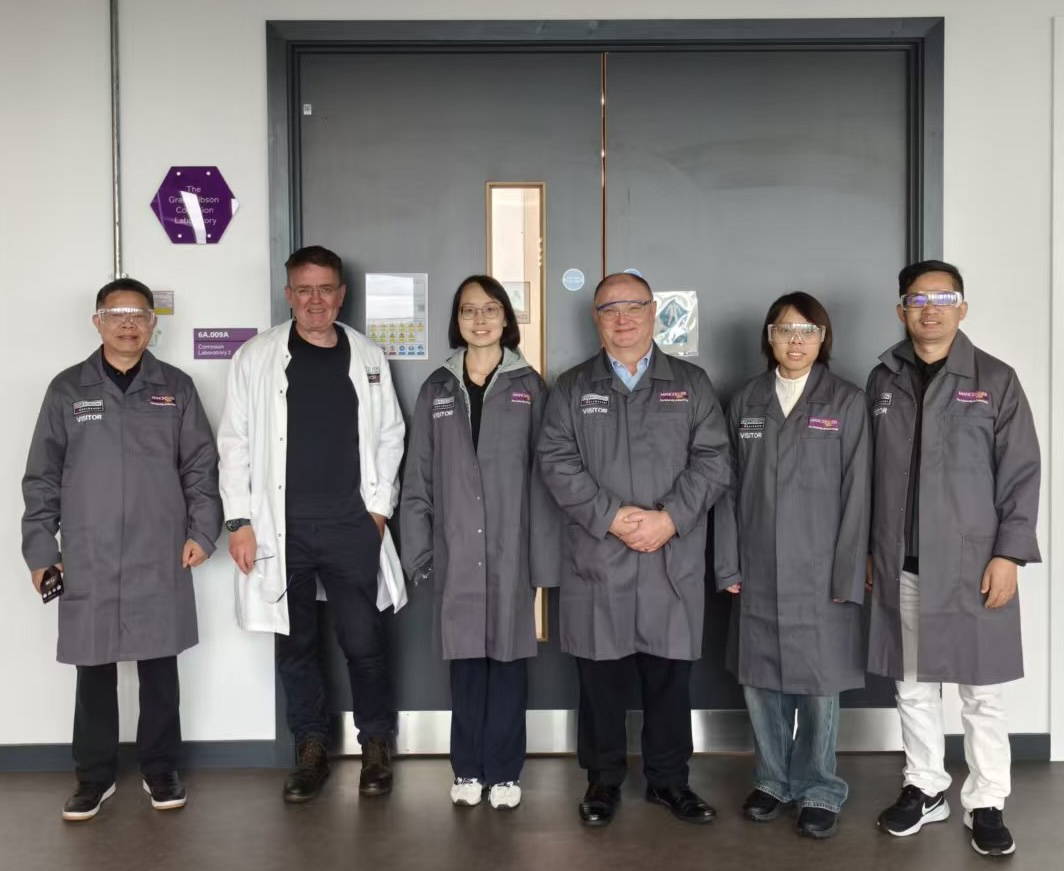
Photo: One of the Four Groups of the China Delegation Visiting the Materials Laboratories of the University of Manchester on 4th September 2025
In the afternoon of 4th September 2025, the delegation travelled to Sheffield to visit Argyll Ruane, where they were given demonstrations in coating science, coating inspection, and non-destructive testing training – areas where ICorr certification and industry practice intersect closely.
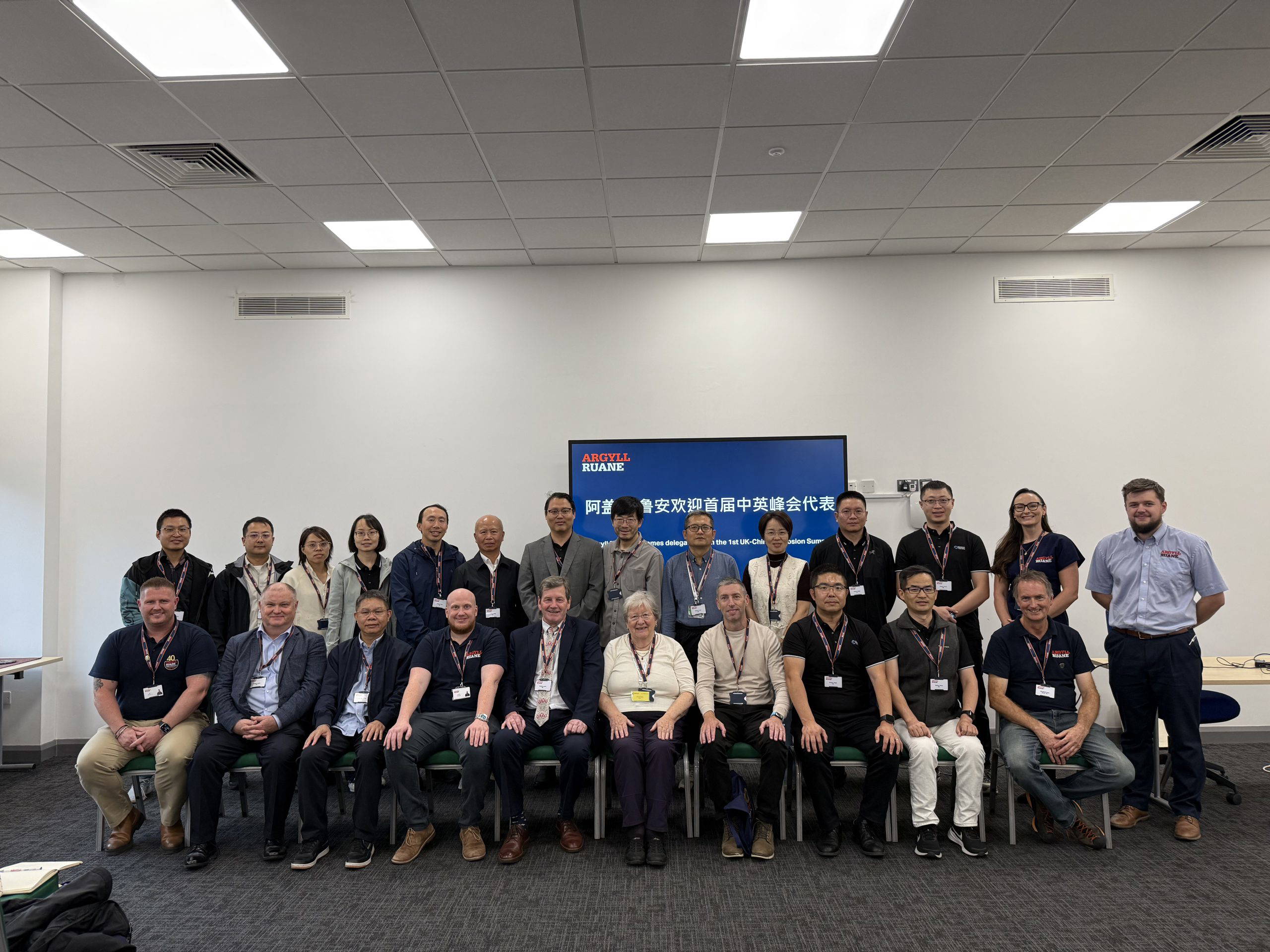
Photo: China Delegation Visiting the Premises of Argyll Ruane (ICorr Training Partner, UK) in Sheffield
Conclusion
The inaugural UK-China Corrosion Summit successfully combined technical exchange with academic, industrial, and training engagement. By bringing together researchers, students, and industry practitioners from both countries, the event created a platform for knowledge sharing and laid the groundwork for continued collaboration between the corrosion communities of the UK and China.
Appreciation and Future Plan
ICorr extends its sincere thanks to the summit’s UK sponsors: exclusive Platinum Sponsor Argyll Ruane, Silver Sponsor – ICR Integrity, and Bronze Sponsors – Beasy, Corrodere, and Corrpro Europe, whose support made this whole event possible.
We now look forward to the 2nd China-UK Corrosion Summit, to be hosted in China in 2026, continuing the spirit of collaboration and knowledge exchange established so well in Manchester.
Yosef Thio Widyawan, Dirk L Engelberg Metallurgy and Corrosion, Department of Materials, School of Natural Sciences, The University of Manchester, United Kingdom
Yosef Thio Widyawan, BEng, ST, MSc, is a recently graduated engineering professional with academic and practical expertise in naval architecture and corrosion control engineering.He holds a Master’s degree with Distinction in Corrosion Control Engineering from the University of Manchester and a joint Bachelor’s degree in Naval Architecture from Institut Teknologi Sepuluh Nopember, Indonesia and Mokpo National University, Korea. His experience spans roles in ship structural design, welding engineering, and protective organic zinc coating/painting site coordination at Hyundai Samho Heavy Industry, PaxOcean Shipyard, and PT. NOV Profab. Certified as an AMPP Coating Inspector and holding a Welding Engineering Diploma, Yosef demonstrates a strong commitment to integrity, sustainability, and professional development in the marine and offshore industries.
Dirk Engelberg is a professor in materials performance and corrosion at the University of Manchester. He obtained a Dipl.-Ing. (FH) in Surface Engineering and Materials Science from Aalen University (Germany) before moving to Manchester in 2000 for an M.Sc. in Corrosion Science & Engineering and a PhD in Metallurgy & Materials Science. He joined the Corrosion & Protection Centre as an academic lecturer in 2010, which is now part of Metallurgy & Corrosion (Corrosion@Manchester) in the Department of Materials.Dirk’s research is centred on (i) understanding material degradation related to the storage, disposal, and decontamination of nuclear waste, (ii) applied electrochemistry and high-throughput screening techniques, (iii) development of innovative solutions for net-zero engineering, and (iv) localised corrosion, stress corrosion cracking and hydrogen embrittlement. Dirk is also an expert in microstructure engineering and leads several cross-disciplinary projects combining mechanical, civil, and chemical engineering with chemistry, physics and materials-based research.
(*The work reported here is based on Yosef’s dissertation for the MSc in Corrosion Control Engineering (CCE) at The University of Manchester).
1. Introduction
Austenitic stainless steels are commonly used for applications in the energy, medical and chemical process industries due to their enhanced corrosion resistance, ease of availability and beneficial physical properties [1]. However, the material is not immune to corrosion, which is frequently caused by chlorides and other halide ions that may be present in petrochemical refinery systems or marine atmospheres [2]. Such corrosion damage can lead to serious material loss, crevice or localised corrosion or even stress corrosion cracking (SCC). Thus, monitoring, inspecting, predicting and investigating the corrosion behaviour and its patterns are most important to avoid the risk of material failure and to ensure the materials are performing accordingly.
Passivation treatments are viable options to enhance the corrosion resistance of stainless steels, providing an additional layer of protection
via enhancing surface passive film properties. These treatments are either applied via exposure to citric or nitric acids [3,4,5] or via electrochemical treatments [6]. Passivation treatments strengthen the existing passive film of stainless steel surfaces, but there will likely often remain some residual issues at sites of jointing and particularly welding.
A novel method for screening materials for their corrosion resistance is bipolar electrochemistry. The technique has been used for high-throughput corrosion screening and to obtain information about microstructures that might provide enhanced protection against material degradation [7,8].
The idea of this dissertation is to explore bipolar electrochemistry for modifying passive film properties on type 316L stainless steel.
The set-up does not require a direct ohmic contact to the test sample, and the set-up is quite simple and easy to replicate. A bipolar electrode (BPE) is an electrically conductive substance that encourages electrochemical reactions at its extremities (poles) when exposed to an electrical field between two feeder electrodes [9]. Through bipolar electrochemistry [10], the material’s surface properties can be either modified or assessed.
Differing from the conventional three-electrode experimental corrosion test, the bipolar set-up can be used to conduct corrosion assessment across a far wider range of applied potentials and materials. Bipolar electrochemistry has even been used to screen 2707 Hyper-duplex stainless steels for their corrosion resistance [11]. This is possible through scan rate independent, directly acting potential gradients along the BPE. In addition, one of the studies related to the oil and gas industries is the employment of cathodic protection, where stray current can be further studied via bipolar electrochemistry utilisation or the formation of inhibitor films under anodic or cathodic polarisation control. These test set-ups are currently being further developed for corrosion screening.
2. Methodology
Material and Sample Preparation
Type 316L sheet samples with dimensions of 10 mm x 25 mm were mechanically prepared with SiC paper from 400 up to 2500 grit, then polished with diamond paste to a ¼ micrometre finish. The final mirror-finished surface is required for passivation and corrosion test experiments—the desired quality of sample finish is also needed for elemental depth profile analysis with Glow Discharge Optical Emission Spectroscopy (GDOES). Figure 1 gives a flow chart of the research methodology and analysis steps applied. The prepared samples were first passivated using a novel bipolar electrochemistry approach, followed by assessment of the passivated surfaces in HCl solutions using standard 3-electrode electrochemistry. The sample surfaces were then analysed after corrosion testing using optical microscopy. One additional sample was also prepared under bipolar passivation treatment (in citric acid and boric acid) in order to observe the GD-OES depth profiling effect of bipolar passivation treatment.
Bipolar Electrochemistry Passivation Treatment
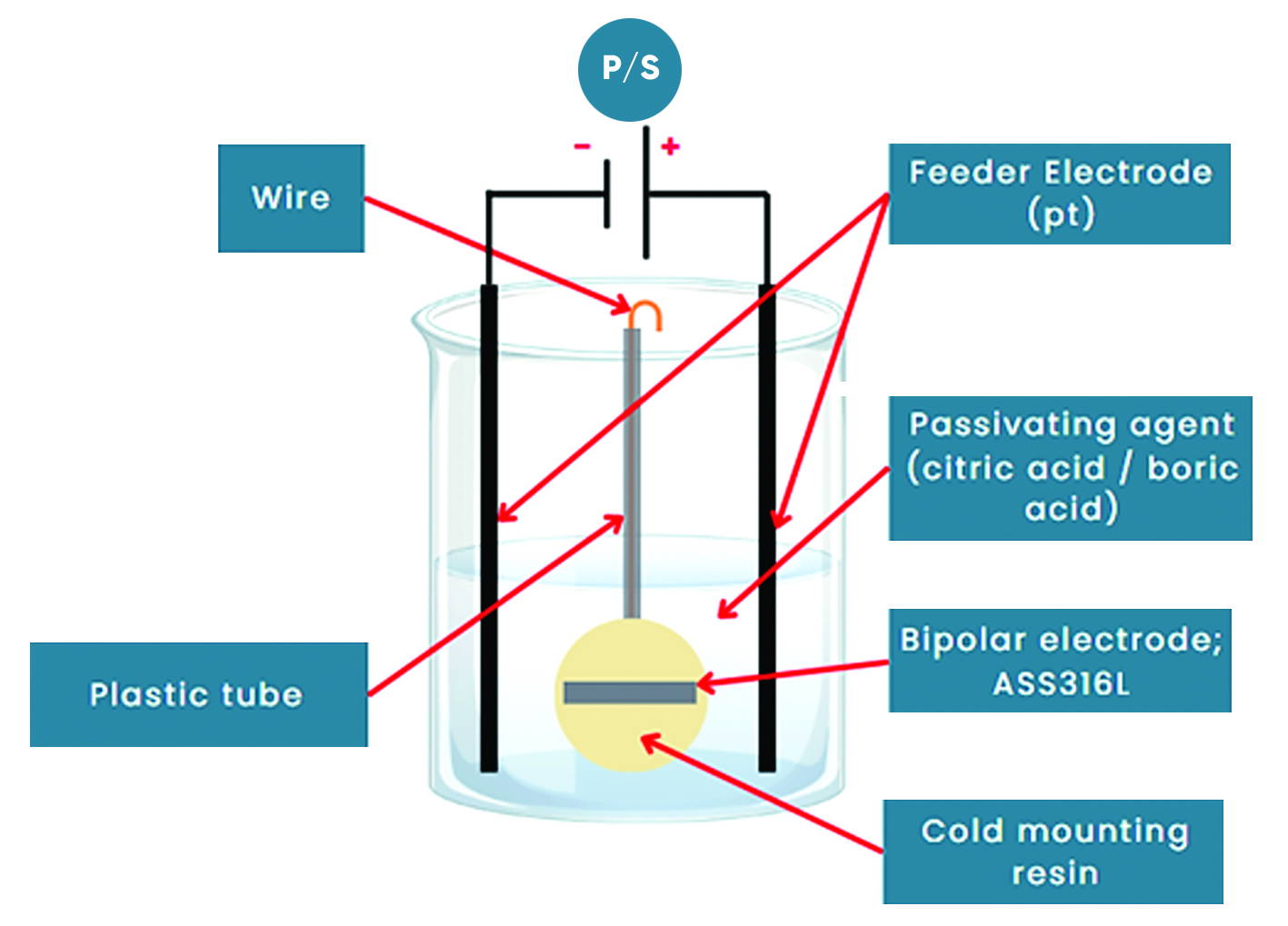
The passivation treatment utilised citric acid (C6H8O7), and boric acid (H3BO3) as passivating agents in order to facilitate the formation of a gradient passivation layer along the BPE surface. Employing bipolar electrochemistry to induce passivation at the anodic side, with the cathodic side expected to weaken the passive film. The expected outcome here was to generate one sample surface containing the full spectrum, starting with a strong passive film at the anodic side, to surfaces experiencing OCP conditions close to the central region, to a cathodically cleaned surface at the cathodic end of the BPE. Figure 2 below shows the bipolar test set-up, with the sample exposed to the electric field between both feeder electrodes, but without any electrical connection to an outside power source. Here it was expected that the negative pole of the feeder electrode would induce a positive reaction at the one end of the BPE surface, with the positive feeder inducing a negative pole at the BPE. The set-up was similar to experiments to test stray current corrosion of different metals related to cathodic protection as well as buried power line corrosion [12,13].
The effect of cathodic polarisation on passive film stability has been demonstrated previously under different applied potentials on super duplex stainless steel [14].
The bipolar parameters used for the passivation treatment were 8V with 10-minute or 30-minute polarisation in 10% (wt.) citric acid or 1 M boric acid. A Keysight power source was was used for applying the voltage. For surface film characterisation GDOES depth profile measurements were carried out, and each experiment was conducted 3x for each parameter variable.
Corrosion Test
Directly after the bipolar passivation treatment, standard 3 electrode potentio-dynamic corrosion tests were carried out to assess the effect of the surface passivation treatment. An 0.01 M, 0.1 M and 1 M hydrochloric acid (HCl) solution was used with Ag/AgCl/saturated KCl reference electrode.
Open circuit potential (OCP) measurements were recorded for 180 minutes, to see whether changes occurred at the surface that might be reflected in a shift of the OCP. The assessed samples were then observed under an optical microscope to analyse the impact of the corrosion testing on the treated sample surfaces.
The depth profiles of the sample surface were measured using a GD-OES instrument. The power output used was 30 W and 650 Pa. with the sample very flat and the backside of the sample parallel to the front side to enable the vacuum to work properly. GD-OES analysis was carried out at both ends and the centre of the sample after passivation.
3. Results and Discussion
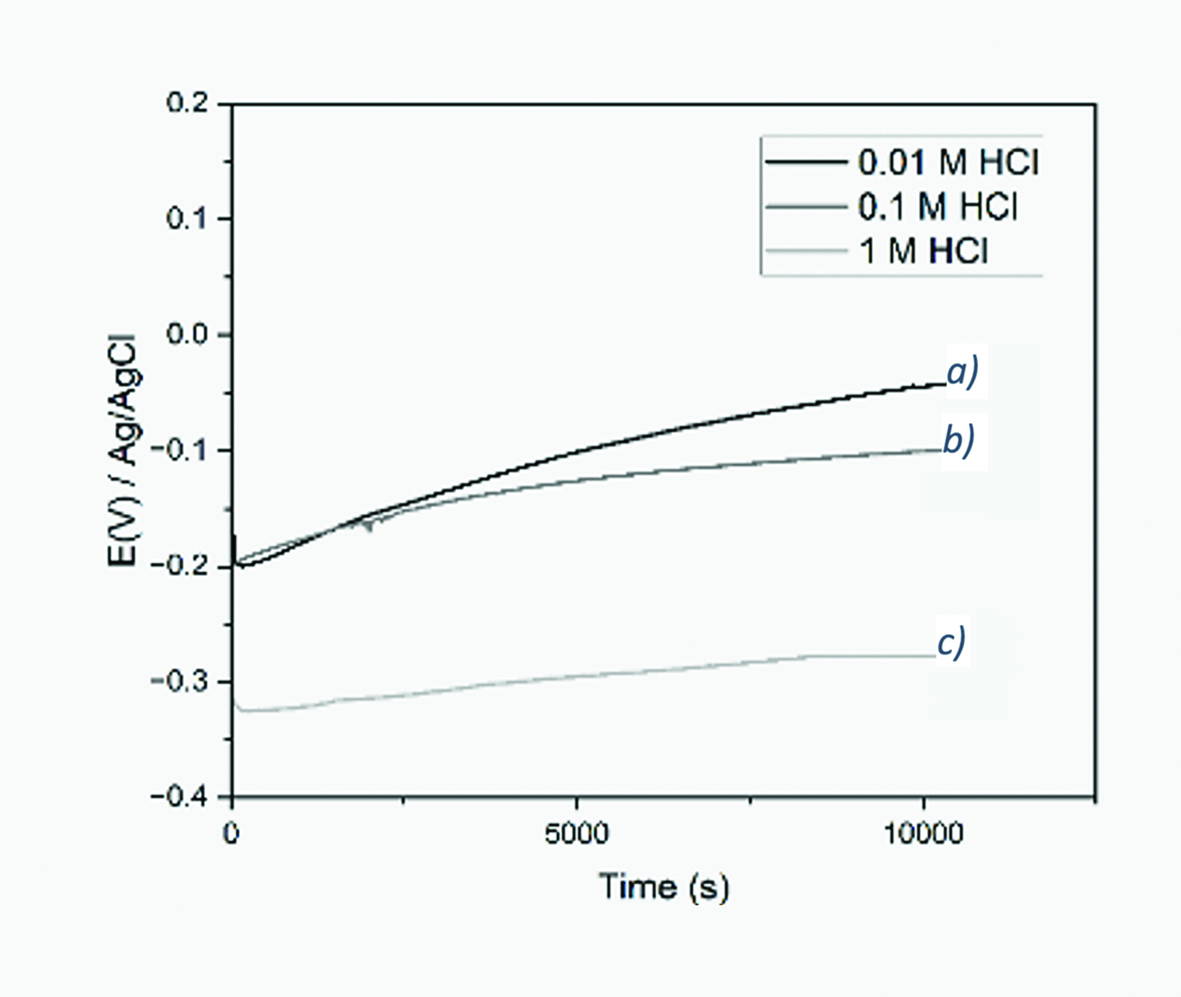
Figure 3 below shows the OCP versus time for the untreated type 316L surface. The test in 0.01 M HCl shows a steady increase of OCP from -0.2 V at the start to about -0.05 V after 3 hours, with the 0.1 M HCl giving a final rest potential close to -0.1 V, and the 1 M HCl sample somehow stabilising at -0.3 V. These long OCP measurements were employed to understand whether the bipolar passivation treatment caused changes in the OCP response.
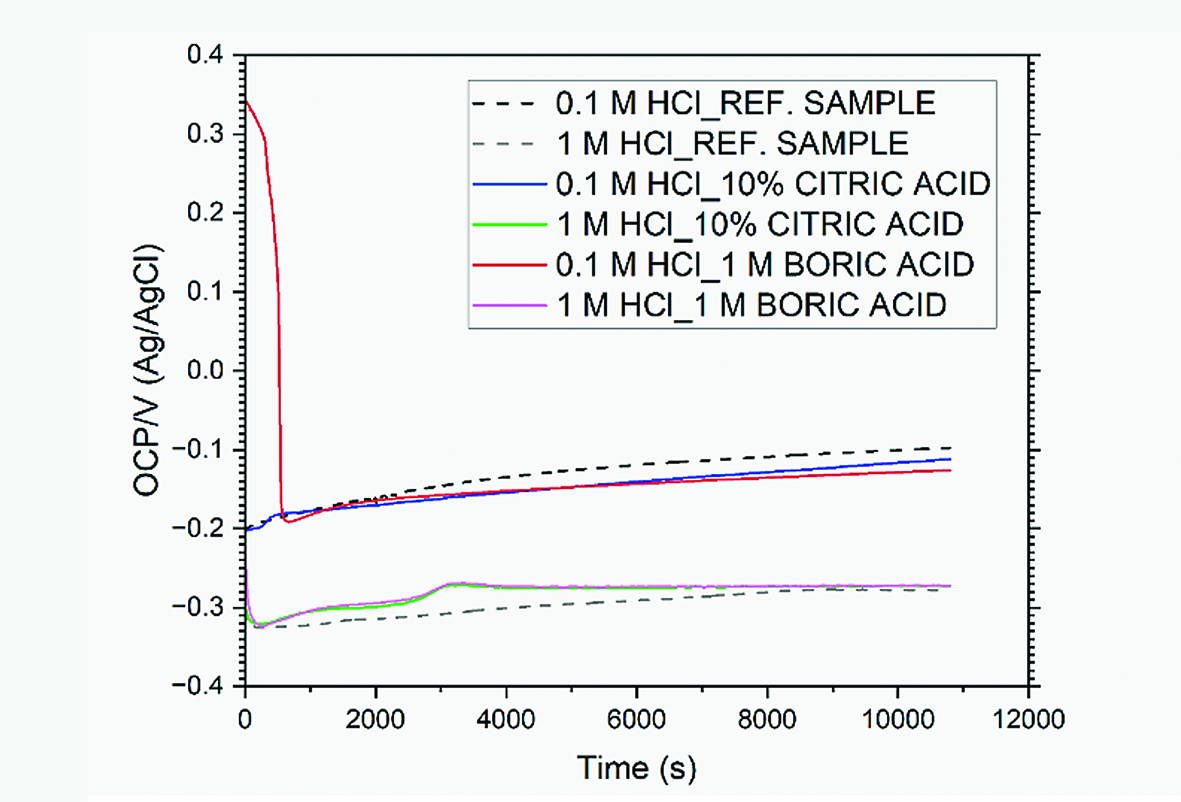
Figure 4 further summarises the OCP response of the citric and boric acid treated BPE surfaces, with the same trend apparent for all samples. The OCP test for citric acid passivation exposed to 0.1 M HCl started at -0.2 V and stabilised at -0.13 V, with the only marked difference observed for the boric acid treated surface giving an initial potential of +0.3 V. Although the final potential was slightly less positive than the 0.1 M HCl test of the untreated type 316L surface, it still showed the material’s resistance was in a similar OCP range.
Furthermore, the OCP test for both passivation treated surfaces exposed to 1 M HCl started at -0.35 V and gradually rose to about -0.28 V, then remained steady until the end of the test at 3 hours. Both passivation treatments showed a distinct OCP stabilisation hump after 1 hour of exposure. This shows the system reaches a stable state, but at a far more negative potential compared to the lower HCl concentration.
The bipolar passivation treatment was expected to enhance the passive layer at the anodic side of the bipolar electrode, leading to a more corrosion resistant surface, compared to the cathodic side. However, since the full sample was immersed in the passivating solutions, even the central part would be expected to be more resistant than the cathodic, with the later cathodic BPE side is expected to have a far weaker passive film [14].
Although all the results show a similar behaviour, when the corrosion test was deployed in 1 M HCl, the treated sample obtained a constant OCP far earlier than the reference sample test; this could be due to the effect of passivation treatment, which enabled the samples to obtain their equilibrium earlier than the reference sample without passivation treatment [15].
Comparing the results of the samples that have been treated with bipolar passivation in 10% citric acid and 1 M boric acid in Figure 4, the OCP data showed no particular difference between them. The application of bipolar electrochemistry on the citric acid and boric acid passivation showed a similar behaviour when immersed in the 0.1 M HCl and 1 M HCl.
Figure 5 above summarises the optical microscopy observations of both sample surfaces that underwent bipolar electrochemistry passivation treatment in 10% citric acid and 1 M boric acid, which were corrosion in both 0.1M and 1M HCl solutions. The optical assessment showed no significant corrosion attack variation between the anodic and the cathodic pole of the BPE sample. The difference in 0.1M to 1M HCl exposure clearly showed more general surface roughening, with the appearance changing into a “wrinkle-like” roughened contour after 1M HCl exposure. Type 316L is known to readily corrode in 1M HCl.
The idea of this OCP exposure test in HCl was to understand whether differences exist between the anodically and cathodically treated sides after the bipolar passivation treatment. No visual differences were actually observed along the sample surface after both 0.1M and 1M HCl exposure.
Characterisation
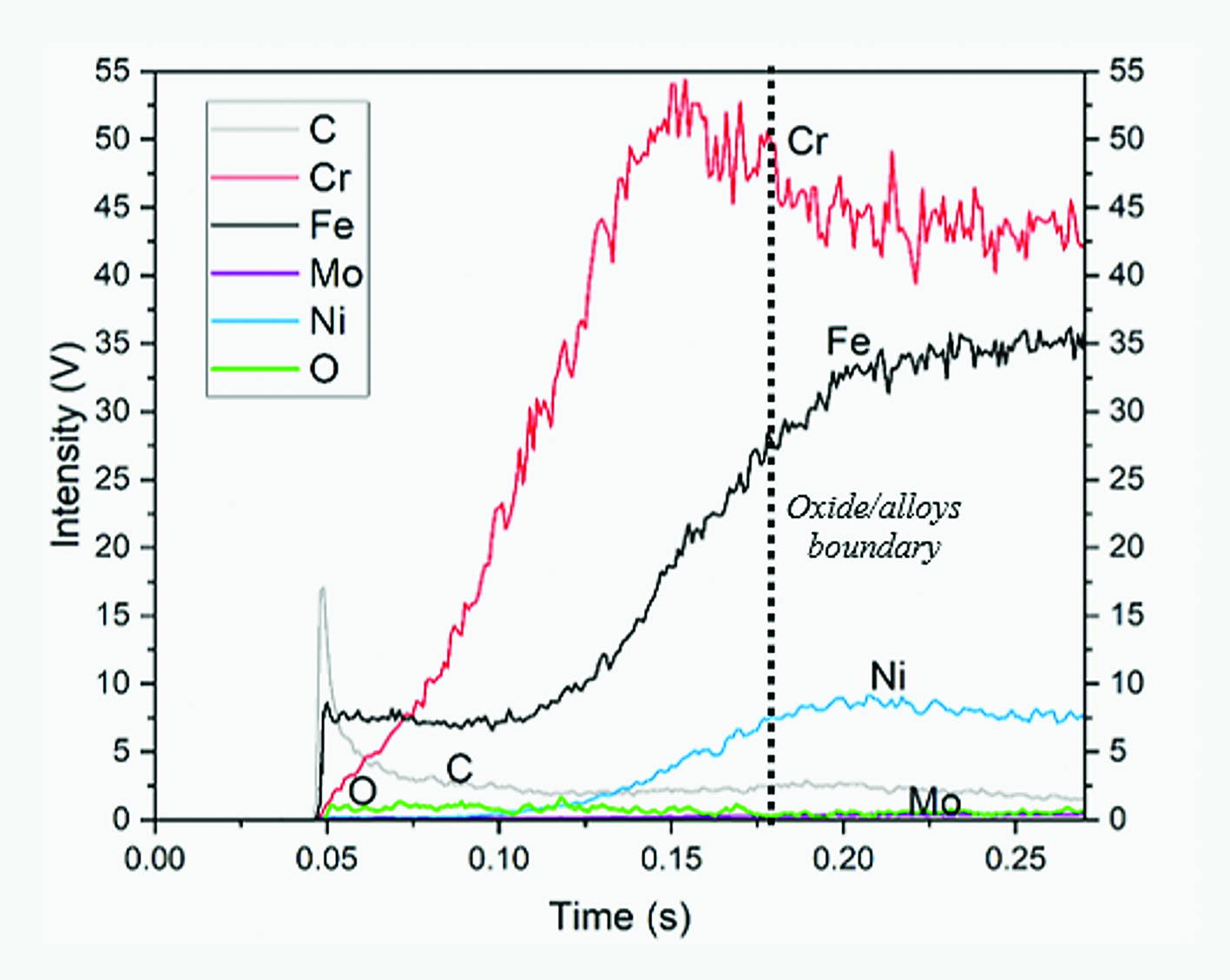
GD-OES application for surface chemical analysis is described in more detail in Ref. [16,17]. The plasma generated during the measurement will create a circular crater of 4 mm in diameter, as shown in Figure 6 below. The scan rate was 1 m/s to obtain the depth profiles with a sputter duration of 75 seconds, with measurements taken at different locations. The collision between the argon ions and the sputtered material excites atoms and releases the photon energy as a characteristic light spectrum. The data obtained from the measurements shows the emission intensity versus time (s). GD-OES is frequently used for the depth profiling of thin surface films and layers, such as passive surface films, galvanised materials, or PVD/CVD coatings [18].
All data obtained showed carbon contamination at the surface, which is expected with sample storage under standard ambient conditions in the laboratory. Figure 7 above shows the resulting GD-OES depth profile of the reference Type 316L sample, with carbonaceous surface contamination, followed by enriched chromium, with the iron (Fe) and nickel (Ni) then indicating the bulk composition. The oxygen signal was found slightly raised in the surface region, with the horizontal line then indicating a drop in this signal, indicative of the interface between surface oxide and the bulk.
Finally, Figure 8 below compares the GD-OES depth profiles of the specimens treated in 10% citric acid and 1 M boric acid. The application of the bipolar passivation treatment seemed to influence to some degree the formation of the passive film of the Type 316L sample. The passive film formation of the sample under passivation treatment in 10% citric acid showed some minor change in chromium signal between the middle region and both anodic and cathodic regions. The middle region shows the presence of iron on the outer surface, while chromium dominates both the anodic and cathodic poles [19].
Observation of the cathode side of the passivated sample (both in citric and boric acid – Figure 8) showed a higher intensity level of chromium at the very beginning of the time axis. This may indicate that the chromium exists at the very outer layer of the treated sample’s cathode side; therefore, the treated sample had higher chromium content on the passive layer than the untreated sample. This behaviour might be influenced by the application of bipolar passivation treatment on the sample, which strengthens the formation of a passive layer on the sample’s cathode side.
The chromium intensity of the sample treated in 10% citric acid fell before it reached the bulk interface. On the other hand, the sample treated in 1 M boric acid underwent a falling of chromium intensity before it went constant at the bulk layer. According to Ref. [36], the peak of the elements chromium and iron showed that the elements were the major cationic alloys in the redox reaction. Thus, it can be assumed that applying 1 M boric acid was a more susceptible, favourable environment for the passivation of stainless steel 316L compared to the treated sample in 10% citric acid.
Conclusion
The overall bipolar passivation treatment did not show the expected behavior regarding the formation of a gradient passive film, although some interesting response was observed conducting OCP measurements in 1 M HCl solution.
It seems though that the application of bipolar passivation treatments influences somehow local passive layer compositions. From GD-OES characterisation of the sample passivated in 10% citric acid, the anodic and cathodic regions seemed Cr enriched in the oxide layers, while the middle part of the surface remained covered with iron oxide. On the other hand, on the sample exposed to 1 M boric acid, the anodic and centre part of the sample have iron oxide at the outer film surface, while the cathodic region was enriched with chromium. More work is certainly needed to further investigate the successful application of bipolar passivating treatments.
References
[1] P Kangas and G C Chai, “Use of Advanced Austenitic and Duplex Stainless Steels for Applications in Oil & Gas and Process Industry,” AMR, vol. 794, pp. 645–669, Sep. 2013, doi: 10.4028/www.scientific.net/AMR.794.645.
[2] A H Al-Moubaraki and I B Obot, “Corrosion Challenges in Petroleum Refinery Operations: Sources, Mechanisms, Mitigation, And Future Outlook,” Journal of Saudi Chemical Society, vol. 25, no. 12, p. 101370, 2021, doi: https://doi.org/10.1016/j.jscs.2021.101370.
[3] ASTM A380-99E1Standard Practice for Cleaning, Descaling, and Passivation of Stainless Steel Parts, Equipment, and Systems, 2017. doi: 10.1520/A0380_A0380M-17.
[4] ASTM A967-05E2Standard Specification for Chemical Passivation Treatments for Stainless Steel Parts, 2013. doi: 10.1520/A0967-05E02.
[5] BS EN 2516:2023 Aerospace Series – Passivation of Corrosion Resisting Steels and Decontamination of Nickel or Cobalt Base Alloys, BS EN 2516:2023, Feb. 06, 2024. doi: 978 0 539 30425 1.
[6] ASTM B912-02(2018)Standard Specification for Passivation of Stainless Steels Using Electropolishing, 2018. doi: 10.1520/B0912-02R18.
[7] YZhou, J Qi, and D L Engelberg, “A Novel High Throughput Electrochemistry Corrosion Test Method: Bipolar Electrochemistry,” 2023.
[8] Y Zhou, J Qi, and D L Engelberg, “On The Application of Bipolar Electrochemistry For Simulating Galvanic Corrosion Behaviour of Dissimilar Stainless Steels,” Electrochemistry Communications, vol. 126, p. 107023, 2021, doi: 10.1016/j.elecom.2021.107023.
[9] S EFosdick et al., “Bipolar Electrochemistry,” Angew Chem Int Ed, vol. 52, no. 40, pp. 10438–10456, Sep. 2013, doi: 10.1002/anie.201300947.
[10] R M Crooks, “Principles of Bipolar Electrochemistry,” ChemElectroChem, vol. 3, no. 3, pp. 357–359, Mar. 2016, doi: 10.1002/celc.201500549.
[11] Y Zhou et al., “A Rapid Corrosion Screening Technique for Grade 2707 Hyper Duplex Stainless Steel At Ambient Temperature,” Materials and Corrosion, vol. 75, no. 2, pp. 227–234, 2023, doi: 10.1002/maco.202313943.
[12] T J Lennox and M HPeterson, “Stray Current Corrosion of Steel, ”Naval Engineers Journal, vol. 88, no. 1, pp. 45–53, 1976, doi: 10.1111/j.1559-3584.1976.tb03795.x.
[13] J M K Nairn et al., P Wade, and S Thomas, “Cell-Within-Cell Study of Stray Current Copper Corrosion: Impact of Soil Conductivity and Source Distance,” Corrosion Engineering Science and Technology, The International Journal of Corrosion Processes and Corrosion Control, 2025, doi: 10.1177/1478422×241311671.
[14] COrnek et al., “Understanding Passive Film Degradation and Its Effect On Hydrogen Embrittlement of Super Duplex Stainless Steel – Synchrotron X-Ray And Electrochemical Measurements Combined With Calphad And Ab-Initio Computational Studies,” Applied Surface Science, vol. 628, p. 157364, 2023, doi: 10.1016/j.apsusc.2023.157364.
[15] S Mischler and A I Munoz, “Tribocorrosion,” in Encyclopedia of Interfacial Chemistry, Elsevier, 2018, pp. 504–514. doi: 10.1016/B978-0-12-409547-2.13424-9.
[16] R Payling and T Nelis, Glow Discharge Optical Emission Spectroscopy: A Practical Guide. Royal Society of Chemistry, 2007. Available:https://books.google.co.uk/books?id=7mwoDwAAQBAJ&dq=glow+discharge+optical+emission+spectroscopy+&lr=&source=gbs_navlinks_s
[17] LECO Corporation, Michigan, USA. GDS Series Glow Discharge Spectometers Product Video, (2023).
[18] T Nelis and RPayling, Surface Analysis Methods in Materials Science. Berlin, Heidelberg: Springer. [Online]. Available: https://link.springer.com/chapter/10.1007/978-3-662-05227-3_24
[19] M Uemura et al., “Depth Profile Analysis of Thin Passive Films on Stainless Steel By Glow Discharge Optical Emission Spectroscopy,” Corrosion Science, vol. 51, no. 7, pp. 1554–1559, Jul. 2009, doi: 10.1016/j.corsci.2008.11.017.
We use cookies to optimize our website and our service.
Functional
Always active
The technical storage or access is strictly necessary for the legitimate purpose of enabling the use of a specific service explicitly requested by the subscriber or user, or for the sole purpose of carrying out the transmission of a communication over an electronic communications network.
Preferences
The technical storage or access is necessary for the legitimate purpose of storing preferences that are not requested by the subscriber or user.
Statistics
The technical storage or access that is used exclusively for statistical purposes.The technical storage or access that is used exclusively for anonymous statistical purposes. Without a subpoena, voluntary compliance on the part of your Internet Service Provider, or additional records from a third party, information stored or retrieved for this purpose alone cannot usually be used to identify you.
Marketing
The technical storage or access is required to create user profiles to send advertising, or to track the user on a website or across several websites for similar marketing purposes.