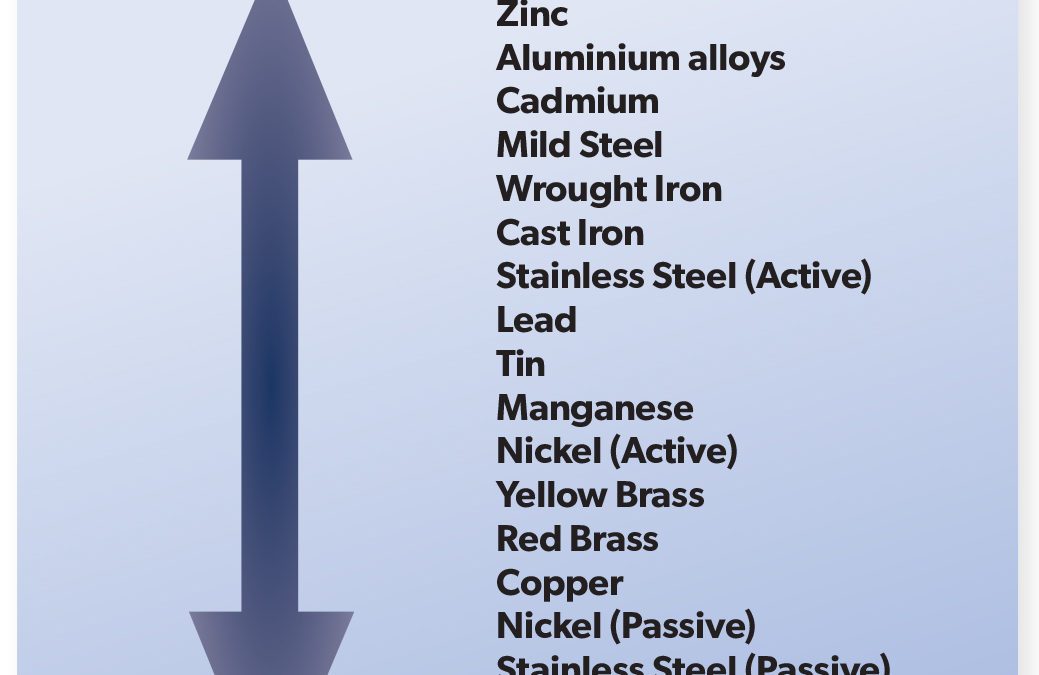
Protecting metallic structures from corrosive attack is not just about using coatings or cathodic protection, the design of the structure also plays an important part. There maybe situations which call for two different metals, or alloys, to be joined. If these metals are electrically connected under conditions permitting the formation of a “corrosion battery”, then in this situation, one metal can corrode preferentially in relation to the other metal to which it is physically and electrically connected. This is termed “galvanic corrosion”.
Galvanic corrosion is an extremely important corrosion process, and one that is frequently encountered. The principles of galvanic corrosion are used to advantage in the cathodic protection of surfaces by using sacrificial metal anodes or inorganic protective coatings. The Galvanic Series lists the activity of metals in order, from the most active (magnesium) to the least active (platinum). When two metals are connected, the metal located higher up the scale will corrode preferentially, and thereby protect the metal lower down the scale from corrosion attack. As an example, if copper and zinc are connected together, the zinc will dissolve, or be corroded preferentially, thus protecting the copper. The metal attacked is defined as the anode, thus the zinc will serve as an anodic area, and the copper will form the cathodic, or the protected area. The function of each will be identical to that found in the typical corrosion cell, as in the set up for rusting of iron. The intensity with which the two metals react in this preferential manner can be measured by the distance between the two metals in the Galvanic Scale. As magnesium is at the top of the scale it will have a tendency to corrode in preference to any other metal shown on the Galvanic Scale, conversely, platinum, which is extremely inert, never corrodes preferentially. While the tendency to corrode depends on the kinds of metal coupled together, the rate at which the corroding anode is attacked depends on the relative area of the anodes and cathodes joined together.
If a small magnesium anode is coupled to a large area of steel (as in protection of a ship’s hull), the anode area (being small as compared to the cathode area) will corrode very rapidly. This is due to the entire galvanic current being concentrated on a small area of active metal. Conversely, if the cathode area is small compared to the anode area the corrosion of the anode will be relatively slow, since the demand on the anode is spread evenly across the whole surface of the metal. It must be kept in mind that the areas of each metal involved are those in electrical contact and not just the areas of metal in physical contact. The area of metals in electrical contact will be determined by those areas which are in contact with an external conductive circuit (electrolyte).
For example, in the use of rivets of one metal to fasten together plates of different metal, we find an excellent example of possible effects of galvanic corrosion. If steel plates (anodes) were joined with copper rivets (cathodes) only a very slow corrosion of steel would occur, since the galvanic corrosive effect is spread out over a large area of steel. On the other hand, if copper plates (cathodes) were joined with steel rivets (anodes), a rapid rusting of the rivets would occur. The small area of rivets would be attacked by all the galvanic current generated by large copper plates and would corrode rapidly.
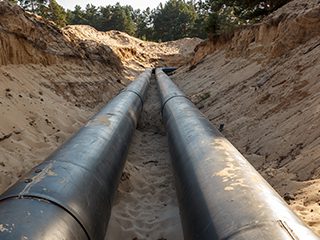
Buried metallic structures are common in the oil and gas, petrochemical, and chemical industries. These structures are exposed to a corrosive underground environment which results in their degradation and eventual failure in the form of loss of primary containment. The preferred fabrication materials for the construction of buried assets are carbon and low-alloy steels. Carbon and low alloy steels with some means of mitigation have low capital and operating cost (Opex and Capex) over the asset life cycle when compared to other engineering materials (e.g., polymeric and corrosion resistant alloys). Other notable reasons are, better environment management, safety and security concerns, and long-term strategic objectives. Whilst most buried assets are made of carbon and low-alloy steels with some means of external corrosion control (e.g., protective coating and cathodic protection system), in specific cases where historic data indicate severe corrosion that cannot be acceptably reduced with some means of mitigation in the exposed environment, the other option is to utilise stainless steel or other corrosion resistant alloys (CRA) to reduce corrosion to as low as reasonably practicable. Despite of the superiority of stainless steel to carbon steel in terms of its resistance to corrosion and environmental assisted cracking, it is not immune to localised corrosion damage in the form of pitting, crevice corrosion, stress corrosion cracking (SCC) and intergranular corrosion. Hence, when CRAs are used, there is a need for monitoring, mitigation and management to achieve asset design life during its operation.
Buried metallic assets are exposed to soil, atmospheric gases, ground water and corrosion activating bacteria such as sulphate reducing bacteria (SRB), and others. External corrosion of buried assets is directly influenced by oxygen as it promotes the cathodic reaction, other parameters that accelerate external corrosion are, soil type (e.g., clay, marshy etc.), pH, presence of chlorides, stray current, and induced alternating current. Stray currents can be direct current from a cathodic protection system (CP) or alternating current, e.g., from powered transit systems, electrical welding operations, and mining operations. Also, buried metallic structures that are less than 500 m from power lines rated at 312kV and above, are at risk from induced ac corrosion, plus pose an induced ac hazard to maintenance personnel, and an adverse effect on the cathodic protection system. Although, industry statistics for buried metallic structure show that failures due to induced ac are rare, best engineering practice and codes (e.g., NACE SP 0169, 2013; NACE SP0285, 2011 and API RP 1632, 1996) recommend effective mitigation based on powerline rating, separation distance. angle of overhead, soil resistivity, coating conductance, type of powerline support pole (e.g., metal/wood etc.), and other factors. It is best to carry out computer modelling to assess the effect of ac interference on a buried structure prior to implementing mitigation measures. Due to the complex variables that influence corrosion of buried metallic structures, atmospheric, soil, microbiological influenced corrosion (MIC), and stress corrosion cracking (SCC) are all possible.
The corrosion rates in different soil types vary with soil chemistry, mineralogy and permeability. Soils with poor drainage like clay are more corrosive than soils with excellent drainage like sand. Soil contains base and acid forming elements. Base forming metals that influence corrosion are sodium, calcium, potassium, and magnesium. Acid formers are chloride, carbonate, nitrate, sulphate and bicarbonate. Chloride ion concentration in water can be determined using the ASTM D 512-12 method (withdrawn 2021) and sulphate ion concentration in water is determined using ASTM D516-16 (2016).
The electrical resistivity of the soil greatly influences corrosion, as resistivity increases, the conductivity decreases, and vice versa. Soil resistivity less than 1000 ohm-cm is severely corrosive, and resistivity greater than 10,000 ohm-cm is considered progressively less corrosive. The ASTM G 57-20 (2020), method is recommended, using the
Four-Pin method or the Soil Box (Nelson meter), for determination of soil resistivity, and for greater depths, the Geonic EM 37 can be used.
Soil pH influences soil corrosivity. At a pH value less than 4, the soil is extremely corrosive to carbon steel and at a value greater than 10 soil corrosion is controlled except in the presence of strong alkaline solutions. Field operating data for carbon steel, indicates it is unaffected by pH except at a value less than 4, or greater than 10, with the cathodic reaction driven by oxygen reduction. As the moisture content reduces, even at higher soluble ion concentration (very dry soil), the soil corrosivity reduces.
At the pH range found in most soil, oxygen would usually be present for corrosion to take place. This is because most soils have either a neutral or slightly alkaline pH which does not accelerate corrosion except when there is poor aeration or differences in oxygen concentration in the soil creating an anaerobic condition that promotes galvanic (differential concentration) corrosion cells.
Sulphate reducing bacteria (desulfovibrio desulfuricans) can be found in soil with anerobic conditions containing organic matter like clay soil. This results in MIC of metallic structures. Details on the characteristics of soil can be found in ASTM STP 1013. For a better understanding of soil corrosion behaviour, it is advisable to collect soil samples at the installation depth for a detailed soil analysis prior to installation of asset.
The predominant damage modes for buried metallic structures are progressively, wall thinning, pitting and cracking. Common failure modes are pin hole leak, small to moderate leak, large leak, rupture and fracture. Because of the adverse effect on people, environment, asset, and company reputation in the event of loss of primary containment, the integrity of buried assets should be considered a priority.
To ensure effective mitigation of external corrosion, during backfill the soil should be carefully selected to ensure it is dry and free from gravel, clay, rocks, marshy soil, and other harmful corrosion activating materials. The buried structure should be coated with a protective coating (often high build epoxy, vinyl ester etc.) and inspected at hold points to ensure conformance to specification. The coating should have high dielectric strength, superior resistance to water ingress, good mechanical properties (adhesion and abrasion resistance), good flexibility, compatible with CP, withstand degradation due bacteria, excellent performance, long service life, and ideally have low application cost. The asset should also be protected with impressed current CP or sacrificial anode CP with a design life greater than that of the structure.
A CP interference survey should also be conducted to rule out stray current, and if found, should be mitigated to prevent sudden loss of containment.Company standards and codes should be enforced during the engineering, procurement, construction, installation, pre-commissioning and commissioning phases of any buried metallic asset. Because of the criticality of buried assets, it is vital to develop and implement an integrity management programme that is risk-based (API 580, 2016). For pipelines, a risk-based assessment (RBA) should be conducted to determine the remaining asset life. Finally, I would advise the use of ISO 55000 (2014) and 9001 (2015) to develop the asset management plan to increase top leadership commitment to integrity whilst ensuring continual improvement. Joseph Itodo Emmanuel, Consultant, Joiegloe Global Synergy
In this issue, we have three articles from experienced Fellows who have made a significant contribution to the understanding of corrosion and its prevention. The first follows on from the topic in the last issue, where Brenda Peters discusses the application of protective coatings, and what needs to be done beforehand.Secondly, Joseph Itodo Emmanuel describes the corrosion protection of buried structures, and finally James McLaurin explains how the design of a steel structure can influence its protection, specifically from bi-metallic corrosion problems.
Corrosion protection by protective coatings
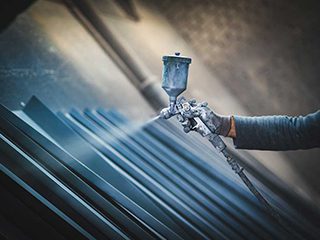
The institute of Corrosion is split about 50:50 between Engineers and Scientists, and across several different disciplines, the common ground is in Corrosion Prevention, and there are many overlaps within the fields of expertise.Following on from the Fellow’s Corner column in last issue of Corrosion Management, the emphasis of this article is on paint as a means of corrosion protection.Paints generally falls into two categories, decorative and industrial (protective), and paint manufacturers have tended to split their manufacturing and R&D, specialising in one or the other. However, decorative paint can be protective and industrial paint can be decorative. When we talk about “Industrial” or protective paints, we are usually referring to the prevention of steel from rusting. These paints are the most sophisticated technically engineered paints, but they tend to be applied by the least qualified painters. This is why the Correx ICATS (Industrial Coating Applicator Training Scheme) programme was developed to improve the quality and longevity of the finished product.In addition, many manufacturers will run their own training schemes on how their particular product should be mixed and applied and the limitations of the ambient conditions. Paint inspectors are also employed to ensure that the paint is stored and applied correctly, and the surface preparation is to the specified standard. These paint inspectors are normally trained by ICorr or NACE or both, so what can go wrong?
When applying paint to new steel a primer coat is applied to promote adhesion and protect the surface against corrosion, however preparation of the steel prior to painting is paramount. When investigating paint failure, it is a bit “chicken and egg”, did the steel corrode and push off the paint or did the paint fail allowing the steel to corrode.
When the steel leaves the mill, it will have some level of millscale on the surface which is blue/black in colour, although this surface can look nice and smooth and suitable for painting, this millscale is however only loosely adhered to the underlying steel, and will scale off after painting.This can often be seen on hand rails and post made from tubular steel which has not been blast cleaned.
To prepare steel for painting, several methods can be used, which depend to an extent on the end use of the material,for example, steel can be pre-treated to inhibit rust and passivate the surface: examples of which are in hot dip galvanising, where the steel is “pickled” in acid to remove rust and millscale then immersed in a vat of molten zinc, which forms layers of zinc alloys at the interface with the steel, culminating in a layer of pure zinc on the surface, and this can be difficult to paint as it is smooth and can result in poor adhesion. It can be left to weather so that zinc oxides form on the surface resulting in roughening which provides a key for the paint to adhere to, or alternatively a variety of primers are available which etch into the surface. These include, acid etch epoxy primers and more the commonly used “T Wash”, a mordant solution originally developed by British Rail, which is a phosphoric acid solution containing alcohol and copper carbonate as an indicator. The solution reacts with the surface of the zinc and a black coloration is formed, anywhere it doesn’t react and show this colour change can indicate previous contamination on the galvanising and these areas need to be washed, degreased and retreated.
Steel can be treated with hot metal spray (Thermal Spray) as an alternative to hot dip galvanising creating an anti-corrosive layer with a profiled surface to which paint can be applied. This is normally zinc or aluminium and is often used for high temperature conditions.
Similarly, steel can be “phosphated” by dipping in a bath containing a solution of zinc in phosphoric acid forming a thin layer of zinc phosphate on the surface, and which is commonly used in the automotive industry. This can then be undercoated and a decorative finish coat applied on top. The paint can be applied electrostatically in a powder or liquid form then heat cured or applied by spray, roller or brush.
However, in the heavy duty protective coatings field, steel supplied from the factory has to be blast cleaned to remove all millscale and rust, and then primed within a short period of time to prevent flash rusting from forming on the surface. Epoxy primers are commonly used, but these need a good steel surface profile to form a key to ensure good adhesion, so the profile of the blasted steel needs to be checked before application of the paint.As epoxies cure by chemical reaction, they will continue to cure over time until they become fully cross linked, and at this stage they become unsuitable for overcoating, so the manufacturers’ overcoating times must be adhered to enable the following coats to adequately bond with the surface of the epoxy. If the overcoating time is exceeded, these coats will eventually lose adhesion at the interface with the epoxy, and detach. Epoxies, like most protective coatings, are also sensitive to ambient conditions, they won’t normally cure if it is too cold, and if there is any condensation on the steel, or if they get wet before they cure can prevent them from curing properly. For example, with amine cured epoxies, the amine can react preferentially with moisture resulting in undercure, and if moisture gets on the surface before they
are fully cured, amine bloom can occur resulting a dull and chalky surface. Therefore, attention to temperature and dewpoint are very important. Epoxy coatings have been developed which are moisture tolerant and some can even be applied underwater and are utilised for subsea repairs.
When epoxy primers are used then these need to be finished with a decorative acrylic or polyurethane top coat as these are UV resistant – epoxies yellow with sunlight and colours fade through chalking. Acrylics retain their colour longer.Similarly, for alkyd based systems, urethane alkyd top coats are used as these are tougher and have greater longevity.
Historically red lead primers were used, although these were phased out in the late 1960s due to toxicity and leaching they can still be found on many steel structures, and cause problems when it comes to maintenance (full containment and special disposal are necessary).These have been replaced by zinc rich or other anticorrosive primers.
Similarly, some steel structures have existing coats of chlororubber or acrylated rubber, which have good corrosion resistance and longevity.However, these can also pose problems during maintenance painting, as they are incompatible with solvent based coating like epoxies, and cannot be refurbished with anything else.
Whichever paint system is chosen it is advisable to use material supplied by the same manufacturer as these are developed to be compatible with each other, and if a failure should occur then there is less anomalies to be considered.Manufacturers will offer a full paint system with primers undercoats and finish coats, for a specific end use. Brenda Peters
In this series of articles by practitioners who have made a significant contribution to the field of corrosion protection, the editor discusses paint technology.
Over the past 18 months this column has concentrated on topics relevant to the corrosion engineers, however, there is a need to address the part that protective coatings play in the corrosion protection of structures.In an attempt to address this imbalance, this issue will feature an introduction to paint technology, and how protective coatings fit into the overall corrosion protection scenario.
Paints and coatings are used to protect and decorate, however, before we consider the properties of paints and how they work, it is necessary to consider “what is a paint”.
All liquid paints are composed of three basic ingredients, resins, pigments and solvent. The resin is the film forming portion of the paint – it holds together the pigment particles and binds the paint to the surface. The resin plays the main part in contributing to the durability, strength and chemical resistance of the final film.Paint types are often referred to by the type of resin in the formulation, so when we talk about an alkyd or epoxy for example, we are referring to the main resin used to make the paint.
The second ingredient in a paint is the pigment. This is a relatively insoluble finely divided powder, or more commonly a mixture of powders. The pigment(s) primarily provide hiding power (opacity), and colour, but they also improve corrosion and weathering resistance, increase paint adhesion, decrease moisture permeability and control gloss. The final ingredient, the solvent, “carries” the resin and pigment(s) and controls the viscosity, such that the paint can be applied to a surface. The chemical ingredients in each of the components vary widely from one generic type of paint to another, in addition each of the components (resin, pigment and solvent) are also usually mixtures of different materials. For example, a paint formulation may contain three or four solvents – one solvent dissolves the resin, while some are used to control evaporation, and others are used to dilute the solution (control viscosity). It is not important for a user to know all the ingredients in a paint, suffice that he knows the properties.
The words, paint and coating, are used interchangeably – they mean virtually the same thing. However, it is necessary to distinguish between a coating system and a coat of paint. A coating system is more than just the material applied, it also refers to other factors such as the surface preparation requirements, the application of a number of coats of paint, in a specific order, and the thickness of each coat of paint. A coat of paint is a single layer, applied to form a coherent film when dry.
The common designation of a series of coatings applied to a surface is primer, intermediate or build coat, and top coat. Normally each coat contains properties that contribute to the success of the total coating system.
Function of each coat
The primer is the first coat applied to the surface. The main function of the primer is to provide adhesion to the substrate – if the primer doesn’t stick, then the whole coating system will fail. The primer also provides a key for the rest of the system.
The intermediate coat is required in many coating systems to provide one or more of the following functions; increase film build, improve chemical resistance, or serve as an adhesion or tie-coat between primer and topcoat where they are not compatible.
The topcoat is intended to be the last coat applied. This provides the weather and/or chemical resistance and also imparts characteristics such as colour, gloss wear resistance, abrasion resistance.
Considering the two main reasons for painting – protection and decoration, this article will concentrate on the protection properties.A paint can protect against, amongst others, abrasion, chemicals and fire, but probably the most common protection use is to prevent corrosion of steel.
There are three recognised ways that coatings protect steel against corrosion, providing a barrier, inhibition and sacrificial action.
Barrier protection is just as the name implies, the dried paint film blocks moisture from reaching the steel surface. All coatings do allow moisture and oxygen to penetrate them to some extent, this is called permeability. Coatings which protect by a barrier mechanism have very low permeability. Typical barrier coatings are 2-pack epoxies and polyurethanes, although there are additives which can reduce permeability further (see below).
Coatings that protect by inhibition contain active pigments to inhibit or interfere with the corrosion reaction on the steel surface. Typical traditional inhibitive pigments were lead compounds and chromates.However, concerns about toxicity and environmental pollution have led to their replacement with so called non-toxic anticorrosion pigments such as phosphates, and many proprietary materials. As moisture passes through the film, the anti-corrosive pigments slowly dissolve and depending on their chemistry interfere with either the anodic or cathodic reaction and thus retard corrosion.
The third mechanism is sacrificial action and is the way that zinc rich primers protect steel.These primers are highly loaded with zinc, such that the zinc is in contact with itself and the steel surface.As zinc is more active than steel, and if the elements necessary for corrosion are present, then the zinc will corrode in preference to the steel (i.e. sacrifice itself), and hence protect the steel. Zinc rich paints are classified into two types, inorganic and organic. This classification refers to the resins used in the formulation and not the form of the zinc.The binder (resin) in inorganic zinc rich coatings is a form of silicate, and organic zinc rich paints are nowadays typically epoxy based.
Returning now to the paint system. This is designed to give optimum protection to the steel or metal substrate by combining the properties of the various coats. Thus for very long term protection, an inhibitive primer, or more particularly a zinc rich primer, would be combined with a barrier intermediate coat and topcoat.In this way, two protective mechanisms are used to give long life protection.
The permeability of a paint and hence its barrier properties are related to the resin used, with oleoresinous and alkyd paints having high permeability and epoxy and polyurethanes having lower permeability due to their highly cross-linked structure.Within each generic class of paint, permeability can be further reduced by formulation, and in particular the use of plate-like pigments such as micaceous iron oxide (MIO) and aluminium flakes. These special pigments orientate themselves parallel to the surface when the paint dries and provide an extremely low permeability film (they effectively increase the path length moisture has to take to reach the metal surface). In a similar manner, permeability can be reduced by increasing film thickness although there is a limit to this before other properties start to suffer.
No matter which type of paint is used, if proper surface preparation is not carried out then vastly inferior performance will be obtained.Surface preparation is essential in two important areas, it provides an anchor for the coating and it allows intimate contact between the coating molecules and the metal surface, and this will be the topic
for a future column.
Non-metallic materials are an essential element of facilities engineering in upstream E&P operations, being widely used in a range of functions from seals and corrosion barriers to piping and structural elements. This short article offers a brief insight into the capabilities of some of the available options.
In common with metallic materials, the selection and successful use of non-metallics is dependent on a detailed understanding of the way in which each material responds to the service environment over the life of the component, or system. Degradation of the capabilities of non-metallic materials can occur through a range of physical and chemical processes.
Elastomers (or rubbers), are widely used in oilfield sealing applications. These are highly elastic, polymeric materials, used in compression seals in a range of downhole, subsea, topsides and pipeline applications. Various nitrile and fluorocarbon-based materials are typically used to span the range of temperatures, pressures and fluid environments, met in oilfield operations. Processing of these materials involves “vulcanisation” or curing, using small amounts of sulphur, amines or peroxides to create highly flexible and extendable polymers.
A number of key failure modes can affect elastomer seals.Some relate to the elastomer material being used outside its working temperature range, or in fluids with which it is incompatible. This can lead to chemical embrittlement, softening, compression set, large volume changes, and loss of elasticity at low temperature – any or all of which can lead to a seal failing. Pressure related failure modes can also be important. Extrusion damage occurs when a rubber seal is forced into the gap which it is sealing as a result of the applied pressure. Gas decompression damage occurs primarily in dry gas duty, being qualitatively similar to the “Bends” suffered by divers when returning to surface.
Qualification of seals and the material’s performance in any component or system, is typically carried out using a combination of materials and system testing, taking account of the time and temperature dependent properties of the materials involved. Finite element analysis (FEA) modelling of the complex, non-linear and time dependent materials properties of elastomers has proven vital in understanding some applications.
Further applications of a range of elastomer materials are to be found in hydraulic and transfer hoses, and in the flexible joints that are incorporated in metal drilling and catenary risers.
Thermoplastic materials, such as polyethene and nylon, find wide application in controlling the internal corrosion of steel pipelines. Such materials are fundamentally different in nature to elastomers, having a much smaller elastic range, and the way in which they are used is therefore somewhat different. As their name suggests, these materials are reversibly melt-processible, often being formed by extrusion for oilfield use. Materials are typically differentiated by their maximum service temperature capabilities, and their resistance to particular service fluids. So, for example, polyethylenes are typically used in water duties to a maximum of 60°C or so, while nylons can be used in hydrocarbon production service up to 90°C.
Thermoplastic liners have an extensive track record, both onshore and offshore, in providing a corrosion barrier within carbon steel pipelines, particularly for water injection service, where suitable metallic options are typically much more expensive or much less reliable. There are a number of “pull-through” liner technologies which can offer cost effective solutions to mitigate internal corrosion challenges in both new build projects and in rehabilitation. Often these involve “tight-fit” polyethylene liners, which have their outer diameter mechanically reduced, while they are pulled into a steel pipe. Release of the pulling force allows the polymer to relax back against the internal diameter of the pipe, which remains the structural element of the pipeline. Another option is the use so-called Reinforced Thermoplastic Pipes (RTPs) which are used, with good economic benefit, as loose fit, “slip liners” or even as stand-alone pipelines, in a range of production and injection services. These are composites in which glass, aramid or carbon fibre, or wire, reinforcement, is wound over a plastic pipe, in order to increase its pressure capability.
Thermoplastic materials additionally find wide application in unbonded flexible pipes, importantly being used as the internal and external sheathes in these complex pipe structures. The flexibility of these pipes often enables faster or more convenient offshore installation and hook-up, and provides excellent fatigue resistance in a range of harsh environments. Several thermoplastic materials are used as internal pressure sheathes, responsible for primary containment. Nylon materials are widely used in production service up to 60 – 90°C, with fluoropolymers used at high temperature, to around 130°C. In water injection, polyethylene is normally used. External, or outer, plastic sheathes contain the whole pipe structure, helping to keep the high strength steel wire reinforcement out of contact with seawater. Typically, this sheath is made of polyethylene for static pipes and nylon for pipes used in dynamic service.
Thermosetting materials, such as epoxy and phenolic resins, form the basis of a further set of related oilfield corrosion protection technologies. These materials employ a chemical hardener to permanently, and irreversibly, “set” the polymeric resin, often with temperature applied during curing to accelerate that reaction.
Fusion bonded epoxy (FBE) is used very widely as an external pipeline coating. It is applied as a powder to a carefully prepared surface, and melted and cured in situ to give a coating approximately 0.5 mm thick.
FBE also finds wide use as the base layer in multilayer coatings with polyethylene and polypropylene. Further, options for subsea insulation involving the incorporation of glass microspheres into thermoplastic layers are also widely accepted, for use on subsea pipelines. The thermoplastic nature of these materials allows the pipelines to be reeled for transport and installation, where required. Where more rigid insulation is acceptable, systems incorporating glass-microspheres into epoxy resins can be applied, for example to subsea manifolds.
Epoxy resins, and similar materials such as vinyl esters, find wide use in the painting and external protection of structures and equipment, as well as in the internal coating of vessels, typically in combination with glass flake fillers.
Glass reinforced epoxy pipes find a range of downhole, piping and pipeline applications, mostly in water service. Typically, this kind of pipe is rated to 16 bar design pressure, although some small diameter products can go much higher than this, for example in downhole tubing applications. A range of adhesively bonded, mechanically jointed and threaded connections are used across the industry. Qualification of composite pipes, and other non-metallic pipe options, is normally undertaken through a series of full-scale pipe tests, including: pressure rating using long term (10,000 hr) testing of pipe and end fittings, characterisation of minimum bend radius for storage, transportation and operation, characterisation of axial load capability, testing of capability of the product to handle gas service, and performance of the product in UV. A range of other engineering design issues also need to be worked through with each product, such as internal surface roughness, heat transfer co-efficient, and pipe expansion due to pressure and temperature.
Glass reinforced epoxy pipes can also be used as a liner, with composite lined downhole tubing having a long track record of successful onshore use in a range of corrosive services, and in offshore water injection. Some composite liners are capable of continuous service at up to 80°C in water-based applications. Insertion of the stiff liner into the steel host, on a joint-by-joint basis, leaves a small annulus between the liner and the host which is typically filled with cement, to transfer mechanical and pressure loads to the carbon steel host. Modified tubing connections allow the liner to be properly terminated, with thermoplastic corrosion barriers providing continuity of corrosion performance.
Finally, it is worth mentioning the use of external epoxy composite wraps to repair and reinforce topsides piping. This is a very convenient repair technology that does not involve hot work and which can be used to seal thinned, cracked or holed piping, at very least as a temporary solution until full repair can be affected.
The use of non-metallic components is an integral part of the materials selection challenge in oil & gas production. Given their frequent role in maintaining a primary or secondary containment, selection and use of these materials should be as carefully scrutinised as with the metallic components within any well, processing facility or pipeline.
For additional information see,B Kermani and D Harrop, Corrosion and Materials in Hydrocarbon Production; A Compendium of Operational and Engineering Aspects, Wiley, 2019, Chapters 9 & 15.
In this series of features from ICorr Fellows who have made significant contributions to the field of corrosion protection, Malcolm Morris discusses the use of Thermal Sprayed Metal Coatings.
An Introduction to Duplex Thermal Sprayed Aluminium (TSA)
Thermal metal spraying is a process by which a steel substrate is protected from corrosion by coating with atomised particles of softened or molten metal. The most commonly applied metals used for this process are aluminium (TSA), or zinc (TSZ), however any metal which is ductile and able to be produced in a wire form can be thermally sprayed, (e.g. tungsten, molybdenum, lead, and even silver or gold), plus combined alloys of zinc and aluminium.
The most common methods of application are:
Gas Applied: A process in which a coil of metal wire is fed to the tip of an application gun, where the metal is melted by a gas flame, and the molten metal is simultaneously atomised by compressed air jets and directed onto the substrate.
Arc Applied: Similar to gas applied – Arc spraying is performed by feeding two electrically conducting metal wires towards each other. An electric arc is produced at the point just before the wires meet. The arc melts the metal wires, and a high-pressure air line is used to atomise the molten metal into fine droplets which are sprayed onto the previously cleaned and prepared steel surface. Arc application gives faster productivity compared to gas application.
Thermally sprayed surfaces have historically been supplemented with protective coatings, in order to increase the level of protection, and also as a cosmetic coat to mask the appearance of the corrosion products of the metal spray, which appear as aesthetically poor, white salt deposits. Paint systems range from a relatively thin single coat (designed to fill and seal the porous voids in the film, which naturally occur in the application of the metal spray), to multi-coat high build systems which are intended to significantly extend the service life of the structure.
A common feature of all thermal spray coatings is their lenticular or lamellar grain structure. Due to the nature of the application, the molten metal cools and solidifies instantaneously upon impact with the substrate, forming a porous matrix of flattened metal particles, interspersed with inclusions of metal oxide and unmelted metal. This porosity is sealed by normal ageing, through formation of salts of the component metals (oxides, hydroxides, carbonates, etc.), or as stated above by sealing, and or, painting.
The correct surface preparation is essential, involving cleaning followed by grit blasting to preferably white metal, Sa3 (BS EN ISO 8501-1), with a surface profile of at least 75µm. This provides the chemically and physically active surface needed for good bonding of the sprayed metal.
Both zinc and aluminium are anodic to steel. Zinc affords greater electrolytic activity than aluminium, providing good galvanic protection to steel exposed in the atmosphere. Breaks in the coating are protected by the galvanic couple, i.e. the zinc corrodes, rather than the structural steel, and its’ corrosion products will self-seal the breaks in the coating.
Aluminium is less active than zinc. Aluminium’s protection of the substrate relies more on a thin oxide passivating film at the surface, however because aluminium is less active than zinc, it cannot protect breaks in the coating.
It has been reported in the literature that the maintenance-free service life of an unprotected aluminium alloy metal spray coating on a typical bridge was predicted to be 25-40 years. Using a sealer and topcoat over the metalised layer is predicted to extend the service life 15-20 years [1]. Also, testing at SINTEF, Norway, in natural seawater, gave free corrosion rates of 2 to 3 microns per year after 11 months of exposure for both Al and Al 5% Mg. This would imply a service life of 60 years for a 200-micron Thermal Sprayed Aluminium Coating [2].
TSA with a single coat of sealer has a track record stretching over several decades, however the disadvantage of this system is the dull, rough appearance of the metal spray. Since the sealer is only applied as a thin coat, it is not possible to enhance the surface appearance, and the corrosion products of the metal spray may become obvious within a short period.
This led to the application of a high-performance paint specification on top of the metal spray in order to enhance its durability, and these so-called duplex systems have been used extensively, based on both TSA and TSZ processes. TSA based systems were specified in the Norwegian Offshore sector, with TSZ used widely on structures such as road bridges.
TSZ systems have performed very well over extended periods (up to 30 years), however TSA duplex systems began to display signs of premature breakdown of the coating system, coupled with extensive degradation of the metal spray coating. Examples of such breakdown included Hutton TLP, Sleipner Raiser Platform, Troll A platform, and at the Troll plant at Kollsnes.
Thermal metal spray coatings have a long service track record in the petrochemical and marine sectors listing advantages such as:
Limited maintenance
Low service life cost
Superior adhesion
Resistant to mechanical damage
Self-healing
No drying or curing time
Wide range of operating temperatures: -45°C to 538°C
Research was carried out with a series of panel exposures using both gas and arc applied TSA, plus TSZ. These metal sprayed substrates were sealed with a selection of different sealers, and then overcoated with a medium build epoxy MIO/polyurethane specification, and also a high build glass flake epoxy. Panels were immersed in salt water and fresh water, plus natural weathering in both industrial and marine environments.
The results of this series were quite startling. After 24 months saltwater immersion severe degradation of all the paint systems over TSA was observed; with extensive degradation of the underlying metal spray. The large quantities of white aluminium corrosion products effectively blew off the paint system. No differences were observed between any of the different sealers, or between gas or arc applied TSA. All systems applied over TSZ were satisfactory on immersion up to 12 years salt water immersion. All fresh water and atmospherically exposed panels also performed well up to 12 years.
From this testing, it was evident that application of high build coating systems over TSA gives very poor performance when subjected to high chloride salt environments, such as hot salt spray or salt water immersion. The speed of the failure is variable, possibly depending upon the efficiency of the sealer coat, however the end failure effect is the same in all cases. Performance of the same specifications on natural weathering in an industrial C3 environment and fresh water immersion is generally good. Thermally sprayed zinc substrates perform well in all environments.
The definitive document on the theory of degradation of coating systems over TSA was published in 2004 by Torstein Rossland of Statoil [3]. The paper describes a number of system failures in the North Sea oil industry, and suggests the following mechanism for coating failure.
When the duplex coating is in galvanic contact with bare steel, galvanic corrosion of the thermally sprayed aluminium is initiated. Cathodic oxygen reduction takes place at the bare steel, while anodic dissolution of the thermally sprayed metal takes place under the organic coating.
In chloride containing environments, such as in marine atmospheres, chloride ions migrate under the organic coating to maintain the charge balance. Aluminium chloride is then formed.
This is highly unstable in the presence of water, reacting to form hydrochloric acid. The electrolyte under the organic coating will therefore be acidic. Cathodic hydrogen evolution will start under the organic coating, which will increase the corrosion rate of the TSA. The TSA will not be passive in the low pH electrolyte. Hence, the thermally sprayed aluminium corrodes actively and rapidly. The organic coating holds the aggressive electrolyte at the surface. TSA with only a thin sealer will not suffer from this type of degradation since the aggressive electrolyte will migrate out of the sealer.
The recommended treatment for pure aluminium metal spray in a high chloride environment would be to apply a thin sealer coat to fill the porosity in freshly applied TSA in order to prevent corrosion through the pores before the surface can self-seal naturally by weathering, and then protect the substrate from corrosion as intended.
It should be noted that thermally sprayed zinc, or aluminium alloys, do not suffer from the same problems when overcoated by high build coating systems in high chloride environments.
References
1) Journal of Protective Coatings & Linings, May, 1995.
2) Materials Performance, April, 1995. Authors: Karl P. Fischer, William H. Thomason, Trevor Rosbrook, Jay Murali).
3) Rapid degradation of painted TSA. Author: Torstein Rossland, (Statoil, Bergen, Norway ).
We use cookies to optimize our website and our service.
Functional
Always active
The technical storage or access is strictly necessary for the legitimate purpose of enabling the use of a specific service explicitly requested by the subscriber or user, or for the sole purpose of carrying out the transmission of a communication over an electronic communications network.
Preferences
The technical storage or access is necessary for the legitimate purpose of storing preferences that are not requested by the subscriber or user.
Statistics
The technical storage or access that is used exclusively for statistical purposes.The technical storage or access that is used exclusively for anonymous statistical purposes. Without a subpoena, voluntary compliance on the part of your Internet Service Provider, or additional records from a third party, information stored or retrieved for this purpose alone cannot usually be used to identify you.
Marketing
The technical storage or access is required to create user profiles to send advertising, or to track the user on a website or across several websites for similar marketing purposes.