



The cart is empty!
London Updates
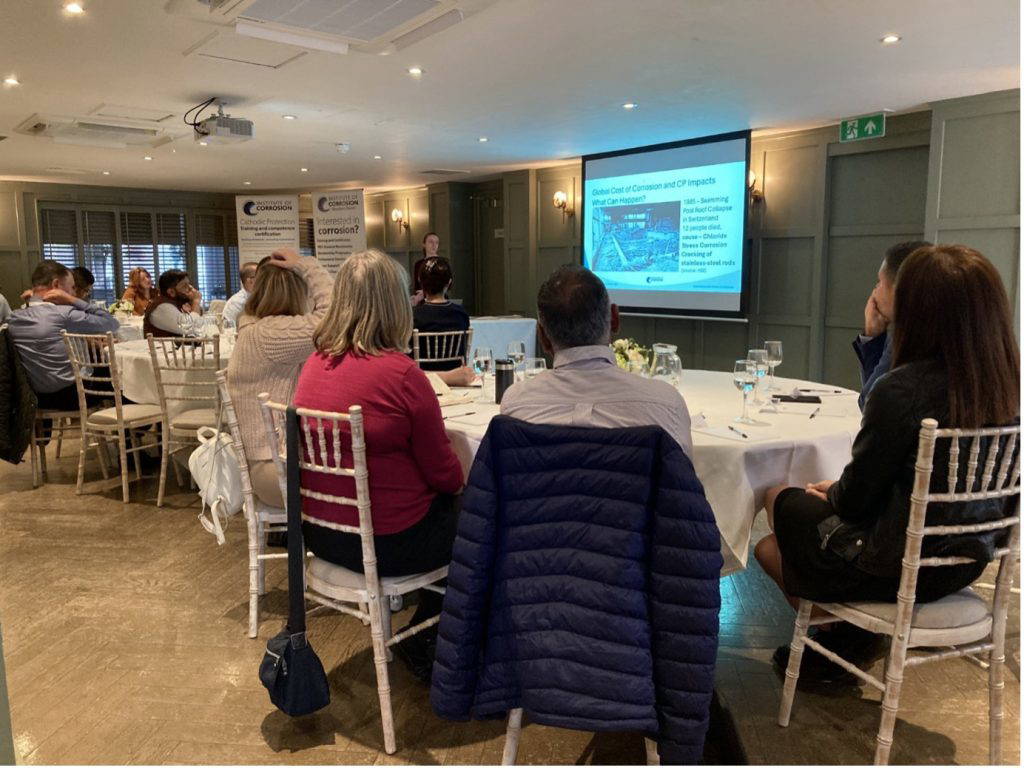
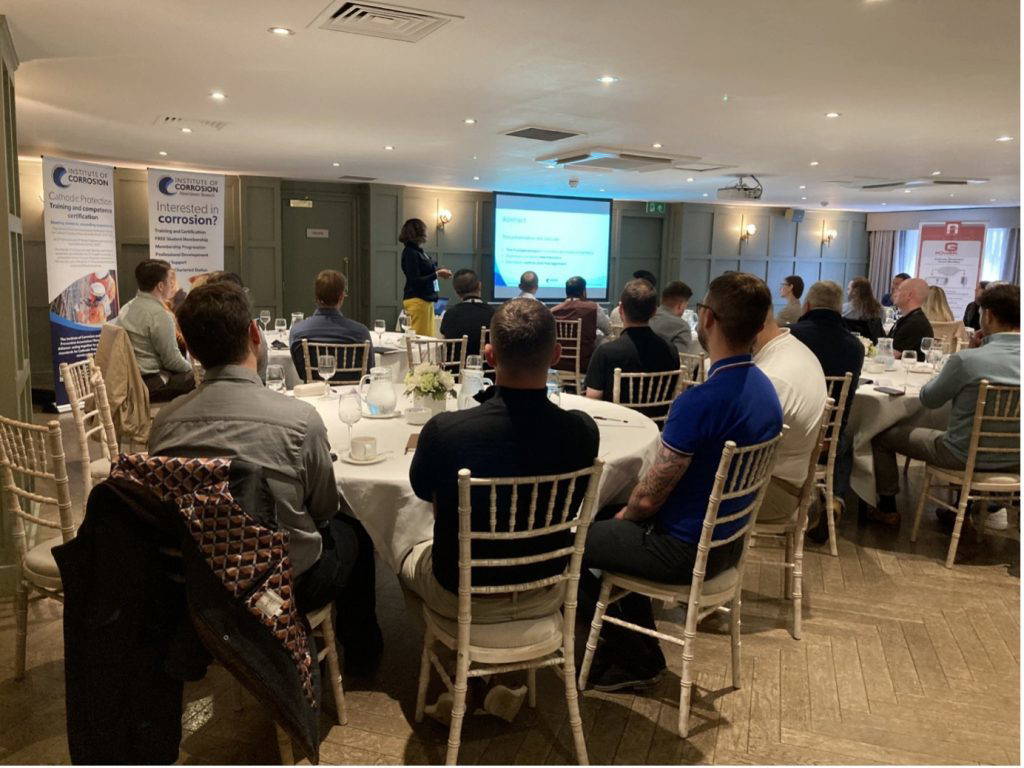
The branch held a technical meeting together with TWI on 10th April, when Mr John Thomson, Director – SeaShield, Winn & Coales (Denso) Ltd., presented “An innovative approach to offshore, subsea pipeline field joint protection.”
John has worked for Winn & Coales for nearly 15 years. A mechanical engineer, he has been involved in both commercial and technical operations with the company. He oversees the technical and commercial aspects of the systems the company supplies for marine and major pipeline projects.
The presentation described the protection of the field joints for two subsea sour-rated carbon steel pipelines, an 18 km run of 254 mm (10”) diameter pipe and a 22 km run of 304.8 mm (12”) diameter, both designed to operate at a temperature of 109° C, and covered the testing and approval of the system and the application of the system during production.
John began by explaining which system is typically used, Heat Shrink Sleeves (HSS), due to their good mechanical properties (bond strength, resistance to damage and high operating temperature) and equivalence to 3LPE and 3LPP main pipe systems, plus good installation time and a well understood system. However, he then explained the downside of such a system, hot working needed, strict temperature and surface preparation requirements, and the time taken to repair any damage. He then described the application of FJCs offshore, and noted that the typical critical path on the lay barge is usually welding the joints, however the FJC can also be a critical path due to the need for surface preparation, heating and cooling, and repair, hence the need for an innovative system to reduce the time taken to coat a joint.
This is where viscoelastic coatings (as per ISO 21809-3, Type 13) come to the fore. These can be applied as a roll or sheet, with mechanical protection provided by a polymer mesh or similar material.
The actual system applied on this project was: one viscoelastic layer (1.8 mm), two layers of polyethylene compression wrap (0.38 mm), glass reinforced resin (0.28 mm per layer), finally, one layer of polymer mesh (6 mm).
John then showed details of application, and the results of pre-qualification tests, and described the benefits of this type
of system:
• Safety – no blasting, no hot work
• Cost effectiveness – no blasting, no heating
• Efficiency – multiple steps concurrently, no PU infill
•FJC off critical path – fast pipelay rate, low repair rate (number of repairs and time of repair
Finally, John summerised the key performance highlights from the use of the novel offshore field joint coating system on this project, including:
•Achieving a record 1,766 hours free of Lost Time Injury (LTI) during the FJC operation.
•Averaging 200 to 290 Field Joint Coating (FJC) joints per day for the 304.8mm and the 254 mm diameter pipelines respectively, with a peak of 305 joints per day.
• Production application time of less than 5 minutes per joint.
•One of the lowest industry repair rates of 0.28% and 0.07% for the 304.8 mm and 254 mm diameter pipelines respectively. Averaging 0.19% for the entire project versus the KPI of 5%.
•Realising further cost savings by eliminating the need for PU infill foam on concrete weight joints.
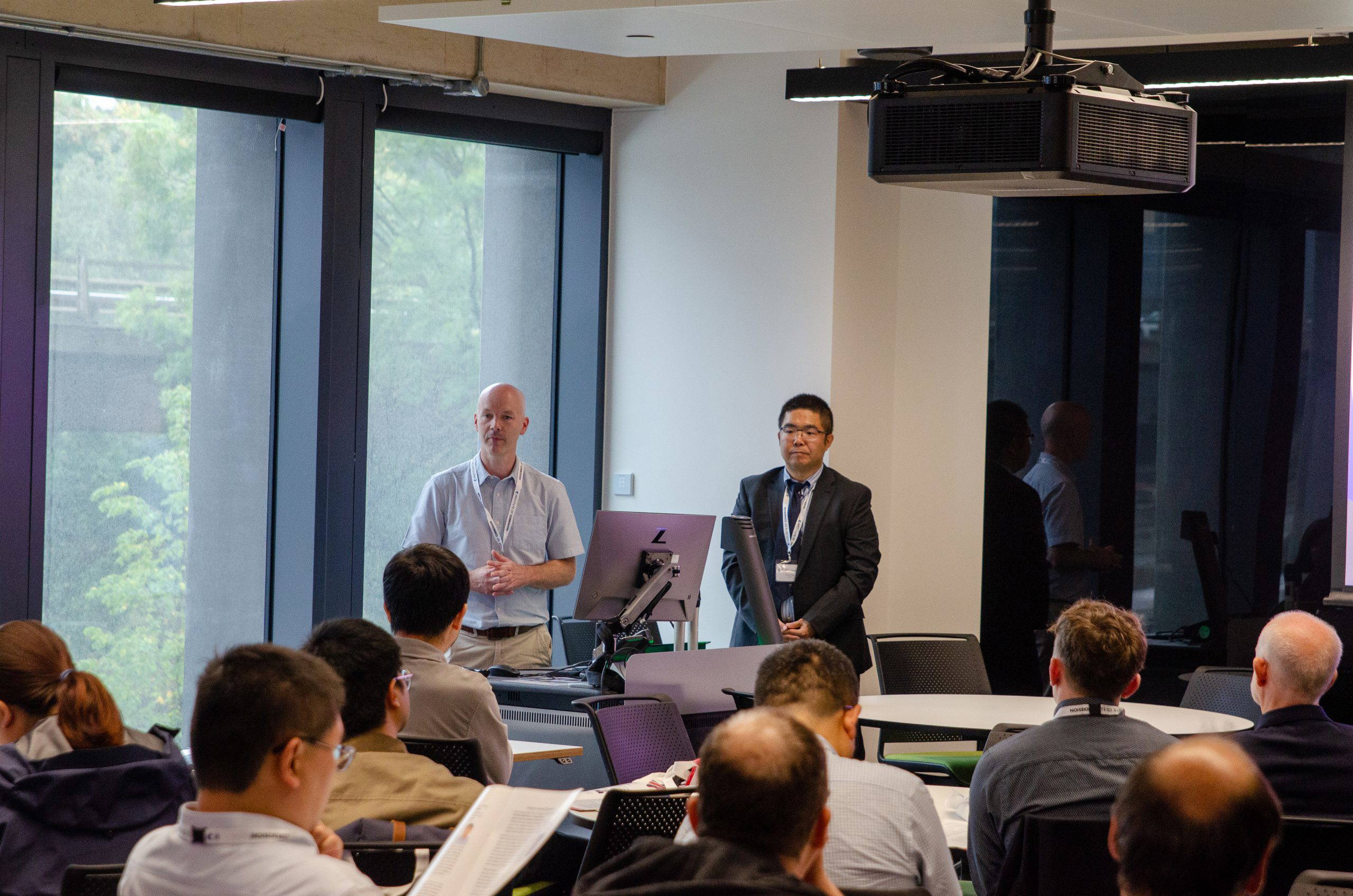
After an interesting Q and A, the chair, Paul Books, presented John with an ICorr pen, as thanks for his presentation.
The branch held two social events for members and their partners on 8th May, the final event of the
24/25 season.
First was a guided walk through Highgate Cemetery, London, where many well-known people are buried, including Michael Faraday, who discovered the principles behind the electric motor and the link between light and magnetism – well known to people in our industry, Karl Marx, the German political philosopher and revolutionary socialist, and the singer George Michael and his family. The guide explained the history of the cemetery, before the small group of members were taken on a tour, and the significance of the different grave stones were explained, and also the resting places of other notable people, eg the Mears family, who owned the Whitechapel Bell foundry which produced the “Big Ben” bell and the first Liberty Bell. The group were also shown round the Terrace Catacombs, before visiting the resting places of Faraday and Marx.
The second event was a Blue Badge guided walk around Paddington basin, now known as Paddington Central.
Our guide, Ingrid, who we have used over many years for these walks, described the new neighbourhood, centred around the restored canal, once a major hub as the result of the industrial revolution. Now gleaming office blocks and new (expensive) apartments overlook the old quayside, with landscaped public spaces, artworks, and social venues.
The Brunel building , a 17-storey office complex, was constructed with sustainability in mind, resulting in a lowering of its carbon footprint. It has a BREEAM “Excellent” and LEED “Gold” ratings.
The area is also connected with several groundbreaking people, e.g., Alexander Fleming, the discoverer of penicillin, and Roger Bannister, who was the first to break the 4-minute mile barrier; both worked at St Mary’s Hospital, which overlooks the area. There are also links to “The Paddington Bear” character author, Michael Bond, and Alan Turing, the ‘father’ of modern computer science, who cracked the Enigma code during WW2.
Finally, the walk ended at a pub in Bayswater for much needed refreshments and a meal.
ICorr London offers an extensive range of activities.
Abstracts are welcome now for consideration for the 2025-2026 Technical Programme. Interested presenters and those wishing to be added to the mailing list can contact: londonchair@icorr.org


