
By Sarah Bagnall, CEng, MRes, BEng, MIMMM, Director R-Tech Consultancy Services
Material: A106 Grade B.
Environment: Nozzle contained both steam and process water used for both heating and cooling.
Operating Pressure: 10 bar.
Operating Temperature: 185oC.
Corrosion Mechanism: Stereomicroscopy revealed localised ‘Mesa’ type attack of the weld area along the internal surface. Analysis of the corrosion deposit revealed the presence of iron carbonate. Mechanism was deduced to be CO2 Corrosion.
Editor’s Notes The economic impact of CO2 corrosion is well-documented, prompting the industry to implement various mitigation strategies over the years. However, as exploration expands into new fields with higher temperatures, pressures, and diverse fluid compositions, it is crucial to continuously assess and improve the corrosion resistance of both existing and new materials.
In the oil and gas industry, the presence of carbon dioxide (CO2) in fields poses a significant challenge due to its potential to cause severe corrosion, especially when water is present. While dry CO2 in either gas phase or supercritical fluid form is not corrosive to metals and alloys, the introduction of water-containing fluids leads to the formation of carbonic acid, which can rapidly corrode infrastructure.
The extent of CO2-induced corrosion is influenced by several key factors: Concentration of CO2 (and other components like H2S), Water Chemistry, Operating Conditions, Material Type.
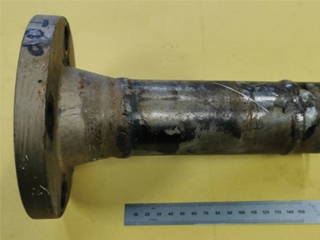
Picture 1: Nozzle Extracted from a Heat Exchanger Vessel Due to Pinhole.
Picture2: Internal Surface of Pinhole Location.
Picture 3: Internal Surface of Circumferential Weld, Detailing Localised Attack
Picture 4. Internal Surface of Circumferential Weld, Detailing Localised Attack
The Young ICorr Committee has been hard at work developing many schemes, events, and initiatives to support the early career members of ICorr – here’s an update of what we’re working on and how you can get involved! Social Buzz: Manchester Pub Quiz Success Our recent...
The 67th Corrosion Science Symposium (CSS) was held jointly with Electrochem2025 at the University of Northumbria, between the 31st August and 2nd September 2025. The CSS has been held annually since its launch in 1960 by Prof. L.L. Shreir. The symposium is always an...
The Institute of Corrosion gathered on 4th November 2025 for its Annual General Meeting (AGM), hosted this year by the Henry Royce Institute in Manchester. The North West Branch ensured the day ran seamlessly from start to finish. ICorr extends sincere thanks to the...
We use cookies to optimize our website and our service.
Functional
Always active
The technical storage or access is strictly necessary for the legitimate purpose of enabling the use of a specific service explicitly requested by the subscriber or user, or for the sole purpose of carrying out the transmission of a communication over an electronic communications network.
Preferences
The technical storage or access is necessary for the legitimate purpose of storing preferences that are not requested by the subscriber or user.
Statistics
The technical storage or access that is used exclusively for statistical purposes.The technical storage or access that is used exclusively for anonymous statistical purposes. Without a subpoena, voluntary compliance on the part of your Internet Service Provider, or additional records from a third party, information stored or retrieved for this purpose alone cannot usually be used to identify you.
Marketing
The technical storage or access is required to create user profiles to send advertising, or to track the user on a website or across several websites for similar marketing purposes.