
ETGB Chair Introduction
Welcome to the dedicated Engineering Training Governing Board (ETGB) page in each issue of Corrosion Management Journal. This space highlights our ongoing work across ICorr training and our commitment to delivering best-in-class corrosion education worldwide.
Our mission is to strengthen meaningful, lasting connections across the global corrosion community—those currently enrolled in our programmes, professionals considering certification and advanced skills, and individuals or organisations interested in developing new training opportunities. Your expectations, experience, and feedback continually shape our direction, ensuring our courses remain relevant, rigorous, and aligned with industry needs.
We warmly encourage subject matter experts – whether retired or active – to contribute to the development of new courses. Your expertise and passion are invaluable. All proposals undergo peer review by ICorr SMEs to ensure they reflect our standards and support our shared goal of preserving and advancing vital corrosion knowledge for future generations.
We also invite the wider community to join us in expanding our outreach. By helping us raise awareness of corrosion protection practices, you support professionals worldwide as they engage with the latest technologies, methods, and insights. We look forward to collaborating with you, growing our community, and ensuring that ICorr training continues to lead global professional development in corrosion management.
Get in touch, contact Dr Tony Rizk on: ETGBchair@icorr.org Today, we are pleased to highlight two key courses from the ICorr training portfolio: Microbiologically Influenced Corrosion (MIC) and Fundamentals of Corrosion Engineering (FOCE).
Microbiologically Influenced Corrosion (MIC)

Photo: Pipeline MIC Corrosion.
This intensive programme provides a structured route into Microbiologically-Influenced Corrosion (MIC), offered at three levels: a one-day Awareness course, a four-day MIC Technologist course, and the full ICorr Certified MIC Technologist programme with examination. Across seven focused modules, participants develop a strong understanding of MIC—from corrosion fundamentals and microbial mechanisms to monitoring, inspection, control methods, and material susceptibility. Training includes practical techniques such as field assessment, lab methods, and hands-on MIC identification, supported by real case studies and integration into Corrosion Management Systems. Designed for those working in corrosion, microbiology, asset integrity, or reliability, it is suitable for engineers, scientists, senior technicians, consultants, R&D specialists, and managers responsible for system performance and risk mitigation
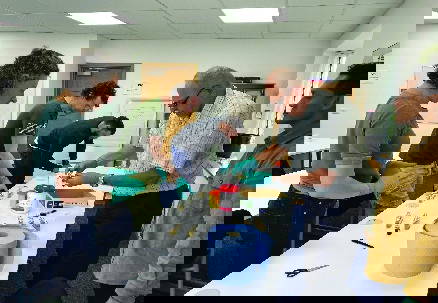
Photo: Training in MIC Detection.
Fundamentals of Corrosion Engineering (FOCE)
The FOCE course gives engineers essential knowledge of why corrosion occurs, how failures develop, and the practical steps needed to manage, remediate, and prevent damage. The course covers corrosion processes in common engineering metals—stainless steels, aluminium, copper alloys, and galvanizing—and the influence of environments such as immersion, atmospheric exposure, concrete, high temperatures, and buried conditions. Participants gain an understanding of the corrosion engineer’s role through real case studies involving failure investigation, inspection, and testing. The four-day, classroom-based course is delivered in English by an experienced corrosion consultant. All attendees receive a Certificate of Attendance, and those who pass the exam earn a Certificate of Achievement—meeting the corrosion training requirements for direct application to ICorr membership grades including TICorr and MICorr. Delegates have ranged from complete beginners to practicing corrosion consultants.