
The branch held its last technical meeting of the 22/23 season on 13th April, when Reza Beheshty, Subject Matter Expert in Materials Corrosion, Welding, & Coating, Fluor, presented on “Flow Accelerated Corrosion.
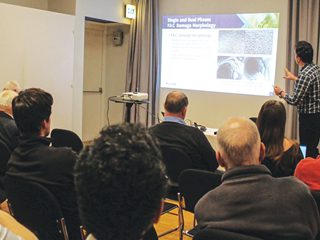
Flow Accelerated Corrosion (FAC) is primarily a corrosion process aided by the chemical dissolution of an internally formed iron oxide protective layer in carbon steel piping and process equipment, followed by its transportation into the bulk fluid in the direction of flow (generally unsaturated water and wet steam) by means of mass transfer. This results in wall thinning (up to 10 mm/y) until complete rupture, if not detected and/or remedied. It is a significant damage mechanism common to power plant and industrial steam cycle systems and has been a concern there for many years.
The rate of metal loss by FAC depends on a complex interplay of several parameters. The challenge is to find a functional relationship between the hydrodynamic severity of the flow (i.e., mass transfer rate) and the environmental parameters influencing the FAC rate, mainly fluid temperature, pH, and oxygen concentration. Also, the amounts of chromium, molybdenum, and copper in the steel are very important material factors in prevention of FAC.
Even though the main influencing parameters are well recognised, major failures are still occurring at the same locations that were found in the 1980s and 1990s. Power plant owners’ major concern is that the FAC problem seems to be fading away in the minds of plant operating management at many facilities as a result of retirements in the power industry, while new personnel simply do not understand the importance of FAC control. Besides understanding the positive combination effects of the FAC influencing parameters for managing FAC proactively, without the need for utilising expensive tools, are still not completely understood.
One of the most well-known, and effective predictive models, for calculating FAC rate, considering the various parameters influencing FAC, was proposed by Chexal & Horrowitz et al [1], as shown below.
FAC rate (thinning loss) = f(T) x f(pH) x f(O2) x f (a) x f(MT) x f(G) x f(AC)
Where the various factors represent, temperature effect (T), pH effect (pH), dissolved oxygen concentration effect (O2), void fraction i.e., steam quality effect, for two phase FAC only (a), mass transfer (i.e., flow rate and pipe diameter) effect (MT), geometry effect (G), and alloy content impact, i.e., effect of chromium, copper, and molybdenum content (AC).
The primary objective of this presentation was to refocus on different FAC mechanisms, and to understand the effects of each of these parameters (as indicated in above model), and postulate how the combination of these influencing parameters could positively result in controlling the FAC damage with an increased level of confidence with carbon steels, in the absence of specific and expensive FAC predictive tools.
[1] Technology development by the U.S. industry to resolve erosion-corrosion, B. Chexal, N. Dietrich, J. Horowitz, W. Layman, G. Randall, V. Shevde, Electric Power Research Institute, published by international working group on reliability of reactor pressure components, IWG/-RRPC-88-1, Corrosion and Erosion Aspects
in Pressure Boundary Components of Light Water Reactors,
September 1988.
The branch resumed its end of season social event, after a number of years, with a canal boat trip on the Regents Canal through London, on the 11th May.
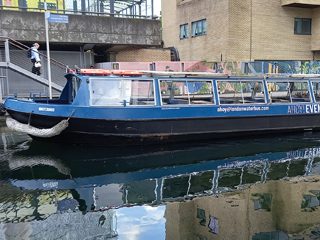
The cruise started at Paddington where 33 local members and supporters boarded, and enjoyed a light snack, while we set off. Once underway, and as we passed Little Venice on the way to Camden, taking in the many varied views along the route, further refreshments, including sandwiches and cakes, as well as beverages from the bar, were made available to the guests. As the boat passed through the grounds of London Zoo, the guests looked out for the African wild hunting dogs, known as painted wolves, but as the weather was so warm, they must have been resting under trees, similarly African warthogs and the monkeys did not show. This did not spoil the enjoyment, as the guests focused on discussing the many subjects of the technical talks given during the 2022-23 season.
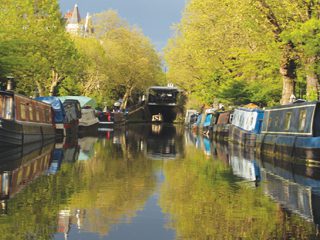
After passing the zoo we came to expansive landscaped gardens of stately mansion houses and classic modern villas, which contrasted with the industrial buildings, a power station, and historical architecture, including ornamental iron bridges such as the pillared Macclesfield ‘blow up’ bridge. Many of these villas are owned by famous musicians such as Ronnie Wood, Pete Townsend, and Noel Gallagher – if only corrosion could pay so much!
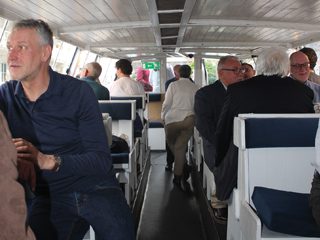
After turning at Camden, the boat made its way slowly back to Little Venice where everyone alighted, and agreed it was a very enjoyable trip, and that they looked forward to future social events in the coming years. This event was an outstanding success, and the branch would like to acknowledge the support from International Paints, without whom it would have been difficult to stage.
Reza Beheshty, Subject Matter Expert in Materials Corrosion,
Welding, & Coating, Fluor.
Onboard and Underway.