

ICATS and Correx ─ All You Need to Know

ICATS and Correx ─ All You Need to Know

Introducing the Industrial Coatings Applicator Scheme

ICATS may sound like a fancy slang word, but it stands for ‘Industrial Coatings Applicator Training Scheme’. It’s a scheme that has been designed specifically to meet industry demand for formally accredited training for applicators of coatings in the UK, and now around the globe. One of the primary functions of Correx Limited is to administer the ICAT scheme.

What is ICATS?

ICATS is a training and certification programme designed to provide standardised training and qualifications for industrial coating applicators. Those who have ICATS certification possess the knowledge and skills to carry out work as an applicator in a safe and planned manner.

The aim of the course is to improve safety and quality of industrial coating application. It is mandated by National Highways (formerly known as The Highways Agency), but is relevant across all sectors in which corrosion plays a role. These include construction, oil and gas, petrochemicals, nuclear and marine industries.

How does ICATS work?

ICATS is a comprehensive, structured training scheme covering various elements of coating applications, including:

  • Surface preparation
  • Coating techniques
  • Equipment usage
  • Health and safety
  • Environmental considerations

The Industrial Applicator section also includes:

  • Corrosion protection
  • Paint types
  • Painting inspection (QA and QC)

The framework of the programme allows individuals to progress from foundation skills to advanced techniques, gaining different qualifications and certifications on the way. Courses contain theoretical and practical learning. Newly qualified ICATS industrial coatings applicators receive an ICATS card according to the course the module they have passed. The scheme contains Industrial Coatings Applicator, Specialist Blast and Spray modules, and Supervisor and Technical Manager courses.

What are the benefits to individuals and companies?

The ICAT scheme delivers a host of benefits to individuals and employers who register to have their workforce certified. 

Benefits for individuals include:

  • Enhanced skills and knowledge, including a deep understanding of industry best practices. This helps to improve work effectiveness as well as the confidence of the individual.
  • Recognition of competence delivered by gaining a recognised qualification. This demonstrates competence and expertise, enhancing credibility, employability, and career prospects.
  • As a qualified ICATS operative, individuals are deemed to be up to date with the latest techniques to prepare surfaces and apply coatings in the safest way possible ─ helping them to exceed industry expectations, and ensure the quality and durability of applied coatings.
  • Greater awareness of health and safety issues and practices. This includes the ability to identify potential hazards, appropriate handling of materials, and proper use of personal protective equipment.

Benefits for employers include:

  • A competent workforce that can deliver high-quality coating application services, leading to improved outcomes, reduced reworks, and greater customer satisfaction.
  • A workforce that delivers work of a consistent quality, operating at industry best practices and standards. This helps a company to maintain a higher level of quality assurance.
  • Benefitting from greater competency across teams that have a strong foundation in surface preparation techniques, coating application methods, and equipment usage, efficiency and productivity improve.
  • Incorporating relevant regulations and environmental considerations, the ICATS scheme helps to ensure that employees remain compliant with industry standards, reducing the risk of the consequences of non-compliance (such as rework, project delays, penalties or fines).
  • A safer working environment, reducing the risk of potential health hazards, accidents, and litigation.
  • Finally, clients are more likely to select a company with ICATS-certified staff. This demonstrates a commitment to high standards, professional development, and high-quality work. In two words: competitive advantage.

Where does Correx come into the ICATS equation?

Correx Limited is a wholly owned subsidiary of the Institute of Corrosion. First registered in 2003, its role is to organise the commercial activities of the Institute of Corrosion.  Many people have asked where the name Correx came from – it is a combination of the words “Corrosion” and “Exhibition” –an early remit of Correx was to run exhibitions on behalf of ICorr.  Correx has a Board of Directors made up from senior members of ICorr including several past Presidents.  As already mentioned, to administer the ICATS . MD Kevin Harold explains more:

As the MD, my roles are very varied. The work I do for Correx takes around a third of the time available to me. I juggle these responsibilities with those I have as Technical Director for Paintel Ltd.

We’re a small core team at Correx with myself as MD and senior trainer for ICATS course. Robert Hurley is the second senior trainer and carries out ICATS audits for our 9001 certificate (he’s also senior painter and quality at Paintel Ltd.). David Mobbs assists with client communication, client visits, business development, and pretty much all things ICATS (his 40+ years of coatings experience is invaluable). At Head Office, Becky and Trish provide incredible help with admin and promotion ideas.

I also author the ICATS courses, a job with which my wife helps me by helping guide me through online courses and transfer of information ─ as well as being a daily sounding board for me.

This brings me to Correx board meetings, where we discuss ideas and keep everyone informed of what we are doing, who is responsible for what, and so on.

(Meet the Correx team.)

ICATS. Not a trendy word, but certainly a trending certification in the corrosion industry. Companies that are involved in industrial painting are finding this certification, accredited by the Institute of Corrosion, is proving to be highly beneficial. It enhances skills, knowledge, and qualifications for individuals, while providing employers with a skilled workforce, quality assurance, compliance adherence, and a competitive edge in the industry.

Want to know more?

Our team is ready to answer your questions. All you need to do is email us at correx@icorr.org.

Using Corrosion Resistant Alloys in Upstream Production

Using Corrosion Resistant Alloys in Upstream Production

5 Key Considerations When Selecting a CRA

When should you use corrosion-resistant alloys in upstream production?

A straightforward and simple enough question. However, like so many questions concerning corrosion prevention, the answer is not quite as simple ─ especially when considering the complexities of corrosion management in the oil and gas industry.

Let’s start by describing what a corrosion-resistant alloy is before considering the steps to take when selecting metal selection in upstream installations.

What is a corrosion-resistant alloy?

The term ‘corrosion-resistant alloy’ (CRA) refers to specific metals or alloys that resist certain corrosion mechanisms. This makes them an excellent choice to combat material degradation caused by corrosion.

However, it’s important to understand that not all CRAs are equal. For example, 316L stainless steel is commonly used in upstream operations for its resistance to carbon dioxide (CO2) corrosion, but it is vulnerable to corrosion in oxygenated seawater.

Therefore, when selecting a CRA it is crucial to first define the corrosion mechanism or mechanisms that the CRA needs to combat – on both internal and external surfaces.

Corrosion-resistant does not mean corrosion will not occur

CRAs are only one of the weapons in the armoury of Materials and Corrosion (M&C) professionals. If only CRAs were the answer to corrosion, the job would be easy! Unfortunately, CRAs are not immune to corrosion in every environment. Indeed, it’s critical to understand this – and a key role of M&C engineers is to educate non-corrosion specialists on the limits of specific CRAs in specific environments.

Isn’t a CRA simply stainless steel?

It’s true that many CRAs are stainless steels and, for a long time, the term stainless steel was used generically to describe any metal that was corrosion resistant. But not all CRAs are stainless steel.

The term CRA emerged when industry started to use alloys without iron as their majority element in the battle against corrosion – such as nickel and titanium-based alloys.

Selecting an appropriate CRA: a step-by-step guide

When we select a CRA, it’s essential that we don’t replace one corrosion mechanism with another. If we do this, we could actually increase the risk associated with corrosion.

For example, many stainless steels are resistant to CO2 corrosion but vulnerable to cracking mechanisms like Chloride Stress Corrosion Cracking (SCC) and Sulphide Stress Cracking (SSC). This can happen suddenly and without warning with catastrpohic consequences. In many situations it will be preferable to have a corrosion mechanism where corrosion monitoring can detect corrosion problems before significant metal loss has occurred.

Five key considerations that we must make when selecting a CRA are:

  1. Cost
  2. Welding
  3. Galvanic corrosion
  4. Construction and commissioning
  5. Availability

CRAs are more expensive than carbon steels, and they require extra care when welding, adding to the cost of construction. Moreover, CRAs can function as a cathode, promoting corrosion of other metals, and they may not be readily available due to manufacturing challenges and mill constraints.

With specific regard to cost, we must consider ‘whole-life costing’. This includes the cost of procurement, construction, operation, and decommissioning costs. Typically, CRAs become more attractive as the required lifetime of a project increases.

We need to consider the expertise needed for welding, and if this is available near to the project site.

And in the construction phase, we must ensure that the CRA does not come into contact with a fluid that is corrosive to it – if this happens, then the CRA can corrode or crack before it enters operational service.

So, when should you use corrosion-resistant alloys in upstream production?

Because of the factors mentioned above, before we consider using CRAs we should assess using carbon steel. Indeed, this should always be the base case for construction. We can then compare CRAs to this, and evaluate under three main themes:

  1. Risk
  2. Operability
  3. Cost

The decision to use a CRA can be straightforward, such as when the corrosion rates of carbon steel are unacceptably high (risk) or when a combination of high strength and corrosion resistance is essential (operability). Risk and operability are intricately linked, and combine to create cost.

The decision to select a CRA in upstream production is often complex. There are so many factors involved. This is why it’s crucial to use M&C professionals to assess the risks and costs of both carbon steel and CRA options for a project. You may also require consultation with corrosion professionals with specialised knowledge of specific materials and types of corrosion to properly evaluate options.

Sometimes, the decision to use a CRA can be simple. For example:

  • When corrosion rates of carbon steel are unacceptably high
  • When the construction and operational costs for managing a carbon steel facility exceed the cost of using CRA for the project
  • When the risk of maintaining an active mitigation system for carbon steel equipment is unacceptable
  • When a combination of very high strength and corrosion resistance are essential

However, it is rarely this straightforward. Selecting CRAs for upstream equipment requires careful evaluation of numerous factors. While CRAs can be an excellent material choice, they are not immune to every corrosion environment, and it’s important to recognise their limitations.

Bill Hedges, past President of the Institute of Corrosion, covered this subject in greater detail in Corrosion Management, the leading journal for corrosion control and prevention and distributed to subscribers worldwide. Back issues are only available to members of the Institute of Corrosion.

To apply for membership of the Institute of Corrosion, click here.

Professional Membership: The Role of the Professional Assessment Committee in ICorr

Professional Membership: The Role of the Professional Assessment Committee in ICorr

Preserving the Integrity of ICorr’s Professional Membership

The Professional Assessment Committee (PAC) has a crucial role to play in how the Institute of Corrosion operates as an organization. It’s critical that we correctly evaluate and assess applications for professional membership of the Institute, chartered scientist, and cathodic protection personnel certification – this is the role handed down to PAC.

Structure of PAC

The PAC consists of a Chair and at least five other members, though committee numbers are limited to a maximum of 10.

The Chair is nominated by the Council of the Institute of Corrosion (ICorr). Members of the committee may be nominated by any Professional Member of ICorr, and nominees should be a Professional Member of ICorr. They should also have extensive experience in the corrosion industry or relevant academia.

Once accepted as a member of PAC, a nominee will usually serve a normal term of four years – though any PAC member is eligible for re-nomination. The Chair’s normal term is also four years, though he or she may also be re-nominated for a further term of office.

Roles and Responsibilities of PAC

The PAC is responsible for assessing all applications for Professional Membership of ICorr (TICorr, MICorr, and FICorr). They are also responsible for evaluating applications for Chartered Scientist and, via the cathodic protection sub-committee, Cathodic Protection Personnel Certification.

Among its prime responsibilities is to ensure that all applications are treated confidentially and in compliance with Diversity, Equity, and Inclusion (DEI) requirements. This includes eliminating any potential unconscious bias.

All members are obliged to act in accordance with Data Protection Regulations.  For example, no information provided by an applicant will be discussed or passed on to any third party.

How PAC Works

The first job of Pac is to ensure that applications comply with ICorr’s membership regulations:

  • Education, training, and experience is appropriate to the applied-for grade of membership
  • The application is accompanied by two references
  • At least one reference is from an existing Professional Member of ICorr, though in exceptional circumstances appropriately certificated and qualified members of other bodies may be acceptable at the discretion of the Chair

Once confirmed that the application for Professional Membership is compliant with these requirements, it is sent to three PAC members for assessment. None of these three may be a referee of the applicant. The process then progresses as follows:

  • The three members assess the applicant independently, and make a recommendation of suitability.
  • If the recommendation is unanimous, the application is approved. If this is not the case, the PAC Chair adjudicates the decision. If required, the President of ICorr may be called upon to help in this process.
  • The Chair then recommends whatever action is necessary. For example, if a meeting with the applicant is needed to discuss the application and address any concerns that the assessors have.
  • At the end of this process, the Chair prepares a report of approved applications, and this is presented to the Council for approval. Certificates of Professional Membership are signed by the President and sent to the new Professional Members.
  • Announcements are made in Corrosion Management magazine, unless requested otherwise.

Commonly, all communication between the members of PAC takes place either by email or post, with the PAC only meeting in person or online at the discretion of the Chair.

An applicant’s files are only retained for record purposes at Head Office, held in a member file and retained for no longer than five years after leaving ICorr.

Membership regulations and the procedures employed by PAC are reviewed and updated every 12 months, following discussions with the Professional Assessors and President and subject to their approval.

Could you play a part in PAC?

As a not-for-profit organization, the Institute of Corrosion is run by its members for the benefit of its members. The PAC has an essential role to play in delivering our mission and ensuring that the Institute aligns with its values.

PAC’s effectiveness depends upon its members. At the time of writing, its membership is close to the maximum number, but new assessors are always welcome. If you have the relevant experience and qualifications, are a Professional Member of ICorr, and would like to be considered as an assessor, please email the current PAC Chair, Paul Lambert.

Corrosion Prevention in the 21st Century: Learning From the Past to Protect the Future

Corrosion Prevention in the 21st Century: Learning From the Past to Protect the Future

​6 Talks, 5 Working Groups, and the Presentation of a Prestigious Award

This year’s Corrosion Engineering Division’s (CED) Working Day and Symposium will feature six talks covering corrosion prevention in the 21st century, with an emphasis on how we can learn from the past to protect the future.

To be held on Thursday 27th April 2023 at the National Physical Laboratory (NPL) in Teddington, it’s the perfect event for those in the field of corrosion engineering. You’ll hear from leading lights in industry and academia, have the chance to tour the facilities and laboratories at the NPL, and the opportunity to network with other corrosion professionals.

After the welcome and introduction by Danny Burkle, Chair of the CED, Gareth Hinds (President of the Institute of Corrosion 2018 to 2020) will introduce delegates to the NPL and the activities that take place there.

Then, from 10:30, we’ll be straight into the technical talks, before breaking for lunch and the Working Group Discussion between 11:30 and 12:30, when the Paul McIntyre Award will be presented by current ICorr President Stephen Tate. This award is among ICorr’s premier awards, and is presented to a senior corrosion engineer, who, as well as being a leading practitioner in his field, has advanced European collaboration and international standards development.

After the presentation, four more speakers will give talks with a 45-minute break for refreshments and a tour of the NPL laboratory. Danny Burkle will return to the podium to close the day at around 15:30.

An Illustrious Lineup of Speakers

Discussing corrosion prevention in the 21st century, our speakers have around two centuries of direct experience in the corrosion field between them!

First to speak is Alison Davenport, Professor of Corrosion Science at the University of Birmingham. A Chartered Engineer and past Chair of ICorr’s Corrosion Science Division, Alison was awarded a PhD from Cambridge in 1987. Alison’s talk is titled ‘Understanding localised corrosion and how this can improve corrosion prevention methods’.

Next up, and talking about the corrosion of canisters during interim storage and deep geological disposal of radioactive waste, is Cristiano Padovani and James Hesketh of Jacobs. A Chartered Engineer, Cristiano is a past Chair of Young ICorr, and Visiting Professor at the University of Bristol. James is the Principal Corrosion Science Consultant at Jacobs, and spent more than seven years as a Senior Research Scientist at NPL.

Steve Paterson will present a talk discussing applying materials experience from oil and gas production to carbon capture and storage – a hot topic right now. Currently a Materials and Corrosion Adviser with Arbeadie Consultants, Steve gained a bachelor’s Degree in Mettalurgy in 1977, and a PhD in 1981. His experience spans Materials, Corrosion, Welding, and Inspection.

We then turn to Nuclear Structural Engineer Jonathan Mann, who will be presenting on ‘How to make trends and influence people’ before breaking for refreshments and the tour of NPL’s laboratory.

Our penultimate talk is titled ‘The limits of use of copper alloy and stainless-steel heat exchanger tubes’, and who better to present on this subject than Roger Francis, who has been in the business of corrosion since the mid-1970s.

Our final speaker is Anthony Setiadi, a PhD in Materials Engineering, and with experience in project engineering, coatings engineering, materials engineering, and nuclear waste consultancy. Antoni will be presenting on the benefits of using corrosion protection for offshore wind.

A Wealth of Working Groups

On the day, delegates will be able to participate in one of five working groups ─ though, depending upon demand, some groups may merge:

  • Nuclear
  • Coatings
  • All Energy
  • Cathodic Protection
  • Corrosion in Concrete

Registration Details

Registration for this incredible single-day event couldn’t be easier. The cost ranges from £25 for students to £95 for non-members, and includes refreshments and lunch.

It’s essential to book your place in advance. The easiest way to do so is to book online.

For details about membership of the Institute of Corrosion, visit our membership page.

Delivering The Highest Standards in Global Corrosion Training

Delivering The Highest Standards in Global Corrosion Training

​Looking Forward to 10 More Years of Our Strategic Partnership with Argyll Ruane

We’re excited and pleased to announce the renewal of our partnership agreement with Argyll Ruane to deliver industry-leading corrosion and coatings training. Having partnered with Argyll Ruane for 20 years, we can now look forward to another decade of collaboration between us.

A partnership to deliver corrosion training for evolving student needs

Students on ICorr accredited courses come from around the globe. They lead busy lives, have many personal commitments, and desire professional development opportunities that fit in with hugely diverse routines.

As daily routines and diversity of students has evolved, so, too, have the methods of delivery. We have worked tirelessly with Argyll Ruane to ensure our corrosion and coatings courses offer the flexibility that students need:

We have recognised industry’s desire to keep face-to-face elements of the course as compact as possible. At the same time, it’s crucial that the quality of course content is maintained while enabling contact time with the trainer to be maximised. To achieve all of this, we continue to evolve our course delivery. As an example of this, candidates will soon be able to complete online elements for courses such as Level 2 Insulation Inspector and Passive Fire Protection (PFP) Inspector prior to attending the course.

A partnership to delivering standardised corrosion training syllabi that industry needs

Industry is also calling for standardisation of qualifications and certification around the world. We’ve seen this with our collaboration with ABRACO to deliver an internationally recognised Coating Inspector qualification and equivalence for coating inspectors.

It’s also crucial that our corrosion training reflects the evolving knowledge and best practice in the corrosion prevention industry. Our partnership with Argyll Ruane brings together our joint experience and expertise – and benefits from the hard work done by the Institute’s Trustees and the STGB  and CPGB.

The result of all this collaborative work is courses that are continually updated by implementing new protocols and processes to ensure course syllabi and standard of training always meet the changing requirements of industry.

A partnership that promotes global partnerships

During our two-decade association, Argyll Ruane has been a valued supporter of the ICorr certification scheme around the world. Together we have been able to forge strategic partnerships with key organisations to provide classroom and online training globally – including in Europe, China, East Asia, Middle East, and Australia.

This partnership continuation ensures that we can continue to promote and expand the global influence of the Institute’s certification scheme.

A partnership that never stands still

We are expanding our training and certification scheme, and doing so quite rapidly. This requires significant investment – time, energy, and finances – and this partnership is indicative of the desire and will of both the Institute of Corrosion and Argyll Ruane to enhance provision.

This is also a partnership that is committed to continual development of content and delivery, ensuring that training and certification remain aligned with industry development and new scientific knowledge as it happens. To this end, our agreement includes that together we will:

  • Use the knowledge and skills across both organisations to continually develop course content
  • Continually enhance the systems and processes of the delivery of professional training
  • Ensure the highest standards of training are provided to clients around the world

A partnership founded for the future

When signing the partnership agreement, ICorr President Stephen Tate remarked:

I can personally speak of the huge contribution Argyll Ruane have made over 30 or more years to this Industry and to my Corrosion colleagues. I remember very well my early training with them as a Senior Painting Inspector which helped lay the foundations of my career in Corrosion.”

Dale O’Reilly, ICorr Manager at Argyll Ruane said:

Our partnership with the Institute of Corrosion has grown from strength to strength over the years. We look forward to continuing working collaboratively to progress the scheme within industry, and ensure candidates continue to receive the very best training courses.”

With a long history of collaboration between us, and a jointly-held ambition to deliver professional development and training to the highest possible standards in an industry that is evolving at pace, this really is a partnership built on solid foundations for an even more successful future.

For further information about the ICorr scheme, click here.

Young Engineer Programme 2022 – Who Won?

Young Engineer Programme 2022 – Who Won?

Could It Be You Flying to the AMPP Conference in the USA Next Time?

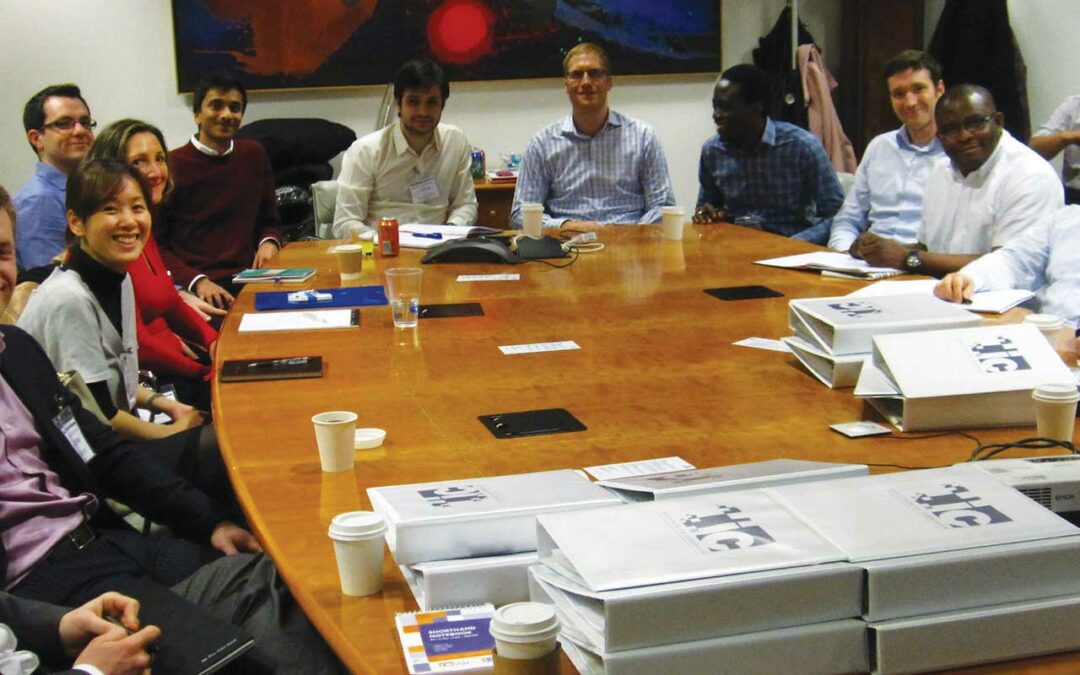
Conceived 10 years ago, and sponsored by BP throughout its history, the Young Engineer Programme (YEP) 2022 was held in Scotland for the first time. The final was in November 2022 and was attended by more than 40 people at the Palm Court Hotel, with another 15 online ─ the Aberdeen branch of the Institute of Corrosion put on a tremendous event.

Here’s the story of this latest YEP chapter, and details of how you could participate in the next YEP.

Why the Young Engineer Programme?

The aim of the Young Engineer Programme is simple, though extensive. The brainchild of our London branch, it is devised to:

  • Help tackle skills shortages in the industry
  • Prepare graduates for entry into the industry by helping to develop enhanced skillsets
  • Be the first stage to achieving MICorr/Ceng status

This was the fourth YEP in the history of a programme that has been interrupted by the Covid pandemic. With 24 candidates selected from more than 50 applicants, it proved to be not only as popular as ever, but equally challenging to name a winning team.

In each YEP, the candidates are divided into teams and set the task of developing solutions to a real-world corrosion case study.

Candidate selection criteria

Each year, selection criteria are determined. The 2022 criteria covered five elements:

  • Students in the early stage of their corrosion-related career
  • Two to six years of relevant experience
  • Aged 35 or under
  • Relevant academic background
  • Based in Aberdeen or willing to travel at their own expense

Creating the YEP teams

It was no easy task for the YEP committee to select students to take forward. The committee deserve special praise for the work they put into this and throughout the programme, especially Hooman Takhtechian (2021-2022 session chair) and Steve Paterson (YEP mentor supervisor/Case study organiser).

Six teams of four students were created, with team members chosen based upon:

  • Experience
  • Academic background
  • Employer

The challenge here was to ensure that all teams had an average experience of between four and four-and-a-half years of experience per team member and that no team had two or more members from the same company or from the same company as the team mentor.

The 2022 case study and the challenge set

The Young Engineer Program teams were faced with a highly complex and challenging case study with the following brief:

A 15-year-old offshore platform in sweet service that had a record of poor corrosion management with the possibility of a new owner for another 10 years of service. The potential new owner is both difficult and demanding, and a subsidiary of an international operator. With the possibility of a tie-in of a new field with slightly sour fluids, it would be necessary to deal with an intermediary integrity services contractor.

Based upon an actual platform in the North Sea, the teams were tasked to:

  • Assess and rank the key Integrity Management threats
  • Provide mitigation measures and a suitable corrosion management system
  • Deliver materials options for the required new pipeline
  • Management and impact of change in operations
  • Identify all other relevant factors to deal with the client effectively

To complete all of this, teams needed to:

  • Analyse and discuss the information and data provided
  • Identify any gaps in information and any assumptions that may need to be made
  • Perform a high-level risk assessment to identify key threats to the mechanical integrity of the pressurised systems (structural integrity was excluded)
  • Identify what further information or data was required for the other tasks in the exercise
  • Propose a systematic approach to manage the key threats including mitigation measures, corrosion control requirements, performance monitoring, and the resources required to manage the process
  • Propose materials of construction for a pipeline, including welding consumables, and any testing requirements to tie back the new reservoir to the platform, and explain the basis for the materials selection and how any corrosion threats will be mitigated
  • Identify what changes, if any, to the existing facilities would be required should the new sour reservoir be tied back to the platform
  • Propose a strategy for convincing the integrity management contractor that the approach is the optimal solution and that you are the right team to do the job

Oh, and present all the above in 20 minutes on the presentation night! And any team that overshot its 20 minutes were deducted points.

The quality of work completed and presentations made were so high that the judging panel of Chris Williams (BP, Sunbury), Susan Cushnaghan (formerly Shell Aberdeen), and Stephen Tate (2022 to 2024 ICorr President) certainly had their work cut out.

All teams were deserving of the huge praise they received for the diversity of their solutions, the professionalism of their presentations, and their enthusiasm for the task in hand. We should also mention that this is a testament to the incredible effort and contribution of all the YEP 2022 lecturers and course mentors.

The 10 lectures (and lecturers) that were delivered during the course of the YEP 2022 programme were:

Lecture Lecturer
Fundamentals of Corrosion Steve Paterson
Asset Integrity Management Stephen Tate
Coatings and Linings Michael Young
Case Study Steve Paterson
Presentation Skills Olubayo Latinwo
Materials Selection/Welding Martin Mweemba
Corrosion Under Insulation and Fire Management Clare Watt
NDT Appreciation Jim McNab
Introduction to Fitness for Service Assessments Pieter Van Der Vyer
Corrosion Aspects of O&G Production Chemistry George Winning
Introduction to Cathodic Protection Brian Wyatt


Team mentors were:

  • Steve Plant
  • Alistair Crichton
  • Bruce McKenzie
  • David Hills
  • Alireza Aghasadeghi
  • Muhammad Ejaz

And the winners are…

One team had to win, of course, and only by strict application of the marking criteria could the teams be separated. The criteria for the presentation were:

  1. Analysis of the scenario and current integrity status of the pressurised systems of the platform (20 marks).
  2. Application of a systematic methodology to manage corrosion and surveillance activities (20 marks).
  3. Viability of the proposed approach to prolong service life (10 marks).
  4. Assessment of material options for the new pipeline (10 marks).
  5. Assessment of the impact of change in operation with H2S (10 marks).
  6. Identification and assessment of factors in dealing with the client (10 marks).
  7. Overall quality and balance of the presentation, plus team coordination as demonstrated by the presentation (20 marks).

Time for the drumroll…

Congratulations to the winning team who were mentored by Alireza Aghasadeghi and who were:

  • Rosie Bird (PIM)
  • Jamie Hillier (Xodus)
  • Lee Hunter (PBS Offshore)
  • Christopher Slater (Stork)

The judges also awarded a Leadership Prize, based upon feedback about performance during the whole programme from mentors, judges, and committee members for teamwork and presentation skills. This was awarded to Eilidh Macdonald (Subsea 7).

All the winners won an all-expenses paid trip to the AMPP Annual Conference & Expo 2023 in March, courtesy of key sponsor BP.

Could you be a Young Engineer Program winner?

We are already planning YEP 2024, to be managed by Young ICorr and pencilled in to take place in London. To register your interest in becoming a team member for the next YEP, please email our Young ICorr Chair James McGladdery. It’s the first step to becoming one of the next winners of this prestigious programme.