



A Conversation with Outgoing President Bill Hedges

A Conversation with Outgoing President Bill Hedges

A Conversation with Outgoing President Bill Hedges

Reflection on a Presidency that Passed By Too Fast

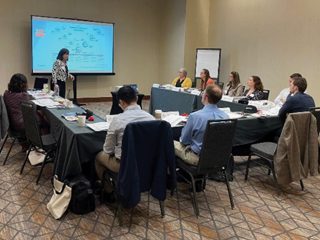
Bill Hedges recently stepped down as the President of the Institute of Corrosion, handing over to Stephen Tate. Bill will continue to be involved as Immediate Past President for two years.

Having completed his two-year appointment as President, we caught up with Bill to get his insights into what it is like to be President of the Institute of Corrosion. We’re sure you’ll find what he said to be interesting and enlightening, as well as entertaining!

“Bill, what inspired you to become involved with the Institute of Corrosion?”

“Well, I’ve spent my entire career working in the area of corrosion and corrosion management. A great career, aided by the advice and help of many fellow professionals. This generosity has always inspired me to do the same for others and support our field of engineering.

“I guess, in many ways, it started when I lived in the United States. I was very involved with AMPP (formerly NACE). On returning to the UK in 2012, I wanted to support the Institute of Corrosion as well. In 2018, I was honoured to be elected as the Vice President. After this I became President in 2020, and handed over the presidency to Stephen Tate in 2022. I’ll now remain as Immediate Previous Past President for the next two years.

“It’s a great leadership system, spanning six years in each presidential cycle, from Vice President to President to Immediate Past President. It helps to ensure that the leadership is consistent, innovative, and forward-looking.”

“The last couple of years have been a rollercoaster ride. What were some of the biggest challenges you faced during your tenure as president?”

“A rollercoaster is putting it mildly!

“Clearly, the COVID-19 pandemic was a major challenge – as it was for everyone in all walks of life.

“One of the great benefits of the Institute of Corrosion is the networking opportunities it provides, but, with COVID-19, all our face-to-face meetings had to stop.

“This was frustrating, but, like many organizations, this cloud had a silver lining. Our rapid switch to virtual meetings enabled more people to attend meetings and seminars – it’s very time efficient for delegates. Another benefit is that it helps us to reduce our carbon footprint, and sustainability is a key motivator in the world of corrosion.

“The global downturn was also a concern. Unable to run our classroom-based training courses meant we lost some revenue, though this has since recovered well.

“Finding individuals who have the time to get involved in the Institute is another challenge, given the busy and fast-paced nature of modern life. However, we are fortunate to have many dedicated members who are willing to get involved – the rewards of being a part of this really are something.”

“How did you measure the success of the Institute during your time as president?”

“As the president, I had a few key metrics that I used to gauge the success of the organization.

“Among the most straightforward was the growth in membership numbers and the financial stability of the organization. For example, the number of members we now have on LinkedIn has grown from virtually zero to more than 10,000. Another key indicator was the positive feedback I received from members.

“However, I should point out that all of the positive results we have achieved during my time as Vice President and President is a testament to the efforts put in by the council and staff as well as myself. No man is an island.”

“That’s a great point, Bill, and leads us nicely on to the next question. What do you consider to be the Institute’s greatest accomplishments during your time as president?”

“Of course, I am proud to have seen the Institute overcome several challenges and come out stronger. The team effort has been colossal during the most challenging time that most people can remember.

“Some of our greatest accomplishments included surviving the Covid-19 pandemic and global economic crisis; introducing virtual meetings; refreshing our training courses; developing new courses in Passive Fire Protection (PFP), Microbiologically Influenced Corrosion (MIC), and Corrosion Under Insulation (CUI); and ISO 17024 compliance for many of our courses.

“We’ve also established strong relationships with our partners (such as ABRACO) and, as I said earlier, made strides in social media with over 10,000 followers on LinkedIn.

“Additionally, our Young Engineer program continued to thrive and our cathodic protection (CP) training centre was opened, which was a major milestone.”

“That’s quite a rollcall of achievements. How do you see ICorr evolving in the next few years, Bill?”

“In the coming years, I see ICorr continuing to grow and evolve as we introduce new training opportunities and expand our online and classroom courses, developing more speciality and engineer-level offerings.

“Already, one-third of our membership is based outside of the UK, and I think we will continue to explore how we can offer greater connectivity and opportunities for these. We are investing in new IT systems. This will make it easier for all members to access our services and keep their details updated.”

“You’ve spoken of the role of the Council and staff in the activities and success of the Institute. How did you work with them during your tenure as President?”

“Working with the council and staff was one of the highlights of my presidency. ICorr’s day-to-day operations are managed by the President, with support from the other four Trustees, and we met monthly or as needed.

“The council, made up of committee chairs and branch chairs (26 in total), was incredibly supportive, and I always valued the feedback I received from them. A wonderful team to work with.

“I couldn’t have done any of this without the three staff members in our office. They are an essential part of our team, and I was grateful for the administration and organizational support they provided. We rely on them heavily.”

“The Institute’s mission is crucial. How did you ensure it was upheld during your tenure as president?”

“You’re spot on: ensuring that the Institute of Corrosion’s mission is upheld is essential. It’s a top priority and it’s this priority that makes it relatively easy to ensure we focus on the mission.

“The President is held accountable by the Trustees and the Council. I always made sure to consult with them and stay on track with our mission. By working together, we were able to achieve our goals and maintain the integrity of the Institute – no matter what this mad world threw at us!”

“Working together seems to be a theme here, Bill. Tell us, how do you involve members of the organization in decision-making processes?”

“For some of the big ideas or decisions I would ask for feedback via email or through my bi-monthly column in our Corrosion Management Magazine.  For this purpose, I created the president@icorr.org email to encourage members to connect with me directly.  Many did and I responded to every email.

I also valued the wise counsel of my fellow Trustees, Council members and past presidents who always gave their time and knowledge generously.

“However, this is an area in which we can continue to improve. We always wrestle with the balance of asking our members for input versus overloading them with emails etc.”

“Only two more questions, Bill. The first is how did you balance your responsibilities as President with your other (personal and professional) commitments?”

“My wife asks me the same question ─ but with a slightly different tone to yours!

The truth is that I’ve always liked to be busy. Being the President of the Institute of Corrosion was simply a part of this. It did take more time than I anticipated, though maybe that was partly my fault as I love to get involved with ideas and projects. 

“Being President has been incredibly rewarding, especially when we came through Covid and I was able to get out and meet with our members again ─ but I was also delighted to hand over to Stephen at the end of my two-year term!”

“We can imagine. And on this note, what advice would you give to the incoming President to help them succeed in their role?”

“I’ve spoken to Stephen about his ‘new life’ as President, so he knows this already: delegate more!

“There are two benefits to delegating. First, it reduces the workload of the President. But at least as important is that delegating provides great opportunities for others to contribute. This is especially the case with some of our fantastic younger members who are incredibly enthusiastic.

“But the most important advice I can give is to make sure you enjoy your time as President. It’s a fantastic role, and I have been extremely privileged to have been given the opportunity to fulfil it. But those two years – they pass by in a flash.”

Classroom Learning: Courses for the Professional Development of the Corrosion Specialist

Classroom Learning: Courses for the Professional Development of the Corrosion Specialist

World-Leading Classroom Learning in the Corrosion Industry

You want to continue your professional development as a corrosion specialist, and would prefer to do so through classroom learning. While in-person courses are often more expensive (there is usually a residential element that must be paid for, too), you thrive on the physical contact between trainers and learners:

  • You find it easier to ask questions face-to-face
  • You enjoy the ‘competitiveness’ element in the classroom
  • Classroom learning helps you to maintain discipline in your personal learning regime
  • Your focus is fully on your learning, without distractions you may experience when learning online at home
  • You find it easier to ask questions in person and learn from questions asked by others
  • You benefit from excellent networking opportunities

(If you’re still not certain if online learning or classroom learning is right for you, read our article ‘Online Classes vs Classroom Learning: Which Is Best for Corrosion Professionals?’.)

At the Institute of Corrosion, we have partnered with some of the best providers of classroom learning to deliver exceptional corrosion courses for corrosion specialists. Our mission? To design, develop, and deliver the quality of learning needed in the industry.

Classroom-based courses for corrosion specialists

Our classroom courses cover a range of specific subject areas. We’ve summarized each course below. In each summary, you’ll find a brief description of the scope of each course, who should take it, the qualifications or accreditation you will receive upon successful completion, and a link to enquire about each course.

  • Fundamentals of Corrosion

Specifically designed for engineers, paint inspectors, designers, technicians, and scientists wishing to expand their career opportunities into the corrosion field or wanting to broaden or refresh their knowledge of corrosion in general, this course is based upon practical information and hands-on examples as well as relevant background theory.

The course lasts for five days. The first four days are talks and practical sessions. The last day includes a course review and examination.

For more information, please email the Institute of Corrosion.

Protective Coating Inspector and other courses

Coatings systems are a protective method used to eliminate or slow the corrosion of metallic structures, thereby increasing lifespan and reducing the need for and cost of maintenance and replacement.

The courses that the Institute have endorsed and that have been accredited by Lloyd’s Register and the Royal Society of Chemistry are:

  • Protective Coatings Inspector Level 1

The entry-level requirement for a career as a coating inspector, this course is designed for those with industrial coating experience but without coating inspection experience. It is also applicable to those who require a knowledge of coating inspection but do not wish to sit an exam.

The course lasts for four days, with a post-course examination day for those who wish to sit the exam.

For more information, please email the Institute of Corrosion.

  • Protective Coatings Inspector Level 2

This course has been designed for those who have passed the ICorr Level 1 Coating Inspector course and have at least 12 months of Level 1 coating inspection experience, to pass the ICorr Coating Inspector Level 2 examination.

This is a five-day course, with one day of examination.

For more information, please email the Institute of Corrosion.

  • Protective Coatings Inspector Level 3

This is the most advanced Coating Inspector level; this course has been designed to prepare ICorr Level 2 Protective Coatings Inspectors for the Level 3 examination.

The main aspects of this course are:

  • Quality assurance
  • Specification analysis
  • Procedure writing

Aspects such as corrosion and paint technology are areas in which a greater depth of training is provided when compared to Level 2. While the course includes a review of Level 2 on the first day, candidates are recommended to either revise or attend a Level 2 course before attending this Level 3 course.

The Protective Coatings Inspector Level 3 course is presented over four days, with a further day for sitting the examination.

For more information, please email the Institute of Corrosion.

  • Pipeline Coatings Inspector Level 2

This course prepares candidates for the ICorr Pipeline Coatings Inspector Level 2 examination. It is available as either a five-day or three-day course. The three-day course omits areas that are common to both coating inspection and pipeline coating inspection. Subject areas covered include:

  • Quality assurance and document control
  • Equipment control and calibration
  • Inspection and quality control
  • Normative documents
  • Application methods
  • Advantages/disadvantages of systems
  • Inspection methods
  • Cathodic protection
  • Standards
  • Health and safety
  • Handling and storage
  • Inspection of more than 15 types of coating applied in factory and field

For more information, please email the Institute of Corrosion.

  • Insulation Inspector Level 2

For candidates with a Coating Inspector approval at any level, this course addresses the need for some corrosion and coating knowledge because of the large amount of corrosion problems which have arisen under insulation.

With two- and three-day options available (depending upon the need for certification), this course covers areas such as:

  • Inspection and quality control
  • Normative documents
  • Insulation systems
  • Insulating materials
  • Protective coverings
  • Insulation design (basic)
  • Application of insulation
  • Handling and storage of materials
  • Health and safety considerations
  • Common problems encountered
  • Corrosion under insulation
  • Standards applicable

For more information, please email the Institute of Corrosion.

Cathodic Protection Certification Courses

European and ISO Standards for CP require personnel to demonstrate their experience and expertise at the appropriate level. 

Whether you work with on-land metallic structures, marine metallic structures, or reinforced concrete structures, our cathodic protection certification courses provide the knowledge you need to take the next step in your career in line with certification requirements as defined by BS EN ISO 1527:2017.

The cathodic protection course applicable to you is determined by the work you do and your experience:

  • Level 1: Data Collector/Tester

In performing the course of your duties, you must measure and record data accurately. While you might have no experience in cathodic protection, Level 1 certification is a requirement for National Grid and other employers.

  • Level 2: Cathodic Protection Technician

To take this course, you will need a minimum of one year of approved experience, though not necessarily in cathodic protection. Typically, your work may involve conducting CP measurements, inspection, and supervisory activities – and you will be instructed by people certified at Levels 3, 4, or 5.

  • Level 3: Cathodic Protection Senior Technician

This course is open to those who hold either an ICorr Level 2 certification or those with at least one year of approved experience and who have attended a Level 2 training course. The work you do might include preparing technical instructions for Levels 2 and 3 persons to work from, including risk assessments and method statements.

To enquire about our range of cathodic protection certification courses in on-land, marine, and reinforced concrete, and discuss which is best for you, please email the Institute of Corrosion.

Accelerate your professional development with the Institute of Corrosion

At the Institute of Corrosion, we are committed to sharing expertise and helping corrosion specialists to develop their knowledge and careers.

Thus, we work hard to ensure that our courses are up to date, relevant, and recognised within the industry around the world. In collaboration with our educational partners, we are continually expanding our range of learning and professional development opportunities via online learning.

To learn more about any of the above corrosion courses, or to enquire about professional development courses for corrosion professionals that are not included above, please email the Institute of Corrosion. We will be happy to help you in the development of a successful career in the corrosion industry.

Online Learning: Courses for the Professional Development of the Corrosion Special

Online Learning: Courses for the Professional Development of the Corrosion Special

World-Beating Virtual Learning in the Corrosion Industry

You’ve decided to continue your professional development as a corrosion specialist through online learning. This allows you to fulfil the requirements for your continuing professional development with corrosion courses specifically designed to be delivered virtually.

For many corrosion professionals, this is an excellent decision:

  • It means that you can fit your training around your professional and personal life
  • You won’t need to cancel other things or miss out on work to squeeze in your learning
  • You’re not bound by time or place, and you can work at a pace that is comfortable for you
  • You can learn while you’re commuting on a train, during the downtime in a hotel room while travelling for business, or at home after a full day’s work and when the children are in bed

Financially, online learning is generally cheaper than classroom learning – and there’s no added expense of accommodation and meals to consider. You won’t suffer a loss of earnings, plus you may have the opportunity to network with corrosion specialists from around the globe.

(If you’re still not certain if online learning or classroom learning is right for you, read our article, ‘Online Classes vs Classroom Learning: Which Is Best for Corrosion Professionals?’.)

Recognising the need for online learning for corrosion specialists, the Institute of Corrosion has partnered with corrosion training experts to design, develop, and deliver the quality of learning needed in the industry.

Online courses for corrosion specialists

Our online courses cover a range of specific subject areas. Below, you’ll find a summary of each of the current courses available for virtual learning. This includes the scope of each course, who should take it, the qualifications or accreditation you will receive upon successful completion, and a link to enquire about each course.

Coating Inspector Courses

Coatings systems are a protective method used to eliminate or slow the corrosion of metallic structures, thereby increasing lifespan and reducing the need for and cost of maintenance and replacement.

The courses that the Institute have endorsed and that have been accredited by Lloyd’s Register and the Royal Society of Chemistry are:

  • Coating Inspector Level 1

The entry-level requirement for a career as a coating inspector, this course is designed for those with industrial coating experience but without coating inspection experience.

After passing the exam, you will be qualified to carry out coating inspections. Online learning includes 40 hours of flexible study and online practical workshops.

  • Coating Inspector Level 2

This course has been designed for those who have passed the ICorr Level 1 Coating Inspector course and have at least 12 months of Level 1 coating inspection experience.

Upon successful completion of the course and exam, you will be qualified to perform direct inspections and testing operations.

  • Coating Inspector Level 3

This is the most advanced Coating Inspector level, open to those with at least three years of experience of coating inspection.

When successfully completed, you will have demonstrated the ability to interpret and evaluate inspection or test results in terms of existing normative documents; that you have the scope and level of knowledge sufficient to enable the individual to select inspection methods and tests, and to assist in the establishment of inspection and test criteria where none are otherwise available; and that you possess a general familiarity with coating materials, fabrics and structures protected by painting and coating, application methods and associated areas.

To enquire about the coating inspector courses delivered online, please email the Institute of Corrosion.

Other online courses

As well as the cathodic protection and coating inspector courses, you may also be interested in:

  • Hot Dipped Galvanizing Inspector Level 2

Produced in collaboration with the Galvanizers Association, this course delivers the knowledge needed to prepare for the ICorr Hot Dip Galvanizing Inspector examination. The course includes:

  • HDG overview
  • Corrosion mechanisms
  • Surface preparation
  • Galvanizing chemistry
  • Inspection overview
  • Organic coating on galvanizing
  • Testing of galvanizing
  • Coating Faults
  • Handling and storage
  • Coating repair methods

You will need to sit the exam within 90 days of completing the course.

For more information, please email the Institute of Corrosion.

  • Coating Surveys Course

This world-first course has been compiled by industry experts and enables you to gain full certification as a professional coating surveyor. You’ll get an exceptional grounding in areas that include:

  • Coating surveys
  • Common defects
  • Marine fouling
  • Dry film thickness surveys
  • Passive fire protection
  • Adhesion testing
  • Sampling techniques
  • Standard test methods, field tests and laboratory analysis
  • Paint testing, paint constituents and paint chemistry
  • And more

If your daily job includes coating surveys, you are strongly recommended to take this course.

For more information, please email the Institute of Corrosion.

Accelerate your professional development with the Institute of Corrosion

The Institute of Corrosion is committed to ensuring that its members and the wider community of corrosion specialists have access to learning and development opportunities wherever they are in the world.

We also understand that the rigours of your job can make classroom learning not only inconvenient, but expensive. Therefore, in collaboration with our educational partners, we are continually expanding our range of learning and professional development opportunities via online learning.

To learn more about any of the above corrosion courses, or to enquire about professional development courses for corrosion professionals that are not included above, please email the Institute of Corrosion. We will be happy to help you in the development of a successful career in the corrosion industry.

What Is the Role of Trustees in the Institute of Corrosion?

What Is the Role of Trustees in the Institute of Corrosion?

​The Guiding, Safe Hands of ICorr

The role of trustees in the Institute of Corrosion is crucial. In fact, without its trustees the Institute could not function effectively as a charity. As you’ll learn in this article, our trustees hold many responsibilities.

What is a trustee?

Charity trustees are the people who share ultimate responsibility for governing a charity and directing how it is managed and run.  They are responsible for safeguarding the assets of the charity. These might, for example, be cash and property. They also include intangible assets such as the charity’s reputation and proprietary information.

In larger charities, trustees may not take a hands-on role. Our trustees are very much involved in the day-to-day running of the Institute of Corrosion. They help to shape our work and our strategic direction.

Since the Institute is also a company registered with Companies House our trustees are also the Directors of the company and act as the Executive Management Committee. By default, this requires our trustees to be knowledgeable about the world of corrosion as well as possessing a broad skills base. Often, we draw our trustees from industry, private consultancy, or academia.

Our trustees have a duty to advance the purpose of the Institute

The duties of trustees are laid out as legal responsibilities by Charity Law as:

  1. To ensure the charity is carrying out its purposes for the public benefit
  2. To comply with the charity’s governing document and the law
  3. To act in the charity’s best interests
  4. To manage the charity’s resources responsibly
  5. To act with reasonable care and skill
  6. To ensure the charity is accountable

The first of these duties is always the primary focus of a trustee. All else flows from this ‘public benefit requirement’.

All trustees should be familiar with their duties, and to aid them in this they are required to  read and understand the Charity Commission guidance titled The Essential Trustee.

Our trustees support our decision-making

One of the ways in which our trustees enable the Institute to function successfully is by supporting the President in the decision-making processes, especially when there are urgent decisions to be made. Thus, trustees need to have a broad base of skills and experience.

The decisions in which our trustees offer their advice, expertise, and support include:

  • Audits and standards
  • Branch requests
  • Co-operation with other Institutes and government bodies/agencies
  • Council meeting and AGM agendas
  • Growth and sustainability
  • ICorr brand management
  • Accounts/reviews
  • Long-term investments
  • Overseas member support
  • HR issues
  • Strategy development
  • Training courses/certification in UK and overseas
  • Website issues and database improvements

Trustees have specific financial and reporting duties and responsibilities

Another of the key duties of our trustees is to ensure that our finances and accounts remain in good order. This duty is also set out in law under the Companies Act 2006. To comply with this, the trustees must prepare financial statements for each financial year. These must give a true and fair view of the finances of the Institute of Corrosion for the year for which the statement is prepared.

In the preparation of these financial statements, the trustees are responsible for:

  • Selecting and applying suitable accounting policies
  • Making reasonable and prudent judgements and estimates
  • Preparing financial statements on a going concern basis

In addition to the financial statements, the trustees also publish an annual report under the direction of the President of the Institute. This report should detail matters that include:

  • Aims and objectives
  • Organisational structure
  • Achievements and performance
  • Funding sources
  • Investment policy
  • Risk management
  • Forward strategy

The report will also detail any collaboration with third parties; recruitment, appointment, training, and responsibilities of trustees; membership and membership services; and members of the management committee. It will also discuss governing documents, future training provision, and sustainability.

Selecting and training our trustees

As you can see, our trustees have a lot on their plate. The work they do is extremely varied and can be complex. It is also ongoing. It also requires continuity. Therefore, we select our trustees for a minimum of six years. This is a significant commitment for a trustee to make to a role that does not provide financial reward.

So, how does the Institute select its trustees?

First, when a trustee position becomes available, we identify the skills needed to maintain the skills mix required by the trustees as a group.

Having established this baseline, we may advertise the role by notification in the Corrosion Management magazine, and on our website.

We may also approach individuals who we believe to possess the skillset we seek.

Often, a new trustee will be familiar with how the Institute works. They are likely to have experience within a local or regional branch, division, or committee. After appointment, the new trustee will be given a brief familiarisation session by the President. This session will cover:

  • Plans and objectives of the Institute
  • Memorandum and Articles of Association of the Institute
  • Obligations of trustees in law and as members of the management committee
  • The current financial position as set out in the latest published accounts

Hard work, commitment, and no pay. Why become a trustee?

While being a trustee is not a full-time role, it does require a commitment of time and dedication. Our trustees meet regularly and form part of the management structure of the Institute. But, though not paid, our trustees receive rewards in other ways.

A trustee of the Institute of Corrosion plays an integral role in the smooth operation of the Institute, shaping our future and the direction of our industry. They grow their networks, increase their personal skills base, and have the satisfaction of knowing they have made a real contribution to positive change in the field in which they are most passionate.

Ask any of our trustees if this volunteer role is rewarding, and the answer will be yes.

The current trustees of the Institute of Corrosion

We currently have five trustees. Each is a director of the Institute of Corrosion. They meet monthly as a ‘committee’, reporting back to the Council and overseeing the routine operation of the Institute between Council meetings.

At the time of writing, our trustees are:

  • The President – Stephen Tate (Appointed 2020)
  • The Vice President – Dr. Yunnan Gao (appointed 2022)
  • The Immediate Past President – Dr Bill Hedges (Appointed 2019)
  • The Honorary Secretary – Dr Jane Lomas (Appointed 2011)
  • The Honorary Treasurer – Dr Tony Collins (Appointed 1993)

In the future, we plan to publish further articles about how the Institute of Corrosion is structured and how it operates. This transparency should help all our members and the wider corrosion community to have a greater understanding of all the moving parts of the Institute and the tremendous amount of work that goes on behind the scenes. If you’re interested in getting involved in any of these activities, please get in touch with us!

In the meantime, to learn more about membership of the Institute of Corrosion, please check out our membership page to learn how to become a member and immediately begin to enjoy the many benefits of membership of the Institute of Corrosion.

ISO 12944-9: Defining Laboratory Test Methods for Offshore and Related Structures

ISO 12944-9: Defining Laboratory Test Methods for Offshore and Related Structures

Improving the Quality of Protective Coating Systems in the CX Environment

In this article, we conclude our series examining ISO 12944 by describing ISO 12944-9, which was introduced to the standard in the 2017/18 revision to improve the quality of protective coating systems in extremely corrosive environments.

ISO 12944-9: A brief history

In the previous version of the standard, the corrosive category C5 (very high corrosivity) had been sub-divided into C5-I (industrial environment) and C5-M (marine environment).

In some cases, the descriptive ‘marine’ was taken to include offshore structures such as oil and gas rigs. However, the coating specifications for such offshore structures are specifically addressed in ISO 20340 (Performance requirements for protective paint systems for offshore and related structures). The differences between the two standards were marked, and created confusion and potential risk.

Specifically, there was an anomaly between the laboratory testing standards for coatings systems for offshore structures. While both ISO 12944 and ISO 20340 included a series of laboratory accelerated tests to verify the performance of candidate systems, the tests required under each standard were incompatible:

  • For ISO 12944 C5-M the test regime was relatively benign (1,440 hour hot salt spray and condensation test).
  • For ISO 20340, there was a much more onerous test. This included a week-long cyclic test of three days hot salt spray, one day in a deep freeze (-20 degrees Celsius), and three days in a QUVA accelerated weathering machine. This one-week cycle was repeated 25 times.

The repeated changes of hot/cold and wet/dry conditions place much more stress on a coating system compared to the static conditions of continuous salt spray. Consequently, only the very best performing paint systems would pass the cyclic test regime, whereas it would be relatively easy to get a ‘standard’ coating system to pass the ISO 12944 C5-M test.

The result?

Coatings were potentially being specified for severe offshore marine environments that weren’t fit for such purpose, and several product failures ensued under these conditions.

The ISO working group TC35/SC14 agreed that the C5-M corrosivity category should be abolished, with the C5 category that covers very high corrosivity limited to onshore structures. In addition, ISO 12944 would incorporate ISO 12340 as the new Part 9 category of CX (extreme corrosivity), covering offshore steelwork.

Coatings recommendations categories in the CX environment

And so to the coatings recommendations within ISO 12944-9, which are divided into the following three categories:

1.     Atmospheric Exposure Areas

For general atmospheric exposure, it is expected that most coating systems will be based on zinc-rich primers. The very stringent pre-qualification accelerated cyclic test referred to above, with extremely low allowance for coating disbondment and corrosion from the scribe, means that non-zinc primers are unlikely (but not impossible) to pass.

The only exception to the very strict test parameters is for coatings that will be used on areas that may be subject to a high probability of mechanical impact and damage such as decks and lay-down areas. Here, zinc-rich coatings may fracture and disbond with the impact. Therefore, coating systems for such areas may utilize more traditional high-build coatings which have an allowance for slightly higher disbondment on the test schedule.

2.     Immersed Areas (with cathodic protection)

These areas (classified as Im4 in ISO 12944-2) are tested for cathodic disbondment to ISO 15711 – Method A, plus a seawater immersion test to ISO 2812-2. They are not tested using the cyclic ageing test.

3.     Splash/Tidal Zone Areas (with cathodic protection)

The splash zone is the portion of an offshore structure that suffers the highest level of corrosion stress. These areas will be subject to constant wet/dry cycling due to tidal movement and wave splashing with highly oxygenated sea water, and coupled with intense UV reflection off the water’s surface and the possibility of mechanical impact from flotsam or boat contact.

Splash zone areas have a significantly thicker coating specification and must pass the combined suite of laboratory tests of cyclic ageing plus immersion and cathodic disbondment tests.

‘Fingerprinting’ of coatings

It is mandatory that all coatings tested to the requirements of ISO 12944-9 are ‘fingerprinted’ by laboratory analysis.

This is done by taking paint samples from test batches and combusting them to ash. This is then analysed using Fourier Transform Infrared (FTIR) spectroscopy. This gives a detailed chemical profile of the coatings that can be used to compare against production batches to ensure that formulations are not changed post-test by the manufacturer. Routine batch checks are required to be undertaken during a project.

Thickness – a key difference in ISO 12944-9

ISO 12944-9 is extremely detailed with regards to surface preparation and quality control requirements that are commensurate with the need for the best possible coating practice to withstand the most corrosive environments. Hence, there are some differences between this part of the standard that covers CX environments and the rest of ISO 12944.

A key difference is that in Part 9, all specified coating thicknesses are minimum requirements. No dry film thickness readings are permitted below the specified level.

This is not the case for C1 to C5 specifications for dry film thickness, for which thickness values are nominal as defined by ISO 19840. This standard allows a small percentage (usually 10% or 20%) of dry film thickness readings to dip down below the nominal value, though no individual reading can be below 80% of the nominal value, and the overall average reading must be above the nominal value.

Piece-meal introduction of ISO 20340 into ISO 12944

The intention is to blend the CX specification requirements and testing schedules into ISO 12944 so that they are more aligned with other corrosivity categories as detailed in ISO 12944-5 and ISO 12944-6. However, in the 2018 iteration, this was not possible.

Therefore, as a first step, ISO 20340 was ‘bolted onto’ ISO 12944 as Part 9 of the standard. This bolt-on was added largely unchanged from the original, though with some tightening of the accelerated testing requirements that forced the use of zinc-based primers for general atmospheric exposure. Thus, there is some repetition from other parts of ISO 12944.

Further discussion of ISO 12944 is due to commence this summer, with a deadline of 2025 for the next issue of the standard – so watch this space!

The Institute of Corrosion Coating and Inspection Training Courses will help ensure your painters and inspectors work to the latest industry standards and benefit from new technology and innovative approaches. For more information, contact us today.

Other articles in our ISO 12944 series:

ISO 12944-8: Technical Writing of Coating Specifications

ISO 12944-8: Technical Writing of Coating Specifications

A Powerful Tool in the Development of Specifications for New Work and Maintenance

ISO 12944-8 is often overlooked, though it contains a huge amount of information that enables competent technical writing with regards to coating specification for new build projects or maintenance of existing structures and items.

If you are writing such coating specifications, it’s crucial that you observe all other parts of ISO 12944 – and the templates contained within ISO 12944-8 help ensure you do this.

Why ISO 12944-8?

ISO 12944 is the globally recognised standard used by the protective coatings industry to develop and verify coating specifications for corrosion protection of steel structures. The most referred to parts of ISO 12944 are:

As well as referencing these and other parts of the standard, Part 8 of the standard explains the value of creating reference areas to set a benchmark for the standards of workmanship of surface preparation and coatings application. Thus, it also enables the finished appearance of the system and relevant inspection and quality control requirements to be established at this primary stage before the project commences.

A set of powerful specification templates

The templates contained within this part of the standard are powerful tools. They ensure that you include all that is needed when documenting the technical requirements of a coating specification, whatever the new build or maintenance project.

There are four basic types of specification templates within ISO 12944-8. You’ll see that there is a certain amount of overlap and repetition between them, but it is important to recognise that each is tailored to a different stage of the project.

1.     Contents of a project specification (Pre-commencement)

The project specification sets out a broad overview of the project with all the factors to be considered before the project bids are in place. This includes:

  • Name and location of the project
  • Key contact details
  • Definition of required durability and corrosivity
  • Descriptions of the constituent elements of the construction
  • Any special considerations and constraints
  • Overview of the required coating systems and surface preparation
  • Overview of the quality control and inspection requirements
  • Reference area requirements

It also includes the provision of a pre-work meeting in which all parties can discuss the project.

2.     Contents of a protective coating system specification (Detailed coating specification)

This specification template drills down further into substrate dressing and preparation requirements, describing the protective coating system with details that include:

  • Wet/dry film thickness
  • Edge protection
  • Technical and safety data sheets
  • Pre-qualification test results

It also includes an overview of inspection requirements and documentation of results.

3.     Contents of a paintwork specification (Application and inspection methodologies)

The paintwork specification focuses on the qualification requirements for paint inspectors and applicators. This document forms the framework for a working method statement that will enable the job to be undertaken to the required standard.

4.     Contents of an inspection and assessment specification (Detailed quality plan)

This template provides a detailed description of the inspection stages to be undertaken by the contractor and independent inspectors. It includes a full QA and inspection plan, as well as the requirements for document control and distribution of records.

Annexes and flow charts

In addition to the specification templates, ISO 12944-8 presents a series of informative annexes. These outline basic headings to be included in a specification, plus the key aspects that need to be considered in the preparation, inspection, and reporting of a reference area.

You will also find a series of flow charts. These help you to map out the steps needed to prepare for new work or maintenance work, and provide templates for both types of projects.

ISO 12944-8: A powerful tool

In conclusion, ISO 12944-8 is an exceptionally powerful tool.

The templates, annexes, and flow charts ensure that even a relatively inexperienced person can create a technically correct specification document that will enable a coating project to be executed in full accordance with best industry practice.

Our final article in this series covering ISO 12944 discusses Part 9 of the standard: protective paint systems and laboratory test methods for offshore and related structures.

The Institute of Corrosion Coating and Inspection Training Courses will help ensure your painters and inspectors work to the latest industry standards and benefit from new technology and innovative approaches. For more information, contact us today.

Other articles in our ISO 12944 series: