The Institute of Corrosion (ICorr) is pleased to announce that the Call for Papers for EUROCORR 2026 (https://eurocorr2026.org/)- to be held from 6-10 September 2026 in Dublin, Ireland-is now open. As one of the co-organisers of this prestigious event, we warmly invite our members to contribute and participate.
The deadline for the submission of lecture and poster abstracts is 16th January 2026.
Abstracts can be submitted via the following link:
Please find ICorr’s EUROCORR 2026 Call for Papers flyer. We encourage you to share it with colleagues and within your professional networks who may be interested in contributing.
ICorr strongly encourages all members to take part in EUROCORR 2026 and help showcase the strength and innovation of our corrosion community.
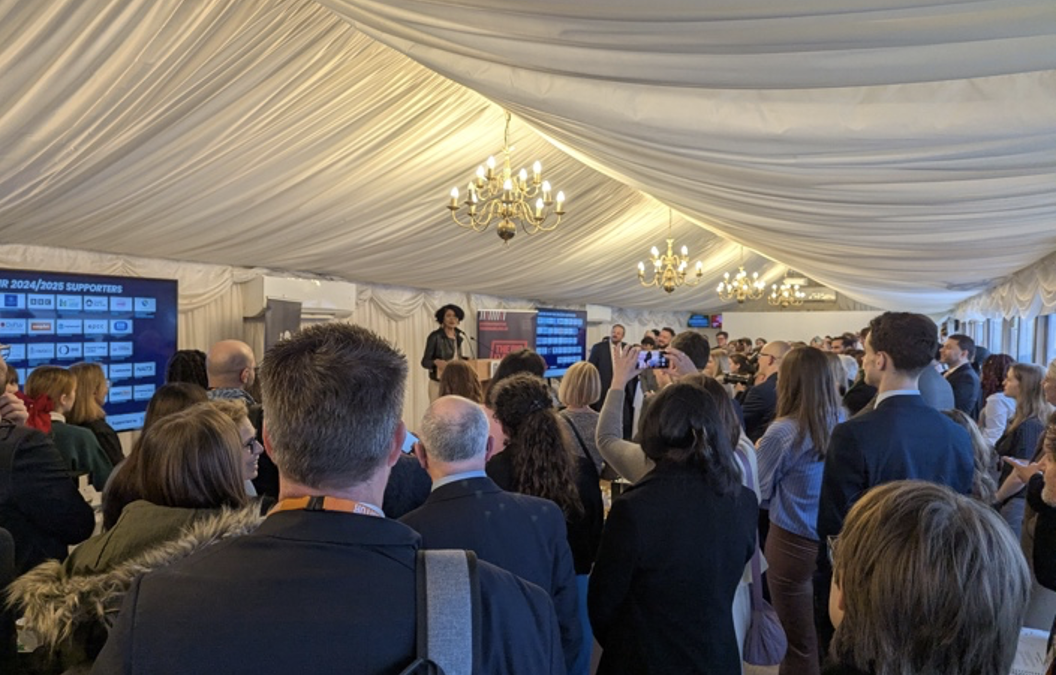
Anthony Setiadi, Vice President, represented ICorr at the Big Bang event at the Houses of Parliament. This was a fantastic event and great to see so many young students enthusiastic about science and engineering. The event was held at the Terrace Pavilion and organised by Engineering UK and hosted by Toby Perkins MP. There were a number of speeches including from Toby Perkins MP, Dame Chi Onwurah, who is a Chartered Engineer, and Dr Hilary Leevers, CEO of Engineering UK. However, the most impactful speech was from one of the winners of the Big Bang Event 2025 (Grace Palmer) who provided the background to her engineering solution to support her disabled cousin. She set out the problem, proposed a solution including coming up with a bill of materials needed, drawings and manufacture as well as trials and feedback with her ‘client’. Her passionate speech regarding Engineering with Empathy, really resonated with a lot of people in the room that were here to support and help others by their work in engineering.
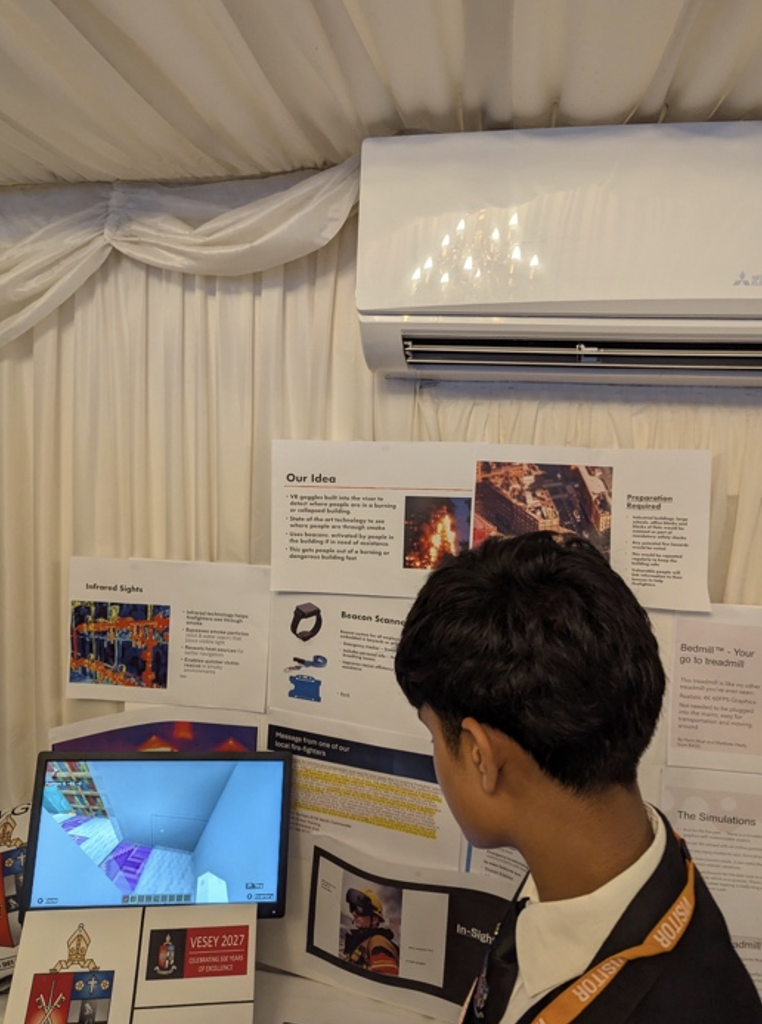
There were numerous projects described from these students, covering inventions and research on mental health, fire safety, simplified transfer aid for disabled, adjustable walking stick for the blind, waste management solutions, and AI cancer detection amongst others. Another one that caught my eye was the research on CO2 emissions from the food we eat, which I think should be something we as engineering practitioners should be using as one of our Safety / Sustainability moments.
Speaking to the young students was very inspiring for me including the way they articulated their work and how they set up their stall with posters and demonstration units. We should further support and encourage them to remain involved and be an ambassador in their community to highlight the rewarding work and career options available. Here at ICorr, we are involved with our Young ICorr initiatives and the YEP (Young Engineering Professionals) programme, but further engagement with colleges and schools will be another key focus, especially since a career in corrosion encompasses both traditional education and non-traditional routes.
The Young ICorr Committee has been hard at work developing many schemes, events, and initiatives to support the early career members of ICorr – here’s an update of what we’re working on and how you can get involved!
Social Buzz: Manchester Pub Quiz Success
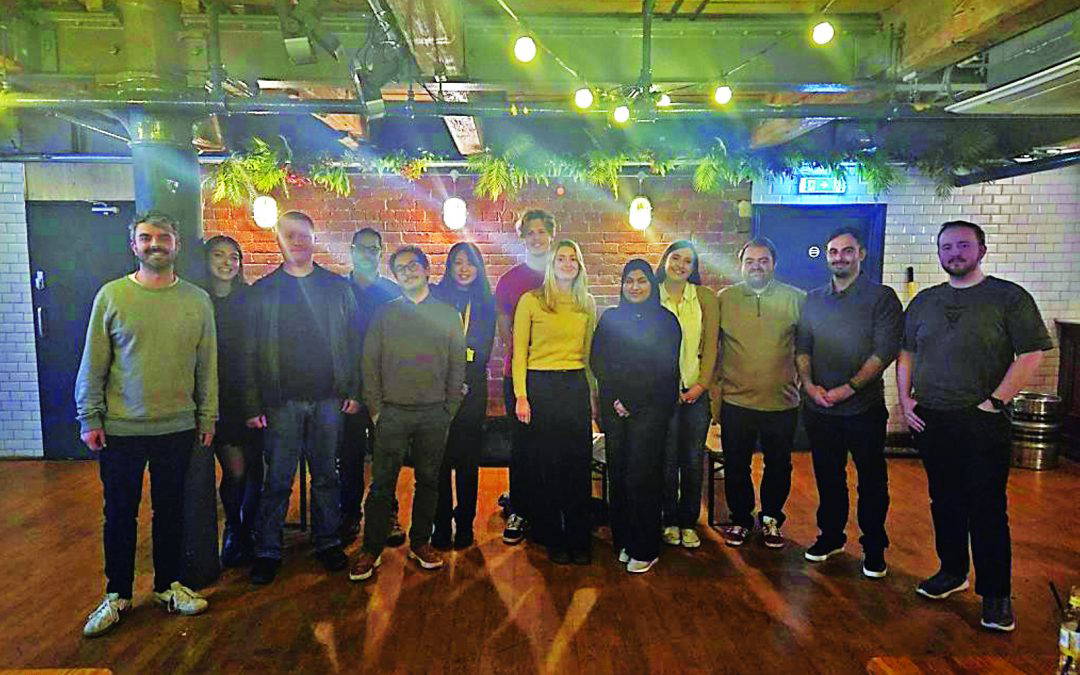
Our recent Pub Quiz social event in Manchester was a hit! With a fantastic turnout and glowing feedback, it proved the power of informal networking in bringing young professionals together. Laughter, learning, and lively competition made for an unforgettable evening.
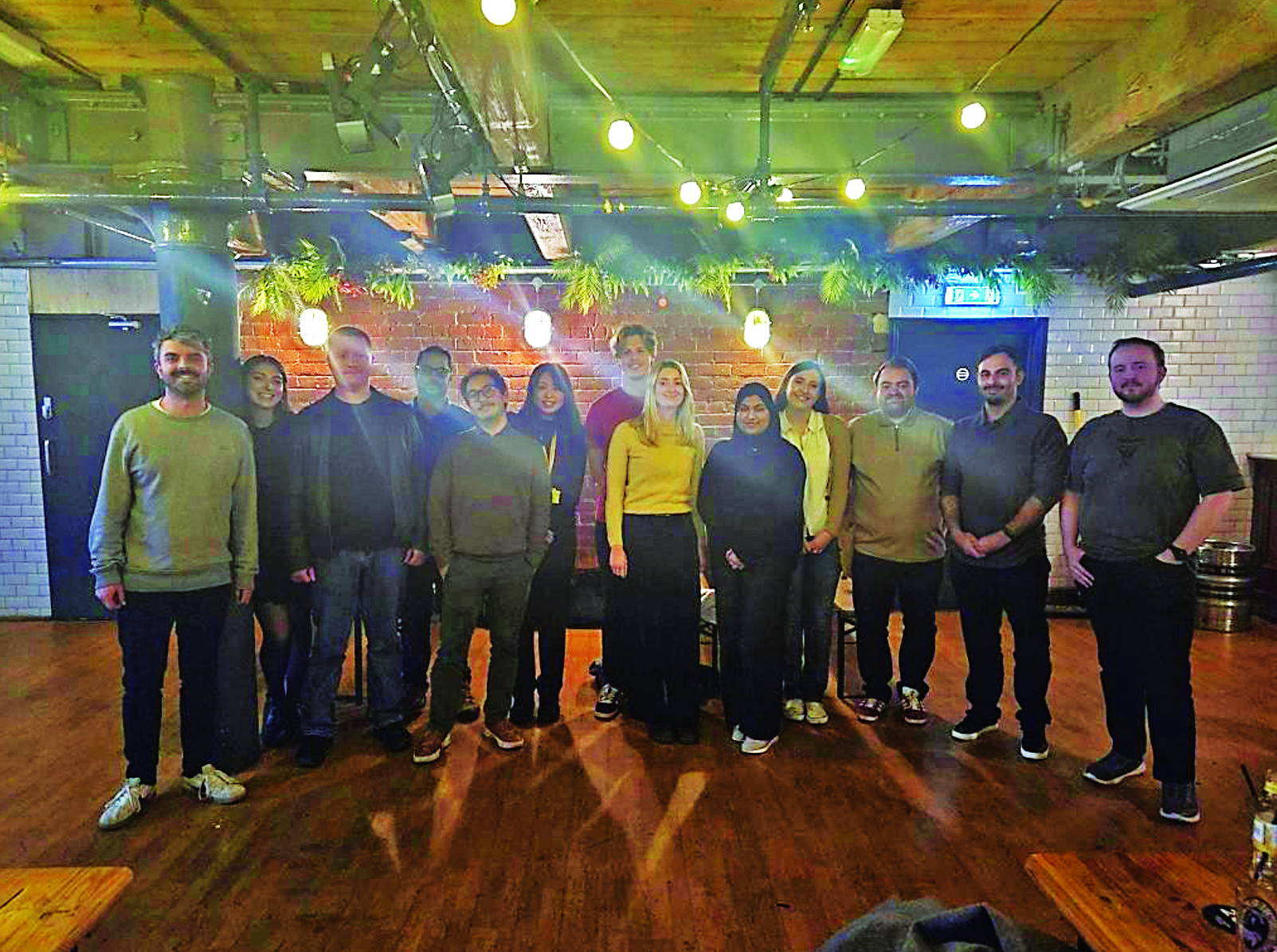
Photos: YICorr Chair Pub Quiz
Other Young ICorr Initiatives Skills for Corrosionists – Online Training Programme In partnership with the Midlands Branch, we’re launching the Skills for Corrosionists online training series in the new year. These sessions are designed to empower participants with essential non-technical skills, including entrepreneurship, communication, personal branding and leadership, to complement their technical expertise. Register at: https://www.eventbrite.com/e/icorr-skills-for-corrosionists-webinar-series-launch-entrepreneurship-tickets-1838991335589 Expanding Horizons: European Collaborations We are working closely with the EFC to develop Young ICorr and Young EFC events for Eurocorr 2026, boosting our international presence and fostering cross-border collaboration. Regional Engagement: Yorkshire and North-West Young ICorr is also teaming up with the Yorkshire and North-West branches to deliver tailored events for young members – bringing opportunities closer to home and strengthening our regional networks.
Mentorship Matters: Launching Soon We’re gearing up to launch the Young ICorr Mentorship Scheme, offering structured career guidance and support for early-career professionals. We’re currently seeking mentors and mentees for the pilot phase – if you’re passionate about nurturing the next generation or would like one-to-one guidance in your career, we’d love to hear from you!
Introducing the Young ICorr Awards – Celebrating the Future of Corrosion
We’re thrilled to announce the launch of the Young ICorr Awards, a prestigious new initiative from the Institute of Corrosion that shines a spotlight on the next generation of corrosion professionals. These awards recognise outstanding early-career engineers and scientists who are making significant contributions to corrosion prevention, research, and innovation. With categories including Young Corrosion Engineer of the Year and Young Corrosion Scientist of the Year, this is a unique opportunity to gain national recognition, connect with industry leaders, and accelerate your professional journey. Visit the Young ICorr section of the website to nominate!
Young Engineers Programme (YEP): Global Reach
Following a successful launch at Eurocorr 2025, the Young Engineers Programme has attracted many applicants worldwide – the successful candidates have been chosen, and we’re now focused on assembling a stellar team of mentors, lecturers, and a compelling case study. Interested in contributing? Get in touch!
Sponsorship Drive: Fuelling the Future
To support YEP and Young ICorr’s growing initiatives, we’ve developed a comprehensive sponsorship proposal and are actively engaging with companies to secure funding. This support will be vital in expanding our reach and impact. If you or your company are interested in supporting the future of corrosion, please get in touch!
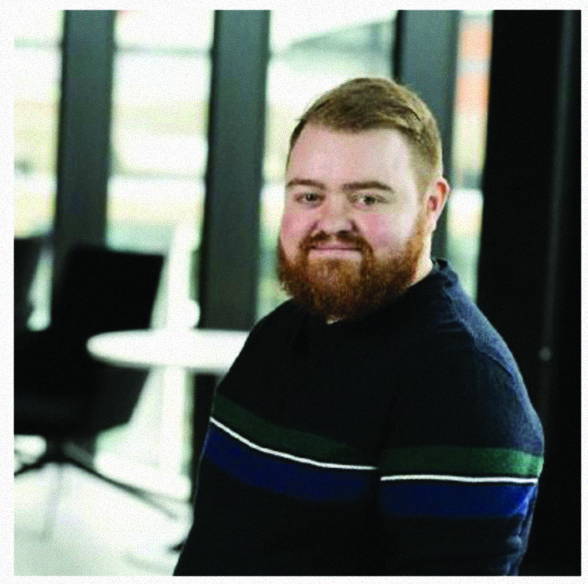
The Young ICorr Committee is buzzing with activity and ambition. We’re always open to new collaborations and welcome anyone interested in joining our journey. For further information about YICorr activities, please contact: Dr Kathleen Purnell Email: youngicorrchair@icorr.org
The 67th Corrosion Science Symposium (CSS) was held jointly with Electrochem2025 at the University of Northumbria, between the 31st August and 2nd September 2025. The CSS has been held annually since its launch in 1960 by Prof. L.L. Shreir.
The symposium is always an ideal opportunity for students and early-career researchers in corrosion science from across the UK and Europe to congregate, discuss their work, share ideas and, above all, enjoy themselves in a stimulating/friendly environment. This year there were 10 talks and 13 posters, and the UR Evans award plenary talk was given by Prof. Herman Terryn (Vrije University, Brussels).
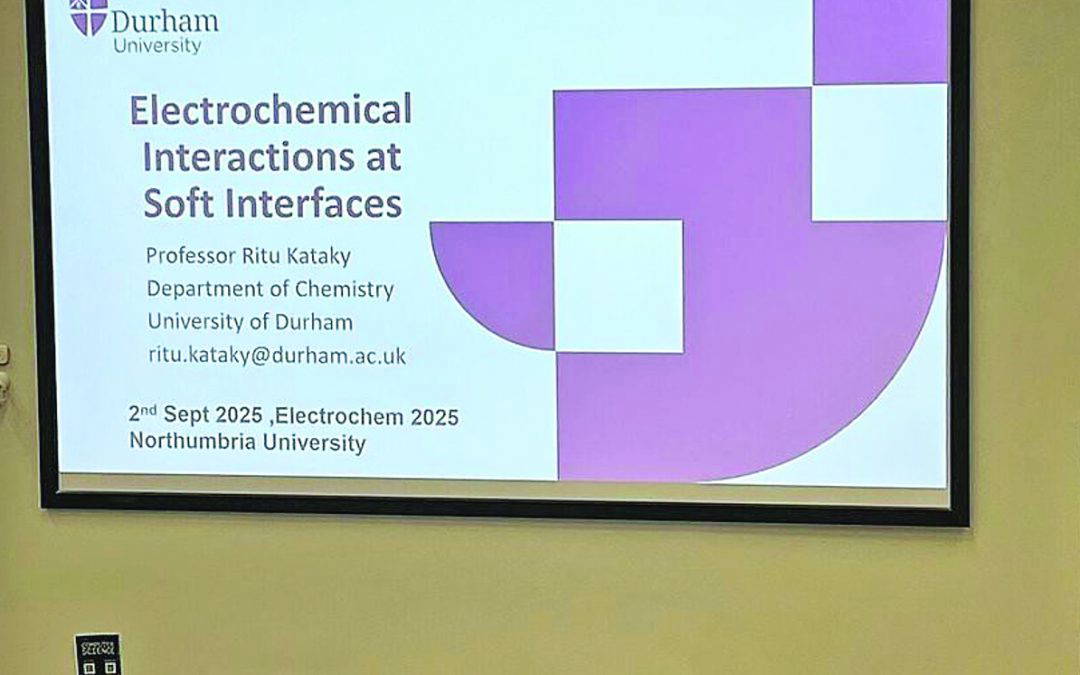
Photo: Plenary Lecture by Professor Ritu Kataky.
In his plenary lecture, Prof. Herman Terryn (Vrije Universiteit Brussel) explores why this goal has long seemed utopian—and how recent advances are bringing it closer to reality. The quest to accurately predict the lifetime of metals remains one of the most pressing challenges in corrosion science. Current industry practice relies on accelerated laboratory tests and long-term field exposure to estimate durability. However, laboratory tests often fail to replicate real-world conditions, while field trials can take up to a decade, slowing innovation. Prof. Terryn’s research aims to bridge this gap by developing a comprehensive platform for predicting the long-term performance of organic-coated metals under realistic environmental ageing. His team combines cutting-edge electrochemical techniques, in situ surface analysis, and advanced finite element modelling, now enhanced with sensors and machine learning. The lecture also introduces VIPCOAT, an EU Horizon 2020 project creating an open innovation platform to design sustainable coating systems and accelerated life tests. Initially targeting aeronautics, VIPCOAT will expand to other sectors, leveraging standardised European Materials Modelling Ontologies. The plenary talk expertly underscored a paradigm shift: from empirical testing toward data-driven, predictive corrosion science, thus paving the way for more sustainable and efficient materials design.
Photo: UR Evans Award to Professor Herman Terryn by ICorr President Dr Yunnan Gao.
Highlights from Electrochem2025: Advances in Corrosion Science The Corrosion Science and Engineering symposium at Electrochem2025 featured several outstanding contributions. Harry Tookey (University of Leeds) presented an insightful study on the effect of salinity on corrosion product characteristics and inhibitor performance in geothermal environments. His work demonstrated how varying NaCl concentrations influence FeCO3 formation on X65 carbon steel and inhibitor efficiency, offering practical guidance for corrosion control in high-salinity systems.
Anjali John (University of Warwick) gave a talk on the initial stages of anodic corrosion of boron-doped diamond electrodes. Using advanced in situ and ex situ techniques, her research provided a rare glimpse into early corrosion mechanisms under extreme electrochemical oxidation conditions, critical for improving electrode durability in advanced oxidation processes.
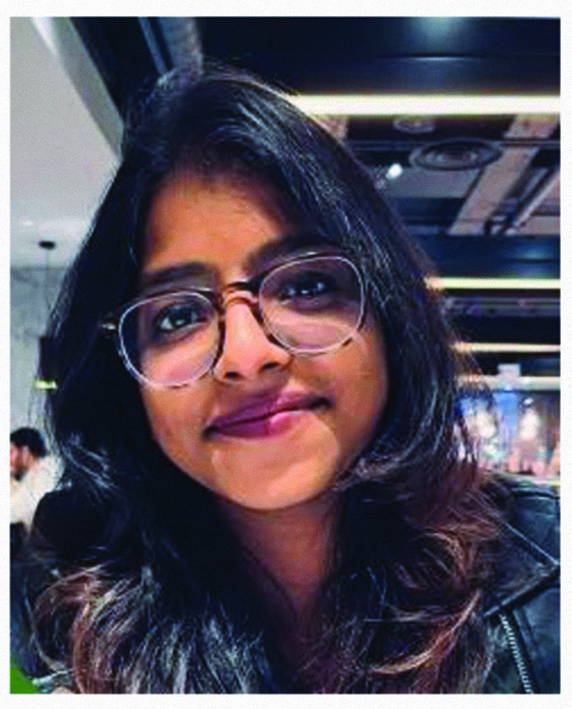
Photo: Talk by Anjali John (University of Warwick).
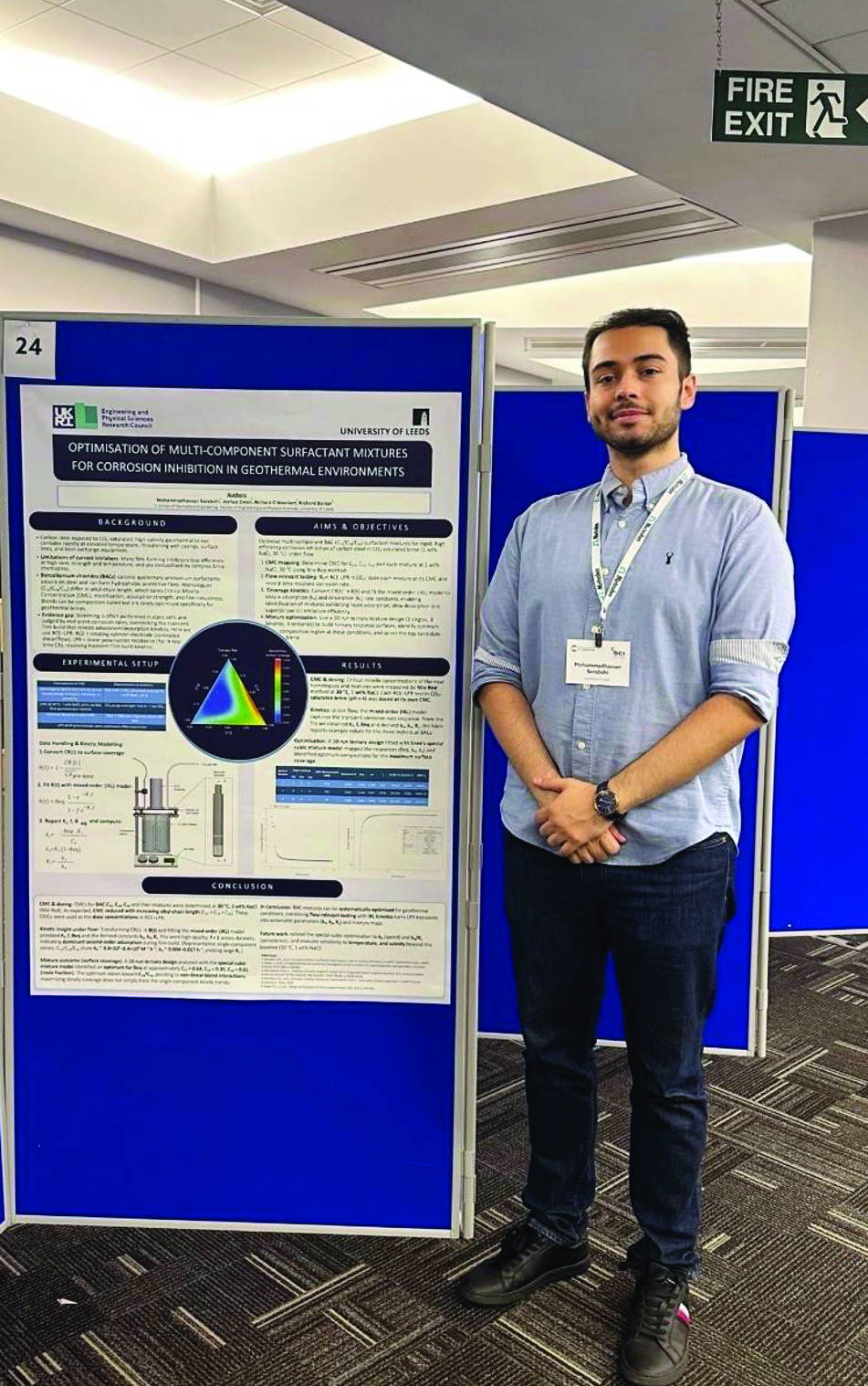
Mohammadhasan Sarabchi (University of Leeds) addressed the challenge of corrosion inhibition in geothermal systems with his presentation on optimising multi-component surfactant mixtures. By combining kinetic modelling with electrochemical testing, he identified formulations that deliver rapid adsorption and strong persistence, paving the way for more sustainable and effective inhibitor strategies. These talks exemplify the innovative approaches currently providing new insights in corrosion science – bridging fundamental understanding with real-world applications.
Photo: Mohamadhasan Sarabchi – Corrosion Inhibitors & Geothermal Energy EPSRC Researcher at University of Leeds.
Harry Tookey was awarded the Shreir Prize 2025 for the best early career research presentation.
Photo: Harry Tookey
For further information about Corrosion Science Division (CSD) activities, please contact: Julian Wharton (Chair) Email: csdchair@icorr.org
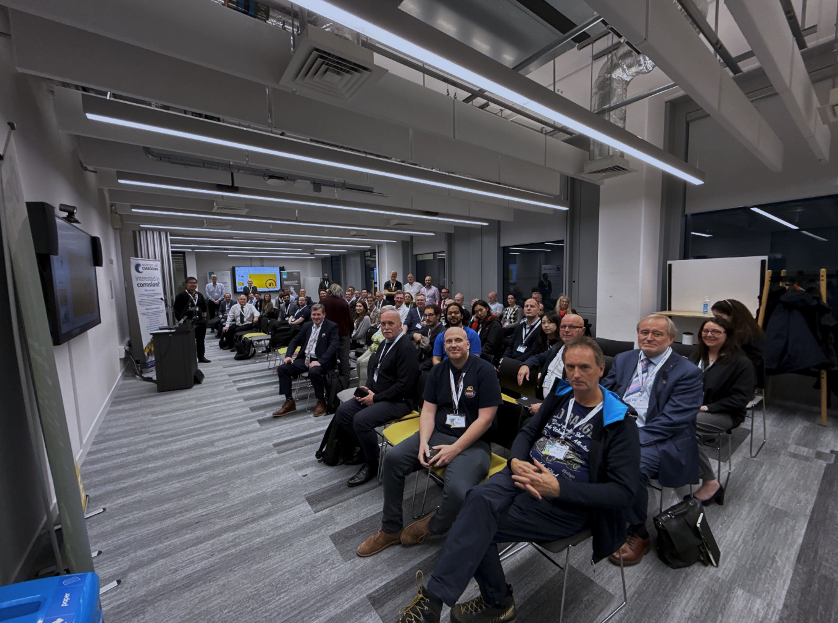
The Institute of Corrosion gathered on 4th November 2025 for its Annual General Meeting (AGM), hosted this year by the Henry Royce Institute in Manchester. The North West Branch ensured the day ran seamlessly from start to finish. ICorr extends sincere thanks to the ICorr team and to all members who travelled – some from considerable distance -to contribute to a lively and well-attended event. The venue’s bright spaces and thoughtful catering choices set a warm tone for the day.
Photo: All Attendees of ICorr AGM in Manchester on 4th November 2025
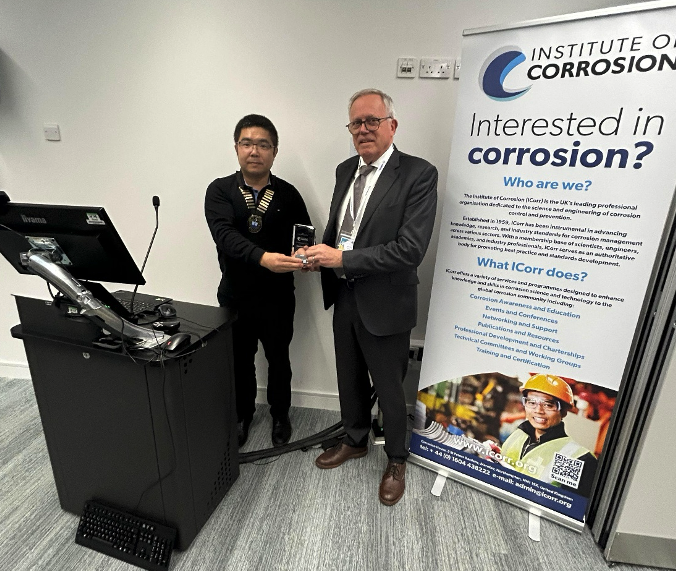
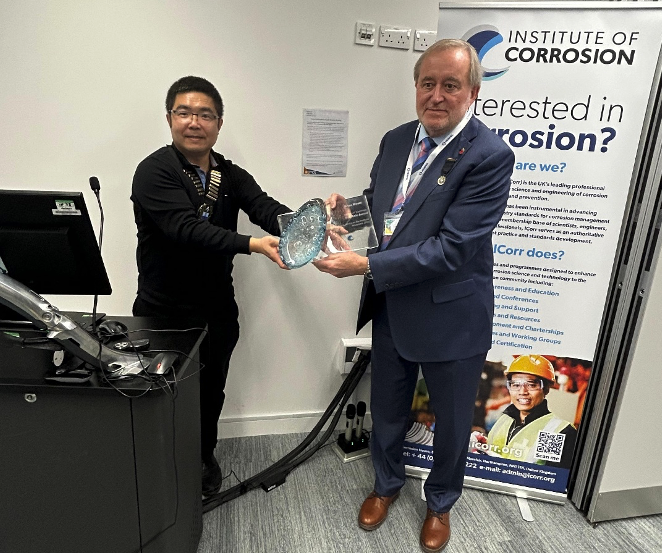
After a welcome lunch and time to reconnect, the programme opened with the presentation of two distinguished ICorr awards. Professor Damien Feron (as reported already on ICorr CED Announces Professor Damien Féron as the Winner of the 2025 Paul McIntyre Award – Institute of Corrosion) received the 2025 Paul McIntyre Award, recognising his longstanding impact on corrosion science, while the 2025 H.G. Cole Award was presented to ICorr Past President Brian Wyatt (as reported already on H.G. Cole Award 2025 – Institute of Corrosion) for his sustained contribution to corrosion engineering practice. ICorr President Dr Yunnan Gao presented to Awards and congratulated both recipients for their work in advancing the field
Photo: ICorr President, Dr Yunnan Gao (Left) Presenting 2025 Paul McIntyre Award to Professor Damien Feron (Right) at the ICorr AGM on 4th November 2025.
Photo: ICorr President, Dr Yunnan Gao (Left) Presenting H.G. Cole Award to Brian Wyatt (Right) at the ICorr AGM on 4th November 2025.
The technical programme supported the AGM with four talks spanning current research, industry experience, and lessons from challenging case studies.
Prof Fabio Scenini (University of Manchester) introduced attendees to the breadth of facilities and research capabilities at the Henry Royce Institute, offering a glimpse of the tools shaping the next generation of materials development.
Steve Hodges (Johnson Matthey) explored contrasts and shared challenges between oil & gas and chemical process sectors, particularly in materials selection and corrosion control.
Dr Bea Mingo (University of Manchester) presented research into innovative coating deposition methods with promising applications across medical, aerospace, and other high-performance industries.
Andrew Piercy (Intertek CAPCIS) closed the session with an assessment of publicly available findings from the Kashagan oil field failure investigations—an unflinching look at the complexity’s corrosion engineers must navigate, and the critical importance of identifying root causes.
Following the technical sessions, the formal 2025 ICorr AGM kicked off by ICorr President, Dr Yunnan Gao, gave a presentation on ICorr’s successes and achievements in 2025, including national and international growth, developments across the events programme, and the Institute’s newly awarded licence status with the Engineering Council – an important milestone in strengthening ICorr’s professional framework. After that, ICorr Treasurer George Winning updated the members with ICorr’s annual accounts and financial position.
Photo: ICorr President, Dr Yunnan Gao, Giving A Presentation on ICorr Successes and Achievements in 2025 at the Formal ICorr AGM on 4th November 2025.
During the 2025 ICorr AGM, members carried out the election of the 2025/2026 ICorr Trustees and Council. The vote was unanimous, confirming that all members serving in the 2024/2025 term have been re-elected to continue in their existing roles for the year ahead.
Before the close out the AGM, ICorr President, Dr Yunnan Gao officially recognised several individuals for exceptional service to ICorr. ICorr Presidents, Stuart Lyon, Brenda Peters, and Paul Lambert were awarded Honorary Life Fellow status for their enduring contributions in 2025. Special thanks were extended to John Fletcher, stepping down from Council, and to David Harvey, Raju Narayan, and Jane Lomas for their considerable work in shaping what has been an energetic and forward-looking year for ICorr. Appreciation is also due to Hempel for supporting the AGM, and to ICorr’s Sustaining and Corporate Members for their continued commitment.
Members can find full minutes – covering proceedings, discussions, and formal votes-within the ICorr Members Area: www.icorr.org/members-area/
The 2025 AGM closed with a sense of momentum, reflecting a community steadily building the future of corrosion science and engineering.
We have just completed our Autumn programme with some excellent Candidate feedback.
“Heard about the course through my work (at Wales and South-West Water). Super happy with Tony, a very nice, fantastic Tutor, a pleasure to meet him. Course was very informative and well structured”
“Lack of knowledge in our workplace (about MIC). Now have a good understanding. Tony very helpful”
“Training Department arranged. All very good.”
Join us for our next ICorr MIC Training Course, a high-impact week for professionals driving excellence in corrosion management.
Whether your role lies in operations, integrity, inspection, management, design, R&D, consultancy, or utilities, this course equips you to:
Identify MIC drivers across diverse systems
Implement targeted monitoring and control strategies
Lead investigations with conclusive evidence
Influence organisational MIC policies and practices
Strengthen internal standards with global best practices
Delivered by a leading expert and aligned with ICorr’s recognised standards, this course blends technical depth with practical application—empowering you to protect assets, elevate performance, and drive meaningful change.
Certification Opportunity: Participants who successfully pass the final exam will be awarded the ICorr Certified MIC Technologist credential—a globally recognised mark of excellence in microbial corrosion management and a testament to advanced professional capability.
These courses contribute to ICorr membership and continuing professional development requirements (CPD).
ICorr offers Chartered Scientist (CSci) and Chartered Engineer (CEng) routes.
We use cookies to optimize our website and our service.
Functional
Always active
The technical storage or access is strictly necessary for the legitimate purpose of enabling the use of a specific service explicitly requested by the subscriber or user, or for the sole purpose of carrying out the transmission of a communication over an electronic communications network.
Preferences
The technical storage or access is necessary for the legitimate purpose of storing preferences that are not requested by the subscriber or user.
Statistics
The technical storage or access that is used exclusively for statistical purposes.The technical storage or access that is used exclusively for anonymous statistical purposes. Without a subpoena, voluntary compliance on the part of your Internet Service Provider, or additional records from a third party, information stored or retrieved for this purpose alone cannot usually be used to identify you.
Marketing
The technical storage or access is required to create user profiles to send advertising, or to track the user on a website or across several websites for similar marketing purposes.