The ICorr India Branch has continued its programme of technical activities and knowledge sharing during the early part of 2026. The branch remains committed to promoting professional engagement, technical learning, and collaboration within the corrosion community.
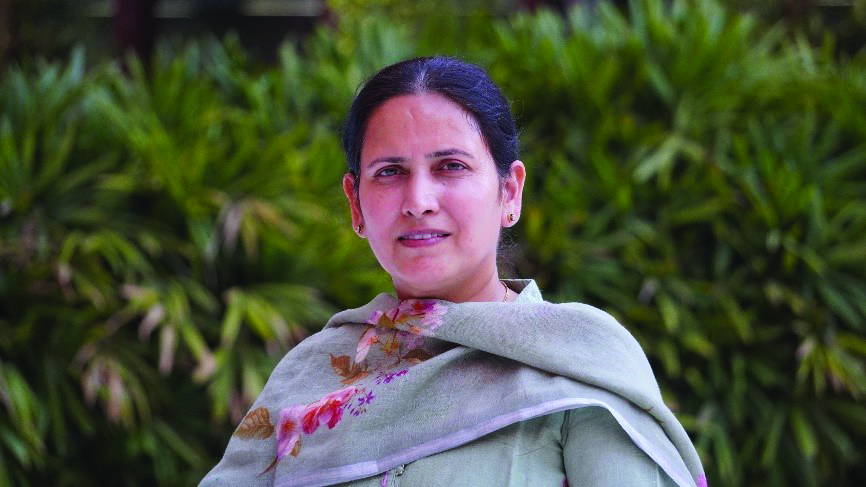
On Tuesday, 20th January 2026, the branch organised an online webinar titled “Advances in the Technology of Corrosion Inhibitors.” The presentation was delivered by Dr Shweta Goyal, Professor and Head of the Civil Engineering Department at Thapar Institute of Engineering and Technology, Patiala, and Vice-Chair of the ICorr India Branch. The talk provided a detailed overview of the development of corrosion inhibitor technology for reinforced concrete.
Dr Goyal discussed the evolution of inhibitors from traditional inorganic compounds, such as nitrites, to modern organic
and environmentally friendly alternatives. Organic inhibitors containing amine,aldehyde and carboxylic functional groups were highlighted for their ability to form protective films on steel reinforcement and reduce corrosion during both the initiation and propagation stages. She also emphasised the importance of two-stage testing, beginning with pore solution studies followed by testing within concrete systems to confirm effectiveness and compatibility. Advanced techniques such as electrochemical impedance spectroscopy (EIS), potentiodynamic polarisation (PDP), FTIR and XPS were presented as valuable tools for understanding inhibitor mechanisms.
The talk also highlighted recent developments in sustainable corrosion protection. Amino acid–based inhibitors were discussed as promising eco-friendly solutions capable of mitigating corrosion in chloride and carbonation environments. In addition, smart corrosion inhibitors and microencapsulation technologies were presented as emerging approaches that allow inhibitors to be released only when corrosion or cracking occurs. The Bidirectional Electromigration (BIEM) technique was also introduced as a hybrid method combining chloride extraction with inhibitor injection for improved durability of reinforced concrete structures.
On Tuesday 17th February 2026, the branch hosted another technical presentation titled “Beyond Monitoring: Leveraging AI and Digital Twins for Predictive Corrosion Resilience,” delivered by Dr G. H. Thanki https://shethgroupofindustries.com/dr-g-h-thanki/
The presentation explored how artificial intelligence and digital twin technologies are transforming corrosion management by moving from reactive maintenance to predictive and data-driven strategies.
Dr Thanki explained how the integration of IoT sensors, physics-based models and advanced analytics can create digital twins that simulate asset behaviour and predict corrosion risks. These technologies allow asset owners to anticipate degradation and take preventive action before failures occur.
He noted that corrosion costs the global economy an estimated USD 2.5 trillion annually, while also contributing significantly to environmental impacts due to the need to replace damaged infrastructure and materials.
The presentation highlighted the benefits of digital twin–based corrosion management, including potential reductions of 30–40% in maintenance costs, 25% extension of asset life, and significantly faster inspection processes.
Dr Thanki also discussed future developments such as multimodal AI combining sensor, imaging and documentation data, intelligent coatings with embedded inhibitors, and advanced simulations for designing corrosion-resistant materials.
Stay Connected
To stay informed about ICorr India Branch activities and technical programmes, follow us on LinkedIn: https://www.linkedin.com/in/institute-of-corrosion-india-branch-india-branch-ab3003379/ For branch-related queries, please contact: INDIAchair@icorr.org