


Corrosion Engineering Division (CED)

Corrosion Engineering Division (CED)

CED Working Day and Symposium on ‘Knowledge Transfer and the Management of Infrastructure Corrosion’

This one-day meeting, held on 27 April at the National Railway Museum, York, is the latest in a series of working days of the CED. There were five main talks after which the meeting broke up into the individual working groups. It was also possible for participants to visit the National Railway Museum.
Nick Smart (Jacobs), Chair of CED, welcomed delegates to the meeting and introduced the speakers. He is stepping down as chairman after 15 years and introduced the new chairman, Danny Burkle. The meeting showed their appreciation for Nick’s excellent efforts during that time and welcomed the new chair.

The first presentation was given by Desmond Makepeace (Galvanizers Association) on ‘Hot dip galvanizing for specification and use in infrastructure projects. Desmond started by describing the galvanising process, and noted the appropriate standard is EN ISO 1461. A variety of defects were discussed. However, it was pointed out that the coating does not have to be perfectly smooth, a certain number of defects can be tolerated, e.g. yellow-orange flux staining, wet storage stains, colour variation, zinc ash, zinc build-up and entrained dross. Other factors affecting the quality of galvanizing were discussed: coating thickness, renovation, adhesion, joining-bolting, duplex systems, maintenance, venting of hollow sections, and overlapping sections. He also discussed how the atmosphere affects corrosion of galvanised structures.

The Young ICorr talk, ‘Best management practices to transfer knowledge to ensure integrity assurance optimisation for oil and gas production’ was given by Izabela Gajewska (Intertek). Knowledge transfer may be defined as, ‘A method of sharing information across different areas in the business’ or ‘A process by which experienced employees share or distribute their knowledge’. In order to address this process, a good plan is needed, which should include work experience, mentoring, training, e-learning, attending conferences, text books, and standards. For best results, a mentor specific to the work situation is required, meeting the ‘student’ weekly or twice monthly, in-person or on-line. The candidate should be furnished with a tailored curriculum and encouraged to give PowerPoint presentations, such as happens with, ‘learn at lunchtime’ talks. External training courses should include subjects such as, basic corrosion, welding, materials, coating, fire protection, cathodic protection, chemical treatments and risk assessments.

Chris Atkins (Mott MacDonald) presented his thoughts on the consequences of climate change on corrosion. He pointed out that historically established corrosion rates in any given environment may no longer be valid, due to the emissions of carbon dioxide that are taking place. The increase in atmospheric carbon dioxide is likely to reduce the pH of natural waters, making them more aggressive to concrete. It will also increase carbonation of concrete, but on the plus side, it may reduce the corrosion rate of galvanized steel. The recognised temperature increase reduces the dissolved oxygen content in water, and Chris showed how an increase in temperature does not automatically produce an increase in corrosion rates. Certainly, any reduction in carbon dioxide levels is likely to reduce atmospheric corrosivity. Chris highlighted that, as far as he is aware, no one is taking an overarching view on the effect of climate change on corrosion, and this could be an opportunity for the Institute to take a leading role.

Richard Barker (Leeds University) addressed the subject of, ‘Academia and industry: How can we advance corrosion science and engineering together?’ It used to be said, ‘academics want to publish and companies want to make money’. However, when research has both scientific and commercial potential, collaboration can be mutually beneficial. Academics have time and research resources and produce new knowledge, and firms are well-placed to commercialise this. However, academia and industry have very different operating environments. Two barriers arise: complexity of communication (knowledge exchange/dissemination) and the complexity of physical collaboration (joint projects). Academic literature tends to be complex, vast and continually changing. To overcome this, industry must trust scientists. Richard pointed out that some companies go to great lengths to identify trusted scientists and research groups. It was concluded that there are significant benefits in collaboration between academia and industry, challenges exist but they can be overcome with the correct approach from both sides.

The President then presented the Paul McIntyre Award to Chris Lynch, Engineering Manager at Corrpro Companies, Europe. Chris received the award for his outstanding contribution to a number of aspects of corrosion engineering over a number of years and particularly his work in advancing standards in the area of cathodic protection and supporting the Institute’s training activities (see below).

After lunch, Nick Smart (Jacobs) gave a presentation on, ‘Radioactive waste disposal – where corrosion science meets corrosion engineering’. He elucidated the three main levels of waste. High (HLW), comprising spent fuel/liquid waste which was usually vitrified before being placed in stainless steel containers, Intermediate (ILW), including graphite, waste sludge and structural components, and Low (LLW), of very low radioactivity (e.g. paper, plastics). He described a number of corrosion science research projects that have supported the corrosion engineering and safety assessment aspects of radioactive waste management. Corrosion issues include atmospheric external corrosion of stainless steel waste containers during interim storage, the corrosion behaviour of waste uranium, aluminium and Magnox after encapsulation in cement, and the long-term corrosion of waste containers after disposal in deep geological conditions. The UK total waste inventory has a volume of approximately 4,500,000 m3, which would fill Wembley Stadium! (fortunately, only 0.02% being HLW). The two main concepts for the geological disposal of HLW involve placing copper or carbon steel canisters deep underground and surrounding them with a ‘buffer’ material to prevent release of radionuclides to the biosphere, such as bentonite clay, which swells and provides compressive forces around copper-based containers, or a cementitious buffer material, which provides a highly alkaline environment that reduces the corrosion rate of carbon steel to very low values (<0.01 µm yr-1). Possible geological disposal environments around the world include sedimentary clay, crystalline granite or salt evaporite, with each potential site having different groundwater compositions. Key environmental factors are oxygen concentration, chloride and sulphide concentrations, radiation levels and microbial activity. Nick highlighted the use of a range of analytical techniques to characterise the corrosion behaviour and corrosion rates of candidate waste container materials in long-term in situ experiments conducted under representative conditions. Such studies can be supported by comparison with the corrosion of natural analogues, such as archaeological artefacts, for example the Coppergate Helmet, an 8th century Anglo Saxon helmet made from iron and copper, currently exhibited in the Yorkshire Museum.

This session finished with a short talk by Stuart Bond from AMPP who discussed and highlighted the revised standards development activities carried out by AMPP (a merger between SSPC/NACE was rolled out in January 2021).

The above talks are available in pdf form through the ICorr website in the CED section of the members’ area.
The meeting then split up into the working party section and, apart from the concrete group, all held meetings, short summaries of these follow:

Nuclear Corrosion Group
Following on from Nick Smart’s talk on the interface between corrosion engineering and corrosion science in the context of radioactive waste management, the nuclear corrosion working group, chaired by Nick Smart, held a small meeting which had a wide-ranging discussion about corrosion issues arising during the storage of nuclear waste. These included assessment of pitting corrosion in stainless steel during storage in atmospheric conditions, the effects of microbial corrosion on cast iron under damp conditions, and the potential for galvanic corrosion of stainless steel in contact with graphite in cementitious environments.

Coatings Group
The meeting, chaired by Phillip Watkinson (PW), had seven participants. The minutes of the last meeting in April 2021 were read and approved. The coatings Technical Information Documents (CTID), created in 2016-17, are now due for review. These comprise, Inspection and Testing of Coatings, Surface Preparation Methods, Paint Definition and Generic Organic Coating Types, Thermal Spraying, and On-site and Off-site Application of Intumescent Fire and Corrosion Protective Coatings for Steel Structures. NACE Coatings standards have been transferred to AMPP. G. Maltman pointed out that, as a result of climate change, 15 years standard atmospheric corrosion tests may have to be amended due to changes in RH, rainfall, temperature etc. Douglas Mills (DJM) suggested that EIS measurements (ISO 12944) be reviewed. PW tabled two standards on Paints and Varnishes (BS EN ISO 4628-1: 2003 and 4628-2:2003) also requiring review. Finally, DJM suggested that an interim meeting (possibly via ZOOM) be held ahead of the next annual CED Working Day. This was agreed by the meeting.

Cathodic Protection Group
Chris Lynch was acting chairman of the CP group on the day. In a small meeting, discussion centred on subsea CP systems and performance of flush fit aluminium deep sea anodes on complex piping systems. This included current distribution, current density, anode installation methodology and expected performance along with coatings, anode corrosion products and calcareous deposits.

All Energy Group
This group with Steve Paterson as the chair arose from the Oil and Gas group, with renewable energies now included. This was its first meeting under the new name. Nine people attended. The minutes of the previous Oil and Gas meeting were accepted, although none of the actions had been able to be completed. A good discussion was had (which all those present contributed to) about the purpose of the working group. This covered 1) production of documents (several of the old TACC documents were being revised), 2) Mentoring of young ICorr members, 3) Information exchange via networking, and 4) engagement with other organisations like AMPP. There was also a standards update. It was agreed (as with the coatings group) to try to hold an update Zoom meeting in October.


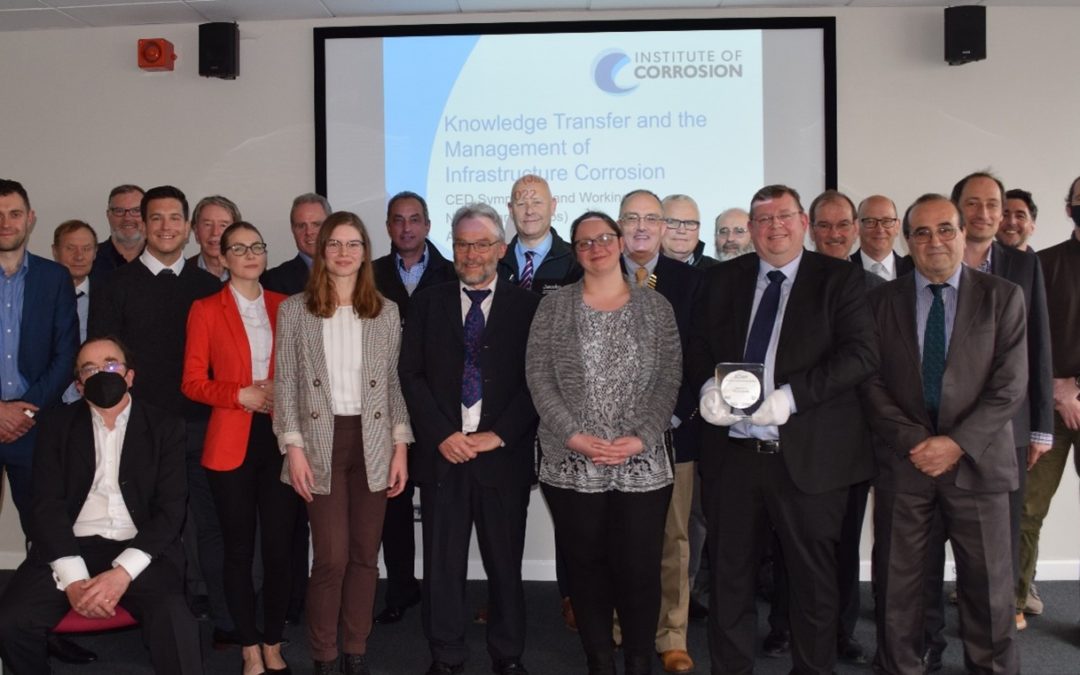
The delegates.

Nick Smart chaired the closing discussions and thanked the speakers, the Institute of Corrosion, the delegates for attending and the National Railway Museum for providing their excellent facilities. As mentioned at the start Nick is retiring from the CED chair position. And so it is over to Danny, to sort out next year’s meeting. Watch this space!
Report by David Nuttall and Douglas Mills

Personal comments from
Nick Smart.

It has been an interesting and rewarding experience for me to be chair of CED for about 15 years. We have held meetings in many venues that I would never have visited otherwise and met many people outside my normal field of work. I am particularly grateful to Douglas Mills, who has helped me in the role. I would also like to thank the working group chairs who have volunteered their time and the many invited speakers (over 60), who have agreed to give a wide range of interesting talks. There is an archive of previous CED talks given in the members’ area of the Institute’s website. A highlight of my term in office was the initiation in 2017 of the Paul McIntyre Award, which is the first Institute award that specifically recognises the achievements of corrosion engineers, rather than corrosion scientists. The CED continues to provide a valuable way of networking between professionals in the corrosion engineering field and of involving up and coming corrosion engineers.
National Railway Museum.
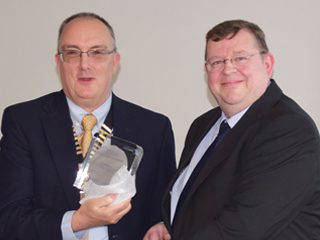
Chris being presented with the award from the President.

Local Branch News – Aberdeen Branch

The branch March meeting featured a presentation by Dr Robert Lindsay, reader in Corrosion Science and Engineering at the University of Manchester via webinar, entitled “Corrosion inhibition: Separating Fact from Fiction”. Prior to taking up this position in 2005 he had appointments at a number of other research institutions including the Fritz-Haber-Institut (Berlin), Cambridge University, and the CSIC Institute of Materials in Barcelona.
For more than a century, surface-active organic species have been employed to control the corrosion of metals/alloys. Given suitable selection, such corrosion inhibitors have proven to be highly effective, preventing significant degradation of metallic substrates even in highly aggressive environments. Corrosion inhibitors (CI) can be applied in a variety of applications, and most obviously in instances where there are large amounts of aqueous solutions such in the Oil & Gas Industry.

Corrosion inhibitors are substances that, when added in small quantities to a normally corrosive environment e.g. water, gas or oil containing, reduce the corrosion rate (CR) by bringing about a change at or near the surface, without significantly changing the concentration of corrosive species. Layers of corrosion inhibitors can be applied to surfaces to markedly reduce corrosion rate. CI efficiency is measured by comparing corrosion rates with and without the CI coating (film), a CI is considered effective if reduction in CR of >95%, and adequate for corrosion allowance of the material, is achieved.
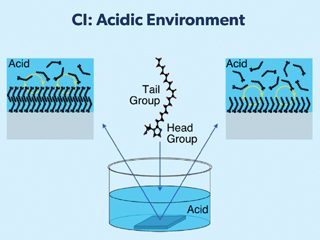
CI can be classed as ‘2D’ or 3D’ adsorbed thin films. The presentation focused on the performance of 2D’ adsorbed films only in low pH, acidic solutions. These frequently have low persistency in operational service (unless CI replenished regularly (at least daily to the system). In an acidic environment of HCl, the main reactions on a steel substrate are the anodic reaction with iron going to its oxide and the cathodic reaction where there is a reduction of protons to form hydrogen molecules. The inhibitor needs to interfere with one or more of these reactions to be defined as an anodic, cathodic or ‘mixed’ type of inhibitor. The inhibitor forming a 2D layer on the surface, shown pictorially as either a monolayer or a bilayer, which is dynamic, forming and re-forming all the time given that there is a balanced supply of inhibitor.

For practical selection in industry, CIs are usually chosen based on users experience by empirical means (historical trial and error), or suppliers’ knowledge and or compatibility with other chemicals already deployed for different production / process reasons. However, to move on, further research is still necessary to fully understand the mechanisms, study of the adsorption thermodynamics (how strongly they bond to surface), and characterise the interfaces, which can possibly lead to ‘green’ CIs being developed.

Understanding how CIs work in detail will allow Industry to move away from an empirical selection process. i.e. are they adsorbing on a clean surface or on top/ combined with salt and oxide, surface?

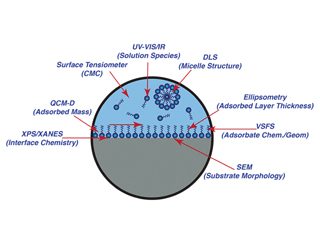
To this end, current research activity at Manchester focuses on mechanistic understanding of interface properties of relevance to corrosion. Combining electrochemical measurements with surface sensitive probes, such as X-ray photoelectron spectroscopy, to develop structure-performance relationships to enable more complete understanding of corrosion related phenomena.

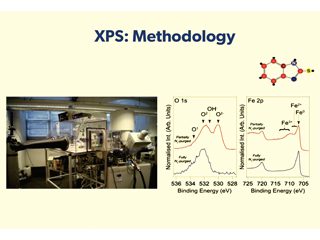
Details of corrosion inhibitor-substrate interactions are being studied through detailed interface characterisation. X-ray photoelectron spectroscopy (XPS), results indicate that the chemistry of the inhibited interface is dependent on both inhibitor concentration and acid identity. The science is highly academic in nature and the physics and chemistry of the studies are best explained by watching the You Tube video presentation at: https://www.youtube.com/watch?v=_-NtzNC7BZo.

Data gathered so far has demonstrated that surface adsorption is not always sufficient for achieving the target corrosion inhibition efficiency, i.e. a surface-active agent can be bound to the surface, but not lead to sufficient reduction in corrosion rate. Moreover, XPS data can be used to argue that the widely adopted approach of determining the standard Gibbs energy of adsorption of a corrosion inhibitor from measured inhibitor efficiencies is flawed, and so should not be relied upon as a tool for corrosion inhibitor selection.

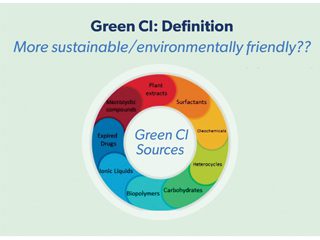
The final message from the presentation focussed on green CIs. We need inhibitors to be more sustainable and environmentally friendly, but a review of the literature shows that little progress has been made and the use of plant-based alternatives (strawberries and other examples) or recycling of waste products (such as coffee grinds) has not received much attention, or is currently judged as having little prospect. However, it should be pointed out that many research programmes have been delayed by the recent pandemic.

In April the branch welcomed Dinko Cudic, Global Technical Authority for StopaqR in a hybrid live presentation/webinar from the Jury’s Inn, Aberdeen entitled “Reducing the environmental footprint for surface preparation and coating application for onshore and offshore assets.”
Dinko is also the technical director for visco-elastic coatings, and has held senior management positions in the Sealed for Life Group who have owned the StopaqR subsidary for more than 15 years.
The energy and utilities industries are now accepting the need to find alternative technologies to reduce waste, CO2 emissions and considerable carbon footprint (product mining/transportation) for steel preparation and coating application. Dinko’s company have developed a solution that addresses, waste reduction, the lowering of CO2, noise and thermal insulation properties, not previously considered in fabric maintenance and asset integrity solutions.

Based on a compound containing non-crystalline, low-viscosity, non-crosslinked (fully amorphous), pure homopolymer polyisobutene, the presentation discussed why such technology should be considered as a viable option, in an industry that requires straightforward maintenance solutions to difficult corrosion problems both onshore and offshore.

Protective coatings are commonly applied to steels, but the integrity of these coatings is dependent on the cleanliness, profile and surface finish of the substrate, and most coatings will simply not adhere or give required lifetime performance unless there is a high-quality preparation giving an angular blast profile and no surface contamination.

In order to achieve this, degreasing compounds are often deployed, followed by abrasive blasting to prepare the new steel substrates or indeed remove old coatings to reapply new ones. The ‘media’ used for blasting is often dependent on the substrate but is essentially hard, angular grit in the form of alumina, garnet, or steel. In the blasting process there are now increasingly demands that all media and the corrosion products, and paint debris, must be safely captured and either recycled or separated and disposed of in a controlled manner, at high cost. However, the environmental cost of mining and manufacturing the media are also quite considerable and with these materials shipped around the world gives rise to a significant carbon footprint. Subsequent clean-up of the paint application equipment means that there are also waste solvents to be recycled and disposed of. Hence the present drivers towards protective coatings that can be applied without extensive surface preparation, or spray application of liquid paints.

Dinko described the target coating engineering requirements, and explained that inspiration for the development of the StopaqR compound was actually taken from chewing gum (!!), an ubiquitous material which adheres to pavements in cities around the world, which is a menace to council authorities. Incredibly, it sticks with no preparation, it flows and adheres, and seals the surface for a lifetime!

In order to develop a product for corrosion protection purposes, polymers available in the open market were studied to look at properties critical to Industry needs, and the product selected that met all criteria was polyisobutene. This product was first developed by BASF in the 1930’s and has a track record in other fields.

In the beginning, solutions were pumped and spread on to surfaces, webbing was added, and a backing or seal coat tape applied for mechanical protection, these were eventually all put into a prepared tape product that could be cut and pressed or wrapped onto surfaces. A particular characteristic of the compound developed was that it remained pliable like a putty, between the surface and the backing tape, so constantly flexible and allowing it to be pressed into all joints and profiles.

The practical application of the product in various fields e.g., buried or submerged piping, splash zone, corrosion under insulation or condensing lines will depend on the international standards and individual company codes that already exist for corrosion protection. Work originally focussed on onshore, above ground pipeline wraps in high salinity, high chloride content environments, desert environments, and then moved on to flanges and awkward junctions where the product was cut to shape and pasted onto the substrate.

The final product can be applied to flat steel in a fashion resembling ‘wallpaper’ using ~ 300mm wide rolls. Essentially the surfaces that it is to be laid onto can first be tested for adhesion by taking a sample and assessing whether it sticks or not.
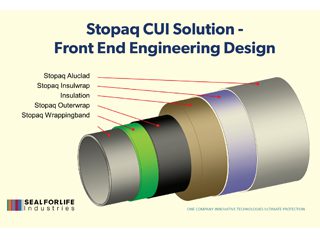
For materials such as stainless steel, surface preparation would remove natural protective films so patches are generally applied directly over natural oxide or flaws. There are also specific system wraps developed with multi-layers to include corrosion protection, insulation, water impermeability, and with outer aluminium cladding.

From the original Oil & Gas industry viewpoint, StopaqR has now moved into applications in civil engineering for bridges and structural supports to offshore renewables – wind turbine towers.

One area in which the product is extremely useful, is in patching damage and sealing small areas by simply cutting patches like plasters from larger sheets and and then applying them.

The presentation also considered the cost advantages of using StopaqR low carbon footprint products. For high quality paint systems 80% of the cost of application is in surface preparation and application but that cost can drop by about 20% for StopaqR type protective compound. The cost over time and the cost to the environment are also significantly reduced along with reduction in risks & HSE associated with the surface prep, materials handling and disposal.

A recent case study of actual cost for the application of North Sea approved epoxy paint systems versus StopaqR for a fabric maintenance area of 550m2 was described. The data from these trials in respect of materials, application and clean up was fully evaluated. Costs for StopaqR system were found to be ~ 2/3 that of a conventional paint system, excluding lifetime costs which can extend maintenance
intervals by 3x.

A comprehensive Q&A took place following both the above presentations which featured significant international attendance.
The branch intends to hold its AGM in September 2022, ahead of the start of the new technical sessions. Abstracts of potential papers for its technical programme are always welcome and these should be sent to:
Hooman Takhtechian, htakhtechian@oceaneering.com


Figure 1 – The Experimental Toolbox


Figure 2 – Summary of Testing Techniques Deployed.


Figure 3 – XPS Methodology.


Figure 4 – Green CI Definition.


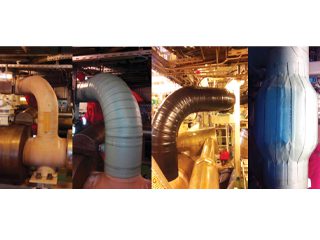
Figure 5 – StopaqR compound product in-service applications.


Figure 6– StopaqR CUI prevention solution.

From the Editor

Well summer seems to have started, the weather has improved markedly, the local branches have stopped their technical meetings for the summer, and the North West Branch has organised a golf day again.

This issue features the usual columns, and there is a detailed report on the successful CED working day mentioned by the President. There is a very interesting “Fellow’s Corner” article on the corrosion risks associated with one method of reducing global warming, and both an “Ask the Expert” answer and a technical article look at metallic coatings for corrosion prevention. The other technical article describes a way of mitigating against corrosion of bolted connections.

As always, I welcome comments from readers about the topics covered in the magazine, and how it can be improved. Also remember to send in your technical questions for answer by our panel of experts.

Brian Goldie, Consulting Editor
Email: brianpce@aol.com

The President Writes

The President Writes

Welcome to this month’s magazine. We’ve had some wonderful sunshine and that has accompanied a surge in ICorr activity – so I’ll jump straight to it.

In the area of training, I’m extremely grateful to Freyssinet in Telford who continue to allow us to use their facilities for our cathodic protection courses which are in high demand. On the 1st April our conversion course in Portuguese for the Brazilian Corrosion Societies (ABRACO) level 1 coating inspectors to obtain ICorr Level 2 went live, and has already attracted several applicants. We are currently working with ABRACO to translate some of our Industrial Coating Applicator Scheme (ICATS) courses into Portuguese. We are also in discussions with providers for new Refinery Corrosion and Boiler Failure courses.

On the 27th April our annual Corrosion Engineering Division (CED) meeting was held at the National Railway Museum in York with 30 attendees. The meeting was very successful, and it was clear to me that all those present were very pleased to be able to meet in person and resume networking. I had the privilege of awarding our prestigious Paul McIntyre award to Chris Lynch – a very deserving winner from a pool of outstanding applicants.

Congratulations also to Gareth Hinds, our current Past President, who has been elected as the President of the World Corrosion Organisation. I know we’ll here more about this from Gareth in future issues, but he got off to an immediate start in organsing several events for World Corrosion Day on the 24th April. I was honored to be invited to give a virtual talk on the day to the Qatar corrosion community.

On the 16th May I visited the offices of our training delivery partner Corrodere in Farnham, Surrey. Corrodere do a fantastic job of providing our courses in an on-line format, and we discussed how we might expand our current training offer.

It’s been wonderful to see the re-start of activities of our North East Branch who have formed a leadership committee and have several events in planning. A thank you to all involved but especially to David Mobbs for driving this and Lee Wilson for taking on the role of chair.

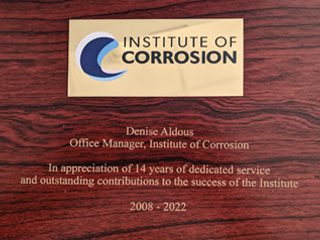
Finally, and with some sadness I want to let you know that Denise Aldous, our Office Manager, will retire from ICorr at the end of June. Denise has been with ICorr since 2008 and has quietly and enthusiastically built an office that efficiently runs all of our administrative processes. Denise has made an outstanding contribution to ICorr that is impossible to document. Please join me in wishing Denise a long, healthy and fun retirement. At our last Council meeting we presented Denise with a plaque in appreciation of her outstanding service together with a more personal gift.
Have a wonderful summer. Until next time,

Bill Hedges, Institute of Corrosion President
Email: president@icorr.org

Institute of Corrosion President,
Bill Hedges.

Corrosion Engineering: A Working Day to Remember

Corrosion Engineering: A Working Day to Remember

5 Talks, 4 Working Group Sessions, 1 Prestigious Award, and a New Chair… Phew!

The corrosion engineering community was able to get together and do what they do best at the Institute of Corrosion’s Corrosion Engineering Division (CED) Working Day and Symposium in April. Discuss latest trends, share knowledge, and brainstorm ideas and concepts.

Held at the magnificent National Railway Museum in York, this was the latest in a series of CED Working Days that offer delegates exceptional networking opportunities – as well as a chance to visit the museum.

A welcome to introduce a sad farewell

Nick Smart, Chair of CED, welcomed the delegates to the event and introduced the speakers. This was the last Working Day and Symposium that Nick has introduced, as, after 15 years of excellent service as the CED Chair, he is stepping down.

Nick’s shoes will be challenging to fill, and the meeting showed their appreciation for his unstinting efforts and contribution throughout his years at the helm. A sad but celebratory farewell, and a warm welcome to the incoming Chair.

Introducing the Corrosion Engineering Division’s new Chair

Before the main proceedings began, Nick Smart introduced the delegates to the CED’s new Chair, Danny Burkle.

While Nick will be a hard act to follow, we’re incredibly lucky to have Danny taking over the steering of the CED.

A business development engineer, Danny’s prime responsibilities in his role at LBBC Baskerville include developing business strategy, business, and product range for innovative corrosion testing autoclaves to simulate realistic field environments within several high-pressure and high-temperature applications and industries.

His Doctorate in mechanical engineering, which he completed at the University of Leeds, focused on corrosion mechanisms involved in carbon dioxide corrosion, and protecting carbon steel assets against corrosion by forming natural corrosion products. The industry-focused research, sponsored by BP, was based on real-life engineering problems.

With both academic and industry experience, Danny’s role as CED Chair could help to forge closer relationships between research and industry.

Knowledge transfer in five presentations

Through the day, delegates were treated to five presentations around this year’s theme of ‘Knowledge Transfer and the Management of Infrastructure Corrosion and Management’:

1.     Hot dip galvanizing for specification and use in infrastructure projects

Presented by Desmond Makepeace of the Galvanisers Association, this talk began by describing the galvanising process, with reference to the appropriate standard EN ISO 1461.

Desmond discussed a variety of defects, which of these can be tolerated, and factors affecting the quality of galvanising, including coating thickness, renovation, adhesion, joining-bolting, duplex systems, maintenance, venting of hollow sections, and overlapping sections. He also discussed how the atmosphere affects corrosion of galvanised structures.

2.     Best management practices to transfer knowledge to ensure integrity assurance optimisation for oil and gas production

One of the highlights of the Working Day, this Young ICorr talk was given by Izabela Gajewska. Izabela was a member of the winning team of the 2020 cohort of the Institute of Corrosion’s Young Engineer Programme (YEP) (which you can read about in our article ‘A case study for all young corrosion engineers – it could be you’).

Izabela discussed the nature of knowledge transfer, and the best practices to ensure this happens effectively and successfully – such as planning, work experience, mentoring, specialised training, attending conferences, and so on. She spoke about creating an effective mentoring strategy, delivery of training, and the value of external training courses in areas including coating, passive fire protection, cathodic protection, and risk assessments.

3.     The consequences of climate change for corrosion

Chris Atkins of Mott MacDonald gave a thought leadership talk, discussing his ideas around climate change and corrosion. For example, can we rely on historically established corrosion rates as emissions of carbon dioxide are increasing? An ensuing reduction in the pH of natural waters could make them more aggressive to concrete, though it may reduce the corrosion rate of galvanised steel.

Temperature increases reduce the dissolved oxygen content in water, but Chris demonstrated how this temperature increase does not automatically produce an increase in corrosion rates – and a reduction in carbon dioxide levels from today’s elevated levels is likely to reduce atmospheric corrosivity.

The real issue? As far as Chris is aware, no one is taking a global view of the effect of climate change on corrosion, and this leads Chris to ask one last question: is this an opportunity for the Institute of Corrosion to take a leading role?

4.     Academia and industry: How can we advance corrosion science and engineering together?

“Academics want to publish. Companies want to make money.”

Old thinking.

Richard Barker of Leeds University addressed this in a thought-provoking talk that pointed to research around this topic, as well as opportunities and challenges that exist for academia and commercial operations to collaborate more effectively.

While academia has the time and resource to produce new knowledge which can be used commercially, barriers that exist include complexity of communication to share knowledge and the complexity of initiating and continuing collaboration.

Perhaps the biggest challenge is trust. Industry must trust scientists, but the complex and ever-changing nature of large bodies of academic research makes this challenging for many businesses. However, we are seeing that some companies are developing strategies to identify and reach out to research groups for collaborative projects – and creating collaborative success.

The conclusion? Yes, there are challenges that exist, but these can be overcome with the correct approach from both sides. If we can do this, then there are significant benefits to be accessed from greater collaboration between academia and industry.

5.     Radioactive waste disposal – where corrosion science meets corrosion engineering

In the first presentation of the afternoon session, Nick Smart gave his last CED Working Day and Symposium presentation as Chair.

Nick discussed the three levels of radioactive waste, and discussed the various research that supports the corrosion engineering and safety assessment aspects of radioactive waste management.

Describing corrosion issues that exist (such as atmospheric external corrosion of stainless steel waste containers during interim storage, the corrosion behaviour of waste uranium, aluminium and Magnox after encapsulation in cement, and the long-term corrosion of waste containers after disposal in deep geological repositories), he pointed out that the UK’s total nuclear waste inventory would fill Wembley Stadium.

Nick discussed the two main concepts for geological disposal of high-level waste, and the challenges that exist within diverse global geological environments – key environmental considerations when disposing of radioactive waste underground include oxygen concentration, chloride and sulphide concentrations, radiation levels and microbial activity.

Nick outlined the analytical techniques that are used to characterise the corrosion behaviour and corrosion rates of candidate waste container materials in long-term in situ experiments conducted under representative conditions, and how such studies can be supported by comparison with the corrosion of natural analogues, such as archaeological artefacts like the Anglo-Saxon Coppergate Helmet currently exhibited in the Yorkshire Museum.

The session concluded with a short talk by Stuart Bond from AMPP. He discussed the development of revised standards being conducted by AMPP (a merger between SSPC/NACE was rolled out in January 2021).

The Working Group Meetings

At the end of the talks, delegates had an opportunity to visit the National Railway Museum and attend Working Group Meetings. This year the following groups held sessions:

·       Nuclear Corrosion Group

Chaired by Nick Smart, the Nuclear Corrosion Group met to discuss a wide range of corrosion issues arising during the storage of nuclear waste. These included assessment of pitting corrosion in stainless steel during storage in atmospheric conditions, the effects of microbial corrosion on cast iron under damp conditions, and the potential for galvanic corrosion of stainless steel in contact with graphite in cementitious environments.

·       Coatings Group

There was plenty to discuss in this group, chaired by Phillip Watkinson. This included:

  • The impending review of the Coatings Technical Information Documents (CTID), created in 2016-17
  • The transfer of NACE Coatings Standards to AMPP
  • A suggestion by Douglas Mills that EIS measurements (ISO 12944) be reviewed
  • Phillip Watkinson tabled that two Paints and Varnishes Standards (BS EN ISO 4628-1:2003 and 4628-2:2003) should also be reviewed

It was agreed that an interim meeting would be held ahead of next year’s CED Working Day.

·       Cathodic Protection Group

Acting Chair Chris Lynch directed discussion around subsea CP systems and performance of flush fit aluminium deep sea anodes on complex piping systems. This included current distribution, current density, anode installation methodology and expected performance along with coatings, anode corrosion products, and calcareous deposits.

·       All Energy Group

Chaired by Steve Paterson, all those present contributed to a positive discussion about the purpose of the group, which has been formed by adding renewables to the previous Oil and Gas Group. Items covered included:

  • Production of documents
  • Mentoring of Young ICorr members
  • Information exchange via networking
  • Engagement with other organisations like AMPP

After an update with regards to standards, it was agreed that another meeting would be held in October.

The Paul McIntyre Award

As is customary at the CED Working Day and Symposium, before the group broke for lunch, the President presented the Paul McIntyre Award.

This year’s recipient of this prestigious award, the premier engineering award of the Institute of Corrosion, was Chris Lynch, who has worked tirelessly for many years and made many outstanding contributions to many aspects of corrosion engineering. You can read more about the award and Chris’s contributions in our article ‘Chris Lynch – Recipient of the Paul McIntyre Award 2022’.

Don’t miss out on the benefits of the CED

The CED is a driving force within the corrosion industry. It shares news, views, and learning to the Institute’s membership, via several channels, including:

Chairs of individual Working Groups liaise with counterparts at other corresponding Working Groups in international bodies. The Working Groups also provide a mechanism for members to collaborate effectively; for example, by jointly preparing documents that are of immediate and practical use to them in their field of activity. Such documents are downloadable within the Members Area of the ICorr website.

If you are not already a member of the Institute of Corrosion, check out our membership page to learn how to become a member and immediately begin to enjoy the many benefits of membership of the Institute of Corrosion.