

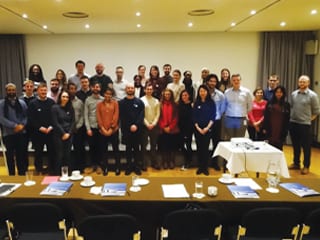
A Case Study for All Young Corrosion Engineers – It Could Be You

A Case Study for All Young Corrosion Engineers – It Could Be You

Rewards, Awards, and Benefits of Participating in the Young Engineer Programme

Here’s a case study for all young corrosion engineers:

Do what you love to do. Receive grade A mentorship in the process. Develop your learning and understanding, and make new connections to deepen your professional network. Oh, and win a fully expensed trip to the 5-day AMPP Annual Conference & Expo in the USA.

Too good to be true? Not for the winning team of the 2020 cohort of the Institute of Corrosion’s Young Engineer Programme (YEP).

What is the Young Engineer Programme?

The YEP is specifically designed for engineers at the early stage of their careers in the corrosion industry. A series of lectures are presented, and the group is divided into teams and challenged to present solutions to a real-life case study.

The lectures cover subject areas including:

  • Basic corrosion
  • Welding
  • Materials
  • Coatings
  • Painting, fire protection and linings
  • Cathodic protection
  • Chemical treatments
  • Presentation skills

These lectures are designed to provide the theoretical and practical guidance needed to complete the case study. To aid progress toward their goal, each team is allocated a mentor with relevant and recognised industry expertise and experience.

There was a total of 30 young engineers enrolled in the 2020 cohort, all able to take advantage of this immensely valuable (and free) course. The YEP enrolled engineers divided into seven teams of between three and five for the case study.

The mentors were:

  • Andrew Sturgeon, Manager Materials Engineering at Genesis Energies, London
  • Chris Googan, Materials & Corrosion Engineer at Anticorrosion Engineering Limited
  • Charles Barraclough, Materials and Welding Engineer
  • Tasos Kostrivas PhD, ΕMBA, MSc, FIMMM
  • David Shaw, Lead QC coating/insulation/PFP Saipem
  • Rob Doggett, Materials and Welding Engineer at Fluor
  • John Davies, Consultant QA Engineer at Fulkrum Technical Services

Throughout the programme, guests included Bill Hedges, Gareth Hinds, Steve Paterson, Danny Burkle, and Caroline Allanach and the Steering Group; Trevor Osborne, Alan Denny, Anthony Setiadi, and David Mobbs.

The case study – the challenge

The case study that the teams were asked to review and present their findings centred around a titanium pipe corrosion failure at an onshore glycol desalination plant, in which was found several leaks. The desalination plant is used to periodically remove the salts from glycol which is used for hydrate and corrosion control in gas pipelines from three offshore fields.

Particularly challenging in this case study is that the high-grade titanium spool would be expected to resist any form of corrosion in this service. After being given the complete case study, the teams were tasked to include the following in their submissions:

  • Propose credible root causes for the observed defects and describe the potential failure scenarios
  • Explain how you would perform a corrosion risk assessment to determine if the plant is safe to operate
  • Identify what mitigation options could be applied to prolong the service life of this section of the desalination plant
  • Propose alternative materials of construction for replacement pipe spools and describe the basis for the selection
  • Describe what other factors should be considered in your assessment and propose possible longer-term solution(s)

The case study – presentation and judging

The teams presented their case studies to a panel of judges (Sadegh Parvizi, Chris Williams, and John Boran) on 12th November 2020. Each 20-minute presentation was followed by five minutes allotted for questioning. While no team was allowed into the presentation meeting before their time, they were permitted to remain in the meeting to hear subsequent teams present.

The presentations began at 5pm after registration and introductions. Would presenting first be best? To get your presentation completed and then relax to watch others? Or maybe presenting last would be more advantageous – with extra time to do those last-minute preparations and practice? Or would each team feel the added pressure of more eyes on them as the evening progressed?

When the final presentation had been made, the presentation session was called to a close. During a 20-minute break in proceedings, the judges deliberated, cogitated, and digested the tremendous presentations they had been served in seven courses (sorry, we couldn’t resist pinching from Lloyd Grossman’s Master Chef catchphrase!).

To be honest, there was very little to choose between the case study tasks completed. Each team’s findings had terrific merit – a testament to their mentorship, the lectures they had attended, and the collaborative capability of each team.

The deciding factor came down to presentation: the clarity and precision with which the winning team delivered its findings and answered the challenging questions posed by the judges.

And the winning team… Drum roll…

Team number four, mentored by Tasos Kostrivas, and comprising:

  • Ryan Cobbs, civil engineer at Mott MacDonald
  • Izabela Gajewska, corrosion engineer at Intertek
  • Harry Wright, corrosion engineer at Element
  • Praveena Nkumaran, mechanical engineer at Worley Parsons
  • Lemoine Vincent, welding engineer at Saipem

The grand prize – the fully expensed trip to the AMPP Annual Conference & Expo 2022

Because of Covid, the delivery of the grand prize was unavoidably delayed by a year. Nevertheless, the winning team – unfortunately minus Praveena who was unable to attend – set out off for San Antonio in Texas for the AMPP Annual Conference & Expo in March 2022.

For many, this is a once-in-a-lifetime event. For only a select few young engineers, their attendance is fully expensed, courtesy of YEP sponsor BP.

This event is the largest of its kind in the corrosion world. There are more than 500 technical paper presentations, almost 500 exhibitors, opportunities to gain credits toward career development, and the chance to hear from some of the best corrosion professionals on the planet – as well as meet and connect with peers from around the globe.

And it wasn’t only these four young engineers who attended the conference and expo in San Antonio. Thanks to the sponsorship of Pipeline Induction Heat, James McGladdery (National Nuclear Laboratory) and Benjamin Lee (SGN) were selected to join the AMPP Leadership Course for their performance during the programme.

The YEP experience through the winners’ eyes

Winning at anything isn’t a cake walk. It takes hard work, effort, and determination. It takes learning and enthusiasm. How does YEP stand up to scrutiny from the inside?

Here’s what Izabela Gajewska said about her experience:

“Taking part in 2020 Young Engineer Programme was an amazing experience and a great opportunity for networking. All lectures were interesting and very educational. I got an opportunity to learn more about areas of the industry that I am not involved a lot in my daily job including welding, fire protection, and chemical treatments.

“It was a great experience to work on the case study with colleagues from different companies and industry branches. The ideas and a views of all team members were equally valuable, enhanced creativity, and were essential to solve the case study and prepare the final presentation. I enjoyed collaboration and brainstorming very much.

“During solving the case study I had to motivate myself to look through many valuable research papers and technical books recommended by my team colleagues and our mentor, Tasos Kostrivas. I had also a chance to see different approaches to solve corrosion issues thanks to the diversity of the industries in my team. Apart from this, I feel that I have improved my planning and communication skills, teamwork, did some good networking, and made new friends.

“I also was delighted to take part in the 2022 Annual Conference by NACE/AMPP (Association for Materials Protection and Performance) in San Antonio, Texas and celebrate winning the Young Engineer Programme 2020 along with my team colleagues Vincent Lemoine, Ryan Cobbs, Harry Wright.

“One of my team colleagues, Praveena Nanthakumaran was not able to attend. Fortunately, she will be able to attend the next NACE/AMPP conference in Denver next year, and celebrate her well-deserved trip to the conference in the United States.

“For me, the highlight of the NACE/AMPP conference was the EMERGing Leaders Bash which included recognition and celebration, acknowledging the accomplishments of 2022 scholarship and award recipients including my winning team and two other colleagues accepted for the NACE/AMPP Leadership Programme:  James McGladdery and Ben Lee. It was an honour to be a part of this amazing and inspiring evening.”

To the present – a case study to whet the appetite

The 2022 YEP cohort have another real-life case study to become immersed in. This year’s candidates will be presenting in Aberdeen (held here for the first time, and aptly so). They have been asked to provide a corrosion risk assessment of a platform in the North Sea for a client who is planning to acquire the asset. But:

  • Corrosion on the platform has been poorly managed during the past 15 years, resulting in several hydrocarbon leaks
  • The teams must determine and present solutions to extend the life of the platform for another 10 years, making the exercise a real challenge
  • They must also identify materials selection for a new pipeline

A challenging, real-life case study that will help all the young engineers involved improve their learning and prove their competence. A fantastic addition to any CV.

To the future – it’s time to start thinking about pre-enrolment for YEP

Demand for places in the Institute of Corrosion’s Young Engineer Programme is always high. Benefitting from lectures given by some of the industry’s brightest minds, offering the chance to network and collaborate with some of the industry’s upcoming stars, and the opportunity to be rewarded with an incredible, fully expensed experience, it is not difficult to understand why.

If you are at an early stage of your career in the corrosion industry and would welcome extra experience to set you up for the future, please contact the Institute of Corrosion. We would be pleased to answer your questions and provide details of how you may pre-enrol for our next YEP cohort.

Don’t forget, also, to follow the Institute of Corrosion on our LinkedIn page – where we post regularly to keep the corrosion community updated.

If you’re not already, why not become a member of the Institute of Corrosion? We have many different membership options, including free student membership.

The 63rd Corrosion Science Symposium at Electrochem 2022: All You Need to Know

The 63rd Corrosion Science Symposium at Electrochem 2022: All You Need to Know

Who Will Be Presented the Lionel Shreir and Galloway Awards This Year?

The Corrosion Science Symposium has been on a long journey through Covid. The 61st Symposium was forced to move online in 2020. While it was a remarkable success in its new format, we had hoped to return to business as usual in 2021. We did our best, but with the Covid laws that existed last year, the best we could do was a hybrid 62nd symposium – a residential option with live streaming, while ensuring we could deliver to our international membership and others in the corrosion community.

This year we are back to how our membership meets best, and in some style – and we’re seeking your input!

In person, and in Edinburgh

The 63rd Corrosion Science Symposium will be held as part of Electrochem 2022, a conference organized by the Royal Society of Chemistry’s Electrochemistry and Electroanalytical Sensing Systems interest groups, and the Society of Chemical Industry’s Electrochemical Technology Group.

As part of this, our Corrosion Science Symposium will take place on the 5th and 6th September. It’s the perfect opportunity for students and researchers in corrosion science and engineering to get together, network, and discuss their work. You’ll have the chance to share news, views, and ideas, and improve your own learning and knowledge.

What better city for our symposium than Edinburgh? What better venue than the John McIntyre Conference Centre?

This purpose-built conference and meeting venue can accommodate up to 330 delegates. With state-of-the-art audio visuals, a configurable plenary room, four large meeting rooms, executive boardrooms, a stunning view across Arthur’s Seat, and an exceptional bar for end-of-day socialising, this is a superb setting.

It’s not the place, it’s the people. It’s you.

Edinburgh’s John McIntyre Centre is a stimulating place for us all to meet. But not as stimulating as the people who gather here.

With delegates expected from around the world, you’ll be in the company of some of the finest and most forward-thinking, up-and-coming minds from all areas of corrosion science and engineering.

Presentations and discussions have never failed to inspire at the symposium, and the friendly, informal environment is highly conducive to making new acquaintances ─ and beginning life-long friendships within the industries we serve.

An opportunity to recognise excellence in the field of corrosion

The Institute of Corrosion’s Corrosion Science Symposium isn’t only an event for informal learning and networking. It has become synonymous with recognising student talent.

There are two awards directly connected with the Symposium: the Galloway Award and the Lionel Shreir Award.

The Lionel Shreir Award – Last call for submissions

This award is presented to the student who gives the best presentation at the Corrosion Science Symposium. It is awarded to the student(s) judged to have performed best across the following criteria when making their presentation:

  • Distinctiveness, originality, and creativity of research – impact on corrosion discipline
  • Knowledge of corrosion science and practice
  • Clarity of presentation and rapport with the CSS audience
  • Clarity when answering questions

All student presenters at the Corrosion Science Symposium are eligible to win this award of a certificate and cheque for £125.

Could you be this year’s Lionel Shreir Award winner?

To be considered to present at the Corrosion Science Symposium, please submit a 200-word abstract that details a 10-minute talk you would like to give at this year’s symposium before 8th July 2022. We’ll let you know if yours has been selected for presentation in plenty of time ahead of the symposium.

For the opportunity to be awarded the highly sought-after certificate and cash prize, send your abstract to j.a.wharton@soton.ac.uk.

The Galloway Award – We’re seeking submissions

Originally presented for either the best essay submission or work project report, the Galloway Award was first presented in 1976, and reinstated in 1998 in memory of Jack Galloway, a founder Member of the British Association of Corrosion Engineers (BACE) and former Chair of BACE Council.

The award of a certificate, a cheque for £300, and publication of the winning article in the Institute’s Corrosion Management magazine is given to the submission of the best submitted or published paper from the previous 12 months.

Have you produced award-winning work?

We are seeking submissions of copies of students’ published or submitted papers from the last 12 months. The student should be the primary author of the paper. Supervisors may nominate students. Submissions for the award will be judged on the following criteria:

  • Distinctiveness, originality, and creativity of research – impact on corrosion discipline
  • Contribution to corrosion science and practice
  • Clarity of presentation

As well as receiving the Galloway Award, the winning student will be invited to present his or her work at the Symposium.

Submissions should be made to the Corrosion Science Division Chair, Dr Julian Wharton by email to j.a.wharton@soton.ac.uk.

If you would like further information about the Institute of Corrosion awards, please click here.

To learn more about Electrochem 2022 and register to attend the event, please click here.

Ask the Expert

Ask the Expert

The questions in this issue feature pipeline corrosion and how to decide whether a full repaint or sport repair is required for a failed vessel lining

Question:

What is Top of the Line Corrosion?  When would you expect this, and how do you mitigate against it?  BK

Answer:
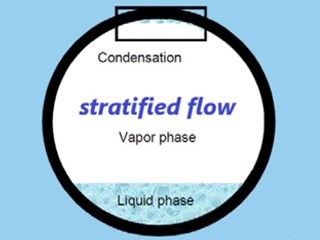
Top of the line corrosion most commonly occurs in wet gas pipelines. It takes place on the top section inside the pipe (hence the name – top of the line corrosion) due to condensation of water containing corrosive agents, such as CO2 (‘’sweet’’ corrosion), H2S (‘’sour’’ corrosion) and acetic acid (HAc).
The flow regime has an impact on this mechanism, as it mostly occurs in pipes with stratified and wavy-stratified flow regimes – these allow for the condensation process to take place uninterrupted, and for that reason makes traditional liquid corrosion inhibitors not very effective in protecting against this type of corrosion, as liquids stay in the bottom area of the pipe and the protective film isn’t formed on top area of the pipe inner surface.

The factors impacting top of the line corrosion include:
–        CO2 /H2S concentration
–        Presence of organic acids
–        Flow regime and flow velocity
–        Temperature
–        Pressure
–        Water condensation rate
The mechanism of the top of the line corrosion in a ‘sweet’ environment, caused by the presence of CO2 is,
(a)   Formation of aqueous CO2:

(b)   Dissociation of H2CO3:

(c)    Formation of H+ and CO32-:

The subsequent carbon steel corrosion mechanism involves,
(a)   Anodic reaction:

(b)   Cathodic reaction:

and the overall reaction is,

The presence of organic acids exacerbates top of the line corrosion as they lower the pH of the condensed water even further.
Top of the line corrosion can manifest itself as pitting, uniform corrosion, or mesa attack, and it depends on the above factors.  To prevent top of the line corrosion, gas lines are often treated with a mixture of monoethylene glycol (hydrate inhibitor) and corrosion inhibitor. Monoethylene glycol is also able to reduce corrosion rate as it reduces the vapour pressure of the liquid phase of a wet gas.

The effectiveness of corrosion inhibitors in protecting pipes against top of the line corrosion varies and highly depends on the volatility of the chemical. You can find a variety of papers on this subject in NACE archive.

Suggested reference articles:
Dugstad, A., 2014. Top of line corrosion – Impact of MEG and organic acid in the gas phase. In: NACE International, Corrosion/ 2014, 9–13 March, San Antonio, Texas, USA, NACE2014-4382.
Ojifinni, R.A., Li, C., 2011. A parametric study of sweet top-of-line corrosion in wet gas pipelines. In: NACE International, Corrosion/ 2011, 13–17 March, Houston, Texas, NACE-11331.
Olsen, S., Dugstad, A., 1991. Corrosion under dewing conditions. In: Corrosion/91, Paper No 472, NACE, Houston, Texas
PN

Question:
What criteria should an inspector/owner use to determine whether to specify full removal or sport repair of a tank lining?  PS
Answer:
There are many thoughts regarding the timing for replacement of vessel linings and whether it should be a total or partial replacement. Lining failures occur due to various mechanisms, the most common among others being the following:
•          Blister formation due to osmosis through the coating caused by surface contamination on the steel substrate during preparation.
•          Solvent entrapment in the coating
•          Adhesive failure of the coating to the steel substrate caused by surface contamination, inadequate profile, material applied outside its pot life or incorrect ambient conditions.
•          Explosive decompression where molecules of a substance that at the operating pressure are liquid but are gaseous at ambient migrate into the coating during operation but in a rapid shut down situation blow sections of the coating apart, this may take several cycles to effect this result.
•          Thermal stress cycling, due to differences in the linear thermal expansion characteristics between the substrate and the coating, thermal cycling sets up a series of stresses which compromise the cohesive and adhesive strengths of the coating system.
•          Mechanical damage from either internal or external sources
•          Chemical attack of the lining due to the introduction of liquids into the vessel that destroy the coating integrity in either small or high concentrations.

The above list is not exhaustive, but gives a feel for the problems associated with vessel lining performance. Because of the potential for failures to occur during service, it is a bit of a lottery estimating the life expectancy of a coating system. A vessel operating at ambient temperature and pressure with a non-aggressive liquid will have a greater life expectancy than a similar lining exposed to varying temperatures and pressures with an aggressive mixture of liquids. Coating manufacturers on the whole will quote life expectancies for what they expect an ‘average’ exposure to involve.
When inspecting a vessel lining that has been in service for a period of time, any breakdown present needs to be carefully analysed to check whether it is a local failure with a driving force that is not uniform throughout the vessel, or whether what is encountered is the first stages of total lining failure. This can be a hard call for the inspector as the decision on whether a total reline, or a series of spot repairs, could lead to a premature/ catastrophic failure of the lining when put back into service especially when under pressure to get a vessel back in service as fast as possible.

From an inspection point of view, a lot depends on the inspector visually identifying the defects present. This should then be backed up by non-destructive tests to determine if the coating still meets specification – the most useful of these being to check the dry film thickness to look for wastage and coating thinning, and these need to be taken over the entire vessel, concentrating on the areas such as nozzles and edges where thinning of the coating is likely to be prevalent. Spark testing at 4Kv per mm of coating will show up any holidays along with other defects such as porosity and inclusions. Destructive testing such as dolly pull-off adhesion tests will give a good indication of any potential reduction in adhesion/cohesion but the test area requires to be repaired.

Spot repairing a vessel lining tends to be a short term fix as the repair itself can end up creating a weak spot. Preparation is invariably of a lower standard that that used to prepare a full vessel, ie power tool, which does not give a long term life expectancy for the lining. If blasting is used, it is essential to remove all corrosion salts and contamination from the affected area, chase back to a firm feathered edge.  Spot repairs result in large amounts of ‘free’ edges where future breakdown may readily nucleate from. When blasting in a vessel to undertake spot repairs there will inevitably be collateral damage from the blasting operation in the form of overblast and ricochet which can lead to coating weakness and potential failure.

If a coating is reaching the end of its expected life it is not advisable to spot repair except in extenuating circumstances, as the failure rate will become unacceptable and damage to the vessel shell will occur. A new coating system should be used that will give the optimum life expectancy, consideration also to be given to the life of the vessel. Under most circumstances it is preferable to completely renew a coating system, changes in the operating parameters need to be taken into account as these may have changed since the original specification was drawn up, it is worth looking at failures and using these to learn from to improve the specification.
Bearing the above comments in mind, the following procedures and systems should be used:

•          100% visual inspection after clean out to identify through coating failures
•          Dry Film Thickness check, all nozzles, edges and welds with at least 3 readings per m² to check for thinning/wear on the coating, minimum acceptable is 15% below specified thickness
•          100% holiday detection to find any pinholing or porosity defects
•          Finally, if deemed necessary, apply dolly pull off adhesion tests to check for reduced adhesion of delamination.
•          Report findings to client.

Under normal circumstances, a failure rate in the order of 15 to 20% or greater would be deemed as uneconomical to spot repair as the effort needed would be as great as that to recoat fully, the percentage being based on the percentage area of the vessel shell that will receive new coating, not the percentage area of visible failure or corrosion. What initially appears as a small defect of say nominally 10mm x 10mm will probably end up as a repair of the order 400 to 500mm diameter if done correctly.
Simon Hope, Auquharney Associates ltd

Readers are reminded to send their technical questions, for answer by the panel of experts, to the editor at, brianpce@aol.com

Standards Up-date  ISO

Standards Up-date ISO

The following documents have obtained substantial support during the past two months and have been submitted to the ISO member bodies for formal approval.

ISO/FDIS 12696 Cathodic protection of steel in concrete (Revision of 2016 standard)ISO/FDIS 24656 Cathodic protection of offshore wind structures
New international standards published during the past two months

ISO 9220:2022 Metallic coatings — Measurement of coating thickness — Scanning electron microscope method

ISO 10270:2022 Corrosion of metals and alloys — Aqueous corrosion testing of zirconium alloys for use in nuclear power reactors

ISO 24020:2022 Corrosion of metals and alloys — Standard test method for particle-free erosion corrosion of metallic materials by jet-in-slit