A recently published review discusses the various types of epoxy-based antifouling coatings as cost-effective and environmentally sustainable solution to biofouling. The need for nontoxic antifouling coatings has encouraged material scientists to develop a new class of epoxy coatings. As a versatile thermosetting resin and well known for various coating applications, antifouling characteristics have been integrated into epoxies along with anticorrosion and adhesive functions. Accordingly, both micro- and macro-biofoulings have been successfully controlled by using epoxy-based antifouling coatings, and epoxy nanocomposites, silicon-grafted epoxy, epoxy-aided conductive polymer blends, and nanocomposites are important antifouling epoxy variants This newly published review discusses the various types of epoxy-based antifouling coatings. The ability of nanomaterials, siloxanes, and conducting polymers to induce antifouling activity into the epoxy and corresponding antifouling mechanisms is also covered. The review concludes with the enormous potential of antifouling epoxy coatings as cost-effective, environmentally sustainable solutions to biofouling in diverse industrial applications.
The study was published in Journal of Coatings Technology and Research, Volume 19, 2022.
In a recently published study, the effect of a partial replacement of spherical zinc particles by stainless steel flakes (SSF) on the corrosion protection performance of a zinc-rich epoxy (ZRE) coating was studied. Salt spray test, open circuit potential, electrochemical impedance spectroscopy and potentiodynamic polarisation tests were utilised to evaluate the anticorrosion performance of the coatings.
The results demonstrated that a partial replacement of zinc particles by SSF enhanced the anticorrosion properties of the ZRE coating, and the enhancement was attributed to the synergistic effects by increasing the coating impedance and extending the cathodic protection duration.
The study was published in Progress in Organic Coatings, Volume 163, February 2022.
The corrosion of steel bars is the main reason for the premature failure of reinforced concrete structures, and coating reinforcement is considered to be an effective method to protect steel bars from chloride attack. A recent publication, describes the development of a graphene oxide (GO) modified silane composite coating (isobutyl triethoxysilane combined with tetraethyl orthosilicate) for the corrosion protection of reinforcement bars. The physicochemical characteristics and corrosion resistance performances of mild steel coated with this composite coating was examined by scanning electron microscopy, Fourier transform infrared spectroscopy, thermogravimetric, Raman analyses, and electrochemical measurements.
The results indicated that the coating with a thickness of about 45 µm exhibits substantial corrosion resistance with a maximum protection efficiency of about 99.36% in chloride media. The superior corrosion protection performance is attributed to the formed covalent bonds between GO and silanol, which strengthens the three-dimensional network structure of the coating. In addition, the uniformly distributed GO immensely slows down the degradation of silane coating structure and improves the stability of the coating, and thus delays
the corrosion.
The study was published in Progress in Organic Coatings, Volume 164, March 2022.
In a recently published study, the effect of a partial replacement of spherical zinc particles by stainless steel flakes (SSF) on the corrosion protection performance of a zinc-rich epoxy (ZRE) coating was studied. Salt spray test, open circuit potential, electrochemical impedance spectroscopy and potentiodynamic polarisation tests were utilised to evaluate the anticorrosion performance of the coatings.
The results demonstrated that a partial replacement of zinc particles by SSF enhanced the anticorrosion properties of the ZRE coating, and the enhancement was attributed to the synergistic effects by increasing the coating impedance and extending the cathodic protection duration.
The study was published in Progress in Organic Coatings, Volume 163, February 2022.
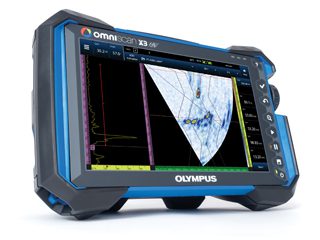
According to a press release, the new OmniScan™ X3 64 flaw detector from Olympus, delivers improved power and performance to their phased array ultrasonic testing (PAUT) product line. This 64-channel instrument has the pulser capacity to drive phased array (PA) probes with a larger number of elements, increasing the data acquisition speed for total focusing method (TFM) imaging. Users can exploit its increased capabilities to expand and diversify their application portfolio.
The high portability and enhanced performance of the OmniScan X3 64 flaw detector increase inspection productivity. It can process TFM images up to four times as fast as its predecessor, yet comes in the same rugged and easily transportable box. On job sites with limited or restricted space, users will appreciate that the unit is compact and less cumbersome than other 64-channel devices. Inspectors can also remain on site longer and perform bigger scanning jobs without transferring data, thanks to the large 1 TB onboard storage.
Smaller defects are easier to distinguish using the flaw detector’s high-resolution PA and TFM imaging. Accommodating lower frequency probes, the OmniScan X3 64 unit can increase penetration in attenuative materials while reducing signal saturation. These improved detection capabilities assist monitoring for early-stage flaws, such as high-temperature hydrogen attack (HTHA), concluded the company.
For more details visit www.Olympus-IMS.com/phasedarray/OmniScan-X3.
We use cookies to optimize our website and our service.
Functional
Always active
The technical storage or access is strictly necessary for the legitimate purpose of enabling the use of a specific service explicitly requested by the subscriber or user, or for the sole purpose of carrying out the transmission of a communication over an electronic communications network.
Preferences
The technical storage or access is necessary for the legitimate purpose of storing preferences that are not requested by the subscriber or user.
Statistics
The technical storage or access that is used exclusively for statistical purposes.The technical storage or access that is used exclusively for anonymous statistical purposes. Without a subpoena, voluntary compliance on the part of your Internet Service Provider, or additional records from a third party, information stored or retrieved for this purpose alone cannot usually be used to identify you.
Marketing
The technical storage or access is required to create user profiles to send advertising, or to track the user on a website or across several websites for similar marketing purposes.