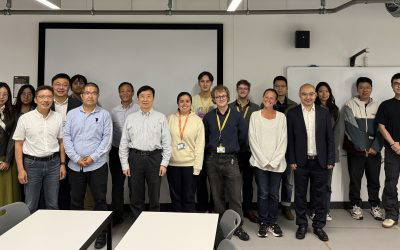
For the second branch technical meeting of 2026, Nick Bander of GPT Industries presented “Critical Service Isolation: Why Yesterday’s Designs Fail Today” on 12th February 2026.
Nick Bander is the director of engineering and product management at GPT Industries https://www.gptindustries.com/ with over 15 years of experience in mechanical engineering, corrosion mitigation, and pipeline integrity. Nick has supported domestic and international energy projects across more than a dozen countries and has played a key role in the development and launch of multiple isolation and sealing technologies. A named inventor on several patents, he focuses on translating engineering rigour into practical, field-proven corrosion control solutions.
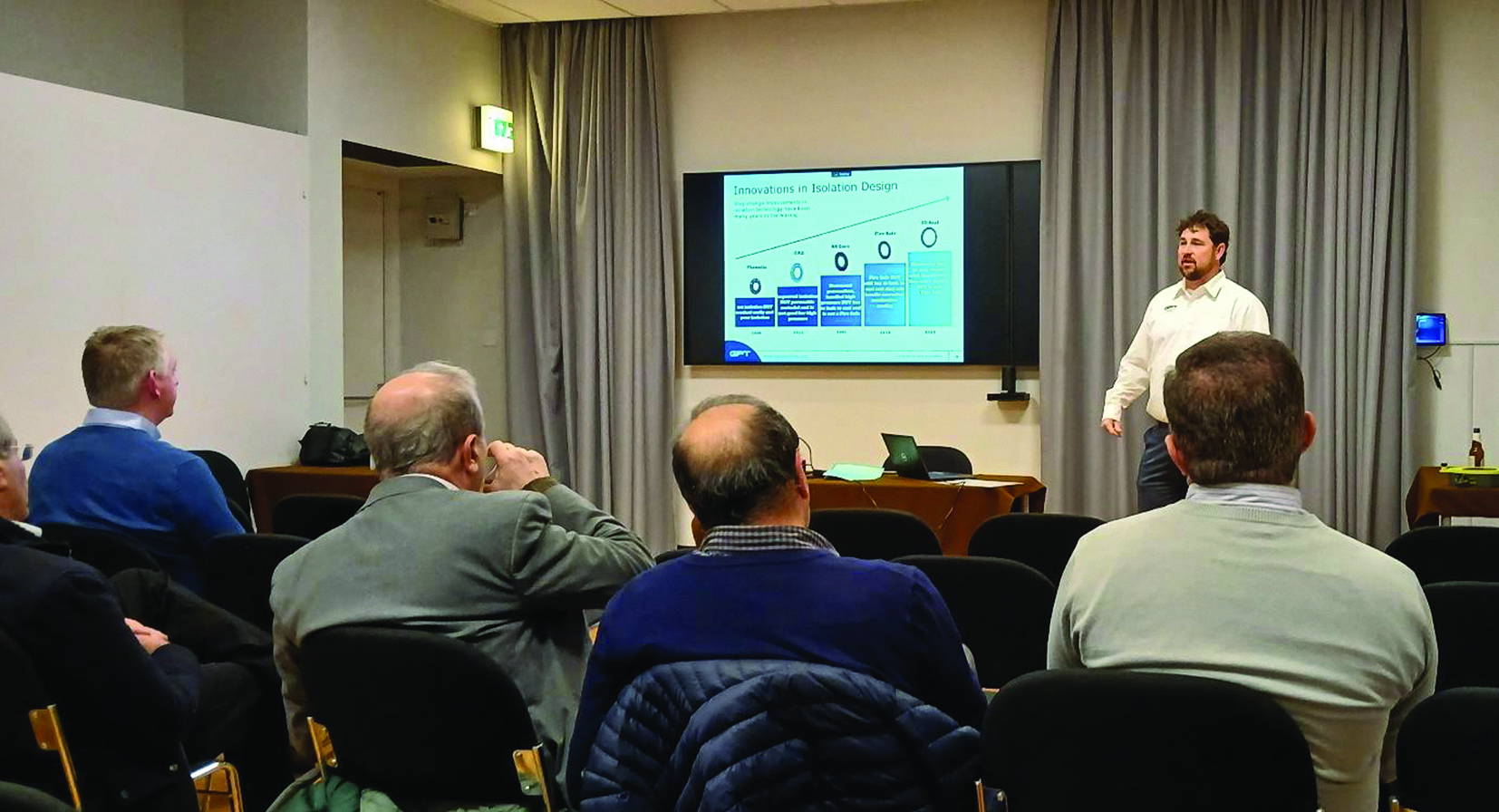
Nick began by explaining how pipeline operating conditions are becoming increasingly more severe, with higher pressures and temperatures, more sour and conductive media, stricter safety requirements, and reduced tolerance for downtime. These changes are placing new demands on electrical isolation systems used for corrosion mitigation on critical service pipelines. The designs that were once adequate are now being pushed beyond their intended limits.
The presentation then examined why isolation design and specification are more important than ever, and Nick reviewed the evolution of isolation technologies and highlighted common failure mechanisms observed in laboratory and field conditions, including GRE permeation, chemical incompatibility, hydrolysis, loss of bolt load, fire exposure, and conductive media bridging. The key design factors such as material selection, gasket geometry, and inside-diameter sealing strategies were discussed in detail
In conclusion, the lessons learned were highlighted to help improve the reliability, safety, and long-term performance of pipeline isolation systems operating in today’s demanding environments, and Nick gave some practical design guidance.
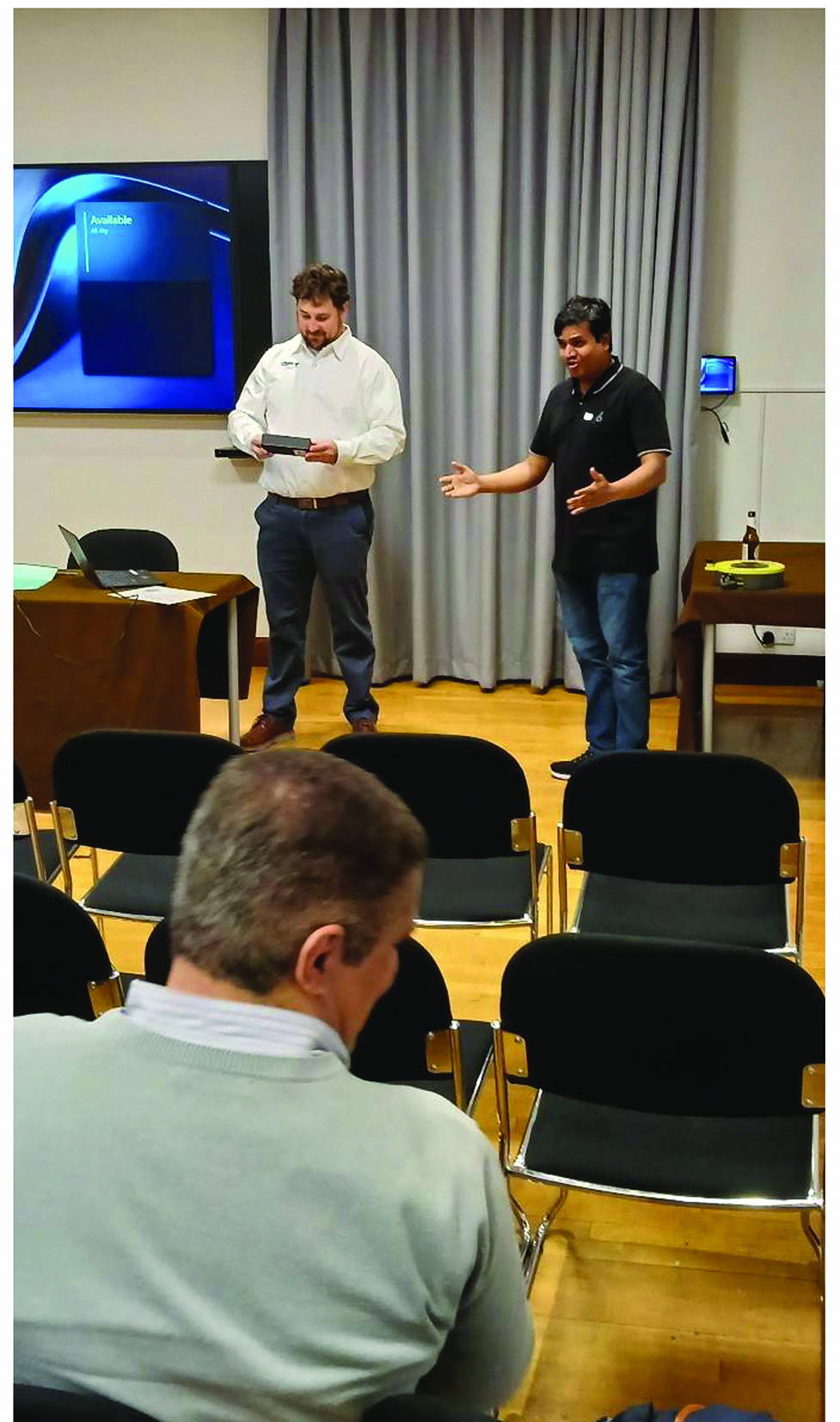
This was an interesting talk which generated a lively discussion, and as is usual, Nick was presented with an ICorr pen as thanks for his presentation by Ashokan Gopal, the branch vice chair.
For more information about London branch events, please see the ICorr website: https://www.icorr.org/ and https://www.icorr.org/events/ For London Branch updates and enquiries contact: londonchaire@icorr.org
London Branch AGM
The branch held its AGM on 12th March, when the current chair, Paul Brooks, gave an overview of the branch’s activities for the last year. The accounts were presented by the treasurer, Jim Glynn, which showed the branch had a very successful year and that more than £6k (£1k more than the allocation) was returned to Head Office. These were proposed and agreed.
Paul stood down as chair, and Ashokan Gobal was proposed as chair, together with the existing committee, which was accepted by the meeting. The committee is now:
Chair: Ashokan Gopal
Vice Chair: Berenyka Syrek-Gesterkornf
Treasure: Jim Glynn
Secretary: Anthony Setiadi
Committee members: Brian Goldie, Ennery Leon, Chiara Sorrentino, Alejandra Fernandez-Vinas and Paul Brooks
There was a discussion about members attending the technical talks and whether to go to a hybrid event or do more events rather than talks. The committee agreed to look into these suggestions at their next meeting.
The AGM was followed by a talk from the ICorr president. Yunnan
described the current set-up and operation of the institute and its
various operations, including the national and international growth,
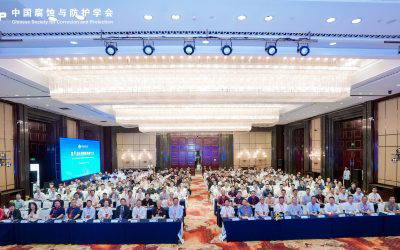
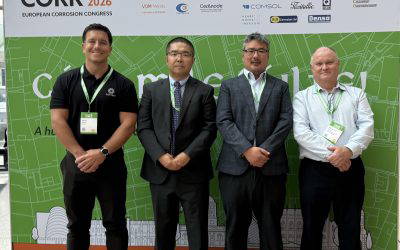
developments across the Photo: Dr Yunnan Gao. events programme, and the institute’s newly awarded licence status with the Engineering Council – an important milestone in strengthening ICorr’s professional framework. He then outlined the upcoming events in which the institute was playing a major part, for example, the 2nd China-UK Corrosion Summit in Beijing, China, hosted by the University of Science and Technology Beijing (USTB). For more information about London branch events, please see the ICorr website or contact the branch at, londonchaire@icorr.org