
Meet the Authors

Tom, our ICorr member, is a PhD student, who is finalising his PhD thesis at the University of Manchester with a BSc in chemistry and physics from Keele University. His research has focused on establishing multi-technique-informed
pitting corrosion detection and monitoring techniques – such as hyperspectral imaging (HSI) – for remote inspection of marine infrastructure. He has developed the use case for hydrogen mapping with laser-induced breakdown spectroscopy (LIBS) to detect occluded corrosion reactions. Additional research focuses include development of rapid, low-cost hydrogen detection routines; depassivation mechanisms; and leveraging atomic hydrogen for engineering applications.
Dirk Engelberg, our ICorr member, is a professor in materials performance and corrosion at the University of Manchester. He obtained a Dipl.-Ing. (FH) in Surface Engineering and Materials Science from Aalen University (Germany) before moving to Manchester in 2000 for an MSc in Corrosion Science and Engineering and a
PhD in Metallurgy and Materials Science. He joined the Corrosion and Protection Centre as an academic lecturer in 2010, which is now part of Metallurgy and Corrosion (Corrosion@Manchester) in the Department of Materials. Dirk’s research is centred on (i) understanding material degradation related to the storage, disposal, and decontamination of nuclear waste; (ii) applied electrochemistry and high-throughput screening techniques; (iii) development of innovative solutions for net-zero engineering; and (iv) localised corrosion, stress corrosion cracking, and hydrogen embrittlement. Dirk is also an expert in microstructure engineering and leads several cross-disciplinary projects combining mechanical, civil, and chemical engineering with chemistry, physics, and materials-based research.
Introduction
Under the Net-Zero drive, Hydrogen energy and infrastructure have seen tremendous growth with electrolyser technologies having seen a 3-4 fold increase in investment over the past years alone [1]. It is therefore expected for hydrogen to grow in its proliferation as a means for energy production and storage. However, being the smallest atom and having an extremely high diffusivity leads to deleterious effects on the mechanical properties of steels, typically referred to as hydrogen embrittlement (HE). Here, the localised presence of diffusible hydrogen atoms within the microstructure can result in local embrittlement and lead to premature component failure [2], [3], [4]. This is not limited to hydrogen storage or transport alone: hydrogen generation from cathodic sites under atmospheric corrosion conditions may also induce crack nucleation in certain alloy classes [5], [6], [7], [8], [9], [10].
It is therefore pertinent to establish techniques for localised hydrogen concentration detection and quantification in metals and engineering structures. Existing analytical methods are, however, limited. Some require the destruction of the test specimen – such as TDA/TDS [11], [12], [13] and hot/melt extraction [14], [15], [16], [17] – or adequate surface preparation – SKP [8], [18], [19] or GD-OES [20], [21]. Destructive techniques may require temporary shutdown for hydrogen contents to be measured and limits on surface condition may stymie the range of regions of interest [22], while the low diffusivity of hydrogen in widely used austenitic steels place potentially untenable detection times for devices such as gas sensors [23], [24].
Laser-induced breakdown spectroscopy (LIBS) is a localised, “quasi-nondestructive” technique for the acquisition of atomic spectra (Figure 1). A high-power laser is fired at the sample surface, often alongside a purge of inert gas (Ar, He, Ne, or other combinations [25]). A small volume (order of a few µm3) of the specimen’s surface is ablated and ionised, and optical photon emission – characteristic of the elements that make up the material – from the plasma recombination is then captured by a charge-coupled device (CCD).
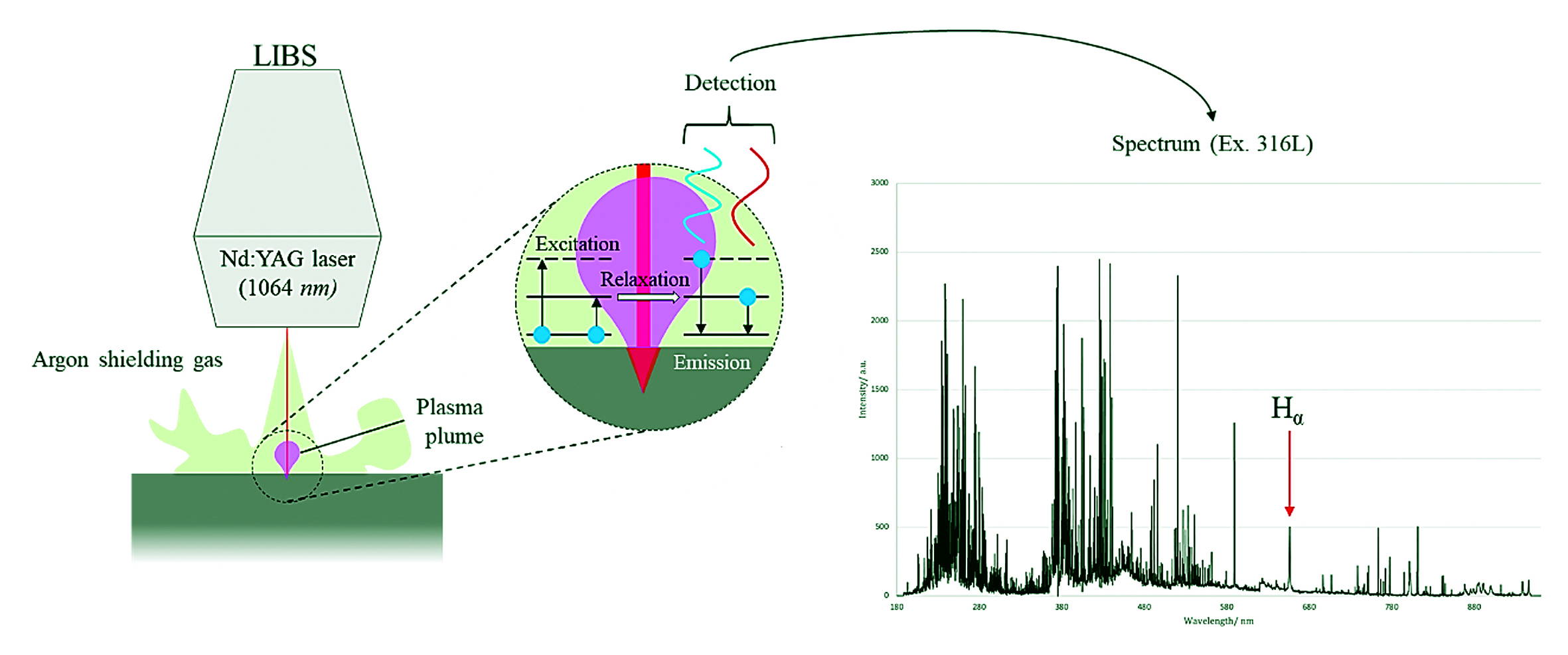
Figure 1: Sketch of the Working Principle of LIBS. The Hα Line Used for Hydrogen Determination is Highlighted.
A utility of LIBS is that it is scalable, and this has been exploited for use in geological and alloy identification for in-situ inspections [26], [27]. Additionally, the LIBS technique itself can capture the hydrogen Hα line at 656.2nm [28] and has been increasingly studied in recent years, with applications ranging from tritium monitoring in fusion reactor walls to hydrogen uptake in steel welds [28], [29], [30], [31]. In this article, the use case for localised hydrogen detection and quantification is demonstrated with a portable, hand-held
LIBS device.
Experimental and Calibration
Initially, three ‘hydrogen in steel’ calibration standards of concentrations 0.95ppm (SciLab), 2.3ppm (SciLab) and 6.23ppm
(LECO) were cold mounted in an epoxy resin and cured for 48 hours before grinding to P1200 with Silicon carbide (SiC) paper to expose the steel surfaces of each. LIBS spectra were acquired using 14 locations per standard. Two LIBS shots were applied per location, with the first as a “cleaning” shot and the second shot for spectra acquisition. This was done for each location to ensure minimal contribution of hydrogenated surface contaminants.
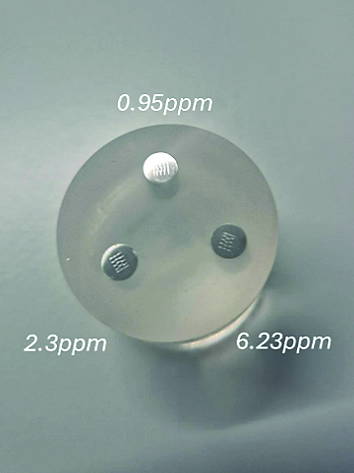
Figure 2: Mounted Hydrogen in Steel Standards with LIBS Shot Ablation Visible on Each of the Standard Surfaces.
Subsequently, four X52 steel coupons with dimensions 50.0mm × 5.0mm × 1.2mm were cut from a pipe section with an SiC abrasive cutoff wheel before surface grinding to P1200 with SiC paper. Coupons were rinsed with DI water before washing with ethanol and drying under cold air. Each coupon was cathodically charged in 0.1M NaCl under a current density of 15 mA cm2 for 122, 165 and 203 minutes to establish different hydrogen concentration depth profiles. Coupons were rinsed after hydrogen charging with DI water and ethanol and then dried under cold air prior to LIBS acquisition. Two LIBS shots were recorded for each charging time, with spectra obtained close to the center point of the charging surface of
each coupon. The first shot was taken as surface concentration measurement with the second shot assumed to be more indicative of the immediate sub-surface hydrogen concentration, allowing influences of surface conditions to be compensated for. The time interval from specimen hydrogen charging to LIBS surface analysis was recorded and kept to a minimum—typically less than 60 seconds—to avoid excessive hydrogen effusion.
LIBS spectra were obtained with a SciAps Z300 handheld LIBS unit equipped with a Nd:YAG 1064 nm laser with energy 5-6 mJ per pulse and Ar purge. Spectral integration time and delay were 1 ms and 250 ns, respectively. All LIBS spectra were processed in the same way: Voigt peak profiles were fitted to the Hα line at 656.2 nm and Ar(I) line at 763.5 nm, respectively, for each analysis and averaged. The resultant Hα peak intensities were normalised to the Ar(I) peak intensities. This peak was chosen for normalisation (over any of the Fe peaks), as it allows for comparison between spectra taken from different materials (such as carbon steel and stainless steel) and is in principle, independent of matrix composition. In this way, hydrogen abundance is normalised to the plasma composition only.
Results and Discussion
The calibration routine with results of both LIBS shots (1st cleaning + 2nd results) is summarised in Figure 3, indicating a larger variation of the surface concentration shot. This could be due to differences in the top surface sample condition and composition, for example, due to adherent water or near-surface physical/chemical discontinuities. The plot also highlights the efficacy of using an internal standardisation routine for LIBS calibrations for hydrogen abundances in stainless steels. The relationship between measured hydrogen concentration and LIBS signal was then approximated using these standard readings and applied to spectra obtained on the cathodically hydrogen-charged X52 line pipe steel samples. Expected hydrogen concentration readings in mild steel and carbon steels are typically in the sub-ppm range (<1 ppm), up to a few ppm, considering analysis of chemical/physical surface discontinuities.
The results in Figure 4 demonstrate the expected effect of charging time under constant current on the X52 coupons. A change of the measured hydrogen concentration for X52 samples in the as- received condition (before hydrogen charging) to material cathodically charged is clearly present. However, the variation of the obtained signal is quite large and overshadows clear trends of longer hydrogen exposure times. As expected, there is a marked increase in the calculated hydrogen abundance with hydrogen exposure. Of note is that the determined ppm values from the X52 samples fall above the calibration range used and are far larger than typically expected in mild/carbon steel. It is not certain at this point how linear the relationship is between hydrogen abundance and the Hα/Ar(763.5) peak height ratio far above the tens of ppm range. In the current stage, LIBS can be used to qualitatively determine differences between charged and uncharged microstructure conditions, but more work is needed to obtain quantitively reliable hydrogen readings. Further work is currently underway to (i) isolate the effect of relative humidity (adsorbed surface water) on the obtained hydrogen signal, (ii) to deconvolute effects of multiple LIBS shots on hydrogen redistribution, and (iii) application of LIBS to measure diffusion coefficients.
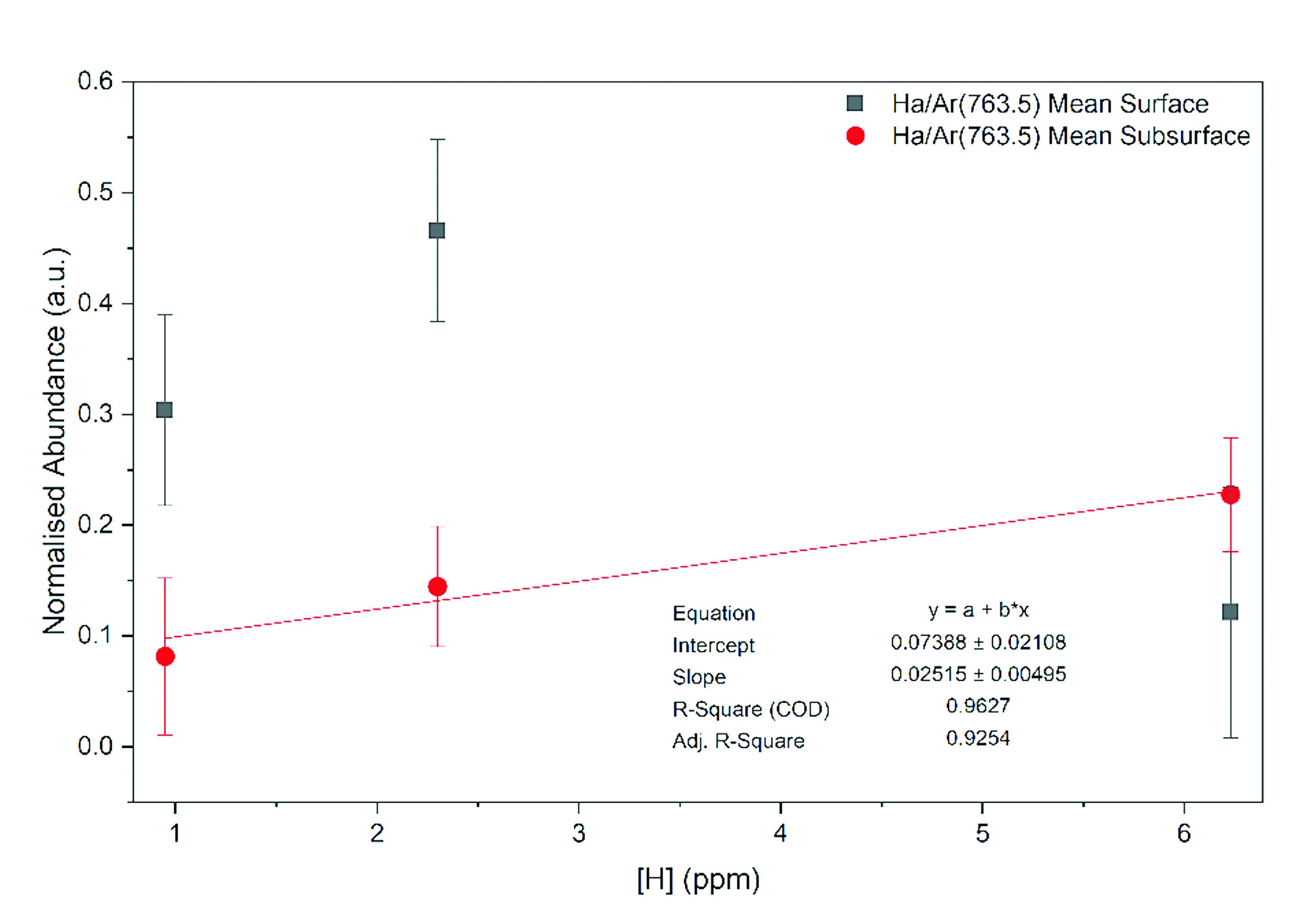
Figure 3: Calibration Plot of Analysed Hydrogen Standards for Normalised Hα Peak Intensity to the Ar763.5 Peak.
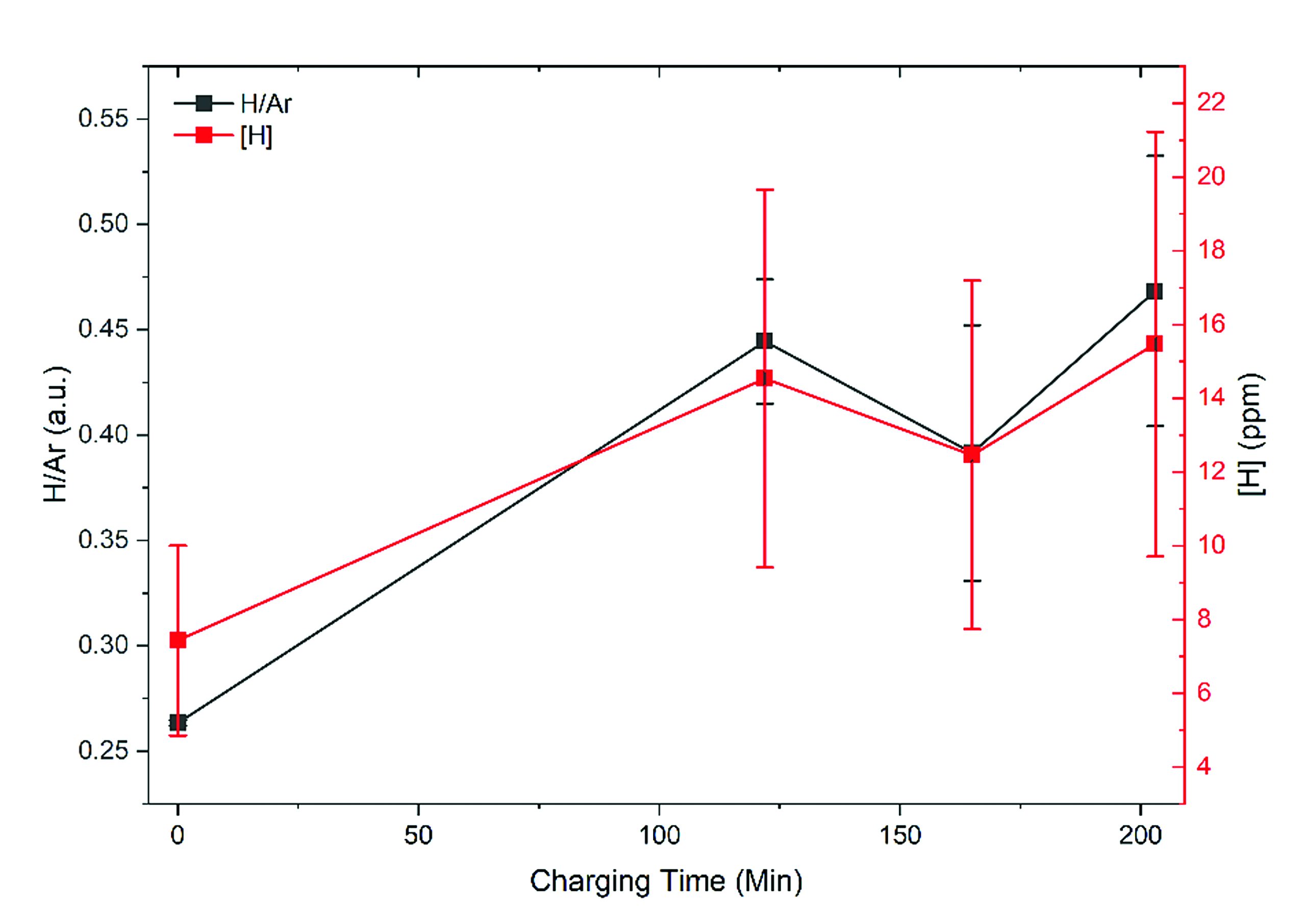
Figure 4: (Left) Measured H/Ar Peak Ratios; (Right) Calculated Hydrogen Abundances.
Conclusions
A handheld LIBS device has been calibrated on hot/melt hydrogen calibration pins, and qualitative differences in hydrogen content readings have been demonstrated on cathodically charged X52 coupons from a pipe section. The adoption of LIBS as a PMI (Positive Material Identification) technique in industry is strong, with advanced applications emerging, particularly in mining, manufacturing, and quality control. This article demonstrated that with correct calibration standards and data treatment, existing routines can readily be adapted into localised hydrogen measurement techniques.
The application of these techniques for structural maintenance applications and fitness-for-service inspection is currently under development but shows great promise at this stage.
References
1. “Global Hydrogen Review 2024 – Analysis,” International Energy Agency, 2024. https://www.iea.org/reports/global-hydrogen-review-2024 (accessed 6 November 2025).
2. J P Hirth, “Effects of hydrogen on the properties of iron and steel,” Metall. Trans. A, vol. 11, no. 6, 1980, pp. 861–890. https://doi. org/10.1007/BF02654700
3. J H Chuang, L W Tsay, and C Chen, “Crack growth behaviour of heat-treated 4140 steel in air and gaseous hydrogen,” Int. J. Fatigue, vol. 20, no. 7, 1998, pp. 531–536. https://doi.org/10.1016/S0142-1123(98)00019-X
4. A Laureys, T Depover, R Petrov, and K Verbeken, “Microstructural characterization of hydrogen induced cracking in TRIP-assisted steel by EBSD,” Mater. Charact., vol. 112, 2016, pp. 169–179. https://doi. org/10.1016/j.matchar.2015.12.017
5. S J Kim, J S Park, and S-P Jung, “Corrosion-induced hydrogen evolution, absorption, and cracking behaviors of ultra-high-strength galvanized and galvannealed steel sheets,” npj Mater. Degrad., vol. 6, no. 1, 2022, p. 31. https://doi.org/10.1038/s41529-022-00245-1
6. G Z Meng, C Zhang, and Y F Cheng, “Effects of corrosion product deposit on the subsequent cathodic and anodic reactions of X-70 steel in near-neutral pH solution,” Corros. Sci., vol. 50, no. 11, 2008, pp. 3116–3122. https://doi.org/10.1016/j.corsci.2008.08.026
7. A Turnbull, “2009 W.R. Whitney Award Lecture: Local Hydrogen Generation and Its Impact on Environment-Assisted Cracking and Crevice Corrosion,” Corrosion, vol. 66, no. 5, 2010, pp. 055001-1–055001-16. https://doi.org/10.5006/1.3430461
8. D Rudomilova, T Prošek, and M Ström, “Hydrogen Entry into Steel Under Corrosion Products,” Corrosion, vol. 77, no. 4, 2021, pp. 427–432. https://doi.org/10.5006/3675
9. T L Burnett et al., “Mechanisms of Environmentally Induced Crack Initiation in Humid Air for New-Generation Al-Zn-Mg-Cu Alloys,” Corrosion, vol. 79, no. 8, 2023, pp. 831–849. https://doi. org/10.5006/4336
10. J Srivastava et al., “The influence of partially recrystallized grain structures on hydrogen-environmentally induced cracking (H-EIC) behavior of AA7085 alloy in humid air,” Corros. Sci., vol. 256, 2025, p. 113199.
11. K Verbeken, “Analysing hydrogen in metals: bulk thermal desorption spectroscopy (TDS) methods,” in Gaseous
Hydrogen Embrittlement of Materials in Energy Technologies, Woodhead Publishing, 2012, pp. 27–55. https://doi.
org/10.1533/9780857095374.1.27
12. D Pérez Escobar, K Verbeken, L Duprez, and M Verhaege,
“Evaluation of hydrogen trapping in high strength steels by thermal desorption spectroscopy,” Mater. Sci. Eng. A, vol. 551, 2012, pp. 50–58. https://doi.org/10.1016/j.msea.2012.04.078
13. F von Zeppelin, M Haluška, and M Hirscher, “Thermal desorption spectroscopy as a quantitative tool to determine the hydrogen content in solids,” Thermochim. Acta, vol. 404, no. 1, 2003, pp. 251–258. https://doi.org/10.1016/S0040-6031(03)00183-7
14. L B Peral, A Zafra, I Fernández-Pariente, C Rodríguez, and J Belzunce, “Effect of internal hydrogen on the tensile properties
of different CrMo(V) steel grades: Influence of vanadium addition on hydrogen trapping and diffusion,” Int. J. Hydrogen Energy, vol. 45, no. 41, 2020, pp. 22054–22079. https://doi.org/10.1016/j. ijhydene.2020.05.228
15. M N Babikhina, V N Kudiiarov, A V Mostovshchikov, and A
M Lider, “Quantitative and Qualitative Analysis of Hydrogen Accumulation in Hydrogen-Storage Materials Using Hydrogen Extraction in an Inert Atmosphere,” Metals, vol. 8, no. 9, 2018, p. 672. https://doi.org/10.3390/met8090672
16. G K Padhy, V Ramasubbu, S K Albert, N Murugesan, and C Ramesh, “Hot Extraction of Diffusible Hydrogen and Its Measurement Using a Hydrogen Sensor,” Weld World, vol. 56, no. 7, 2012, pp. 18–25. https://doi.org/10.1007/BF03321361