The Midland Branch welcomed two new sustaining members, Mapei Ltd based in Halesowen, West Midlands, and Cathodic Protection Engineering based in Wythall, Birmingham.
The last Midland Branch meeting took place on 27 June at Amey’s office in Birmingham. As well as updates on Branch and ICorr news; discussions were held regarding future branch meetings and presentations. Peter McCloskey, of Vector Corrosion Technologies then gave two presentations, “ Cable impregnation techniques for protection of grouted post tensioned tendons” and “Introduction to Termarust corrosion mitigation system for steel structures”.
Both presentations were well received and a detailed Q&A session ensued. The Branch would like to thank Amey, Birmingham, for providing the venue.
The first meeting of the new season is a joint meeting with LMS on 12 October, and the evening has been handed over to the Young ICorr Group, who have organised a presentation by Simon Bowcock of BP on “Corrosion challenges and considerations for the design and installation of 316 stainless steel-clad subsea flowlines’.
The meeting will be held at the usual venue, Imperial College, Skempton Building, London, with the presentation at 18.30, followed by refreshments and networking between 19.30 and 21.00.
For further information please contact icorrlondon@gmail.com or george.winning@clariant.com.
On 19 October there is a meeting, organised by the Society of Chemical Industry’s London group, and the Branch entitled “From the Foundations of Electricity to Modern Corrosion Failures “ – see diary page, and advert on page 11.
This free evening event includes two presentations, the first on the historical background of electricity, by Dr F Parrett, and the second on the recent problems of AC Corrosion on pipelines, by Dr David Eyre.
Planning is well underway for the forthcoming 29th Annual Christmas Luncheon which will be held on the 7th December in London at the normal venue, the Royal Overseas League. Formal advertising and the ability to book tables will take place later in the year. At this time the London Branch – Luncheon Subcommittee would like to offer companies the opportunity of supporting the event in terms of contributing to the cost of the entertainment and the raffle prizes. All companies who contribute to the cost of the entertainment will receive visual publicity on the day for the duration of the event. If you would like to support this event by providing sponsorship, please email ICorr head office (admin@icorr.org) indicating the amount, and they will email you an invoice by return. To help with planning, it would be appreciated if you could respond by 31st August.
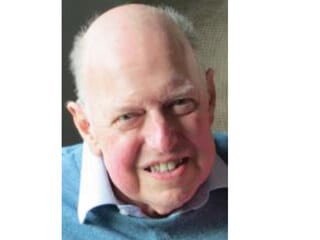
Chris Smith was born in Northampton on 19th May 1944. He was the only child Dora and Aubrey Smith, meeting his father for the first time only at the age of 6 months when the latter was on leave from active service during the war. Chris grew up on Monks Hall Road, Northampton, went to Barry Road Primary School and subsequently attended Northampton (Grammar) School for Boys. The family home was near Northampton Cricket Club, which he attended and from where he gained a life-long love for the game, subsequently shared with his children. At the age of eight, Chris became a Wolf-Cub Scout, moving up to the Scout Troup in 1956. He went on many adventures, including camps in Wales and the Isle of Man, the Easter Initiative Test in London, and hosting Jamboree visitors from the USA and Germany and achieved his Queen’s Scout Award – the top award for young people. In 1962 Chris took out a warrant as an Assistant Scoutmaster and, in the same year, he met his future wife Coral at the Scout and Guide Club – the start of an amazing partnership that lasted 55 years. While family and work commitments initially caused his interest to be interrupted however, after his first son Keith had joined the Cubs, Chris was prompted to re-start his scouting career, which eventually was to involve his whole family.
Chris attended Birmingham University’s School of Metallurgy, graduating in 1965, and decided to stay on to study for his doctorate. At that time there was considerable interest in how to control the properties of steel used for construction of car bodies and during his PhD Chris pioneered the routine use of electron microscopy to understand the microstructural mechanisms involved in the deformation and annealing of sheet steel. For the rest of his career Chris always retained an interest in applying analytical electron microscopy to solve practical problems.
After the completion of his studies at Birmingham Chris and Coral married in 1969 and, after a spell at the Atomic Weapons Research Establishment and the Ministry of Defence Materials Research Policy Unit in London, Chris joined the Corrosion Section of the then Royal Aircraft Establishment (RAE) and the family moved to Hook in Hampshire. When he first joined the RAE his laid back and gentle manner set him aside from the more extrovert members of the section and so at his first Christmas party (in the Price of Wales, Farnborough) his real ale enthusiast colleagues set Chris the “induction” challenge of consuming 5 different beers. Chris steadily worked his way through them all, a pint of each, without any real change in his friendly, laid back disposition. He earned his spurs and the admiration of his colleagues that day!
Chris became Head of the Corrosion Section in 1984 and over the subsequent years he built a number of research relationships with UK Universities to develop alternatives to the toxic cadmium and chromate materials and coatings then used in airframe protection, overseeing pioneering work on zinc-nickel electroplating, magnetron sputtered coatings, anodising and the use of molybdate and rare-earth corrosion inhibitor treatments for aluminium alloys. Chris collaborated extensively with George Thompson and Graham Wood in the Corrosion and Protection Centre at the then University of Manchester Institute of Science and Technology (UMIST, now the University of Manchester) on the surface finishing of aluminium aircraft alloys where his favourite technique, electron microscopy, was used to great effect in elucidating critical mechanisms. Chris was indeed a great friend to UMIST and became an active and valued member of the External Advisory Committee for the MSc programme on Corrosion Control Engineering, lecturing on the corrosion masters programmes there and also at Surrey University. He also had active collaborations with Loughborough University and Cranfield University, and elsewhere, and his valued expertise was called on in a number of occasions as external PhD examiner.
Chris was involved with the corrosion activities of international bodies such as the Group for Aeronautical Research and Technology in Europe (GARTEUR), and the Advisory Group on Aerospace Research and Development (AGARD). This led to collaboration with teams in several major aerospace companies and a regular cycle of aerospace corrosion control conferences and technical visits in Europe and further abroad, cementing Chris’s position in his chosen field. This was achieved while also providing specific corrosion related advice on the RAF’s VC10, Nimrod, Hercules, Tornado and Jaguar aircraft at various times and mentoring the early careers of his new team members, as the RAE successively became part of the Defence Research Agency and eventually the private sector defence technology company QinetiQ. The latter years of Chris’s career saw the Corrosion Section increasingly focussing on projects for the replacement of cadmium and chromate with the participation of companies in the entire aerospace supply chain. During this period Chris attained his personal career target of publishing over 100 peer-reviewed papers and was appointed a company Fellow of both DERA and QinetiQ. He also served for many years as a Referee, Contributor and Member of the Editorial Advisory Board of the Anti-Corrosion Methods and Materials Journal. Even after his well-deserved retirement Chris continued to be active contributing to the 2010 revision of “Shrier’s Corrosion” and starting an Open University degree in Mathematics which, unfortunately, he was only 30 credits from completing when he died.
Chris was a very kind and gentle person, and this shone throughout his life: in his family, in his hobbies and interests and in his work. He was a great listener, never refused a request and was always ready to help. These characteristics made him a fantastic mentor, particularly for early career researchers, colleagues and especially the PhD students whom he funded and helped guide through their studies. Amongst the corrosion community he was widely known and immensely well-respected. He is survived by his wife Coral, children, Keith, Neil, Helen and seven grandchildren. He will be greatly missed.
HCL is a UK based family owned business providing cost effective, non-metallic and innovative solutions for the subsea, cathodic protection and anti-corrosion industries. It is one of the world leaders in high strength non-metallic polymer banding technologies for the Oil & Gas and associated industries, and manufactures what is reportedly the strongest polymer cable tie in the world. HCL specialise in the in the long term, secure clamping of subsea applications such as risers, VIV strakes, pipeline piggy back and cold applied tape wrap jacketed corrosion protection systems, the latest additions to the HCL range of technologies include the ability to mount sacrificial anodes without welding or metal hoop clamps that can facilitate reduced site visits and lower diver costs with less time required for fitting. They can provide the complete package for non-ferrous mounting of corrosion protection of marine assets.
A family business with 80 years’ experience, Mapei is the one of the world’s leading manufacturers of adhesives, sealants and chemical products for the building industry, including products for the installation of cathodic protection, protective coatings, waterproofing systems, all types of wall and floor coverings and a vast range of admixtures and repair products for concrete. They also offer a free expert specification service and work closely with builders, developers, engineers, architects and contractors worldwide providing tailored advice, along with current technical assistance. Mapei adopts independently certified quality, environmental and health and safety management systems in compliance with international standards ISO 9001, ISO 14001 and OHSAS 18001.
Mapei UK Ltd, based in the West Midlands, opened their state-of-the-art manufacturing facility in 2004, the 47th manufacturing plant worldwide. The facility accommodates manufacturing, stock, marketing, sales and technical services and is home to on-site training facilities
We use cookies to optimize our website and our service.
Functional
Always active
The technical storage or access is strictly necessary for the legitimate purpose of enabling the use of a specific service explicitly requested by the subscriber or user, or for the sole purpose of carrying out the transmission of a communication over an electronic communications network.
Preferences
The technical storage or access is necessary for the legitimate purpose of storing preferences that are not requested by the subscriber or user.
Statistics
The technical storage or access that is used exclusively for statistical purposes.The technical storage or access that is used exclusively for anonymous statistical purposes. Without a subpoena, voluntary compliance on the part of your Internet Service Provider, or additional records from a third party, information stored or retrieved for this purpose alone cannot usually be used to identify you.
Marketing
The technical storage or access is required to create user profiles to send advertising, or to track the user on a website or across several websites for similar marketing purposes.