ICATS/CORREX  New Training Centre

ICATS/CORREX New Training Centre

Magic Training LTD: A Premier Construction Training Centre in Wembley have become an ICATS approved training centre. Magic Training Ltd. was born out of the need to prepare construction professionals for the modern world of construction engineering possibilities, and has to be part of the next generation of trainers to deliver competent, accredited, and innovative workforce.

Even though they are a young company, their assessors and trainers are chartered members of CIOB and IOSH, with over 12 years’ experience in construction management and health and safety.

All their courses are accredited by the relevant authorities, including CIOB, IOSH, EAL, CITB, ProQual, and now CORREX. Because of their approach, they are becoming an industry benchmark for construction training.

Their current programmes include national vocational qualifications from levels 2 to 7, and electrical and painting courses including, Industrial Coating Applicator (ICA). They also have a variety of short courses on site management safety, site supervision safety, and IOSH working safety.

Apprentice update
Two of the ICorr time served apprentices, who also achieved distinction marks, Pat Maj and Rory Voulgaris, are now working in the Falklands, over 8,000 miles away. They are working on a project there for employers, Jack Tighes, talk about taking your skills to a different part of the world!

NE Branch News

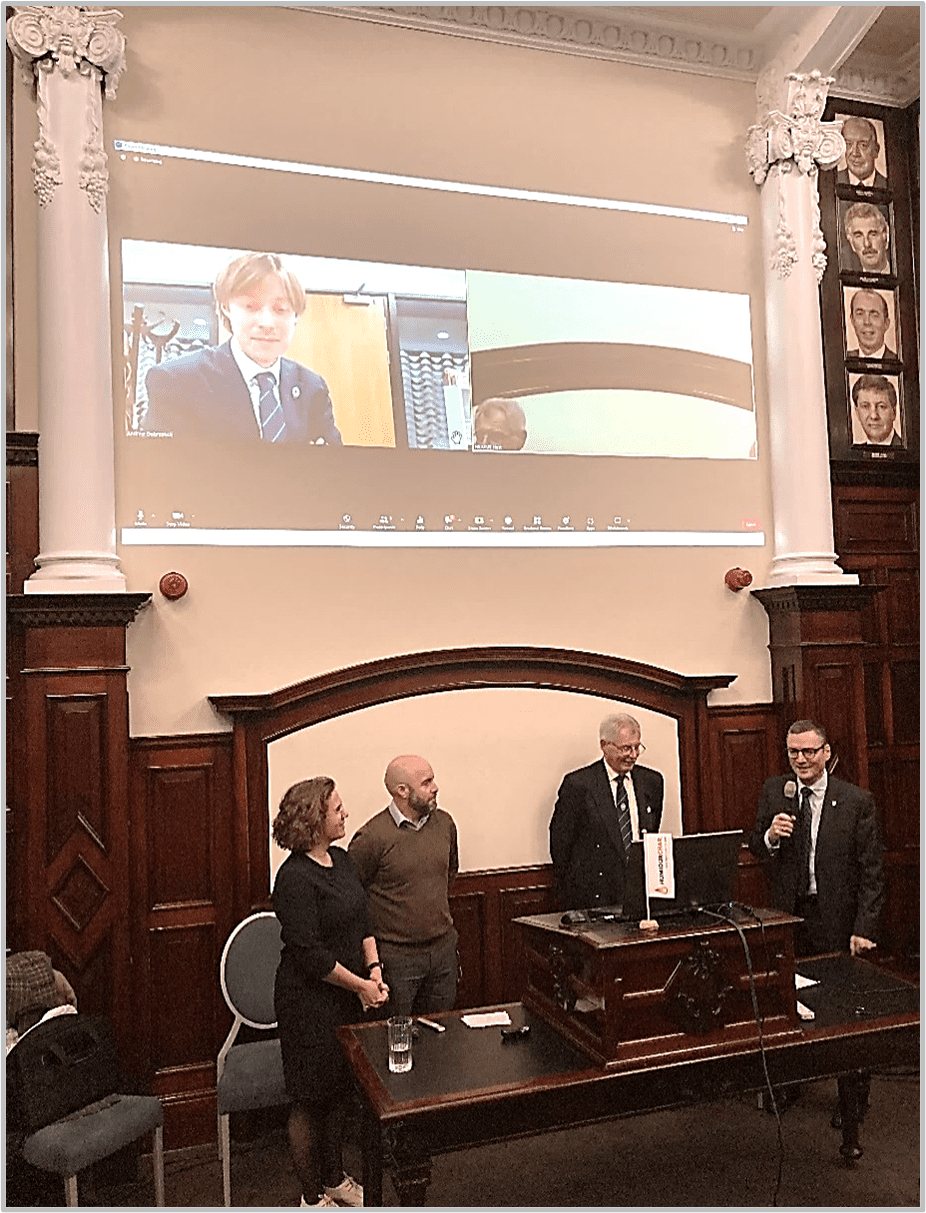
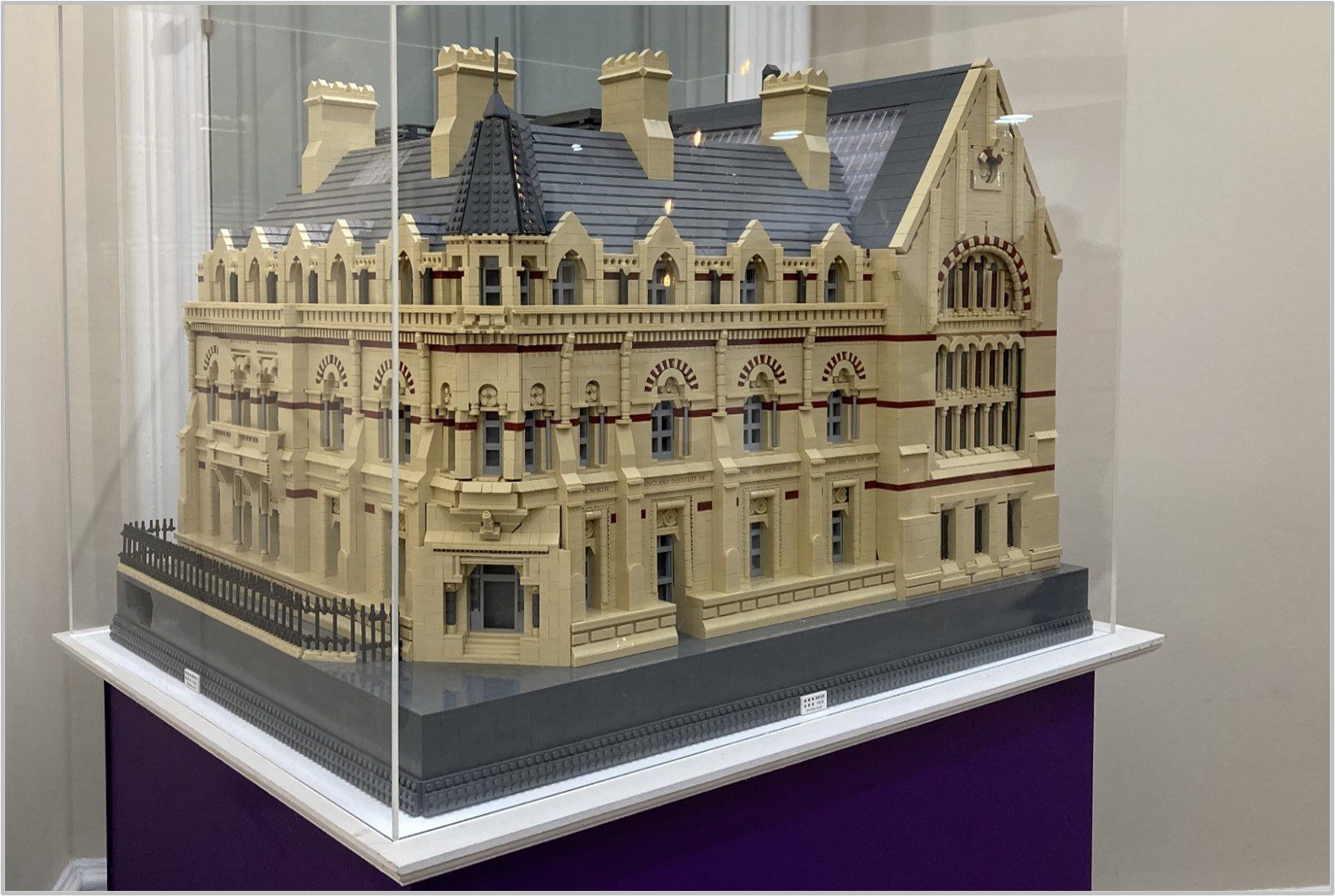
Our North-East Branch relaunched with a very well attended Event at the Institute of Mining Building on 15 December which was greatly enjoyed by all.

Many thanks are due to the New NE Branch committee, and we look forward to their June 22/2  2023 Conference – “Integrity Engineering for a Sustainable Future”. Contact: david.mobbs@c-i-m.co.uk

The ICorr Sustainability Conference is a 1 day technical event split into four sessions on 22 June 2023.

Each session has a chair to facilitate and lead a panel discussion at the end of the morning and at the end of the day. There will be a conference dinner in Newcastle in the evening with the option for delegates to join a site visit the following morning 23 June 2023.

Possible site visits include:

  1. ORE CATAPULT – Offshore renewable energy test and research centre The UK’s leading technology innovation and research centre for offshore renewable energy that will play a key role in delivering net zero targets by accelerating the creation and growth of UK companies in the offshore renewable energy sector.
  2. BATES COLLIERY – pumping station, which is an excellent example of re-purposing, which dissipates 5 MW of heat for reuse.

The Institute of Corrosion has changed in many ways since our Foundation in 1959.  Our NE Branch is part of that expansion

What has not changed is the dedication of its members to the cause and work of ICorr, which is operated almost exclusively operated by Volunteers.  We have grown recently to nearly 1600 Members with an active Overseas involvement in our Online Technical Programmes.

ICorr Pipeline Coating Inspection Level 2 online

ICorr Pipeline Coating Inspection Level 2 online

Course Overview

This course is designed to provide candidates with the essential skills and knowledge needed to conduct inspections of pipeline coatings, ensuring they meet industry standards and protect pipeline infrastructure. This accredited qualification transfers to job opportunities in the oil and gas, subsea, fresh water, diesel and petrol and jet fuel industries.


Course content

An Overview of Pipelines and an Introduction to Pipeline Coatings
Basic Corrosion and Pipeline Corrosion
Cathodic Protection to Pipelines
Cathodic Protection and Coatings
Quality Assurance and Quality Control
Safety and the Pipeline Inspector
Pipeline Inspector Duties
Product Testing
Fusion Bonded Epoxy Coatings
Miscellaneous Pipe Coatings and Field Joint Coatings
Environmental Considerations
Recommended Practices and International Standards

Course details

Study time
16 hours of online study, concluding with a 90-minute monitored online multiple-choice final exam.

Certificate/Qualification
ICorr Pipeline Coating Inspector Certificate of Achievement, valid for 5 years.

Entry criteria
Recognised Coating Inspection Certificate and 24 months of coating Inspection experience.


Course fee

£650.00 – Course Fee
£75.00 – Online Exam Fee

Plus 20% VAT if applicable.

ICorr Pipeline Inspector – Certificate of Achievement. Valid 5 years.

Course dates – Open registration with access to the training material for 12 months. Final examinations can be taken on a date and time to suit you.

Enrol herehttps://corrodere.com/courses/pipeline-coating-inspector/

Course and examination enquiries

For any questions or further enquiries, please visit our training partner’s website at www.corrodere.com, or alternatively, you can contact them at:

+44 (0) 1252 732236
info@corrodere.com 

ICorr awards – call for nominations

ICorr awards – call for nominations

Each year the Institute of Corrosion bestows a range of internationally renowned awards in recognition of excellence in corrosion science and engineering, and to reward outstanding service to the Institute and the wider corrosion community. Many of these awards are open to nomination by both members and non-members of the Institute. Below is a brief description of each award together with details of how to nominate potential candidates.

U.R. Evans Award
The U.R. Evans Award is the premier scientific award of the Institute of Corrosion and is presented annually for outstanding international achievements in pure or applied corrosion science. The recipient is selected by a Corrosion Science Division panel and presented with an engraved sword at the annual Corrosion Science Symposium (CSS). The symposium is one which seeks to encourage the participation of the junior members of the corrosion community who would appreciate the visit of, and address by, a corrosion scientist of international repute. The form of the award symbolises the fight in which we are all engaged. The recipient is also granted Honorary Life Fellowship of the Institute. Nominations may be submitted at any time via email to the CSD Chair, Julian Wharton (j.a.wharton@soton.ac.uk).

Paul McIntyre Award
The Paul McIntyre Award is presented to a senior corrosion engineer, who, as well as being a leading practitioner in his field, has advanced European collaboration and international standards development. The award consists of an engraved trophy, which is presented at the annual CED Working Day meeting. The recipient is requested to present a brief overview of their activities and encouraged to prepare an article for publication in Corrosion Management. Nominations should be
submitted to the CED Chair, Danny Burkle (D.Burkle@lbbcbaskerville.co.uk) by 28th February 2023.

T.P. Hoar Award
The T.P. Hoar Award is presented to the authors of the best paper published in the scientific journal Corrosion Science during the previous calendar year. The winning paper is selected by a sub-committee of the Corrosion Science Division and the authors receive a certificate and a cash sum of £400.

Galloway Award
The Galloway Award is presented to a student author for the best publication describing original research in corrosion science and engineering as judged by a sub-committee of the Corrosion Science Division. The student should be the primary author of the work and preferably first author. A summary of the winning paper is published in Corrosion Management and the prize consists of a certificate and a cash sum of £300. The Institute does not retain copyright of the material, so this does not prevent separate publication of the work in a scientific journal. Submissions (in the form of a paper published within the past 12 months or a draft publication) may be sent via email at any time to the CSD Chair, Julian Wharton (j.a.wharton@soton.ac.uk). Supervisors may nominate students.

Lionel Shreir Award
The Lionel Shreir Award is given to the best student presenter at the annual Corrosion Science Symposium. Selection of the recipient is carried out by a sub-committee of the Corrosion Science Division. The award consists of a certificate and a cash prize of £125.
For further details on the Institute awards, including lists of past recipients, please visit https://www.icorr.org/icorr-awards/

What Is the Role of Trustees in the Institute of Corrosion?

What Is the Role of Trustees in the Institute of Corrosion?

​The Guiding, Safe Hands of ICorr

The role of trustees in the Institute of Corrosion is crucial. In fact, without its trustees the Institute could not function effectively as a charity. As you’ll learn in this article, our trustees hold many responsibilities.

What is a trustee?

Charity trustees are the people who share ultimate responsibility for governing a charity and directing how it is managed and run.  They are responsible for safeguarding the assets of the charity. These might, for example, be cash and property. They also include intangible assets such as the charity’s reputation and proprietary information.

In larger charities, trustees may not take a hands-on role. Our trustees are very much involved in the day-to-day running of the Institute of Corrosion. They help to shape our work and our strategic direction.

Since the Institute is also a company registered with Companies House our trustees are also the Directors of the company and act as the Executive Management Committee. By default, this requires our trustees to be knowledgeable about the world of corrosion as well as possessing a broad skills base. Often, we draw our trustees from industry, private consultancy, or academia.

Our trustees have a duty to advance the purpose of the Institute

The duties of trustees are laid out as legal responsibilities by Charity Law as:

  1. To ensure the charity is carrying out its purposes for the public benefit
  2. To comply with the charity’s governing document and the law
  3. To act in the charity’s best interests
  4. To manage the charity’s resources responsibly
  5. To act with reasonable care and skill
  6. To ensure the charity is accountable

The first of these duties is always the primary focus of a trustee. All else flows from this ‘public benefit requirement’.

All trustees should be familiar with their duties, and to aid them in this they are required to  read and understand the Charity Commission guidance titled The Essential Trustee.

Our trustees support our decision-making

One of the ways in which our trustees enable the Institute to function successfully is by supporting the President in the decision-making processes, especially when there are urgent decisions to be made. Thus, trustees need to have a broad base of skills and experience.

The decisions in which our trustees offer their advice, expertise, and support include:

  • Audits and standards
  • Branch requests
  • Co-operation with other Institutes and government bodies/agencies
  • Council meeting and AGM agendas
  • Growth and sustainability
  • ICorr brand management
  • Accounts/reviews
  • Long-term investments
  • Overseas member support
  • HR issues
  • Strategy development
  • Training courses/certification in UK and overseas
  • Website issues and database improvements

Trustees have specific financial and reporting duties and responsibilities

Another of the key duties of our trustees is to ensure that our finances and accounts remain in good order. This duty is also set out in law under the Companies Act 2006. To comply with this, the trustees must prepare financial statements for each financial year. These must give a true and fair view of the finances of the Institute of Corrosion for the year for which the statement is prepared.

In the preparation of these financial statements, the trustees are responsible for:

  • Selecting and applying suitable accounting policies
  • Making reasonable and prudent judgements and estimates
  • Preparing financial statements on a going concern basis

In addition to the financial statements, the trustees also publish an annual report under the direction of the President of the Institute. This report should detail matters that include:

  • Aims and objectives
  • Organisational structure
  • Achievements and performance
  • Funding sources
  • Investment policy
  • Risk management
  • Forward strategy

The report will also detail any collaboration with third parties; recruitment, appointment, training, and responsibilities of trustees; membership and membership services; and members of the management committee. It will also discuss governing documents, future training provision, and sustainability.

Selecting and training our trustees

As you can see, our trustees have a lot on their plate. The work they do is extremely varied and can be complex. It is also ongoing. It also requires continuity. Therefore, we select our trustees for a minimum of six years. This is a significant commitment for a trustee to make to a role that does not provide financial reward.

So, how does the Institute select its trustees?

First, when a trustee position becomes available, we identify the skills needed to maintain the skills mix required by the trustees as a group.

Having established this baseline, we may advertise the role by notification in the Corrosion Management magazine, and on our website.

We may also approach individuals who we believe to possess the skillset we seek.

Often, a new trustee will be familiar with how the Institute works. They are likely to have experience within a local or regional branch, division, or committee. After appointment, the new trustee will be given a brief familiarisation session by the President. This session will cover:

  • Plans and objectives of the Institute
  • Memorandum and Articles of Association of the Institute
  • Obligations of trustees in law and as members of the management committee
  • The current financial position as set out in the latest published accounts

Hard work, commitment, and no pay. Why become a trustee?

While being a trustee is not a full-time role, it does require a commitment of time and dedication. Our trustees meet regularly and form part of the management structure of the Institute. But, though not paid, our trustees receive rewards in other ways.

A trustee of the Institute of Corrosion plays an integral role in the smooth operation of the Institute, shaping our future and the direction of our industry. They grow their networks, increase their personal skills base, and have the satisfaction of knowing they have made a real contribution to positive change in the field in which they are most passionate.

Ask any of our trustees if this volunteer role is rewarding, and the answer will be yes.

The current trustees of the Institute of Corrosion

We currently have five trustees. Each is a director of the Institute of Corrosion. They meet monthly as a ‘committee’, reporting back to the Council and overseeing the routine operation of the Institute between Council meetings.
At the time of writing, our trustees are:

  • The President – Stephen Tate (Appointed 2020)
  • The Vice President – Dr. Yunnan Gao (appointed 2022)
  • The Immediate Past President – Dr Bill Hedges (Appointed 2019)
  • The Honorary Secretary – Dr Jane Lomas (Appointed 2011)
  • The Honorary Treasurer – Dr Tony Collins (Appointed 1993)

In the future, we plan to publish further articles about how the Institute of Corrosion is structured and how it operates. This transparency should help all our members and the wider corrosion community to have a greater understanding of all the moving parts of the Institute and the tremendous amount of work that goes on behind the scenes. If you’re interested in getting involved in any of these activities, please get in touch with us!

In the meantime, to learn more about membership of the Institute of Corrosion, please check out our membership page to learn how to become a member and immediately begin to enjoy the many benefits of membership of the Institute of Corrosion.