


The cart is empty!
2nd China-UK Corrosion Summit in Beijing, China on 12 & 13 April 2026
The 2nd China-UK Corrosion Summit was successfully held on 12–13 April 2026 in Beijing, hosted by the University of Science and Technology Beijing (USTB). The summit was jointly organised by the Institute of Corrosion (ICorr) and the Chinese Society for Corrosion and Protection (CSCP), with participation from the European Federation of Corrosion (EFC).
Following the success of the inaugural summit held in Manchester in September 2025, this second summit marked a significant advancement in strengthening collaboration between the UK and China corrosion communities. The event brought together leading experts from academia, industry, and research institutions, providing a high-level platform for technical exchange and future cooperation.
The summit theme, “Advancing AI-Driven Corrosion Protection for Infrastructure”, reflected the growing importance of digitalisation and artificial intelligence in corrosion engineering. As highlighted in the CSCP report (https://www.cscp.org.cn/site/content/3208.html in Chinese), the event demonstrated both the depth of technical expertise and the strong commitment to international collaboration.
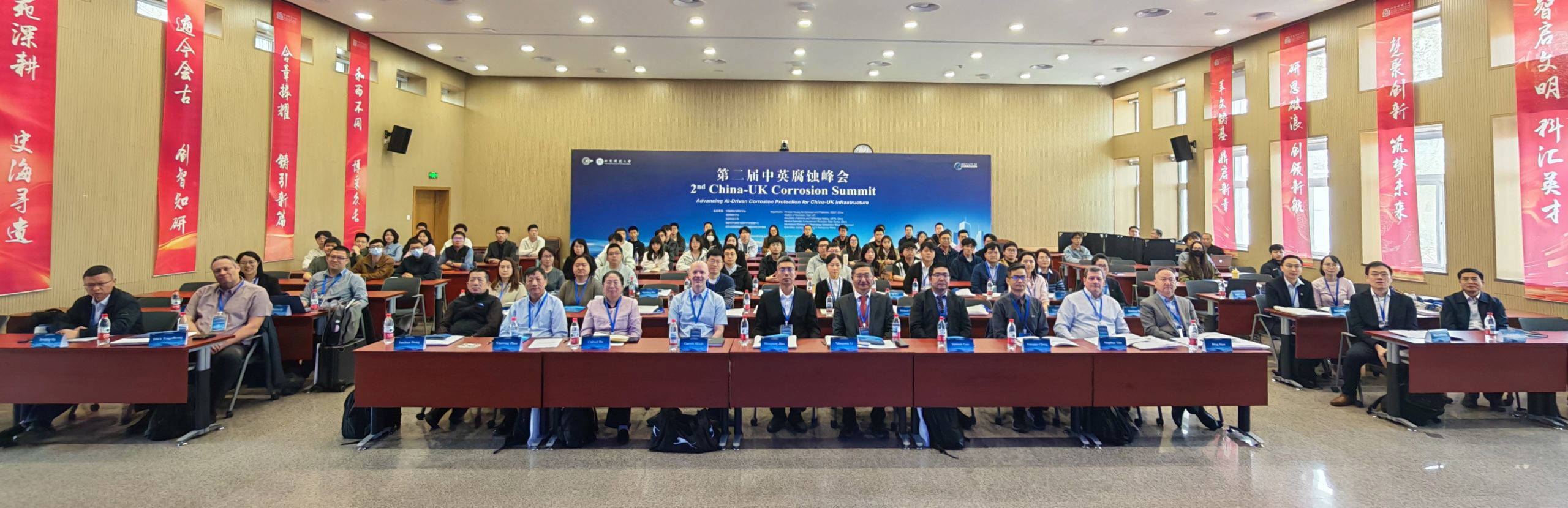
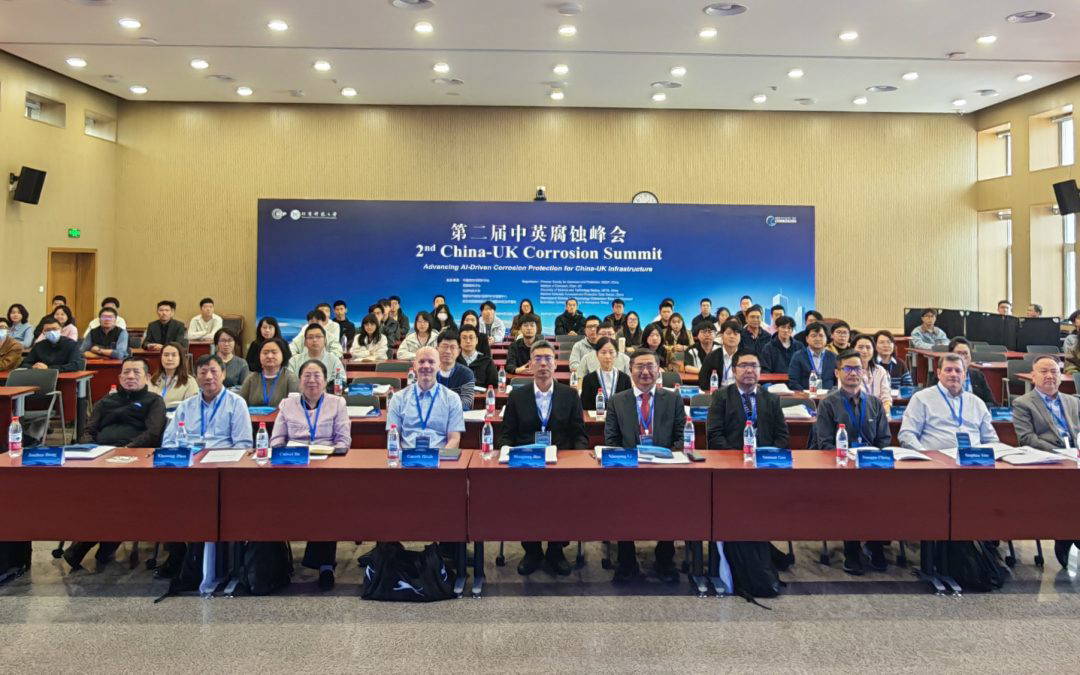
Second China-UK Corrosion Summit Delegates Photo
Opening Ceremony
The summit opened with welcome speeches from senior representatives of the organising bodies.
Dr Yunnan Gao, President of ICorr, highlighted the progress made over the past two years in building a strong and sustained partnership between ICorr and CSCP, and emphasised the importance of continued international collaboration.
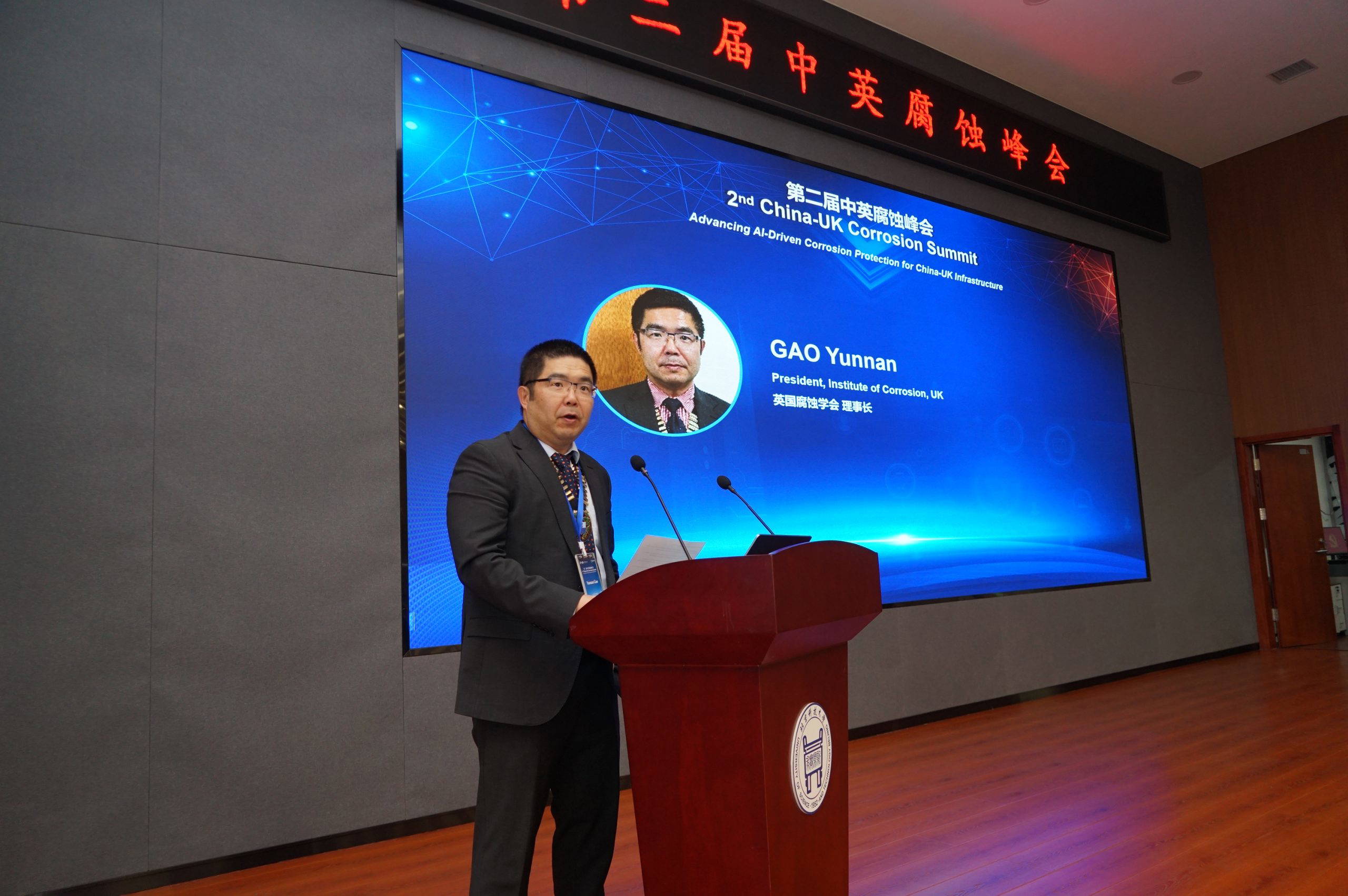
ICorr President, Dr Yunnan Gao, Giving the Opening Speech
Professor Xiaogang Li, President of CSCP, welcomed delegates and underlined the importance of global cooperation in addressing corrosion challenges affecting infrastructure, energy, and materials performance.
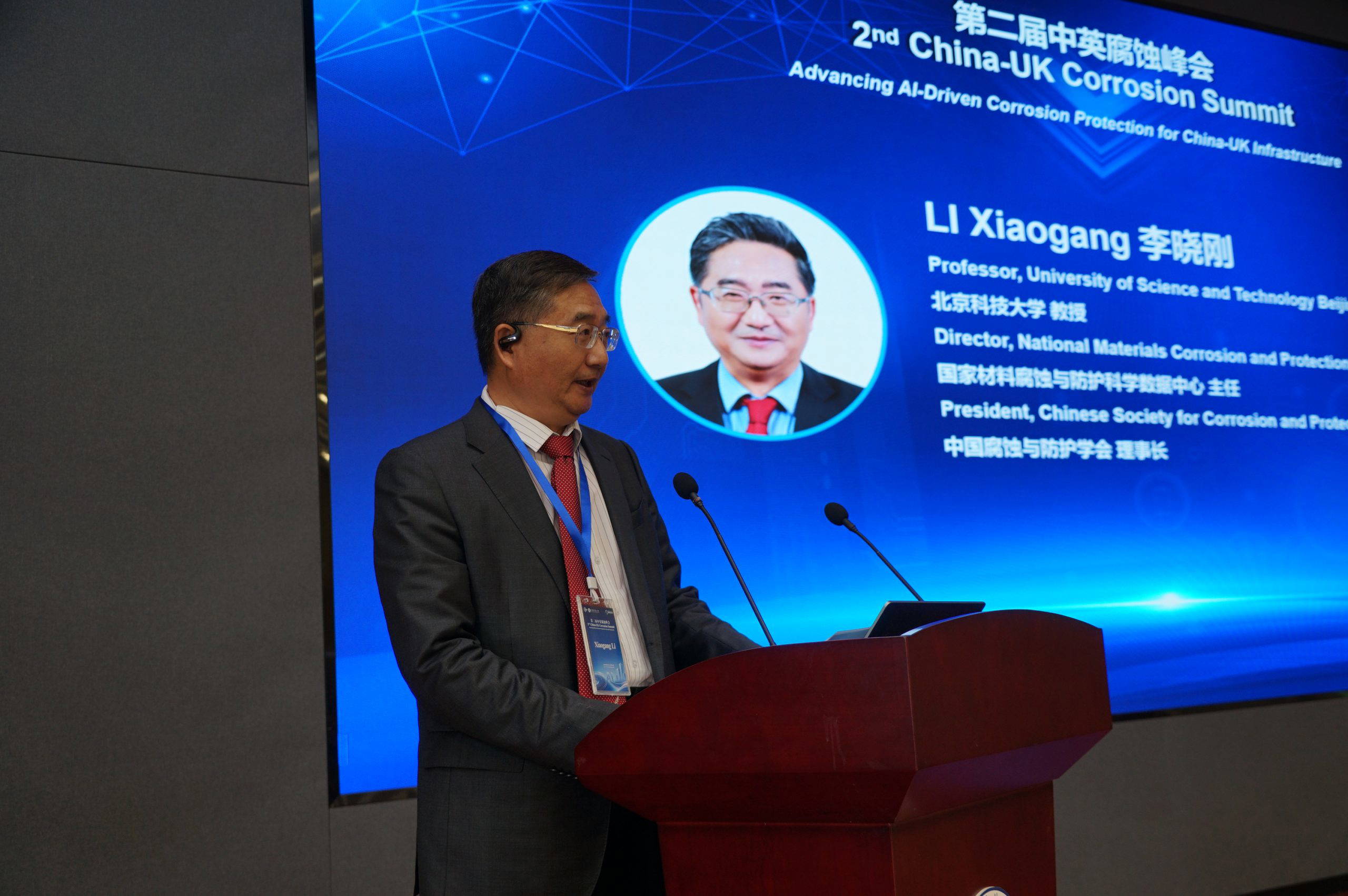
CSCP President, Professor Xiaogang Li, Giving the Opening Speech
Professor Gareth Hinds, President of EFC, spoke on the value of international partnerships and the role of trilateral collaboration in advancing corrosion science and engineering.
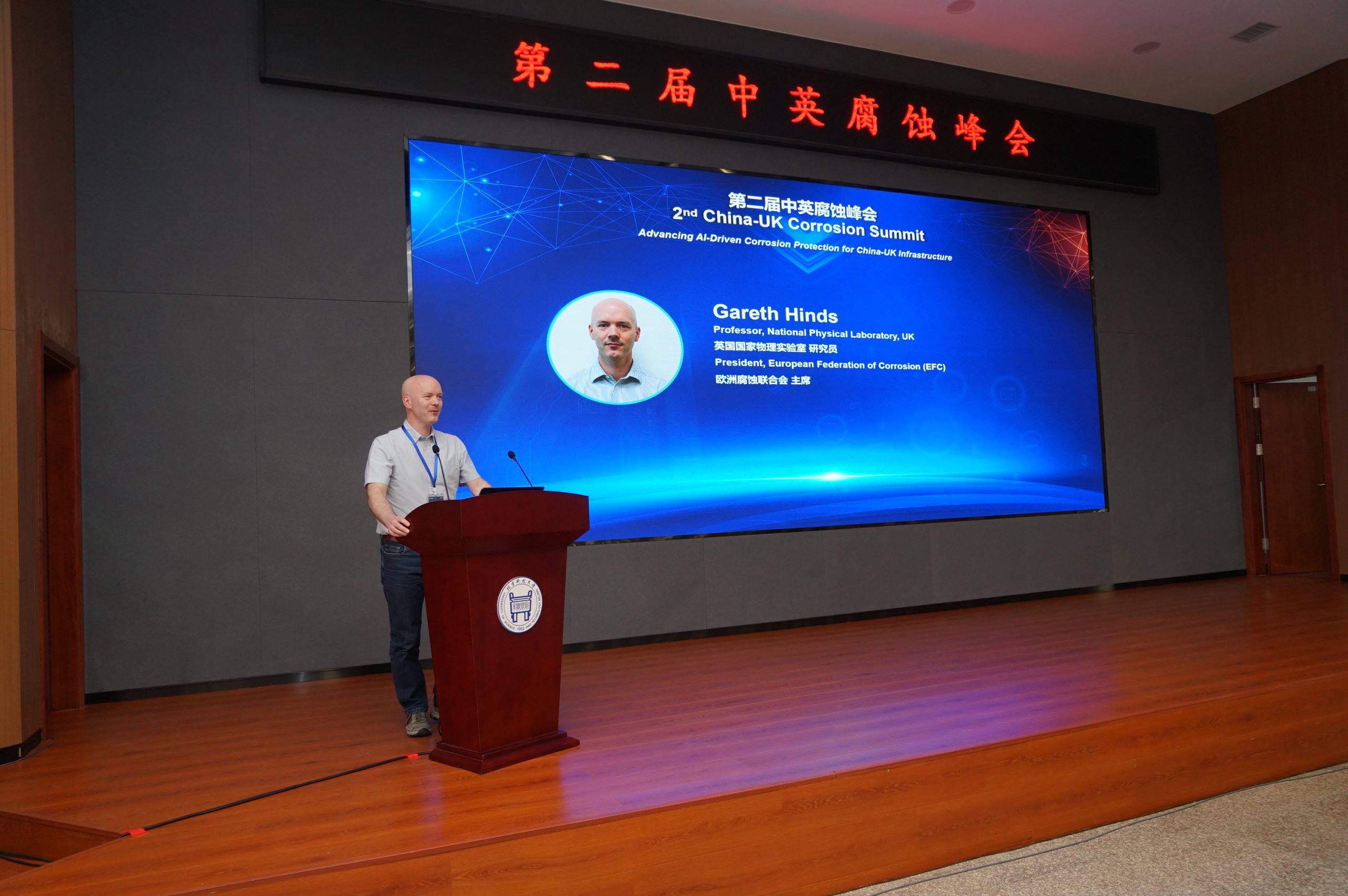
EFC President, Professor Gareth Hinds, Giving the Opening Speech
Technical Programme
The summit featured a comprehensive technical programme comprising 13 presentations, including 7 speakers from the UK and 6 from China. The presentations covered a wide range of topics aligned with the summit theme, with strong emphasis on the integration of artificial intelligence, data science, and advanced engineering approaches in corrosion management.
Dr Yunnan Gao started the technical programme by delivering a presentation introducing ICorr, outlining its role in professional development, certification, and international engagement.
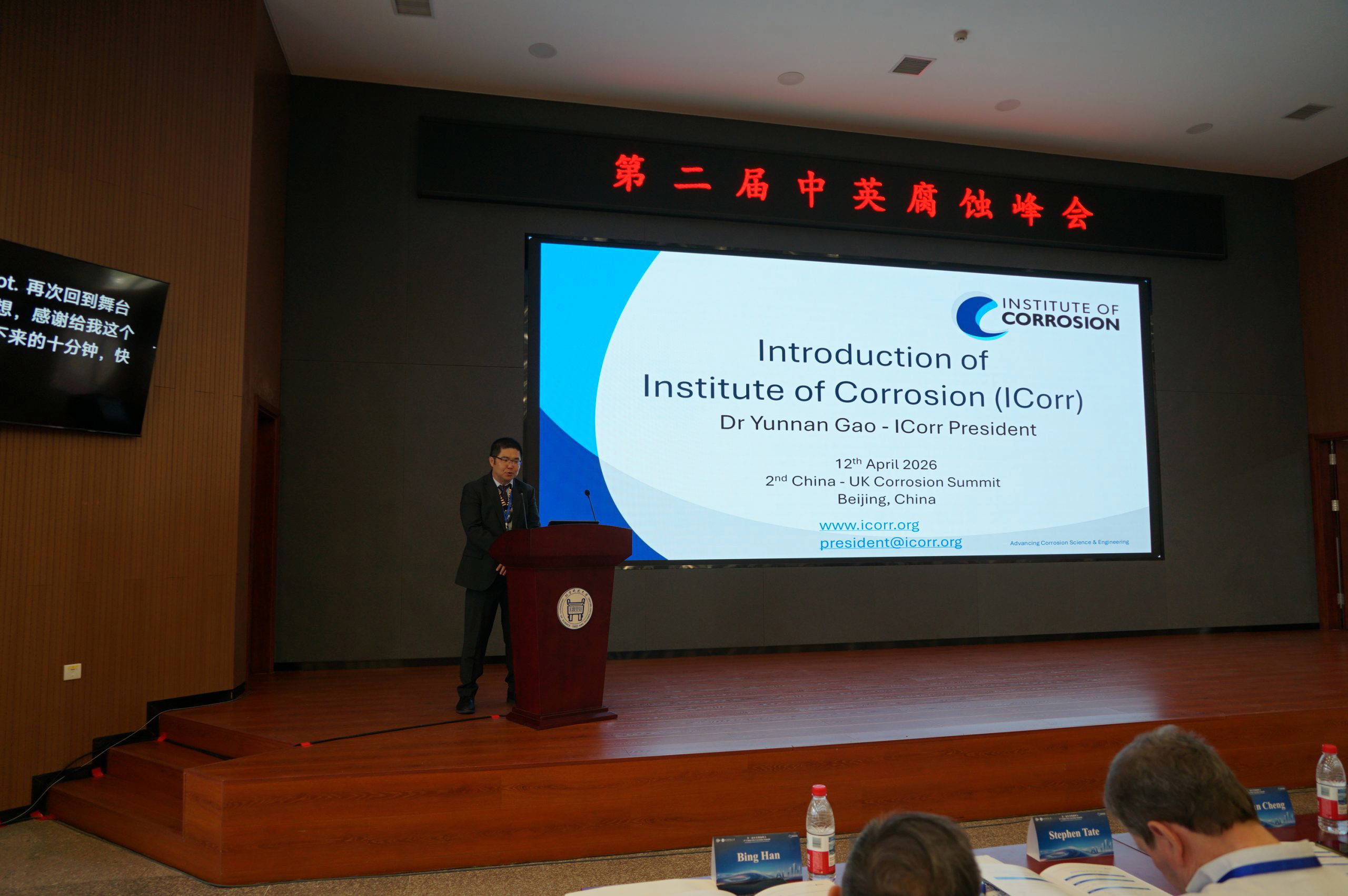
ICorr President, Dr Yunnan Gao, Giving a Presentation on ICorr Introduction
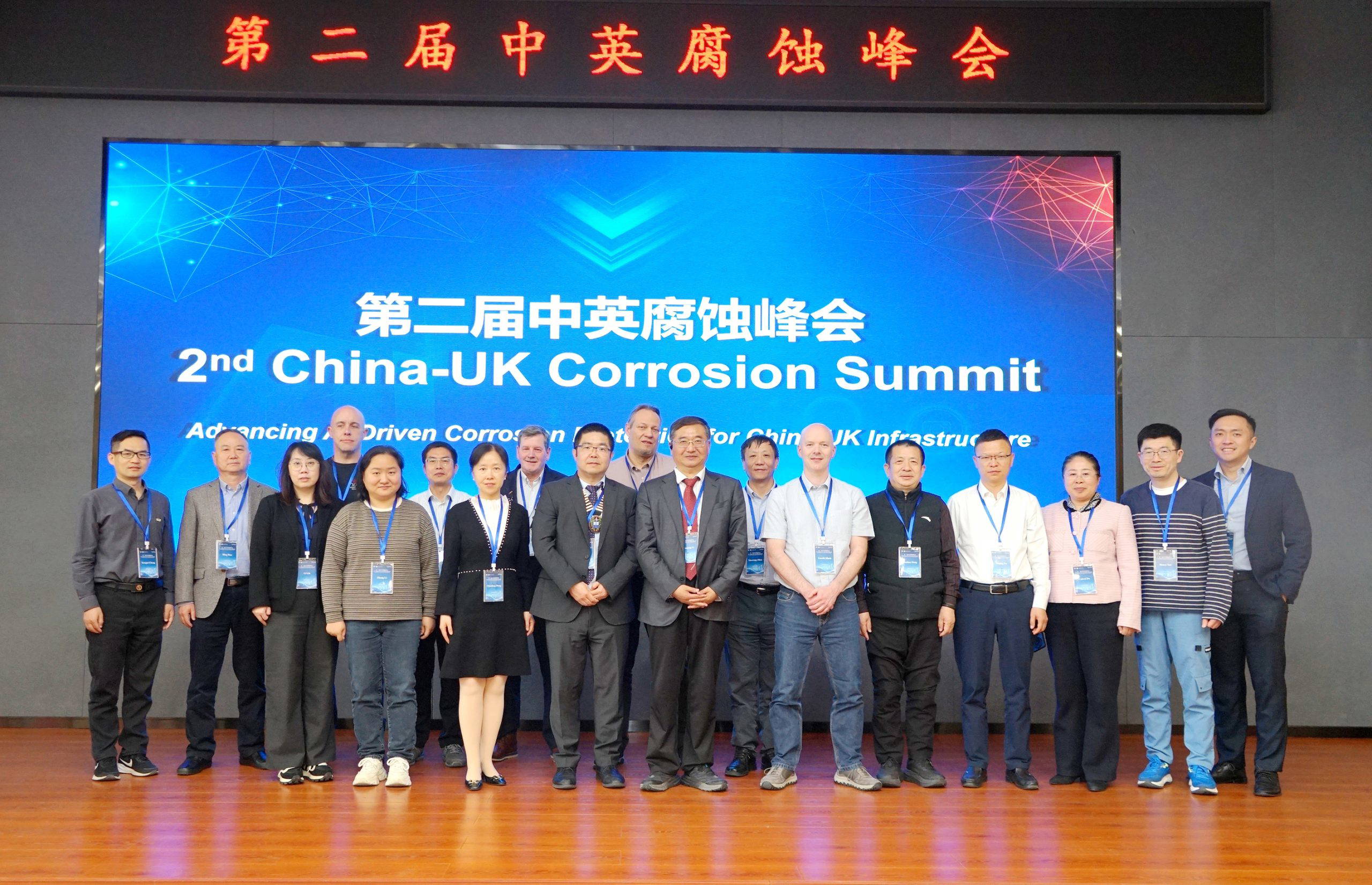
2nd China-UK Corrosion Summit All Speakers
UK Presentations
- Professor Gareth Hinds (National Physical Laboratory) Presented on corrosion challenges in electrochemical energy conversion and storage systems, highlighting degradation mechanisms in emerging technologies such as fuel cells and batteries. The work emphasised the importance of materials durability in enabling the transition to low-carbon energy systems.
- Professor Xiaorong Zhou (The University of Manchester) Introduced a novel large language model approach for interpreting electrochemical impedance spectroscopy data from organic coatings. The study demonstrated how AI tools can enhance data interpretation and improve coating performance evaluation.
- Dr Henry Tan (University of Aberdeen) Discussed uncertainty-informed digital twins for corrosion and integrity management. His work showed how integrating probabilistic modelling improves decision-making in safety-critical infrastructure.
- Professor Dirk Engelberg (The University of Manchester) Presented advances in high-throughput corrosion testing, referred to as “Corrosion Screening 4.0”. The approach enables rapid material evaluation and supports accelerated innovation in corrosion-resistant materials.
- Stephen Tate (Institute of Corrosion) Outlined the application of AI-assisted corrosion management in the UK gas transmission and distribution networks. The presentation demonstrated how digital tools are being implemented to enhance asset integrity and operational efficiency.
- Yanyi Lee (Inductosense) Explored corrosion monitoring technologies combined with machine learning techniques. The work highlighted real-time monitoring solutions and their role in predictive maintenance strategies.
- Michael Nixo (Nixon Cathodic Protection Services Ltd) Presented on impressed current cathodic protection systems for historic structures. The talk emphasised practical challenges and solutions in preserving heritage assets while maintaining structural integrity.
China Presentations
- Professor Chaofang Dong (University of Science and Technology Beijing) Presented a data-driven approach to the design and optimisation of coatings for titanium bipolar plates in PEM water electrolysers. The work demonstrated how computational methods can accelerate materials development.
- Professor Junhua Dong (Institute of Metal Research) Discussed first-principles studies on cathodic reduction mechanisms in atmospheric corrosion rust layers. The research provided fundamental insights into corrosion processes at the atomic level.
- Professor Likun Xu (Luoyang Ship Materials Research Institute) Explored interface damage mechanisms and performance improvement of titanium-based MMO anodes. The study focused on enhancing durability and performance in demanding environments.
- Professor Li Liu (Northeastern University) Presented research on deep-sea metal corrosion and protection technologies. The work addressed challenges associated with extreme marine environments and long-term material performance.
- Professor Anqing Fu (CNPC Tubular Goods Research Institute) Discussed corrosion issues in CCUS-EOR CO₂ injection and production tubing. The presentation highlighted mitigation strategies critical for supporting carbon capture and storage technologies.
- Dr Zhong Li (University of Science and Technology Beijing) Investigated microbiologically induced stress corrosion cracking of X80 steel under biofilm conditions. The research provided insights into the role of microbial activity in pipeline degradation.
Overall, the presentations demonstrated a shared commitment to advancing corrosion science through innovation, with particular focus on AI-enabled monitoring, predictive modelling, materials performance, and infrastructure integrity.
Recognition and Engagement
During the summit, Professor Xiaogang Li was recognised as the World Corrosion Organisation (WCO) Corrosion Awareness Award 2025 winner, acknowledging his outstanding global contributions.
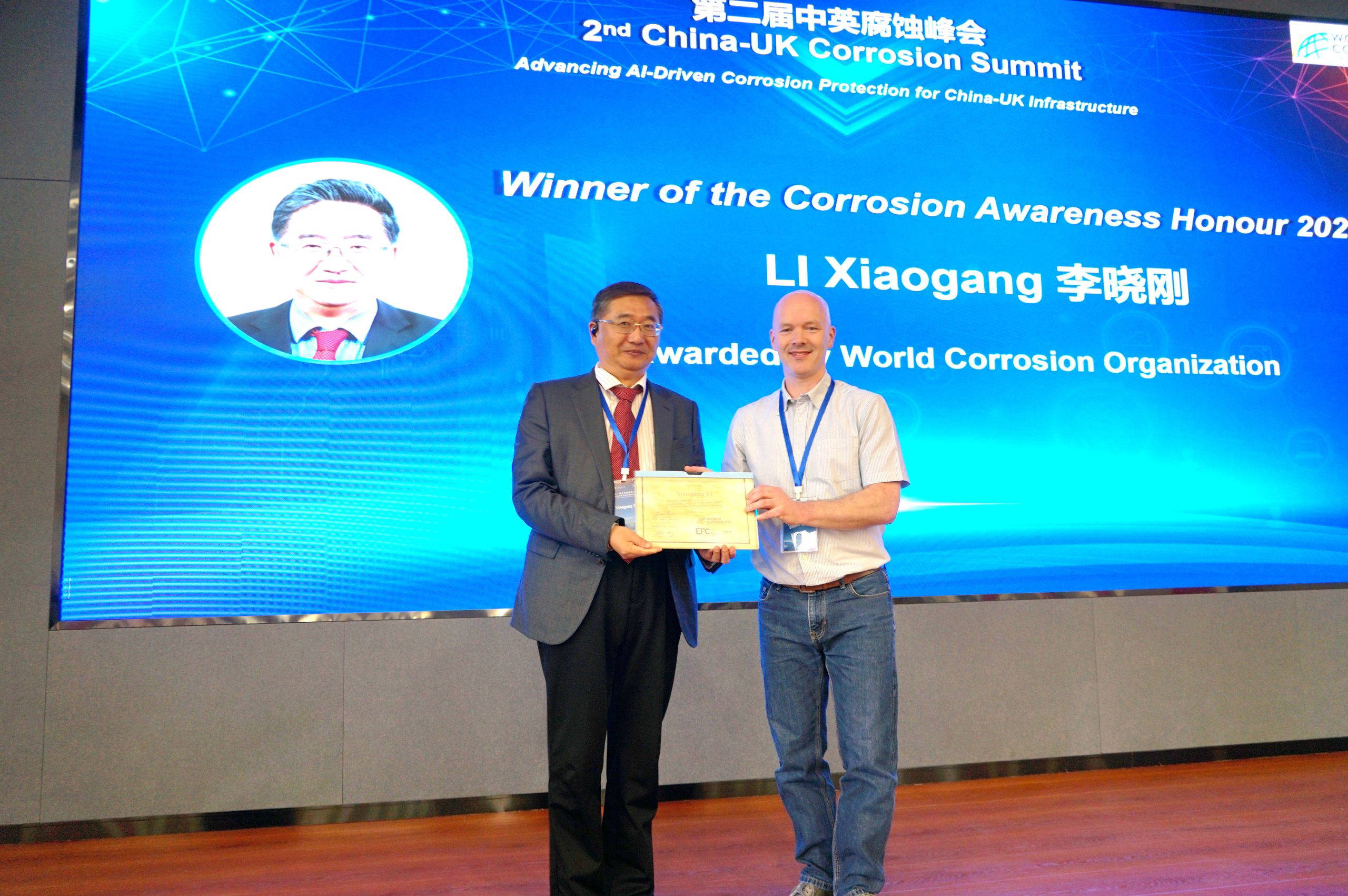
Photo 7: WCO Winner of the Corrosion Awareness 2025, Professor Xiaogang Li (Left)
A joint leaders’ photograph was taken featuring representatives from ICorr, CSCP, and EFC.
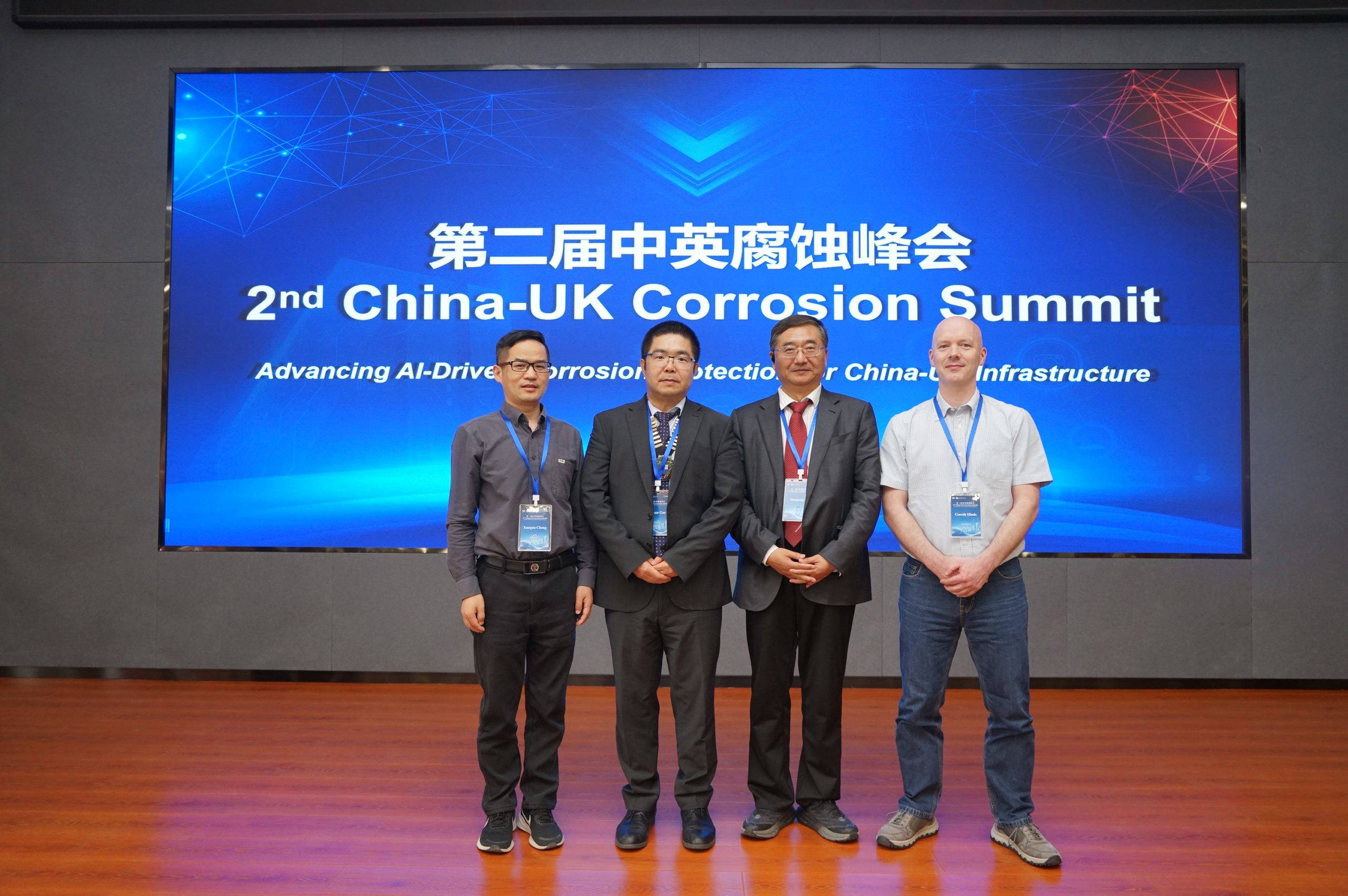
ICorr-CSCP-EFC Leaders. L-R: CSCP General Secretary – Professor Xuequn Cheng, ICorr President – Dr Yunnan Gao, CSCP President – Professor Xiaogang Li, EFC President – Professor Gareth Hinds
Laboratory Visits and Technical Exchange
On the second day, UK delegates visited research and teaching facilities at USTB, providing valuable insight into ongoing work in corrosion science and materials engineering.
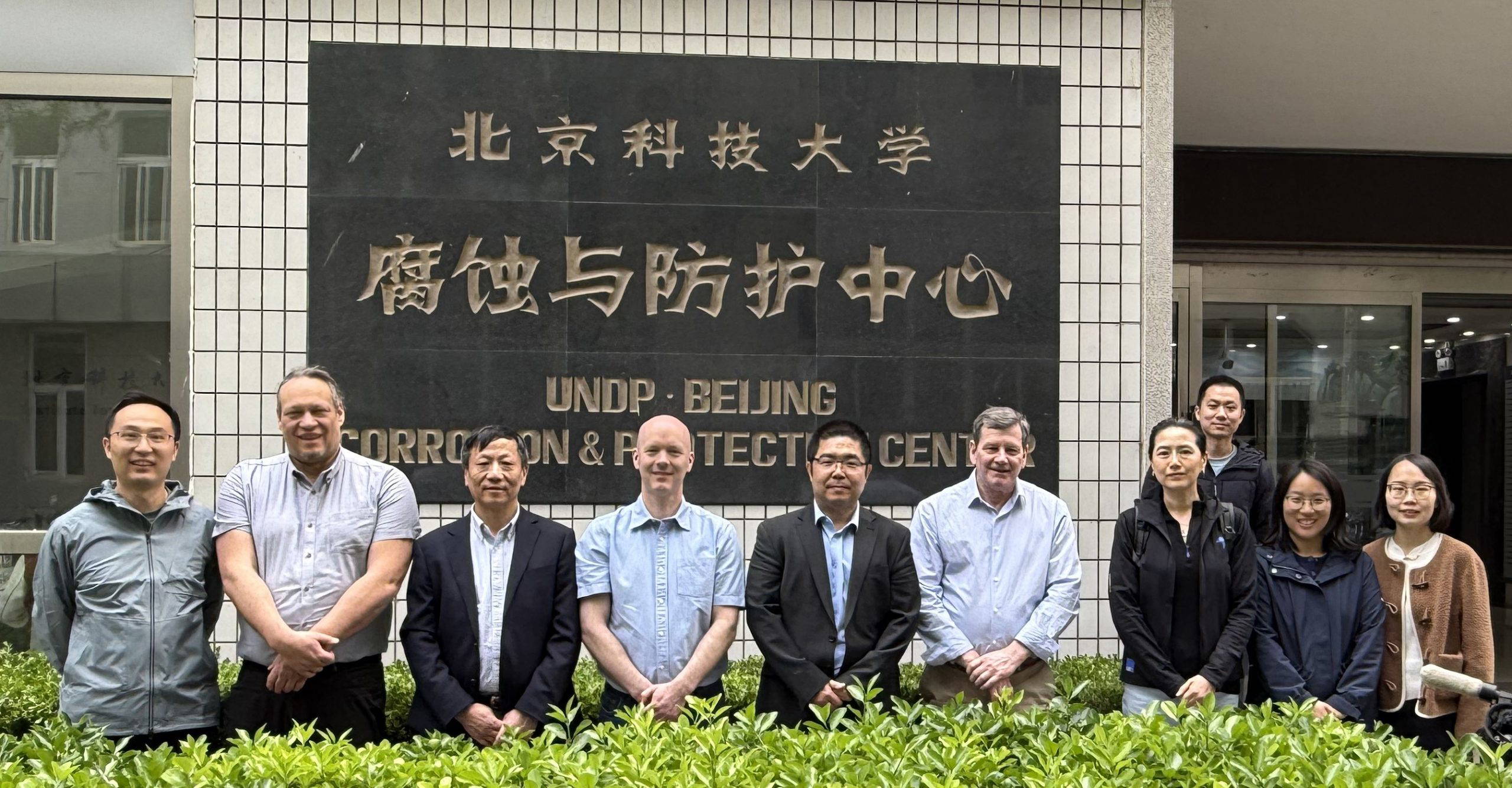
Visit the Corrosion Centre of the USTB by Some UK Delegates
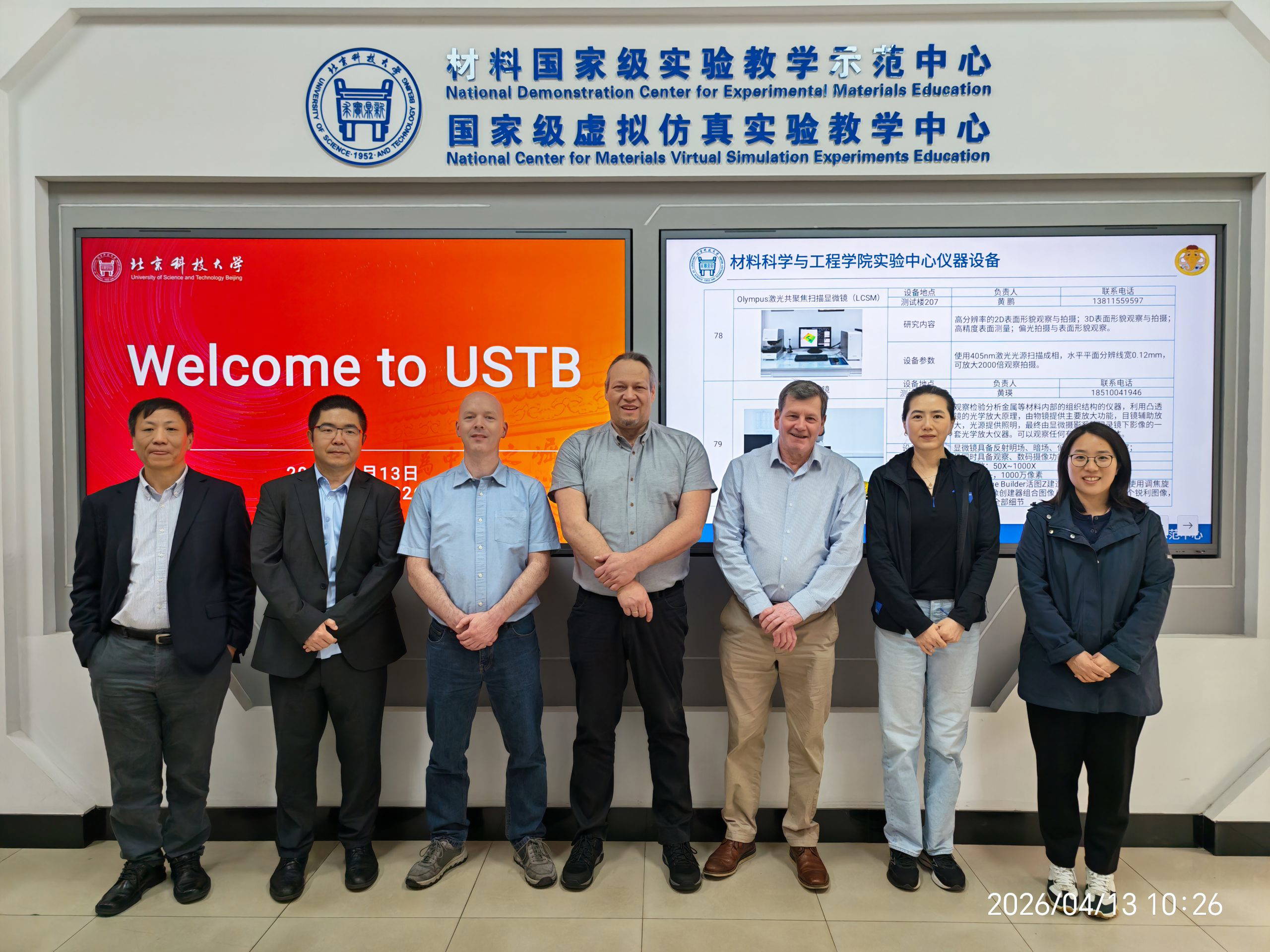
Visit the Materials Department of the USTB by Some UK Delegates
These visits enabled deeper technical exchange and strengthened institutional links.
Conclusion and Future Outlook
The 2nd China-UK Corrosion Summit successfully reinforced the growing partnership between ICorr and CSCP. The event demonstrated the importance of international collaboration in advancing corrosion science, particularly in the integration of AI and digital technologies.
Looking ahead, the next UK-China Corrosion Summit will be held in the UK in 2027, continuing this important bilateral initiative.
ICorr looks forward to further strengthening collaboration and engagement with the global corrosion community.