




ICorr launches its new Leadership Team

ICorr launches its new Leadership Team

The Institute of Corrosion (ICorr) is pleased to announce the election of Dr Anthony Setiadi as President and Dr Danny Burkle as Vice President. The appointments were confirmed at ICorr’s Annual General Meeting, held at Bushy House, National Physical Laboratory, Teddington, on 18 November 2026.

 Dr Anthony Setiadi, President

 Dr Anthony Setiadi has served as ICorr Vice President since 2024. His involvement with the Institute began in 2011, when he helped organise ICorr’s first Young Engineer Programme (YEP). He has continued to champion the programme and support its development over the past 15 years.

 His contributions to the Institute also include active involvement with the London Branch Committee and strong support for professional registration, particularly Chartered Engineer (CEng) registration through the Engineering Council.

Anthony holds a PhD in Materials from the University of Sheffield. He is a Chartered Engineer (CEng) and Fellow of the Institute of Corrosion (FICorr), with more than 20 years of experience across academia and industry. His sector experience includes nuclear, oil and gas, and offshore wind.

 He is currently Chief Consultant and Head of Specialist Engineering at Wood Thilsted, a renewable-energy consultancy based in London, UK.

 Dr Danny Burkle, Vice President

 Dr Danny Burkle has supported ICorr in several leadership roles, including as Chair of Young ICorr. He currently chairs the Corrosion Engineering Division (CED) and led the delivery of ICorr’s 2024 Young Engineer Programme. He has also supported technical events and initiatives that promote collaboration and knowledge sharing across the corrosion community.

 As CED Chair, Danny has led the organisation of its annual event, held in conjunction with World Corrosion Awareness Day. He has also supported the development of specialist working groups and stronger collaboration between industry and academia.

 Danny is a Fellow of ICorr and holds an MEng and PhD from the University of Leeds, specialising in corrosion science and engineering. He has extensive experience in corrosion and materials testing, particularly the evaluation of material performance and degradation in challenging operating environments.

 He is currently Director of Cortest, where he works with industrial and research organisations across multiple sectors to develop corrosion-testing capabilities and improve understanding of material performance and integrity.

 The Institute congratulates Anthony and Danny on their appointments and looks forward to their leadership over the coming term.

 Dr Yunnan Gao, Immediate Past President

At this important leadership transition, the Institute expresses its sincere appreciation to Dr Yunnan Gao for his outstanding service as ICorr President over the past two years. During his presidency, Yunnan provided energetic and internationally focused leadership, supporting the Institute’s continued growth in the UK and overseas.

He strengthened ICorr’s international profile and partnerships, including through the two UK-China Corrosion Summits and engagement across China, the Middle East, India and the United States. Plans are also being developed to broaden participation further in 2027, including involvement from France.

Based at bp in Sunbury-on-Thames, Yunnan brings extensive experience in materials, corrosion and asset integrity. He is a Chartered Engineer, Chartered Scientist and Fellow of ICorr, the Institute of Materials, Minerals & Mining, and the Chinese Society for Corrosion and Protection. He is also an AMPP Corrosion Specialist. In recognition of his professional leadership and contribution to the international corrosion community, he received the 2026 WCO Corrosion Awareness Honour.

As Immediate Past President, Yunnan will continue to support ICorr’s leadership and international development. His work provides a strong foundation for President Dr Anthony Setiadi and Vice President Dr Danny Burkle as they seek to strengthen the Institute’s value and impact for members in the UK and internationally.

The Institute also extends its sincere thanks to Stephen Tate, who has completed his term as Immediate Past President as part of ICorr’s leadership rotation. ICorr is grateful for his dedication, leadership and valuable service, both as Immediate Past President and as a Trustee.

 Stephen will remain involved with ICorr in other capacities, and the Institute looks forward to benefiting from his continuing experience and support.

 ICorr Leadership Team contact details

 Members are welcome to contact the Leadership Team with questions, feedback or matters they would like to discuss.

 The Leadership Team thanks members for their continued support and looks forward to working with them over the next two years.


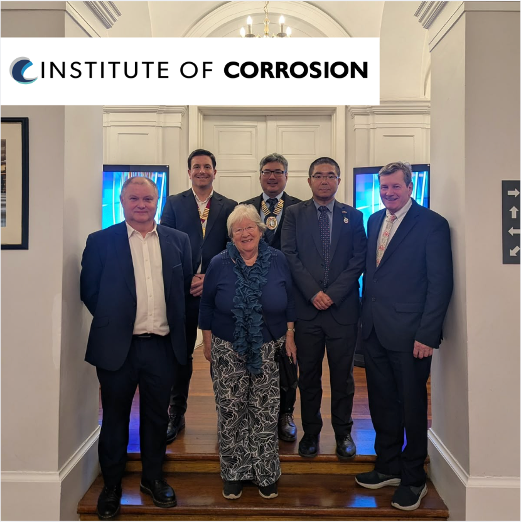
Photo, from left: George Winning, Danny Burkle (Vice President), Brenda Peters, Anthony Setiadi (President), Yunnan Gao (Immediate Past President) and Stephen Tate.

Leveraging Artificial Intelligence  for Corrosion Mapping and Asset  Integrity in Maritime Environments

Leveraging Artificial Intelligence for Corrosion Mapping and Asset Integrity in Maritime Environments

Meet the Author

Leroy Dias is a graduate engineer and holds the AMPP Protective Coating Specialist and FROSIO Paint Inspector certification. Over the past 30 years in the paint industry, he worked with multiple painting contractors, then transitioned to a coating manufacturer, Sigma Paints (PPG), in whose employ over 13 years he rose through the ranks from a ‘Coating Inspector’ to ‘Regional Technical Services Manager (Middle East)’. In 2014, he founded SteelCorr in Dubai, and as the CEO, he led the development and commercial launch of the “SteelCorr Digital Paint Report app” – an AI-powered paint maintenance solution.

Introduction:

The Scale of Maritime Asset Preservation The global economy relies fundamentally on transportation of goods by ships. As the most cost- effective mode of long-distance transport, ocean shipping accounts for approximately 90% of global trade volume. The international shipping fleet constitutes a primary pillar of global supply chain infrastructure, facilitating the transfer of raw materials, energy products, and manufactured goods across continents. Ships are high-value assets with capital expenditures typically ranging from USD 25 million for standard feeder vessels to well over USD 100 million for complex gas carriers, ultra-large container ships, and offshore assets. These high-value assets must remain operational for design lifespans typically extending from 20 to 25 years to yield expected financial returns.

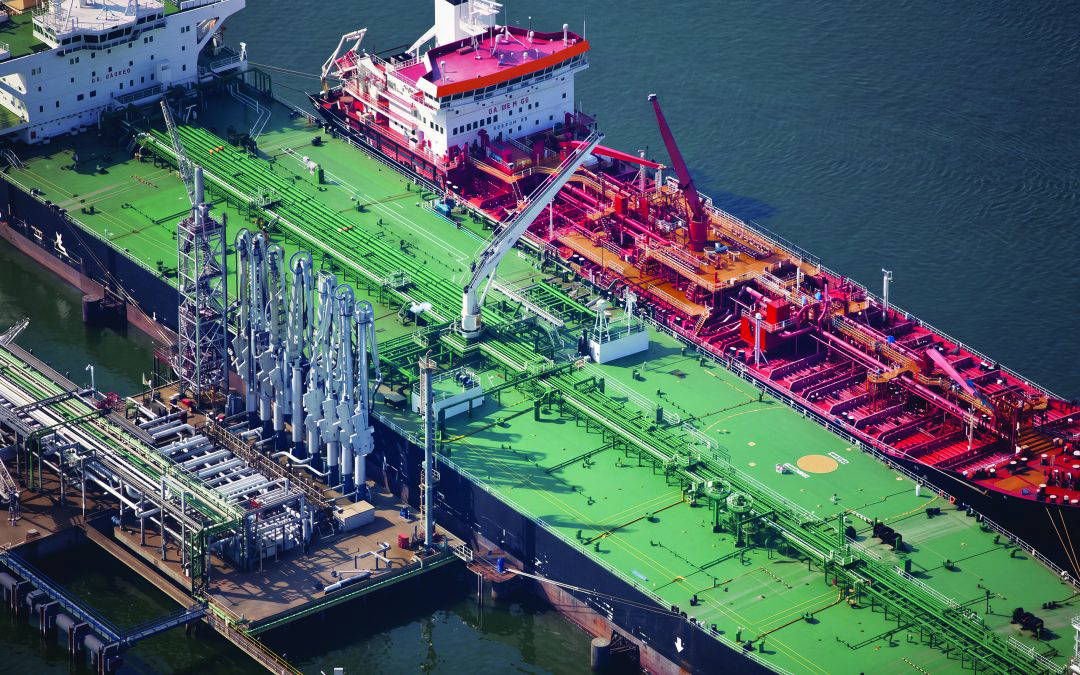
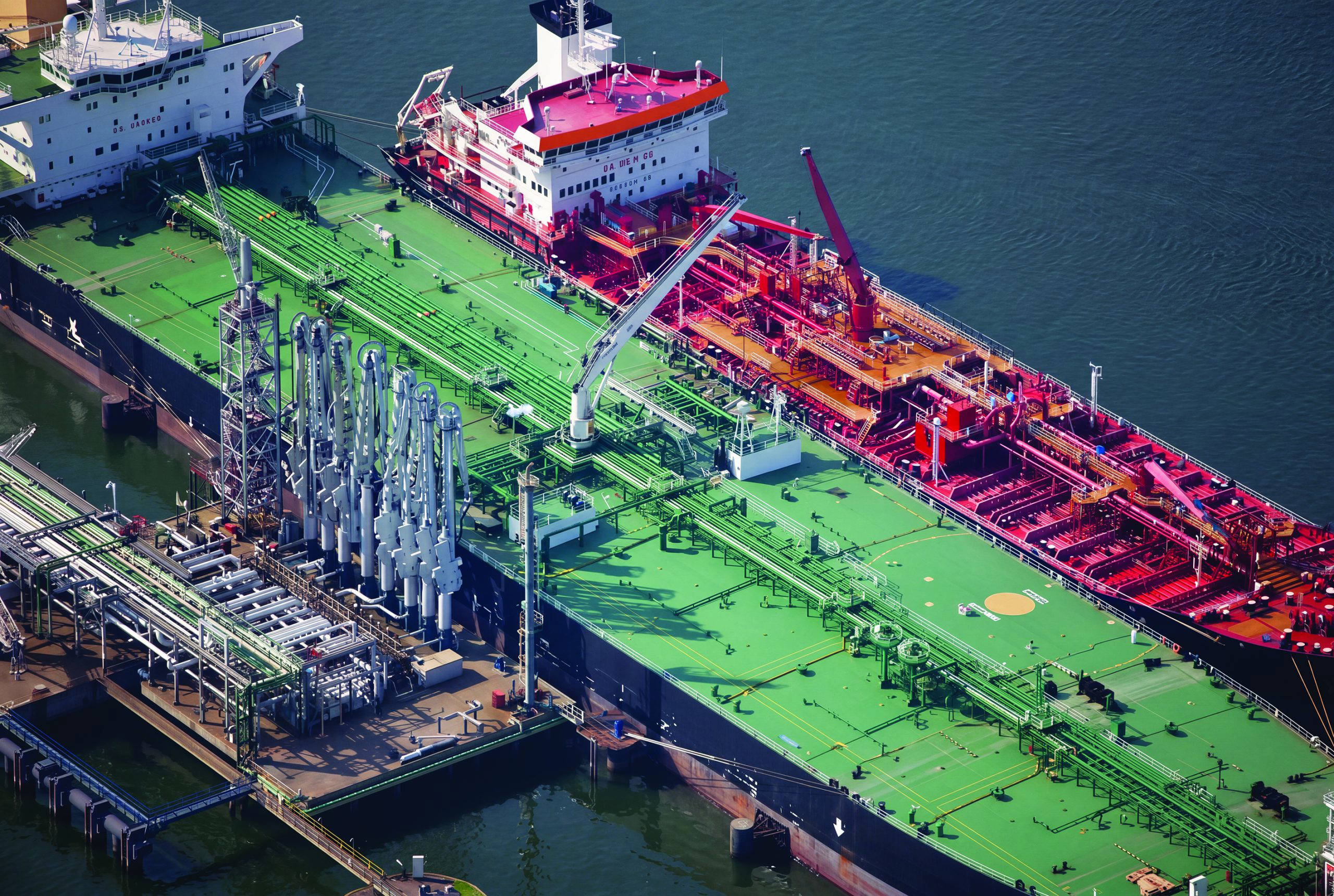
Figure 1: Ship Awaiting Inspection.

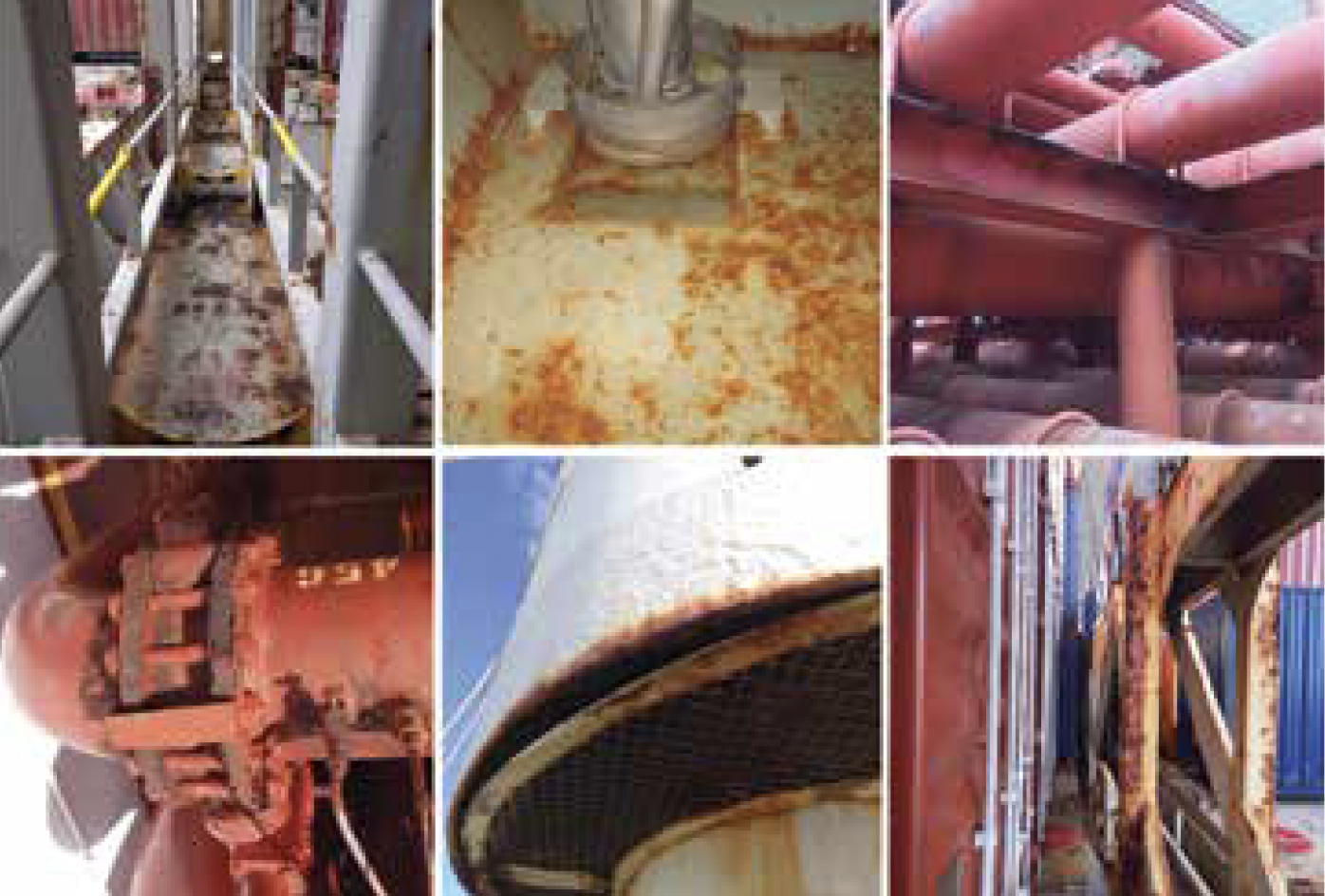
Throughout their service life, commercial ships operate in exceptionally aggressive marine environments. Constructed predominantly of welded carbon steel, hull structures and ballast tanks face relentless exposure to high-salinity seawater, elevated relative humidity, continuous ultraviolet radiation, dynamic mechanical fatigue, and significant thermal cycles. Without rigorous protection, steel oxidises rapidly, leading to structural thinning, loss of yield strength, and potential failure. Preserving structural integrity through high-performance protective coating systems and systematic surface maintenance is therefore a core operational and safety requirement.

Traditional corrosion management in the maritime sector has historically relied on periodic, reactive, or highly subjective inspection protocols. The standard process requires a certified coating inspector to physically access tanks, cargo holds, and weather decks. These manual assessments involve visual inspection and qualitative scoring, making the approach inherently labour-intensive, time- consuming, and subject to inter-inspector variance, often leading to inconsistent reporting and delayed maintenance decisions. Physical inspections present notable operational challenges and safety risks. Assessing ballast tanks or cargo holds requires enclosed space entry, extensive staging or rope access, and costly vessel downtime. Relying on periodic visual surveys often means active corrosion or coating degradation is detected only after significant surface area breakdown has occurred, escalating repair costs and dry dock duration.

Asset Ownership Structure

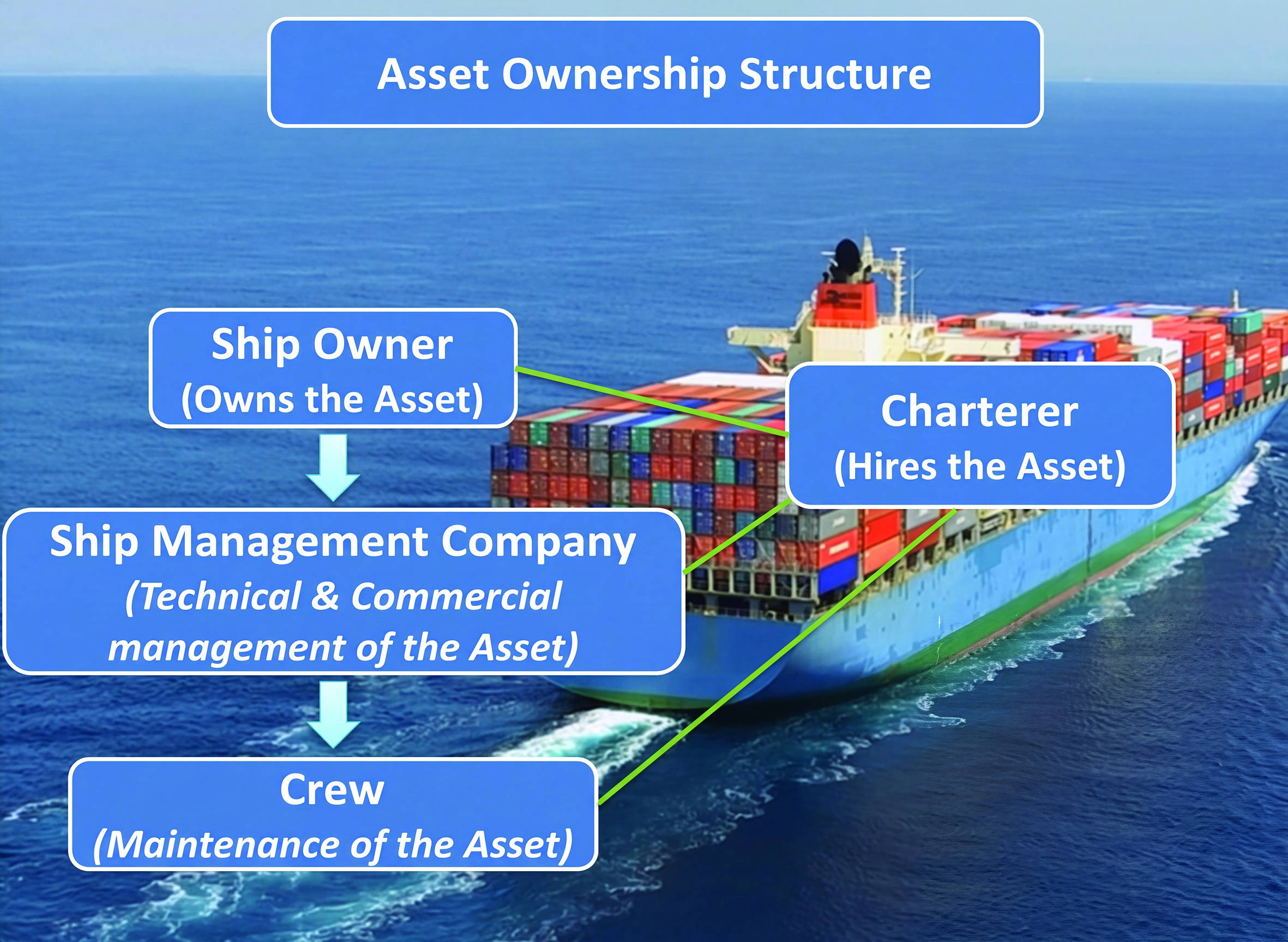
The ownership and operational structure of commercial maritime assets differ significantly from traditional industrial infrastructure. Vessel ownership frequently involves a complex web of stakeholders with distinct financial and operational priorities. A typical structure includes equity owners, charterers, commercial operators, and technical managers.

This division of responsibilities directly impacts asset maintenance strategies. While registered shipowners hold long-term residual value risk, day-to-day technical maintenance, class compliance, and crew management are routinely outsourced to technical management companies. The onboard crew, employed by the technical manager, executes routine surface preparation, localised touch-ups, and log reporting while at sea. This operational dynamic creates a clear requirement for standardised, objective reporting mechanisms. Technical managers require transparent data to justify maintenance budgets to shipowners, while charterers need verification of structural reliability to minimise off-hire risks. Implementing standardised digital corrosion mapping provides an unbiased, verifiable record of coating health across the asset life cycle, aligning the economic and operational interests of owners, managers, and charterers alike.

The Economic Case for Digital Preservation

The financial implications of corrosion in the maritime industry are extensive and directly impact the return on capital for vessel owners. Beyond the initial capital outlay of USD 25 million to over USD 100 million per vessel, continuous operational expenditure is required to maintain structural integrity. Onboard paint maintenance alone accounts for approximately USD 15,000 to USD 30,000 annually per vessel in consumable coatings and surface preparation tools.

Figure 2: Asset Ownership Structure

Beyond routine onboard touch-ups, commercial vessels must undergo mandatory dry-docking every 3 to 5 years to satisfy Classification Society rules and statutory survey requirements. During these drydocking periods, the underwater hull, sea chests, cargo holds, and water ballast tanks undergo extensive surface preparation and coating renewal. These scheduled dry-docking operations routinely cost hundreds of thousands of dollars in shipyard fees, surface blasting, and specialised marine paint applications. The financial risk escalates significantly when unscheduled maintenance causes operational downtime. Daily charter rates across commercial shipping segments range from USD 5,000 for smaller coastal vessels to upwards of USD 150,000 for specialised gas carriers and peak-market container ships. Any additional days spent in drydock due to unexpected steel repairs or extensive coating failures represent direct, unrecoverable revenue loss through off-hire status.

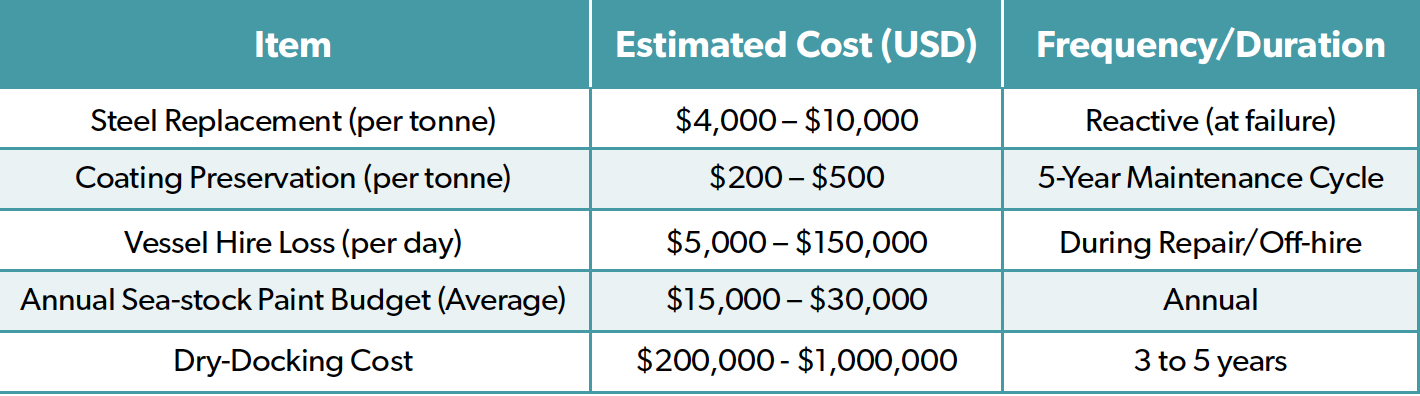
The cost-benefit ratio of proactive coating maintenance versus structural steel replacement is overwhelming. Replacing a single tonne of corroded marine steel typically costs between USD 4,000 and USD 10,000 when accounting for hot work permits, staging, steel plate procurement, labour and localised coating restoration. Steel renewal also carries a notable carbon footprint due to the energy-intensive manufacturing process of marine-grade steel. In contrast, preserving that same tonne of steel through scheduled coating maintenance over a five-year period costs an estimated USD 200 to USD 500.

Table 1 Provides a Clear Breakdown of These Relative Costs, Highlighting the Financial Necessity of Systematic Preservation.

Table 1: Comparison of Costs

As demonstrated in Table 1 above, the cost of failure far exceeds the investment required for prevention. Beyond direct steel renewal costs, advanced corrosion represents a critical risk to asset integrity and operational compliance. Classification Societies hold statutory authority to suspend or revoke seaworthiness certificates if structural wastage exceeds allowable tolerances. Furthermore, Port State Control (PSC) and Flag State authorities can detain non-compliant vessels, resulting in reputational damage, immediate loss of hire, and rejection by commercial charterers.


Figure 3: Ship Corrosion.

Challenges of Maritime Asset Management

Managing a commercial vessel presents operational challenges distinct from fixed land-based industrial infrastructure. The inherent mobility of ships, combined with the hostile environments in which they operate, creates significant barriers to conventional inspection methodologies.

Commercial vessels spend most of their operational life at sea, making brief port calls optimised solely for rapid cargo loading and discharge. These tight turnaround windows leave qualified coating inspectors with minimal time to gain access, conduct comprehensive visual surveys, and compile detailed degradation reports.

A further operational challenge lies in the primary responsibilities and rotation schedules of the onboard crew. Seafarers prioritise
safe navigation, machinery operation, and cargo handling. Detailed manual reporting on coating conditions is frequently viewed as a secondary administrative burden.

This issue is compounded by regular crew turnover. Seafarers rotating off a vessel at the end of a contract rarely return to the same ship for their next assignment. This continuous rotation fragments record-keeping and leads to a lack of long-term accountability for ongoing surface maintenance.

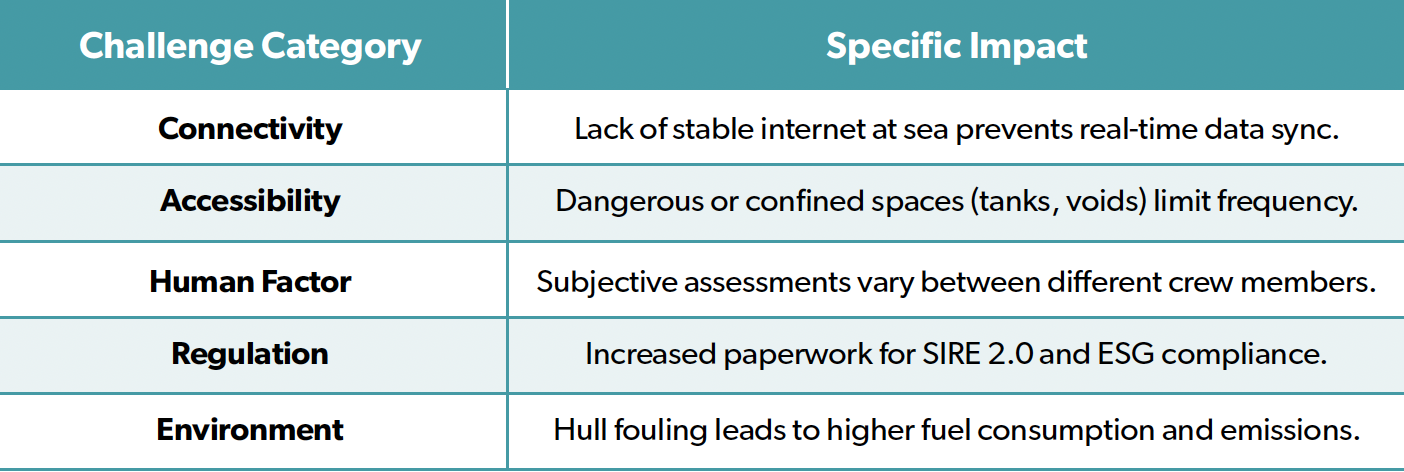
Finally, digital infrastructure at sea remains constrained. While satellite connectivity is improving, high-bandwidth internet access while transiting open ocean is often limited, intermittent, or expensive.

Any mobile or digital inspection framework deployed on board must function completely offline, storing capture data locally and synchronising seamlessly once connectivity is established.

Figure 4: Offline Mode.

Table 2 summarises the primary challenges associated with shipboard inspections.

Table 2: Operational Challenges in Maritime Corrosion Inspection.

AI-Powered Mapping and Assessment

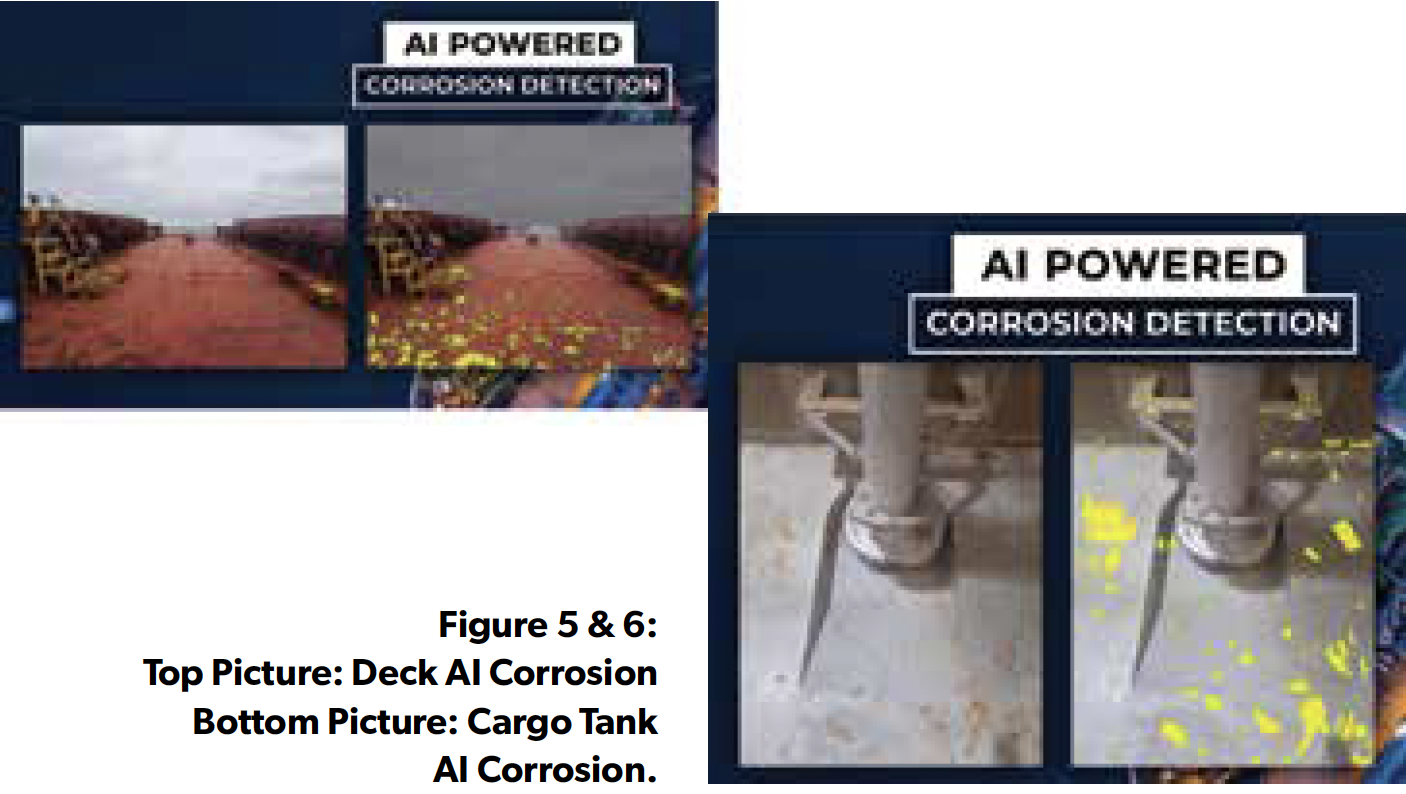
The foundation of modern digital corrosion management rests on artificial intelligence processing high-resolution visual data. Manual corrosion assessment is inherently subjective and prone to human error; one inspector may categorise a corroded plate as moderate degradation, while another classifies the same area as severe. AI eliminates this inter-inspector variability by applying standardised algorithmic models to visual inputs, establishing an objective baseline across all evaluations.

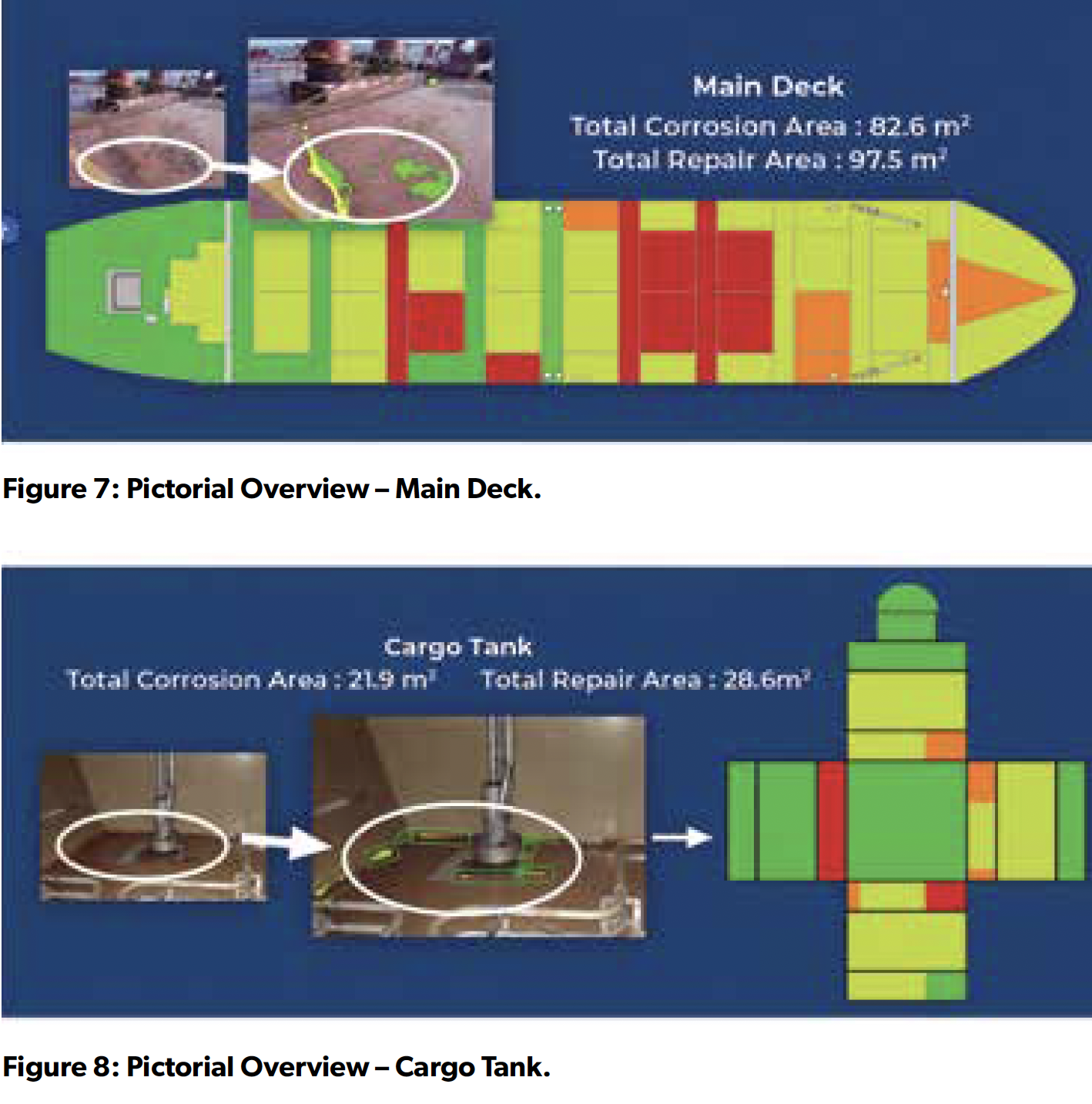
AI systems analyse hundreds of images in a fraction of the time required for a human inspector to complete a manual survey. These models are trained on extensive marine corrosion datasets allowing them to detect rust, paint breakdown, blistering, and structural anomalies across varying lighting conditions, surface geometries, and background noise. This high-speed processing enables the automatic compilation of a detailed, vessel-wide corrosion map. A holistic approach relies on defining distinct structural zones across the ship, including weather decks, water ballast tanks, cargo holds, the superstructure, and the underwater hull. Onboard crew members can capture imagery using standard mobile devices during routine watchkeeping or safety rounds and upload the data to an AI processing engine, which generates immediate, localised condition assessments.

The Role of Computer Vision

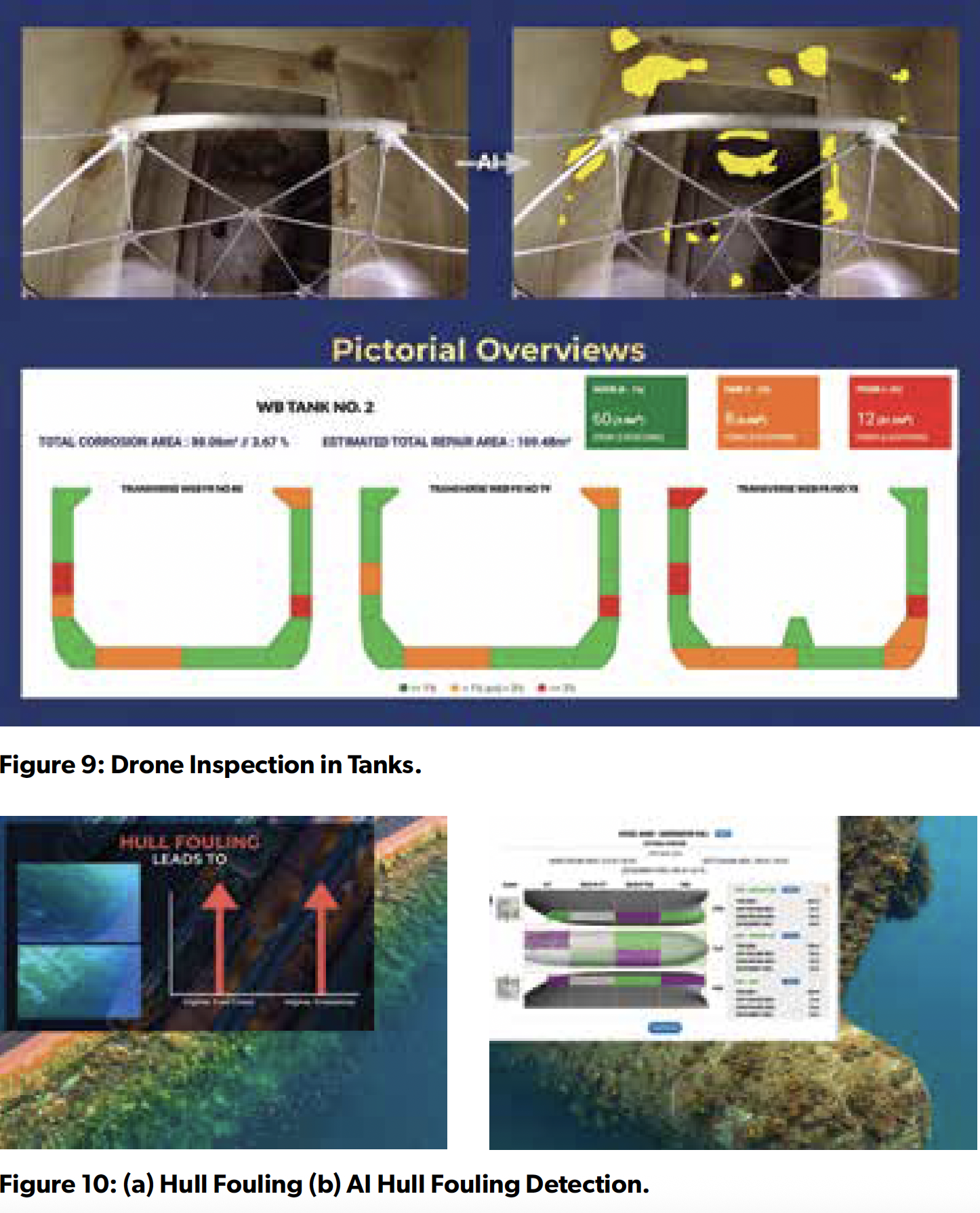
Computer vision models are utilised to detect corrosion, fouling and anomalies from the photos uploaded. Quantitative evaluation is essential for determining the reliability of inspection approaches, and AI provides this quantification by calculating the exact percentage of a surface area affected by corrosion. This data is compiled into a pictorial overview to provide the stakeholders with an immediate understanding of the vessel condition without requiring superintendents or class surveyors to review hundreds of unsorted photographs. This traceability is vital for benchmarking performance across a fleet.

Integration with Robotics and Drones

The physical challenges and safety risks associated with inspecting enclosed or elevated shipboard structures are increasingly mitigated through autonomous hardware, such as Unmanned Aerial Vehicles (UAVs/drones) and Remotely Operated Vehicles (ROVs). Modern AI evaluation software integrates directly with photos captured from these robotic platforms. In ballast tanks and cargo holds, drones navigate complex internal spaces to capture images of overhead stiffeners, under-deck plating, and high-placed welds. This eliminates the need for working at height, rope access, or erecting costly scaffolding. For the underwater hull, ROVs can map biofouling. Hull fouling has serious consequences beyond structural integrity; it increases drag, leading to higher fuel costs and carbon emissions. Accurate AI mapping of fouling allows owners to optimise cleaning schedules, thereby meeting Environmental, Social, and Governance (ESG) goals, saving fuel costs and avoiding penalties for excessive emissions.

For underwater hull inspections, ROVs capture subsea images to map fouling and detachment. Beyond structural considerations, fouling increases drag, raising fuel consumption and greenhouse gas emissions. Precise AI-driven mapping of hull fouling allows ship managers to transition from fixed cleaning schedules to condition-based hull cleaning, optimising vessel hydrodynamics, reducing fuel costs, and supporting fleet compliance with stringent ESG targets and international carbon intensity regulations.

Limitations of AI Assisted Robotics

While AI-driven mobile devices, drones, and ROVs significantly improve inspection coverage, certain shipboard environments remain inaccessible or restricted. Internal structural obstructions—such as tight double-bottom tanks, complex stiffener matrixes, behind pipe runs, and narrow void spaces—physically block drone flight paths and camera sightlines. Furthermore, laden cargo tanks on oil or gas tankers prohibit standard mobile phones and non-explosion-proof electronics due to explosion risks. Technical managers must rely
on traditional visual inspections using specialised intrinsically safe lighting, temporary staging and rope access, etc. once spaces are fully gas-freed and certified safe for entry. The inspection process relies on a hybrid execution model rather than handheld devices alone. Onboard crew members utilise handheld mobile phones and tablets for accessible, larger open-air environments like weather decks, superstructures, and accessible cargo holds during routine operations. Drones equipped with high-resolution cameras and sensors are deployed specifically for elevated, dangerous, or enclosed spaces—such as deep cargo holds, ballast tank structures, and vertical bulkheads—eliminating the safety risks of working at height and limiting work in confined spaces. By digitising imagery from both handheld devices and drone feeds within a central AI processing platform, corrosion and repair areas can be calculated over multiple surveys. This allows technical managers to track degradation rates over time, predict localised coating failure, and optimise predictive maintenance schedules across the asset life cycle.

Data Security and Infrastructure

Because maritime operational data includes commercially sensitive asset condition reports, drydocking schedules, and structural compliance metrics, robust cybersecurity architecture is paramount. Modern digital preservation platforms rely on enterprise-grade cloud hosting featuring multi-factor authentication (MFA), end-to-end data encryption in transit and at rest, and strict role-based access control (RBAC). This ensures that sensitive asset health data is accessible only to authorised personnel, protecting vessel owners from data breaches and corporate espionage.

Transitioning from fragmented, paper-based logs to a centralised digital database establishes a secure, continuous historical ledger
of vessel maintenance. By cross-referencing paint procurement, surface preparation logs, and localised coating performance against actual visual degradation over multiple years, vessel owners can quantitatively evaluate the long-term efficacy of competing paint formulations. Furthermore, this historical tracking provides an objective benchmark to evaluate the surface preparation standards and application quality delivered by different repair shipyards during major dry dockings.

Approval of Certification Bodies

While official approvals for AI coating inspections are still developing across classification societies like DNV, BV and LR, data-driven tools are gaining strong industry support. SteelCorr’s Digital Paint Report (DPR)© app is featured on the Veracity by DNV marketplace: DNV. veracity.com/digital-paint-report-coat-cost-optimisation-monitoring Identifying its reliability in delivering organised vessel inspection data.

Impact on Crew Efficiency

A major operational benefit of deploying AI-driven mobile tools is the immediate reduction in administrative burden placed on onboard personnel. Traditional inspection workflows require crew members to manually capture photos, transfer files to onboard workstations, format word-processor reports, and more. This process is inherently tedious, inefficient, and prone to minimal compliance. Mobile-native applications with full offline functionality streamline this entire pipeline, enabling seafarers to log structural zones, capture images on site, and auto-generate standardised reports directly from the deck or tank.

Field feedback from vessel crews indicates a marked increase in job satisfaction when administrative overhead is minimised. Simplified reporting tools empower seafarers to efficiently document routine surface preparation and paint maintenance, creating a clear visual record of their daily work for onshore management. By eliminating tedious paperwork, data collection becomes more frequent, consistent, and reliable, directly improving overall maintenance outcomes and long-term asset health.

Conclusion

The maritime industry is at a point where traditional maintenance must meet digital innovation. AI-powered corrosion mapping offers a scalable, objective, and cost-effective solution to the problem of rust. By reducing the reliance on subjective manual inspections and providing actionable insights through computer vision, ship owners can extend the life of their assets.

The integration of mobile technology, drone compatibility, and secure cloud storage ensures that corrosion management is no longer a reactive necessity but a proactive strategic advantage. As regulations like SIRE 2.0 (the International Marine Forum’s (OCIMF) digitised, risk-based vessel inspection regime for the global tanker industry) and RISQ 3.2 (RightShip Inspection Ship Questionnaire) increase the demand for transparent reporting, digital tools will become indispensable for maintaining the integrity and profitability of the global fleet. Below is the image of the device used by one of our customers – i.safe MOBILE IS930.1 – and a drone used for tank inspections.

Figure 11: a. Tablets and b. Drone. 

References

1.https://hafnia.com/news/hafnia-partners-with-artificial-intelligence-partner-steelcorr-to-monitor-vessel-effective-paint-maintenance/

2. https://ardmoreshipping.com/ardmore-shipping-deploys-steelcorr-ai-solution-to-enhance-vessel-corrosion-monitoring-and-paint-maintenance/

3. https://smartmaritimenetwork.com/2026/02/18/jome-engineering-3dts-and-steelcorr-partner-on-drone-tank-inspections/

4. https://store.veracity.com/digital-paint-report-coat-cost-optimization-monitoring

5. https://www.sciencedirect.com/science/article/abs/pii/S1350630723006891

6. https://www.sciencedirect.com/science/article/pii/S2666845925000170

7. https://play.google.com/store/apps/details?id=com.steelcorr. digitalpaintreport&hl=en

8. https://www.mdpi.com/2073-4360/17/11/1548 9. https://gulfnews.com/business/corporate-news/hafnia-tankers-partners-with-dubai-based-ai-

High-Temperature Degradation in Chlorine and Sulphur-Rich Environments: Mechanisms and Mitigation Using ArcSprayed Coatings

High-Temperature Degradation in Chlorine and Sulphur-Rich Environments: Mechanisms and Mitigation Using ArcSprayed Coatings

Ahmad Usman, Group Innovation R&D Engineer, Welding Alloys Group UK

Meet The Author

Ahmad Usman is a Group Innovation R&D Engineer at Welding Alloys Group UK, specialising in high-temperature material degradation in demanding industrial environments. He works with a multidisciplinary team to design alloys that resist corrosion and wear in heavy industry applications. His expertise in thermal spray coatings enables him to address complex challenges through practical, performance-driven solutions. His work focuses on real-world case studies to develop materials that protect critical components and extend service life under extreme conditions.

Ahmad is part of a global research and innovation team committed to technical excellence and supporting industrial partners in advancing their products and services. His research interests focus on the future performance of materials in increasingly aggressive operating environments.

Introduction

Material degradation at high temperature remains a critical challenge across a wide range of industrial sectors, including chemical processing, aerospace, gas turbines, energy generation, refining and petrochemical processing, and metallurgical operations (Spiegel, Zahs, and Grabke 2003). Components operating under such conditions are exposed to reactive gaseous and condensed species, leading to reduced operational efficiency, increased maintenance demands, and ultimately premature component failure. These challenges carry significant economic

and operational consequences, underscoring the importance of understanding and mitigating high-temperature degradation processes (Khantisopon et al. 2022).

The nature and severity of degradation are strongly influenced by the local chemical environment, which is governed by factors such as process conditions, feedstock composition, and deposit chemistry (Corrosion Basics Understanding the Basic Principles and Causes of Corrosion

n.d.). In oxygen-rich environments, protective oxide scales may form and provide a degree of resistance; however, under oxygen-deficient conditions, the stability of such layers is compromised, increasing susceptibility to accelerated attack. The presence of sulphur- and chlorine-containing species further complicates these processes by introducing additional degradation pathways (Floreen and Kane n.d.). Sulphur-rich environments typically promote sulphide formation, while chlorine-containing species can induce active oxidation through the formation and volatilisation of metal chlorides, resulting in rapid material loss (Sadeghimeresht et al. 2018; Usman et al. 2025).

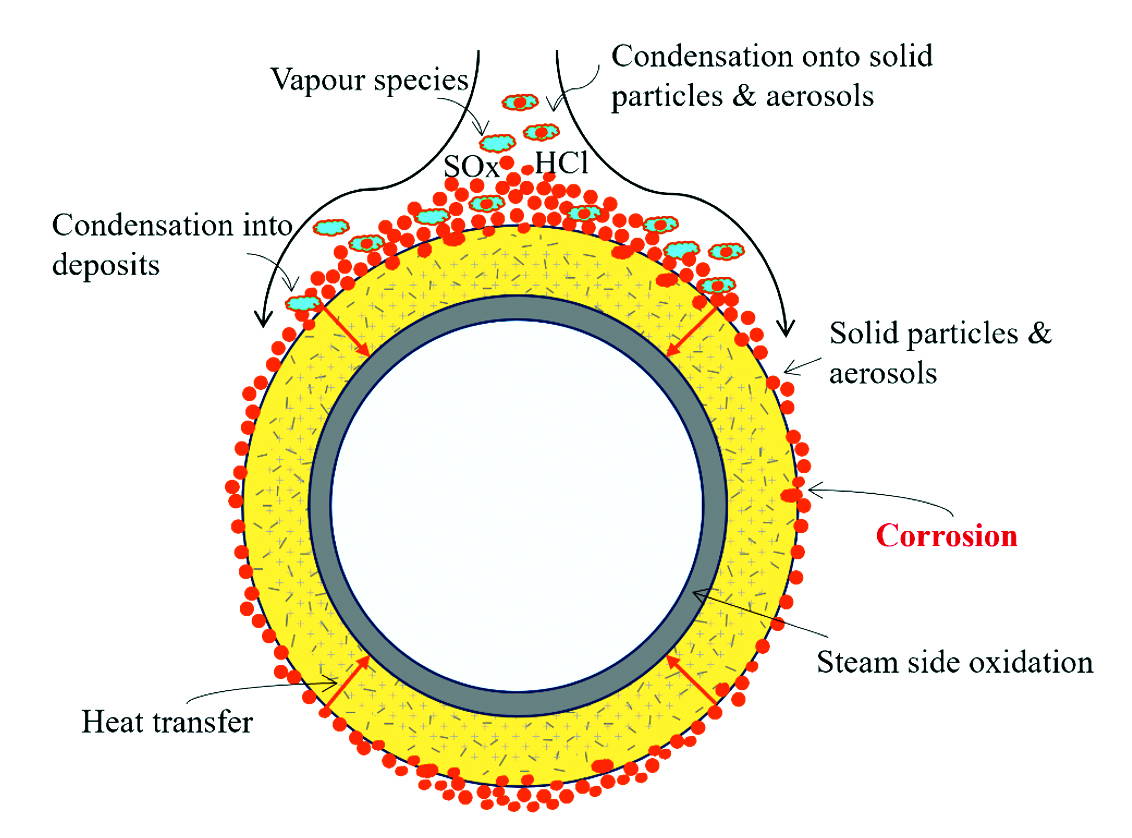
In practical systems, these mechanisms rarely occur in isolation. Instead, they evolve dynamically in response to local variatio in temperature, gas composition, and deposit accumulation, as shown in Figure 1 (Usman et al. 20 As a result, degradation behaviour is often highly heterogeneous, even within a single system, making material selection and lifetime prediction particularly challenging.

Figure 1: Schematic Representation of Corrosion Attack on a Metal Surface.

Although considerable research has been conducted in this field, many studies are based on simplified or controlled environments that do not fully capture the complexity of real operating conditions. Industrial systems exhibit significant spatial and temporal variability, leading to differences in dominant corrosion mechanisms across components.  Addressing this gap requires studies that integrate realworld observations with controlled experimental validation.

The present study adopts this approach by examining three industrial case studies representing distinct chemical environments. The objective is to identify the dominant degradation mechanisms under different conditions and to establish a mechanistic understanding based on post-exposure characterisation of materials and deposits. Alongside this analysis, the study evaluates the performance of thermally sprayed coatings as a mitigation strategy. These coatings offer a flexible and cost-efficient solution for protecting large components, particularly where in situ application is required (Usman et al. 2025). Among the available techniques, arc-sprayed coatings provide a practical balance between performance and deployability. This work therefore investigates the relationship between environmental conditions, degradation behaviour, and coating performance, with the aim of informing the design and selection of protective systems for high-temperature applications.

Industrial Case Studies

Three industrial case studies were selected to examine material degradation under distinct high temperature operating environments. Each case represents a different chemical regime, characterised by variations in deposit composition and gas-phase species, resulting in differences in dominant degradation mechanisms. Material samples were obtained from components exposed to high temperature service conditions. Post-exposure characterisation was carried out to assess both substrate degradation and deposit chemistry. Elemental analysis using scanning electron microscopy coupled with energy-dispersive X-ray spectroscopy (SEM-EDX) enabled identification of key reactive species and their distribution within the deposits and affected material regions.

Case Study 1: Chlorine-Dominated Environment

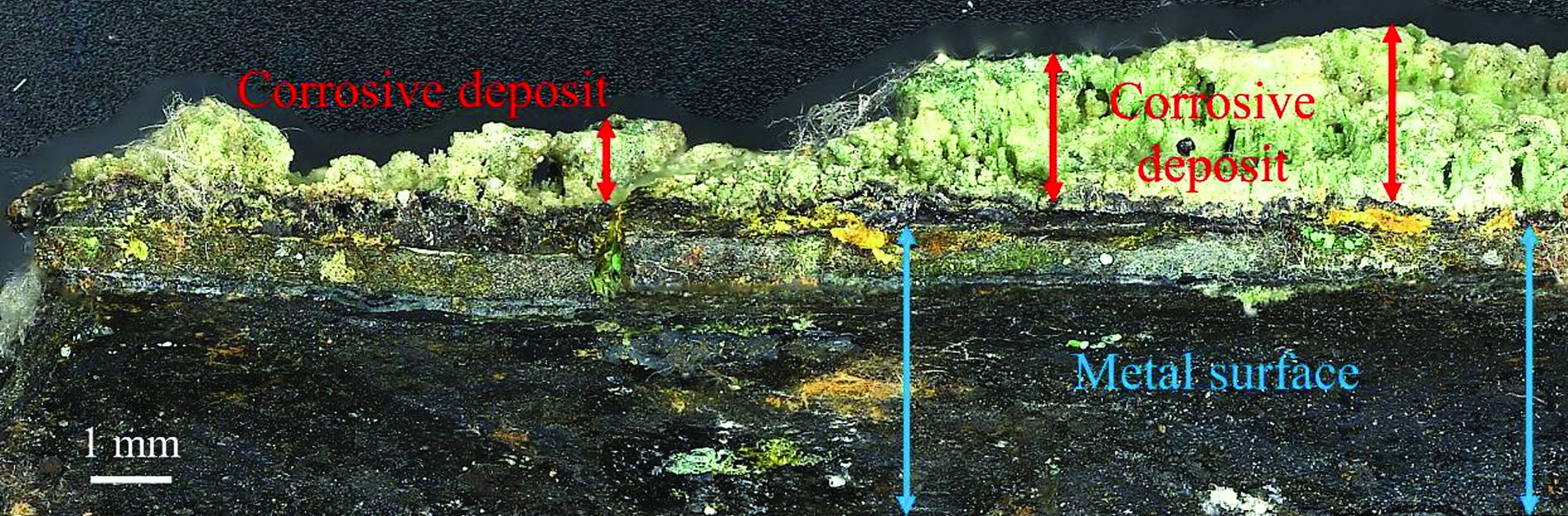
This environment is characterised by solid-fuel combustion conditions operating at relatively low temperatures (500-600 °C), which favour the condensation and accumulation of highly corrosive molten salt deposits on exposed component surfaces, as shown in Figure 2. Under these conditions, deposited species remain stable in the condensed phase, enabling sustained interaction with the underlying material.

Figure 2: Deposit and Accumulation of Corrosive Deposits on the Exposed Component Surface.

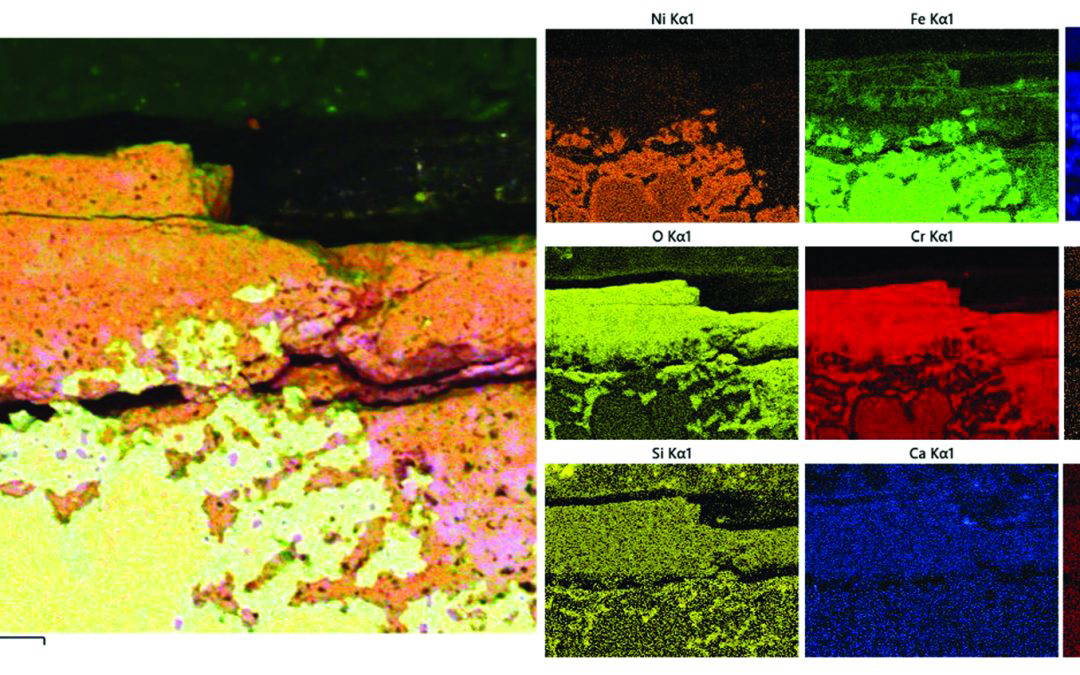
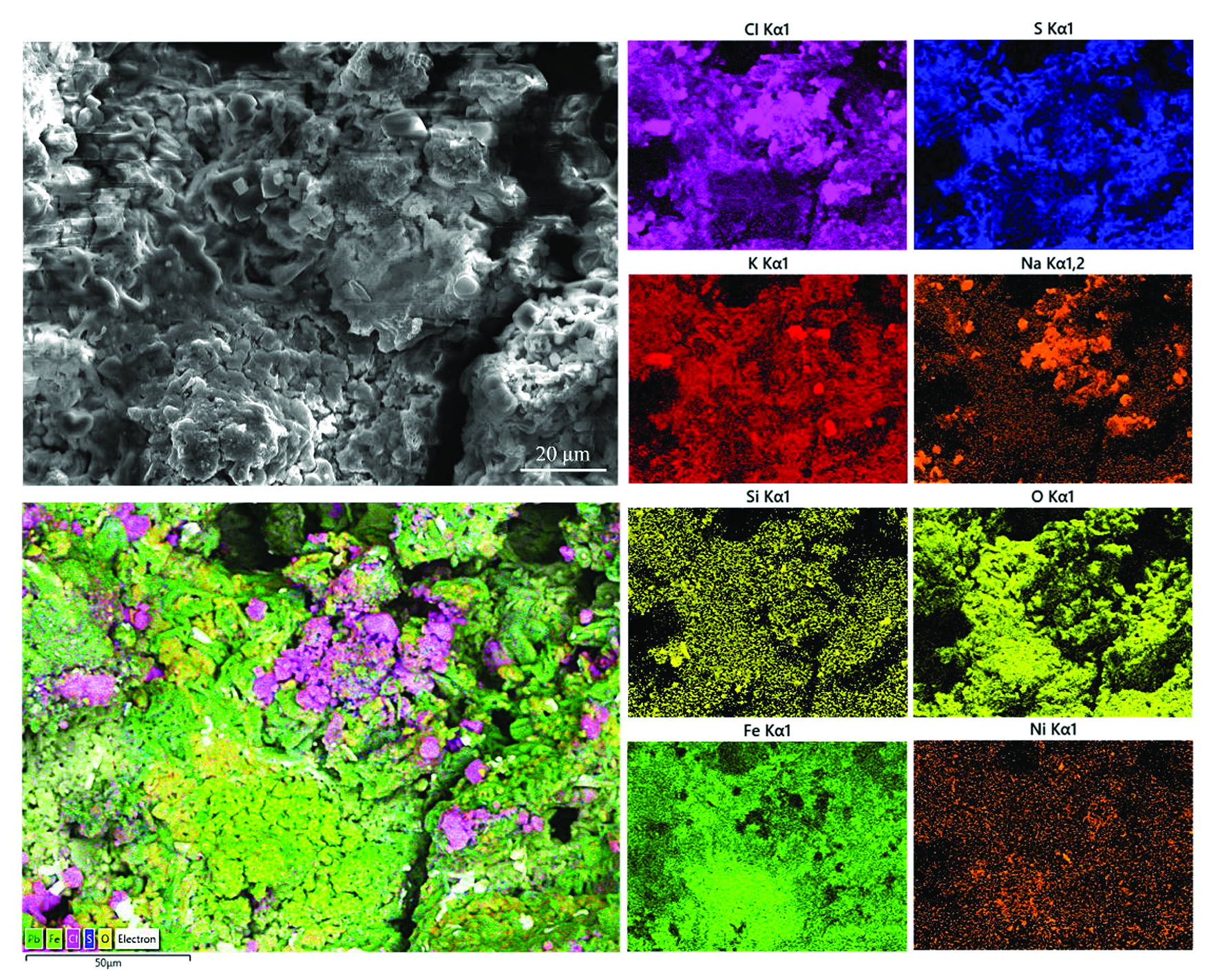
Elemental analysis of surface deposits, as shown in Figure 3, revealed elevated concentrations of chlorine in combination with alkali metals (K, Na), along with iron and oxygen. The presence of alkali chlorides indicates a chemical environment conducive to active oxidation. In this mechanism, chlorine participates in cyclic reactions involving the formation of volatile metal chlorides at the metal-deposit interface. These metal chlorides subsequently migrate outward and re-oxidise in regions of higher oxygen partial pressure, regenerating chlorine species and sustaining the degradation process. This cyclic mechanism disrupts the formation of stable protective oxide layers, leading to accelerated material loss.

Figure 3: SEM-EDX Elemental Analysis of Surface Deposit from the Exposed Material Showing High Concentrations of Chlorine and Alkali Metals (K, Na).

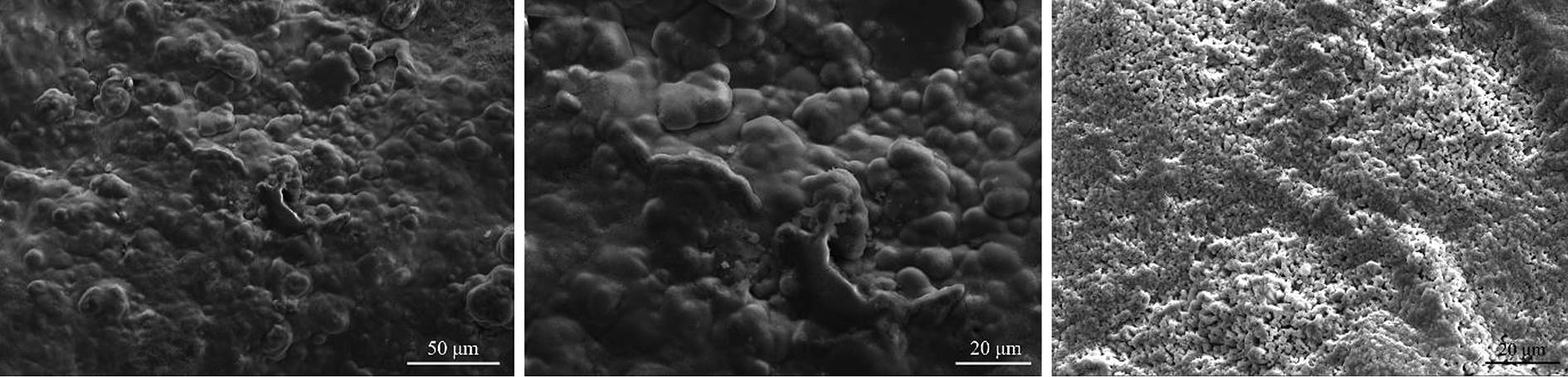
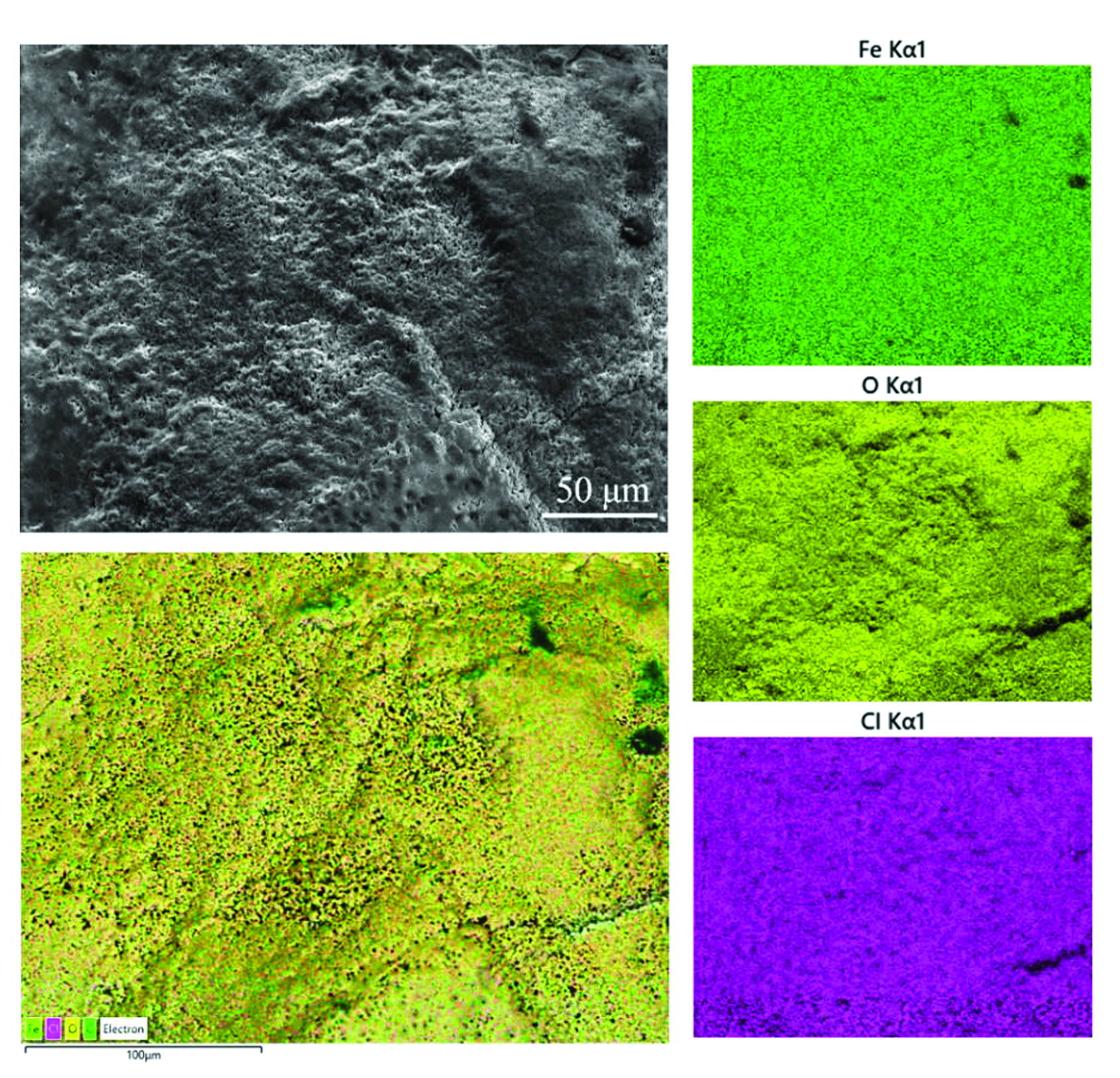
Microstructural observations from the degraded surface (Figure 4) show a porous morphology associated with outward-growing corrosion products. This porous structure is indicative of volatilisation-driven material transport, in which the formation and outward diffusion of metal chlorides result in a non-protective and mechanically weak scale. Elemental distribution maps obtained via EDX analysis (Figure 5) further confirm the localisation of chlorine within these regions, supporting the proposed mechanism of chlorine-driven degradation.

Above: Figure 4: Surface Morphology of Degraded Material Showing a Porous and Outward-Growing Corrosion Product Layer.

Figure 5: SEM-BSE and EDX Maps of Degraded Region Highlighting the Localisation of Chlorine within the Corrosion Products.

Case Study 2: Sulphur-Dominated Environment

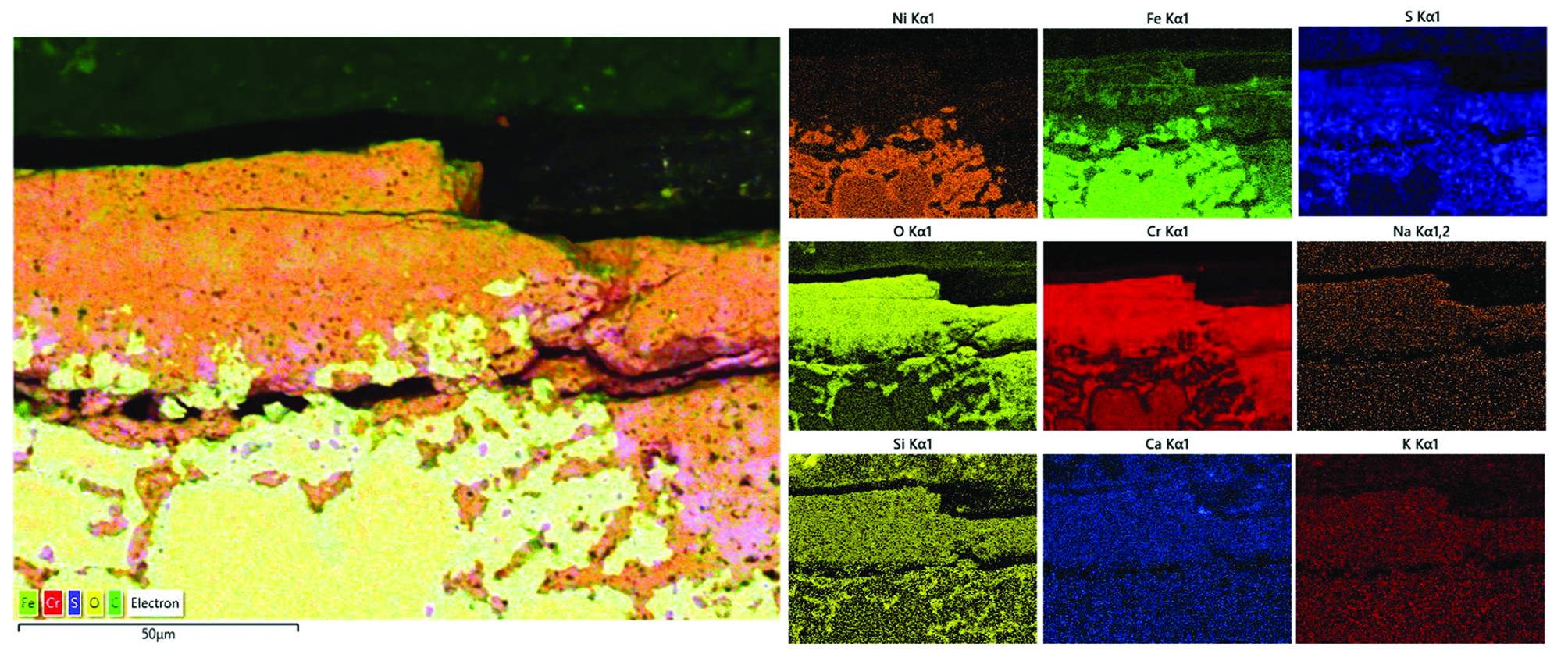
In this study, a 310H stainless-steel component operated at approximately 800 °C under a low oxygen atmosphere with high moisture content. The environment contained sulphur-bearing species, including hydrogen sulphide, carbon disulphide, sulphur dioxide, and sulphur trioxide, along with other process-related compounds. Post-exposure analysis revealed significant sulphur enrichment within the degraded regions, accompanied by redistribution of alloying elements such as chromium, iron and nickel.

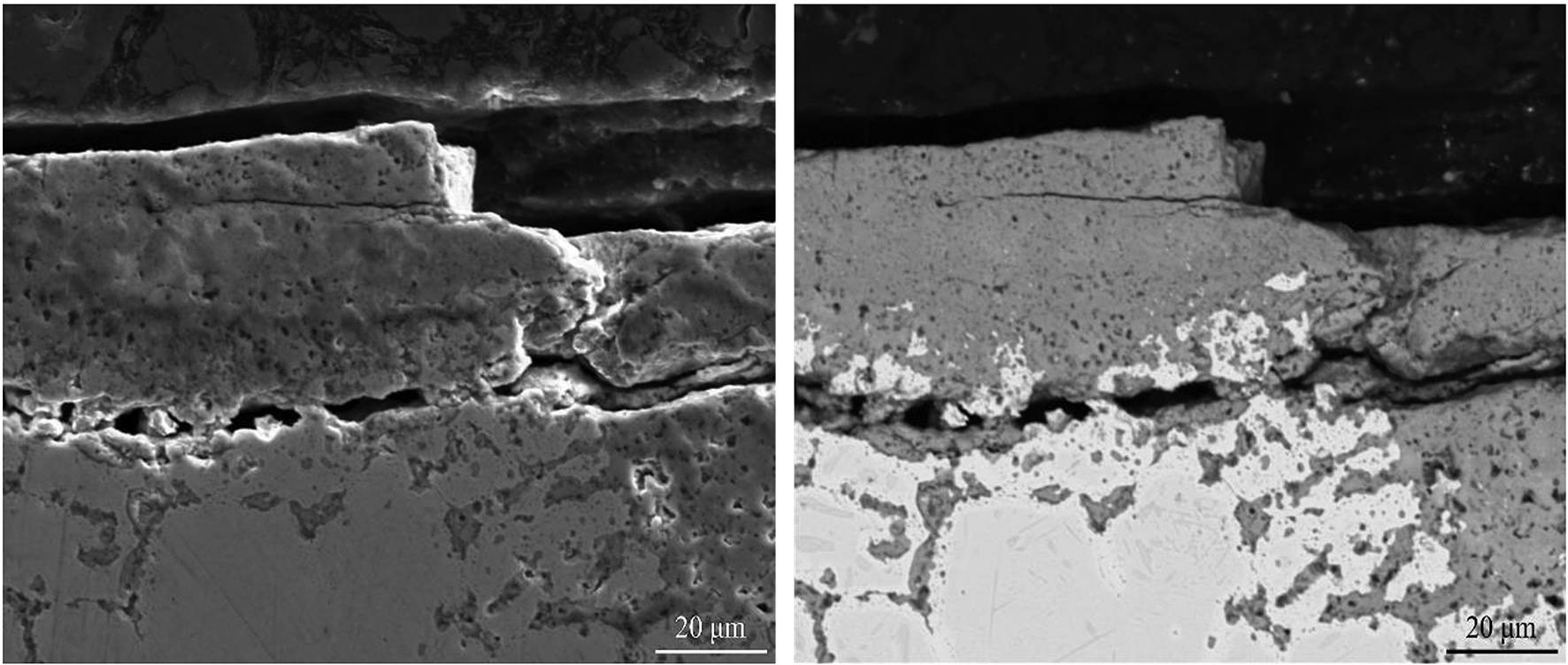
Microstructural examination (Figure 6) shows the formation of a layered surface scale, with evidence of cracking and localised breakdown. The outer region is enriched in chromium and oxygen, including the formation of a chromium-rich oxide layer; however, this layer appears discontinuous and mechanically unstable, exhibiting fracture and partial spallation.

Elemental distribution maps (Figure 7) further demonstrate that while chromium and oxygen are predominantly concentrated within the outer oxide layer, sulphur has penetrated beneath this layer into the underlying material.

Within these sulphur-enriched regions, iron and nickel remain present, suggesting the formation of sulphide phases within the substrate. This indicates that the protective oxide layer has been compromised, allowing inward diffusion of sulphur species.

Figure 6: Cross-Sectional SEM Micrograph Showing the Layered Oxide Scale Formed on the Exposed Material.

Figure 7: SEM-EDX Maps Illustrating Chromium and Oxygen Enrichment within the Outer Oxide Scale, Alongside Sulphur Penetration into the Underlying Material. The Co-Location of Iron and Nickel within Sulphur-Rich Regions Suggests Internal Sulphide.

 Case study 3: Mixed Chemical Environment

This case study exhibited the simultaneous presence of both sulphur and chlorine-containing species, along with alkali metals, indicating a mixed degradation regime.

Such environments are associated with competing and interacting mechanisms, including sulphide formation and chlorine-induced active oxidation, resulting in complex and often accelerated material degradation behaviour.

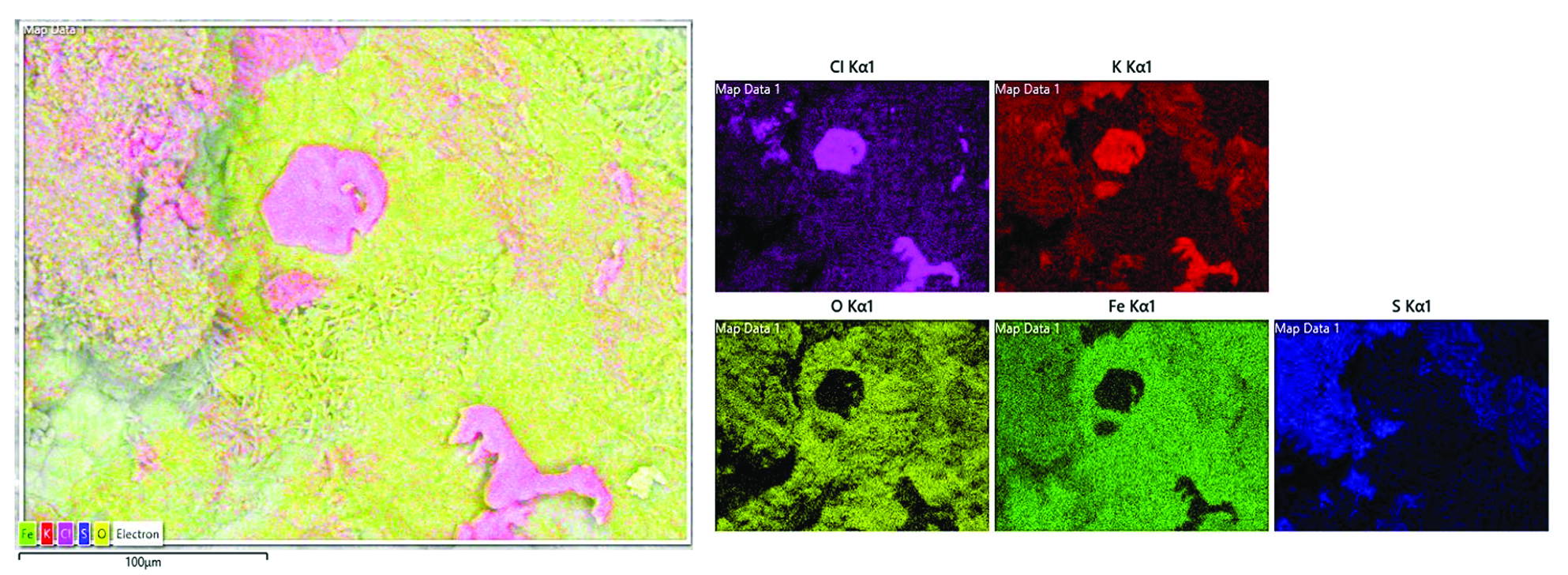
Elemental maps (Figure 8) from the degraded metal surface indicate the co-presence of chlorine and potassium within the same regions, suggesting the formation of KCl within the deposited salts. In contrast, sulphur is more widely distributed and associated with iron and oxygen.

Figure 8: SEM-EDX Maps of the Degraded Surface Showing Co-Localisation of Cl and K, Indicating the Presence of KCl within the Deposits. Sulphur is More Broadly Distributed and Associated with Fe-Rich Regions.

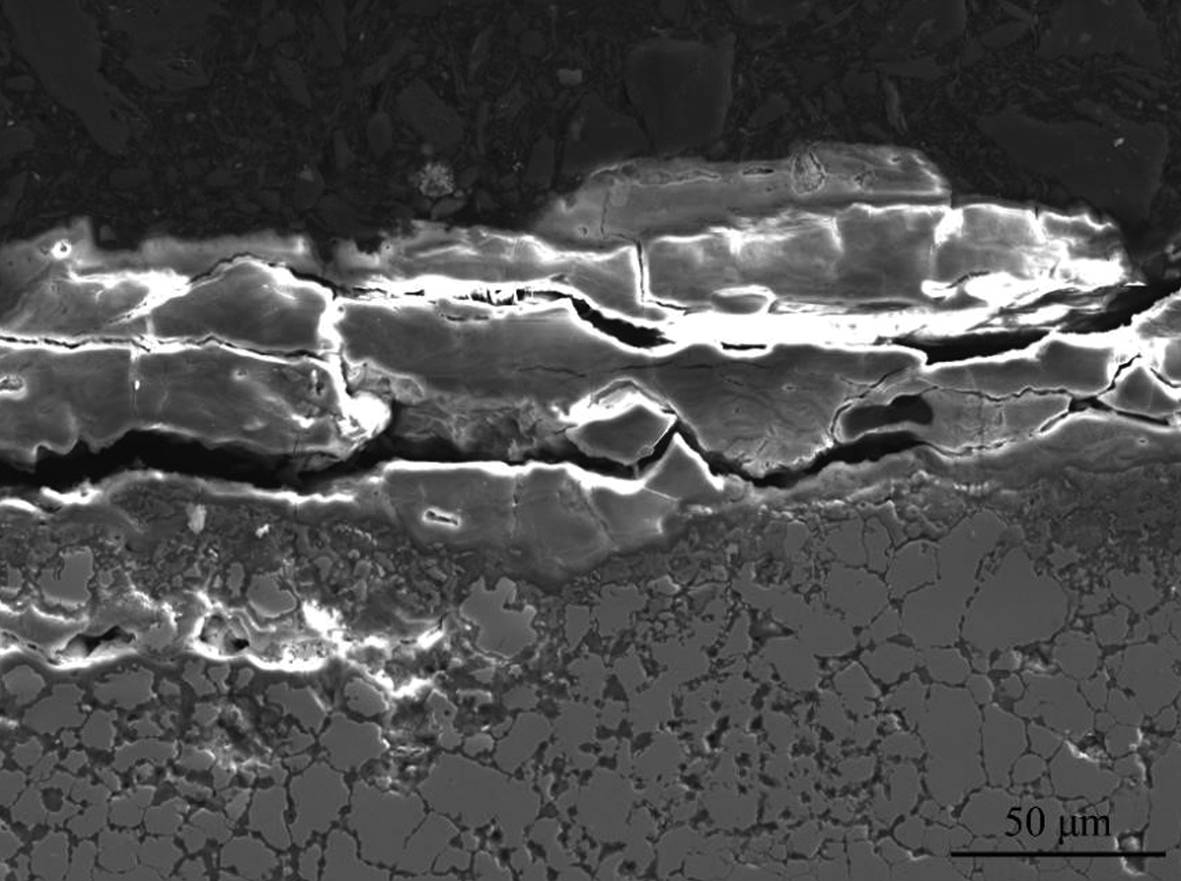
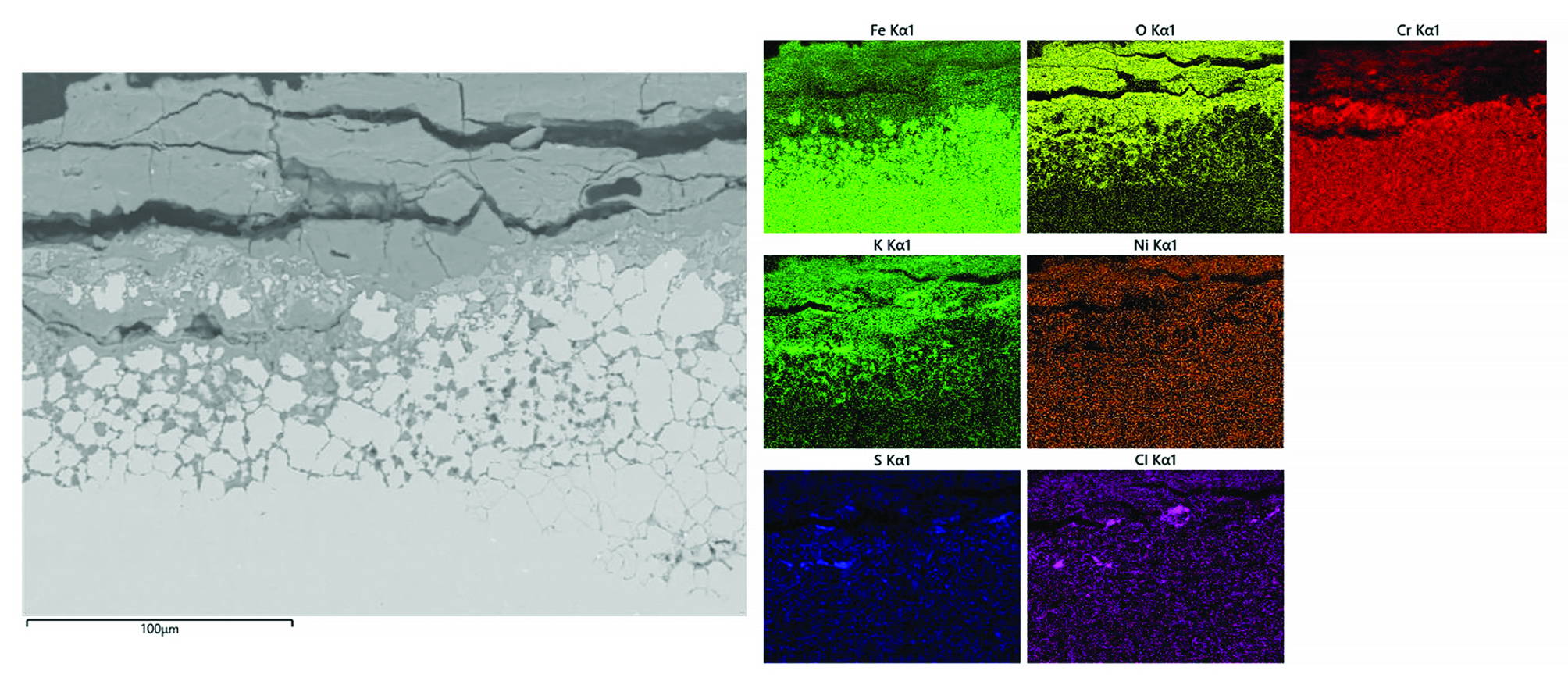
 Cross-sectional SEM micrograph (Figure 9) reveals breakdown of the outer oxide scale, accompanied by intergranular attack within the underlying material. The oxide layer appears discontinuous and locally disrupted, reducing its protective capability. Further insight from elemental maps (Figure 10) shows that sulphur, chromium, and potassium are concentrated along the grain boundaries, indicating preferential penetration along these paths. This behaviour suggests that grain boundaries act as fast diffusion pathways, facilitating the ingress of aggressive species and accelerating localised degradation within the material.

Figure 9: Cross-Sectional SEM Micrograph Showing the Presence of Intergranular Attack within the Underlaying Material.

Figure 10: Elemental Distribution Maps Showing the Concentration of Sulphur, Chlorine, and Potassium Along Grain Boundaries, Indicating Preferential Ingress of Reactive Species and Localised Degradation Along These Pathways.

Experimental Procedure and Material

Given the complexity of the three operating conditions identified in the above case studies across different environments, controlled laboratory-scale high-temperature corrosion tests were designed and conducted. This approach was developed to systematically investigate the influence of key variables such as, temperature, exposure time, gas phase composition, and deposit chemistry on the corrosion process.

Arc-Spray Coating

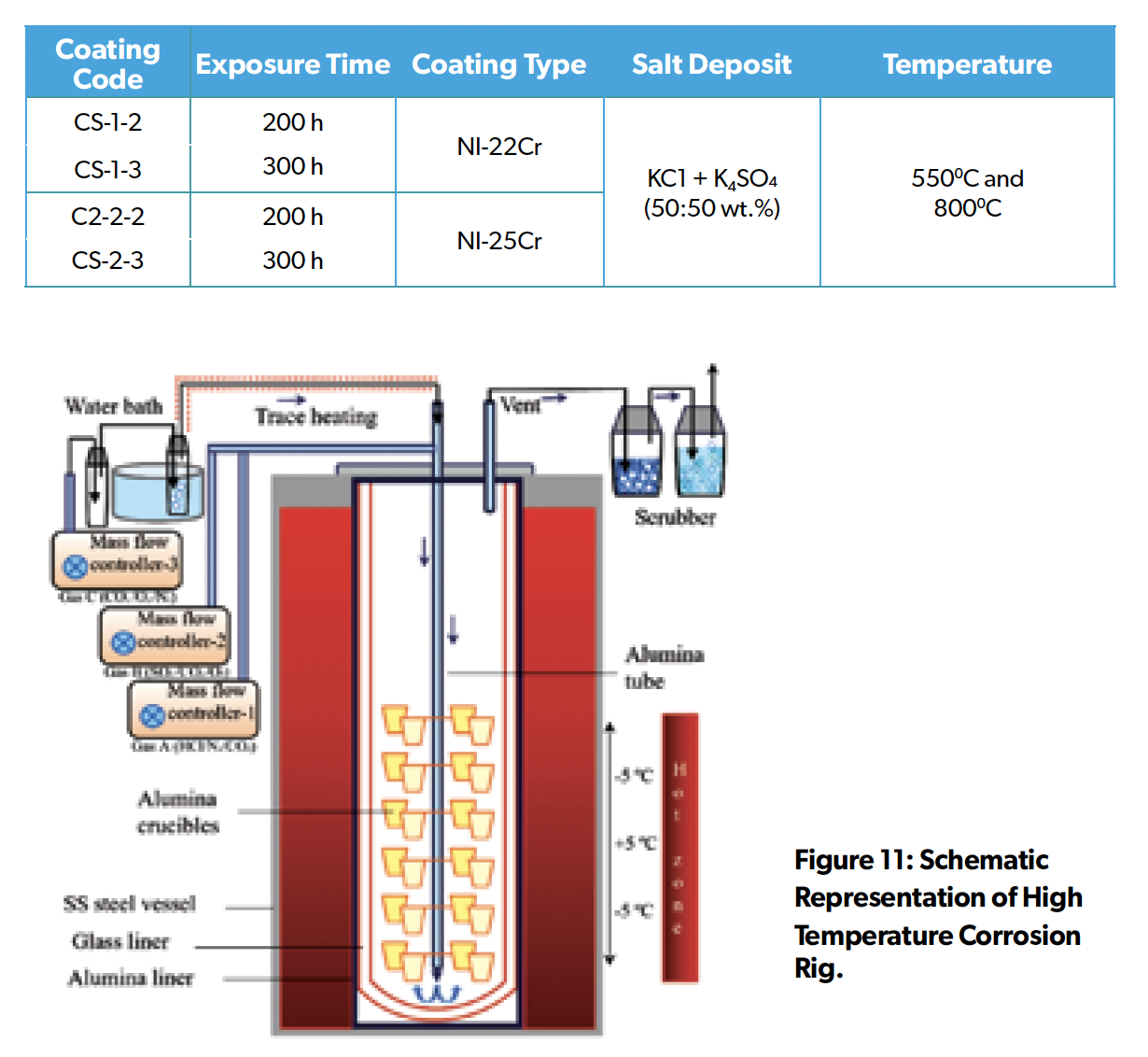
Two cored wire feedstocks were used to deposit coatings via the twin wire arc spraying (TWAS) process (details are reported in a previous study) (Usman et al. 2025). The Ni-based coatings, designated CS-1 and CS-2 (details provided in Table 1), were applied onto 310 H stainless-steel substrate. The coatings were deposited to a thickness of approximately 700 μm.

High-Temperature Corrosion Testing

Corrosion tests were conducted under highly aggressive simulated environments containing CO2, SO2, H2O, O2, HCl, and N2 at temperatures of 550 and 800 ± 5 °C, with exposure durations of 200 h and 300 h. A vertically oriented alumina-lined tube furnace (Figure 11) was used to carry out the high temperature corrosion tests under a controlled atmosphere (Waeytens et al. 2023). Coating samples were evaluated under deposited salt conditions comprising KCl and K2SO4. Before testing, coupon samples and crucibles were ultrasonically cleaned in acetone, followed by drying on a hot plate at 100 °C for 1 h before initial weighing. The combined mass of the crucibles, samples, and deposited salts was recorded to determine the applied deposit quantity.

Table 1: Samples Identification Codes and Experimental Conditions.

Post-Exposure Analysis

Following 200 h and 300 h of exposure, coating samples were assessed through cross-sectional microstructural analysis. Samples were sectioned, cold-mounted in low-shrinkage epoxy resin, and prepared using standard metallographic procedures, followed by polishing to a 1 μm diamond finish using an oil-based system. The cross-sectional microstructures were examined using digital microscopy to evaluate coating integrity, thickness variation, and degradation features.

Dimensional Metrology

Coating performance was further quantified using dimensional metrology to assess material loss and degradation (Waeytens et al. 2023). Thickness measurements were obtained along the perimeter of the exposed coatings. Multiple measurements were collected to ensure statistical relevance, and the data were compared with pre-exposure thickness values. These measurements were used to develop probability models describing coating degradation and to estimate coating lifetime under the tested conditions.

Results and Discussion

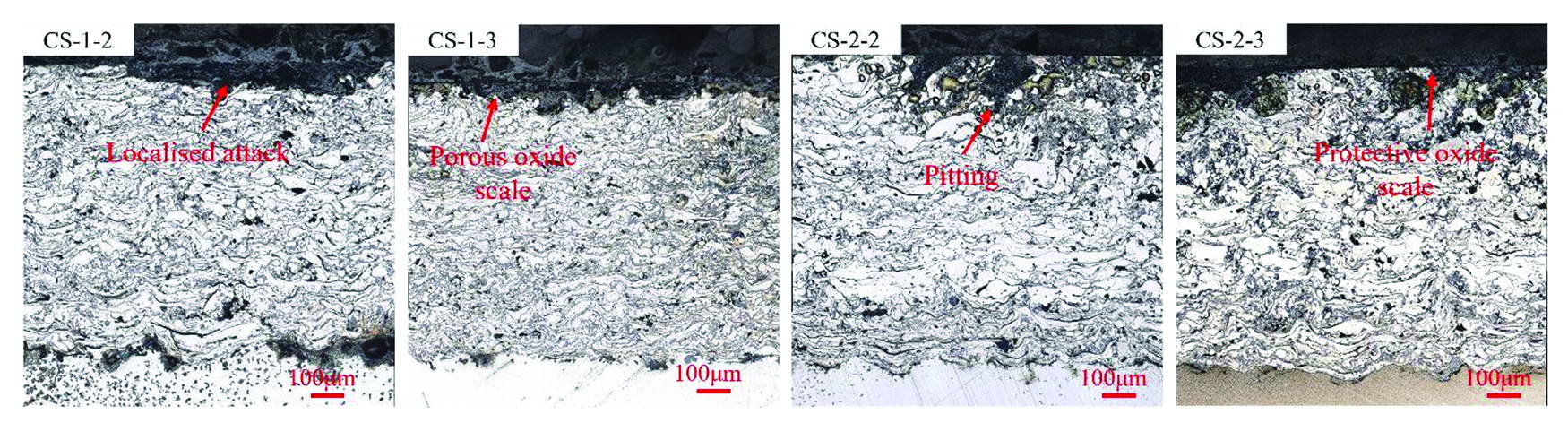
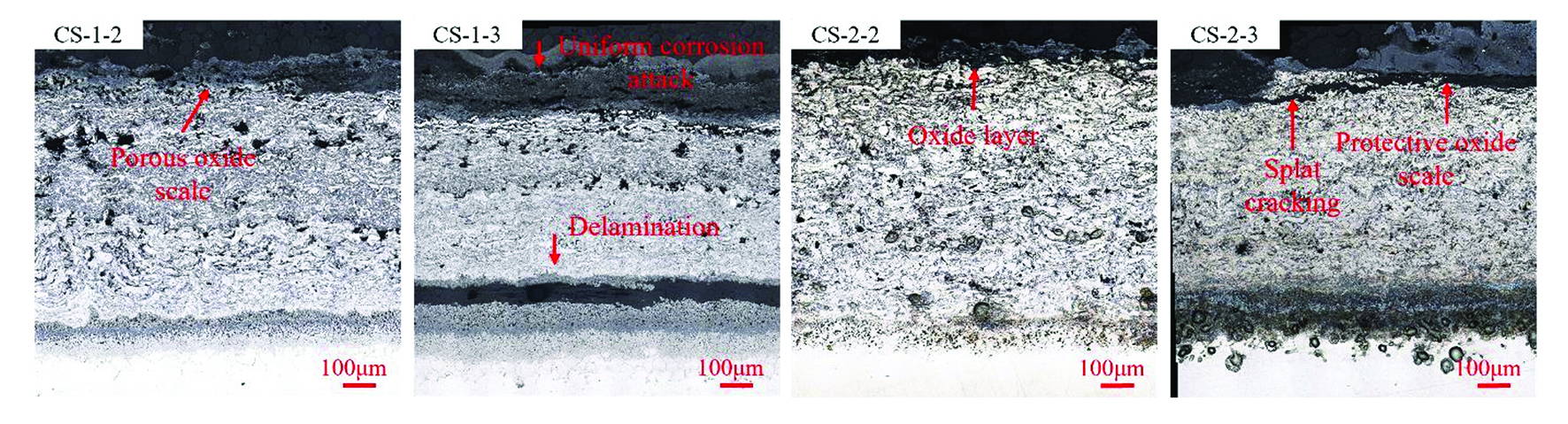
Microscopy Image Analysis Cross-sectional optical microscopy was performed on all eight coatings following high-temperature corrosion exposure. The micrographs presented in Figure 12 and Figure 13 indicate that all coatings experienced varying degrees of surface degradation. However, the CS-2 coatings exhibited comparatively lower damage than the CS-1 coatings at both temperatures. At 550 °C (200 h and 300 h), the CS-1 coatings showed pronounced localised attack, leading to the formation of a porous and non-adherent oxide scale. At 800 °C, the degradation was significantly more severe, as evidenced by the development of a highly porous surface morphology and coating delamination after 300 h of exposure. In contrast, the CS-2 coatings formed a relatively uniform and more adherent oxide layer at 550 °C, with only limited pitting observed at isolated locations. At 800 °C, although the severity of attack increased, the coatings continued to exhibit protective behaviour, with no significant spallation or deep interfacial corrosion observed. 

Figure 12: Cross-Sectional Optical Microscopy Images of Samples After Exposure at 550 °C for 200 h (CS-1-2, CS-2-2) and 300 h (CS-1-3, CS-2-3).

Figure 13: Cross-Sectional Optical Microscopy Images of Samples After Exposure at 800 °C for 200 h (CS-1-2, CS-2-2) and 300 h (CS-1-3, CS-2-3).

Dimensional Metrology

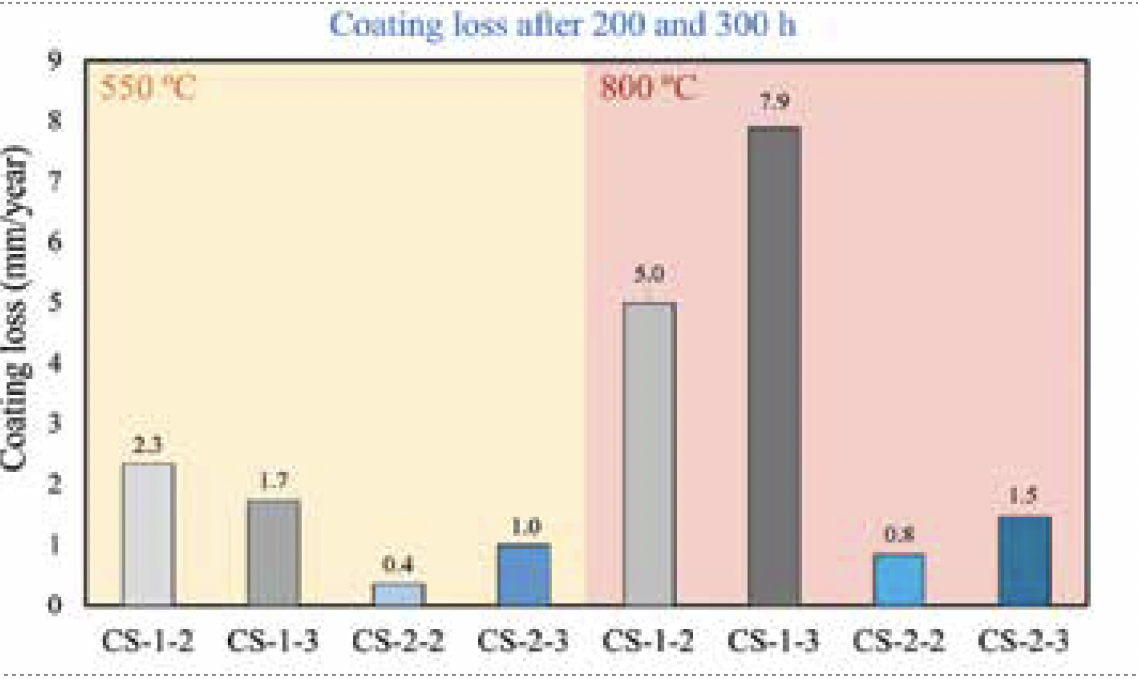
Dimensional metrology analysis was used to evaluate the corrosion performance of coating systems by generating statistical distributions of material loss. The median coating loss values (Figure 14) represent the extent of degradation in the exposed specimens. Figure 14 summarises the corrosion performance of coatings CS-1 and CS-2 exposed to simulated environments at 550 and 800 °C. Across all conditions, CS-2 consistently exhibited lower material loss compared to CS-1, indicating superior resistance to high-temperature degradation. For CS-2-2, the median coating loss was approximately 0.4 mm after 200 h at 550 °C, increasing to 1.0 mm after 300 h. At 800 °C, the corresponding values increased to 0.8 mm and 1.5 mm after 200 h and 300 h, respectively. In contrast, CS-1-2 showed significantly higher degradation, with median coating loss values reaching 5.0 mm after 200 h and 7.9 mm after 300 h at 800 °C.

Figure 14: Median Coating Loss of KCl + K2SO4 Deposited Coating Samples Exposed to Aggressive Environments at 550 °C and 800 °C for 200 h and 300 h.

Conclusion

This study investigated high-temperature degradation mechanisms across three industrial environments characterised by chlorine-dominated, sulphur-dominated, and mixed chemical conditions and evaluated the performance of twin-wire arc-sprayed Ni-based coatings under simulated laboratory conditions.

• Chlorine-rich conditions led to the formation of porous, non-protective oxide scales, while sulphur rich environments promoted sulphide formation and internal degradation. Mixed environments resulted in complex attack, including oxide breakdown and intergranular corrosion.

• TWAS coating performance varied significantly between the two systems, with CS-2 consistently outperforming CS-1 under all test conditions. Lifetime modelling confirmed lower material loss for CS-2, demonstrating its superior protective performance at both 550 °C and 800 °C.

• The results highlight the importance of coating composition and microstructure in controlling oxide stability and limiting the ingress of corrosive species. Crucially, a detailed understanding of the underlying degradation mechanisms provides a foundation for the rational design of improved coating materials with enhanced performance in aggressive environments.

Acknowledgements

Special thanks are extended to Dr Adnan Syed, Dr Luis Isern and
Prof John Nicholls from the Centre for Materials at Cranfield University for their technical support in interpreting case study data and corrosion mechanisms, as well as in the development of methodologies enabling coating trials under aggressive conditions. The author also acknowledges Dr Mario Cordero from Welding Alloys Group for his support in the design of new alloy chemistries, which demonstrated good resistance under laboratory conditions, and for his support with arc spray
coating deposition.

References

1. M Spiegel et al, “Fundamental aspects of chlorine induced corrosion in power plants,” Materials at High Temperatures, 2003, 20(2), pp. 153–159. https://doi.org/10.1179/mht.2003.018

2. K Khantisopon et al, “High-temperature corrosion investigations of deposit containing eutectic KCl-K2SO4 mixture on AISI 1015 and SS304 steels,” Corrosion Science, 2022, 205, pp. 110470. https://doi.org/10.1016/j.corsci.2022.110470

3. C orrosion Basics: Understanding the Basic Principles and Causes of Corrosion, Materials Performance, 2011, 50, pp.88.

4. S Floreen and R H Kane, “The sulfidation attack of a nickel-base alloy at intermediate temperatures,” Metallurgical Transactions, 1984, 15A, pp. 5-10.

5. E Sadeghimeresht et al, “Chlorine-induced high temperature corrosion of HVAF-sprayed Ni-based alumina and chromia forming coatings,” Corrosion Science, 2018, 132, pp. 170–184.
https://doi.org/10.1016/j.corsci.2017.12.033

6. A Usman et al, “Fireside corrosion behavior of thermally sprayed coatings for waste-to-energy power plant applications,” Journal of Materials Engineering and Performance, 2025, 34(19), pp. 22393–22405. https://doi.org/10.1007/s11665-025-11630-7

7. M Waeytens et al, “A microscopy study of nickel-based superalloys performance in Type I hot corrosion conditions,” Materials at High Temperatures, 2023, 40(4), pp. 272–282. https://doi.org/10.1080/09603409.2023.2188355

Reducing Detection Time for Sulphate-  Reducing Bacteria in Industrial Water Systems  Les Merrill, CEO, Retego Labs

Reducing Detection Time for Sulphate- Reducing Bacteria in Industrial Water Systems Les Merrill, CEO, Retego Labs

Reducing Detection Time for Sulphate- Reducing Bacteria in Industrial Water Systems
Les Merrill, CEO, Retego Labs

Bacterial contamination does not always lead to material degradation, however, microbiologically influenced corrosion (MIC) continues to present a significant operational and economic challenge across a wide range of industrial sectors, including oil and gas systems, water treatment, and process industries.
A substantial proportion of corrosion-related failures are associated with MIC [1], a complex process in which microbial activity alters localised chemical conditions at metal surfaces, accelerating degradation.

Among the microbial groups implicated in MIC, sulphate-reducing bacteria (SRB) are widely regarded as one of the most significant contributors [2]. These anaerobic microorganisms reduce sulphate to hydrogen sulphide (H2S), a corrosive species that can promote pitting, contribute to sulphide stress cracking, and interfere with corrosion inhibition strategies. The presence of SRB is also associated with oilfield reservoir souring and operational inefficiencies in industrial systems. Despite the well-established role of SRB in corrosion processes, effective monitoring of these organisms remains challenging. Traditional detection methods often involve extended incubation periods or sophisticated laboratory-based analysis, limiting the ability of operators to respond rapidly to changing microbial conditions. As industrial systems increasingly move toward predictive and proactive maintenance strategies, there is a growing need for faster, field-applicable methods of detecting microbial activity.

Limitations of Conventional Detection Techniques

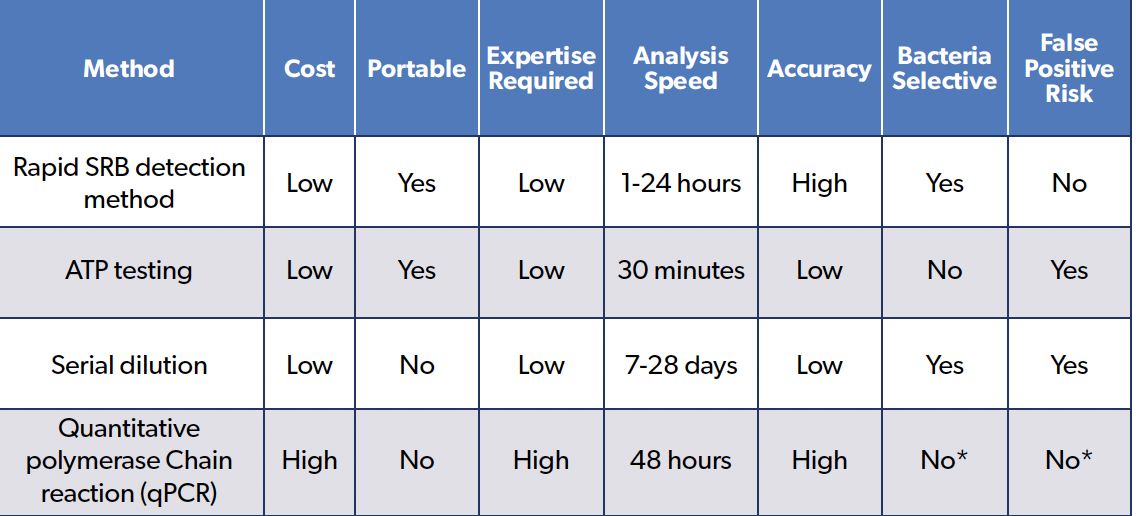
Table 1. Comparison of Conventional and Rapid SRB Detection Methods.

*Note: qPCR selectivity depends on the DNA target primers; however, it cannot distinguish between viable and non-viable microorganisms without propidium monoazide (PMA) sample optimization.

A range of analytical methods has been developed to detect and quantify sulphate-reducing bacteria in industrial water systems. These include culture-based techniques, serial dilution methods, and molecular approaches such as qPCR.

Another commonly used approach utilises adenosine triphosphate (ATP) testing, which measures total microbial activity by quantifying cellular energy present in a sample. While ATP testing provides rapid results and is useful for assessing overall biological activity, it does not distinguish between specific microbial groups such as SRB, limiting its ability to directly assess SRB-related corrosion risk. ATP testing is additionally susceptible to false positives, as it can have difficulty distinguishing between viable and non-viable bacteria [4].

Culture-Based and Serial Dilution Methods

Culture-based methods, including the serial dilution most probable number (MPN) technique, remain widely used due to their relative simplicity, ease of on-site use and historical acceptance [3]. These approaches rely on the growth of microorganisms under controlled conditions to estimate bacterial populations.

However, a key limitation of these methods is the time required to obtain results. Incubation periods may extend up to 28 days before observable changes occur, particularly in samples with low bacterial concentrations. During this time, environmental changes such as oxygen exposure, temperature variation
and sample handling can influence microbial activity and affect accuracy.

In addition, culture-based methods may underestimate microbial populations due to the inability to cultivate all organisms present in a sample, leading to incomplete assessment of microbial activity.

Molecular Techniques

Molecular approaches, including qPCR, offer faster detection compared to culture-based methods and can provide highly sensitive identification of microbial DNA, often within hours to days depending on sample logistics.

Despite these advantages, molecular methods require specialised laboratory infrastructure and trained personnel. Additionally, DNA-based detection does not necessarily indicate active metabolism, as genetic material from non-viable organisms may still be present [5], unless both propidium monoazide (PMA) and photoactivation protocols are optimized for each sample. This limitation can complicate interpretation when assessing current corrosion risk through overestimation of bacterial content.

Operational Implications

The extended timelines and logistical requirements associated with traditional detection methods can delay decision-making in corrosion management. In dynamic industrial environments, a delay of several weeks between sampling and results may result in missed opportunities for early intervention.

Emerging Approaches to Rapid Detection

Alternatives to traditional microbiological detection protocols have led to the development of methods that focus on measuring microbial activity rather than microbial growth. These approaches aim to provide faster and more relevant insights into the presence of metabolically active organisms.

A new method uses two key indicators of SRB activity:

• Enzymatic activity associated with microbial metabolism

• Production of hydrogen sulfide (H2S)

By targeting these indicators, it is possible to detect active SRB populations without prolonged incubation.

Case Example: Rapid Detection of SRB Activity

A field-deployable detection approach has been recently developed and evaluated that combines biological and chemical indicators to assess the presence of sulphate-reducing bacteria in water samples. The method employs two complementary detection pathways:

• Biological detection: Enzymatic activity from SRB produces a fluorescent signal through reaction with a substrate.

• Chemical detection: Hydrogen sulfide (H2S) from the sample reacts with a reagent to generate a visible color change.

These combined mechanisms allow for detection of active SRB without requiring propagation of the organism.

Rapid SRB Detection Workflow

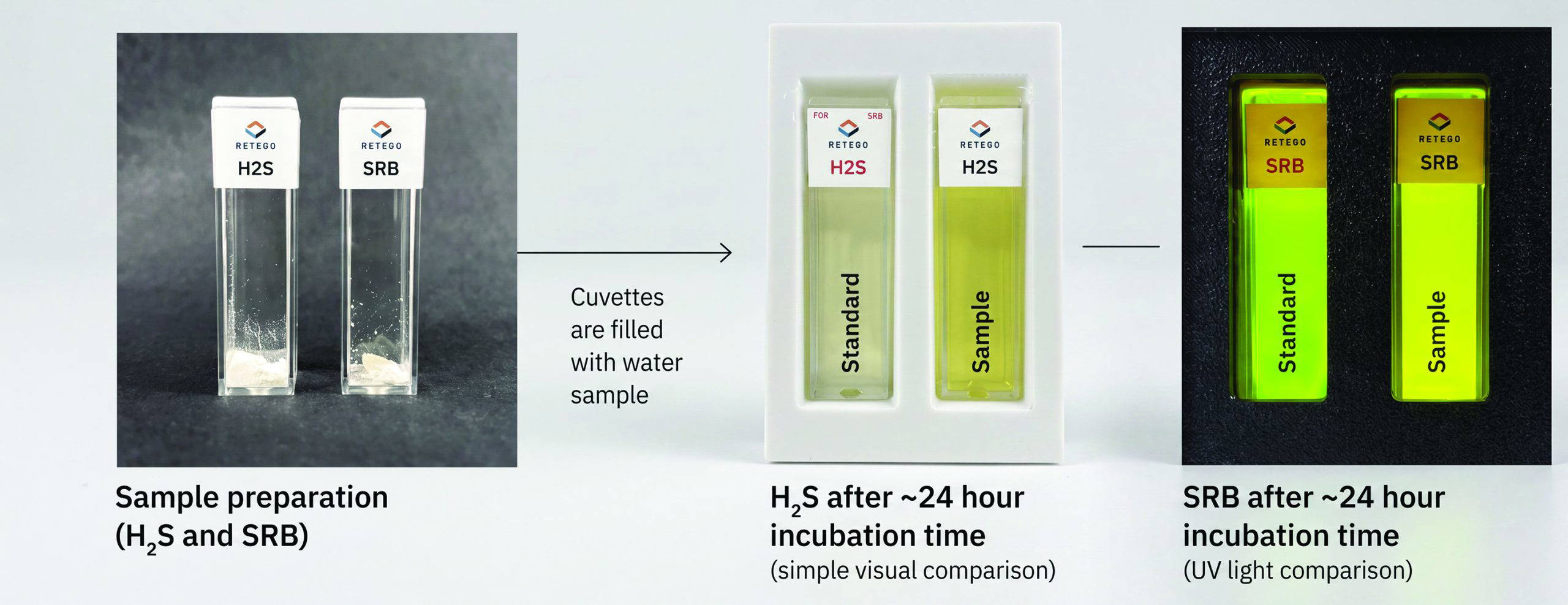
Figure 1. Workflow for rapid detection of sulphate-reducing bacteria (SRB) and associated hydrogen sulfide (H2S) in water samples. Following sample preparation, results are obtained between 1 and 24 hours, with visual indicators distinguishing microbial activity through colorimetric and fluorescent responses. This workflow illustrates how rapid detection enables earlier identification of microbial activity compared to traditional incubation-based methods.

Detection Time and Sensitivity

Field evaluations have demonstrated that this method can produce detectable results within approximately 1 to 24 hours, depending on bacterial concentration. Detection sensitivity has been observed at levels as low as 1,000 colony-forming units per milliliter of water (CFU/mL).

Field Application

The new method can be applied directly in the field and is effective across a wide range of water conditions, including variations in salinity and pH. Field-based testing reduces the need for sample transport and minimizes environmental impact on microbial activity prior to analysi

Validation and Comparative Performance

The new rapid SRB detection methods have been evaluated against established techniques, such as serial dilution and ATP-based testing across diverse environments, including Arctic, desert and tropical conditions. These evaluations demonstrate that rapid detection methods can provide results consistent with traditional techniques while significantly reducing time to result [6]. Faster turnaround enables more frequent monitoring and improved responsiveness.

Performance Characteristics

Key performance characteristics include:

• Detection sensitivity down to 1,000 CFU/mL
• Effective across a wide range of salinity and pH conditions
• Reduced likelihood of false-positive results
• Suitable for field-based application without
laboratory infrastructure
• Time to result typically between 1 and 24 hours

Limitations and Considerations

While the new rapid detection method provides significant advantages, several limitations should be considered. The method is specific to sulphate-reducing bacteria and does not detect other microbial groups, such as acid-producing bacteria. Additional testing may be required for comprehensive microbial analysis. Sample conditions are also critical. Fresh samples provide the most reliable results, while aged or oxygen-exposed samples may exhibit slower reaction times due to reduced microbial activity. Rapid detection methods should be used as part of a broader corrosion monitoring strategy that includes chemical analysis and system inspection.

Implications for Corrosion Management

The ability to detect SRB activity within hours rather than weeks has important implications for corrosion management. Operators can use rapid results to:

• Adjust treatment strategies, including biocide dosing
• Assess corrosion risk more quickly
• Identify microbial activity earlier
• Monitor effectiveness of bacteria mitigation programs • Provide early indication of reservoir souring

This supports a shift from reactive maintenance toward more proactive corrosion management.

Conclusion

Sulphate-reducing bacteria play a critical role in microbiologically influenced corrosion, yet traditional detection methods often fail to provide timely insight into their activity. Rapid detection approaches that target metabolic indicators offer a significant advancement in corrosion diagnostics. By reducing detection timelines from weeks to hours, these methods enable faster, more informed decision-making. As these technologies continue to evolve, they are likely to become an increasingly important component of modern corrosion management strategies and associated treatments. Regardless of the technique used, regular microbial monitoring is essential to evaluate whether preventative treatments are effective over time, as trend analysis provides the clearest insight into system conditions .

References

1. H Byars, Corrosion Control in Petroleum Production, 2nd ed. NACE International, Houston, TX, 1999, pp. 32–33.
2. D Enning and J Garrelfs, “Corrosion of iron by sulfate-reducing bacteria: New views of an old problem,”
Applied and Environmental Microbiology, 2014, 80(4). https://doi.org/10.1128/AEM.02848-13.
3. NACE TM0194-2014, Field Monitoring of Bacterial Growth in Oil and Gas Systems. NACE International, Houston, TX, 2014.
4. S A Hernandez et al., “ATP bioluminescence assay for onsite microbial assessment in drilling rig operations,” in Proceedings of the SPE/IADC Middle East Drilling Technology Conference, Abu Dhabi, UAE, 2018.
5. H S Khanfar et al., “Molecular approach for identifying and quantifying viable microorganisms using PMA-qPCR,” in Proceedings of the Middle East Corrosion Conference (MECC), 2025.
6. A Confer, J Fajt, K McLeroy and K P Ramirez, “Use of novel, rapid enzyme based assays to detect the presence of sulfate-reducing bacteria in oil and gas produced water,” Paper No. C2026-00198, in Proceedings of the AMPP Annual Conference and Expo 2026, AMPP, Houston, TX, 2026.

ICorr 2026 AGM

The Institute ofCorrosion Annual General Meeting (AGM) 2026 is coming to London on 18 November, hosted by the ICorr London Branch.

Before the formal AGM gets underway, join us for an afternoon of technical presentations, knowledge sharing and professional networking. Discover perspectives from across the corrosion and materials industry, covering a diverse range of technical and professional topics:

🔹 MichaelKuhn – PPG
Standards in the Protective Coatings Industry

🔹 MusabIbrahim – Innervate Engineering
The BlindSpot in Pipeline Integrity: Predictive Integrity Intelligence for Unpiggableand Difficult-to-Inspect Pipelines

🔹 Rochelle Holness – Genesis
Reflections on My Experience with the Young Engineers Programme (YEP) and the Case Study

🔹Professor Arjan Mol – TUDelft      
Challenges and Emerging Opportunities in Corrosion Performance and Lifetime Prediction                                                                                                                            

From protective coatings and pipeline integrity to professional development and the next generation of corrosion professionals, the sessions offer abroad range of insights and perspectives.

Whetheryou’re an ICorr member, an industry professional, researcher, or simplyinterested in corrosion and materials, we’d love to see you there.

🗓️ 18 November 2026                                                                                             
📍 Bushy House, NPL, Teddington, London, TW11 0EB
🎟️ Free to attend. Register here: https://www.eventbrite.co.uk/e/institute-of-corrosion-2026-annual-general-meeting-tickets-2002120397003

Members and non-members welcome. Come along, share yourexpertise and be part of the conversation shaping our community.