

The cart is empty!
Leveraging Artificial Intelligence for Corrosion Mapping and Asset Integrity in Maritime Environments
Meet the Author
Leroy Dias is a graduate engineer and holds the AMPP Protective Coating Specialist and FROSIO Paint Inspector certification. Over the past 30 years in the paint industry, he worked with multiple painting contractors, then transitioned to a coating manufacturer, Sigma Paints (PPG), in whose employ over 13 years he rose through the ranks from a ‘Coating Inspector’ to ‘Regional Technical Services Manager (Middle East)’. In 2014, he founded SteelCorr in Dubai, and as the CEO, he led the development and commercial launch of the “SteelCorr Digital Paint Report app” – an AI-powered paint maintenance solution.
Introduction:
The Scale of Maritime Asset Preservation The global economy relies fundamentally on transportation of goods by ships. As the most cost- effective mode of long-distance transport, ocean shipping accounts for approximately 90% of global trade volume. The international shipping fleet constitutes a primary pillar of global supply chain infrastructure, facilitating the transfer of raw materials, energy products, and manufactured goods across continents. Ships are high-value assets with capital expenditures typically ranging from USD 25 million for standard feeder vessels to well over USD 100 million for complex gas carriers, ultra-large container ships, and offshore assets. These high-value assets must remain operational for design lifespans typically extending from 20 to 25 years to yield expected financial returns.
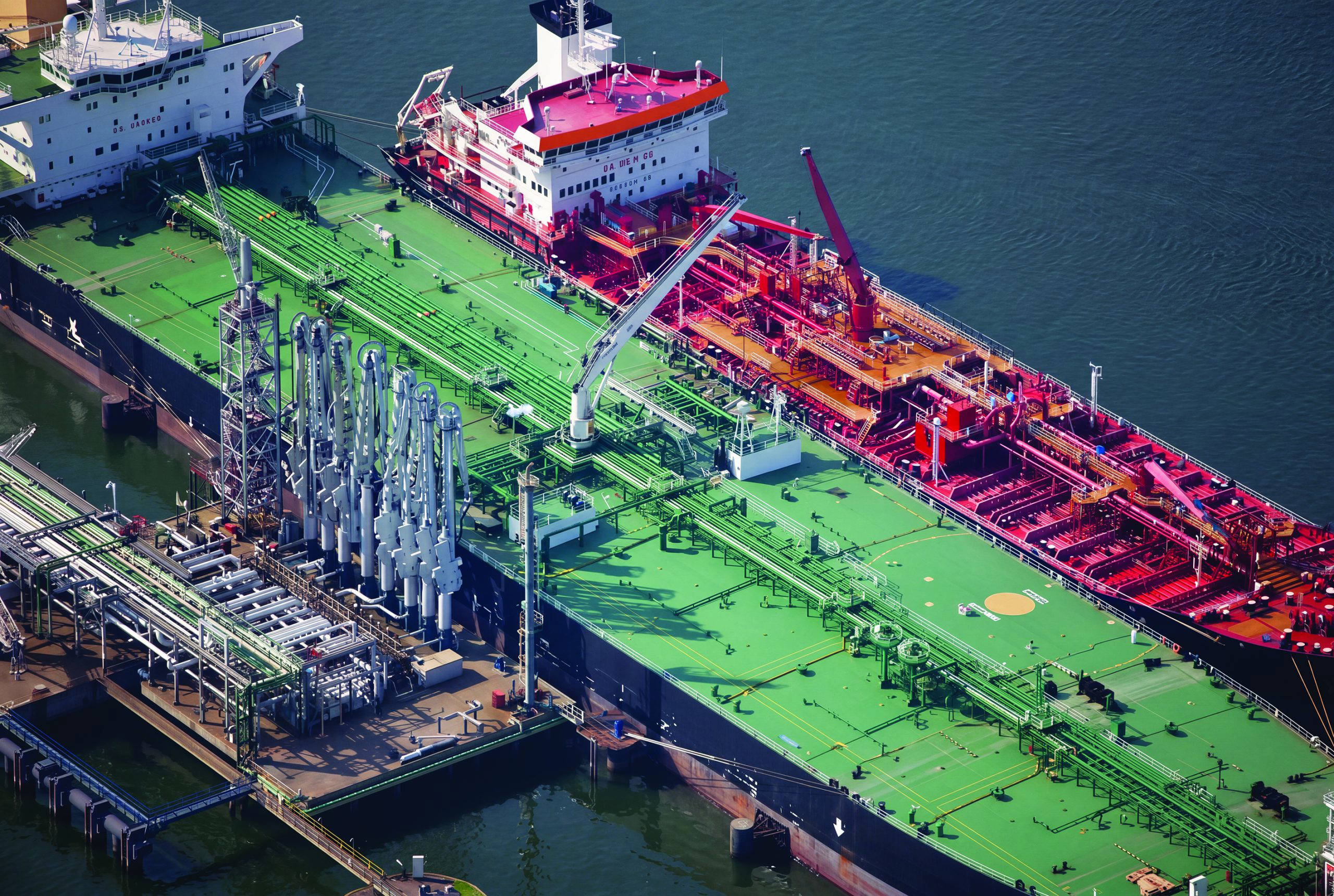
Figure 1: Ship Awaiting Inspection.
Throughout their service life, commercial ships operate in exceptionally aggressive marine environments. Constructed predominantly of welded carbon steel, hull structures and ballast tanks face relentless exposure to high-salinity seawater, elevated relative humidity, continuous ultraviolet radiation, dynamic mechanical fatigue, and significant thermal cycles. Without rigorous protection, steel oxidises rapidly, leading to structural thinning, loss of yield strength, and potential failure. Preserving structural integrity through high-performance protective coating systems and systematic surface maintenance is therefore a core operational and safety requirement.
Traditional corrosion management in the maritime sector has historically relied on periodic, reactive, or highly subjective inspection protocols. The standard process requires a certified coating inspector to physically access tanks, cargo holds, and weather decks. These manual assessments involve visual inspection and qualitative scoring, making the approach inherently labour-intensive, time- consuming, and subject to inter-inspector variance, often leading to inconsistent reporting and delayed maintenance decisions. Physical inspections present notable operational challenges and safety risks. Assessing ballast tanks or cargo holds requires enclosed space entry, extensive staging or rope access, and costly vessel downtime. Relying on periodic visual surveys often means active corrosion or coating degradation is detected only after significant surface area breakdown has occurred, escalating repair costs and dry dock duration.
Asset Ownership Structure
The ownership and operational structure of commercial maritime assets differ significantly from traditional industrial infrastructure. Vessel ownership frequently involves a complex web of stakeholders with distinct financial and operational priorities. A typical structure includes equity owners, charterers, commercial operators, and technical managers.
This division of responsibilities directly impacts asset maintenance strategies. While registered shipowners hold long-term residual value risk, day-to-day technical maintenance, class compliance, and crew management are routinely outsourced to technical management companies. The onboard crew, employed by the technical manager, executes routine surface preparation, localised touch-ups, and log reporting while at sea. This operational dynamic creates a clear requirement for standardised, objective reporting mechanisms. Technical managers require transparent data to justify maintenance budgets to shipowners, while charterers need verification of structural reliability to minimise off-hire risks. Implementing standardised digital corrosion mapping provides an unbiased, verifiable record of coating health across the asset life cycle, aligning the economic and operational interests of owners, managers, and charterers alike.
The Economic Case for Digital Preservation
The financial implications of corrosion in the maritime industry are extensive and directly impact the return on capital for vessel owners. Beyond the initial capital outlay of USD 25 million to over USD 100 million per vessel, continuous operational expenditure is required to maintain structural integrity. Onboard paint maintenance alone accounts for approximately USD 15,000 to USD 30,000 annually per vessel in consumable coatings and surface preparation tools.
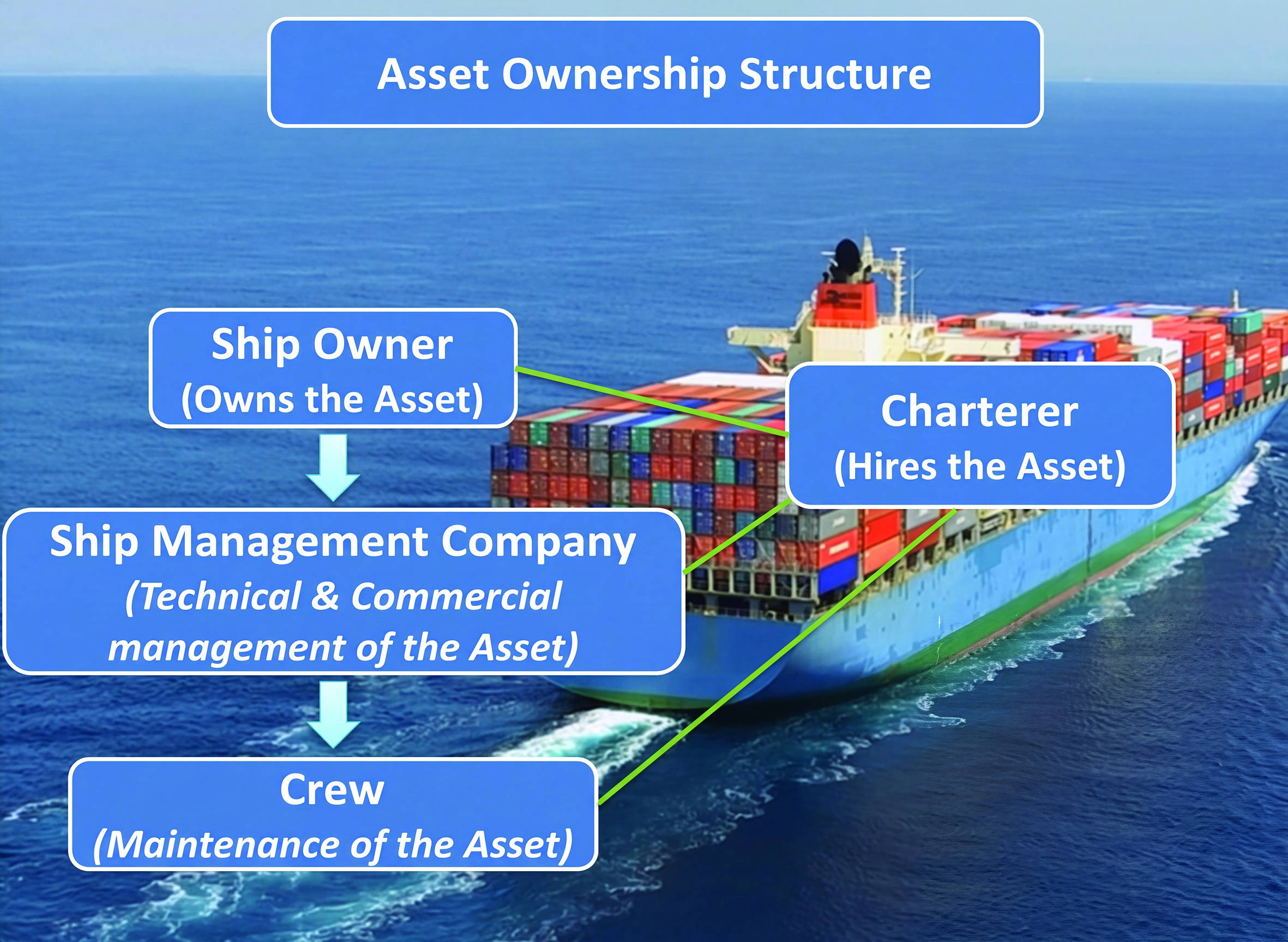
Figure 2: Asset Ownership Structure
Beyond routine onboard touch-ups, commercial vessels must undergo mandatory dry-docking every 3 to 5 years to satisfy Classification Society rules and statutory survey requirements. During these drydocking periods, the underwater hull, sea chests, cargo holds, and water ballast tanks undergo extensive surface preparation and coating renewal. These scheduled dry-docking operations routinely cost hundreds of thousands of dollars in shipyard fees, surface blasting, and specialised marine paint applications. The financial risk escalates significantly when unscheduled maintenance causes operational downtime. Daily charter rates across commercial shipping segments range from USD 5,000 for smaller coastal vessels to upwards of USD 150,000 for specialised gas carriers and peak-market container ships. Any additional days spent in drydock due to unexpected steel repairs or extensive coating failures represent direct, unrecoverable revenue loss through off-hire status.
The cost-benefit ratio of proactive coating maintenance versus structural steel replacement is overwhelming. Replacing a single tonne of corroded marine steel typically costs between USD 4,000 and USD 10,000 when accounting for hot work permits, staging, steel plate procurement, labour and localised coating restoration. Steel renewal also carries a notable carbon footprint due to the energy-intensive manufacturing process of marine-grade steel. In contrast, preserving that same tonne of steel through scheduled coating maintenance over a five-year period costs an estimated USD 200 to USD 500.
Table 1 Provides a Clear Breakdown of These Relative Costs, Highlighting the Financial Necessity of Systematic Preservation.
Table 1: Comparison of Costs
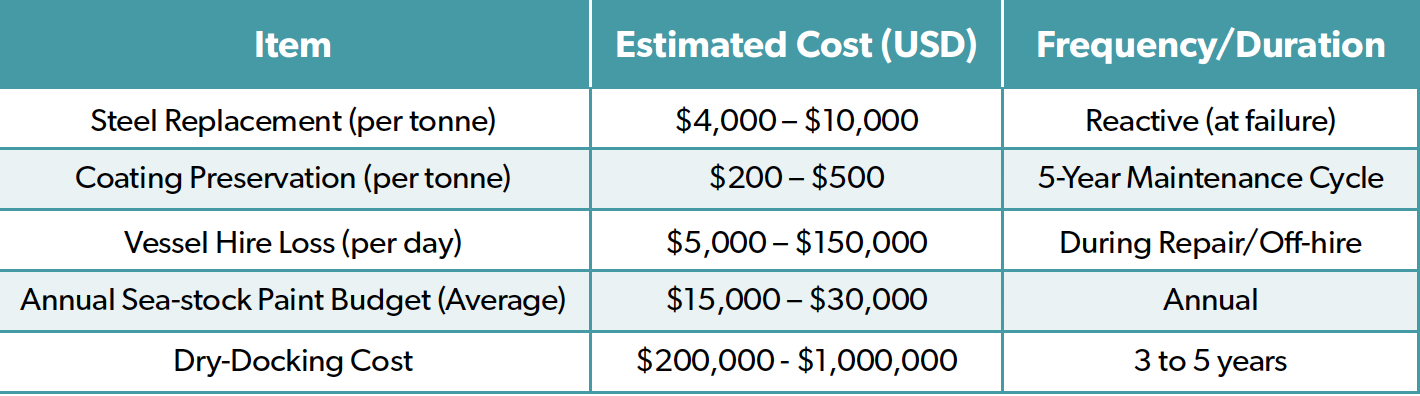
As demonstrated in Table 1 above, the cost of failure far exceeds the investment required for prevention. Beyond direct steel renewal costs, advanced corrosion represents a critical risk to asset integrity and operational compliance. Classification Societies hold statutory authority to suspend or revoke seaworthiness certificates if structural wastage exceeds allowable tolerances. Furthermore, Port State Control (PSC) and Flag State authorities can detain non-compliant vessels, resulting in reputational damage, immediate loss of hire, and rejection by commercial charterers.
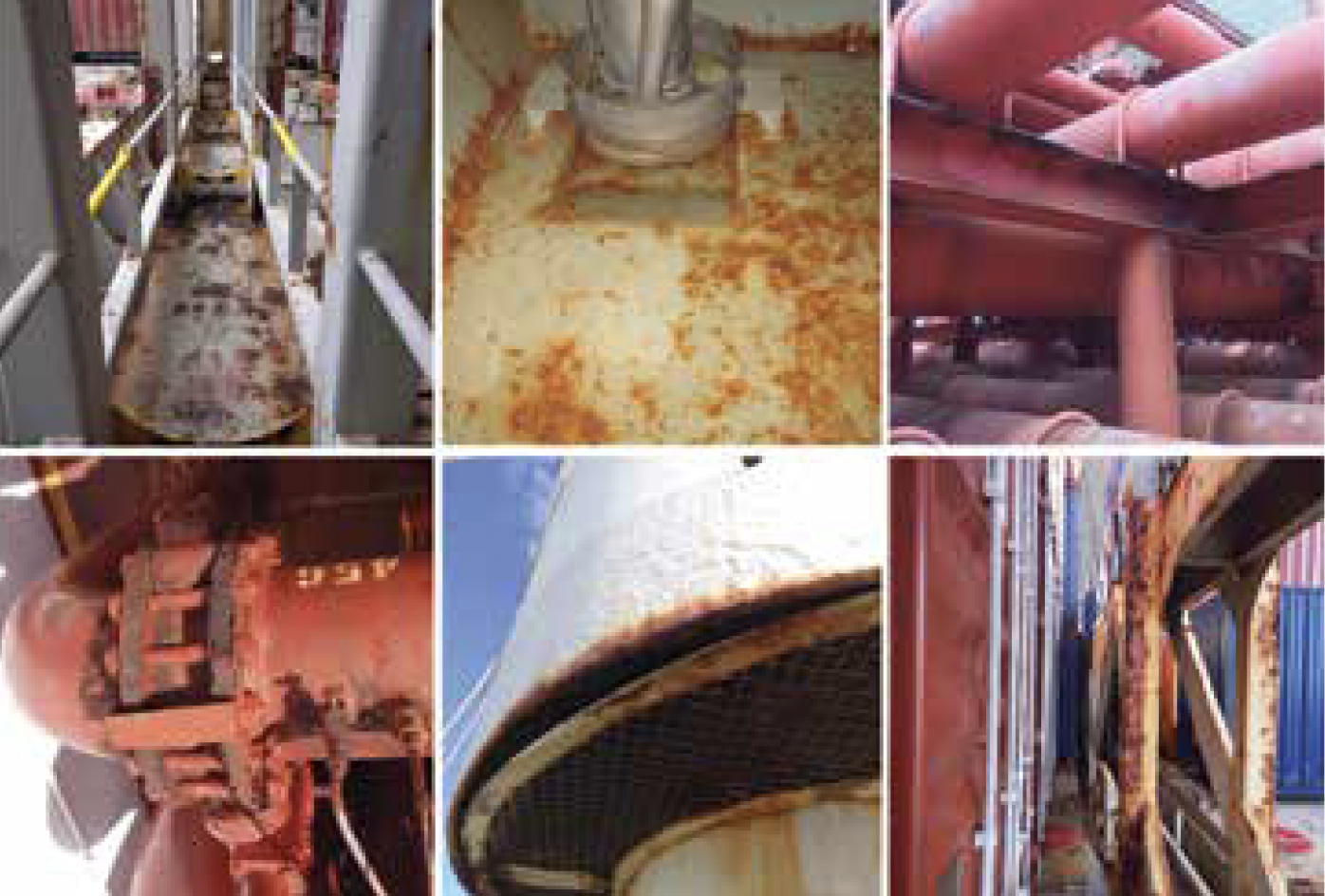
Figure 3: Ship Corrosion.
Challenges of Maritime Asset Management
Managing a commercial vessel presents operational challenges distinct from fixed land-based industrial infrastructure. The inherent mobility of ships, combined with the hostile environments in which they operate, creates significant barriers to conventional inspection methodologies.
Commercial vessels spend most of their operational life at sea, making brief port calls optimised solely for rapid cargo loading and discharge. These tight turnaround windows leave qualified coating inspectors with minimal time to gain access, conduct comprehensive visual surveys, and compile detailed degradation reports.
A further operational challenge lies in the primary responsibilities and rotation schedules of the onboard crew. Seafarers prioritise
safe navigation, machinery operation, and cargo handling. Detailed manual reporting on coating conditions is frequently viewed as a secondary administrative burden.
This issue is compounded by regular crew turnover. Seafarers rotating off a vessel at the end of a contract rarely return to the same ship for their next assignment. This continuous rotation fragments record-keeping and leads to a lack of long-term accountability for ongoing surface maintenance.
Finally, digital infrastructure at sea remains constrained. While satellite connectivity is improving, high-bandwidth internet access while transiting open ocean is often limited, intermittent, or expensive.
Any mobile or digital inspection framework deployed on board must function completely offline, storing capture data locally and synchronising seamlessly once connectivity is established.
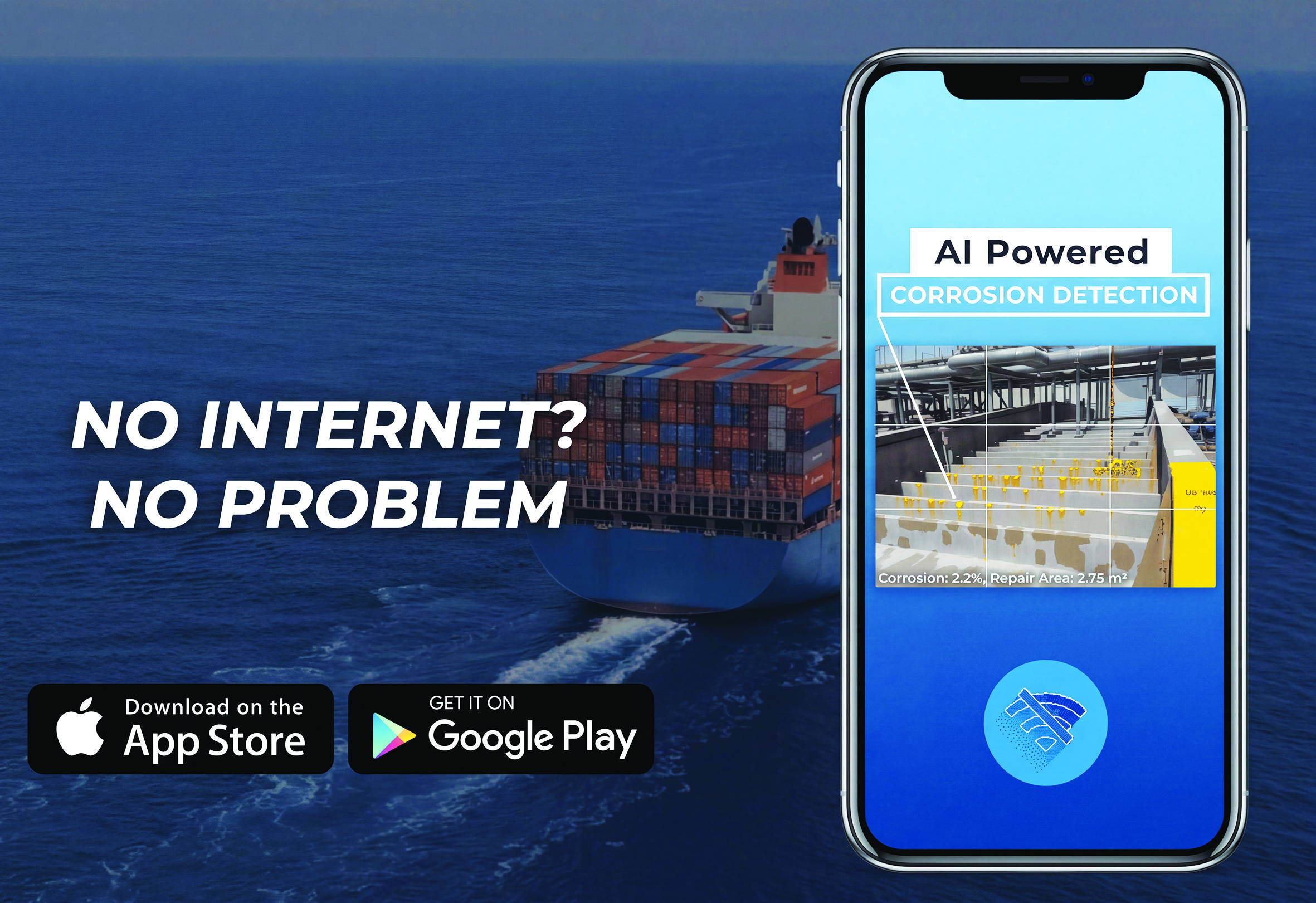
Figure 4: Offline Mode.
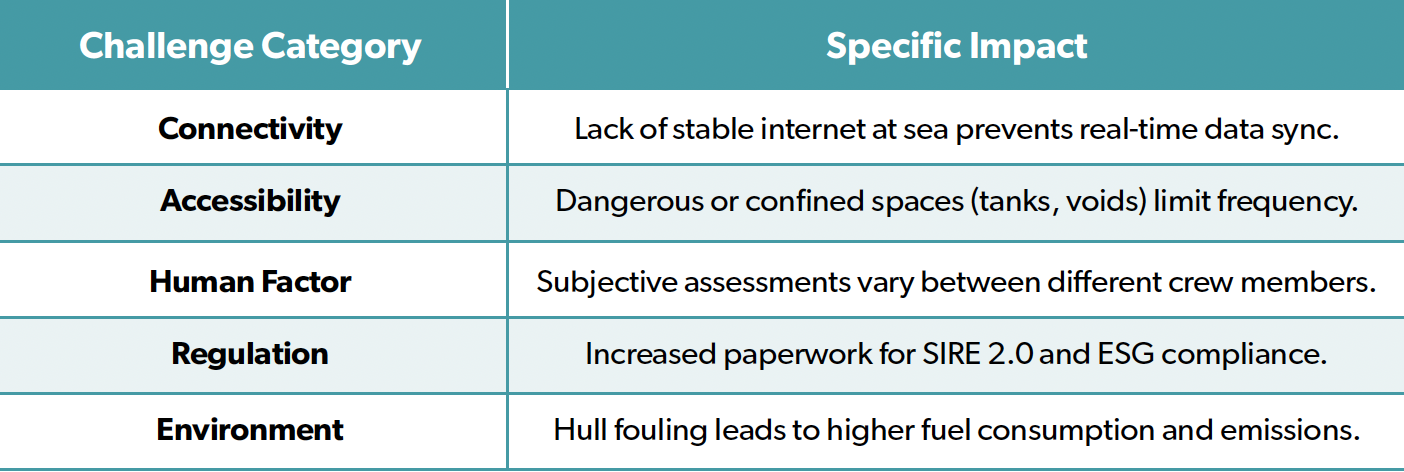
Table 2 summarises the primary challenges associated with shipboard inspections.
Table 2: Operational Challenges in Maritime Corrosion Inspection.
AI-Powered Mapping and Assessment
The foundation of modern digital corrosion management rests on artificial intelligence processing high-resolution visual data. Manual corrosion assessment is inherently subjective and prone to human error; one inspector may categorise a corroded plate as moderate degradation, while another classifies the same area as severe. AI eliminates this inter-inspector variability by applying standardised algorithmic models to visual inputs, establishing an objective baseline across all evaluations.
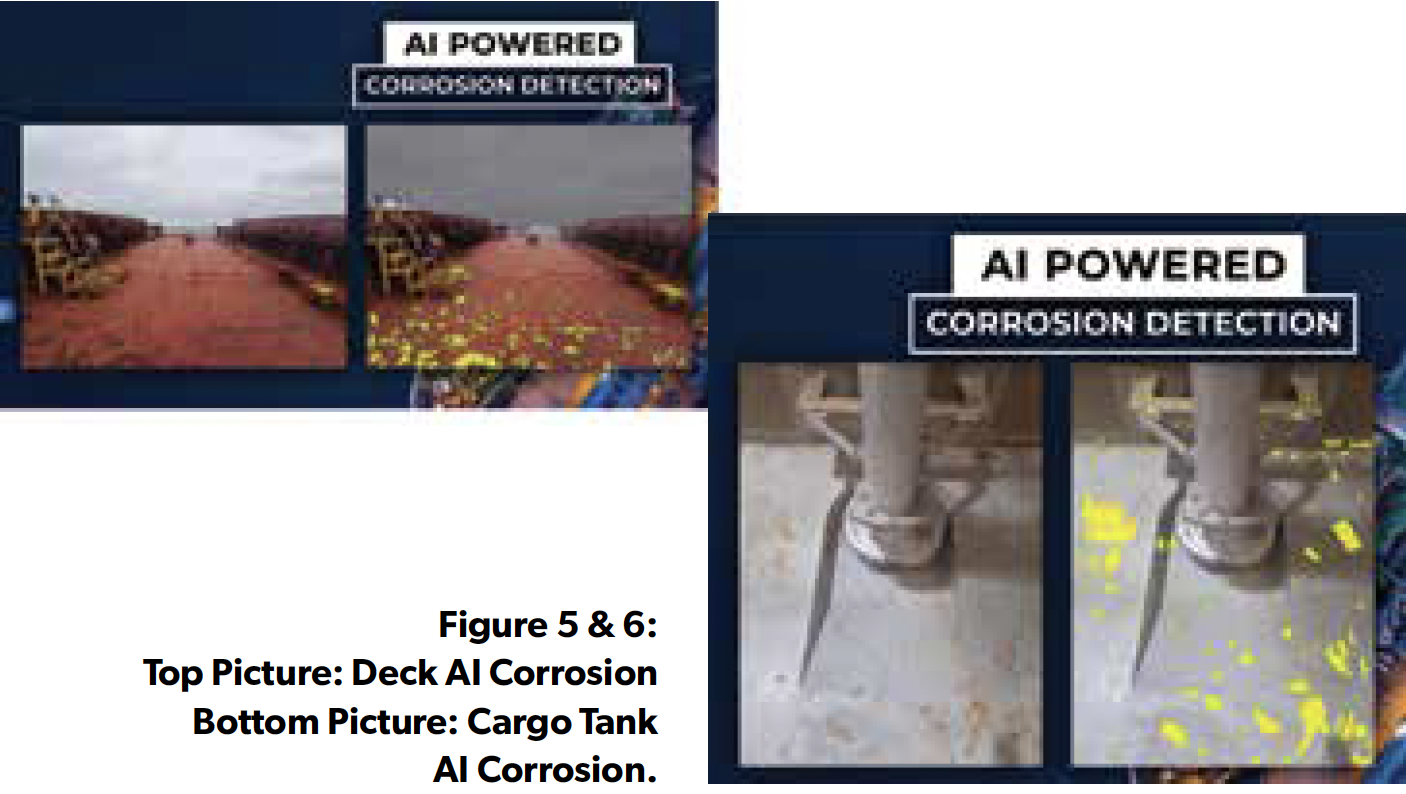
AI systems analyse hundreds of images in a fraction of the time required for a human inspector to complete a manual survey. These models are trained on extensive marine corrosion datasets allowing them to detect rust, paint breakdown, blistering, and structural anomalies across varying lighting conditions, surface geometries, and background noise. This high-speed processing enables the automatic compilation of a detailed, vessel-wide corrosion map. A holistic approach relies on defining distinct structural zones across the ship, including weather decks, water ballast tanks, cargo holds, the superstructure, and the underwater hull. Onboard crew members can capture imagery using standard mobile devices during routine watchkeeping or safety rounds and upload the data to an AI processing engine, which generates immediate, localised condition assessments.
The Role of Computer Vision
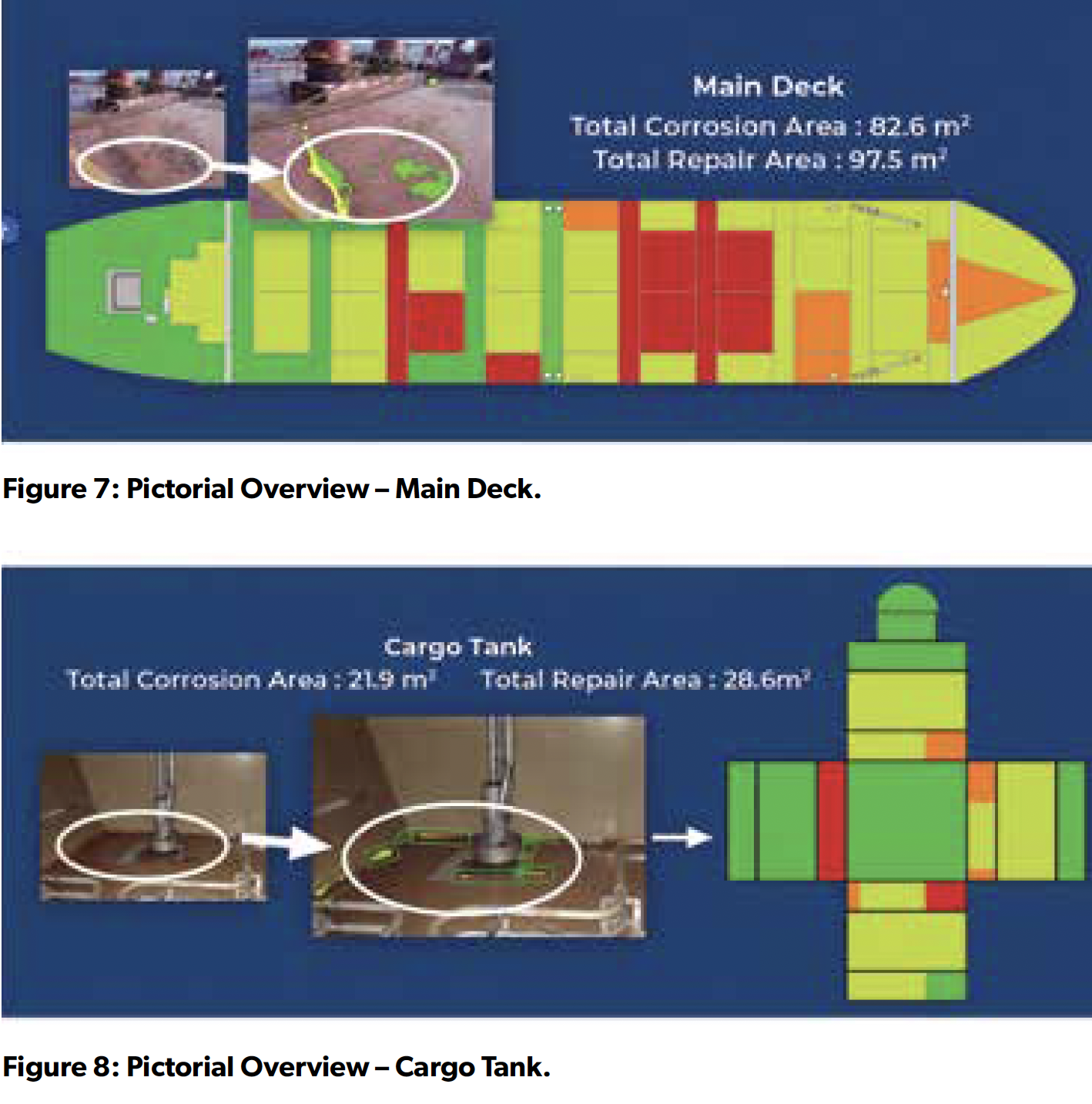
Computer vision models are utilised to detect corrosion, fouling and anomalies from the photos uploaded. Quantitative evaluation is essential for determining the reliability of inspection approaches, and AI provides this quantification by calculating the exact percentage of a surface area affected by corrosion. This data is compiled into a pictorial overview to provide the stakeholders with an immediate understanding of the vessel condition without requiring superintendents or class surveyors to review hundreds of unsorted photographs. This traceability is vital for benchmarking performance across a fleet.
Integration with Robotics and Drones
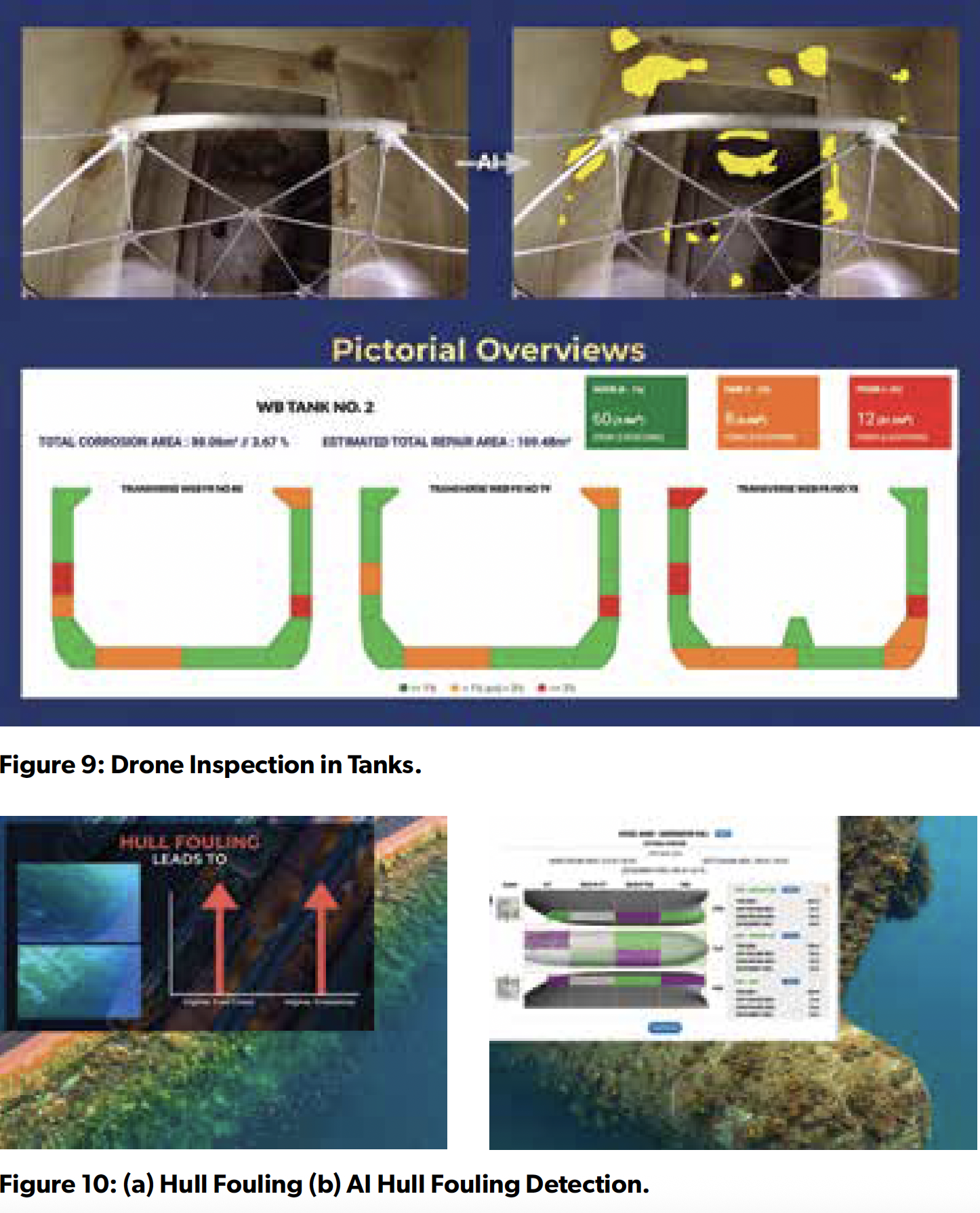
The physical challenges and safety risks associated with inspecting enclosed or elevated shipboard structures are increasingly mitigated through autonomous hardware, such as Unmanned Aerial Vehicles (UAVs/drones) and Remotely Operated Vehicles (ROVs). Modern AI evaluation software integrates directly with photos captured from these robotic platforms. In ballast tanks and cargo holds, drones navigate complex internal spaces to capture images of overhead stiffeners, under-deck plating, and high-placed welds. This eliminates the need for working at height, rope access, or erecting costly scaffolding. For the underwater hull, ROVs can map biofouling. Hull fouling has serious consequences beyond structural integrity; it increases drag, leading to higher fuel costs and carbon emissions. Accurate AI mapping of fouling allows owners to optimise cleaning schedules, thereby meeting Environmental, Social, and Governance (ESG) goals, saving fuel costs and avoiding penalties for excessive emissions.
For underwater hull inspections, ROVs capture subsea images to map fouling and detachment. Beyond structural considerations, fouling increases drag, raising fuel consumption and greenhouse gas emissions. Precise AI-driven mapping of hull fouling allows ship managers to transition from fixed cleaning schedules to condition-based hull cleaning, optimising vessel hydrodynamics, reducing fuel costs, and supporting fleet compliance with stringent ESG targets and international carbon intensity regulations.
Limitations of AI Assisted Robotics
While AI-driven mobile devices, drones, and ROVs significantly improve inspection coverage, certain shipboard environments remain inaccessible or restricted. Internal structural obstructions—such as tight double-bottom tanks, complex stiffener matrixes, behind pipe runs, and narrow void spaces—physically block drone flight paths and camera sightlines. Furthermore, laden cargo tanks on oil or gas tankers prohibit standard mobile phones and non-explosion-proof electronics due to explosion risks. Technical managers must rely
on traditional visual inspections using specialised intrinsically safe lighting, temporary staging and rope access, etc. once spaces are fully gas-freed and certified safe for entry. The inspection process relies on a hybrid execution model rather than handheld devices alone. Onboard crew members utilise handheld mobile phones and tablets for accessible, larger open-air environments like weather decks, superstructures, and accessible cargo holds during routine operations. Drones equipped with high-resolution cameras and sensors are deployed specifically for elevated, dangerous, or enclosed spaces—such as deep cargo holds, ballast tank structures, and vertical bulkheads—eliminating the safety risks of working at height and limiting work in confined spaces. By digitising imagery from both handheld devices and drone feeds within a central AI processing platform, corrosion and repair areas can be calculated over multiple surveys. This allows technical managers to track degradation rates over time, predict localised coating failure, and optimise predictive maintenance schedules across the asset life cycle.
Data Security and Infrastructure
Because maritime operational data includes commercially sensitive asset condition reports, drydocking schedules, and structural compliance metrics, robust cybersecurity architecture is paramount. Modern digital preservation platforms rely on enterprise-grade cloud hosting featuring multi-factor authentication (MFA), end-to-end data encryption in transit and at rest, and strict role-based access control (RBAC). This ensures that sensitive asset health data is accessible only to authorised personnel, protecting vessel owners from data breaches and corporate espionage.
Transitioning from fragmented, paper-based logs to a centralised digital database establishes a secure, continuous historical ledger
of vessel maintenance. By cross-referencing paint procurement, surface preparation logs, and localised coating performance against actual visual degradation over multiple years, vessel owners can quantitatively evaluate the long-term efficacy of competing paint formulations. Furthermore, this historical tracking provides an objective benchmark to evaluate the surface preparation standards and application quality delivered by different repair shipyards during major dry dockings.
Approval of Certification Bodies
While official approvals for AI coating inspections are still developing across classification societies like DNV, BV and LR, data-driven tools are gaining strong industry support. SteelCorr’s Digital Paint Report (DPR)© app is featured on the Veracity by DNV marketplace: DNV. veracity.com/digital-paint-report-coat-cost-optimisation-monitoring Identifying its reliability in delivering organised vessel inspection data.
Impact on Crew Efficiency
A major operational benefit of deploying AI-driven mobile tools is the immediate reduction in administrative burden placed on onboard personnel. Traditional inspection workflows require crew members to manually capture photos, transfer files to onboard workstations, format word-processor reports, and more. This process is inherently tedious, inefficient, and prone to minimal compliance. Mobile-native applications with full offline functionality streamline this entire pipeline, enabling seafarers to log structural zones, capture images on site, and auto-generate standardised reports directly from the deck or tank.
Field feedback from vessel crews indicates a marked increase in job satisfaction when administrative overhead is minimised. Simplified reporting tools empower seafarers to efficiently document routine surface preparation and paint maintenance, creating a clear visual record of their daily work for onshore management. By eliminating tedious paperwork, data collection becomes more frequent, consistent, and reliable, directly improving overall maintenance outcomes and long-term asset health.
Conclusion
The maritime industry is at a point where traditional maintenance must meet digital innovation. AI-powered corrosion mapping offers a scalable, objective, and cost-effective solution to the problem of rust. By reducing the reliance on subjective manual inspections and providing actionable insights through computer vision, ship owners can extend the life of their assets.
The integration of mobile technology, drone compatibility, and secure cloud storage ensures that corrosion management is no longer a reactive necessity but a proactive strategic advantage. As regulations like SIRE 2.0 (the International Marine Forum’s (OCIMF) digitised, risk-based vessel inspection regime for the global tanker industry) and RISQ 3.2 (RightShip Inspection Ship Questionnaire) increase the demand for transparent reporting, digital tools will become indispensable for maintaining the integrity and profitability of the global fleet. Below is the image of the device used by one of our customers – i.safe MOBILE IS930.1 – and a drone used for tank inspections.
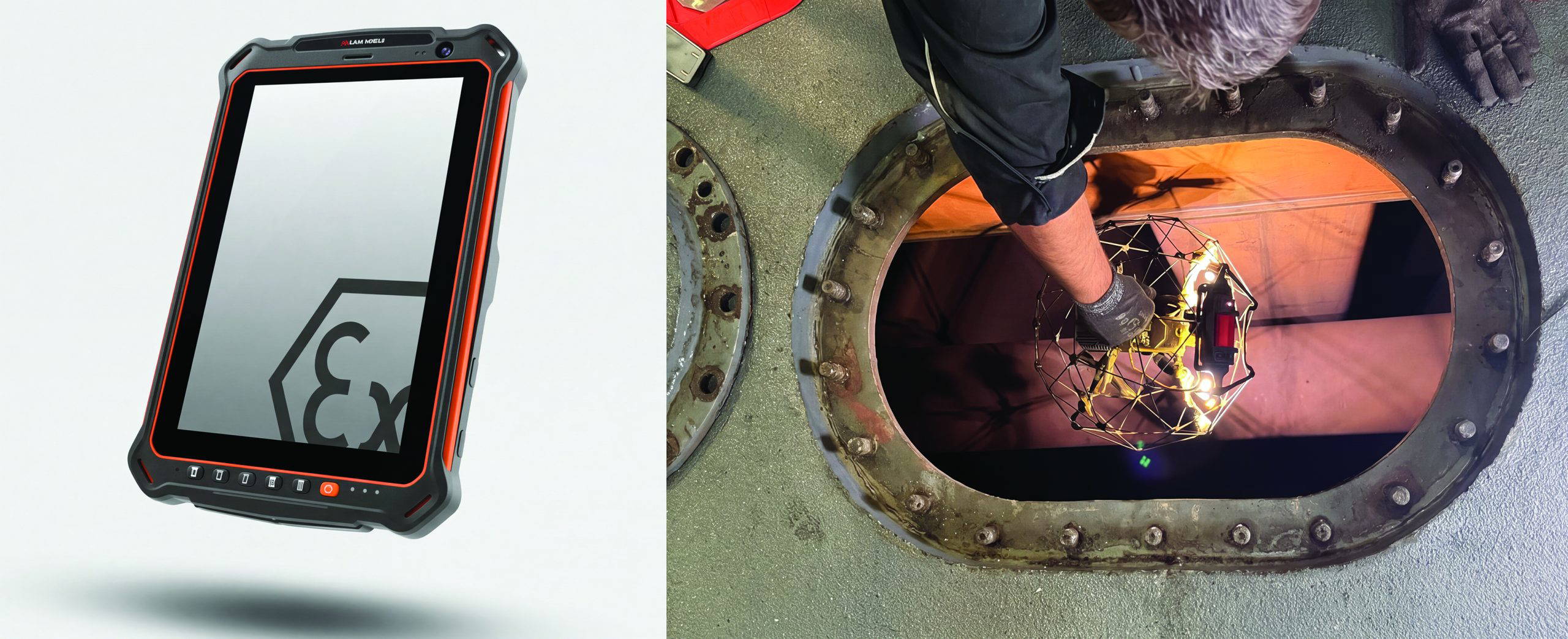
Figure 11: a. Tablets and b. Drone.
References
1.https://hafnia.com/news/hafnia-partners-with-artificial-intelligence-partner-steelcorr-to-monitor-vessel-effective-paint-maintenance/
2. https://ardmoreshipping.com/ardmore-shipping-deploys-steelcorr-ai-solution-to-enhance-vessel-corrosion-monitoring-and-paint-maintenance/
3. https://smartmaritimenetwork.com/2026/02/18/jome-engineering-3dts-and-steelcorr-partner-on-drone-tank-inspections/
4. https://store.veracity.com/digital-paint-report-coat-cost-optimization-monitoring
5. https://www.sciencedirect.com/science/article/abs/pii/S1350630723006891
6. https://www.sciencedirect.com/science/article/pii/S2666845925000170
7. https://play.google.com/store/apps/details?id=com.steelcorr. digitalpaintreport&hl=en
8. https://www.mdpi.com/2073-4360/17/11/1548 9. https://gulfnews.com/business/corporate-news/hafnia-tankers-partners-with-dubai-based-ai-