Many of you know that in May 2018 CEOCOR held its Annual Congress in Stratford upon Avon. A significant number of those in ICorr with interests in buried pipelines, their internal and external corrosion mitigation, coatings and cathodic protection attended the Congress. This was the first time in the 62 years since the formation of CEOCOR that the Congress had been held in the UK. Those of you who may wish to know about the history of CEOCOR are encouraged to visit the CEOCOR web site http://ceocor.lu and in ‘Bibliography’ and read the ’50 years of CEOCOR.
ICorr and Correx Ltd were responsible for organising the venue, the Exhibition and the Social programme for both delegates and partners. CEOCOR were responsible for the Technical programme. All the bookings were administered by the ICorr/Correx Ltd Office staff. An organising committee chaired by Steve Barke and comprising Sarah Vasey (President), John Fletcher (Immediate Past President), Ross Fielding (Midlands Branch), Brian Goldie (Editor, Corrosion Management) and Brian Wyatt (ICorr and CEOCOR) were responsible for the planning and operation of the Congress. Linda Wyatt was responsible for the Partners’ Programme and two of her ex work colleagues assisted with the registrations and enquires throughout the Congress. I thank them all for their tireless work over many months. There was a dedicated web site for which thanks go to Debbie Hardwick at SquareOne; our President opened the Congress, John Fletcher and Steve Barke were there all the time working to keep it all running smoothly. Thanks are also due to ICorr Council for their support from when this was just an idea and one that might have cost ICorr a lot of money.
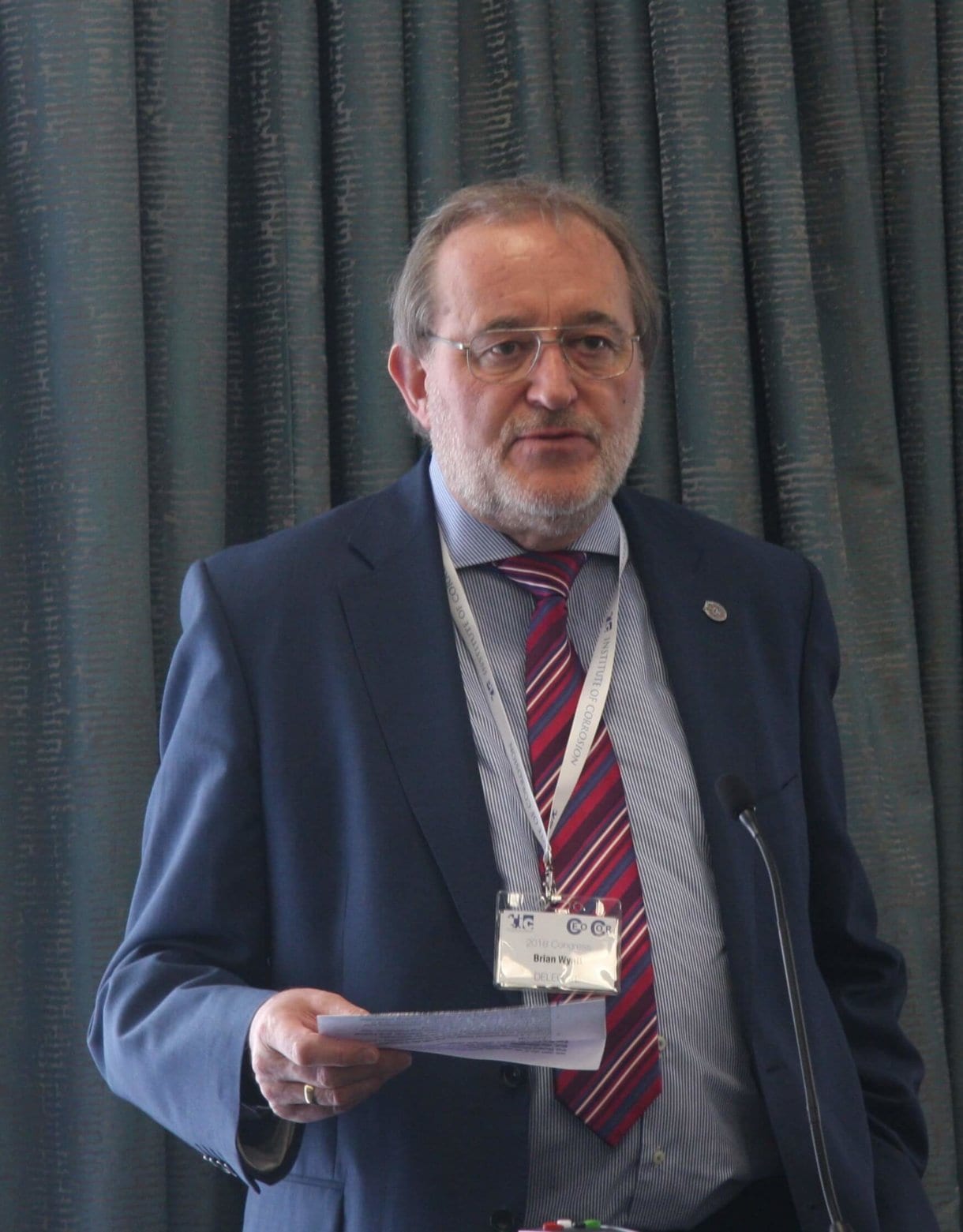
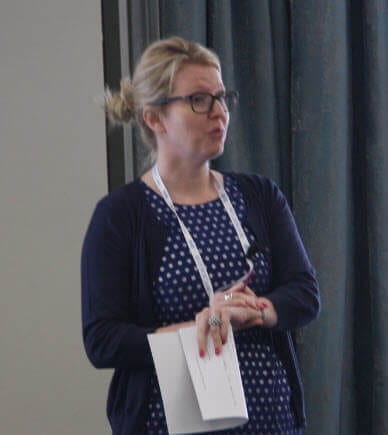
Sarah Vasey ICorr President open CEOCOR Congress
The Technical Programme was managed by the CEOCOR Secretary General Rene’ Gregoor from Belgium and the two Presidents of Commissions within CEOCOR, Markus Büchler from Switzerland and Tom Levy from Luxembourg. Key Note Speakers were organised by ICorr. Again, sincere thanks are due to all concerned.
Technical Programme
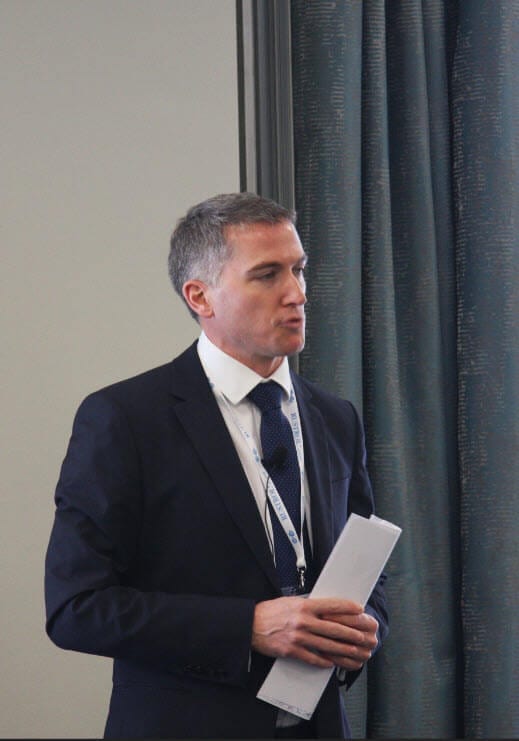
The meeting was opened by Darren Thomas, Asset Engineering Manager of National Grid, who were also the Platinum Sponsors for the Congress. This was an interesting overview of the UK gas transmission pipeline assets, its management and the future challenges within the energy market of the UK. Darren also committed National Grid to the ICorr Training and Certification Scheme for Cathodic Protection Personnel. During the next 2 days there were a further three Key Note Speakers; Peter Elliott (Corrosion & Materials Consultancy Inc.) with an entertaining general paper on pipeline corrosion, Phillip Clisham (GHD) with a very informative paper on the UK water industry pipeline assets and the financial and political constraints for their management and Roger Francis (RF Materials) with a typically comprehensive paper on materials selection for pumps and the need for corrosion engineering expertise at the start of projects, not in the expensive ‘fix it when wrong’ stage.
There were a further 29 technical papers covering topics including:
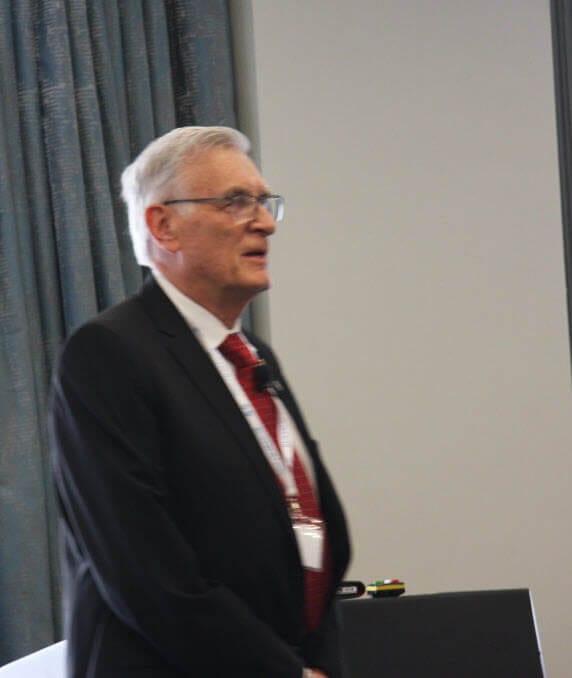
Darren Thomas, asset Engineering Manager, National Grid Opening Address
My assessment was that the quality of the papers was, as is always the case with CEOCOR, first rate and that the delivery of them was excellent. Attendees were presented with these in hard copy and electronic formats. They are not available to non CEOCOR Members for 12 months (join for this benefit; it is only Euro 150) but next year they will be publicly available on the CEOCOR website.
Before and after the 2 day Technical Paper sessions were the Work Group meetings. These deal with technical issues of interest to the members; most of the European Standards related to cathodic protection of buried pipelines have been developed as pre-standards within these Work Groups. Their completed documents are on the CEOCOR web site. Current work includes CP criteria, reference electrodes, internal corrosion, casings and OFF potential measurements. Members and non members are welcome to participate, there are typically 2 or 3 meetings per year with electronic working between times.
Peter Elliot, FIM and Past Chairman of ICorr delivering Plenary Lecture
Sponsors and Exhibition
The Platinum Sponsor was National Grid. There were 6 Gold, 8 Silver and 5 Bronze Sponsors who also exhibited, there were 4 Exhibitors and a number of Companies also sponsored other elements. All told there were 23 Exhibitors, a record for CEOCOR. One or two thought that they did not have sufficient space, but CEOCOR has always held small table top exhibitions. My thanks go to all of the Sponsors and Exhibitors, without whose support the Congress would not have been possible. Those that I have spoken to directly have all said that this was a success for them. This was not like one of the larger trade ‘shows’; it was an opportunity to display and talk to some of the most senior technical authorities in buried pipeline corrosion in Europe. 100% of the footfall was high quality.
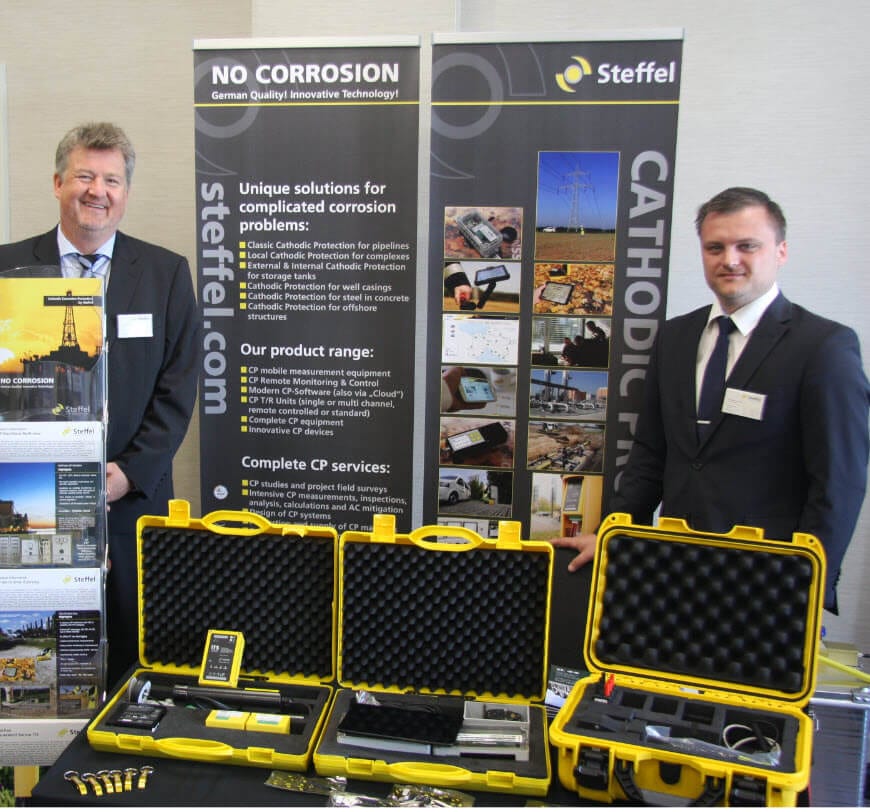
Exhibitors from Steffell Germany
Social and General
Although the prime reason for attendance was work we also had a great time. We had a fantastic Gala Dinner with hilarious entertainment from the Shakespeare Birthplace Trust and some attendees who were prepared to enter into the spirit of Shakespeare and corrosion engineers! The BBQ, hog roast and Jazz trio was a fantastic networking opportunity. The Partners enjoyed visits all around Stratford and a private tour of Ragley Hall.
In total we had over 150 participants; again a record for CEOCOR. But we measure success by the quality and not the quantity; it was a great success. Those of you who were unable to come missed something really special; those of you who were unable to persuade your companies to Exhibit now know how wrong they were … but we had no more room!
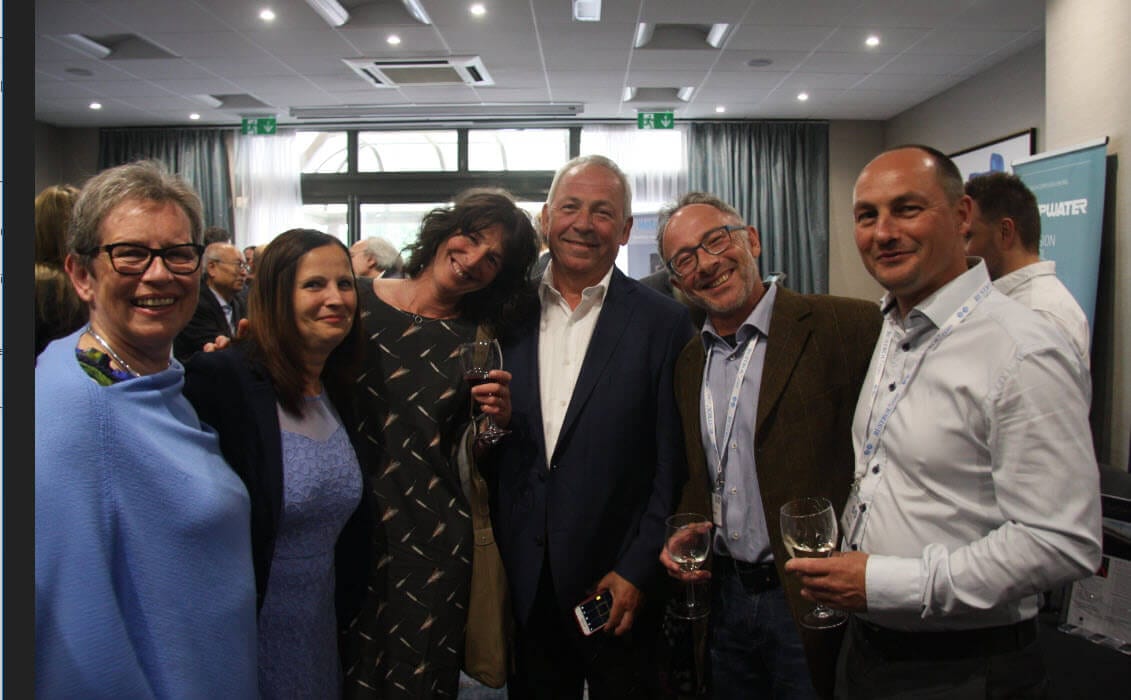
CEOCOR Attendants
What Next
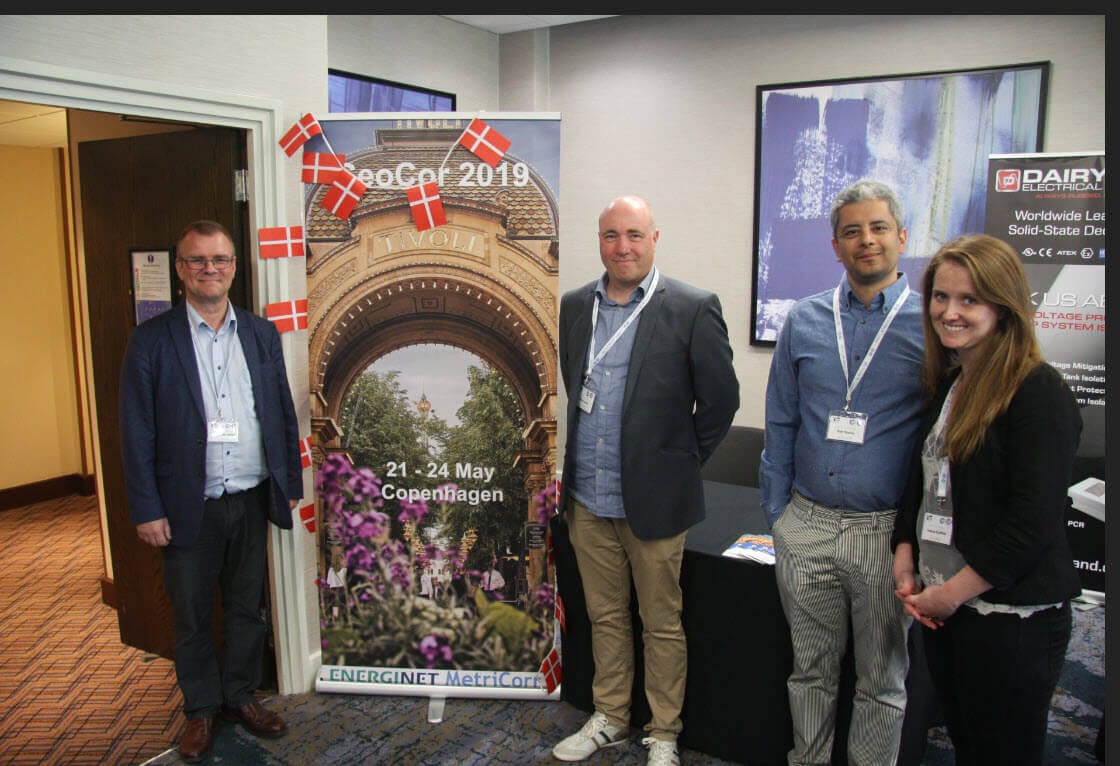
I hope for more UK individual and corporate members of CEOCOR. The next Congress is in Copenhagen; see http://www.ceocor2019.com I know that the organising team of Lars Nielsen and Thomas Larsen will be striving to do even better than we managed to do; they are a good team and it is a good venue …. But they will have to work very hard to do better than 2018!
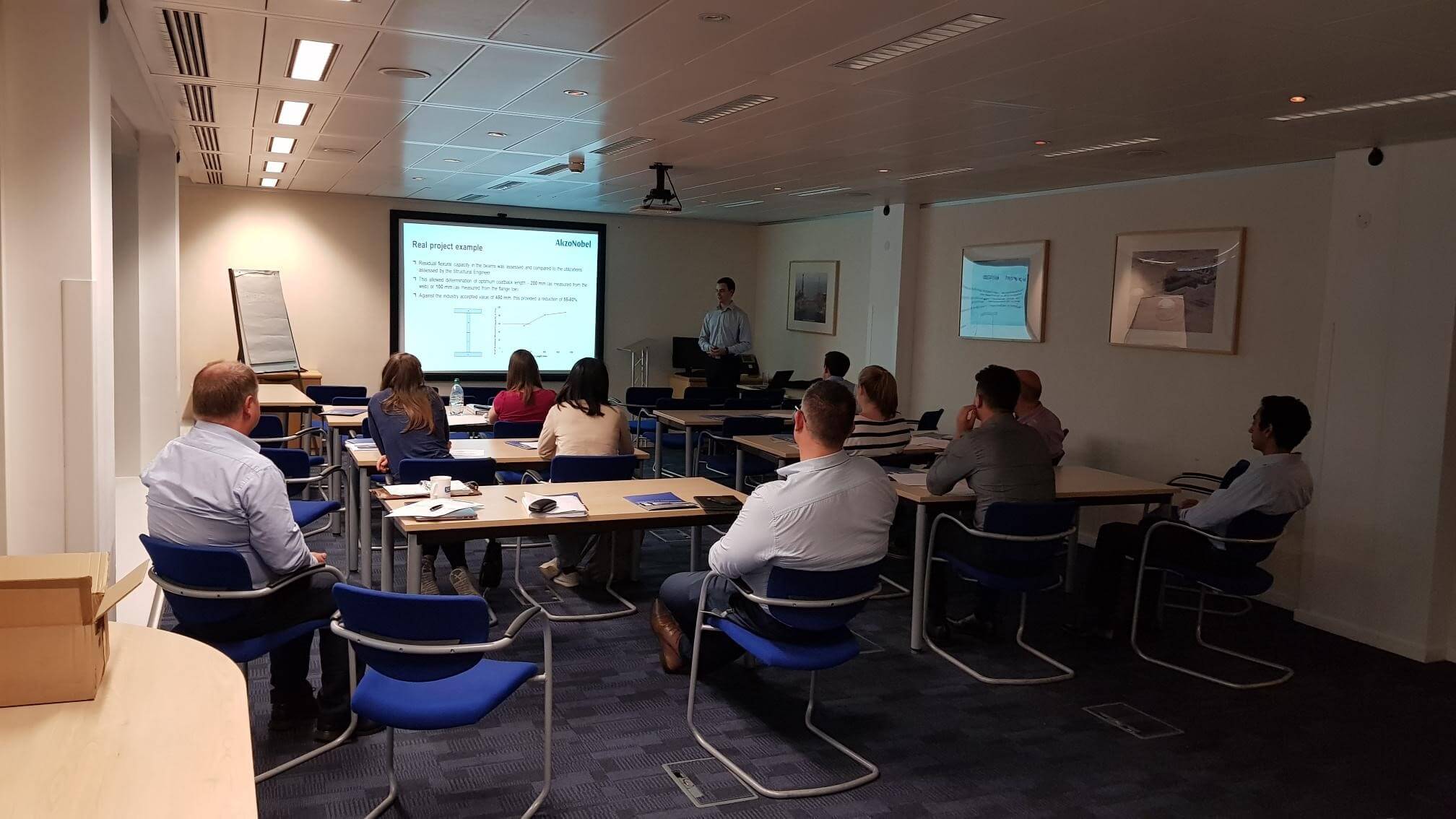
Young Engineer Program June meeting was opened by George Winning with a brief discussion on the Case Study which was delivered to the delegates last month with an update on the programme and the mentors.
Hydrocarbon Fire Protection is a complex; important topics that a young Engineer needs to focus on;
Passive Fire Protection
What is fire protection and why is it needed
Fire types
How PFP coatings are tested
Factors affecting the loading
Structural Fire Design
What is it and how does it provide cost and weight savings
Magic numbers and real project examples
Further Information
What information is available
Who are the governing bodies
Where do I find information
There was some good interaction from the floor with discussion on how Engineers could approach Fire Protection to meet the current project requirements to save weight and costs.
The evening closed with a networking dinner hosted by the Institute of Corrosion and AkzoNobel.
Our thanks as always goes to those who give up their free time to come and assist with the YEP programme and in particular Philip Hollyman from AkzoNobel.
CED Working Day and Symposium on Atmospheric Corrosion in Industrial Applications
The tenth CED Working Day was held on Tuesday 24 April 2018 at The Centre, Birchwood Park, Warrington. Some thirty-nine delegates were welcomed by Chairman, Nick Smart. In addition, there were several exhibition stands, a visit to Wood plc test facilities, and CED Working Group Meetings.
Professor Stuart Lyon (University of Manchester) gave an introductory lecture entitled, ‘Introduction to atmospheric corrosion – mechanisms etc’. Given the large surface areas of materials exposed to the atmosphere, annual losses due to corrosion in the UK are in the order of several hundred million pounds. The atmosphere is one of the most common natural environments to which materials are exposed, however unlike most environments, the atmosphere does not provide constant exposure conditions. Thus, the corrosion rates of similar specimens exposed to the atmosphere have poor reproducibility. The main constituents of the atmosphere are essentially constant, however minor components can affect corrosion rates significantly, for example, the concentration of water vapour can vary over a large range. Three primary sources of air pollution are, volcanic action, vegetation and animal wastes, however sea-spray and dust from the earth also need to be considered. Pollutants are also classified as gaseous, particulate or aqueous (dissolved in rain) and man-made atmospheric pollution includes that from burning fossil fuels, chemical processing, sewage treatment and farming. Stuart went on the explain climate effects, macroclimates and microclimates, and that ISO 9223 provides a classification scheme for ranking pollution in a particular climatic location, which is based on the deposition rates of SO2 and Cl-. Atmospheric corrosion only proceeds when sufficient water is present to solvate ions generated during anodic and cathodic reactions. By definition, at 100% Relative Humidity (RH) condensation occurs. Metal corrosion cannot occur unless there is sufficient liquid water on the surface. The time during which RH exceeds a critical value is defined as the ‘Time of Wetness’ (TOW) and ISO 9223 also includes a scheme for ranking a particular climate in terms of TOW (hrs/year). The standard also provides a classification scheme for the ‘Corrosivity’ of an environment, based on the expected annual corrosion rate over 1 year. Finally, specific mechanisms relating to the atmospheric corrosion of iron and zinc were outlined.
Richard Bewell (Engineering Manager, BAM Nuttall) gave a presentation on, ‘Atmospheric corrosion prevention in the windpower industry’. The ‘Blyth Demonstrator Project’ (located about 5.6 km off the North-East coast of England at a water depth of about 38m) has five 8.3 MW turbines, capable of supplying power to 34,000 homes, with a design life of 26 years, and commercial operations commenced in October 2017. The design is essentially a monopole with a heavy reinforced concrete base approx. 30m diameter x 1.1m deep and using over 1,800m3 of concrete with over 500 tonnes of steel reinforcement per foundation. The towers comprised steel shafts, 60m high x 7.5m diameter with a wall thickness of 70mm. For protection in the splash zone and for atmospheric exposure, Norsok C5M specification was applied.
Cristano Padovani (Wood plc) addressed, ‘Modelling the corrosion behaviour of intermediate level radioactive waste (ILW) containers during prolonged exposure to atmospheric conditions’. The stages involved in waste management are, immobilise and containerise, interim storage, transport to an underground geological disposal facility (GDF) and utilise man-made and natural barriers to prevent/minimise release. The atmospheric corrosion of the stainless steel containers, used for medium- and long-term storage , is induced by chloride-containing aerosols, generated by hygroscopic chloride salts on surfaces. Temperature and relative humidity (RH) determine electrolyte characteristics (e.g. concentration) and hence, corrosivity. The factors investigated were, environmental and corrosion monitoring, pit initiation, and mechanistic and SCC initiation studies. Temperature and humidity fluctuate daily and have seasonal variation for above-ground facilities, but are typically more stable underground. It was found that MgCl2 and CaCl2 were inherently much more corrosive than NaCl (especially with regard to SCC), and that high enough RH can lead to dilution of corrosive ions and prevent initiation or cessation, and that SCC initiation was severely inhibited by induced surface compressive stresses. Mechanistic studies in bulk solution indicated that, under polarization, follow kinetics such as, D = A tn, where D=pit depth, A= a constant, t= time and n is an exponent. Furthermore, it was found that SCC propagated very fast after an ‘apparent’ incubation period. A Parametric model – Atmospheric Corrosion of stainless Steel in Stores (ACSIS) was developed, comprising three basic modules, environmental (is the surface wet ?), corrosion initiation (does corrosion initiate ?), and corrosion propation (if so, how much damage results ?). The Laycock-White-Krouse (LWK) mechanistic model was described and used to relate pit depth as a function of time for high RH’s and different chloride surface concentrations.
‘Assessment of corrosion under insulation and engineered composite wraps using pulsed Eddy-current techniques’ was described by Bill Brown (TRAC Oil and Gas Ltd). This presentation touched on the NDT aspect of atmospheric corrosion. Corrosion under insulation (CUI) is possibly the greatest unresolved asset integrity problem in industry. Current methods for measuring wall thickness under insulation, without removing it, all have severe limitations. In total, there are three eddy current devices available for this. However, TRAC evaluated the recently-introduced ‘Lyft’ – a high-performance reinvented pulsed eddy current (PEC) technique) and also Maxwell produced PEC equipment. Although radiography may also be used, it is generally limited to 6 in. diameter pipework, and computer-aided tomography has also been used. A combined PEC and digital radiography technique was developed by Shell in the early 1990’s. A simplified working model of PEC was described and that the concepts of footprint and average area of a probe are key to understanding what a PEC can and cannot detect. The footprint is affected by the size of the probe and the distance from the component or structure being examined from the probe. The footprint is of utmost importance, as it is the decisive factor in determining the dimension of the inspection grid, edge effect and the smallest volume or defect. Nine case histories using this technique were then given.
Professor Geraint Williams (Swansea University) addressed, ‘Preventing corrosion of galvanized steel in the non-chromate age’. The EU has set a ‘sunset’ date of 2019 for the replacement of hexavalent chromium corrosion inhibitor. The problem of how the performance of new inhibitor pigments could be quantified under atmospheric corrosion was raised. Methods included, external weathering, accelerated salt spray and EIS (immersion in corrosive solutions). Assessment of organic coatings carried out at Swansea University included the use of a Scanning Kelvin Probe (SKP). This involves the use of a reference electrode in a test chamber, without physical contact – i.e. not in a ‘bulk’ electrolyte, providing a ‘spatial map’ of corrosion potentials. Ion exchange materials are promising chromium-free anti-corrosion pigments, in which ‘smart release’ inhibitors are only released whenever a corrosive environment is encountered. ‘Hydrotalcite’ is a layered double hydroxide of general formula Mg6Al2CO3(OH)16.4H2O. The carbonate anions that lie between the structured layers are weakly bound giving the material anion exchange capabilities. Inhibition arises by the sequestered aggressive Cl- ions being exchanged for less aggressive ions. The action of this ion exchange mechanism was studied on hot-dip galvanized steel by SKP. The use of benzothiazole inhibitors as a non-chromate alternative was also mentioned. The mechanism is to stifle the underfilm oxygen reduction reaction. Finally, the next generation of Zn-MgAl alloys for galvanizing was introduced. These are very heterogeneous, comprising a three phase material.
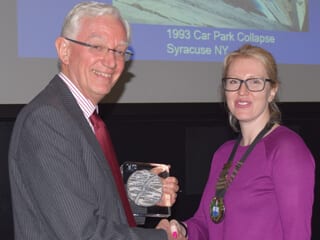
John Broomfield receiving the Paul McIntyre Award from Sarah Vasey.
The second annual Paul McIntyre Award was presented at the meeting to John Broomfield, by Sarah Vasey, President of The Institute of Corrosion. This Award is presented to a senior corrosion engineer, over the age of 30, who as well as being a leading practitioner in his field, has advanced European collaboration and international standards development (in keeping with Paul’s area of interest). Recipients must have established an international reputation in the field of corrosion engineering. John had originally a background in spectroscopy and applied these studies to monolayers on steel surfaces. Later, he worked on problems with PWR reactors in the UK, later transferring to Taylor Woodrow and subsequently carried out work on concrete pre-stressed pressure vessels. Some very interesting slides on the pioneering work he was involved with were shown.
At the close, Nick Smart thanked the speakers, the delegates for attending the working day, Wood plc staff for the conducted tours of facilities, and the exhibitors, for a successful and enjoyable event.
Editor’s note: Text copyright: David Nuttall, released under CC-BY-NC.
The branch held their AGM at the evening meeting on 11th April 2018, which was hosted by Amey at their International Design Centre in Birmingham.
The outgoing branch Chairman, Trevor Box, thanked the members for their continued support, those that had taken the time to prepare talks and presentations over the previous year and thanked the organisations, companies and individuals that had offered sponsorship, either by way of providing the meeting venues or refreshments at these. The committee members were elected and the new Chairman was Bill Whittaker
Following the AGM, a trinity of experts in galvanic anode technology for use in reinforced concrete gave presentations on developments in the industry, starting with Roberto Giorgini, consultant to Mapei, who had kindly travelled from Holland for the evening. Roberto’s presentation looked at design criteria and reviewed the basis of design for the use of galvanic anodes in concrete, and compared this with the more conventional design processes used for galvanic anodes in other electrolytes. It was noted that agreed design procedures for galvanic anodes in concrete are not documented and reliance on data from the manufacturers is required.
Gareth Glass, from Concrete Preservation Technologies (CPT), presented “Polarisation and Responsive Behaviour of Galvanic Anodes”. This covered the basis for galvanic and hybrid protection technology, the use of potential mapping and potential changes in the early age assessment of galvanic systems, the responsive behaviour of galvanic systems to environmental changes, the importance of responsive behaviour in aged systems and the use of corrosion rates in the assessment of protected structures. Gareth explained that a simple method of checking system installation was to measure two potentials at and away from a sample of the installed anodes, and potential mapping to show early age changes in steel potential was presented. Data were also presented that indicated the current output of aged systems may fall to low levels in dry or sheltered environments and that re-activation occurs when such systems get wet, including in systems older than 10 years. It was further shown that data can be analysed and translated into corrosion rates in the assessment of the structure. Recommendations included the production of brief commissioning reports, using potential mapping to assess performance, taking into account long term responsive behaviour especially in aged sheltered systems that may dry out, and using corrosion rates to assess the condition of the protected structure.
George Sergi of Vector Corrosion Technologies completed the evening’s talks with a presentation on a new dual-phase anode system for protection of steel reinforcement that he had been instrumental in developing with Vector. George described the process by which application of an impressed current charge can increase the pH around the reinforcement and passivate the steel where corrosion is taking place, and presented some data on the extent of charge required to do this based on laboratory experiments. The presentation explained how the Vector product could provide a charge phase without an external dc power supply.
After the presentations a lively panel discussion was held with the three experts responding to the audience questions. The Chairman thanked all presenters for the time taken in preparing and attending the very informative meeting.
The last presentation of the 17/18 season was a joint meeting with NACE UK, and Francois Lirola of Saipem, gave a very interesting talk entitled, “Fusion Bonded Joint: an innovative technology for cost effective plastic pipe installed in J&S lay”.
In deepwater, corrosion protection of flowlines is becoming a major issue. Conventional corrosion allowance of carbon steel flowlines, or cladding, leads to excessive procurement costs, installation weight, welding and NDT challenges. Francois introduced an interesting alternative to achieve an acceptable corrosion protection – is the use of plastic liners. However, plastic lining has been mostly limited up to now to reel lay. SAIPEM has developed and patented an innovative and cost effective field-joint system, the Fusion Bonded Joint (FBJ), which can maintain the corrosion barrier across girth weld locations along the flowline. It has minimal impact on the offshore laying rate and it is based on field proven technologies and methods that are commonly employed in gas transportation networks. The design and fabrication of the FBJ system were explained, and the results of the extensive qualification that has been carried out, were shown.
This excellent presentation led to a high level of discussion by the audience, and the chairman thanked Francois for the time taken in preparing this talk and for coming to London to deliver it.
We use cookies to optimize our website and our service.
Functional
Always active
The technical storage or access is strictly necessary for the legitimate purpose of enabling the use of a specific service explicitly requested by the subscriber or user, or for the sole purpose of carrying out the transmission of a communication over an electronic communications network.
Preferences
The technical storage or access is necessary for the legitimate purpose of storing preferences that are not requested by the subscriber or user.
Statistics
The technical storage or access that is used exclusively for statistical purposes.The technical storage or access that is used exclusively for anonymous statistical purposes. Without a subpoena, voluntary compliance on the part of your Internet Service Provider, or additional records from a third party, information stored or retrieved for this purpose alone cannot usually be used to identify you.
Marketing
The technical storage or access is required to create user profiles to send advertising, or to track the user on a website or across several websites for similar marketing purposes.