


The cart is empty!
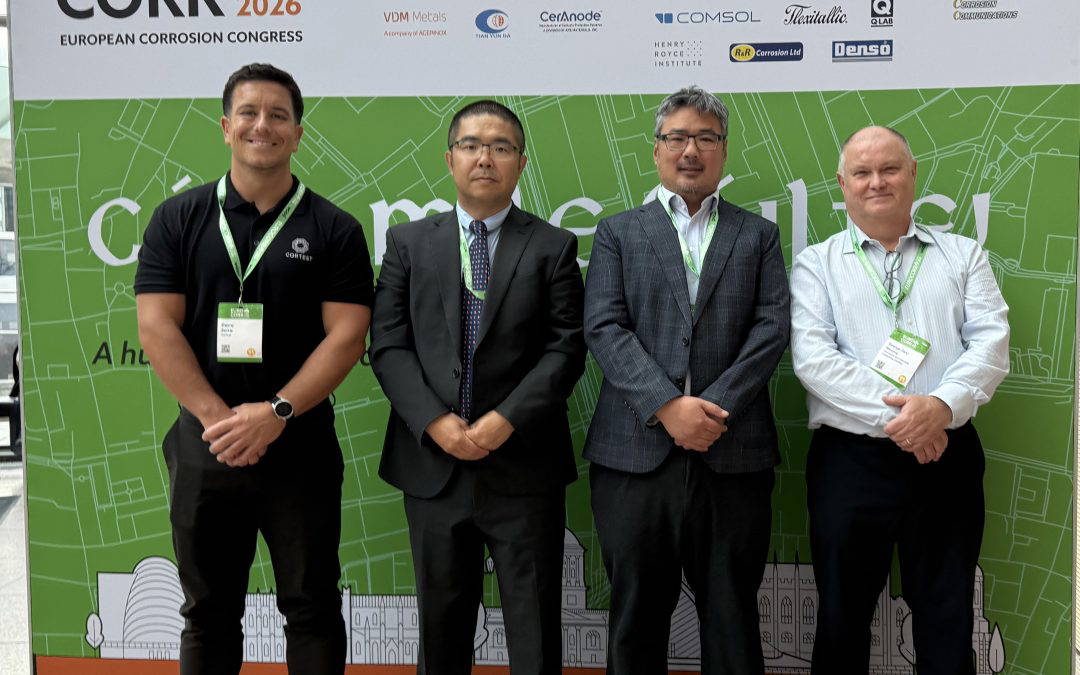
EUROCORR 2026 in Dublin: ICorr Strengthens International Collaboration at a Landmark European Corrosion Congress
6–10 September 2026 | Convention Centre Dublin, Ireland
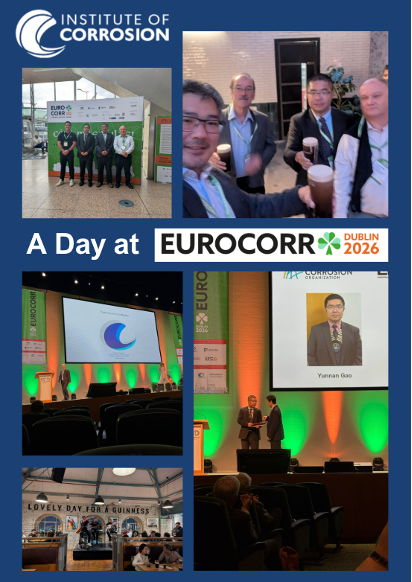
EUROCORR 2026 brought the international corrosion community together in Dublin from 6–10 September 2026 for five days of scientific exchange, technical discussion, professional networking and international collaboration.
Held under the theme “Investing in our future: corrosion challenges for green technologies”, the congress highlighted the increasingly important role of corrosion science, engineering and materials protection in enabling the energy transition and the deployment of sustainable, low-carbon technologies. EUROCORR 2026 welcomed more than 1,200 delegates from 48 countries and regions. Its broad international technical programme featured 656 conference abstracts and 158 posters.
For the Institute of Corrosion (ICorr), EUROCORR 2026 was a particularly significant occasion. It was the first EUROCORR held in the British Isles since Edinburgh in 2008, after an 18-year interval, and provided an important opportunity for ICorr and the Institute of Materials, Minerals & Mining (IOM3) to help host the European corrosion community in Ireland.
The congress was organised under the auspices of the European Federation of Corrosion (EFC), with ICorr, IOM3 and DECHEMA working together as event partners. Its successful delivery demonstrated the value of collaboration among professional institutions and the wider international corrosion community.
A Strong ICorr Presence in Dublin
ICorr maintained a strong presence throughout EUROCORR 2026 through its leadership, technical divisions, speakers, awards programme and international engagement.
A major ICorr contribution was the 67th Corrosion Science Symposium (CSS), organised by ICorr’s Corrosion Science Division and incorporated into the EUROCORR programme as a dedicated specialist session. The CSS is ICorr’s flagship annual meeting for students and early-career researchers in corrosion science and engineering. Its inclusion in EUROCORR enabled emerging researchers to present their work to a wider international audience while retaining the supportive and focused environment traditionally associated with the symposium.
The CSS programme reflected the breadth of modern corrosion science, including areas such as surface science, marine corrosion, coatings, hydrogen and green energy systems, tribocorrosion, AI-supported corrosion testing, corrosion imaging, nuclear corrosion and low-carbon technologies.
Integrating the CSS into EUROCORR reinforced ICorr’s commitment to supporting students, early-career researchers and the next generation of corrosion professionals. This commitment aligned closely with the wider Young EFC programme, which included networking activities, a careers fair, presentation awards and further opportunities for early-career engagement.
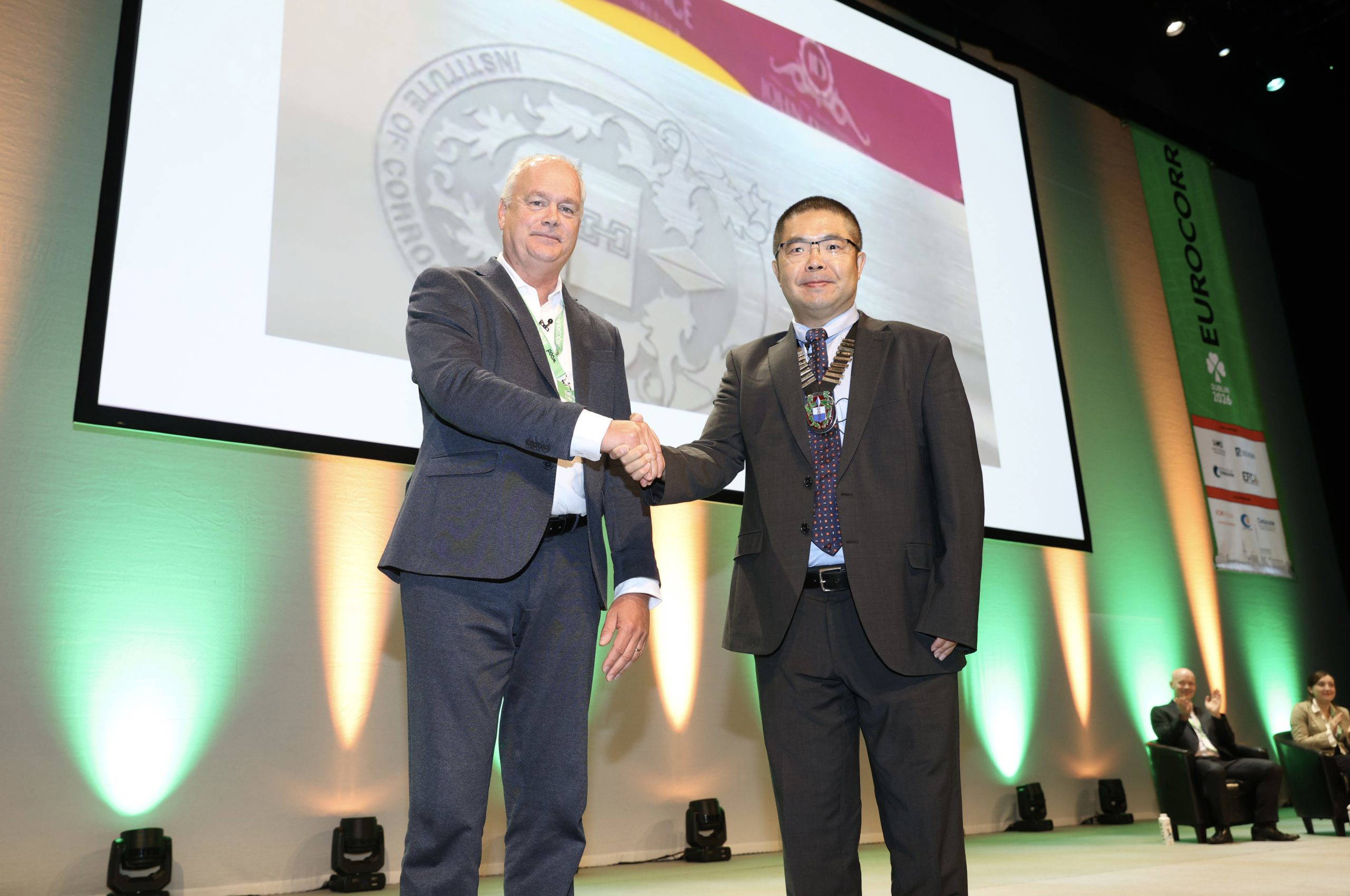
Photo 2: ICorr President Dr Yunnan Gao presents the 2026 ICorr U.R. Evans Award to Professor Arjan Mol.
Advancing Corrosion Awareness Internationally
EUROCORR 2026 also provided an important platform for ICorr to continue raising the profile of corrosion prevention and management beyond the traditional technical community.
During the morning plenary programme on 10 September, Dr Yunnan Gao received the 2026 World Corrosion Organization (WCO) Corrosion Awareness Honour, presented by Professor En-Hou Han, President of WCO.
The honour recognises Dr Gao’s contribution to promoting awareness of corrosion and corrosion protection, together with his continuing work across industry, academia, professional institutions and the wider engineering community. WCO specifically recognised his efforts to strengthen international collaboration and encourage the next generation of corrosion professionals.
For ICorr, the recognition also highlights the importance of making corrosion prevention more visible as an issue of engineering reliability, infrastructure resilience, safety, environmental performance and sustainability.
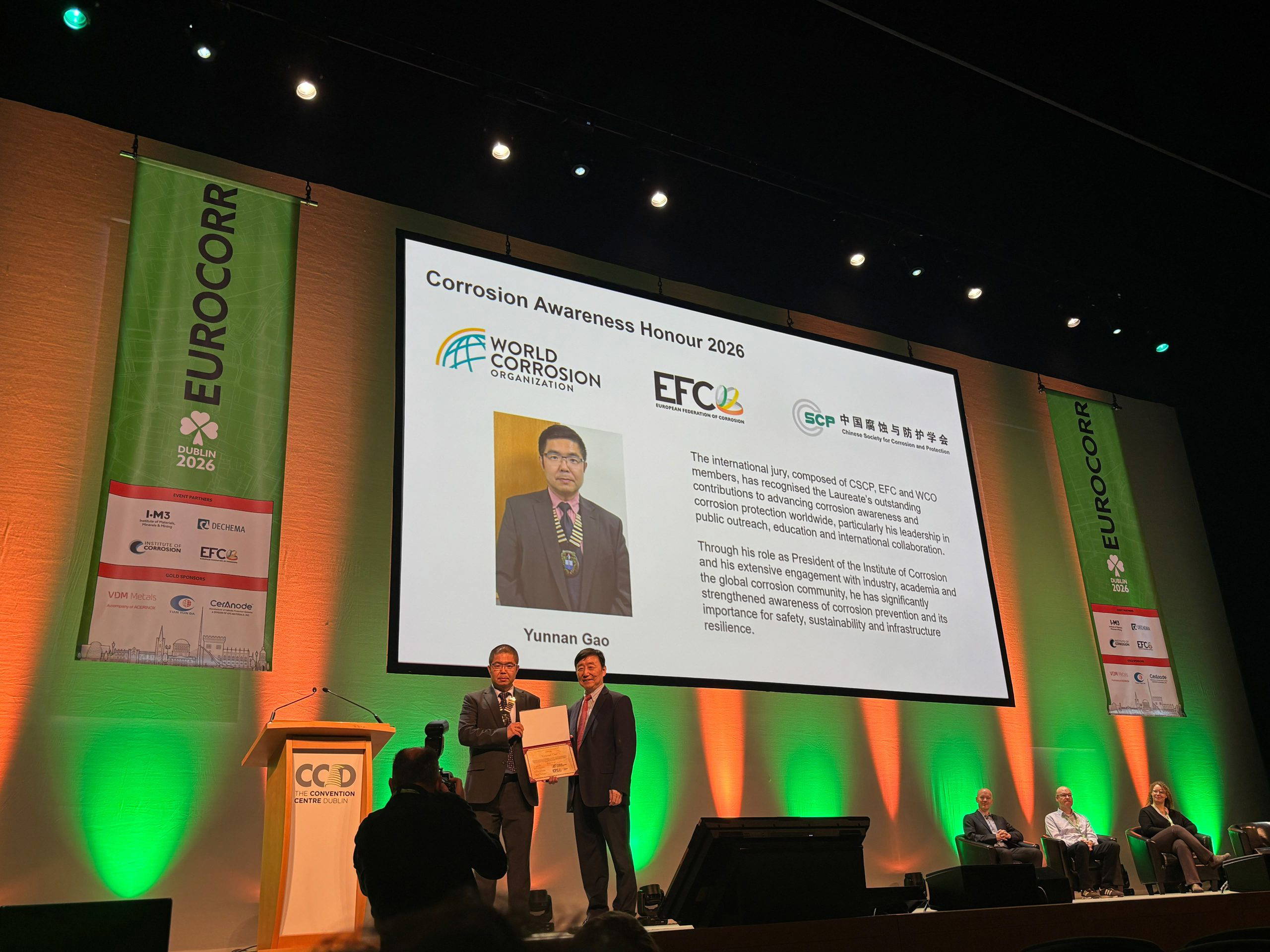
Photo 3: Dr Yunnan Gao, President of ICorr, Receives the 2026 Corrosion Awareness Honour from Professor En-Hou Han, President of WCO.
From Corrosion Science to Corrosion Advocacy
A further highlight of the final day was the Plenary Session on Advocacy, held in the Auditorium on the morning of 10 September. Chaired by Professor Gareth Hinds, EFC President, the session brought together Kimberly-Joy Harris of AMPP, Ayushka Dhakal of WCO, Dihao Chen of CSCP and Izabela Gajewska of ICorr, representing four major international corrosion organisations.
The speakers considered how the corrosion community can communicate more effectively with industry leaders, governments, infrastructure owners, educators and wider society. The discussion emphasised that advocacy should translate technical evidence into clear messages about public safety, asset reliability, infrastructure resilience, environmental protection, sustainability and whole-life value. The session also demonstrated the benefit of international organisations working together to strengthen corrosion education, public awareness and professional engagement. Its inclusion in the closing morning programme, immediately following the 2026 Corrosion Awareness Honour, underlined the importance of advocacy alongside scientific and engineering excellence.
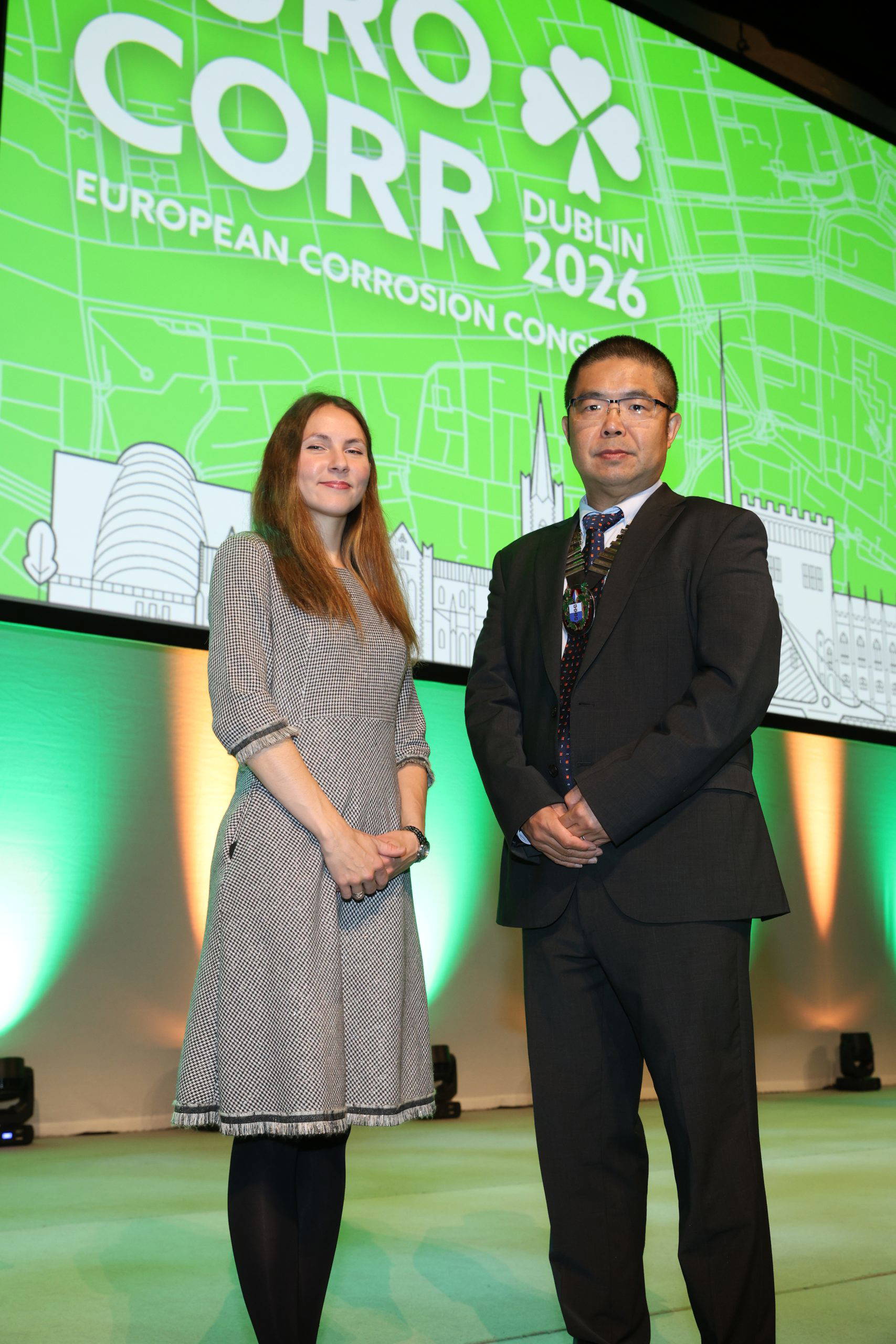
Photo 4: Izabela Gajewska, ICorr speaker during the Plenary Session on Advocacy, with Dr Yunnan Gao, ICorr President.
Strengthening the Global Corrosion Network
For ICorr President Dr Yunnan Gao, EUROCORR 2026 was also an important opportunity to continue a programme of high-level dialogue with fellow leaders of corrosion organisations around the world.
During the congress, Dr Gao held a series of discussions and collaborative meetings with senior representatives of the European Federation of Corrosion (EFC), World Corrosion Organization (WCO), Chinese Society for Corrosion and Protection (CSCP), Association for Materials Protection and Performance (AMPP), and Materials Engineering Association (MEA) in Saudi Arabia.
These discussions covered opportunities for greater international cooperation in areas including professional development, technical exchange, education, corrosion awareness, knowledge sharing, technology transfer and future joint activities.
This engagement supports ICorr’s broader international strategy of building practical links among corrosion professionals and institutions across geographical and organisational boundaries, while creating greater opportunities for members and the wider corrosion community.
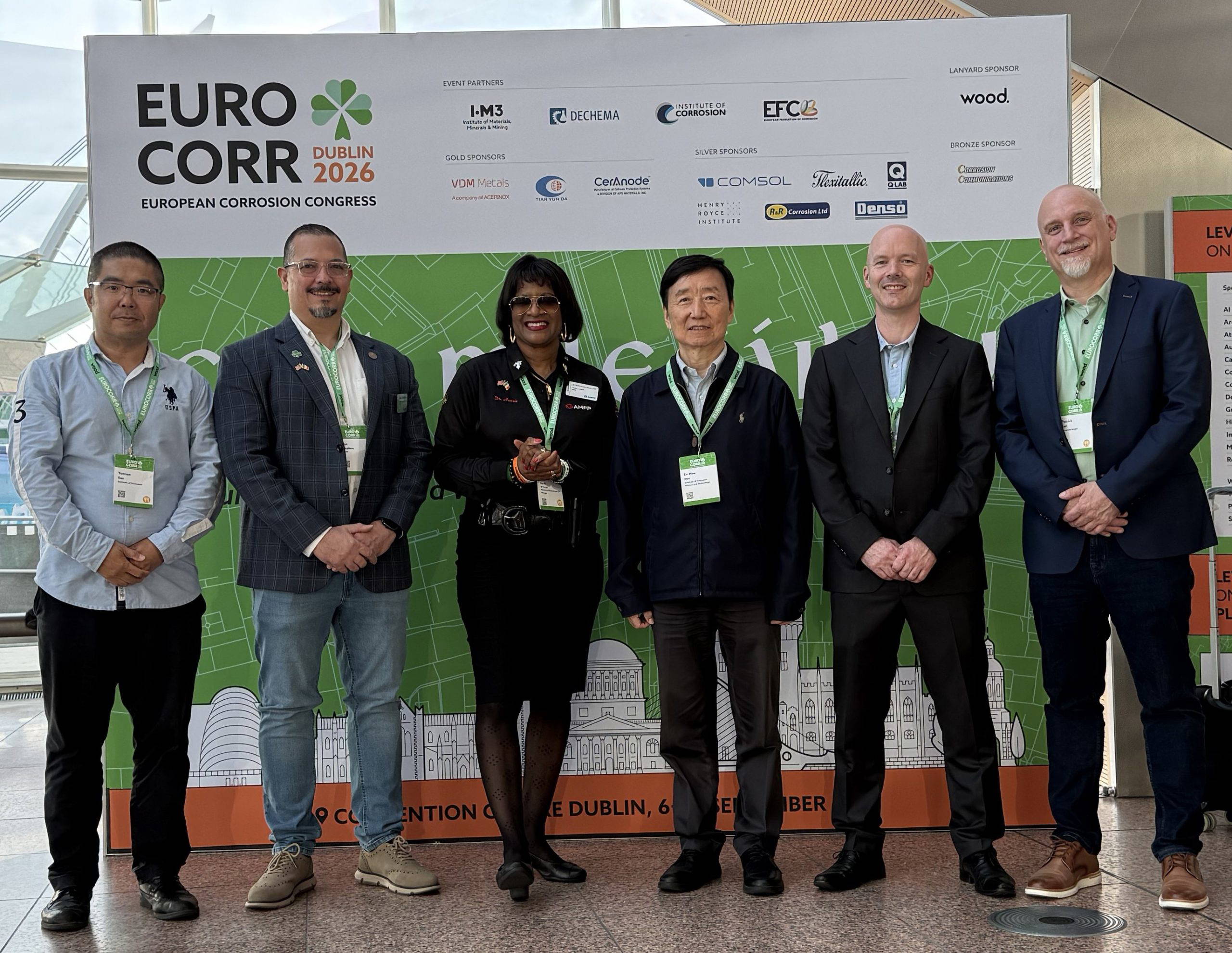
Photo 5: Presidents and senior leaders of international corrosion organisations meet during EUROCORR 2026 in Dublin. From left: Dr Yunnan Gao, ICorr President; Juan Caballero, Immediate Past Chair of the AMPP Board of Directors (2026); Dr Kimberly-Joy Harris, Chair of the AMPP Board of Directors (2026); Professor En-Hou Han, WCO President; Professor Gareth Hinds, EFC President; and Dr Patrick Keil, EFC Vice President.
Strengthening UK–Europe–China Collaboration
A particularly important element of EUROCORR 2026 was the continued dialogue between ICorr, EFC and CSCP.
Professor Xiaogang Li, President of CSCP, led a Chinese delegation to Dublin. More than 120 representatives from over 20 Chinese universities, research institutes and organisations attended EUROCORR 2026. CSCP reported that its delegation participated extensively in technical presentations and discussions and held exchanges with EFC, ICorr and CEFRACOR on future cooperation in talent development, academic exchange, bilateral seminars and other collaborative activities.
The presence of such a substantial Chinese delegation demonstrated the increasingly global nature of EUROCORR and the importance of maintaining strong connections between European and Chinese corrosion communities.
For ICorr, these relationships form part of a wider programme of international engagement designed to encourage open technical exchange, professional mobility, shared learning and collaborative solutions to global corrosion challenges.
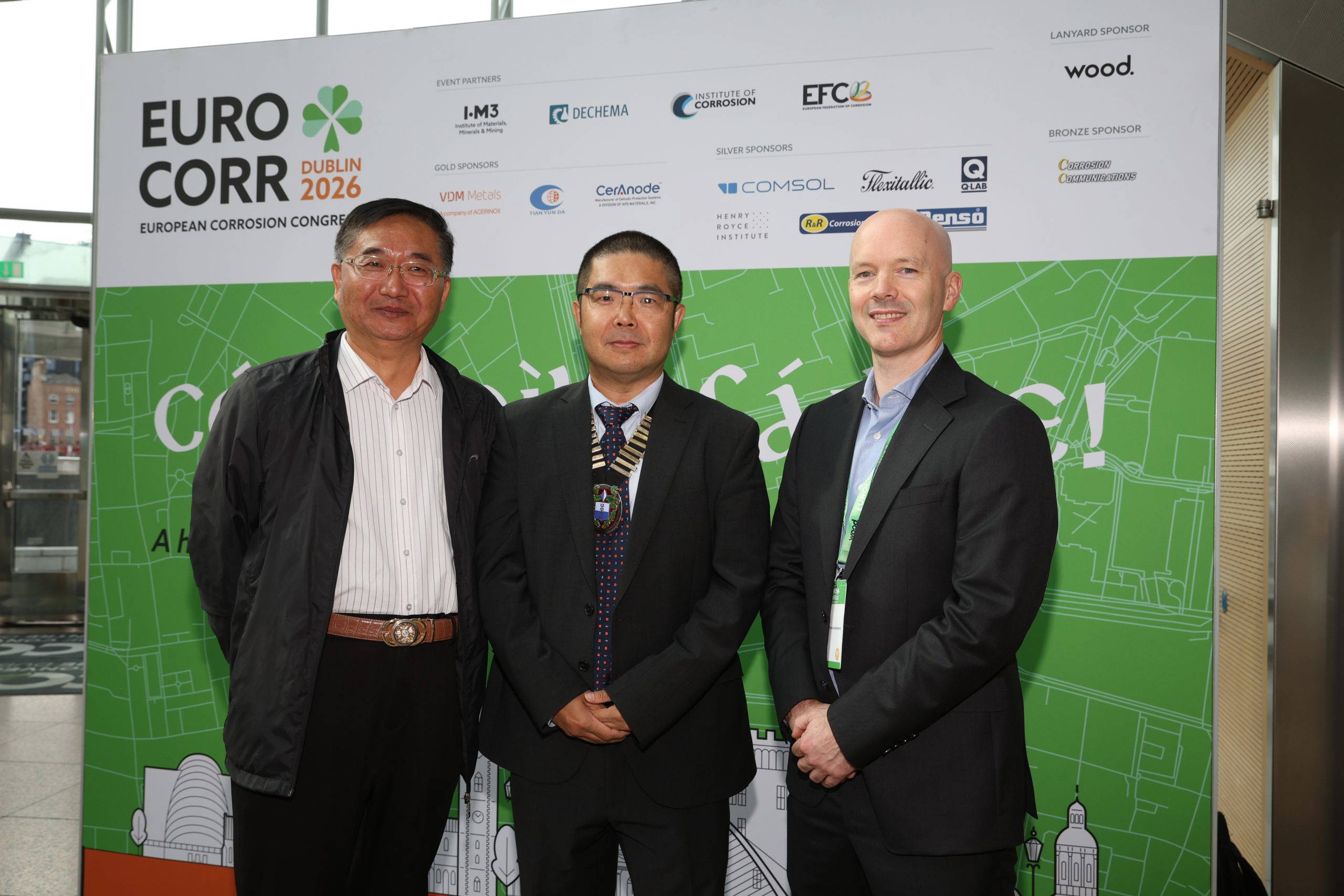
Photo 6: ICorr, CSCP and EFC leadership. From left: Professor Xiaogang Li, President of CSCP; Dr Yunnan Gao, President of ICorr; and Professor Gareth Hinds, President of EFC.
Strengthening ICorr-MEA Collaboration in Saudi Arabia
EUROCORR 2026 also provided an important opportunity to strengthen the growing collaboration between the Institute of Corrosion (ICorr) and the Materials Engineering Association (MEA) in Saudi Arabia.
The discussions built on the relationship established during ICorr’s visit to Saudi Arabia in November 2025, when ICorr and MEA met at the 19th Middle East Corrosion Conference and Exhibition and subsequently signed a Memorandum of Understanding (MoU) to develop closer professional and technical cooperation.
Building on that agreement, discussions in Dublin focused on practical implementation of the ICorr–MEA collaboration, including the planned delivery of ICorr engineering courses in Saudi Arabia during the fourth quarter of 2026. The courses are intended to give corrosion and materials professionals in the Kingdom access to ICorr’s technical expertise and professional training, while supporting the continued development of engineering competence in corrosion management and related disciplines.
The discussions also provided an opportunity for both organisations to review the next steps for implementing the MoU and to strengthen their longer-term cooperation in professional education, technical training and knowledge exchange.
ICorr is pleased to continue working closely with MEA to develop practical activities that combine the two organisations’ professional and technical strengths and provide tangible value to corrosion and materials professionals in Saudi Arabia.
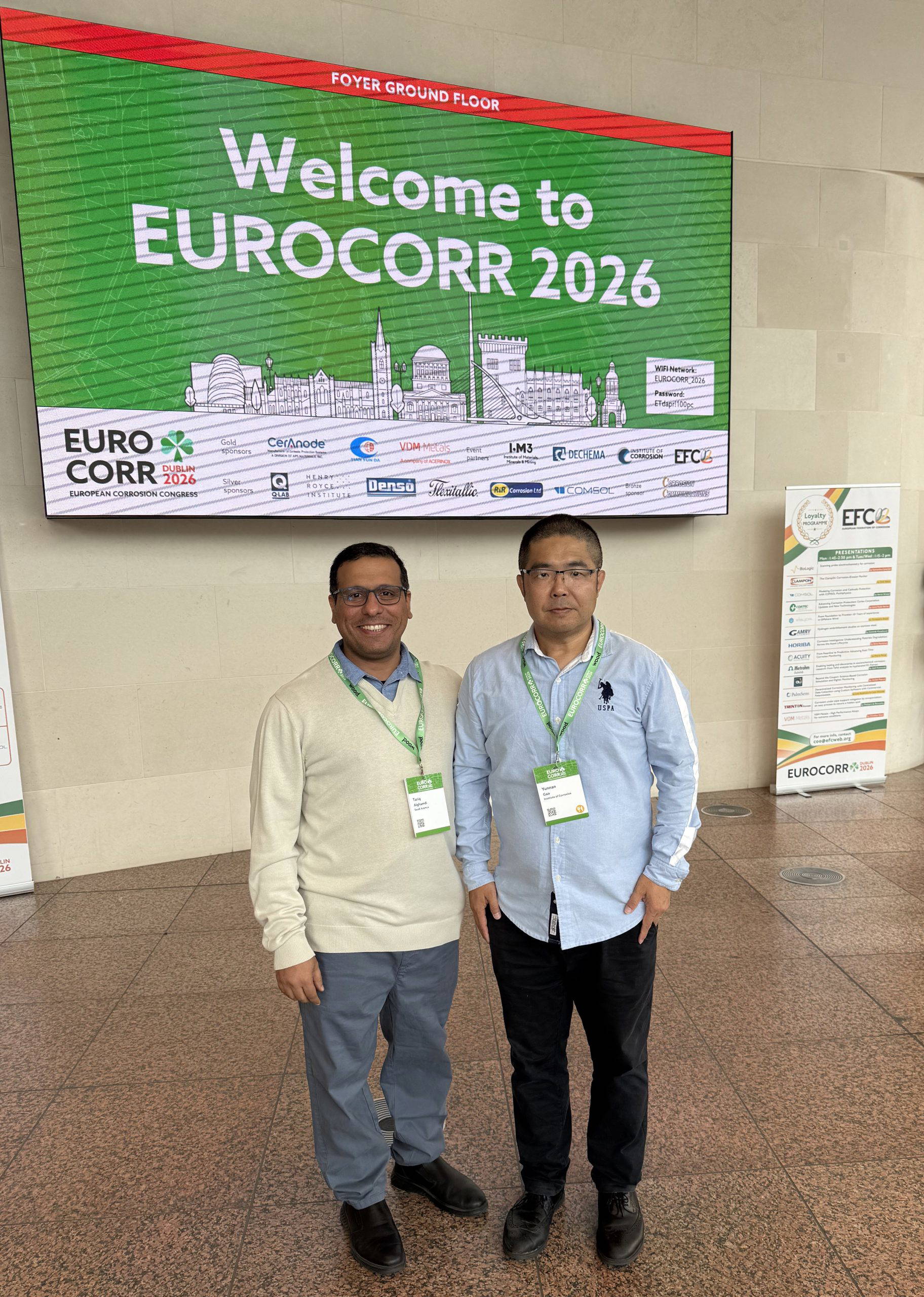
Photo 7: ICorr and MEA leadership. From left: Dr Tariq A. Alghamdi, MEA President, and Dr Yunnan Gao, ICorr President, during EUROCORR 2026.
Looking Towards the Future
EUROCORR 2026 demonstrated once again the breadth and importance of the corrosion profession. From fundamental corrosion science and advanced materials to hydrogen, carbon management, renewable energy, nuclear technologies, coatings, cathodic protection and digital approaches, corrosion management remains fundamental to the safe and sustainable deployment of new technologies.
The conference programme covered a wide range of technical areas, including high-temperature corrosion, nuclear corrosion, marine corrosion, microbial corrosion, coatings, cathodic protection, tribocorrosion, corrosion in water systems, aerospace corrosion, CO₂ applications, atmospheric corrosion and corrosion in green and low-carbon energy technologies.
The successful Dublin congress also demonstrated the continuing strength of international cooperation within the corrosion community. For ICorr, the event provided an opportunity not only to contribute technically, but also to strengthen institutional relationships, promote professional development, support emerging researchers and advance the global conversation on corrosion awareness.
Eighteen years after EUROCORR was last held in the British Isles, in Edinburgh in 2008, EUROCORR 2026 marked a highly successful return to these shores. ICorr is proud to have played a significant role alongside IOM3, EFC and DECHEMA in supporting this major international gathering.
The Institute looks forward to building on the relationships and collaborations developed in Dublin and continuing to work with colleagues around the world to advance corrosion science and engineering, strengthen corrosion awareness and support a more sustainable and resilient future.