Jeremy Pasatta, Vice President of Technology, Advanced Polymer Coatings, Avon, OH, USA
Introduction
Industrial coatings face extreme and varied stressors: chemical exposure in processing facilities, ultraviolet light and weathering in outdoor service, vibration and impact in transport, and high humidity or temperature fluctuations in storage. Traditional solutions rely on multi-layer systems, each designed for a separate performance role. While technically effective, such systems introduce practical drawbacks: long cure times, complex application requirements, sensitivity to environmental variables, and risks of inter-coat adhesion failure.
Asset owners demand coatings that can perform multiple functions under real-world conditions across sectors such as rail transport, chemical processing, and heavy industry. Coatings must resist corrosion and chemical attack, remain flexible under vibration or thermal cycling, retain gloss and colour under UV light, and be applied efficiently in environments that may be less than ideal.
Advanced Polymer Coatings (APC) have developed a triple resin DTM (direct-to-metal) system to meet these evolving needs. This system merges the performance benefits of multi-coat structures into a single, co-cured architecture.
The triple resin coating system represents a deliberate shift away from this paradigm, integrating three distinct resin chemistries into a single film seeks to balance chemical resistance, mechanical toughness, UV durability, and rapid cure in one step. Co-curing ensures compatibility between components and creates a uniform polymer network with balanced properties. The result is a formulation designed not only for laboratory excellence but also for field reliability.
This paper integrates three complementary investigations of the system:
- Atmospheric Durability – assessment of UV stability, corrosion protection, chemical spot testing, and heat ageing.
- Mechanical Performance – using ASTM standards to evaluate adhesion, flexibility, and impact resistance.
- Performance Architecture – an in-depth look at resin selection, formulation strategy, and co-curing integration.
Atmospheric Durability of a Triple Resin DTM Coating
Materials and Test Methods
QUV Accelerated Weathering (ASTM D4587)
12” x 12” (30 x 30 cm) steel panels were sprayed with the triple resin coating system, along with three competitive epoxies. Each panel was partially masked to preserve an unexposed control area. Panels were subjected to 750 hours of UV exposure using UVA-340 bulbs. Colour stability was measured using Lab* colour space and Delta E calculations to quantify change.
Dry Heat Ageing (120°C, 720 Hours)
Performed by GPI Laboratories Project ID: N102301.B. The triple resin coating system panels were exposed to 120°C for 720 hours to simulate continuous high-temperature service. The post-exposure evaluation included visual assessment per ASTM D660 and D772 and adhesion testing per ASTM D4541.
Corrosion Testing (ISO 12944-6:2018)
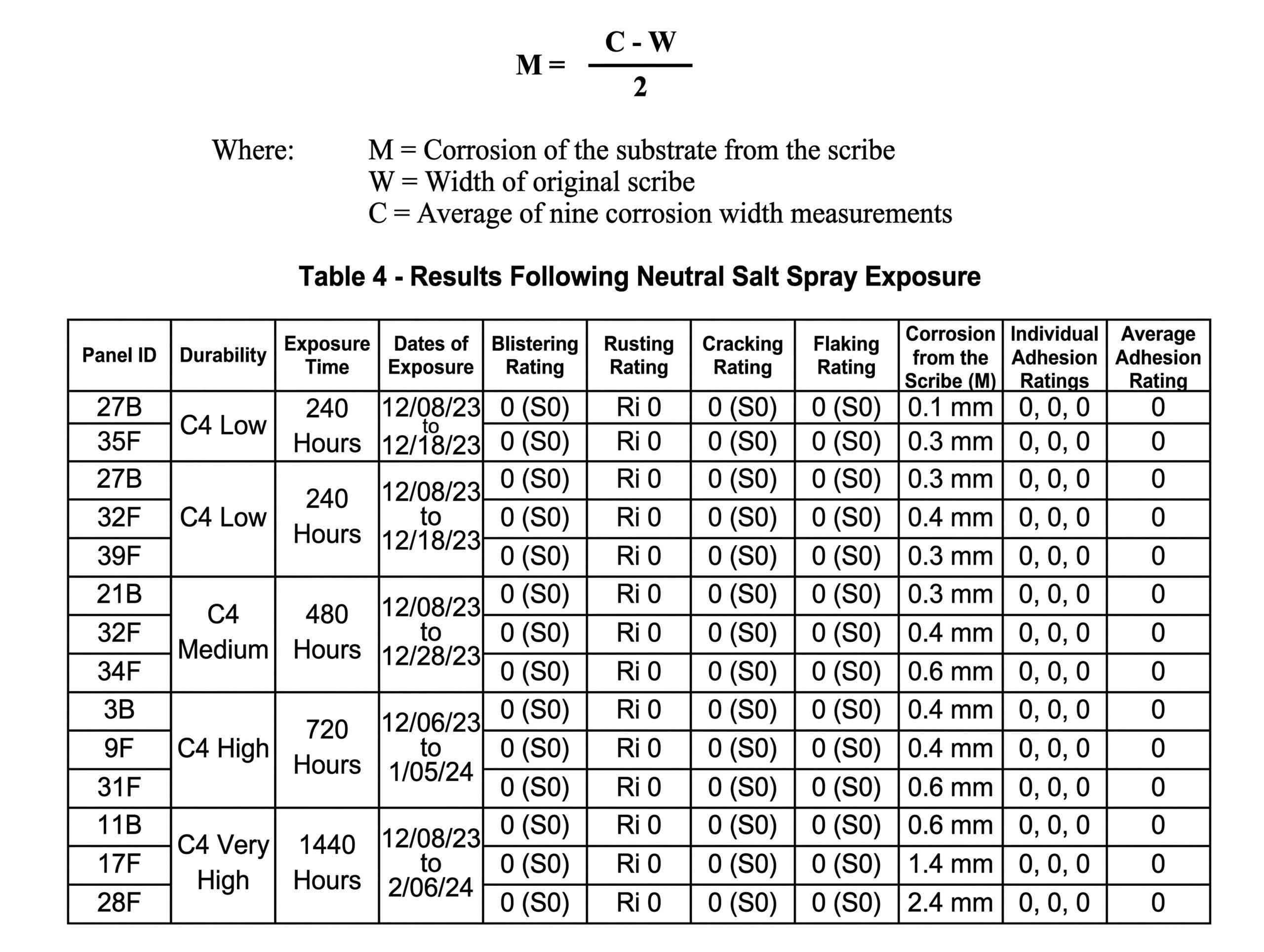
Performed by KTA-Tator, INC. Project No. 66075853-R2. Panels coated at 6.0-8.0 mils (150-200 microns) were subjected to salt spray (ISO 9227), humidity (ISO 6270-1), and cyclic ageing. Each test included multiple durability classifications from C3 to C4 (Low through Very High). The assessment included rusting, blistering, cracking, and scribe creep.
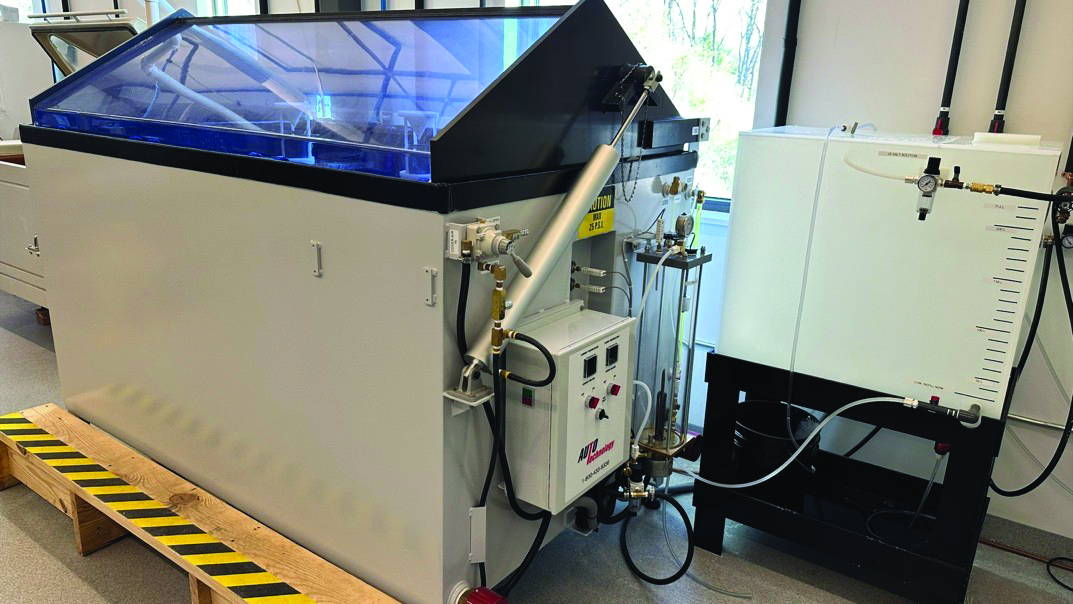
Figure 1: KTA-Tator, INC. Project No. 66075853-R2.
Chemical Spot and Humidity Testing (ASTM D1308, D2247)
Panels were exposed to ten aggressive chemicals for 72 hours at 23°C. The post-exposure evaluation included blistering (ASTM D714), rusting (ASTM D610), and visual degradation. Separate humidity exposure was performed at 38°C in 100% humidity for 1000 hours.
Spot and Spill Acid Resistance
Panels were exposed to concentrated acids, including nitric, phosphoric, sulphuric, acetic, and hydrochloric, for up to 72 hours. Gloss loss, discolouration and film integrity were evaluated.
Results and Discussion
QUV Accelerated Weathering (ASTM D4587)
After 750 hours of UVA-340 exposure, the triple resin panels showed only minor discolouration and gloss loss compared to epoxies. Delta E measurements confirmed superior colour stability, highlighting its enhanced UV resistance. Masked panels directly compared exposed unexposed areas, demonstrating long-term aesthetic retention. This enhanced performance is considered due to UV-stable polyaspartic and polyurethane resins that absorb and dissipate radiation without the chain scission typical of conventional epoxies.
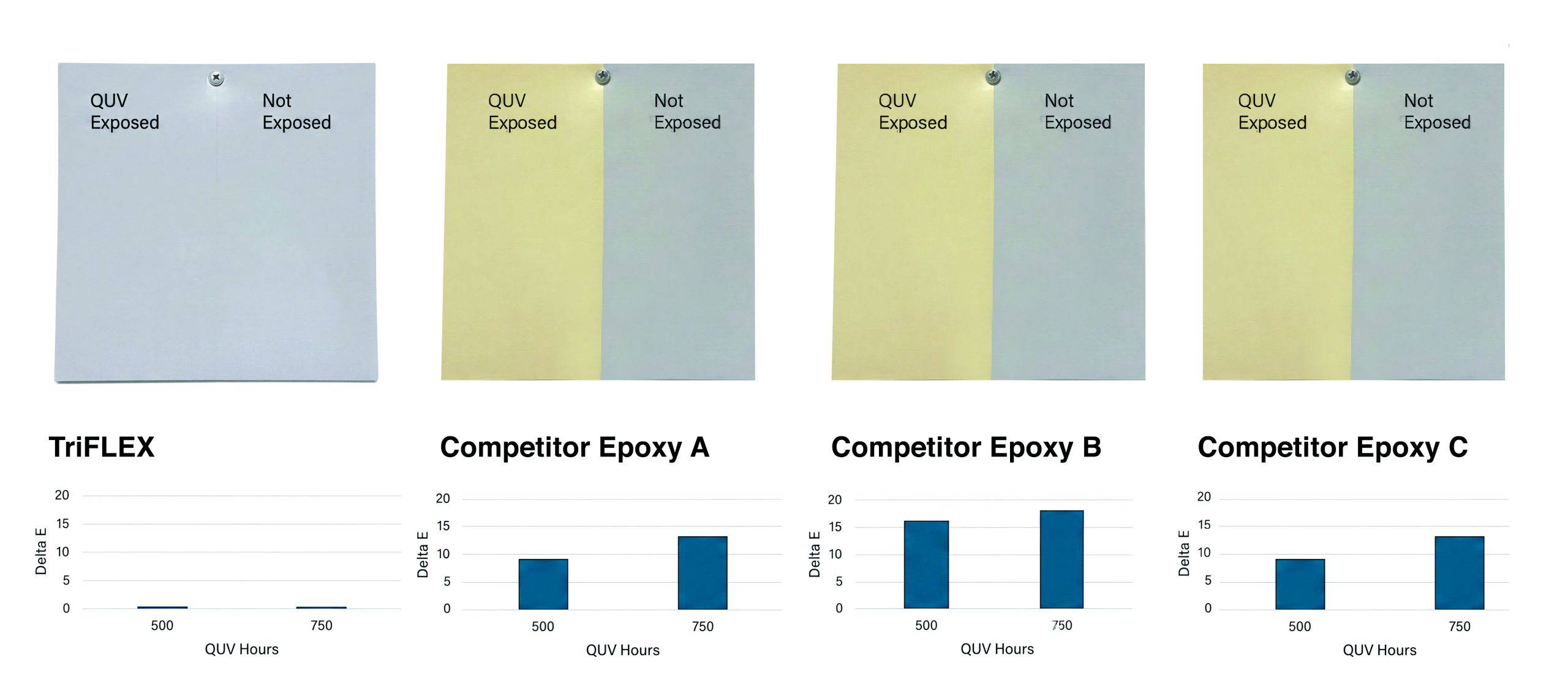
Figure 2: Results of QUV Accelerated Weathering (ASTM D4587) Testing at 500 and 750 Hours, Showing that TriFLEX Maintains Colour Stability with Minimal Change, While Competitor Epoxies A, B, and C Exhibit Significant Yellowing and Higher Values After Exposure.
Dry Heat Ageing Performance (120°C for 720 hours)
After prolonged exposure at 120°C, the triple resin system maintained structural and adhesive integrity, with no cracking, flaking or blistering. Adhesion exceeded 3600 psi, with cohesive rather than interfacial failure, suggesting strong thermal stability and possible cross-linking benefits. Minor discolouration and gloss loss were superficial, confirming suitability for continuous dry heat service up to 20°C.
Corrosion Resistance (ISO 12944-6:2018)
Corrosion testing by KTA-Tator, including salt spray, humidity, and cyclic aging per ISO 12944-6, showed the triple resin system met or exceeded C4 durability requirements. Panels exhibited no rusting, blistering, flaking, or cracking, and adhesion remained intact. Scribe creep was minimal and within limits, with only the most extreme accelerated regime causing higher creep than allowed. Overall, the results confirm the system as a reliable corrosion barrier for demanding coastal and industrial environments.
Chemical Spot and Humidity Resistance (ASTM D1308 and D2247)
The triple resin coating system strongly resisted aggressive chemicals, including concentrated acids and bases. After 72 hours of exposure, only minor gloss loss or surface yellowing was observed, with better retention of appearance and integrity than a leading epoxy. In 1000 hours of humidity testing at 38°C, panels exhibited minimal blistering, reduced underfilm corrosion, and superior adhesion.
These results confirm the system’s suitability for environments with frequent chemical contact and sustained moisture.
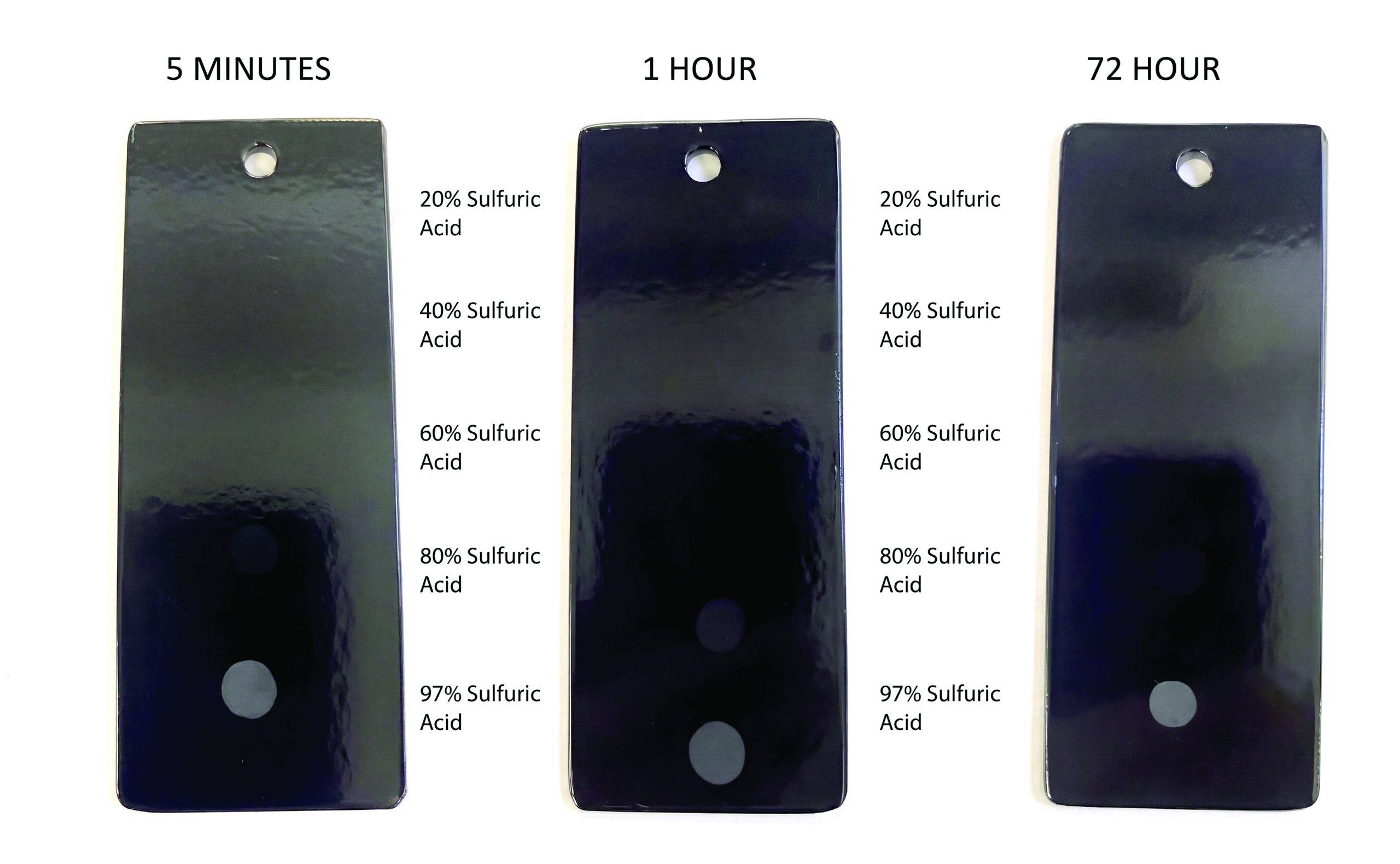
Figure 3: Results of Spot and Spill Acid Resistance Testing for TriFLEX™ Panels
Formulation Strategy and Resin Components
The foundation of this approach lies in the deliberate selection and chemical compatibility of three primary resins:
- a Cyclic polyolefin-based polymer,
- a Cycloaliphatic polyurethane, and
- an Aliphatic polyaspartic (fast-curing, durable resin).
Each resin contributes to a specific performance domain, and together, they co-react to form a single crosslinked polymer network during cure.
Cyclic Polyolefin-Based Polymer
Serving as the primary barrier resin, the cyclic polyolefin-based polymer provides the dense, inert matrix necessary for chemical resistance and moisture impermeability. Unlike traditional epoxies, which often embrittle over time or under cyclic loading, this polymer retains its flexibility and integrity. Its molecular structure is characterised by tightly packed chains and minimal free volume, which translates into low water vapour transmission rates and high resistance to underfilm corrosion.
Cycloaliphatic Polyurethane
The second resin in the formulation is a cycloaliphatic polyurethane, chosen for its resistance to ultraviolet degradation and weathering. Derived from sterically hindered aliphatic isocyanates and UV-stable polyols, this polyurethane is chemically engineered to avoid the common pitfalls of aromatic variants, which degrade quickly under UV exposure.
Aliphatic Polyaspartic Resin
Completing the resin triad is an aliphatic polyaspartic resin formed by reacting a polyaspartic ester with an aliphatic isocyanate. This component offers several key benefits. First, it enables a rapid cure profile, reducing overall project timelines. Second, it is highly tolerant to humidity and temperature variations during application. These properties are particularly useful in real-world environments where conditions are rarely ideal.
Resin Integration Through Co-Curing
While each resin in the system offers unique attributes, the formulation’s performance depends on more than just its individual properties. Central to the system’s effectiveness is its co-curing behavior. Unlike traditional multi-coat systems, where each resin is applied and cured in isolation, the triple resin formulation is designed for simultaneous chemical reactions.
This co-curing strategy addresses several critical challenges. First, it prevents phase separation, a common issue when combining
chemically dissimilar polymers. The resins in this system are selected for their function and compatibility in terms of reactivity, polarity, and molecular weight distribution. Second, simultaneous cure minimises differential shrinkage and stress accumulation within the film. These unmitigated stresses can lead to cracking or delamination over time.
The result is a coating with a uniform modulus profile across the film thickness. This uniformity enhances both mechanical toughness and resistance to environmental degradation.
Furthermore, the system achieves a high crosslink density, improving chemical resistance and moisture impermeability. The balance of hardness and flexibility achieved through co-curing is especially significant, as most conventional coatings tend to favour one of these properties at the expense of the other.
Application and Performance Considerations
From a practical standpoint, this triple resin coating system is designed to perform in varied and unpredictable environments. Its moisture-tolerant cure behaviour, primarily driven by the polyaspartic component, allows for application under high-humidity or low-temperature conditions without introducing common defects such as amine blush or incomplete film coalescence.
The barrier properties of the cyclic polyolefin base bolster the formulation’s chemical resistance. At the same time, the cycloaliphatic polyurethane ensures surface durability in the presence of UV light, cleaning agents, and temperature fluctuations. The three resins contribute to a versatile performance profile that addresses the full range of chemical, mechanical, and aesthetic challenges commonly encountered in protective coatings.
In addition, the single-coat approach simplifies logistics. It reduces labour requirements, eliminates inter-coat inspection steps, and shortens turnaround time. This streamlined process is particularly advantageous in fast-paced project environments or settings where consistent environmental control is difficult.
Mechanical Performance of a Triple Resin DTM Coating
Materials and Test Methods
Adhesion Testing with Surface Conditioner
To evaluate the system’s adhesion to steel substrates under realistic surface conditions, carbon steel panels were prepared via dry abrasive blasting to a near-white metal finish (SSPC-SP10 / NACE No. 2). Panels were then exposed to three different pre-coating treatments:
- No submersion (control)
- Submersion in distilled water
- Submersion in a 50:1 water dilution of HoldTight®102
HoldTight® 102 is a biodegradable, non-flammable surface preparation additive that removes soluble salts and prevents flash rusting post-blasting. Although widely used in field settings, its compatibility with high-performance coatings must be verified to ensure no adverse impact on adhesion.
After treatment, panels were coated with the triple resin coating system Grey at an average dry film thickness (DFT) of 8 mils (203 microns) and cured under ambient laboratory conditions (23 ± 2°C, 50 ± 5% RH) for seven days. Pull-off adhesion was tested per ASTM D4541 using an Elcometer 510 hydraulic adhesion tester with 20 mm aluminium dollies. Failure modes were classified as adhesive (at the substrate), cohesive (within the coating), or interfacial (between coating and dolly).
Flexibility Testing
Flexural properties were assessed using the ASTM D522 Method A test for cylindrical mandrel bend. Coated panels were conditioned for 7 days post-application and then bent 180 degrees over mandrels of decreasing diameter, ranging from 1 inch (25.4 mm) to 1/8 inch (3.2 mm). The smallest mandrel diameter with no observed cracking was recorded. In parallel, a qualitative assessment of the coating’s crack resistance was performed by manually flexing fully cured panels back and forth to evaluate performance under repetitive bending stress, simulating flexural fatigue.
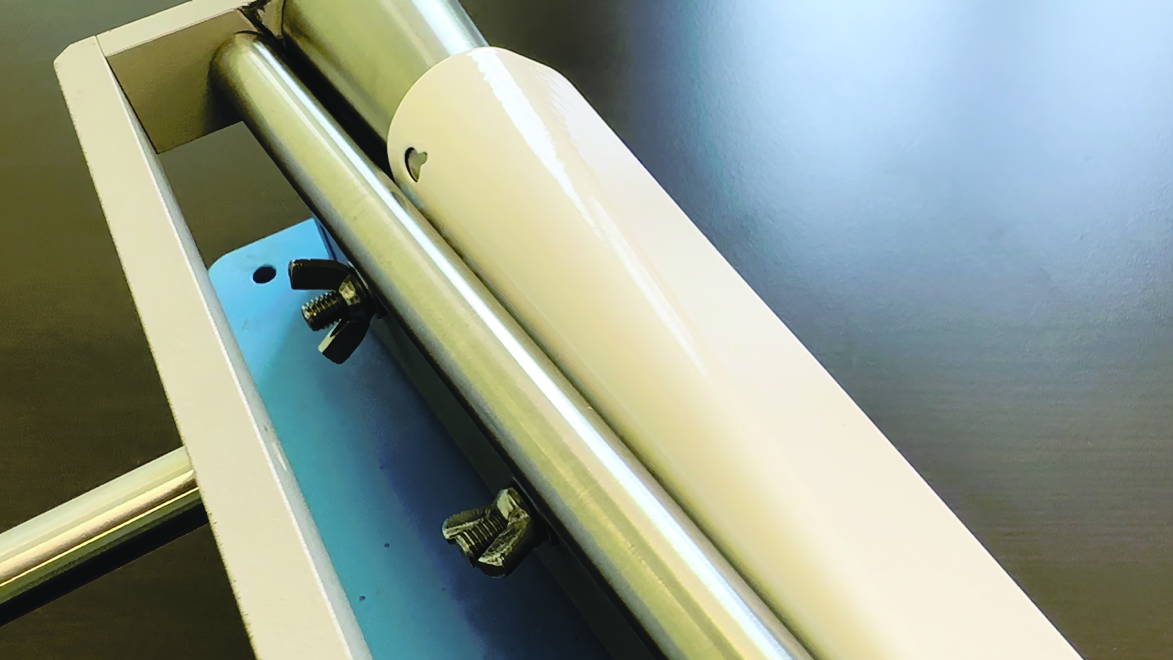
Figure 4: Mandrel Bend Test Performed on a TriFLEX™ Coated Panel.
Impact Resistance Testing
Impact resistance was evaluated by ASTM D2794, using a falling weight impact tester capable of delivering both direct and reverse impact. A hemispherical indenter was dropped from a fixed height to apply a known energy load (measured in inch-pounds) to the coated surface. For direct impact, the indenter contacted the coating directly. For reverse impact, force was applied to the uncoated backside of the panel. Failure was defined by visible cracking, delamination, or complete rupture of the coating film. The system’s results were compared to reference data from standard epoxy coatings.
Results and Discussion
Adhesion Performance
The average adhesion strength across all test conditions remained consistent. The control panel exhibited a pull-off strength of 1802 psi, while the distilled water-treated and HoldTight® 102-treated panels measured 1814 psi and 1796 psi, respectively. These differences are statistically negligible and fall within the expected variability of field-blasted substrates. More importantly, all tests exhibited cohesive failure within the system’s film, indicating that the failure occurred in the bulk material rather than at the substrate interface. This suggests that a
triple resin coating system establishes a robust bond to carbon steel surfaces and maintains interfacial strength even in salt removal agents or residual moisture films. Field use of HoldTight® 102 as part of the surface preparation process does not compromise adhesion and may be confidently included in standard surface treatment protocols.
Flexibility Results
The triple resin coating system demonstrated high flexibility, withstanding 180-degree bending over a 1/8-inch mandrel without cracking, delamination, or visible film degradation. This performance equates to an elongation threshold exceeding 30%, which surpasses the flexibility range typically observed in conventional epoxies (6% to 12%).
The triple resin matrix appears to distribute mechanical stress across the film, reducing localised strain concentrations that would otherwise initiate cracks. When manually flexed in both directions, panels retained film integrity, supporting that the system possessed static flexibility and dynamic strain tolerance. These attributes make the coating advantageous for mechanical vibration, thermal cycling or structural movement environments.
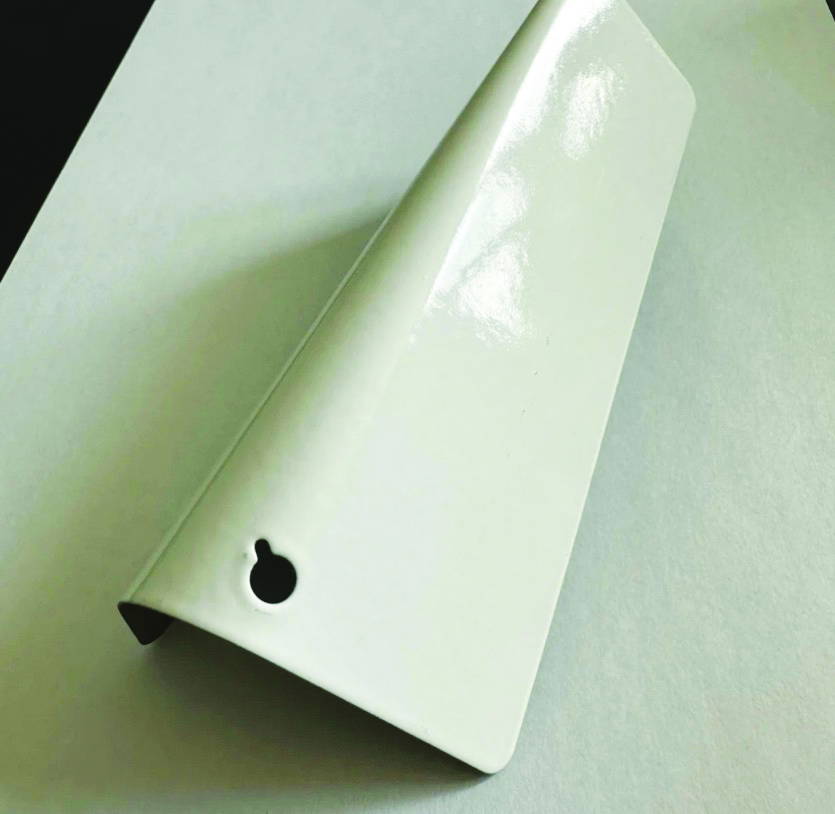
Results of Mandrel Bend Test Performed on a TriFLEX™ Coated Panel.
Impact Resistance
Results from ASTM D2794 testing showed that the triple resin coating system provides impact resistance values exceeding 160 in-lb for both direct and reverse impacts. Conventional epoxy coatings typically register direct impact resistance in the 70 to 90 in-lb range and show significantly diminished resistance in reverse impact due to their brittleness.
The coating’s ability to absorb and dissipate mechanical energy from both directions without cracking or film failure reflects the synergistic effect of its resin composition. This makes it well-suited for highwear environments where equipment may be subjected to dropped tools or shifting loads. The dual-mode impact resistance also suggests that the coating can provide reliable protection during service, fabrication, transport and installation.
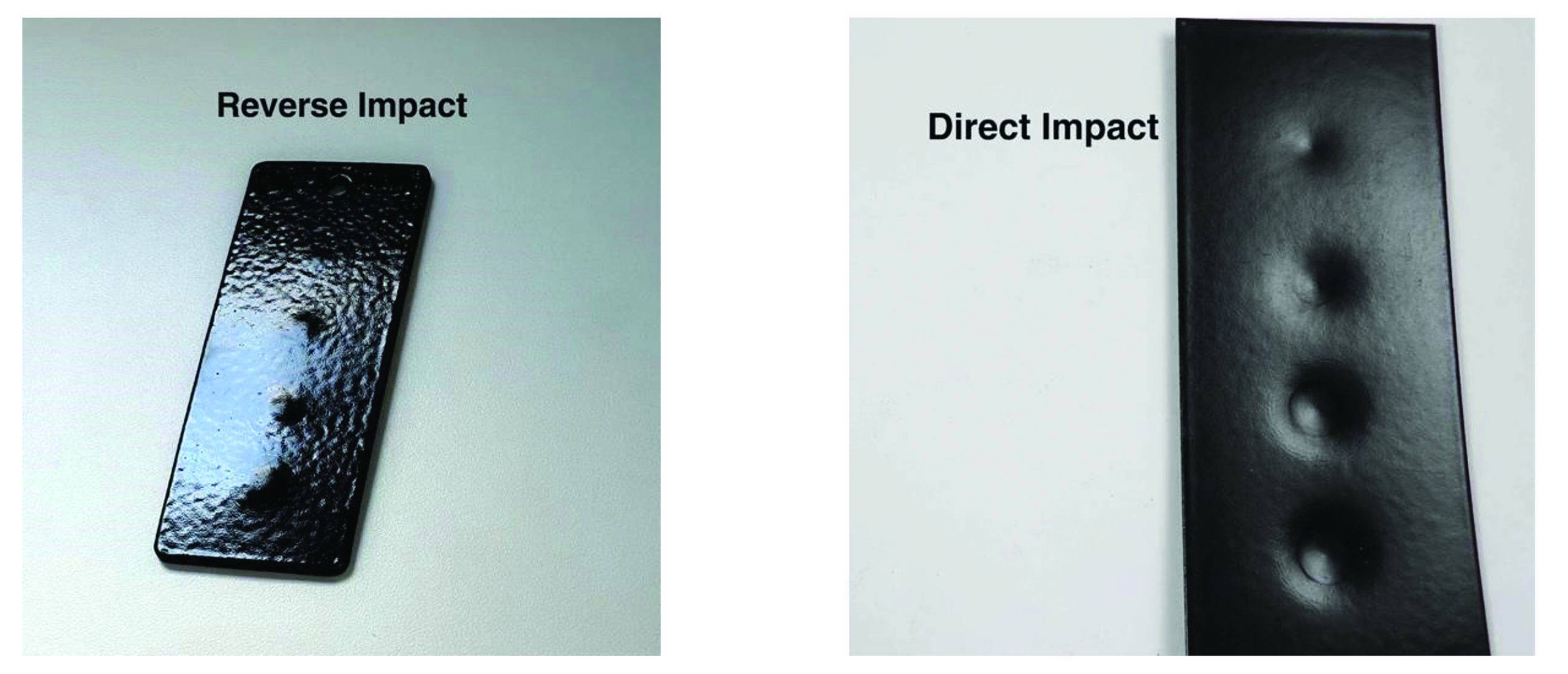
Figures 6: Results of Revers Impact and Direct Impact ASTM D2794 Testing of TriFLEX™ Panels.
Conclusion
This research indicates significantly improved performance traditionally reserved for multi-coat architectures through uniting three distinct resin chemistries into a co-cured single-coat system. The performance architecture study established the scientific rationale for resin selection and integration. The mechanical study confirmed that adhesion, flexibility, and impact resistance exceed conventional epoxy benchmarks. The atmospheric research validated resilience against UV, corrosion, humidity, heat, and chemical exposure.
Together, these results confirm the developed triple resin coating system as a durable, versatile, and efficient solution for industrial and transportation applications, offering asset owners the ability to reduce downtime, simplify coating application, and extend protection cycles.