A new review has been published that focuses on physical vapour deposition-based (PVD) metallic coatings for steel as an alternative to conventional galvanised coatings.
This article reviewed the scope and prospect of the PVD technique for the steel industry over HDG and EG, and focused on different kinds of PVD techniques, their advantages, and disadvantages. An emphasis has been given to the recent development of Zn- and Al-based PVD coatings on steel substrates. The industrial competency of PVD in the steel industry was also discussed together with the challenges associated with the commercialisation of the process, and it makes recommendations for further improvement.
The review was published in Journal of Coatings Technology and Research Volume 19, 2022.
A recent study reported on the synthesis of calcium tannate, its characterisation, and use in an epoxy coating as an inhibitive pigment.
Electrochemical Impedance Spectroscopy (EIS) was used to monitor the anti-corrosive performance of the coating formulated with the as-prepared pigment after exposure in a salt spray chamber. Reference coatings with a commercial calcium phosphate pigment and an unpigmented coating were also evaluated for comparison.
EIS results showed that epoxy coating pigmented with calcium tannate had higher coating impedance after 21 days of exposure compared with reference coatings, either unpigmented, or calcium phosphate pigmented coatings. XPS analysis was also used to give a deeper understanding of the inhibitive action of calcium tannate for corrosion protection, and verified the incorporation of tannate molecules in the protective film formed on the steel substrate under the coating.
The study was published in Progress in Organic Coatings, Volume 167, June 2022.
A recent article described a smart epoxy coating with mesoporous silica nanoparticles loaded with calcium phosphate for corrosion protection. This however is not particularly new, as in the 1980s, a controlled release pigment based on calcium supported on silica was developed, and gave enhanced corrosion protection in several resin systems (Shieldex®)
During this study, calcium phosphate was encapsulated into mesoporous silica nanoparticles (MSN), and the effect of pH on the structure, morphology of the MSN, and the release of calcium phosphate from the MSN, was investigated. Epoxy coatings with encapsulated (3 wt%) and non-encapsulated (3 wt% and 5 wt%) calcium phosphate were formulated and their anti-corrosive performance was evaluated.
Results showed that encapsulation of the calcium phosphate as inhibitive pigment in the coating can enhance the anti-corrosive performance by preventing spontaneous pigment dissolution and controlled the pigment’s release from the coating, as did the 80s development.
The study was published in Progress in Organic Coatings, Volume 165, April 2022.
A former refinery in Eastern Canada was carrying out a site-wide conversion in preparation for the use of renewable fuels instead of oil. The Canadian government was partly financing this conversion, and the refinery aims to start processing sustainable aviation fuel (SAF) this summer, which can result in an up to 80% reduction in carbon emissions compared to the traditional jet fuel it replaces.
Two reactors and two drums required an internal metallurgy upgrade due to the new operating conditions, as with renewables processing, reactors are susceptible to high temperature free fatty acid corrosion, sulfidation, wet chloride corrosion, and stress corrosion cracking. This upgrading could be achieved by automated welding, or high velocity thermal spray (HVTS).
The refinery, in conjunction with its EPC (Engineering,Procurement and Construction contractor) decided to use HVTS instead of automated welding, which would probably save half of their costs, and selected Integrated Global Services (IGS) as their turnkey contractor.
Another reason for not using automated welding, was that the substrate does not have to be preheated, which was important as the facility was subjected to Arctic conditions. The selected contractor could perform the blasting, provide ventilation, and apply the thermal spray, as well as supplying inspection services.
IGS designed and specified two different alloys for the drums and the reactors, NiCroMoXX type material was used for the reactors due to its excellent resistance to chloride corrosion, SCC and sulfidation, and for the drums, a NiCroMoWXX material was used because of its proven corrosion and erosion resistance.
The facility owner required comprehensive pre-qualification testing and adherence to a tight engineering standard, to govern the quality of the cladding applied and ensure that the HVTS protection would hold up against the new harsh corrosion environment.
Iain Hall, IGS CTO, said: “While material selection is important, it is only a small part of the technical package required to ensure durable long-term performance in cladding systems. Careful attention to surface preparation and accessibility, utilisation of the High Velocity process, and critical parameter control, is necessary to ensure homogenous alloy cladding with the right mechanical properties”.
IGS delivered an engineering package, including the project plan, method statement, inspection test plan, project safety analysis, risk mitigation plan and the job-specific safety data sheets, and the whole project was completed in 29 days.
The project – called Hydrogen Turbine 1 (HT1) – aims to be first project in the world to test the full integration of hydrogen production with an offshore wind turbine. Money from the UK government’s Net Zero Innovation Portfolio Low Carbon Hydrogen Supply 2 fund will be used for a pilot project at Vattenfall’s Offshore Wind Farm in Aberdeen Bay.
The electrolyser to produce the hydrogen will be sited directly onto an existing operational turbine, and this pilot project will have an output of 8MW and be able to produce enough hydrogen every day to power a hydrogen bus for 24,000km. The hydrogen produced will be piped to shore at Aberdeen Harbour.
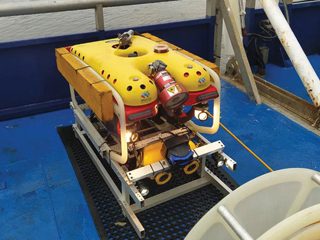
Researchers from the Offshore Robotics for Certification of Assets (Orca) Hub have teamed up with EDF to use a customised remotely operated vehicle (ROV) to carry out what is believed to be the first autonomous wind farm foundation inspection.
The ROV, equipped and operated by the Orca Hub, and funded by the UK’s Engineering & Physical Sciences Research Council, was modified for the project at the Blyth Offshore Wind Farm. It carried out visual inspections of the gravity-based foundations of three offshore turbines over the course of four days. The trials demonstrated the ROV’s ability to work autonomously at the site, as it recorded videos to assess the exterior condition of turbine foundations and cables.
The ROV was also used to create a 3D model of parts of the underwater structure, which will be used to monitor biofouling.
We use cookies to optimize our website and our service.
Functional
Always active
The technical storage or access is strictly necessary for the legitimate purpose of enabling the use of a specific service explicitly requested by the subscriber or user, or for the sole purpose of carrying out the transmission of a communication over an electronic communications network.
Preferences
The technical storage or access is necessary for the legitimate purpose of storing preferences that are not requested by the subscriber or user.
Statistics
The technical storage or access that is used exclusively for statistical purposes.The technical storage or access that is used exclusively for anonymous statistical purposes. Without a subpoena, voluntary compliance on the part of your Internet Service Provider, or additional records from a third party, information stored or retrieved for this purpose alone cannot usually be used to identify you.
Marketing
The technical storage or access is required to create user profiles to send advertising, or to track the user on a website or across several websites for similar marketing purposes.