From the Editor

From the Editor

I hope everyone is well and that you managed to have a summer holiday (of sorts). This issue has the now regular “Ask the Expert” and “Fellow’s Corner” columns, together with three technical articles.

There is the second part of the detailed article on cathodic protection of offshore renewable energy structures by Brian Wyatt, a look at contamination in gas pipelines in Kuwait, and the pros and cons of shop painting of bridge structural steel.

I hope these three technical articles and the new columns are of interest to you, and remember this is your magazine and I welcome suggestions for improvement, or new topics to be covered. You can also send me case studies, your industry news and new product information. I can be contacted at, 
brianpce@aol.com

Brian Goldie, Consulting Editor

The President Writes

The President Writes

I trust you are keeping safe and healthy in these challenging times for us all. It has been very heartening to witness the way in which ICorr activities have transitioned almost seamlessly online. More than ever, our website, social media platforms and online meeting facilities are proving critical in bringing people together and facilitating the excellent networking, training and knowledge transfer activities that the Institute has to offer.

The future of ICorr rests with our younger members and I’m delighted to see the continued success of initiatives to support networking, training and career development of our students, apprentices and early career professionals. We have put younger members firmly at the heart of our membership development strategy and it is fantastic to see some of these activities already coming to fruition. I’ve mentioned some of these below but there is much more to come!

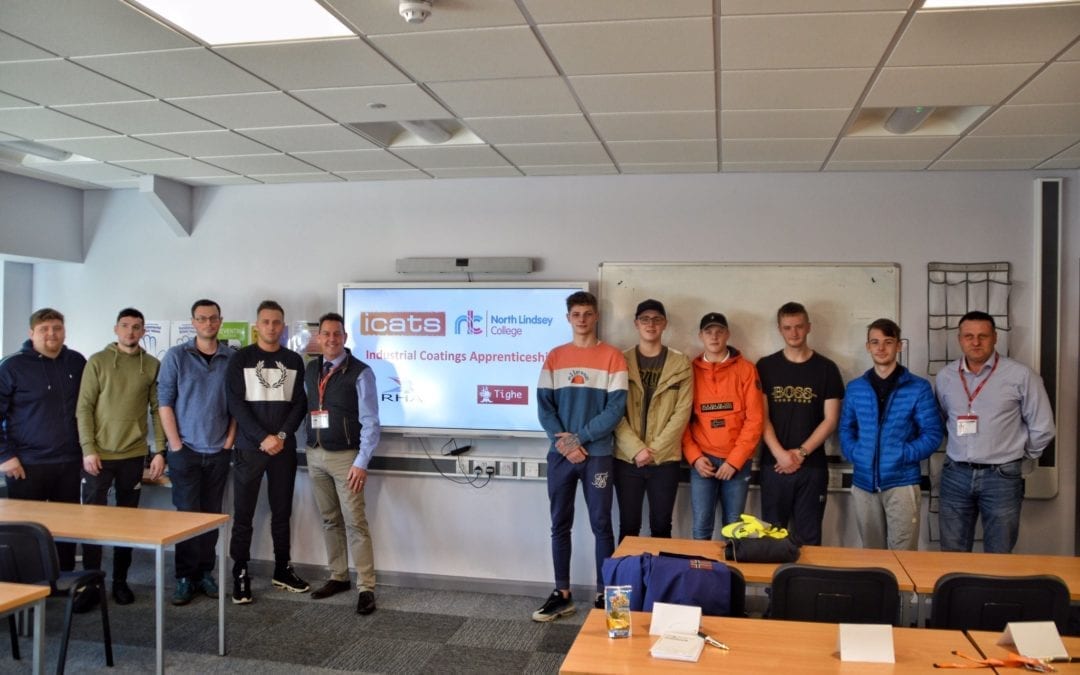
The Institute is proud to support the new Level 2 Industrial Coatings Applicator standard for apprentices, which has been developed in collaboration with Skills Training UK, BINDT and the Highways Agency. I was very pleased to hear that the first cohort of apprentices at Jack Tighe Ltd have successfully passed their End Point Assessment, which consisted of a series of practical tests and a professional discussion over a week in early August. The success of this initiative is down to a lot of hard work by a large number of people but I would particularly like to thank Martin Hillyard and John Whittaker of Jack Tighe Ltd for their strong support for the next generation of coating applicators. Hopefully this will be the first of many such cohorts!

Young ICorr is also continuing to flourish under the leadership of Caroline Allanach. Key to our strategy here is the intention to link Young ICorr activities with local Branch events to broaden the professional network of our early career corrosion engineers and scientists. Combined with the current need to hold Institute events online, this will also have the beneficial effect of revitalising some of our less active Branches. If you are interested in supporting these events in any way please get in touch with Caroline (Caroline.Allanach@gmail.com).
It was a pleasure to attend the 61st Corrosion Science Symposium, which was held online using the Institute’s Zoom Pro account in September. The quality of the talks by the students was very high and there were many interesting discussions, both verbally and via the chat function. I was also honoured to present the U.R. Evans Award (at least virtually) to Prof. Bob Cottis – hopefully there will be an opportunity to present him with the sword itself in the not too distant future!

As a professional society we are constantly striving to develop new ways to raise standards in corrosion protection across a range of sectors. Our training courses are an important part of this strategy and are internationally recognised for their quality and integrity. In the past few years we have been updating and expanding our portfolio of world class training courses. A notable addition that launched on 23 September is our new Level 3 Passive Fire Protection course, which has been developed in collaboration with PFPNet and will set new standards for health and safety in this area.
Finally, I’m delighted to announce a new grade of Corporate Membership, with BP as our first Corporate Member. Our thanks are due to David Mobbs for developing this concept and making it a reality in discussions with BP. I would also like to extend my sincere thanks to BP for agreeing to act as a ‘guinea pig’ for this new grade of membership; their strong support for the Institute and its vital activities is greatly appreciated. Going forward we have exciting plans to roll out Corporate Membership to other larger companies, which will further raise the profile of corrosion protection as a major priority for asset owners.

Enjoy this issue of the magazine – I would also like to point you towards the excellent blogs on our website (www.icorr.org) and the interesting links they contain. Happy reading!

Gareth Hinds, Institute of Corrosion President

The Birth of Apprenticeships for Industrial Coating Applicators

The Birth of Apprenticeships for Industrial Coating Applicators

Introducing the First Ever Industrial Coatings Applicator Apprenticeship

With a high demand for skilled industrial coatings applicators in the UK and globally, it is surprising that it took so long for an entry-level apprenticeship to become available. Until recently, industrial coatings applicators were drawn from within the industry.

The first Industrial Coatings Applicator Apprenticeship (ICAA) has now been completed, and all apprentices who took part in the programme passed with distinction. The Institute of Corrosion spoke to the driving forces behind the ICAA programme, and asked how they not only developed the training programme, but also managed to get this much needed apprenticeship programme into the marketplace.

Why are apprenticeships for industrial coatings applicators needed?

The country’s infrastructure is under constant attack from the environment. Such infrastructure includes structures such as bridges, sports stadia, buildings, hospitals, lighting columns, and wind turbines.

Industrial coatings applicators prepare steel surfaces and apply protective coatings to protect them against corrosion. They may work closely with coating inspectors, for whom separate and specialised coating inspection training is available.

However, despite the critical nature of the work of industrial coatings applicators, employers in the sector are facing a serious problem. The average age of applicators has been rising for years. There is a danger that in a few years there will be very few qualified and experienced industrial coatings applicators remaining. In a nutshell, the industry needs new, younger employees.

What difference will ICAA make to industry?

The whole of the industry is trained and regulated, except for applicators. This apprenticeship, when coupled with the Institute of Corrosion’s applicator training scheme (ICATS), is the first time that this gap has been rectified.

David Mobbs had responsibilities for the End-Point Assessment on behalf of ICorr, and he recalls how one of Jack Tighe’s existing applicators, who was applying epoxy PFP in the factory told him, “There wasn’t anything like this when I joined. I just got given a paint brush.

An industrial coatings applicator is a highly-skilled role, and key to the integrity of the national infrastructure. Poor workmanship can have dire consequences, including increased risk of fatalities. Competent industrial coatings applicators are able to work autonomously, to the highest standards.

Industrial Coatings Applicator Apprenticeships – an idea is conceived

Stephen Hankinson, Chairman of Hankinson Whittle Group, explains how the concept of apprenticeships for industrial coatings applicators came from an idea to reality.

The journey really started at a meeting of the Advisory Committee for National Highways Sector Scheme 19A back in October 2015. 

An employers group was established from 19A accredited companies. We also established a sub-committee training group, chaired by David Horrocks from BAM Nuttall Ltd. David was ideally placed with a vast knowledge and experience in the coatings industry spanning some 38 years. The group also included other members from the Advisory Committee – Jeff Bowden and Lance Williams from Highways England, and also Pete Walker from the British Constructional Steel Workers Association (BCSA). All on the sub-committee were a great help in getting the standard developed.

19A specifically deals with corrosion protection and therefore has always had an interest in raising quality standards within this sector. As a committee, we recognised for a number of years that there was a shortfall of new young entrants coming into the sector.

(Watch the video on YouTube: ‘How the first Ever Industrial Coating Applicator Apprenticeship Was Created’.)

The passion behind the mission

David Horrocks, Materials Engineer at BAM Nuttall Ltd., Fellow of the Institute, is passionate about the apprenticeship programme and says, “I was delighted to be a part of this apprenticeship development and to chair the committee was a real pleasure.

As a committee in Highways England, we were and still are very passionate about making sure that the UK’s infrastructure is protected for many years to come,” David says. “I think that one of the key things that was highlighted within that committee was that the government had started to demand that more apprentices were trained in various sectors.

The industrial coatings applicator sector didn’t have that in place, so there was a gap in the market that needed filling. We were clearly keen to see this come to fruition.

Peter Walker from the BCSA had described to the committee the new apprenticeships being developed for roles such as steel erector and steel fabricator. Thus, the committee was able to tap into the format of applying for a new apprenticeship and how the standard should be presented to the Institute for Apprenticeships.

The training committee took on responsibility for creating the standard, with a view to providing a pathway for training providers to deliver this much needed apprenticeship programme for industrial coatings applicators.

Apprenticeships are real opportunities

There was a period when apprenticeships were scoffed at. Certainly, the Young Trainee Scheme (YTS) of the 1980s seemed to morph apprenticeships into cheap labour programmes. Thankfully, today’s modern apprenticeships provide real opportunities for youngsters to gain skills, qualifications, and a pathway into rewarding careers.

The apprenticeship standard in terms of the committee developing it, was something of a passion of mine to get over the line,” David Horrocks says. “Leaving school and getting an apprenticeship or ‘trade’ is the best way to start a career in this industry and certainly the first step towards further opportunities in this exciting industry.

It took a lot of hard work and dedication to get the ICAA standard developed, written, created, accredited, and available for employers to take on. But it has proved to be worth every ounce of effort.

In late 2018 the ICAA apprenticeship standard was accepted by the Institute For Apprenticeships, which was shortly followed by classroom candidates taking their seats in early 2019 at North Lindsey College in collaboration with Jack Tighe Ltd.

I met the apprentices at North Lindsey College during their initial introduction to the apprenticeship programme. This was an absolute privilege for me,” David Horrocks says. “I presented to the class in terms of how they could progress from being an industrial painter, into paint inspection, and even management.

Stephen himself is no stranger to the power of apprenticeships to change lives. Hankinson Whittle runs its own apprenticeship schemes, and has witnessed apprentices make similar career progression to that experienced by David Horrocks. “There’s something about seeing your hard work in developing others bear real fruit,” he says.

David Horrocks agrees. “It is this pinnacle of seeing this developed that gives me the passion to make sure this continues for many years to come.

In our next article, we meet John Whittaker, Training Manager, and Sam Panter, who is Health & Safety Director of Jack Tighe Ltd., the first employer to run the ICAA scheme in the United Kingdom. They tell us about their journey in taking the apprenticeship standard and developing a new apprenticeship programme for Industrial Coating Applicators.

In the meantime, whether you are an employer considering your workforce and business strategy, or a youngster considering your career options, to learn more about the ICAA, email the admin team at the Institute of Corrosion.


A Passive Fire Protection Course is Critical: The Experts’ View

A Passive Fire Protection Course is Critical: The Experts’ View

We Asked the Questions You Want Answered

A passive fire protection (PFP) course is critical for asset integrity and health and safety of employees. Poorly applied PFP systems put at risk both, as well as adding huge costs to the industry when rectification must be executed.

The Institute of Corrosion has been working with PFPNet to address these issues. The outcome is the Fire Protection Coatings Inspector Training Programme, led by the evolution of needs within the oil and gas industry.

Together with PFPNet, we’ve spoken to many industry experts, including:

  • Shivas Lindsay, Fixed Gas Platforms Process Safety Lead & Technical Authority, Woodside Energy
  • Bill Hedges, Chief Engineer, Materials & Integrity Management, BP
  • Sebastien Viale, Paint and Insulation Group Leader at Technip Energies
  • David Stowers, Associate Consultant at PFP Specialists
  • Gautam Arya, Managing Director at Muehlhan Middle East Holding Limited
  • Sarah Vasey, Global Project Director at Sherwin-Williams
  • David Mobbs, Business Development Manager at Corrosion Integrity Management Ltd
  • Gareth Hinds, President of the Institute of Corrosion
  • Simone Thurlbeck, Visiting Professor, University of Manchester and Director at PFPNet
  • John Dunk, Director of PFPNet and Passive Fire Protection Specialists

Why do we need this PFP course?

The PFP market over the past 10 years has become much more competitive,” says Bill Hedges. Though he says that more suppliers entering the market is a good thing, he adds, “This also means that they’re not able to provide the inspectors we need at our facilities when the PFP has been applied.

It’s become evident that the quality standards associated with PFP installation have become quite poor over the recent years,” says John Dunk. “Therefore, having a qualified inspector to inspect the installation becomes very much more important.

What are the consequences of poorly applied PFP?

Poor installation of PFP systems can have extreme consequences. The financial cost of poorly applied PFP can be colossal, and PFP is critical for health and safety and asset integrity.

If passive fire protection has been badly applied, it means that we don’t know how it would act in a fire. Therefore, the safety of personnel and facilities could be undermined,” says Shivas Lindsay.

It could also lead to corrosion under the passive fire protection, which is a problem,” says Bill. “If we need to repair it, it’s very expensive. We estimate it can cost anywhere between 10 to 100 times the original cost if we have to go back and repair.

Why are current inspection regimes missing PFP installation defects?

The need for an upgrade in PFP inspection competency across the entire industry is highlighted by many of the experts we have spoken to.

The main reason we miss defects is because we don’t have enough experienced inspectors to find them,” continues Bill. “We find this to be especially true in more remote parts of the world, where we’re constructing many of our facilities these days.

Simon Thurlbeck remarks, “In my experience of inspecting lots of PFP systems over the last 20 or 30 years, I’ve found many errors and mistakes in the way things have been done.

Some people have the misconception that passive fire protection is just like regular paint – even the paint you might apply in your own house,” says Bill. “That’s far from the truth.

Improving PFP inspector competence

There’s a clear gap in the market in passive fire protection. We’re looking to raise the bar and support industry to set higher standards for people who are qualified to inspect work on passive fire protection systems and sign off work on passive fire protection systems,” says Gareth Hinds.

Introducing the Fire Protection Coatings Inspector Training Programme

The comments from these experts give a flavour of the desire within the industry for a huge upgrade in the training and competency of PFP inspection. Which is why the Institute of Corrosion (ICorr) and PFPNet have developed a market-leading Fire Protection Coatings Inspector Training Programme specifically aimed at the training of inspectors who inspect installation of hydrocarbon passive fire protection coating materials.

We’ve really tried to write the course in a way that people are going to absorb it and enjoy it,” says Sarah Vasey.

The main purpose of this course is to properly qualify inspectors of hydrocarbon passive fire protection coatings used to resist hydrocarbon fires,” says David Stowers. “It’s not a fire engineering course, but we do start with an overview of the effects of fires on plants and structures – and, hence, the need for PFP.

The course isn’t a PFP application course, either, but it does look in detail at the application and quality control requirements of the most widely used hydrocarbon PFP materials. The course also covers installation issues that influence how well PFP will withstand operational and environmental demands.

At the end of the course,” says Simon, “there’s quite a detailed examination that covers all the course materials that participants have heard over the previous few days.

Then there is a peer review,” says Sarah, who is excited by the panel of people who will be conducting it. “People in the industry who we look up to,” she says.

Sebastien sums up the real-world benefits of this training when he says, “It’s great to have people like PFPNet putting together a course that will improve the knowledge of inspectors. For me, this is improving safety.

Who should attend the course?

The people who will benefit from this course in the first instance are those inspectors who are currently practising PFP inspection on major projects,” says David Mobbs.

We’re looking for those who have a minimum Level 1 Paint Inspector course. We would like to have seen them work in the PFP industry for a minimum of three years,” confirms Sarah.

In addition to these early-stage course participants, John Dunk says, “the course could also be of interest to engineers or other parties who just want to understand passive fire protection and its installation.

Those who will benefit from this course include:

  • Owner-operators who will need to build the course into specification, to ensure that PFP is fully considered and that the design and application of PFP meets improving standards and industry best practice;
  • Fabricators and applicators who will need to have their inspectors competently trained, demonstrating that they are committed to maintaining improved standards of application and inspection; and
  • Inspection houses who will need to have trained inspectors ready to meet the market requirement.

In summary

Developed by highly experienced industry experts – people who really understand the needs of the industry – this course will raise the competence of persons responsible for inspecting and signing off on the quality of installation of such systems, covering epoxy intumescent and cementitious PFP systems in the hydrocarbon industries.

With the need for improved PFP inspection, there is a career path for people in this discipline. This comprehensive Fire Protection Coatings Inspector Training Programme will be the springboard for all those who want to develop their career in this area.

We cover the course content in more detail in our article ‘PFP Course for Inspectors – Finally, Training That Meets Industry Needs’.

For more information, contact either John Dunk at PFPNet or David Mobbs at ICorr.