The Corrosion Engineering Division (CED) has announced that this year’s recipient of the Paul McIntyre award is Chris Lynch.
Chris Lynch is currently employed by Corrpro Companies Europe Limited as their Senior Engineering Manager. He is responsible for the Cathodic Protection Engineering, Site Services and the Power Unit Design personnel, and has been in this role for the last 8 years.
He graduated from The University of Leeds in 1990 and started working as a Junior Corrosion Engineer for Aberdeen Corrosion Engineers Limited, and stayed in the North of Scotland for over 10 years whilst travelling extensively as an ‘engineer in-learning’ taking him across Europe and the Middle East working both onshore and offshore. He now specialises in Cathodic Protection. In 2005 he returned to Teesside to work for his current employer as a Senior Projects Engineer and has worked through the ranks to his present position.
“I believe in working hard with honestly and integrity and have been fortunate to have worked on some excellent Projects with competent people. I am constantly learning and have a continual appetite to understand more and more in my field and the wider Corrosion Industry. I think it is important to put a little back into the industry that has served me so well and have taken the opportunity to do so which has rewarded me in so many ways. Throughout my career I have championed and supported the Institute of Corrosion. I have worked on the numerous training committees and as a course presenter of the ICorr CP training scheme since the mid 1990’s and continue this voluntarily to this day as a current member of the Cathodic Protection Governing Body (CPGB). I am a Level 4 CP Specialist of buried and marine structures and internal surfaces, a Fellow of the Institute of Corrosion and a Chartered Engineer”, stated Chris.
He holds the position of Chair of GEL/603 which is the British Standards Institute (BSI) committee for Cathodic Protection and works on numerous Working Group activities for ISO and CEN. He is a member of several professional bodies including CEOCOR and the Marine Corrosion Forum, and reportedly he has thrived on the open exchange of experience and learning between his peers, particularly those from overseas. He believes it is this sharing of knowledge and experience that has benefitted both himself as an individual and the wider corrosion industry. It is his ambition to communicate and to guide people, especially younger, less experienced people, into this opportunity and to encourage people to share what they know with others.
Chris continued “I would like to thank those who have voted for me to receive the Paul McIntyre Award for 2022. This is a great honour for me. I would like to dedicate it to all the people who have contributed to my success, many of whom I have met whilst doing the work that Paul himself did tirelessly and for so many years himself. It is wonderful that my work with GEL/603 and with ISO and CEN standards committees and working groups has been recognised with this award. The work is so varied and with communities such as CEOCOR, the approach is unique and informal. To be honest, it is not work at all. It is fun. There is much to be gained in international standards work and I have built up friendships with peers and experts across Europe and the wider world. I have gained so much more than can be taught on courses or read in presentations, papers or visiting exhibitions. I believe we all have something to share. Perhaps an experience we have had that is unique or a set of interesting data we have gathered, a job that went wrong that others would benefit from in hindsight.
Standards development and contribution is not mandated to be the sole right of exclusive clubs where only experts can be members. There should be no place for elitism or intellectual snobbery. I wish to encourage groups to be inclusive and friendly. Groups which are pleased to have your contribution and listen to your experiences regardless of age or experience.
When I read Paul’s contributions to BSI and ISO, it strengthens my belief that I can do more and aspire to his level of achievement. It is humbling to be in the company of the five previous winners of this award. I thank ICorr and the Corrosion Engineering Division for this recognition, having first asked, are you sure you have the right person and I look forward to continuing working alongside other volunteers in developing and improving the CP competency training courses”.
For more information on working on standards committees and working groups or joining professional institutions please contact him at, clynch@aegion.com
The Covid pandemic has taken its toll on all industries around the world. It has disrupted business and delayed projects, but crucial learning, such as passive fire protection courses, cannot be ignored.
Here at ICorr, we continued to work with our partners behind the scenes to ensure that as the world returns to normality (whatever the so-called ‘new normal’ is), we can ramp up the sharing of corrosion knowledge, experience, and expertise. This includes delivery of an increasing range of corrosion training courses, qualifications, and certifications.
It is crucial that we protect facilities against fire by using high-performing passive fire protection. In high-risk facilities, such as oil and gas installations, this protection is most commonly offered by epoxy intumescent coatings, protecting the structural steel from extreme heat and providing full corrosion protection as an added benefit.
Training and qualification to improve expertise in PFP
The Institute of Corrosion (ICorr) came together with PFPNet and Argyll Ruane to design and deliver the new PFPNet Competency Framework, which is expected to be mandated by owners and stakeholders as a requirement for projects and operations. Central to this is the core PFP training required to improve (and prove) PFP competencies:
PFPNet has written the courses
ICorr has qualified them
Argyll Ruane is delivering the training globally
After delays caused by Covid, the PFP training courses are now in full swing, and being offered in a variety of training delivery solutions around the world.
Global training options to suit you
Understanding both the need for this specialised training and the challenges for individuals and groups to receive it, the PFP courses have been developed and adapted to suit individual needs in Europe, the Middle East, and Southeast Asia. Course delivery includes the following:
PFP Level 2 courses are now running in India and China
There are two PFP level 3 courses planned in Australia in April, and others expected through the Australasia Region to follow the Operators’ lead
A PFP Level 3 course will soon be delivered in the Netherlands
Learning methods available include:
Inspector Level 2
The PFP L2 Inspector course is designed as an online or classroom course and can be adapted to be delivered as a combination.
Inspector Level 3
The PFP L3 Inspector course has been adapted to provide a blended learning experience with around 30-40 hours’ online learning, and three days of classroom, followed by a Peer Review within 28 days.
Do you require PFP training/accreditation?
These unique courses are designed to qualify inspectors of epoxy intumescent coatings, with a cementitious PFP course to follow shortly. The course and qualification will evidence your competence to understand and inspect PFP installations in both new and retrofit installations.
Owner operators should also attend these courses, as there will be a need to build the course into specifications, and thus make certain that PFP is fully considered, and that the design and application of PFP meets standards and best-practice requirements as they evolve and improve.
Fabricators/applicators will also benefit from the course, as they will need to have fully trained inspectors. And, of course, inspectors who work for inspection houses will also need to be qualified to meet the market requirement.
To learn more about the PFP courses, and how you can register for your preferred learning style and availability, contact either John Dunk at PFPNet or David Mobbs at ICorr.
ICorr and ABRACO Collaborate on Equivalence for Coating Inspectors
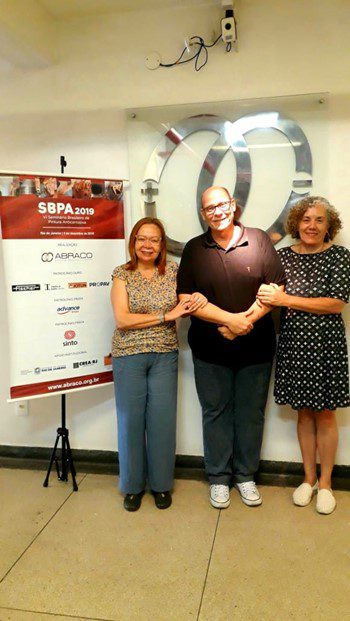
The Institute of Corrosion and ABRACO have now reached a major milestone in a collaboration that stretches back to May 2018. Coating inspectors who have qualified in Brazil as ABRACO Paint Inspector Level 1 can now take a conversion module and gain the internationally recognised coating inspector qualification as ICorr Coating Inspector Level 2.
This is a huge step in developing closer ties between ABRACO and ICorr, and a partnership that will go beyond technical recognition. It will help Brazil’s professionals to be immediately recognised as competent for coating inspector jobs on the international stage with the recognition of an international coating inspector qualification, and help ICorr and its members gain greater exposure and recognition in another of the world’s most important economies.
This is the story of how, together, we unravelled the complexity of developing this conversion model.
Synergic connection in corrosion identified
A meeting between ICorr’s Lucia Fullalove and Florentina (Flor) Melo, and Isaac Catran of ABRACO at the INTERCORR (International Corrosion Congress) in Sao Paulo in May 2018 proved to be the starting block for the ICorr-ABRACO collaboration project.
It was during this meeting that the three realised the synergies between the ICorr and ABRACO, and between the corrosion inspector courses for which both bodies are responsible. The three became excited by the idea of developing these synergies for the benefit of both organisations and their members, and presented the idea to the then President of ABRACO, Professor Paerce de Paula Lunes.
Developing partnership goals
A letter was sent from ABRACO to the then President of ICorr, Sarah Vasey, outlining the proposal and its primary goals:
The promotion of ICorr in Brazil
The recognition by ICorr of Paint Inspectors trained and qualified to ABRACO standards – providing a route to become internationally certified and recognised paint inspectors
A Memorandum of Understanding (MoU) between ABRACO and ICorr was agreed and signed by the new presidents of both organisations in 2018 (Dr Gareth Hinds of ICorr and Dr Olga Ferraz of ABRACO).
Coating inspector courses – identifying the gap
To deliver the second of these primary goals, Lucia, Flor, and Isaac set to work on developing equivalence for the certification of coating inspectors.
It became immediately clear that there was a lot of work required. For example, in Brazil, paint inspector certification is divided into two levels, whereas ICorr’s certification model is based on three levels.
Evaluating how to provide equivalence in coating inspector certification
John Fletcher of ICorr was tasked with appraising and evaluating differences between the coating qualifications, and asked to put forward proposals on how the certifications could best be aligned. By December 2019, John had completed his gap analysis. His major findings were that:
The ABRACO Level 1 Paint Inspector course content addressed most of the content of the ICorr Coating Inspector Levels 1 and 2
There was a shortfall in Health and Safety, and in the International Maritime Organisation ballast tank coating regulations
John’s proposal was for equivalence to be achieved by developing and introducing a conversion module for ABRACO’s Level 1 qualified paint inspectors to ICorr’s Level 2 certification.
Mapping standards for coating inspector training
In 2020, and armed with John Fletcher’s findings, Lucia, Flor, and Isaac carried out a mapping exercise between the relevant Brazilian and international standards.
This work was crucial to help ICorr become acquainted more fully with the differences between the two programmes, and to understand that Brazilian paint inspectors have the level of work practices that is equivalent to their international counterparts, despite working to local standards.
In Brazil, health and safety activities are conducted by a Health and Safety qualified engineer and a Safety Medical professional. Further, corrosion protection professionals in Brazil must follow technical standards that are supported in the country’s laws – even down to how paint containers are stacked in storage.
With a better understanding of these key differences, work could begin on creating the conversion model.
Creating the conversion module
Even with the differences identified, it’s no mean feat to deliver a conversion module. The module must be created, exam questions written, everything reviewed, and all translated into Portuguese for delivery in Brazil. Fortunately, ICorr had Kevin Harold to compose the conversion module and exam questions.
Watch this space!
The collaboration between ABRACO and the Institute of Corrosion is beginning to bear fruit.
The delivery of the conversion course from ABRACO Paint Inspector Level 1 to ICorr Coating Inspector Level 2 is only the start. This demonstrates the ability of ICorr and its membership of experienced corrosion experts to collaborate and work effectively towards collective goals – even in the toughest of global environments.
Like so much else around the world, our plans have been hampered by the Covid pandemic, but we’re now on track to accelerate the ICorr/ABRACO alliance, developing areas for growth in Brazil and enabling more Brazilian corrosion professionals to become internationally recognised for their expertise.
Watch this space for more news soon. In the meantime, to learn more about the Coating Inspector Conversion Module, please contact John Fletcher by email at info@corrodere.com.
This month, we’re showcasing Lucia Fullalove FICorr MSc BSc. Originally from Rio de Janeiro, Lucia is now Director of Fullalove & Associates Consultancy, working in industries such as civil construction, petrochemical, and automotive.
Here are the 11 questions we posed in the 11 minutes we took of Lucia’s valuable time.
1. What did you aspire to be when you were younger?
From the time I could talk, I wanted to be a medical doctor, but I ended up studying Chemical Engineering at Rio de Janeiro State University. Half of the class of 40 were women.
2. So, how did you end up as a corrosion specialist?
After graduating, I was torn between doing a master’s degree or getting a job. The lack of money won, and I started as a Quality Control and Process Control Engineer in a composite manufacturing plant. Immediately, I was working in corrosion.
In my second job as a quality control engineer at another manufacturing plant, my work became more varied and challenging. I had to learn and be responsible for the quality of various surface treatment processes, such as paint, hot dip galvanising, electroplating, and anodizing. I was also responsible for training other quality inspectors.
Why study corrosion? Coming from Brazil to rainy Manchester and salt on roads… never be out of work!
3. What were those first jobs like?
Stressful work, but never boring!
In my first job, I had to travel three hours to work, and three hours back. The people, and some of the challenges I faced, made it all worth it.
Those challenges ranged from getting over initial perceptions of me (I looked young for my age, so the foreman and production workers often assumed I lacked knowledge), to dealing with a snake I found in a toilet!
4. What made you move to the UK?
Love! In 1983, I married a British engineer. I’d met him working in a train depot in Rio. The rest, as they say, is history.
5. How did you find the transition from Brazil to the UK?
In many ways, difficult.
When I arrived in the UK, my first thoughts were that I had come to the country where the industrial revolution happened. I remember thinking that this must be the promised land for all engineers.
To have my degree recognised here, I needed to complete an MSc in Corrosion Science, which I gained in 1984 at the University of Manchester. I was stunned to find that there were only three women in my class of 40. I quickly learned why. The industry was dominated by men.
It took me eight months and 800 letters to get my first job here. Some of the responses I received mentioned how engineering was a ‘dirty profession’ and not suited to women! I can tell you, I had to keep my Latin temperament in check.
Eventually, though, I landed a great position as Process Engineer at Lotus in Norfolk.
From there, I became the first fully qualified female engineer at Rolls Royce Cars, where I worked at Rolls Royce as a Research and Development Engineer, then as a Coatings Specialist at an industrial corrosion consultancy. Eventually, I joined the Highways Agency. While there, I helped to instigate the Institute of Corrosion Industrial Coating Applicator Training Scheme (ICATS).
6. What career advice would you give to a young corrosion specialist?
Choosing engineering is still not an easy option for women. I’ve faced prejudices along the way. Nevertheless, I have had a productive, enjoyable, and fulfilling career. If I had to start again, I wouldn’t change a thing. Go for it, and never give up – and have fun along the way. Four key pieces of advice I would give to all today are:
Sometimes it’s good to be bossy ─ if your intentions come from a place of expertise.
Walk through floors and talk to people. Help them understand the ‘why’ of what they are doing, and engage them in the process of corrosion protection.
You want to be respected? Then respect others first – give and you will receive.
Take the initiative to train people. Give lessons in what people are doing and teach others about corrosion.
7. What is in store for corrosion professionals?
I have experienced many challenges during my career. These include cultural change, working in a foreign language, and gaining acceptance as a female engineer in a field that is still predominantly male.
I hope, and feel, that some of these prejudices are now being overcome, and I think that more women will enter the industry.
8. What have you gained from your membership of ICorr?
This is easy to answer. The more active you are within the Institute, the more you’ll get out of it. My membership of ICorr has helped me to develop my professional network, provided me with learning opportunities, given me chances to help to train others, and to help improve corrosion knowledge in multiple industries around the world.
Let’s get personal with the corrosion professional!
We know that corrosion scientists aren’t all work and no play, so we asked Lucia three final questions to learn a little more about her personally.
9. What’s your favourite food?
I have a very eclectic taste in food, and there isn’t much that I don’t enjoy. But my favourite foods must be French, Portuguese, and Spanish: I adore Mediterranean tastes and seafood. Oh, and red wine with almost everything!
10. What do you like doing most outside of your professional life?
When I’m away from my day job, I work as a volunteer as a STEM ambassador to encourage youngsters to take up engineering. I think it’s important to pass on knowledge and experience to the younger generation.
To take myself away from my work and the science world, I walk a lot. This gets me into nature and helps me relax, as does reading different things.
11. Tell us a secret about yourself, something that might surprise fellow members (and something we can print!)
Here are two things that may surprise you.
First, I’m a Reiki Master. I’ve had to find ways to destress and relax, and Reiki has proved to be invaluable to me. As a Reiki Master, I help others achieve the relaxation that improves energetic balance and supports healing.
Second, before I could read or write, I learned music. In Brazil, music is taught by colour. I used to play the accordion. Perhaps I should take it up again…
What do you want to ask a corrosion specialist?
Now, over to you. Let us know what you’d like us to ask the next ICorr member we put in the hotseat for 11 questions in 11 minutes. Send us an email, and we’ll try to include your question.
This series articles is intended to highlight industry wide engineering experiences, practical opinions and guidance, to provide an improved awareness for the wider public, and focused advice to practicing technologists.The series is prepared by ICorr Fellows who have made significant contributions to the field of corrosion management.This month’s contributions include, Bijan Kermani on the problems associated with geothermal energy production, Dirk L. van Oostendorp on challenges of dealing with aging infrastructure, and Dr Gareth John on the multi-discipline nature of corrosion engineering.
Materials for geothermal wells
Anthropogenic global warming (environmental pollution originating from human activity) is the central issue of our time. Shifting weather patterns and the associated consequences threaten the biosphere and human civilisation alike. Global concern about this existential threat/risk has initiated a new Energy Transition (ET). The term is not novel, and incorporates many factors. It has previously been driven by technology, economics, environmental considerations and in developing nations’ living standards. In its current guise, it is also determined by politics, government policy and concerted activism.
Energy demand supplied by hydrocarbons will continue to influence geopolitics in the post-coronavirus world. In the coming years, CO2 and greenhouse gas (GHG) policies will bring continuing changes in how energy is produced, transported and consumed. ET is global, but nations will respond to it differently depending on their own particular circumstances. In this transition, geothermal energy can play a significant role as a source of carbon free and sustainable energy. It can potentially provide a continuous, uninterrupted supply of heat or electricity and become a major contributor to the energy mix to meet a current and future growing global demand.
Geothermal Energy
Broadly speaking, geothermal energy is the natural heat present within the earth’s core, mantle and crust. Typically, this can be divided into low and high energy systems (HES). The former includes direct geothermal applications to heat single buildings, as well as whole districts, and HES covers electricity generation. The associated technologies for each system differ and are greatly influenced by pool depth, geographic location as well as regional geology, and governed by temperature and pressure conditions. HES is most prominent in active tectonic zones in many of the regions of the world, and normally requires relatively deep drilling and is the subject of the present overview.
Use of geothermal energy in HES, generally involves producing and injecting wells. In this, steam/fluid is drawn up in producing wells and eventually enters surface facilities to rotate the turbine and generate electricity.The returning water is then injected back into the reservoir via an injecting well for pressure enhancement. The simple cycle is schematically shown in Figure 1. Recent developments have achieved a number of milestones in HES including drilling deeper and tapping into hotter sources potentially offering more energy than standard boreholes.
The chemical nature of most geothermal fluids poses some severe technical constraints and many challenges in tapping into these resources.The prevailing conditions include the type of geothermal system, the reservoir depth and the operating conditions.Amongst the challenges are corrosion, particularly affecting carbon and low alloy steels (CLASs) as the main and cost effective material of choice, and scaling of wells and heat exchangers. While corrosion and scale prevention can be achieved by injecting inhibitors based on quaternary amines into the fluids, their applicability and effectiveness are limited.Another main challenge is in relation to constraints on capital investment. These underline the significance of materials optimisation to allow for economic systems which are fit-for service.
This brief overview outlines two elements in relation to geothermal well completion including, (i) types of corrosion threat and, (ii) a summary of suitable tubing materials and their respective optimisation.It is certainly not exhaustive and only attempts to set the scene for furthering future more focussed studies.
Potential Types of Corrosion Threat in Geothermal Wells
Corrosion challenges in geothermal energy production differ greatly from those of the oil industry and may be somewhat similar to those of steam generation, nuclear or the petrochemical industry.Nevertheless, due to the absence of pertinent methodologies, those involved with geothermal well construction continue to adopt oil and gas industry corrosion models and materials selection criteria.
Principal types of corrosion threat experienced in HES include:
H2S, CO2 and low pH corrosion or a combination of these in production mode, and, Primarily O2 corrosion in the injection mode.
These are to some extent similar to the threats experienced in oil and gas production, such as metal loss or environmental cracking (EC) or a combination thereof. While during production, oxygen may not be present, although it may be involved when using untreated fresh water for drilling, stimulation or in injection mode and subject to well depth.These corrosion threats are particularly in relation to HES, although they may be equally applicable to low energy systems depending on operating conditions.
In addition, erosion-corrosion is also a topic of importance particularly where sediments are lifted with the produced fluids.
The likelihood of corrosion threats for specific well components in the production mode are summarised in Table 1.As mentioned earlier, in the injection mode, unless injection water contains CO2 or H2S, the main corrosion threat is related to the chemistry of injected fluid and the presence of O2 affecting the integrity of fluid flow wetted parts of the well. Where system corrosively is high (red zones), in injection mode O2 corrosion type may take over.
Materials Optimisation
In most high energy geothermal wells (HES), high system corrosivity and low in-situ pH in the production stream renders CLAS unsuitable for fluid flow wetted parts and industry experience of its use has been inconsistent.A summary of materials options for geothermal wells in production mode is presented in Table 2, taking on board both aspects of metal loss corrosion and EC outlining limitations and suitability.This is always complemented with a full reference to whole life costing. It is apparent that for the majority of applications CLAS may prove inadequate in terms of metal loss corrosion resistance, and corrosion resistant alloys (CRAs) including Ti alloys can become the obvious options.In the absence of fluoride species and subject to benign mud acids, Ti alloys in particular have a good track record for such applications.In addition, glass reinforced epoxy (GRE) tubing has been used for low pressure systems at temperatures not exceeding 90 C offering corrosion resistance. In the case of clad pipe, application specific studies need to be carried out.
The case of GRE lined tubing is an ongoing subject, although its use for the injection wells is a proven technology particularly in hydrocarbon producing water injection wells subject to meeting operational conditions. However, minimising O2 entry to the wells can allow the use of CLAS for the injection wells.
Other key points in high energy geothermal well design which require consideration include derating of mechanical properties for tubing/casing grades due to elevated temperature exposure and also potential scaling.However, these are considered beyond the scope of the present article.
While providing an overview, it is apparent that the subject is of great importance and warrants further research in areas of corrosion prediction, materials optimisation and well categorisation to move the sector further forward in offering carbon free and sustainable energy in ET agenda.
Bijan Kermani
Challenges of dealing with aging infrastructures
When we switch on the light at home, it comes on to illuminate the room. When we open the tap, we get water for drinking and cooking. These simple facts are often considered normal in our modern world and taken for granted. However, it is far more complicated than that.
For our electricity, we rely on power generation plants and facilities, and our water is supplied to us through a complex network of purification plants and underground pipelines. The concerning aspect is that the majority of the infrastructure operating quietly in the background is over 40 years old. For most large, cross-country pipelines, they were originally designed for 25 years of service, so we are well beyond that point now, yet still functioning.
Corrosion engineers and specialists are being called upon more frequently to assess the condition of this infrastructure, identify specific areas where remediation is needed, and assist in the process of extending the operating life of these already aged assets. This is a very different role than where corrosion engineers were typically involved in the past, and a different mindset is required when considering an extended timeline.
There have been a fair number of incidents in recent years to remind us of the consequences when aged structures can no longer perform as expected. In-service failures on water transmission and distribution pipelines have demonstrated an increasing trend over the past decade and this represents more of an inconvenience for some people, while it remains unnoticed by the majority of the populace. After all, it is only water, right? Industry statistics indicate that there are approximately 700 water main breaks per day across North America. A study by Utah State University found that break frequency increased by 27% between 2012-2018. Corrosion turns out to be the leading cause of these leaks on cast and ductile iron pipe.
But pipelines are not the only structures that are affected by corrosion, whereby catastrophic failure can occur. The collapse of the Champlain Towers South condominium in Surfside, Florida was a graphic and very visual example. While the investigation is ongoing, it is believed that corrosion on the steel reinforcement was at least a contributing cause.
So how do we properly assess and manage aging assets? For many years, the discussion generally involved the ‘3R’s’ … repair, refurbish, replace. The cost of replacement, coupled with the dependance that has evolved on many of these aged structures, makes replacement very costly and unfeasible. Repair can be a solution for minor damage, or as a short-term measure. This means refurbishment or rehabilitation become the most reasonable approach, meaning we must approach it with different and alternate methodologies.
Over the past decade, there have been tremendous advances made in coatings, composites, and inspection technologies. Using tools like phased-array ultrasonics or pulsed eddy current, technicians are able to look deeper and with more detail into the condition of structures, be it reinforced concrete or pressure vessels. The successful addition of carbon monofibers and Kevlar into composite systems have increased the strength of the final repair, on an antiquated wooden penstock, for example.New epoxy coating formulations have been developed and tested, these include the addition of performance enhancers, such as sintered ceramics, to increase strength and abrasion resistance. Finally, developments in microelectronics have now added the possibility of installing remote monitoring as part of a refurbishment project that allows for real-time assessment of key parameters, such as corrosion rate, cathodic protection potentials or pH of operating environment. With this data, it is possible to apply predictive analytics and determine not only what is required, but also when the necessary work is best completed. In parallel, corrosion engineers are being asked to assess the economic implications of the repairs through Life-Cycle Cost Analysis, as a means to compare the benefits from various repair alternatives and ‘net present value’ considerations of the subject assets.
The role of a corrosion engineer is changing, as corrosion control becomes a more integral part of the overall asset integrity management process, and training in these “new” disciplines is an important part of a corrosion engineer’s professional development. The addition of non-technical skills, such as engineering economics, are becoming important tools for corrosion engineers.
Dirk L. van Oostendorp, Director of Engineering, Corrpro Companies
The Multi-Discipline Nature of Corrosion Engineering
One of the more interesting aspects I have observed in more than 40 years working in this industry is the frequent requirement to seek input and support from a wide range of scientific / technical disciplines in solving corrosion engineering problems, both large and small.
Generally, corrosion engineering requires input not only from metallurgists / materials scientists (to some, perhaps, the “traditional” corrosion engineer’s background), but also from chemists, chemical / process engineers, mechanical / structural engineers, microbiologists, mathematicians / statisticians, and others. For the modern corrosion engineer, one’s work can also cross several technical areas, from desktop consulting through to failure investigations, site inspections and audits, as well as laboratory analysis and testing.
In my company (and before that CAPCIS Ltd) I have been privileged to have been actively involved in many hundreds of projects over that time, covering a wide range of industries including oil & gas, petrochemicals & chemicals, water & wastewater, power generation, civil infrastructure, transport, with the work ranging from initial design and selection for new facilities, to operational and maintenance issues and through to failure investigations. In my experience, successful project completion (regardless as to the type of activity) involves input and interaction from a range of specialist disciplines. By way of example, as part of my post-doctoral research project for corrosion of steel in concrete (back in the late 1970’s), I noted that it was only after corrosion scientists and concrete technologists started to talk to each other, with respect to how the chemistry within concrete interacted with the reinforcing steel, was any development / understanding of this world-wide problem developed and, from that, successful solutions for both existing and new structures developed.
It is self-evident that the very nature of corrosion requires a knowledge of chemistry, to ensure an understanding of the electrochemical processes at play and the corrosivity of the environment under investigation. But also, whilst chemical knowledge is critical with respect to assessing if conditions exist for corrosion to occur, the way any material reacts to a given environment also affects how corrosion manifests (if at all); hence, a metallurgical / materials engineering knowledge is also required.
The requirement for input from other technical disciplines varies on a case-by-case basis. For example, input may be required from microbiologists to assess the threat of Microbiologically Influenced Corrosion. Advice from production chemists may also be needed, for example, to perform mineral scale precipitation threat assessments, as well as wax and asphaltene modelling / testing.
In many cases chemical / process engineering input is necessary to fully characterise the extent of corrosion threats across a facility, for example, through analysis of heat and mass balance data, and understanding fluid flow behaviour in a system and consequent impact on water hold-up / drop-out and production chemical performance.
Of course, just understanding the likelihood of corrosion and how it manifests itself is only part of the overall problem, the key question is often “is the structure / component / facility, fit-for-service (FFS)?”This is where mechanical / structural engineering comes in, from simply determining the minimum allowable wall thickness for the item, to determining the limiting conditions for corrosion damage.For example, determining critical defect size for the operating pressure (or the inverse, the safe working pressure for an existing defect), to critical defect size for crack initiation / propagation and overall fatigue life.
Finally, mathematics in general (and statistics in particular) play a key (if often overlooked) role in day-to-day corrosion engineering.Many corrosion-prediction models (as well as integrity models) are statistical in nature as they provide an estimation of the corrosion rate / failure condition under different conditions by interpolation and extrapolation of results from laboratory tests and (in some cases) real life data. Data trending to allow extrapolation from current to future conditions is also a major aspect of corrosion engineering.Fundamental to any such analysis is a need to understand that any model is based on assumptions and/or a limited data set, and hence, having the knowledge to understand when to accept and when to question the results is also vital.
A good example of a multi-faceted project is one we carried out for ADNOC Offshore (then ADMA-OPCO) several years ago in relation to assessing the impact of a proposed CO2 enhanced oil recovery (EOR) project for a mature offshore field [1].In this case there were significant concerns given the assets were over 40 years old and several subsea flow lines and other facilities would be directly impacted.At the time there was very little published information relating to expected corrosion in the various operating conditions that would be created by the new CO2 EOR and most predictive models had not been verified for the very high partial pressure of CO2 that would be encountered.
As such, the study covered a wide range of interrelated tasks including:
• Process engineering – to assess issues associated with handling super-critical / dense phase CO2, including predicted varying process compositions / production rates for the different field assets / facilities.
• Corrosion modelling – to estimate expected corrosion rates for the range of operating conditions covering varying partial pressure of CO2 / H2S, and water content.
• Laboratory testing – to confirm corrosion rates for natural (non-inhibited) and inhibited conditions, under super-critical CO2 conditions.
• Statistical analysis – to compare the corrosion rates from the modelling work with laboratory test data and hence to provide realistic predicted rates across the facility.
• Integrity assessment – based on the condition of the existing assets / facilities and expected future corrosion rates, perform integrity and remaining life assessments.
• Corrosion monitoring – identifying what system modifications / additional facilities would be required to ensure adequate on-going corrosion monitoring and assessments.
• Field surveys – to assess the existing facilities and have discussions with on-site personnel.
• Materials selection – for the new injection and production wells, including use of corrosion resistant alloys for different components.
• Production chemistry – to determine the expected impact of asphaltene formation (due to changes in system pH from CO2 injection) and options for mitigation.
Considering all the different scientific and engineering aspects that need to be taken into account, it is not surprising that a Corrosion Engineer is often considered as a jack-of-all-trades (although I prefer the more poetic term polymath).However, whilst a broad overall knowledge may be sufficient for routine situations, the above makes it clear (I trust) that for many complex cases it is important that expertise from all the appropriate technical disciplines, and input from different sources, are utilised to ensure that a fully comprehensive and effective solution is developed and applied.
My own background, BSc in Chemistry & Mathematics, followed by a PhD and post-doctoral research at the Corrosion & Protection Centre (University of Manchester) before joining CAPCIS back in 1981, has allowed me to get involved across all the different scientific, technical and engineering areas I have discussed above. I must admit that it is this multi-discipline nature of corrosion, with all the different challenges that it throws up, that makes it such an interesting and intellectually rewarding field to work in.
(1) H A Binthabet et al Corrosion management challenges related to CO2 enhanced oil recovery on existing production infrastructure, paper no 7649, presented at NACE Corrosion 2016, Vancouver, Mar-2016.
Dr Gareth John, Executive Consultant, Intertek Production & Integrity Assurance.
We use cookies to optimize our website and our service.
Functional
Always active
The technical storage or access is strictly necessary for the legitimate purpose of enabling the use of a specific service explicitly requested by the subscriber or user, or for the sole purpose of carrying out the transmission of a communication over an electronic communications network.
Preferences
The technical storage or access is necessary for the legitimate purpose of storing preferences that are not requested by the subscriber or user.
Statistics
The technical storage or access that is used exclusively for statistical purposes.The technical storage or access that is used exclusively for anonymous statistical purposes. Without a subpoena, voluntary compliance on the part of your Internet Service Provider, or additional records from a third party, information stored or retrieved for this purpose alone cannot usually be used to identify you.
Marketing
The technical storage or access is required to create user profiles to send advertising, or to track the user on a website or across several websites for similar marketing purposes.