By our Editor, Dr. Shagufta Khan, PhD, FICorr
World Environment Day, organised by the UN Environment Programme (UNEP), is the biggest worldwide environmental event, having been established by the UN General Assembly in 1973. Every year, millions of individuals from governmental bodies, corporations, civil society organisations, and academic institutions take part in environmental awareness campaigns and action plans with the goal of safeguarding the planet’s future.
The theme for 2024, “Our Land, Our Future. We are #Generation Restoration,” emphasises the importance of restoring land, combating desertification, and enhancing resilience to drought. Due to desertification, up to 40% of the world’s land is currently damaged, affecting about 3.2 billion people worldwide. Furthermore, estimates indicate that drought will affect more than three-quarters of the world’s population by 2050.
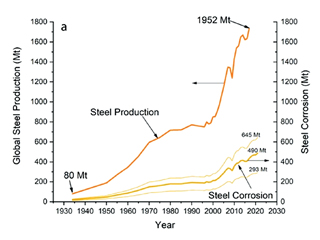
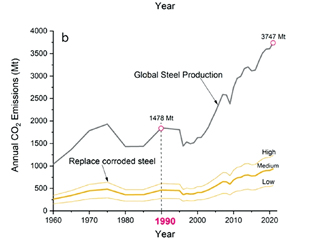
Corrosion and CO2 Emissions: Corrosion of metals, particularly steel, leads to significant CO2 emissions due to the need for replacement and maintenance of corroded structures. Maintenance due to corrosion accounts for an estimated 3.2% of global CO2 emissions (C. Hoffmann, 2020).
Synergy Between Land Restoration and Corrosion Technology
- Reducing Environmental Footprint: Use of advanced sustainable ecofriendly corrosion protection solutions helps reduce the environmental impact of industrial activities by:
- Lowering greenhouse gas emissions.
- Decreasing the need for raw material extraction and processing.
- Reducing toxic waste and contamination from traditional corrosion prevention methods.
- Supporting Sustainable Development Goals (SDGs): By minimising the environmental impact of industrial maintenance and extending the lifecycle of infrastructure, corrosion technology contributes to:
- SDG 9: Building resilient infrastructure, promoting inclusive and sustainable industrialisation and fostering innovation.
- SDG 11: Making cities and human settlements inclusive, safe, resilient and more sustainable.
- SDG 12 : Ensuring sustainable consumption and production patterns.
- SDG 13 : Taking urgent action to combat climate change and its impacts.
- Promoting Circular Economy: Utilising recycled materials in production of corrosion protective products (coating/corrosion inhibitors) aligning with circular economy principles, enhancing resource efficiency and reducing waste.
- Enhancing Land Restoration Efforts: Reducing industrial emissions and waste, supports broader environmental restoration initiatives by:
- Improving soil and water quality.
- Mitigating climate change impacts.
- Reducing air pollution.
Call to Action
- Adoption of Sustainable Technologies: Industries should integrate advanced, sustainable corrosion technologies to reduce their environmental footprint and support global restoration efforts.
- Alignment: By aligning the goals of World Environment Day with advancements in corrosion technology, we can make significant strides towards a sustainable and resilient future. This integrated approach not only addresses immediate environmental challenges but also sets a foundation for lasting positive impacts on our planet.
- Invest in Research and Development: Continued investment in R&D for innovative corrosion prevention solutions is crucial for achieving long-term environmental and economic benefits.
- Promote Awareness and Collaboration: On World Environment Day and beyond, stakeholders should raise awareness about the importance of corrosion technology in environmental sustainability and collaborate to implement best practices.
Sources
- https://impact.nace.org/economic-impact.aspx NACE International. (2016, March 1st). Economic Impact.
- https://sdgs.un.org.
- https://www.mckinsey.com/industries/metals-and-mining/our-insights/decarbonization-challenge-for-steel C. Hoffmann, M. V. (2020, June 3rd). Decarbonisation challenge for steel. Retrieved from McKinsey & Company.
- https://www.nature.com/articles/ . The carbon footprint of steel corrosion.
- https://www.unep.org/ietc/events/un-day/world-environment-day-2024.
Figure 1: Influence of Steel Production and Corrosion on CO2 Emissions.