According to Hempel, they provided coatings to protect the Orbital O2 tidal energy turbine, the world’s most powerful tidal turbine. O2 is set to operate at the European Marine Energy Centre (EMEC) in the Orkney Islands in the UK. Around the islands of Orkney, tidal currents can reach over four metres per second, making them some of the strongest in the world. To harness this energy, Orbital’s O2 comprises two 1MW turbines, which together create a 600 m2 rotor area and can generate 2MW of clean, predictable energy. O2 is capable of supplying enough energy to power around 2,000 UK homes.
Hempel have been involved in the project since Orbital’s prototype SR2000 turbine was built in 2015. As well as high-performance anti-corrosion coatings, Hempel has supplied Hempaguard X7 for the O2’s turbine rotor blades. Hempaguard X7 was developed specifically to combat biofouling, such as algae and barnacles.
According to Andrew Scott, CEO of Orbital, collaborations with companies like Hempel have been key to the O2’s development. “We rely heavily on our supply chain to help deliver our pioneering technology such that it exceeds expectations, and in that regard, we are delighted to continue our relationship with Hempel for our novel coating applications”.
Fluor Corporation has announced that Stork, a Fluor company, has been awarded a 2-year contract for inspections, surveillance and quality assurance services by Babcock International Group, covering various sites in the United Kingdom, including Babcock’s Rosyth site, as well as other global locations. Babcock’s Rosyth site is one of the largest waterside manufacturing and repair facilities in the UK. This new specialist services contract award demonstrates Stork’s expanding footprint into new onshore markets as well as the company’s proven capabilities to deliver value-added solutions to clients, stated the company.Over the next two years, Stork will provide independent third-party inspection, surveillance and quality assurance services to assist Babcock International Group in complying with regulatory and legal requirements for the quality standards of the company’s products and services.
Stork’s office in Aberdeen will lead the work, in addition to assistance from its global network of industry experts. The project began in January 2021.
Can you present your research or a topic as an elevator pitch in just 3 minutes?Well, these Young ICorr members certainly can.
To celebrate Corrosion Awareness Day 2021, in collaboration with the European Federation of Corrosion and World Corrosion Organisation, four PhD students presented their research. The audience were treated to an informative presentation on hybrid FeCO3-poly(allylamine hydrochloride) deposition on carbon steel to improve corrosion resistance and characterising the associated mechanical properties and wettability by, Dlshad Shaikhah of Leeds University. Mohamed Alhebsi provided an in-depth analysis of pitting corrosion and SCC behaviour of CRAs in sweet and sour environments, to support industry applications. New techniques for understanding the erosion-corrosion phenomena revealing how time-dependent surface-hardening processes affect material loss rates during mechanical-electrochemical coupled corrosion, were presented by Aigerim Omirkhan from Imperial College.
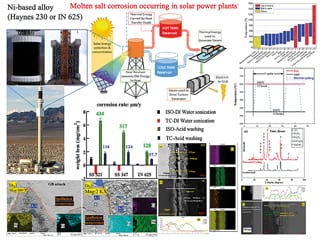
Competition was fierce and the standard of presentation was excellent. However, there had to be a winner, and Qingyan Liu from Leeds University’s whistle stop presentation on corrosion resistance of alloys to molten nitrate salt environments to support their use in solar power plants was the winner! Qingyan described how thermal cycling mitigates the corrosion rate and reduces the spallation behaviour of stainless steels compared with isothermal samples. Further analysis showed the multilayer corrosion products consisting of on the outside, sodium ferrite, and on the inside, iron chromium oxides. It was fantastic to find out about everyone’s research and the standard of presentation was very high. Many thanks to the judges, Bill Hedges, David Mobbs and Trevor Osborne.
An epoxy-amine coating exhibited high impedance after 30 days of NaCl immersion. Even artificially damaged epoxy-amine coatings displayed satisfactory performances.
In the present work, scientists used a tetrafunctional epoxy-amine resin as a coating for mild steel and used electrochemical impedance spectroscopy (EIS) to investigate its protection performance in a 3.5 wt % NaCl solution. The results indicate that the coating was able to resist corrosion and maintain a very high impedance modulus for more than 30 days of continuous exposure to the NaCl solution.
Different resistance behaviours, as indicated by EIS, were observed for the coatings with artificially introduced damage. The coating also showed high thermal resistance and good adhesion to mild steel surfaces.
The study was published in Progress in Organic Coatings, Volume 151, February 2021.
The anticorrosive behaviour of an epoxy coating modified with hydrophobic nano-silica on phosphated carbon steel was the subject of a new study.
According to the researchers, the anticorrosive performance of an epoxy coating is significantly improved when hydrophobic nano-silica is added to an epoxy matrix, adding hydrophobic nano-silica can effectively increase the diffusion path of water-soluble corrosive media through the coating film. The modified epoxy coatings presented good hydrophobicity, good thermal stability at 250 °C with only about 3 % weight loss.
The study was published in Progress in Organic Coatings, Volume 151, February 2021.
A recent report describes the importance of varying the ratio of conventional flame-retardant additives and the scale of testing on the thermal and flammability/fire performance, of acrylic-based coatings.
Ammonium polyphosphate (APP) acid source, pentaerythritol (PER) carbonising agent, and expandable graphite (EG) blowing agent were used in intumescent coatings at various ratios. 1:1:3 or 1:3:1 or 3:1:1. Despite the different roles of APP, PER, and EG, in all the compositions, the physical mechanism of exfoliation of graphite played an important role in offering the fire protection.
With higher loadings of EG, the fire-resistance time was higher. However, there were clear differences in the protection extent when tested in a furnace under one-dimensional heat transfer conditions (bench-scale) as opposed to three-dimensional large-scale testing. Parameters that are not intrinsic to the coating system like char cohesion, cracking, delamination from the substrate, rapid and non-directional expansion, and even higher heat fluxes experienced by the edges of the I-steel section however all affect the fire performance.
This study was published in Progress in Organic Coatings Volume 150, January 2021.
We use cookies to optimize our website and our service.
Functional
Always active
The technical storage or access is strictly necessary for the legitimate purpose of enabling the use of a specific service explicitly requested by the subscriber or user, or for the sole purpose of carrying out the transmission of a communication over an electronic communications network.
Preferences
The technical storage or access is necessary for the legitimate purpose of storing preferences that are not requested by the subscriber or user.
Statistics
The technical storage or access that is used exclusively for statistical purposes.The technical storage or access that is used exclusively for anonymous statistical purposes. Without a subpoena, voluntary compliance on the part of your Internet Service Provider, or additional records from a third party, information stored or retrieved for this purpose alone cannot usually be used to identify you.
Marketing
The technical storage or access is required to create user profiles to send advertising, or to track the user on a website or across several websites for similar marketing purposes.