According to a press release from CEPE, the European paint, printing inks and artists’ colours industry is under increased pressure, for several reasons.
“After a year marked by the COVID-19 pandemic, the industry faces serious challenges again in 2021 due to the rise in raw material prices”, said André Vieira de Castro, Chairman of CEPE. There are several reasons for the increase, namely increasing demand for raw materials due to the anticipated economic recovery, a shortage of raw materials available due to bad weather conditions and the closing of several plants causing suppliers of raw materials to invoke force majeure. In addition, transportation costs are on the rise resulting from the sharp increase in oil prices. André Vieira de Castro pursued “The burden for the industry is immense, as raw material prices account for more than half of the cost. Since January last year, costs for key components like epoxy resins have risen by 60 percent in Europe. The situation is similar for solvents, where the price of acetone and n-butyl acetate alone rose by 123% and 91% respectively.”
The current situation stems from Europe and Asia and especially the unexpected rapid recovery in China which is fuelling demand for essential raw materials. Next to epoxy resins, the list of highly demanded petrochemical raw materials includes polyester resins, polypropylene glycols, acrylic acids, acrylic resin, UV resins, polyurethane resins, and solvents. In parallel to petrochemical raw materials, global pigment raw material costs (including titanium dioxide, red and yellow iron oxide) have also seen sharp increases.
The situation is exacerbated by capacity issues. Disruptions at producers in Asia and Europe – either due to factory closures or plant accidents – have significantly tightened supply. Another cost factor are scarce transportation resources. The COVID-19 pandemic led to erratic demands for international trade which affected the shipping container movements. The current global shortage of containers in the right places has led to a sharp increase in transportation costs: prices of containers between China and Europe have risen more than 400% since Q4 2020.
Bard Capital Holdings, the owner of Blastrac, has announced that it has agreed to sell its business to Swedish public company Husqvarna Group. The acquisition is reported to be a significant opportunity and will add to Husqvarna Construction’s surface preparation technology and product offerings.
Brian MacKenzie, CEO of Blastrac, said that Blastrac and Husqvarna have been robust but respected competitors for many years. We are excited to marry our business to a strong and long-term industry player, and in these uncertain times, size and financial strength will be important to our employees and customers alike.
According to CorrosionRADAR Ltd, an investment from Saudi Aramco Energy Ventures (SAEV) is driving the next phase of global growth for the UK-based company. The funding will enable them to strengthen their operations and widen efforts to address Corrosion Under Insulation (CUI) and other operational challenges through digitalisation. SAEV’s investment was part of a $5m funding round which also included investment from the MEIF Proof of Concept & Early Stage Fund.
This latest funding boost follows successful on-site installations of CorrosionRADAR predictive corrosion monitoring systems at a primary Aramco production facility, and Dr Chiraz Ennaceur, CEO at CorrosionRADAR said. “We welcome this exciting collaboration with Saudi Aramco Energy Ventures as we step up the global response to CUI through the adoption of digital solutions. This investment demonstrates a surge of confidence from the sector in the use of real-time data systems that will accurately predict leakages and the onset of structural failure.”
CorrosionRADAR systems combine patented Electro-Magnetic Guided Radar (EMGR) wireless sensing technology and Industrial Internet of Things (IIoT) applications to continuously monitor and safeguard complex structures and critical assets from the effects of corrosion. With a series of sensors embedded under the asset insulation, the systems have exceptional range and will relay real-time data to localise CUI well in advance of damage or structural failure. An article describing this technology can be found in the May/June 2020 issue of Corrosion Management.
A recent survey of British Coatings Federation (BCF) members demonstrates how Brexit has impacted on the coatings sector in the form of new customs red-tape and higher costs, since 1st January.
BCF members fear the new trading relationship will have a significant impact on the UK manufacturing of paints, coatings and printing inks.
The survey reported higher shipping costs, increased costs of imported raw materials, and new administration costs to complete customs paperwork, with 30% of companies estimating increases in total operating costs of 3-10%.
As a result, the BCF sees significant risks to the competitiveness of UK production and exports of its members, despite the industry investing in preparing for Brexit (86%) and experienced exporters outside the EU (75% of companies). According to BCF, the new free trade agreement (FTA) will have a significant negative impact on UK exports of paints, coatings and printing inks.
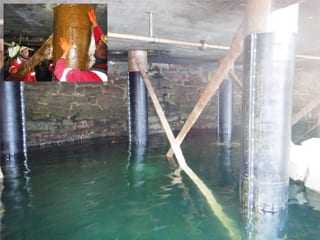
According to Winn & Coales (Denso) their SeaShield™ systems were specified to protect the jetty piles at Ullapool Harbour in the Scottish Highlands, due to an extensive track record of providing long-term corrosion protection to marine structures.
The contractor used a combination of the SeaShield 2000FD™ on the piles and SeaShield 70™ systems on the supporting crossbeams on the structure. For the piles, the system consisted of, a petrolatum paste with corrosion inhibitor, a tape wrap consisting of synthetic fibre cloth impregnated with a petrolatum compound and backed with HDPE film, and an outer HDPE jacket, which was hydraulically tensioned before being secured. For the crossbeams, the system was petrolatum paste, a profiling mastic to fill voids and joints etc, to provide a smooth surface for tape wrap, and finally a resin impregnated glass fibre outer wrap.
The second edition of the Paint Inspector’s Field Guide, is now available direct from the publishers, TQC Sheen. The new guide features new images and up-dated text reflecting the changes in industry practice and standards, since the last edition.
The guide has been written by Lee Wilson, an inspector with many years of experience in the field and offers guidance and assistance to protective coating inspectors, specifiers, owners, painting contractors, or individuals interested in the inspection of protective coatings application. It is intended as a practical inspection aid for the Inspector whilst in the field – providing vital information on inspection methods, general good painting practice, and experience points, whilst its format allows it to be carried in the inspector’s pocket, and could be vital to the success of protective coating projects.
The information in this handbook concerns the general duties and responsibilities of painting and coating inspectors and is intended to enhance their performance. It is not intended as a substitute for formal inspection training and certification. Although corrosion is not just applicable to steel this handbook focuses mainly on the corrosion of steel due to the general use of this material by industry.
The cost of a single copy is, €145, and discounts are available for multiple purchases. Further information, and to order a copy, go to https://www.tqcsheen.com/en/product/the-paint-inspector-s-field-guide-new/
We use cookies to optimize our website and our service.
Functional
Always active
The technical storage or access is strictly necessary for the legitimate purpose of enabling the use of a specific service explicitly requested by the subscriber or user, or for the sole purpose of carrying out the transmission of a communication over an electronic communications network.
Preferences
The technical storage or access is necessary for the legitimate purpose of storing preferences that are not requested by the subscriber or user.
Statistics
The technical storage or access that is used exclusively for statistical purposes.The technical storage or access that is used exclusively for anonymous statistical purposes. Without a subpoena, voluntary compliance on the part of your Internet Service Provider, or additional records from a third party, information stored or retrieved for this purpose alone cannot usually be used to identify you.
Marketing
The technical storage or access is required to create user profiles to send advertising, or to track the user on a website or across several websites for similar marketing purposes.