



The 63rd Corrosion Science Symposium at Electrochem 2022: All You Need to Know

The 63rd Corrosion Science Symposium at Electrochem 2022: All You Need to Know

Who Will Be Presented the Lionel Shreir and Galloway Awards This Year?

The Corrosion Science Symposium has been on a long journey through Covid. The 61st Symposium was forced to move online in 2020. While it was a remarkable success in its new format, we had hoped to return to business as usual in 2021. We did our best, but with the Covid laws that existed last year, the best we could do was a hybrid 62nd symposium – a residential option with live streaming, while ensuring we could deliver to our international membership and others in the corrosion community.

This year we are back to how our membership meets best, and in some style – and we’re seeking your input!

In person, and in Edinburgh

The 63rd Corrosion Science Symposium will be held as part of Electrochem 2022, a conference organized by the Royal Society of Chemistry’s Electrochemistry and Electroanalytical Sensing Systems interest groups, and the Society of Chemical Industry’s Electrochemical Technology Group.

As part of this, our Corrosion Science Symposium will take place on the 5th and 6th September. It’s the perfect opportunity for students and researchers in corrosion science and engineering to get together, network, and discuss their work. You’ll have the chance to share news, views, and ideas, and improve your own learning and knowledge.

What better city for our symposium than Edinburgh? What better venue than the John McIntyre Conference Centre?

This purpose-built conference and meeting venue can accommodate up to 330 delegates. With state-of-the-art audio visuals, a configurable plenary room, four large meeting rooms, executive boardrooms, a stunning view across Arthur’s Seat, and an exceptional bar for end-of-day socialising, this is a superb setting.

It’s not the place, it’s the people. It’s you.

Edinburgh’s John McIntyre Centre is a stimulating place for us all to meet. But not as stimulating as the people who gather here.

With delegates expected from around the world, you’ll be in the company of some of the finest and most forward-thinking, up-and-coming minds from all areas of corrosion science and engineering.

Presentations and discussions have never failed to inspire at the symposium, and the friendly, informal environment is highly conducive to making new acquaintances ─ and beginning life-long friendships within the industries we serve.

An opportunity to recognise excellence in the field of corrosion

The Institute of Corrosion’s Corrosion Science Symposium isn’t only an event for informal learning and networking. It has become synonymous with recognising student talent.

There are two awards directly connected with the Symposium: the Galloway Award and the Lionel Shreir Award.

The Lionel Shreir Award – Last call for submissions

This award is presented to the student who gives the best presentation at the Corrosion Science Symposium. It is awarded to the student(s) judged to have performed best across the following criteria when making their presentation:

  • Distinctiveness, originality, and creativity of research – impact on corrosion discipline
  • Knowledge of corrosion science and practice
  • Clarity of presentation and rapport with the CSS audience
  • Clarity when answering questions

All student presenters at the Corrosion Science Symposium are eligible to win this award of a certificate and cheque for £125.

Could you be this year’s Lionel Shreir Award winner?

To be considered to present at the Corrosion Science Symposium, please submit a 200-word abstract that details a 10-minute talk you would like to give at this year’s symposium before 8th July 2022. We’ll let you know if yours has been selected for presentation in plenty of time ahead of the symposium.

For the opportunity to be awarded the highly sought-after certificate and cash prize, send your abstract to j.a.wharton@soton.ac.uk.

The Galloway Award – We’re seeking submissions

Originally presented for either the best essay submission or work project report, the Galloway Award was first presented in 1976, and reinstated in 1998 in memory of Jack Galloway, a founder Member of the British Association of Corrosion Engineers (BACE) and former Chair of BACE Council.

The award of a certificate, a cheque for £300, and publication of the winning article in the Institute’s Corrosion Management magazine is given to the submission of the best submitted or published paper from the previous 12 months.

Have you produced award-winning work?

We are seeking submissions of copies of students’ published or submitted papers from the last 12 months. The student should be the primary author of the paper. Supervisors may nominate students. Submissions for the award will be judged on the following criteria:

  • Distinctiveness, originality, and creativity of research – impact on corrosion discipline
  • Contribution to corrosion science and practice
  • Clarity of presentation

As well as receiving the Galloway Award, the winning student will be invited to present his or her work at the Symposium.

Submissions should be made to the Corrosion Science Division Chair, Dr Julian Wharton by email to j.a.wharton@soton.ac.uk.

If you would like further information about the Institute of Corrosion awards, please click here.

To learn more about Electrochem 2022 and register to attend the event, please click here.

Passive Fire Protection Courses: An Update from ICorr

Passive Fire Protection Courses: An Update from ICorr

PFP Training to Suit You

The Covid pandemic has taken its toll on all industries around the world. It has disrupted business and delayed projects, but crucial learning, such as passive fire protection courses, cannot be ignored.

Here at ICorr, we continued to work with our partners behind the scenes to ensure that as the world returns to normality (whatever the so-called ‘new normal’ is), we can ramp up the sharing of corrosion knowledge, experience, and expertise. This includes delivery of an increasing range of corrosion training courses, qualifications, and certifications.

In this article, we provide an update on the Passive Fire Protection Courses that provide training to meet industry needs.

PFP is crucial, but competency is lacking

It is crucial that we protect facilities against fire by using high-performing passive fire protection. In high-risk facilities, such as oil and gas installations, this protection is most commonly offered by  epoxy intumescent coatings, protecting the structural steel from extreme heat and providing full corrosion protection as an added benefit.

In recent years, the industry has identified a shortfall of early-stage technical competency in PFP systems. This has led to higher risks, lower safety, and extra costs – all of which could be avoided by improving competencies in the application and inspection of PFP.

Training and qualification to improve expertise in PFP

The Institute of Corrosion (ICorr) came together with PFPNet and Argyll Ruane to design and deliver the new PFPNet Competency Framework, which is expected to be mandated by owners and stakeholders as a requirement for projects and operations. Central to this is the core PFP training required to improve (and prove) PFP competencies:

  • PFPNet has written the courses
  • ICorr has qualified them
  • Argyll Ruane is delivering the training globally

After delays caused by Covid, the PFP training courses are now in full swing, and being offered in a variety of training delivery solutions around the world.

Global training options to suit you

Understanding both the need for this specialised training and the challenges for individuals and groups to receive it, the PFP courses have been developed and adapted to suit individual needs in Europe, the Middle East, and Southeast Asia. Course delivery includes the following:

  • PFP Level 2 courses are now running in India and China
  • There are two PFP level 3 courses planned in Australia in April, and others expected through the Australasia Region to follow the Operators’ lead
  • A PFP Level 3 course will soon be delivered in the Netherlands

Learning methods available include:

Inspector Level 2

The PFP L2 Inspector course is designed as an online or classroom course and can be adapted to be delivered as a combination.

Inspector Level 3

The PFP L3 Inspector course has been adapted to provide a blended learning experience with around 30-40 hours’ online learning, and three days of classroom, followed by a Peer Review within 28 days.

Do you require PFP training/accreditation?

These unique courses are designed to qualify inspectors of epoxy intumescent coatings, with a cementitious PFP course to follow shortly. The course and qualification will evidence your competence to understand and inspect PFP installations in both new and retrofit installations.

Owner operators should also attend these courses, as there will be a need to build the course into specifications, and thus make certain that PFP is fully considered, and that the design and application of PFP meets standards and best-practice requirements as they evolve and improve.

Fabricators/applicators will also benefit from the course, as they will need to have fully trained inspectors. And, of course, inspectors who work for inspection houses will also need to be qualified to meet the market requirement.

To learn more about the PFP courses, and how you can register for your preferred learning style and availability, contact either John Dunk at PFPNet or David Mobbs at ICorr.

Delivering a Coating Inspector Course and Internationally Recognised Coating Inspector Qualification

Delivering a Coating Inspector Course and Internationally Recognised Coating Inspector Qualification

ICorr and ABRACO Collaborate on Equivalence for Coating Inspectors

The Institute of Corrosion and ABRACO have now reached a major milestone in a collaboration that stretches back to May 2018. Coating inspectors who have qualified in Brazil as ABRACO Paint Inspector Level 1 can now take a conversion module and gain the internationally recognised coating inspector qualification as ICorr Coating Inspector Level 2.

This is a huge step in developing closer ties between ABRACO and ICorr, and a partnership that will go beyond technical recognition. It will help Brazil’s professionals to be immediately recognised as competent for coating inspector jobs on the international stage with the recognition of an international coating inspector qualification, and help ICorr and its members gain greater exposure and recognition in another of the world’s most important economies.

This is the story of how, together, we unravelled the complexity of developing this conversion model.

Synergic connection in corrosion identified

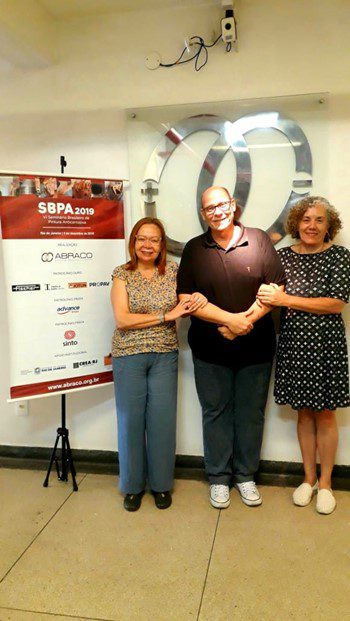
A meeting between ICorr’s Lucia Fullalove and Florentina (Flor) Melo, and Isaac Catran of ABRACO at the INTERCORR (International Corrosion Congress) in Sao Paulo in May 2018 proved to be the starting block for the ICorr-ABRACO collaboration project.

It was during this meeting that the three realised the synergies between the ICorr and ABRACO, and between the corrosion inspector courses for which both bodies are responsible. The three became excited by the idea of developing these synergies for the benefit of both organisations and their members, and presented the idea to the then President of ABRACO, Professor Paerce de Paula Lunes.

Developing partnership goals

A letter was sent from ABRACO to the then President of ICorr, Sarah Vasey, outlining the proposal and its primary goals:

  1. The promotion of ICorr in Brazil
  2. The recognition by ICorr of Paint Inspectors trained and qualified to ABRACO standards – providing a route to become internationally certified and recognised paint inspectors

A Memorandum of Understanding (MoU) between ABRACO and ICorr was agreed and signed by the new presidents of both organisations in 2018 (Dr Gareth Hinds of ICorr and Dr Olga Ferraz of ABRACO).

Coating inspector courses – identifying the gap

To deliver the second of these primary goals, Lucia, Flor, and Isaac set to work on developing equivalence for the certification of coating inspectors.

It became immediately clear that there was a lot of work required. For example, in Brazil, paint inspector certification is divided into two levels, whereas ICorr’s certification model is based on three levels.

Evaluating how to provide equivalence in coating inspector certification

John Fletcher of ICorr was tasked with appraising and evaluating differences between the coating qualifications, and asked to put forward proposals on how the certifications could best be aligned. By December 2019, John had completed his gap analysis. His major findings were that:

  • The ABRACO Level 1 Paint Inspector course content addressed most of the content of the ICorr Coating Inspector Levels 1 and 2
  • There was a shortfall in Health and Safety, and in the International Maritime Organisation ballast tank coating regulations

John’s proposal was for equivalence to be achieved by developing and introducing a conversion module for ABRACO’s Level 1 qualified paint inspectors to ICorr’s Level 2 certification.

Mapping standards for coating inspector training

In 2020, and armed with John Fletcher’s findings, Lucia, Flor, and Isaac carried out a mapping exercise between the relevant Brazilian and international standards.

This work was crucial to help ICorr become acquainted more fully with the differences between the two programmes, and to understand that Brazilian paint inspectors have the level of work practices that is equivalent to their international counterparts, despite working to local standards.

In Brazil, health and safety activities are conducted by a Health and Safety qualified engineer and a Safety Medical professional. Further, corrosion protection professionals in Brazil must follow technical standards that are supported in the country’s laws – even down to how paint containers are stacked in storage.

With a better understanding of these key differences, work could begin on creating the conversion model.

Creating the conversion module

Even with the differences identified, it’s no mean feat to deliver a conversion module. The module must be created, exam questions written, everything reviewed, and all translated into Portuguese for delivery in Brazil. Fortunately, ICorr had Kevin Harold to compose the conversion module and exam questions.

Watch this space!

The collaboration between ABRACO and the Institute of Corrosion is beginning to bear fruit.

The delivery of the conversion course from ABRACO Paint Inspector Level 1 to ICorr Coating Inspector Level 2 is only the start. This demonstrates the ability of ICorr and its membership of experienced corrosion experts to collaborate and work effectively towards collective goals – even in the toughest of global environments.

Like so much else around the world, our plans have been hampered by the Covid pandemic, but we’re now on track to accelerate the ICorr/ABRACO alliance, developing areas for growth in Brazil and enabling more Brazilian corrosion professionals to become internationally recognised for their expertise.

Watch this space for more news soon. In the meantime, to learn more about the Coating Inspector Conversion Module, please contact John Fletcher by email at info@corrodere.com.


Meet the Corrosion Specialist – This Month, Lucia Fullalove

Meet the Corrosion Specialist – This Month, Lucia Fullalove

11 Questions in 11 Minutes

This month, we’re showcasing Lucia Fullalove FICorr MSc BSc. Originally from Rio de Janeiro, Lucia is now Director of Fullalove & Associates Consultancy, working in industries such as civil construction, petrochemical, and automotive.

Here are the 11 questions we posed in the 11 minutes we took of Lucia’s valuable time.

1.     What did you aspire to be when you were younger?

From the time I could talk, I wanted to be a medical doctor, but I ended up studying Chemical Engineering at Rio de Janeiro State University. Half of the class of 40 were women.

2.     So, how did you end up as a corrosion specialist?

After graduating, I was torn between doing a master’s degree or getting a job. The lack of money won, and I started as a Quality Control and Process Control Engineer in a composite manufacturing plant. Immediately, I was working in corrosion.

In my second job as a quality control engineer at another manufacturing plant, my work became more varied and challenging. I had to learn and be responsible for the quality of various surface treatment processes, such as paint, hot dip galvanising, electroplating, and anodizing. I was also responsible for training other quality inspectors.

Why study corrosion? Coming from Brazil to rainy Manchester and salt on roads… never be out of work!

3.     What were those first jobs like?

Stressful work, but never boring!

In my first job, I had to travel three hours to work, and three hours back. The people, and some of the challenges I faced, made it all worth it.

Those challenges ranged from getting over initial perceptions of me (I looked young for my age, so the foreman and production workers often assumed I lacked knowledge), to dealing with a snake I found in a toilet!

4.     What made you move to the UK?

Love! In 1983, I married a British engineer. I’d met him working in a train depot in Rio. The rest, as they say, is history.

5.     How did you find the transition from Brazil to the UK?

In many ways, difficult.

When I arrived in the UK, my first thoughts were that I had come to the country where the industrial revolution happened. I remember thinking that this must be the promised land for all engineers.

To have my degree recognised here, I needed to complete an MSc in Corrosion Science, which I gained in 1984 at the University of Manchester. I was stunned to find that there were only three women in my class of 40. I quickly learned why. The industry was dominated by men.

It took me eight months and 800 letters to get my first job here. Some of the responses I received mentioned how engineering was a ‘dirty profession’ and not suited to women! I can tell you, I had to keep my Latin temperament in check.

Eventually, though, I landed a great position as Process Engineer at Lotus in Norfolk.

From there, I became the first fully qualified female engineer at Rolls Royce Cars, where I worked at Rolls Royce as a Research and Development Engineer, then as a Coatings Specialist at an industrial corrosion consultancy. Eventually, I joined the Highways Agency. While there, I helped to instigate the Institute of Corrosion Industrial Coating Applicator Training Scheme (ICATS).

6.     What career advice would you give to a young corrosion specialist?

Choosing engineering is still not an easy option for women. I’ve faced prejudices along the way. Nevertheless, I have had a productive, enjoyable, and fulfilling career. If I had to start again, I wouldn’t change a thing. Go for it, and never give up – and have fun along the way. Four key pieces of advice I would give to all today are:

  1. Sometimes it’s good to be bossy ─ if your intentions come from a place of expertise.
  2. Walk through floors and talk to people. Help them understand the ‘why’ of what they are doing, and engage them in the process of corrosion protection.
  3. You want to be respected? Then respect others first – give and you will receive.
  4. Take the initiative to train people. Give lessons in what people are doing and teach others about corrosion.

7.     What is in store for corrosion professionals?

I have experienced many challenges during my career. These include cultural change, working in a foreign language, and gaining acceptance as a female engineer in a field that is still predominantly male.

I hope, and feel, that some of these prejudices are now being overcome, and I think that more women will enter the industry.

8.     What have you gained from your membership of ICorr?

This is easy to answer. The more active you are within the Institute, the more you’ll get out of it. My membership of ICorr has helped me to develop my professional network, provided me with learning opportunities, given me chances to help to train others, and to help improve corrosion knowledge in multiple industries around the world.

Let’s get personal with the corrosion professional!

We know that corrosion scientists aren’t all work and no play, so we asked Lucia three final questions to learn a little more about her personally.

9.     What’s your favourite food?

I have a very eclectic taste in food, and there isn’t much that I don’t enjoy. But my favourite foods must be French, Portuguese, and Spanish: I adore Mediterranean tastes and seafood. Oh, and red wine with almost everything!

10. What do you like doing most outside of your professional life?

When I’m away from my day job, I work as a volunteer as a STEM ambassador to encourage youngsters to take up engineering. I think it’s important to pass on knowledge and experience to the younger generation.

To take myself away from my work and the science world, I walk a lot. This gets me into nature and helps me relax, as does reading different things.

11. Tell us a secret about yourself, something that might surprise fellow members (and something we can print!)

Here are two things that may surprise you.

First, I’m a Reiki Master. I’ve had to find ways to destress and relax, and Reiki has proved to be invaluable to me. As a Reiki Master, I help others achieve the relaxation that improves energetic balance and supports healing.

Second, before I could read or write, I learned music. In Brazil, music is taught by colour. I used to play the accordion. Perhaps I should take it up again…

What do you want to ask a corrosion specialist?

Now, over to you. Let us know what you’d like us to ask the next ICorr member we put in the hotseat for 11 questions in 11 minutes. Send us an email, and we’ll try to include your question.

Cathodic Protection Training Delivered in World-Class Facilities

Cathodic Protection Training Delivered in World-Class Facilities

The Who, How, Where, and When of CP Certification Courses

In this series of blogs discussing ICorr’s Cathodic Protection Certification Courses, we have examined:

  • Establishing competence in cathodic protection
  • Choosing which course is right for you
  • Charting your career with the CP certification scheme

In this last blog, we look at the who, how, where, and when of these groundbreaking courses.

A triumvirate of experience delivers exceptional CP training

We started updating our courses so that they would align perfectly with the new ISO 1527:2017. As is often the case, the planning and execution have taken a little longer than anticipated. We certainly were not helped by the interruption caused by the coronavirus pandemic.

What we had hoped to deliver in 2020 was delayed. It’s here now, though, and courses have got off to a flying start.

For this latest phase in delivery of exceptional training in all things corrosion, we have partnered with the Corrosion Prevention Association (CPA). If you don’t know who CPA are, here’s a brief rundown – the CPA:

  • Represents consultants, contractors, and engineers working in the field of corrosion prevention [primarily in the reinforced concrete industry]
  • Acts as the leading authority and source of information on cathodic protection and other corrosion prevention techniques
  • Shares the Institute of Corrosion’s values of encouraging a better understanding of corrosion and sharing of knowledge

CPA has extensive experience in the industry, including delivering seminars, demonstration days, holding industry events, providing CPD presentations, and, of course, online and in-person training programs.

To deliver the groundbreaking CP courses, the CPA partnered with Corrosion Control Services Limited (CCSL) to provide training facilities.

Best-in-class training facilities

CCSL has established an examination and test centre in Telford, Shropshire, and it really is a state-of-the-art facility. It is here that all our CP courses are delivered.

The Gary McKenzie Training and Examination Centre is an innovative development. We had no hesitation in approving it for courses in cathodic protection in reinforced concrete, and on-land (buried) and marine metallic structures.

Officially opened in May 2021, course delegates have already experienced all it has to offer. This includes ‘real-world’ testing grounds. Yes, course attendees will work on pipes and structures in settings that replicate being in the field. If it’s raining, be prepared to get wet!

When are our cathodic protection courses held?

The Level 1, Level 2, and Level 3 courses last between two and five days. If you are taking the exam, this is a separate one-day event with exam days tagged to the end of each course.

Course dates have been announced for through to September 2022, and there will be more to come. The courses are selling fast, and some are already fully booked. You can find out available dates for your chosen course here:

At the time of publication, depending upon the course, the course cost is £575 and £1,200, with exams costing between £330 and £375. Once you have completed the course and been successful in the exam, you will need to apply to the Institute of Corrosion for appropriate certification.

To book a course, please contact CPA on 01420 471614 or send an email to admin@corrosionprevention.org.uk.

For any further information, or to enquire about membership of the Institute of Corrosion, please contact us.


Sustainable Engineering: Corrosion Takes Centre Stage

Sustainable Engineering: Corrosion Takes Centre Stage

Corrosion Engineers (and Scientists) Deliver a Sustainable Environment

The Engineering Council recently updated its Guidance on Sustainability. This is becoming a major focus in infrastructure projects, as environmental issues take on ever greater meaning in the modern world.

In this article, we discuss the nature of sustainable engineering, the benefits it delivers, and what role corrosion engineers and scientists play in it.

What is sustainable engineering?

Sustainable engineering is an approach that enables resources and materials to be conserved for future generations so that the environment is not compromised. All fields of engineering are impacted by sustainability issues, and this includes corrosion engineering.

How does corrosion impact sustainability?

Corrosion affects all areas of our society. This includes:

  • The environment; for example, by leakage of pollutive substances from corroded pipelines
  • Critical infrastructure, to mitigate the costs and damage in infrastructure and transport when corrosion is ignored
  • Economic productivity; for example, the closing of plants when machinery and infrastructure is corroded
  • Energy and fuel; for example, when corrosive damage disrupts supply

Corrosion to infrastructure, buildings, bridges, industrial plants, etc. impacts the health and safety of people, national security, and the wider environment.

In short, the more we can do to manage corrosion, the more sustainable we will build, create, and produce.

The benefits of engineering for sustainability

UNESCO has published eight Millennium Development Goals (MDGs) – internationally agreed targets to reduce poverty and improve living standards. Ensuring sustainability of infrastructure helps to increase the welfare of local communities, nations, and regions. UNESCO has identified relationships between physical infrastructure and the MDGs, including:

  • Ports and harbours
  • Airports
  • Highways
  • Factories
  • Education establishments
  • Communication infrastructure
  • Power supplies
  • Irrigation
  • Healthcare centres
  • Public buildings
  • Sanitary infrastructure
  • Water supplies

Understanding how corrosion affects infrastructure, and the comprehensive list of infrastructure that affects attainment of the MDGs, it is easy to acknowledge that corrosion engineering and corrosion science have a huge part to play in creating a more sustainable world.

Successful sustainable engineering helps to reduce carbon footprints, reduce maintenance costs, add value to installations, protect the environment, and improve health and safety.

How can corrosion engineers (and scientists) contribute to a sustainable environment and society?

Both corrosion science and corrosion engineering have major parts to play in the creation of greater sustainability:

  • Corrosion science helps to improve our understanding of corrosion and develop and improve methods to combat and manage it
  • Corrosion engineers are responsible for ensuring that corrosion mitigation processes are put into practice and have the effect they are designed to have

Where corrosion protection is inadequate, the sustainability of equipment, machinery, installations, and infrastructure is compromised. From design through installation, maintenance, and decommissioning, corrosion engineers have a huge part to play in the sustainability of our planet as they:

  • Apply their professional experience to judgement
  • Exceed sustainability regulations by continually challenging boundaries
  • Use resources more effectively
  • Manage risks to minimise the effects of corrosion and maximise the benefits of corrosion engineering

Alasdair Coates CEng FICE MCIHT CMIOSH, CEO of the Engineering Council says:

Sustainable development is an increasingly important issue for society, and the engineering profession works to meet the challenge of the climate emergency. Engineers have a key leadership and influencing role in working towards sustainability, increasingly as part of multi-disciplinary teams that include non-engineers, and through work that crosses national boundaries.

This updated Guidance on Sustainability supports individual engineers in achieving sustainable development through engineering, as well as helping professionally registered engineers – Chartered Engineers, Incorporated Engineers and Engineering Technicians – to meet their professional obligations.

The Institute of Corrosion is committed to sharing our expertise with the world, helping to unlock and manage the effects of corrosion. Our goal – and the vision behind the ICorr brand – is to reduce the environmental impact of corrosion on our infrastructure, enable a more sustainable environment, and reduce the costs of corrosion on business and society.

For more information about our programmes, symposia, and training that help to deliver our vision, please contact us.

(You may also like to read article, ‘7 Benefits to Exploit with Professional Membership of ICorr’ to learn how we help our members achieve their environmental and career goals.)