



ISO 12944 – Are You Meeting the Latest Standards in Corrosion Protection?

ISO 12944 – Are You Meeting the Latest Standards in Corrosion Protection?

Corrosion protection of steel structures by protective paint systems

First introduced as an eight-part standard in 1998, ISO 12944 was updated for the second time in 2018 with some significant changes and additions. Setting standards for coatings for steel structures in atmospheric, immersed, and buried environments, ISO 12944 now has nine parts. This article introduces the standard, answering the key questions that professionals in corrosion prevention ask about it.

What is ISO 12944?

ISO 12944 is a globally recognised standard that lays out the rules and guidelines for the protection of assets from corrosion by use of coating systems and paint. Having been introduced in 1998, it was updated in 2007 and revised a second time in 2018.

The standard covers paint and coatings for steel structures in atmospheric, immersed, and buried environments. It does not cover coatings for concrete, non-metallic substrates, high-temperature surfaces, chemical immersion, and other uses.

The standard covers three factors when dealing with protecting steel structures from corrosion:

1.      Corrosivity

The potential of the environment to cause corrosion. To achieve this, the standard classifies the environment into categories that are rated on their ability to corrode unprotected steel.

2.      Durability

The expected lifetime of the coating system until its first major maintenance. The standard also emphasises that inspection and minor maintenance should be expected throughout the lifetime of the structure.

3.      Coating system specifications

Based on the corrosivity of the environment and the durability of corrosion protection needed, ISO 12944 acts as a guide to selecting the coating system required for the steel structure to be protected.

Who should use ISO 12944?

The standard is designed for use by all those who have some experience and knowledge of either specifying, manufacturing or using paint and coatings to protect steel structures against corrosion in different environments.

Those who need to adhere to ISO 12944 include asset owners, construction companies, engineering companies, corrosion consultants, paint manufacturers and painting companies. Individuals who must work to the standard include:

What standards does ISO 12944 detail?

Within the nine parts of ISO 12944, standards are provided across the following themes:

1.      Corrosivity, environments, and categories (parts 2 and 9)

Environments are classified across several categories, with recommendations that cover atmospheric exposure, fresh and seawater immersion, and buried surfaces.

2.      Design considerations (part 3)

The standards covered here deal with the basic criteria for the design of steel structures that are to be coated to avoid premature corrosion of the substrate.

3.      Surface preparation (part 4)

Standards for the preparation of surfaces are given, with the objective of minimising the risk of premature failure of the coating system used.

4.      Protective paint systems (part 5)

The paint system used will depend upon the environment in which it is to be used and the intended durability, and ISO 12944 covers this.

5.      Lab testing methods (part 6)

Testing methods and conditions are detailed in ISO 12944. Testing should help users decide which coating system should be used, and so standardises testing to enable more accurate and comparable testing that acts as a guide (but not exact information) for determination of durability within a given environment.

6.      Execution and supervision of paint work (part 7)

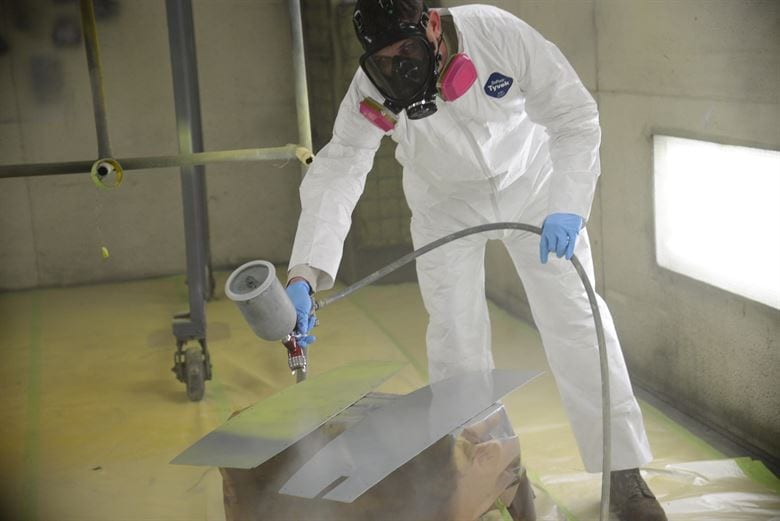
As you would expect, the standard also deals with how coating of steel structures is executed and supervised, either on-site or in the workshop. The standard includes pre-treatment and paint application methods.

7.      Development of specifications (part 8)

Part 8 of the standard deals with development of specifications for the protection of steel structures from corrosion by using coating systems. These standards also apply to the protection of individual components, and cover new work and maintenance both on-site and in the workshop.

What changed in the latest revision?

The major changes in the 2018 revision were:

  • The Introduction of part 9, which discusses offshore environments and establishes a new ‘CX’ category.
  • Alterations to the categorisation of onshore environments.
  • The introduction of a new category for coatings used in conjunction with cathodic protection in seawater and brackish water environments.
  • Changes to durability standards, and the introduction of a new category for very long durability of more than 25 years.
  • Changes to minimum dry film thicknesses and the minimum number of coats to be used. These specifications have been made mandatory to bring a halt to the ‘race to the bottom’ in which paint manufacturers were producing increasingly thin layers to compete on cost.
  • Standards for testing have been updated, with new cyclical testing recommendations to better replicate on-site conditions.

The standard also recognises the need to remain innovative. It states that new technologies and innovative products can be accepted, but the manufacturer must demonstrate suitability by either reference to third-party product testing or a demonstrable track record.

In future articles, we’ll take a closer look at the changes and updates in ISO 12944. You can also read about them in Corrosion Management Magazine.

The Institute of Corrosion Coating and Inspection Training Courses – presented by Argyll Ruane and Corrodere – will help ensure your painters and inspectors work to the latest industry standards and benefit from new technology and innovative approaches. For more information, contact us today.

Corrosion Courses Opening Again

Corrosion Courses Opening Again

Is it time to boost your career with training and development (T&D) in corrosion?

It’s been a tough period for training and development in the corrosion prevention industry. Because of the coronavirus lockdown, it was necessary to move a lot of corrosion T&D initiatives online. Here at ICorr, we adjusted our training and development initiatives as fast as we could, to ensure that as few people as possible were negatively affected as possible.

In a recent blog, we described some of these initiatives, including:

We can now give you more great news. Another of our approved training partners, Argyll Ruane, is now open for business and once more delivering Institute of Corrosion courses designed to address corrosion issues facing various industries.

Back in the classroom – with a difference

On 21st May, 2020, Argyll Ruane was able to announce that it is fully back up and running, and that those wishing to book onto its Institute of Corrosion courses can do so now.

These on-site courses, held at their exceptional facility at the Sheffield Business Park, will now benefit from a range of measures to ensure your health and safety as we move to a new normal economy. Training processes have been adapted, and there will be PPE in place to aid student and staff safety as well as social distancing methods. It’s on-site delivery of training with a COVID-19 twist.

Though there will be many visible differences to how training is delivered, which may include distance learning for some course material where possible and appropriate, one thing has not altered – you’ll still benefit from trainers with years of experience in the field and in delivering exciting training experiences. You can be certain that the training you receive will be accompanied by real-world examples.

The benefits of being ‘in the classroom’

While the benefits of online training have become apparent to many, there are many benefits only available through on-site training. These include:

  • The human touch – a quality that is, thus far, impossible to replicate online. The interaction that is possible between students and staff in the classroom helps all to learn. You’ll learn from questions asked by others, and the experience of all participating in the training course.
  • A classroom setting – this also helps you to hone soft skills (such as interpersonal skills) and develop your professional network more effectively.
  • Health and safety measures in place – you’ll be learning in a safe, clean environment away from the pressures of work or the interruptions at home.

A wide range of training and development in corrosion prevention

All the ICorr training and development opportunities lead you toward industry standards with internationally accredited and recognised courses and certification that help to accelerate careers in your industrial setting.

Aspects of corrosion prevention that are covered by these courses include:

Re-certifications are available online for:

  • Painting Inspector Level 1
  • Painting Inspector Level 2
  • Insulation Inspector
  • Passive Fire Protection Inspector
  • Pipeline Coatings Inspector Level 2
  • Hot Dip Galvanising Inspector

Is it time to give your career a boost through T&D?

Training is critical for your career. It helps improve your skills and abilities, and makes you more attractive to current and potential employers. Developing your value in your professional capacity is a choice that helps you in all economic conditions.

Your training and development also benefit your current employer. You’ll perform your job more effectively, improve productivity, and be more satisfied in your role (and less likely to look for another job elsewhere). Happy employees are great advertisements for any business, and make it easier to attract talented new hires.

The answer to the question “Is it time to give your career a boost through T&D?” is always yes – whether through online or on-site methods.

You Can’t Keep Innovative Young Engineers Down

You Can’t Keep Innovative Young Engineers Down

Could you solve this case study and become a big winner?

The young engineers in the Institute of Corrosion’s Young Engineer Programme are an innovative bunch. There was no way that the coronavirus lockdown and curtailing of mass gatherings was going to stop them in their tracks.

Instead of in the elegant Royal Over-Seas League club in London, these intrepid young engineers gathered around their computer screens at home to learn of the 2020 Case Study that will be used to determine which group of young engineers will be the winners of this year’s star prize. It was the first time that an ICorr Young Engineers group had met online, but was so successful that it is unlikely to be the last.

2018’s Winning Young Engineers group whet appetites for success

With an appraisal of their winning case study from 2018, Caroline Allanach, Danny Burkle and Tim Evans whet the appetites for success of the young engineers in attendance online during the evening.

The insight they provided as to how they approached their task, and a critical assessment of their reaction and solution to the failure that occurred was both informative and entertaining. So, too, was their description of the prize they won – a tremendous trip to the 2019 NACE Conference in Nashville.

A corrosion conundrum is this year’s case study

There are seven participating groups in this year’s Young Engineer Programme case study, and they have been given quite a conundrum to unravel.

The case study was presented by Steve Paterson, from Arbeadie Consultants Ltd., who has a career of corrosion experience to draw on. He hasn’t made it easy for this year’s programme participants. Here is the scenario he has set:

  • Several leaks have been identified in the titanium piping in an onshore desalination plant
  • This plant is used to remove salts from mono-ethylene glycol
  • The plant is also used for hydration and corrosion control in gas pipelines from three offshore fields

At the end of the presentation, the 32 young engineers were posed with the problems they must work to overcome, which include:

  • How to perform a corrosion risk assessment to determine that the plant is safe to operate
  • Recommending alternative materials to use
  • Identifying what mitigation options could be used to prolong the life of this section of the desalination plant
  • Identifying the root cause of the corrosion

Online meetings can get lively!

The young engineers in this year’s intake come from 19 companies, and their specialities include mechanical and materials engineering, welding, materials, and more. With such diversity, you might expect a lively meeting when in a meeting room. It was hard to know what to expect online, though.

The discussions that followed the presentation of the case study proved that no matter how we get together, when there’s an interesting and provocative scenario put forward, online events can be just as lively as in-person meetings.

The range of experience and specialties were certainly put to the test, and the question and answer session proved to be the first opportunity for ideas and complexities to be explored.

In brief, a fruitful, useful and exciting meeting, aptly brought to a close by Trevor Osborne, a past President of the Institute of Corrosion, and Managing Director of Deepwater Corrosion services (UK) Ltd.

The big wait begins!

And so, the big wait begins. It will be several months before we learn which group of young engineers will be this year’s winner.

The groups now undertake further investigation, collaborating behind the scenes and aided by four more lectures, and the help of a mentor assigned to each group, before presenting their case studies in November.

Could you be a future winner in the Young Engineer Programme?

Watch this space! The Young Engineer Programme is held biannually. To learn how you could become a winner, visit our YEP pages or email the Institute of Corrosion at admin@icorr.org.

The Institute of Corrosion Booms on Social Media

The Institute of Corrosion Booms on Social Media

Connecting the world to the corrosion conversation

During the COVID-19-induced lockdown, the use of social media has exploded. Numbers from The Institute of Corrosion’s social media accounts show that our members are staying in touch and connected to their professional life as well as their personal.

Connecting with corrosion professionals

Coronavirus has shown the world many things. Our need to connect with other humans, for example. And when we can’t interact face-to-face, we find other ways of doing do. That’s a common thread that has run through history. From cave drawings to smoke signals, to telegrams to telephones, we humans have always innovated new ways to interact remotely.

Of course, the world has moved on from smoke signals to social media as a preferred channel of communication, interaction, and information gathering. The unprecedented times in which we currently find ourselves has shown just how much we now rely on social media – and the Institute of Corrosion has not been left behind.  

ICorr – Your professional destination on social media

According to recent data from GlobalWebIndex, social media is a core activity of people in lockdown. If you’re like half of internet users, your use of social media and messaging services will have taken up more of your time recently. The research shows that:

  • Almost half of internet users say they are spending more time on their social media and on messaging services
  • More than a third are spending more time on mobile apps
  • One in five people expect to continue to spend more time on their social media after the COVID-19 outbreak has passed

You may have noticed that we’ve been developing our social media this year as part of the Institute of Corrosion’s rebranding strategy. You can now find us on LinkedIn, Facebook, Instagram and Twitter. We’re sharing our blogs, news, and market information with the world, and we’re encouraging our members to become involved – and this approach is paying dividends.

ICorr – Social media growing faster than LinkedIn

Our social media numbers are growing tremendously. For example, the number of members on our LinkedIn group page are up by around 15% this year, and moving toward 2,500. That’s a faster rate of growth than the whole of LinkedIn, which has seen its number of members increase by around 2.25%.  

We’re seeing more visitors on Facebook, and more shares of our social media posts. Our fledgling Instagram account is gaining traction.

ICorr – An increasingly globally social society

Among the core values of the Institute of Corrosion, we want to share corrosion expertise with the world. We took the decision to communicate through channels that people use – including increasing our depth and presence on social media.

Our ambition of increasing our global reach is being helped by our social media presence. Traffic to our website – in large part driven by our social media and organic search – increased by around 9.5% in the last three months from the previous three months.

The UK accounts for around a third of site visitors, but our new focus on digital communication channels is gaining an audience around the globe. Here are a few highlights from the latest digital presence report presented at the most recent council meeting:

  • Visitor numbers from Europe rose strongly, led by the Netherlands with a colossal increase of more than 25%.
  • Visitors from the United States increased by a very impressive 15%.
  • India was next on the list, with almost 13% more visitors than in the previous period.
  • Among others, Nigeria and the UAE are also showing strong growth in visitor numbers to our website.

Online content and social media working hand-in-hand

When we rebranded, we rebranded our website simultaneously. The greater depth of content on site now includes:

We’re continually developing our content and social media to keep an increasing worldwide community in touch with all the latest news, views and developments in corrosion. And our efforts are helping corrosion professionals around the globe develop their professional networks through membership of the Institute of Corrosion.

Our social media is your social media

One of the most satisfying outcomes from our social media is the ease with which you can now get in touch with us at the institute and your fellow corrosion community. It’s easy, too:

Our conversation about corrosion is your conversation. And if you’re not a social media person, then don’t forget that the leading journal for corrosion control and prevention, Corrosion Management, is published bi-monthly and is distributed to subscribers worldwide.

The Institute of Corrosion is your institute. our social media is your social media. We look forward to hearing from you.

Corrosion Science Symposium – Same Prestige in a New Format for 2020

Corrosion Science Symposium – Same Prestige in a New Format for 2020

Corrosion Science Symposium – The Same Prestige in a New Format for 2020

Could your abstract win the Lionel Shreir Award?

The Corrosion Science Symposium is one of the premier events in the Institute of Corrosion’s calendar. This year, circumstances looked like causing it to be cancelled. However, we’ve discovered that coronavirus, lockdown and social distancing are no match for innovative minds, willpower, and technology.

It’s not going to be quite the same as in previous years. But we think you’ll like what we’ve done to ensure the Corrosion Science Symposium is as equally engaging and enlightening an event as it has always been, since it was first held in 1959. The key to its success, as ever, is those who attend: you.

What is the Corrosion Science Symposium?

The Corrosion Science Symposium (CSS) has traditionally been a two-day event held in a prestigious location befitting of its status. The 60th CSS was held as part of Electrochem 2019, hosted by the University of Strathclyde’s Innovation Centre in Glasgow.

This is an informal meeting of the Corrosion Science Division in which corrosion scientists, corrosion engineers and PhD students can gather, receive talks on corrosion, and discuss relevant corrosion issues.

Though it is an informal event, the CSS does include certain formalities. Presentations of some of the Institute of Corrosion Awards are made during the CSS including:

  • The UR Evans Award – the premier scientific award of ICorr
  • The Lionel Shreir Award – for the outstanding student talk given during the CSS

A new format for new normal times

With a more unpredictable future than at any time in our history, the CSS has been moved from a physical space to cyberspace this year. While the exact format is still being finalised, we’ve set the date and the outline format.

We’re going online, but, rather than what we believe would be an intense two days of sitting in front of a screen, we’re extending to three or four sessions during the week beginning 14th September 2020.

Nearer the date, we’ll announce the exact format, times, and technology we’ll be using. One thing is for certain, though – being online, the CSS will be more accessible this year than it has ever been. Consequently, we are expecting many more international students to take part, and that could lead to some exciting competition for the Lionel Shreir Award.

What is the Lionel Shreir Award?

Lionel Louis Shreir set incredibly high standards during a career spanning engineering, research and education. A recipient of the UR Evans Award in 1978, he is, perhaps, best remembered for his encouragement and mentorship of young authors attempting to write papers.

It is fitting, therefore, that the Lionel Shreir Award is presented to the student who gives the best presentation at the CSS, with criteria for the award being:

  • The originality and creativity of research
  • Knowledge of corrosion science and practice
  • Clarity of presentation and rapport with audience
  • Clarity when answering questions

Get involved with the 61st CSS

Last year, presentations at the CSS included:

  • David Kumar (University of Bristol), who gave an interesting overview of his work on hot water corrosion issues related to fusion reactor cooling circuits
  • Mariana Folena (University of Leeds) reported on her studies into the role of acetic acid in CO2 top of line corrosion using real-time corrosion measurements
  • Jessica Moulton (University of Manchester) gave a good overview into her recent studies modelling the behaviour of aluminium flakes in marine coatings using agar gels
  • Amelia Langley (University of Bath) – the eventual winner of the Lionel Shreir Award for her talk entitled ‘Chaotic copper corrosion: the influence of dissolved gas on the anodic passivation of copper in model seawater’

We are now accepting submissions of abstracts for this year’s CSS. All you need to do is to send a 200-word abstract of a 10-minute presentation/talk you’d like to give. We’ll review the abstracts, and select those that we believe can be coordinated into a cohesive programme of presentations through the week.

The winner of the Lionel Shreir Award is selected during the CSS, and we currently plan to present the award online on the final evening – though we must still figure out the logistics of doing so!

To enter your abstract, please send to j.a.wharton@soton.ac.uk by Friday 17th July 2020. Those selected will then be contacted and asked to send an extended abstract by Friday 28th August.

Introducing Cathodic Protection – Electrochemical Corrosion

Introducing Cathodic Protection – Electrochemical Corrosion

Corrosion and electrochemistry from Davy to today

Cathodic protection is a highly effective method of preventing corrosion, and is used in multiple industries and environments. Its history in corrosion science really begins when Sir Humphry Davy first discovered the cathodic protection principles and applied them to electrochemical corrosion.

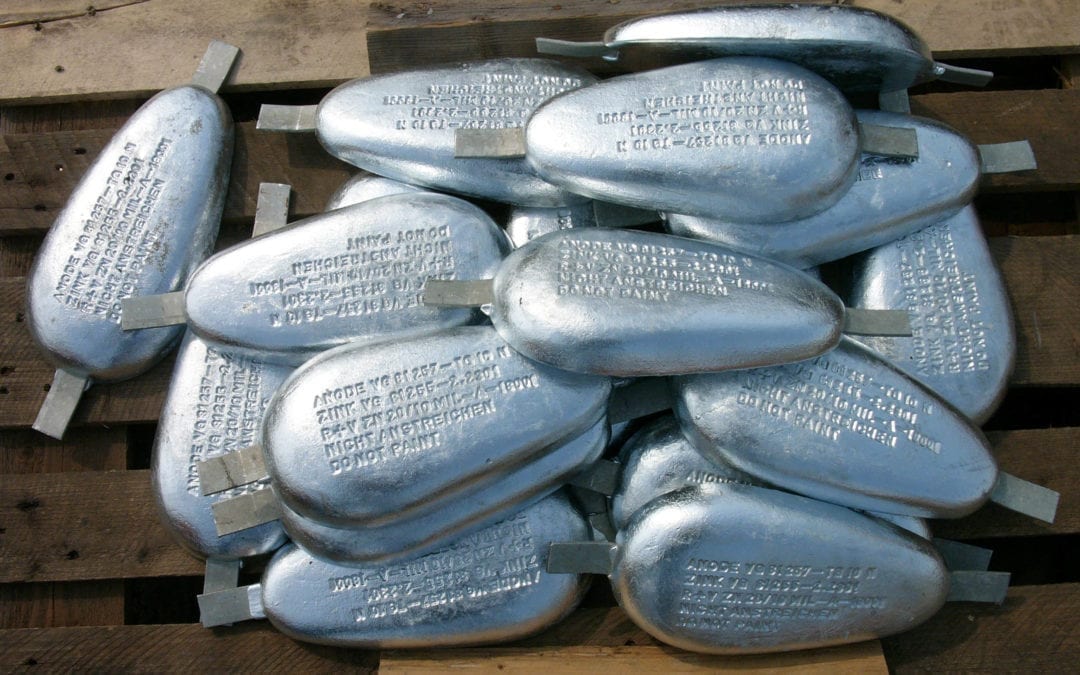
Davy’s experiments led to a better understanding of electrochemical corrosion and the first use of cathodic protection in 1824, when Davy successfully protected a British Navy ship’s copper sheathing from corrosion in seawater by using iron anodes.

In this article, we examine the process of electrochemical corrosion as an introduction to cathodic protection.

What is electrochemical corrosion?

Electrochemical corrosion is a process in which current flows between the cathodic and anodic areas on metallic surfaces, resulting in corrosion. There are always multiple elements in this process:

  • A host metal or metals exposed in an electrolyte.
  • An electrolyte is a medium that can conduct electricity by movement of ions (for example, saltwater, soil, or the pore water in concrete)
  • A metallic path between the exposed metal surfaces. Examples of this include:
    • A buried steel pipeline, accidentally connected to a copper earthing system in a classical ‘galvanic couple’ (the steel being anodic to the copper)
    • A buried or immersed steel pipeline or structure on which ‘anodic’ and ‘cathodic’ areas naturally establish due to variance in either the steel composition/metallurgy or within the electrolyte

Corrosion initiates on the metal/electrolyte interface and, at these anodic areas, low voltage direct current (DC) flows off the anodic metal into the electrolyte. Charged ions are released into the electrolyte and electrons are released into the metal. By convention, DC flow is opposite to electron flow.

The simple electrochemical circuit is:

  • Within the electrolyte (that is in the soil, the sea or river water, or the pore water within concrete) DC flows OFF the corroding anodic areas.
  • This must complete the electrical circuit, so it flows in the electrolyte and discharges on the non-corroding cathodic areas. The DC flows in the metallic circuit electronically, by electron movement. In the electrolyte it is via ionic movement, termed ‘ionic conduction’. The cathodic areas, receiving current flow from the electrolyte, do not corrode.

The electrochemist, rather than the engineer, will describe precisely the same process as the anodic area losing ions to the electrolyte (metal loss) and electrons to the metal (electron flow); the process is the same, it just that by convention the directions of electron and ion flow are opposite to the DC current flow.

In electrochemical corrosion, the magnitude of current flow is directly proportional to the rate of corrosion: approximately 10kg of steel is consumed by 1 ampere DC passing off a steel surface for one year.

How does cathodic protection help prevent corrosion?

Depending on whether it is described by an electrochemist or an engineer, cathodic protection might be described as:

  • Replacing the lost electrons from an external source, thus changing an anodic area into a cathodic area and preventing corrosion (electrochemist)
  • Providing cathodic protection current to all areas of the metallic surface within the electrolyte, sufficient to make all surfaces cathodic (engineer)

Though different descriptions, these are the same process.

Where is cathodic protection used?

Cathodic protection is used around the world to protect against corrosion, especially in aggressive environments such as soils, waters, and chloride contaminated concrete. Applications include:

  • Buried and immersed storage tanks – external surfaces of bases of above ground storage tanks with corrosive foundations; inside crude oil storage tanks with highly saline ‘water bottoms’; inside storage tanks for seawater or raw water
  • Ships’ hulls’ externals and internally in seawater-filled ballast tanks and cooling water systems
  • Offshore oil rigs, platforms, and subsea completions
  • Offshore wind foundations and tidal generators
  • Pipelines – buried and immersed – both onshore and offshore
  • Well casings
  • Flood defences and lock gates
  • Reinforcement in concrete

Cathodic protection is a specialisation

Though used extensively, cathodic protection is highly specialised. To be successful it requires a combination of the application of corrosion science, electrochemistry, electrical engineering, metallurgy, and often structural and mechanical engineering.

There are effective Standards (BS ENs and BS EN ISOs) for a wide range of CP applications in different environments for different types of structures. They all have one thing in common: all make clear that CP design must be undertaken by CP specialists with a documented and appropriate level of competence.

The standards make it clear that all work associated with cathodic protection (such as design, installation, testing, commissioning, performance assessment, and maintenance) should be undertaken by personnel with appropriate training, experience and competence.

How do you become a cathodic protection specialist?

Despite the rigorous nature of the standards surrounding cathodic protection, there are no graduate or postgraduate courses in cathodic protection engineering.

Cathodic protection specialists may start with a science or engineering degree, or via apprenticeships and trade skills, then augment these with specific training, experience and expertise.

The Institute of Corrosion offers both courses and certification in cathodic protection.

·         Courses in cathodic protection

ICorr cathodic protection courses provide the training required for levels 1 to 3 for cathodic protection data collectors, technicians and senior technicians in the sectors of buried, marine, and steel-in-concrete cathodic protection.

While providing the knowledge and skills training detailed in standard BS EN ISO 15257, existing experience and task competency are required depending on the course level.

These courses are suitable for those seeking certification of competence in cathodic protection in accordance with ISO 15257, and also for managers and others who wish to have an introduction to cathodic protection so that they understand what their staff or contractors need to be able to do and the limits of what they should do, within the scope of the standards.

·         Certification in cathodic protection

Independently of the cathodic protection courses, we also operate an independent assessment of competence. The ICorr Professional Assessment Committee (PAC) assesses whether the applicant has the requisite levels of experience, training, knowledge, and task skills as defined in BS EN ISO 15257.

This certification is recognised and valid internationally. In the UK, almost all steel-in-concrete cathodic protection projects, including those for Highways England (previously the Highways Agency), require cathodic protection personnel to be certified in accordance with ISO 15257. In addition, National Grid and the distribution companies, and many marine, port, harbour and offshore operators, also require certification of cathodic protection personnel.

Sustainability in cathodic protection provision

Cathodic protection companies will experience increasing benefits from having their employees certified in line with BS EN ISO 15257. They will be better trained, more competent, and better aware of their responsibilities. Clients are increasingly purchasing services from companies whose staff are certified in cathodic protection. For independent contractors, certification will enhance your reputation, help you to work more effectively, and give greater access to employment opportunities.

To learn more about our range of cathodic protection training courses and the experience and qualifications needed for certification, please visit our pages detailing the Cathodic Protection, Training, Assessment and Certification Scheme.

In our next article, we take a closer look at how cathodic protection works.