The timeline for innovation in corrosion prevention is evolving
Corrosion is a factor within all industries, and left unchecked corrosion has catastrophic effects on infrastructure and transport. With its potential to cause widespread damage across multiple economic sectors, corrosion has spawned an entire sphere of scientific study, innovation, and engineering.
Corrosion science is interdisciplinary in nature, involving organic chemistry, microbiology, electrochemistry, metallurgy, and more. However, it is also a relatively new field, dating back only a few hundred years. In this article, we take a brief look at the history of corrosion science.
Observations of corrosion in history
Throughout the centuries, we can observe actions taken against corrosion. For example, we know that the Romans covered copper utensils with a thin layer of tin to prevent corrosion.
Counterintuitively, there appears to have been little investigation into corrosion until Robert Boyle published two papers which served to introduce corrosion science in 1675. These papers – Of the Mechanical Origin of Corrosiveness and Of the Mechanical Origin of Corrosibility – detailed notes of experiments, mostly undertaken with Robert Hooke between 1654 and 1668 and beyond when Boyle moved to London.
However, despite Boyle introducing corrosion as a science, it wasn’t until the 1830s that the economic consequences of corrosion became apparent. Consequently, in 1837, the British Association for the Advancement of Science offered grants to those studying the action of water and temperature on wrought iron. It was around this time that the potential for profiting from anti-corrosive processes and coatings was first established.
Advances in corrosion protection
Largely because of the financial potential of lengthening the life of corrosive metals, anti-corrosive inventions flowed reasonably quickly in the ensuing years. These included:
1837: Galvanisation of puddled iron, invented by H. W. Cranford in England
1840: Silver electroplating, invented by George E. Elkington and H. Elkington
1869: Nickel electroplating, invented in the United States
1878: Hit-dip tinning, patented by Morewood in England
1906: Phosphating, invented by T. W. Coslett
1923: Anodised aluminium, invented by Guy D. Bengough and J. M. Stuart in England
The rise of corrosion resistant alloys
As well as protecting corrosive metals, corrosion science sought to develop new corrosion-resistant alloys. This branch of corrosion science – the deliberate addition of elements to steel to enhance resistance to corrosion – was pioneered by Michael Faraday in 1819.
Faraday was inspired to find a non-corrosive alloy by the observation that meteorites did not rust. These meteorites contain 8% nickel.
However, Faraday’s main conviction was in the research of electromagnetic induction, and so he did not continue his alloy experimentations. It wasn’t until 1931, when Robert Hadfield was examining Faraday’s notes and experiments, that the scientific community realised that the steel alloy age could have started half a century earlier – if only Faraday had pursued his findings.
The timeline of corrosion-resistant alloys includes these two significant discoveries/inventions:
1905: Albert Portevin observed that steels with a chromium content of more than 10% are resistant to attack by common reagents
1912-1914: Stainless steels were developed in England and Germany
Electrochemistry, hydrometallurgy, and corrosion science
The electrochemical nature of corrosion is one of the most experimented and discussed aspects of corrosion science. The first record of this theory is found in a paper published by French chemist Louis Jacques Thenard in 1819. Developments after this came as follows:
1824: Humphrey Davy first proposed cathodic protection principles.
1830: Swiss physicist Auguste de la Rive attributed rapid attack by acid on impure zinc to the electrochemical interaction between the zinc and the impurities.
1834: Faraday provided evidence of the connection between chemical action and electrical currents.
1907: The function of oxygen as a cathodic stimulator was recognised by Walker, Cederholm and Bent when developing theories of corrosion by neutral liquids.
1908: In Germany, Heyn and Bauer found that attack on iron is stimulated by contact with a nobler metal, while contact with a baser metal offered protection against corrosion.
1924: Whitman and Russell discovered that corrosion is often intensified when a small anode is connected to a large cathode.
The connection between corrosion and hydrometallurgical processes was first made in the late 1880s, when John Stewart MacArthur discovered the cyanidation process for leaching gold from its ores. However, it wasn’t until many decades later that the process was shown to be an electrochemical one. In 1947, P.F. Thompson demonstrated that by developing a galvanic cell on a gold particle, oxygen on the surface was reduced. This acts as a cathode, while the gold dissolving away acts as an anode. Thus, many hydrometallurgical processes are, in fact, electrochemical processes.
Acid is replaced by oxygen as a main protagonist of corrosion
It wasn’t until the early 1900s that oxygen’s status as a main protagonist of corrosion was established. Until then, it was generally held that acidic conditions were mostly responsible for corrosion of metals. This was specifically assumed in the corrosion of iron, which was assumed to only take place when carbonic acid was present.
In 1905, this false assumption was disproved when it was found that iron exposed to water and oxygen, without the presence of carbon dioxide, was subject to corrosion. Though the presence of acid does accelerate some types of corrosion, it is now understood that water and oxygen are the chief corrosion agents in most natural environments.
This advance in understanding wasn’t entirely revolutionary, however. Many scientists had noted the effect that different concentrations of oxygen have on corrosion. These observations by scientists included:
1830: Marianini, in Italy
1845: Aldi, in England
1889: Warburg, in Germany
1908: Kistiaknwosky, in Russia
Further experimentation confirmed that oxygen concentration is an important factor for corrosion scientists to consider. These included experiments by Aston in the United States in 1916, and by U.R. Evans and others in England between 1922 and 1934. U.R. Evans in particular played a key role in establishing contemporary understanding of corrosion processes and is often referred to as ‘the father of corrosion science’. An award in his name is presented annually by the Institute of Corrosion.
Inhibiting corrosion
As corrosion science improved and developed, it was discovered that covering the anodic or cathodic parts of a metal with certain soluble substances stopped corrosion. These substances came to be called inhibitors. Polish scientist Chyzewski classified these into anodic and cathodic inhibitors.
Much of the experimentation in this area has helped to develop inhibitive paint, mechanically-excluding paints, and zinc-dust coatings. The need for different types of coatings was established by John Samuel Forest in England in 1930.
As with all branches of corrosion science, our understanding of coatings is continually evolving and this is reflected in the continuous development of coating and inspection training.
Corrosion science – a rich history with an exciting future
Like the spectrum of scientific knowledge, corrosion science continues to develop and advance. The brightest and most innovative minds will help all industries to accommodate corrosion in their long-term strategic thinking and everyday plans.
The Institute of Corrosion was specifically set up in May 1959 with the objectives to “disseminate technical information about corrosion matters and to develop by means of social activities, the free interchange of information among members.” Further, the objectives included to “progress towards the establishment and acceptance of suitable qualifications for corrosion engineers, and a promotion of standardization in the terminology and techniques of corrosion control.”
These objectives remain encapsulated in our core values today.
Here at the Institute of Corrosion, we are also refusing to stand still. We understand that training and development is key to your personal success – especially during the coronavirus lockdown. The training and development initiatives that we have in place with our partners to help you with your CPD include many online options.
In this post, you’ll learn about another – a whole business week of hour-long webinars that are virtual and free, hosted by Phil Dent (Chair of the Marine Corrosion Forum) and Stephen Tate (Institute of Corrosion Aberdeen Branch).
Why a week of corrosion webinars?
The lockdown has disrupted almost all the training and events in the corrosion industry. Training providers and events organisers have had to cancel public events, and if these don’t take place then the industry is left with a void in the learning and sharing of information and innovation.
These webinars replace what would have been a full day event held in Aberdeen on 29th April.
When is the week of corrosion webinars?
The webinars will take place between April 27th and May 1st inclusive, with each webinar lasting an hour and starting at noon. Each is presented by an expert in their field. The time of the webinars has been selected to allow as many people to participate as possible.
How can I participate in the webinars?
Each webinar will follow the same format, and will be hosted on GoToMeeting:
A one-hour subject presentation
Q&A session via the chat box at the end of the presentation
When you register, you’ll be given the URL for attendance and an access code immediately, and your registration details will be sent via email.
What are the presentations?
The five webinars cover a range of key corrosion themes. Registering for them individually allows you to participate in those that are most relevant to you – or all five, of course. The webinars are:
The Six Core Elements of Asset Management – April 27th
Corrosion Under Insulation Online Monitoring with Electro-Magnetic Guided Radar (EMGR) – April 28th
Hot Topic: Cold Bonding, Using Epoxy Adhesives in Place of Hot Metal Welding – April 29th
An Overview of the Corrosion of Metals in Seawater (And What to Look for) – April 30th
Exploring High Pressure CO2 Annular Corrosion in Flexible Pipes – May 1st
Tell me more about the webinars
Here’s a little insight about each of the webinars.
Presented by Adam Lea-Bischinger CEng CMgr MEng CMRP Eur. Ing of the Institute of Asset Management (IAM), this presentation examines the critical work of the IAM and the development and rollout of ISO 55000 which defines terminology, requirements, and guidance for implementing, maintaining and improving an effective asset management system. The presentation includes examples of UK companies operating the ISO 55000 system.
Corrosion Under Insulation Online Monitoring with Electro-Magnetic Guided Radar (EMGR)
Presented by Dr Prafull Sharma, an inventor and Chief Technology Officer of CorrosionRADAR Ltd., you’ll learn why corrosion under insulation (CUI) continues to be a big challenge for the asset integrity management of industrial facilities, and about the growing trend to remotely monitor corrosion in accessible locations using wireless connectivity and battery-powered devices. You’ll also learn about the latest innovative sensor system for monitoring CUI that has been developed by CorrosionRADAR.
Hot Topic: Cold Bonding, Using Epoxy Adhesives in Place of Hot Metal Welding
Presented by Henry Smith, UK Technical Supervisor of Belzona Polymerics Ltd, this webinar examines the options available to the offshore fabric maintenance engineer when it is not possible or preferable to weld, and discusses viable solutions using bonding or cold-welding technologies. You will benefit from references to case histories, from initial design to installation and ongoing inspection.
An Overview of the Corrosion of Metals in Seawater (And What to Look for)
Presented by Carol Powell BSc, a Fellow of the Institute of Materials, Minerals and Mining, and independent consultant, this webinar provides a brief overview of the world of metals and their response to one of the most aggressive environments there is, giving examples of the types of corrosion which can occur and how to avoid them.
Exploring High Pressure CO2 Annular Corrosion in Flexible Pipes
Presented by Maria-Eleni Mitzithra PhD and Senior Project Leader for Corrosion at TWI Ltd., this webinar focuses on the work conducted by Mitzithra and tests carried out in a lab-scale test system designed and built at TWI Ltd. for the simulation of complex annulus environments, describing corrosion rates and the link to stability, structure, and thickness of the precipitated iron carbonate scaling.
A positive response with online training and events
This week of webinars replaces the MCF meeting in Aberdeen that was due to be held on 29th April. The Institute of Corrosion has partnered with MCF to offer these webinars as an alternative, and opened them to members and non-members of ICorr and MCF. You’ll be able to gain insight into the subjects that were to be presented and discussed at the Aberdeen meeting from home, work, or other location, and it’s free of charge.
As the lockdown and COVID-19 pandemic evolves, we are proud to bring you online options like this to help you continue your personal professional growth – just one example of the benefits of membership of the Institute of Corrosion.
Friday 24th April is World Corrosion Awareness Day. This year, it will be a little different. We’re battling coronavirus, and many of you reading this will be in lockdown. You’ll be stuck indoors with little to do. By now, your children might be driving you insane.
This year’s World Corrosion Awareness Day is a great opportunity to relieve some of the tedium – and for households to do their bit in the battle against the devastating effects of corrosion.
Though the world is on hold, corrosion isn’t
Even when corrosion engineers aren’t locked in their homes, corrosion works to destroy our world. When we ignore corrosion control in infrastructure and transport, the result is often a human catastrophe. When bridges collapse and airplanes break apart, people lose their lives.
Eventually (hopefully soon), we will beat coronavirus. When the pandemic is a distant memory, corrosion will still be costing lives and money. Which is why engineers and scientists will continue to develop strategies, tools, and techniques to fight back against corrosion.
Here at the Institute of Corrosion, our aims include increasing awareness of corrosion, improving corrosion education, and sharing our expertise with the world. So, with World Corrosion Awareness Day in mind – and understanding how different the day will be for pretty much everyone on the planet this year – in this blog you’ll learn how to conduct a simple experiment to keep your kids amused and help them learn more about the world in which we live.
Amaze your children with a simple corrosion experiment
Here’s a little interactive experiment you can do with your kids to show the effects of corrosion, and just how quickly corrosion happens. You’ll need three clean jars, some water, some oil, some Epsom salts, and three clean steel nails. Here’s what to do:
Pour some Epsom salts into the first jar, and drop a nail onto the Epsom salts. Screw the lid onto the jar.
Pour some boiled water that has been cooled into the second jar. Drop a nail into the water, and then cover the water with oil. Put the lid on the jar.
Pour non-boiled water into the third jar, and drop a nail into it. Screw the lid on the jar.
Explain to your children that:
The first jar is air but no water. The Epsom salts draw any moisture out of the air in the jar, so it is very dry.
In the second jar, the nail is in water, but there is no air because the oil prevents the air from combining with the water. You boiled the water to remove as much air from it as possible.
In the third jar, water and air can get to the nail.
After a few days, your children will notice that the steel nails in the first two jars have not corroded. In the third jar, the steel nail will have started to rust. This shows that both air and water are necessary for steel to rust.
Corrosion-proof your home on World Corrosion Awareness Day
Now that you have taught your children how metal corrodes, it’s time to teach them how to prevent corrosion. This is your chance to keep them busy on World Corrosion Awareness Day (and beyond).
Your children know that it takes air and water for metal to corrode. Ask them what items around the home – including in your shed, your garden, and your driveway – are metal. Lead them through to the discovery that painted metal items are protected against air and water.
Ask your children if they want your garden benches and tables to corrode. Buckets and spades, garden fences and gates, door handles, and so on. Lead them on a hunt around the house and garden to find metal items that are not coated or painted, or that have been affected by rust.
Then, supervise your children as they clean and dry metal items, removing any corrosion, and painting items with anticorrosive paint.
This year’s World Corrosion Awareness Day is the perfect opportunity to teach your children about corrosion and get them involved in doing all those anticorrosion jobs you have been promising to do for months. Family time with a real end-product – beautifully painted metal items that are protected against corrosion.
The earlier we promote corrosion awareness, the more likely we are to reduce its human and financial cost. For advanced corrosion prevention training for corrosion professionals, contact the Institute of Corrosion to learn about our latest training initiatives – online and in person.
How to Benefit from Institute of Corrosion T&D Initiatives Online
With the coronavirus lockdown firmly in place in most parts of the world, businesses and people are adjusting to the new normal. One of the hardest hit business activities is training and development. This is bad for businesses and their employees. Of course, the safety of employees is critical but so, too, is the continual upskilling and development of those employees.
Given that your professional development is key to both your career and the future of your employer, what has been the response by businesses and how can you keep your career on track?
3 Training and Development Strategies Adopted by Businesses
Generally, we’ve seen three approaches to training and development during the lockdown:
1. Suspend/cancel training & development
Some businesses have drastically cut back or even cancelled all their training and development. They have done this to reduce costs. Some of these companies have laid off staff and are seeking to recruit experienced people to help them through this difficult period. (Staffing Future is the first company we know that has developed a not-for-profit recruitment website to match people to jobs that suit their skills specifically for COVID-19 jobs in the UK and the United States.)
2. Transition training & development as an online resource
Other businesses are helping their employees adjust to online working and encouraging continuation of CPD by transitioning existing training and development as an online resource. Such organisations are using working from home as an initiator to encourage upskilling toward a new normal that is likely to include more working from home – even after the lockdown has ended.
3. Increase accessibility to training & development
The third business model is increasing capacity and accessibility to training and development. The issue that many businesses have here is that their IT capability is already stretched. They simply don’t have the bandwidth to offer the desired depth and breadth of training and development to an army of employees wishing to connect via video.
Online Training & Development with the Institute of Corrosion
Organisations have been forced to prioritise their approach to training and development – for both what they believe is needed and what they can reasonably provide. This has necessarily meant that much training and development has been postponed or cancelled. The knock-on effect for individuals is that their own CPD – and therefore their career path – has been put on ice.
As a not-for-profit organisation committed to continuous development of knowledge and expertise within a supportive and inclusive framework (read about our core values here), the Institute of Corrosion is adjusting to the current lockdown environment at pace. We understand that it is imperative for industry professionals and members of the Institute of Corrosion to continue to develop professionally.
Training and development initiatives that we have in place include:
The Industrial Coating Applicator Training Scheme (ICATS) ICA module is now available online. You can learn the theoretical aspects of application and complete all the tests within the programme from the comfort of your own home during lockdown. For further information, please email Kevin Harold at Kev@paintel.co.uk.
One of our training partners, Corrodere, specialise in providing training packages developed with industry experts to ensure that users gain insight into basic corrosion, methods of surface treatment and application of protective coatings – with many of its courses available through online training. Contact Corrodere for more information.
We are working with other training providers to enable you to continue your professional development during lockdown. For example, Argyll Ruane are working on the delivery of an online classroom-style training programme.
We’re also in the process of transitioning the Fundamentals of Corrosion course for delivery online. Please, if you are interested in learning more and participating online, contact admin@icorr.org.
5 Benefits of Online Training
Because you are working from home or furloughed, you don’t need to put your professional development on hold. In fact, the online training and development initiatives we have already released and those that we are working on will help you develop a broader appeal as the world returns to work. The benefits of online training include:
More affordable – online training and development can generally be delivered at reduced rates (and sometimes free, as with our Corrosion Engineering Division Working Day, which is now being held online)
More flexible – adaptable to different learning styles and flexible to fit your personal timetable
More convenient – take your course with you wherever you are, and balance between your work and free time
More comfortable – if you don’t like sitting in classrooms, you’ll love learning in the comfort of your own home
Improves career prospects – with more time on your hands and more flexibility to learn, taking online courses during the COVID-19 lockdown will demonstrate your commitment as well as provide valuable skills and knowledge that will help to develop your career
Make sure your career stays on track. Stay tuned to the Institute of Corrosion blog to learn of the latest developments in training and development in the corrosion industry.
In the connected, social media world in which we live, some professionals question whether membership of an organisation is still as relevant as it was, say, 20 years ago. Now you are only a Facebook message away from your peers. You can interact with likeminded people in groups such as the Institute of Corrosion on LinkedIn.
However, even in our globally connected society, professional membership of the Institute of Corrosion provides powerful benefits that are not available otherwise. Here are a few of these benefits.
1. Improves your personal branding
Membership of the Institute of Corrosion is viewed highly positively by employers. It demonstrates that you are committed to your profession and to remaining current. Membership credentials add gravitas to your CV.
2. Opens exciting CPD opportunities to you
There is no doubt that Continuing Professional Development (CPD) is critical to your career. Through membership of the Institute of Corrosion, you’ll be kept informed of all the training and professional qualifications that we offer through our partners.
You’ll also benefit from greater access to ICorr technical events, workshops, working days, and other events that we provide or sponsor through the year.
3. Networking opportunities for you
As a professional and modern organisation, we recognise the importance of social media. We’re boosting our presence across LinkedIn, Facebook, Instagram and other social media, making it easier for you to stay connected with us and our membership. (We already have almost 2,300 members on our LinkedIn group – why not join?)
However, the real networking advantage of membership of the Institute is the potential it provides for you to connect with professionals closer to you. By attending ICorr events, you will help to unlock the power of building a more personally connected network – you’ll meet people you would not have met otherwise.
4. Opportunities to improve your professional profile
As you progress through your career and through the different grades of membership of the Institute of Corrosion, you will find that you have opportunities to give back to the profession and simultaneously improve your professional profile.
Better still, you could put your name forward to be an officer on your local Branch committee, volunteer to chair a CED Working Group or join the organising committee of an Institute event.
Becoming involved in your profession through your membership of the Institute of Corrosion not only helps to raise your profile in the community, it adds credible authority to your CV too.
5. Access to the Members Area of our website
As a member of the Institute of Corrosion, you have access to areas of our website that are not available to the general public. This includes access to the magazine archive, minutes from the AGM, meeting notes and technical papers of the Corrosion Engineering Division and free download of EuroCorr conference papers.
The Members Area also includes access to the Engineering Council’s ‘mycareerpath®’ professional development system for you to record your CPD activities.
6. A route to Chartered Engineer status
Chartered Engineer status offers real tangible benefits such as:
Improving your career prospects
Improving your earning potential
Your competence is internationally recognised
You increase your professional network
As a professional member of the Institute of Corrosion, you will be eligible to become a Chartered Engineer (CEng). Should you wish to do so, as part of our commitment to you we have designed an exclusive mentoring programme to help you achieve CEng status.
7. Individual Recognition
We also sponsor prestigious awards that are recognised across the world, helping to improve visibility of the important work that people within the field do. These cover scientific and engineering achievements on the international stage, as well as outstanding contribution to furthering the objectives of the Institute.
View from our expert
Of the benefits of membership of the Institute of Corrosion, David Horrocks, says:
“As a professional member and Fellow of ICorr, I feel the Institute has many benefits to offer. The membership grades on offer will not only enhance an individual’s visual status professionally to the outside world, but will also show that prerequisite competence levels have been met to achieve professional status.
“The process of membership – and, indeed, up-grading current membership – is a process made easy by ICorr. There are mentors available for individuals with the aim to enhance their standing professionally within the Institute of Corrosion.
“The members area on our new website and our social media platforms are great tools to broaden your knowledge, ask questions, seek advice, and generally engage with other professional members.
“Membership is not a standalone rubber stamp on an individual: it’s potentially life changing. If combined with enhanced networking opportunities and joining ICorr committees, the potential benefit for individuals and their continuous professional development is immeasurable.”
The Real Cost of Poor Corrosion Prevention Practices Is Human
The financial cost of corrosion to the global economy is enormous, and estimated to be more than 3% of global GDP. Corrosion control is essential to reducing this cost, and is critical within infrastructure and transport. The economic benefits of longer life of transport and infrastructure assets are clear. Therefore, it is crucial that governments and businesses invest in corrosion control.
However, there is a far bigger reason why the Institute of Corrosion is leading the global corrosion conversation. People’s lives depend upon it.
Catastrophe is the real cost of infrastructure corrosion
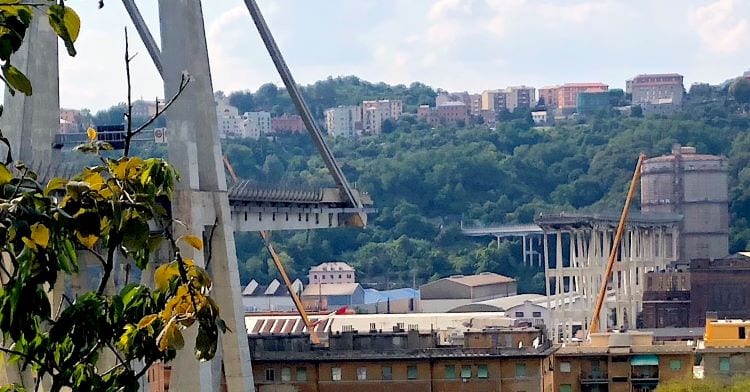
In August 2015, the catastrophic effects of a lack of corrosion management was made abundantly clear in Italy. During a violent storm in Genoa, the Morandi Bridge collapsed. 43 people lost their lives. It is not as if the disaster could not have been foreseen. Its designer Riccardo Morandi warned of the risk of corrosion to the bridge all the way back in 1979. He said:
“Sooner or later, maybe in a few years, it will be necessary to resort to a treatment consisting of the removal of all traces of rust on the exposure of the reinforcements, to fill in the patches.”
Indeed, of all infrastructure, bridge collapses have been one of the most common examples of the cost of lack of corrosion control. Other notable bridge collapses include the following tragedies:
Silver Bridge, on a major highway in the United States, collapsed under the weight of rush hour traffic one afternoon in December 1967. A total of 75 vehicles crashed into the Ohio River. Nine people were seriously injured. 46 people were killed. The cause? Corrosion fatigue of the bridge’s suspension chain.
The pedestrian section of the Gokhale Bridge in Mumbai collapsed in July 2019 due to corrosion, killing one person and injuring four others.
Preliminary evidence points to corrosion as the cause for the sudden collapse of the Nanfang’ao Bridge in Taiwan. One of only two bifurcated single-arch bridges in the world – and only 20 years old – the 320-ton bridge killed six people when it fell in October 2019.
Inevitably, when corrosion control is ignored or mismanaged on highway bridges, buildings and other infrastructure, that infrastructure is weakened and lives are put at risk.
Corrosion causes tragedy in transport disasters
Corrosion is also a huge financial cost to the transport economy. Components that corrode must be repaired or replaced, and can cause breakdown and costly delays. Massive ships have enabled vast amounts of goods to be transported around the world, but they only last around 30 years before they must be scrapped due to the effects of corrosion.
Once more, though, the financial cost pales into insignificance when compared to the human cost of poor corrosion management. Examples include:
In October 1992, an El Al Boeing 747 crashed into an apartment block in Amsterdam killing more than 100 people. It had taken off only five minutes earlier. Corroded components were found to be the culprit, causing an engine and its pylon to separate from the wing. This engine hit a second engine, causing it to separate, too.
Join the corrosion control conversation
The first of our core values is Trust and Respect. The Institute of Corrosion is an independent professional body, trusted and respected by the public with the goal of reducing the environmental impact of corrosion on our infrastructure.
It is crucial that we encourage the innovation that enables greater sustainability of our infrastructure and transport. Developments in corrosion science, prevention and management should reduce (and, eventually, eliminate) the cost of corrosion to society.
To this end, we have designed this year’s Corrosion Engineering Division (CED) Working Day around corrosion control in transport and infrastructure. Held on 29th April 2020, only five days after Worldwide Corrosion Awareness Day, the original venue could not have been more appropriate – the meeting was to be held at the National Railway Museum, York. However, as you know, world events have overtaken us this year. Consequently, we are now holding the Working Day online.
It remains a fantastic opportunity to network with other professionals from different industry sectors (albeit through cyberspace and not face-to-face) and to learn about some of the latest developments in the field of corrosion control in a variety of transport and infrastructure applications across diverse industries.
This full day event will now be free. We have an excellent group of speakers lined up, including Phillip Watkinson (Corrocoat), Chris Atkins (Mott MacDonald), Steve Paterson (Arbeadie Consultants), Cliff Harris and Clive Harrison (Jacobs), and Pablo Merino (CLH Pipeline Systems). The series of lectures will cover:
Fascinating Uses of Heavy Duty Glassflake Coatings in Transport Applications
Innovations in Preserving Transport Infrastructure
Managing Corrosion in Ageing Offshore Infrastructures
Corrosion Monitoring of Dry Fuel Storage Containers in Nuclear Facilities
A New CP Approach on Non-Isolated and Aged Pipelines: A Case Study
If you are interested in taking part, please send an email to admin@icorr.org by 24th April. In return we will send you a link to be able to join the meeting. Please also indicate which working group discussion you would like to join in the afternoon.
We use cookies to optimize our website and our service.
Functional
Always active
The technical storage or access is strictly necessary for the legitimate purpose of enabling the use of a specific service explicitly requested by the subscriber or user, or for the sole purpose of carrying out the transmission of a communication over an electronic communications network.
Preferences
The technical storage or access is necessary for the legitimate purpose of storing preferences that are not requested by the subscriber or user.
Statistics
The technical storage or access that is used exclusively for statistical purposes.The technical storage or access that is used exclusively for anonymous statistical purposes. Without a subpoena, voluntary compliance on the part of your Internet Service Provider, or additional records from a third party, information stored or retrieved for this purpose alone cannot usually be used to identify you.
Marketing
The technical storage or access is required to create user profiles to send advertising, or to track the user on a website or across several websites for similar marketing purposes.