

How the Institute of Corrosion operates

How the Institute of Corrosion operates

Members often ask what the organisational structure of the Institute is, and to answer this, a series of articles has been planned, starting with an overview of the Institute’s structure.

The Institute of Corrosion is a not-for-profit organisation, dedicated to putting its members at the heart of the global corrosion prevention community and ensuring that all that is done is aligned to its core values:

• Trust and respect
• Experts and leaders in the field
• Innovative and forward-thinking
• Supportive and inclusive

The organisational structure is the framework that enables this, and in which many talented and hard-working corrosion professionals help us to achieve our goals. The Head Office, Corrosion House, is where all the admin work is conducted, and is located in Northampton, where the staff of three work tirelessly to ensure the smooth running of ICorr.

The Council of the Institute of Corrosion
The Council is like the Board of Directors of a large company. It is the Institute’s highest decision-making body, and every branch, division, and committee, reports to the Council, which is made up of the following members:
• The four trustees/directors
• Branch and division chairs
• Committee chairs
• The chair of Young ICorr
• The technical Editor of Corrosion Management magazine
• Various co-opted members

The Trustees of the Institute of Corrosion
There are four trustees, and these form the ‘committee’ that oversees the routine running of the Institute between Council meetings. The trustees are the following Institute members:
• The President
• The Vice President
• The Immediate Past President
• The Honorary Secretary
Beneath the Council, the structure allows information and operations to flow freely in all directions.

The Branches of the Institute of Corrosion
The eight regional UK branches let us reach deep into the heart of the corrosion community in the UK:
• Aberdeen
• Central Scotland
• London
• Midlands
• Northeast
• Northwest
• Yorkshire
• Wales and South-West

In addition, we now have two new international branches – India and UAE.

The work they do, and the networking opportunities they present to our members is vital. The branches have a great deal of autonomy, and run various events, including technical meetings/webinars, workshops, and social events.
Every event within the branches is a networking opportunity, and a chance for members to learn and share ideas, experience, and best practices.

The Two Divisions of the Institute of Corrosion
The two divisions stretch across every part of ICorr.
The Corrosion Engineering Division (CED) is made up of five working groups which look at specific aspects of our industry. The CED runs an annual Working Day and Symposium to tie-in with the Global Corrosion Awareness Day.

The Corrosion Science Division (CSD)
This division consists of representatives from the corrosion research community – primarily academia and research – and runs the annual Corrosion Science Symposium.

Young ICorr
While the experience of senior corrosion professionals is crucial to our industry and to the Institute, equally important are the younger engineers and scientists who are entering and progressing in their careers in corrosion control.
Young ICorr is a vibrant and forward-looking group, through which many initiatives and early-career networks are formed, and from which the corrosion industry leaders of tomorrow will develop.

The Committees of the Institute of Corrosion
Finally, to the committees – without which the Institute could not function effectively. This is where much of the day-to-day work is managed. These teams meet when needed, collaborate with other teams, and ensure that actions agreed are carried out.

The Awards Committee
Responsible for overseeing the portfolio of ICorr awards, and for the nomination of members for external awards. The recognition of excellence both internally and externally helps us to demonstrate the authority with which the Institute operates and the professionalism, knowledge, and expertise of our members.

The Building Management Committee
This committee is responsible for the maintenance and upkeep of our Head Office, Corrosion House. They may not get their hands dirty with building work, but without them we might not have a home!

The Course Approval Boards
The education of the corrosion community, at whatever stage of their individual careers, is crucial to the future of our industry, and, indeed, the future of our world. 

The Cathodic Protection Governing Board (CPGB), responsible for cathodic
protection courses.

The Engineering Training Governing Board (ETGB), responsible for all engineering
level courses

All boards report monthly to ICorr Trustees and quarterly to ICorr Council.

The Digital Strategy Committee
In our digital world, it is easier to connect, build networks, and share expertise than ever before. However, to do this effectively, it is essential to develop and follow a strategy that aligns with the goals of the Institute. This is the remit of the Digital Strategy Committee.

The Membership Development Committee
The real strength of the Institute lies in its membership. The broader and deeper our membership is, the more we can offer and provide to them and the global corrosion community.
The Membership Development Committee is responsible for initiatives to increase our membership and highlight the benefits for members.

The Professional Assessment Committee (PAC)
While the Membership Development Committee is responsible for driving up membership applications, it is the PAC that handles membership and upgrade applications.

Correx Limited
Although the Institute is a not-for-profit organisation, our commercial activities are key to the present and future sustainability. However, it is also crucial that the operation of these is kept at arm’s length to satisfy the requirements of the Charity Commission. To ensure this is the case, we registered Correx Limited in 2003 (the name was derived from “Corrosion” and “Exhibitions”). Correx organises all of our commercial activities, and especially the administration of ICATS (Industrial Coating Applicators Training Scheme), which is mandated by the Highways Agency and Network Rail for all coating applicators – and it is also a requirement for many other major structure owners including Oil Companies, Power Generators, and Infrastructure Owners.

It is intended to explore each element of the organisation structure of ICorr in more detail in future articles, to help our members and the wider corrosion community to have a greater understanding of all parts of the Institute and the tremendous amount of work that goes on behind the scenes. If you’re interested in getting involved in any of these activities, please get in touch with us.

From the Editor

From the Editor

Welcome to the summer issue of the magazine. I hope you have all had a good holiday break, or that you have one planned soon.

This issue has the usual columns and technical articles, except for “Ask the Expert”. All our panel have been on holiday, but don’t worry they will be back to answer your technical questions in the next issue.

The three technical articles have complementary themes relating to fabric maintenance and inspection. Simon Hope describes a methodology for the control of fabric maintenance of offshore structures. Ali Morshed discusses how to reduce corrosion failures, by maintaining a leak register of an asset, and Chukwuma Onuoha explains the use of external corrosion direct assessment in relation to pipelines.

As always, I welcome readers comments about the magazine, and remind you to send in your technical questions for answer by our panel of experts.


Brian Goldie, Consulting Editor
Email: brianpce@aol.com

ICorr are running a Senior Marine CP Technician course and exam 26-30 September at Ketley, near Telford in Shropshire

Marine Metallic Structures Training Course:  This application sector includes: l Ships (external hulls and ballast tanks) l CP measurement techniques l Fixed offshore structures, such as platforms, jackets, monopiles or tension leg platforms l Offshore renewables, windfarms, wave and tidal l Floating structures, such as buoys, semi-submersible platforms, floating production storage or offloading structures (FPSO) l Underwater structures (well heads, manifolds, piping) l Coastal and offshore pipelines, risers l Harbour facilities, piers, jetties and lock gates l Landfall of offshore pipelines protected by an offshore CP system

Senior Technician: ISO Level 3 Duration: 5 days. Why attend this course? This course and examination is in compliance with ISO 15257:2017 and is suitable for candidates with ICorr ISO Level 2 Certification (or EN Level 1) who intend to proceed onwards to certification. Please note that applicants for certification must either hold ICorr Level 2 Cathodic Protection Technician certificate in Marine Metallic Structures, or have at least one year of approved experience and attended a Level 2 training course to satisfy the educational and experience requirements set out in ISO 15257. Course content CP general principles l Principles of corrosion in seawater, estuarine conditions and saline sea/river beds l Structure and environment survey techniques prior to CP l CP system installation and testing CP measurement techniques l Measurement safety l Preparation of risk assessments and method statements for Level 2 Technicians. This course is also suitable for those who either do not wish or need to proceed to Level 3 certification, or who expect to do so based on experience gained after the course and examination.

This course is also suitable for those who either do not wish or need to proceed to Level 3 certification, or who expect to do so based on experience gained after the course and examination.

Download Brochure

The President Writes

The President Writes

Welcome to this edition of your magazine and I hope you’re enjoying the wonderful warm weather we’ve had so far? As usual there is plenty of activity within ICorr which you can read about in this edition and which I hope you enjoy.
As I noted in the last issue our long serving and dedicated office Manager, Denise Aldous, retired at the end of June but thankfully she is remaining to help us with our financial administration on a temporary basis. The office is now in the very capable hands of Becky, the office supervisor, and Trish. They are both working flat out and learning all the things that Denise did for us – so please be patient with us as we adjust to this change.
In May we hosted a meeting with the Institute for Apprenticeships at Corrosion House to re-energise the Coating Applicator Apprentice Programme which had stalled during Corvid. There were twenty attendees representing employers, training providers and ICorr. The meeting was very successful, and a forward looking programme was developed which everyone was excited about. Many thanks to David Mobbs, Kevin Harold and David Horrocks for organising the meeting and making it so successful.

I’d also like to thank David Mobbs again for all of his work as ICorr’s Business Development Manager which ended in its current form in June 2022. David took the role in 2018 and since then he has championed many successful programmes and we have seen our membership and revenue streams increase. Many of our courses have been updated, we have a strong social
media presence, and undertaken a highly successful re-branding exercise.

In June we had our annual ISO 9001 audit which went very well. We had four minor non-conformances which will be fixed over the coming year. I’d like to thank Jo and Kevin Harold, David Harvey and Chris Williams for all their hard work on this to ensure we retain our certification.

In the area of Cathodic Protection (CP) I have a request. We would like to build a new CP training centre and we are looking for a small plot of land to buy or a building we can rent to do this. Ideally it would be near our office in Northampton. If you are aware of any opportunities for us to do this, please let me know using the email below.
In the last few months we have sadly lost two outstanding corrosion professionals: Dr John Scully, who’s contributions to our profession is highlighted in this issue, and Prof. Anne Neville. They will be missed.

As I close, I’d like to highlight the 30th August as a date for your diary when our Aberdeen Branch are holding a one-day forum on the “Energy Transition – Corrosion and Material Challenges”. Attendance is both in-person and on-line and you can find more details on the website.

Until next time.

Bill Hedges, Institute of Corrosion President
Email: president@icorr.org

ICorr/ABRACO co-operation

Although we are at the start of the journey with ABRACO, the work continues to get more of the ICorr training courses into Brazil.
Lucia Fullalove would like to thank Argyll Ruane and all her ICorr colleagues for the support and trust to turn the partnership with ABRACO into a reality. Especially, Bill Hedges, Kevin Harold, Gareth Hinds, David Horrocks, Keith Wagner, Brian Wyatt and John Fletcher.

North East Branch

The branch has been relaunched after a period of inactivity, in what many believe is perfect timing for the industry, with the NE becoming the central hub for many major construction projects.

The chair of the new committee is Lee Wilson, and the other members are,
Bruno Ravel – Vice chair
Chris Langley – Secretary
Josie Watson – Treasurer, and
Young ICorr link
Matt Fletcher – Events
Patrick Johnson
David Mobbs – Branch support

The branch is planning to hold its technical meetings in collaboration with the Institute of Mining and Mechanical Engineering, who are based in the heart of Newcastle. A full programme is being planned, along with a social event in the winter.

A brief introduction of some of the committee members, and their areas of expertise is given below:


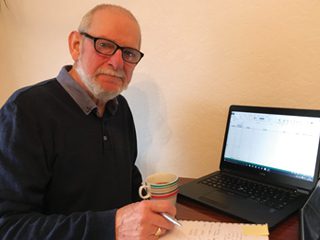
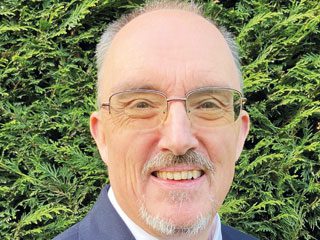
Chairman: Lee Wilson, C.Eng, FICorr, is an AMPP and ICorr certified instructor, and has authored several books aimed at the inspector. He has over 25 years of experience in our industry and has worked on some of the world’s largest oil and gas projects,


Branch support: David Mobbs, C.Eng, MICorr, has spent 42 years in the protective coating industry working for major paint manufacturers, a contractor and one of the largest engineering consultants. He has been a London Branch committee member for over 20 years, and will assist the new branch committee.

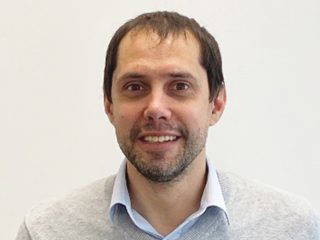
Vice chair: Bruno Ravel, has a background in chemistry and has specialist knowledge of coating formulation and testing in relation to the heavy-duty coating market.

He has worked for 10 years as a formulator for many paint companies in the marine and protective coating sector including one of the world’s largest heavy-duty paint companies.

The expertise and background of the other members will be given in the next magazine. Full details of the branch’s technical meetings will be given in the up-coming magazines, and on the Institute website.