Forward Protective Coatings Ltd is one of East Midlands foremost industrial coatings applicators, specialising in painting steelwork for most industries. They can apply most paint systems on structural steel and fabrications and also on stainless steel and aluminium items. Operating from a 30,000 square feet facility based in Mansfield, Nottinghamshire, they have a lifting capacity of up to 20 tonnes. As well as applying protective paint systems, they can also apply thermal spray coatings, passive fire protection and powder coatings, and have crews to provide on-site touch up or full paint systems.
FPC pride themselves on providing the highest quality products with a service that is one of the best in the industry, and have experience in providing coatings for the most demanding of industries and are able to tailor inspections and certifications to meet any client requirements.
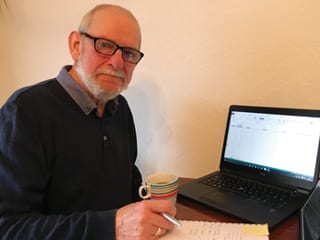
After careful deliberation the CSD committee nominated Prof R.A. (Bob) Cottis (University of Manchester) as the recipient of the 2020 U.R. Evans Award. This decision has been ratified by the ICorr Council and it is planned that this will be awarded at the 61st Corrosion Science Symposium being held as a standalone meeting at the University of Southampton in September 2020.
Prof Cottis has been a champion of corrosion education throughout his entire career with seminal contributions within UMIST/Manchester, and activities linked to EFC WP7 Corrosion Education and NACE International. He joined the Corrosion and Protection Centre, UMIST in 1979, initially as a lecturer, then senior lecturer, reader and professor. He was appointed Professor Emeritus in Corrosion Science and Engineering on his retirement in 2011. Nonetheless, he has continued his research into hydrogen embrittlement and electrochemical noise measurements.
He has been active in the development of teaching in the field of corrosion, being responsible for the development of a distance learning approach to the MSc in Corrosion Control Engineering, and Director of the Teaching and Learning Technology Programme (TLTP, funded by the UK higher education funding bodies HEFCE, IIEFCW, SHEFC and DENI) Consortium that developed the Engineering Corrosion (Ecorr) courseware to support corrosion teaching. In 2005 he was awarded the T.J. Hull Award of NACE International, given in recognition of outstanding contribution to NACE in the field of publications.
Prof Cottis has also contributed to the international development of the subject in several areas. The main focus of his early research was the mechanistic aspects of corrosion fatigue. Both in respect of crack initiation, which is significant primarily for smaller components and where he demonstrated the role of corrosion in assisting the initiation process, and crack growth, where his work showed that larger cracks, such as those found in offshore structures, are relatively unaffected by corrosion and hydrogen entering the steel is a more important factor. In collaborative work he was responsible for the clarification of the interpretation of the results of existing electrochemical techniques and contributed to improvements in the statistical interpretation of pitting corrosion, both of which are of considerable industrial significance. On a more fundamental note, he also developed very efficient algorithms for the modelling of alloy corrosion. Most recently, he has been one of the leaders in the development of a fundamental understanding of the theoretical basis of electrochemical noise measurements, and in the better understanding of the capabilities and limitations of the use of artificial neural network methods for modelling corrosion processes.
As a reminder, the award criteria are; an international reputation and service to the corrosion science community, a contribution to dissemination – publications, professional bodies, patents and IPR, conferences and events. Plus a contribution to industry – especially of an inter-disciplinary nature, corrosion science and technology training, distinctiveness, originality and creativity of research – impact on corrosion discipline, seminal contribution to corrosion science and practice, and a continuing potential contribution to corrosion research. Nominations can be submitted at any time to the CSD chair.
Galloway Award
The Galloway Award is presented annually to a student author of a published paper on a corrosion-related topic. It is named in honour of Jack Galloway, a founder member of the British Association of Corrosion Engineers, a forerunner of the Institute of Corrosion.
The 2019 recipient is Liberato Volpe (University of Manchester) for his paper ‘Replicating PWR Primary Water Conditions in Low Pressure H2-Steam Environment to Study Alloy 600 Oxidation Processes’, which was published in the Journal of the Electrochemical Society (Volume 166, C1-C8, 2019).
The award consists of a certificate and a cheque for £300. Nominations for the 2020 award are now open; candidates should email a pdf copy of a paper published in the last 12 months to the CSD Chair by 4 Sept 2020.
We are pleased to announce that the Registration Agreement with the Society of Operations Engineers (SOE), a Licenced Member of the Engineering Council, has been approved by both ICorr and SOE and by Engineering Council, and is now in place. The Institute is now able to resume the service of registering with the Engineering Council, through SOE, Chartered Engineers, Incorporated Engineers and Engineering Technicians. The new procedures, guidance notes and application forms are now available for downloading on the ICorr website. To members applying for registration, can we ask you to now complete the new forms, and submit them with all your supplementary information to the ICorr office.
Unfortunately, after careful consideration, the CED has decided to postpone the working day scheduled for Wednesday April 29th 2020 at the National Railway Museum, York, entitled ‘Corrosion Control in Transport and Infrastructure’. This decision was made in the interests of the welfare and safety of our members and other attendees in view of the evolving risks from the spread of coronavirus (COVID-19). Anyone who has already registered for the meeting will be refunded in full.
It is hoped to reschedule the event for the autumn and more details will be provided when the national health situation has become clearer.
ICorr is now using social media to promote the activities of the Institute to both members and non-members.
ICorr has a website that is the primary online source of information. In addition, several social media platforms which provide a fast way of disseminating information and which direct users to the website for further information have been set up. Links to the website and the social media platforms are:
ICorr Website: www.icorr.org
LinkedIn Group page: this is a discussion group where anyone, including Institute members, can interact and join in discussions. Since anyone can post opinions on this page they may not represent official ICorr views. ICorr will remove any items deemed to be inaccurate or offensive. www.linkedin.com/groups/4308333/
LinkedIn Company page: this is where the Institute posts official news that is specific to ICorr, articles and upcoming events. Editorial access to this site is limited to a small number of approved individuals. www.linkedin.com/company/6321450/admin/
Young ICorr LinkedIn page: this is kept updated with content published on our website and other social medial platforms. In addition to this the Young ICorr group post events and information about seminars www.linkedin.com/groups/8599206/
Twitter page: this includes regular updates, tweets linking to our blog posts and ICorr News and Events www.twitter.com/instofcorrosion
Facebook page: this is used to generate traffic, with links to our social media, website, ICorr News and blogs. www.facebook.com/icorradmin/
Instagram page: this is used to generate traffic, with links to our social media, website, ICorr News and blogs. www.instagram.com/institute_of_corrosion/
For assistance or queries about any of these sites and platforms, please contact:
l David Horrocks (ICorr) david.horrocks@bamnuttall.co.uk
l Jonathan Phillips (Square One) jonathan@squareone.co.uk
For blog or technical content ideas, in the first instance please contact;
l Gareth Hinds (ICorr) gareth.hinds@npl.co.uk
l Bill Hedges (ICorr) bill.hedges@bp.com
ICorr has engaged a professional blog writer to produce weekly blogs for posting on social media using material provided by ICorr and its members.
All ICorr members are encouraged to interact and stimulate conversation on our social media platforms, which helps ICorr achieve its aims, including supporting its members and raising awareness of the work of the Institute and its members.
Key areas to focus on when engaging with our social media are:
Benefits of membership of ICorr
Training opportunities
Our vision and core values
Our professional support mechanisms
Our expertise in science, engineering & technology
Remember that when you engage on social media (through ICorr platforms) you are representing the Institute of Corrosion. It is important that posts are polite, respectful and in keeping with the Institute’s status as a trusted and respect professional society. Members are encouraged to read our Social Media Code of Conduct, which can be found in the Members Area of the website.
Welcome to the latest issue of the magazine. This month there are two comprehensive technical articles, Markus Büchler of the, Swiss Society for Corrosion Protection on the effectiveness of corrosion mitigation by CP, and the second part of the ship painting article from Safinah.
For the two new columns introduced in the previous issue, Don Harrop describes the use of Corrosion Inhibitors in oil and gas production in the “Fellows Corner”, and the questions in “Ask the Expert” are on linings for acid storage tanks and how to choose the most suitable for equipment non-intrusive corrosion/erosion monitoring. Remember to send your technical questions for answer by our industry experts.
Finally, I would just like to add my good wishes to that of Gareth, to you all in this troublesome time and remember to keep yourselves and family safe.
We use cookies to optimize our website and our service.
Functional
Always active
The technical storage or access is strictly necessary for the legitimate purpose of enabling the use of a specific service explicitly requested by the subscriber or user, or for the sole purpose of carrying out the transmission of a communication over an electronic communications network.
Preferences
The technical storage or access is necessary for the legitimate purpose of storing preferences that are not requested by the subscriber or user.
Statistics
The technical storage or access that is used exclusively for statistical purposes.The technical storage or access that is used exclusively for anonymous statistical purposes. Without a subpoena, voluntary compliance on the part of your Internet Service Provider, or additional records from a third party, information stored or retrieved for this purpose alone cannot usually be used to identify you.
Marketing
The technical storage or access is required to create user profiles to send advertising, or to track the user on a website or across several websites for similar marketing purposes.