


Growing our Membership (Gareth Hinds)

Like all professional societies, ICorr needs to take regular stock of how well it is serving the needs of its members. At the same time, the Institute has ambitious plans for future growth, with a target of achieving 2000 members by 2020. With this in mind, earlier this year the President Sarah Vasey asked me to chair a Membership Development committee, on which I have been joined by Young ICorr Chair Chris Bridge and ICorr Past Presidents John Fletcher and Bill Cox. Our remit was to review the perceived benefits of ICorr membership and to propose ways of enhancing what we can offer our members in order to sustain this growth.

Following much consultation and lively debate, we have put together a summary of the main benefits of ICorr membership, which will appear shortly on the website. We will be using this as the basis for a sustained marketing drive, both within the UK and overseas, with a particular focus on students and early career professionals. This demographic is clearly key to the future of the Institute but has suffered a slight decline in numbers in recent years, which needs to be addressed as an urgent priority. One important initiative will be to strengthen our links with materials science and engineering students in UK universities by arranging automatic ICorr student membership registration for selected undergraduate courses. We will also be putting in place measures to retain these members once they have joined the workforce, for example by connecting them with successful initiatives such as the Young Engineer programme.

The central theme that has emerged quite strongly from our discussions is that you get out what you put in. The benefits of being an ICorr member increase dramatically the more you get involved, whether it be attending local Branch or Division meetings, joining a committee, attending a training course, carrying out professional assessment reviews or organising a conference. So I would encourage all members to consider how you could get more involved in the various activities of the Institute. Together we are greater than the sum of our parts!

November Meeting

November Meeting

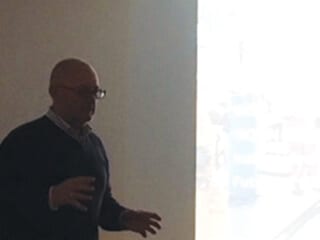
The November meeting was held at the Rosen Facility in Gosforth, and Barry Turner gave a presentation entitled, “A review of ISO 21809-3 standard for field joint coating”. Barry has over 30 years’ experience in industrial coatings and plastics for the oil and gas and water industry. He has a strong technical background with experience in sales, marketing, development and technical service positions, and is an active participant in ISO standardisation development for pipeline coatings as UK nominated expert.

ISO 21809-3 is becoming the recognised standard for the qualification and testing of field joint coatings on steel pipelines in the Oil and Gas sector. Barry presented his personal review of the 2016 revision of the standard and tried to put some light on the standard development process and explain the different material classes and associated issues and concerns. The presentation started with a historical look at the qualification of field joint coatings (FJC), viz:

DIN 30672-1 (2000) – Joint DIN/DVGW developed standard for tapes and shrinkable materials, with no cathodic protection, and max. temperature 50ºC.

EN 12068 (1999) – developed under CEN leadership for tapes and shrinkable materials, with cathodic protection, material defined maximum temperature, and offshore and “special situations” are excluded.

NF A49-716 (1998) – replaced by EN 10329 in 2006.  Covers 8 different coating types, as very diverse materials unable to standardise requirements.   End user to chose coating type.  (EN 10329 based on similar philosophy to 49-716).

The presentation then moved on to the dominant standard in North America, CSA Z245.30 (2014) developed by Canadian Standards, and which is a mandatory requirement in Canada for FJC,  but also for field applied coatings in general, covers 7 material classes. It also defines responsibilities of each party involved in a coating job and the qualification of materials, application procedures and individuals as applicators.  ISO 21809-11 is new and currently being drafted and will similarly be for field applied coatings but looking more toward external coating’s rehabilitation in the field. The bulk of the discussion held was on the ISO 21809 standard and especially the different coatings classes, ie., Part 1, Polyolefin coatings (3-layer PE and 3-layer PP) and currently under revision; Part 2, Single layer fusion bonded epoxy coatings; Part 3, Field joint coatings; Part 4, Polyethylene coatings (2 layer PE) ; Part 5, External concrete coatings ; Part 6, Dual layer and Multi layer fusion bonded epoxy coatings (NEW, currrently in development);
and Part 11, Coatings for in-field application, coating repairs and rehabilitation.

Everyone that attended found the talk very informative and resulting in a lot of discussion.

Next YEP Programme

Following on from the successes of the previous YEPs, the next Young Engineer Programme will start in January 2018.

Lectures will cover, basic corrosion, welding, materials, coatings, painting, fire protection and linings, cathodic protection, chemical treatments, and will include presentation skills.   We are currently carrying out pre-enrolment for this programme, and are seeking engineers in the early stages of their career in the corrosion industry, and who are looking for extra experience to set them up for their future. 

If you are interested in this event please fill in the application form which can be obtained from Institute of Corrosion, Barratt House, Kingsthorpe Road, Northampton, NN2 6EZ, or email, admin@icorr.org.   Deadline for receipt of applications is mid December 2017.

Young ICorr

Young ICorr

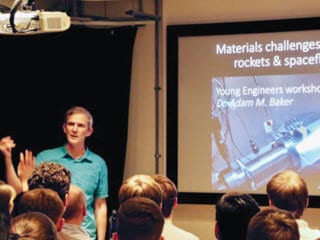
On November 8th, Young ICorr hosted a joint young engineering networking event in collaboration with The Welding Institute and the London Materials Society, at the TimberYard in Soho, London. The evening brought together fifty young engineers, professionals and students who are interested in corrosion, materials, metallurgy and welding, and it was a great opportunity to meet like-minded peers from other industries and to allow an opportunity
to network.

The evening’s guest speaker, Dr. Adam Baker, gave a thrilling talk about the materials challenges of rocket engineering and spaceflight. Since studying Materials Science and Metallurgy at The University of Oxford, Dr. Baker has spent his career working in the space industry and currently both teaches part-time at Kingston University and consults widely on space technology. Dr. Baker’s enthusiasm for the UK space industry was palpable as he explained why rockets are needed, the different propulsion technologies and the materials and corrosion engineering challenges associated with the extreme environments they experience.


Sponsorship was kindly provided by the Institute of Corrosion and The Welding Institute. To stay informed about future Young ICorr events please join the LinkedIn group by searching for ‘Young ICorr’ or alternatively email chris.bridge@uk.bp.com

The President Writes …

The President Writes …

We have made great strides in continuing the work started by the previous Presidents in focusing on delivering value for our members.  The committee who worked on the support we are giving in the ‘Route to Chartership’ have delivered an excellent package, drawing on personal and wider industry knowledge.  The Young ICORR group goes from strength to strength with Chris Bridge at the helm, and I see the network that exists within our current membership being extended through this group.

As ever, I am thankful to our volunteers who give so much of their time to keep us functioning and relevant to our members.  Good news is that ICorr have now been approved by the Engineering Council’s Quality Assurance Committee as a Professional Affiliate for a further five years.

I have also represented the Institute at the Elcometer world conference, celebrating 70 years’ service to the corrosion industry

The AGM was held at the end of November and this also marked the half way point in my Presidency, and on reflection a lot has been achieved, but there is certainly more still to be done!

I would finally like to wish all members A Merry Christmas.

Sarah Vasey, ICorr President