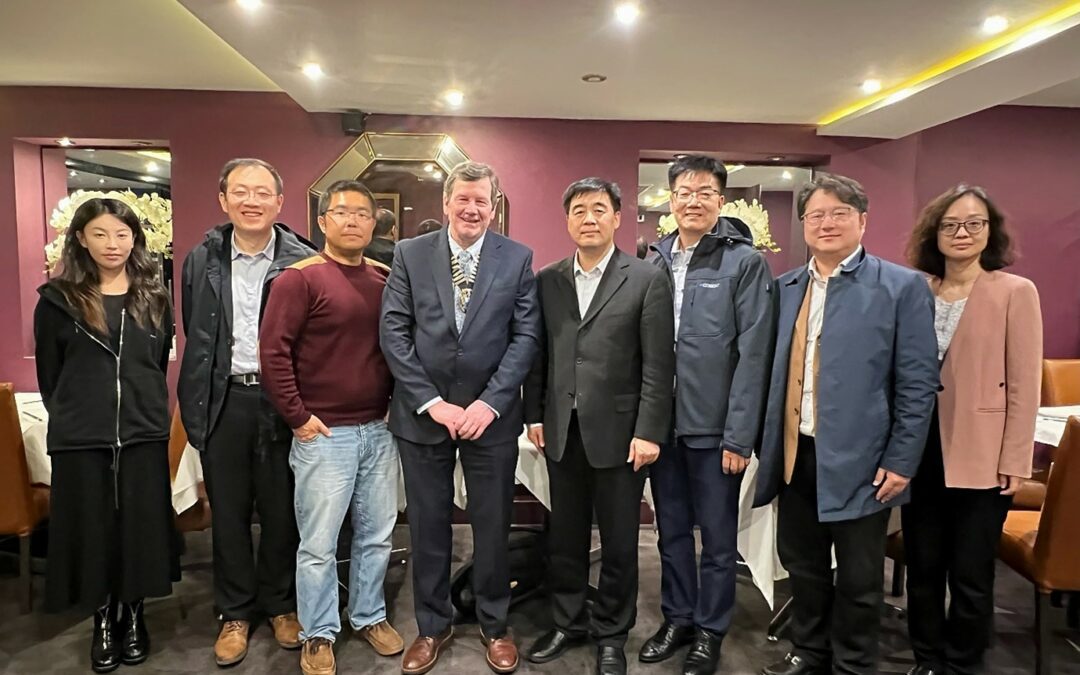
On Sunday 28th April 2024, the President (Stephen Tate) and Vice President (Yunnan Gao) had the greatest pleasure in meeting up with the delegation from University of Science and Technology Beijing, USTB, https://en.ustb.edu.cn/ the foremost University in China for Corrosion education. The London delegation was led by the Vice Chancellor and President of the University and formed of six people.
We have discussed a number of possible collaborative matters between ICorr and USTB going forwards.
In the September/October issue of Corrosion Management, Professor ZHANG Dawei, Director of Office of International Affairs, USTB, China will contribute a paper on the Application of Artificial intelligence and Machine learning in Corrosion management based on his recent research.
Also in October 2024, at the kind invitation of Chinese Society for Corrosion and Protection (CSCP) described below, Stephen and Yunnan will attend the 22nd International Corrosion Congress to be held on 22 – 26 October 2024 in Xi’an, China https://icc-corrosion.org/
The International Corrosion Council (ICC)on which ICorr is represented, was founded in 1961 to advance corrosion science and engineering represents 68 countries of the world including the UK and every three years organises the International Corrosion Congress.
Chinese Society for Corrosion and Protection (CSCP)
As an integral part of China Association for Science and Technology, the Chinese Society for Corrosion and Protection (CSCP) is registered in Ministry of Civil Affairs and is an academic organisation with independent legal entity in China. Founded in November 1979, CSCP currently has 7,979 individual members and 287 group members.
The 11th Council of CSCP comprises, Academician Baorong Hou, Academician Tongyi Zhang, Academician Shengkai Gong, Professor Guangzhang Chen, Professor Yu Zuo, Professor Lijie Qiao and Professor Fuhui Wang, who serve as the Honorary Presidents. Professor Xiaogang Li is the President, Professor Cuiwei Du et al are the Deputy President, Professor Xuequn Cheng is the Secretary-General.
CSCP consists of 7 working committees, 24 specialized committees and one standardization committee, and has 15 branches in Beijing, Shanghai, Liaoning and other provinces and cities in China.
The society is committed to building an academic exchange platform. The National Corrosion Congress, the Marine Corrosion Conference and the Electrochemical Corrosion Conference have become the brand conferences of CSCP. Each professional committee organises different forms of academic events every year. CSCP has also established several academic journals such as Journal of Chinese Society for Corrosion and Protection and Materials Protection.
CSCP carries out various kinds of popular science activities and publishes the popular science journal Corrosion and Protection Fan. It also issues scientific and technological awards to outstanding experts in the field of corrosion and protection at the National Corrosion Congress. Furthermore, it organises technical training and certification for corrosion engineers and enterprises, evaluation meetings for scientific and technological achievements, and provides consulting and other technical services for its members.
As an academic body, CSCP attaches great importance to the training of young corrosion scientists and engineers by organising Youth Corrosion Seminars and establishing Distinguished Academic Achievement Award for Young Talents.
The international organisations with which CSCP is affiliated include International Corrosion Council (ICC), Asia Pacific Materials and Corrosion Association (APMCA) and World Corrosion Organisation (WCO). CSCP has also formed long-term partnerships with AMPP International and European Federation of Corrosion (EFC) and will shortly complete the signing of an MoU with our own Institute (ICorr).
Agreements in Principle Made by Both Parties:
To collaborate in the areas of training, joint webinars, conferences, ICorr membership and UK professional registration, including Chartered Engineer (CEng) and Chartered Scientist (CSci).
To start the work to compose a formal MoU to document the agreements (to be formally signed at International Corrosion Congress).
To hold the very first Webinar event later in 2024.
To hold the regular joint Co-operation Meetings.
To have alternating awards to outstanding ICorr and CSCP Members.
Photo: ICorr and University of Science and Technology Beijing (USTB) Collaboration Meeting in London on 28/04/2024
From Left to Right
QIN Yuqing, Program Coordinator of Office of International Affairs, USTB, China
Prof ZHANG Dawei, Director of Office of International Affairs, USTB, China
Yunnan Gao, Vice President of ICorr, UK
Stephen Tate, President of ICorr, UK
Prof ZHANG Weidong, Vice President, USTB, China
Prof ZHENG Wenyue, School of Materials Science and Engineering, USTB, China
Prof XING Yi, Dean of School of Energy and Environmental Engineering, USTB, China
ZHAO Meng, Director Office of Co-operation and Development, USTB, China.
Do please regularly check the ICorr Events Calendar for further details of upcoming activities www.icorr.org/events/
World Corrosion Awareness Day’ a University of Manchester / ICorr NW Joint Event
To celebrate World Corrosion Awareness Day, the Institute of Corrosion Northwest Branch held a joint event with the University of Manchester (UoM) on 24th April 2024.
The event comprised an afternoon of exciting and varied presentations from University of Manchester and industry speakers:
The Role of Organophosphates in Corrosion Inhibition, K Brook (University of Manchester)
With a background in the coatings industry, Kathy presented post-graduate research on this innovative area of corrosion prevention.
Cathodic Protection of Wind Turbine Monopiles – Internal and External Issues, David Buxton (Intertek CAPCIS)
David Buxton is a Corrosion Consultant who has spent over 30 years working in cathodic protection and stray current corrosion control. David completed a PhD at the Corrosion Centre (UMIST/University of Manchester) and has been at Intertek CAPCIS for 20+ years undertaking both onshore and offshore cathodic protection related investigations, testing and assessments. He outlined key issues associated with cathodic protection in the emerging area of renewable energy.
Quff: An Innovation in Quantum Computer Programming, Christopher Wright (University of Manchester)
Christopher presented on this new programming language, developed for the fast-moving field of quantum software engineering. Quff is a high-level, dynamically typed programming language focused on simple yet effective hybrid programme development.
My Corrosion Journey: Dr Jane Lomas (ICorr / Amtec Consultants Limited)
The talk covered many aspects of the working life of a corrosion engineer and the role that ICorr has played in Jane’s corrosion journey. Whilst obtaining a BSc in Biochemistry, an interest in the problems with corrosion of metal hip joint replacements made an MSc in Corrosion seem a logical next step. This led on to the establishment of an independent corrosion consultancy and jobs ranging from beer cans to aeroplanes; bulk carriers to battleships; building and factory corrosion issues to corrosion of classic cars, church windows and on the leisure front even Blackpool Tower.
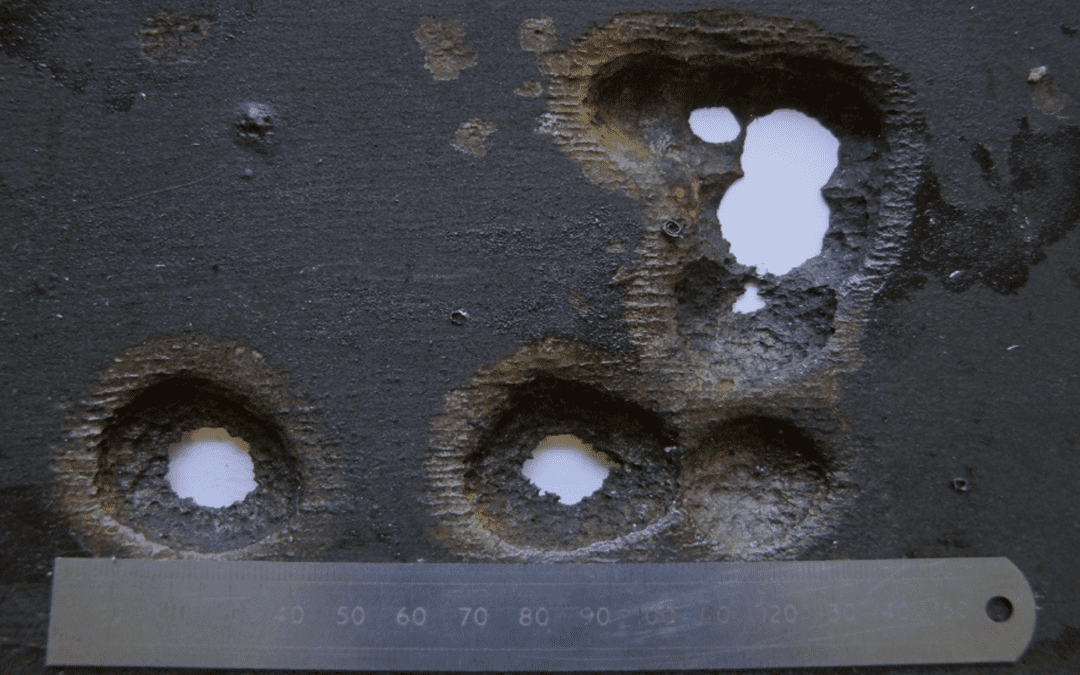
Safety Risks Cannot Be Overstated: The structural integrity
of buildings, bridges, and transportation can be severely compromised by corrosion and have led to many catastrophic failures. https://www.bbc.co.uk/news/uk-england-34335931 and http://news.bbc.co.uk/1/hi/scotland/glasgow_and_west/8495807.stm
The “World Corrosion Organisation (WCO) has previously designated 24th April as “World Corrosion Awareness Day”. This day aims to encourage the adoption of corrosion prevention strategies to reduce the economic and social costs associated with corrosion. The World Corrosion Awareness Day reminds the world that ‘rust never sleeps’ and recognises the impact corrosion prevention and control professionals make. It promotes sustainable management practices for critical industrial assets like energy infrastructure, transportation infrastructure, water/wastewater and waterways, the shipping industry, defence assets, and more.
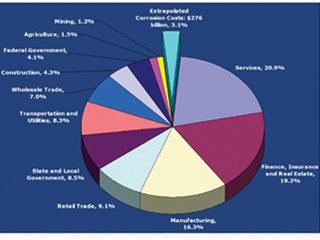
The estimated annual cost of corrosion, amounts to US$2.5 trillion globally and accounts for 3 to 4% of the GDP of developed nations, according to earlier research by AMPP, a global non-profit organisation that represents more than 32,000 members in the materials, corrosion control, and coatings industries. and brought to light on World Corrosion Awareness Day. This figure may be attributed, in part, to the lack of understanding among government and industry decision-makers regarding the seriousness of corrosion and the need for control.
Every year on World Corrosion Awareness Day, seminars, conferences, webinars, competitions, and student events are organised by corrosion associations worldwide to raise public awareness of corrosion and corrosion control among decision-makers in government, business, and academia.
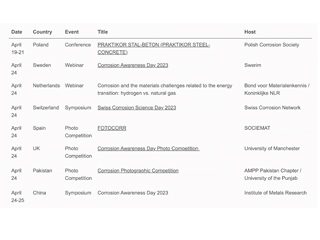
Some of the events conducted on corrosion awareness day 2023 are listed below. An elaborated list of events conducted on corrosion awareness day for previous years is available on the World Corrosion Organisation (WCO) Website (https://corrosion.org)
It is estimated that the use of corrosion control techniques will reduce the annual cost of corrosion worldwide by 15 to 35 percent, or $375 to $875 billion. The other intangible advantages to public safety and the environment that come with long-term, consistent asset integrity also add up to these substantial cost savings. Corrosion control specialists are in charge of averting catastrophic failures that can endanger public safety, cause lost output, deteriorate the environment, or result in fatalities.
You may like to read our Corrosion Awareness Day article published on the ICorr website:
Note: On 1st July 2024, an ICorr Sponsored – Parliamentary and Scientific Committee Event will take place with several Institute speakers including: Professor Gareth Hinds, Dr. Christian Stone and Izabela Gajewska.
Full details will be announced during April 2024. Some recent everyday examples of corrosion impacts to Infrastructure may be found at:
Coast Road barrier corrosion speed limit to remain – BBC News
‘Severe corrosion’ found during Cleveland Bridge repairs – BBC News https://www.bbc.co.uk/news/uk-england-58494275
Above: An Example of Complex Infrastructure Requiring Special Anti-Corrosion Measures.
The Institute of Corrosion is currently in the process of becoming a Full Licensee of Engineering Council, in order to be able to provide CEng, IEng and EngTech, directly through ICorr in future. This will be a major improvement to our membership offering and member retention.
We are now looking for Professional Registration assessors (for both Applications and Interview assessment purposes).
Are you Engineering Council registered at CEng level?
Do you want to give back to the profession by helping the next generation of engineers achieve professional registration?
We are looking for volunteers to become Professional Registration Interview (PRI) assessors who will be reviewing, assessing, and interviewing applicants.
By giving us your time, you will be doing vital work ensuring the future of the profession. All we need from you is 6 hours of your time per month.
If this is of interest to you, please reply: F.A.O Anthony Setiadiadmin@icorr.org and we will be in touch with you about the next steps.
Our new Wales and South-West Regional Branch is set to host its first event and AGM on 21st March 2024. It’s first scheduled committee meeting will take place on the 1st of February 2024.
Covering a region with a hugely diverse range of business sectors, including:
Aerospace
Chemical plants
Construction Products
Energy Production
Inspection and analytical services
Oil & Gas
Petrochemical
Renewables
Steel and metal manufacturing / recycling
This new ICorr Branch is being specifically founded to help this region develop and share knowledge regarding corrosion and corrosion prevention.
The Branch is ideally placed to join these diverse industries as well as leading Universities, for not only sharing this knowledge but also helping to develop new ideas for corrosion prevention.
A major key to the success of the Branch will not only be the promotion and sharing of knowledge, but also the development of corrosion and materials engineers of the future.
The initial aims of the Branch include:
Having a focus on local industry needs and challenges within the broad subject of corrosion – with selected presentations from companies / academics etc.
Promoting, sharing, and learning between experts within the region.
Defining a yearly programme of meetings that generate discussions and promote learning across the region – guest visits / speakers / workshops / roadshows.
Encouraging interest from undergraduates, schools, apprenticeship programmes, and colleges within the area on this broad subject.
Committee meetings and social and technical events to be held across the Wales and South-West Region.
The first official event and inaugural AGM will be held on March 21st – 12pm – 2pm. Lunch will be provided. Committee members and their roles to be announced soon after the AGM.
Details of Event: The topic will be Microbiologically Induced Corrosion – Real world failures and how to prevent them. There will be two presentations, one by Sarah Bagnall, (Director of Consultancy Services at R-TECH) and one by Dr Gareth Williams, (Consultancy Services Manager of ECHA Microbiology). This will be followed by a Laboratory tour.
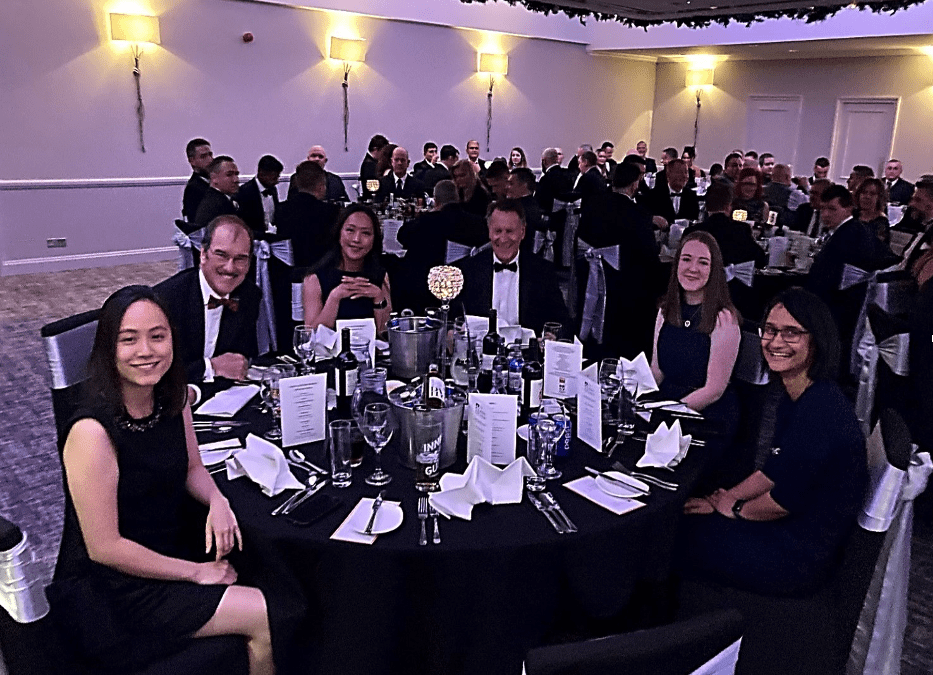
On 17th November 2023 the Aberdeen Committee, as close partners of the North Scottish Branch of The Welding Institute (TWI) were invited to attend their 38th Annual Dinner, held at the Aberdeen Altens Hotel. This year the TWI are celebrating their 100th Anniversary.
Aberdeen Branch Committee Members – L to R, Mei Ling Cheah (former YICorr Officer and now Vice Chair), Steve Paterson (YEP Mentor’s and Case Study Co-ordinator), Lian Ling Beh (Secretary Internal), Nigel Owen (Secretary External), Eilidh Macdonald (2022 YEP Winner and now Events Co-ordinator) and Leela Ramachandran (University Liaison & CPD Officer).
There were some truly excellent presentations by Brian Bell (TWI Chairman), Katy Heidenreich (OEUK – Offshore Energies UK, Supply Chair and People Director) and Stephen Anarach (TWI- Oil and Gas Energy Transition Manager).
Later guests from across Energy companies in Aberdeenshire, were greatly entertained by Gordon Smith, former CEO of the Scottish Football Association and professional footballer who made 490 league appearances, six international appearances and scored 117 goals for teams including Brighton, Kilmarnock, Manchester City, Oldham Athletic, Rangers and Stirling Albion.
With some hilarious storytelling, Gordon told us what really goes on behind the scenes in the football world and some key life lessons from his own experiences.
The Aberdeen Branch expresses its sincere thanks to the committee of the TWI North Scottish Branch for making this all possible.
The 64th Corrosion Science Symposium (CSS) was held jointly with Electrochem 2023 at the University of Bristol between September 10 and 12, 2023. The CSS has been held annually since its launch in 1960 by Prof. L.L. Shreir. The symposium is always an ideal opportunity for students and early career researchers in corrosion science from across the UK and Europe to congregate, discuss their work, share ideas, and, above all, enjoy themselves in a stimulating and friendly environment. This year, there were 20 talks and seven posters, and the UR Evans award plenary talk was given by Prof.
Nick Birbilis (Deakin University, Australia).
The Shreir Prize for the best student presentation went to James Rafferty (University of Manchester) for his talk entitled Environmental effects of a simulated AGR coolant on oxidation and carburization behaviour of type 316H stainless steel. His talk eloquently described the environmental effects of oxidation and carburisation of type 316H stainless steel, which is used within the super-heater and re-heater sections of the UK’s Advanced Gas-cooled Reactors. The effects of gas pressure, water vapour content, and applied stress on oxidation and carburisation were investigated. Unlike other studies, no significant changes in oxidation or carburisation as a function of water vapour in the gas were explored with the development of some critical insights and understanding.
Other symposium highlights included: Lawrence Coghlan (University of Manchester) gave an interesting overview of his work on the degradation mechanism of polyester powder coatings exposed to cyclic corrosion testing. In an effort to better understand the mechanism of crack initiation and subsequent degradation of coatings, powder-coated samples were exposed to cyclic corrosion testing experiments of various lengths to characterise the formation and subsequent development of defects within the coating. These defects and the development of cracks were linked with microstructural features within the coating and the substrate surface to better understand the mechanism of initiation and propagation. Amber Sykes (University of Leeds) reported her studies into the influence of CO2 partial pressures on the formation and protective characteristics of iron carbonate corrosion products. Specifically, under certain conditions, the precipitation of FeCO3 corrosion products on pipe walls can form a dense layer that protects the underlying X65 carbon steel from further corrosion. However, the level of protection offered by the corrosion product layer is highly sensitive to changes in environmental conditions. Amber used electrochemical tests to demonstrate how distinct FeCO3 layers develop and revealed how operating pressure affects FeCO3 formation rates.
Finally, one of the four poster prizes awarded by the Electrochem 2023 meeting was presented to Hector Arriba Gutierrez (Cranfield University) for his work on the SS Great Britain: Decarbonising the Unique Conservation System for the World’s First Iron Ship.
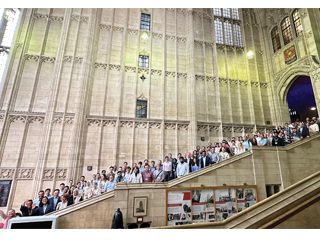
Electrochem 2023 and Corrosion Science Symposium (CSS) delegates
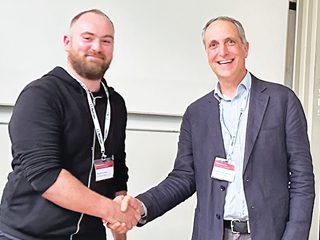
Shreir prize recipient (James Rafferty) and CSD Chair
Julian Wharton.
We use cookies to optimize our website and our service.
Functional
Always active
The technical storage or access is strictly necessary for the legitimate purpose of enabling the use of a specific service explicitly requested by the subscriber or user, or for the sole purpose of carrying out the transmission of a communication over an electronic communications network.
Preferences
The technical storage or access is necessary for the legitimate purpose of storing preferences that are not requested by the subscriber or user.
Statistics
The technical storage or access that is used exclusively for statistical purposes.The technical storage or access that is used exclusively for anonymous statistical purposes. Without a subpoena, voluntary compliance on the part of your Internet Service Provider, or additional records from a third party, information stored or retrieved for this purpose alone cannot usually be used to identify you.
Marketing
The technical storage or access is required to create user profiles to send advertising, or to track the user on a website or across several websites for similar marketing purposes.