





Preserving Concrete Using Sustainable Bio-Based Coatings

Preserving Concrete Using Sustainable Bio-Based Coatings

Antonella Sardinella and Mariaenrica Frigione of University of Salento have provided an overview of the bio-based/sustainable materials proposed for the development of original coatings to protect concrete works in their recent review.

Traditional coatings involve the use of synthetic materials that are often toxic for human beings and the environment. Research is going on around the world for the development of new sustainable coatings made with bio-based or non-toxic materials using green technologies.

Following are qualities of a good coating:

  • Chemical inertness against substrates.
  • Good stability against acids, alkalis, UV radiations, heat, and oxidation.
  • Permeability to water vapor (the underlying concrete must still “breathe”).
  • Adequate adhesion to the substrate.
  • Non-toxic and non-dangerous to the environment and human beings.

In the field of construction, the sustainable products proposed as potential protective coatings for concrete substrates can be divided into: (i) geopolymers and (ii) natural bio-based substances, such as agricultural waste, oil, wax, cellulose and others.

Geopolymers
The low curing temperatures of geopolymers and their ability to be produced from a wide range of raw materials, including industrial waste (also known as secondary raw materials, or SRM), make them sustainable materials. Reusing (or recycling) solid waste, such as fly ash (FA), slag, and other active byproducts, can actually produce geopolymers by the alkaline activation of aluminosilicate precursors.

Coatings Based on Agricultural Waste
Agricultural organic waste, i.e., products that are constantly generated, can be profitably exploited for different purposes, giving an economic value to the waste and reducing the costs of its disposal.

Vegetable Oil and Fatty Acids
Recently, vegetable oils have been used in technologies meant to preserve a substrate (like concrete), which can be a viable substitute for synthetic materials and a sustainable approach. The chemical structure and film-forming properties of oil and its derivatives actually make them useful in this field.

Proteins
Very recently, proteins have been proposed to develop coatings with good hydrophobic characteristics. Lysozyme, for instance, is composed of a microfiber network containing amyloid which, when applied to the surface of a metal, adheres to it and increases its resistance to corrosion.

Cellulose
Cellulose, the most abundant natural polymer on earth, is a low-cost renewable resource: it is generally recognised as a potential candidate for the production of green superhydrophobic coatings.

Plant-Based Wax Coatings
Starting from materials of vegetable origin dispersed in water, Morrissette et al. developed superhydrophobic self-cleaning coatings for different applications.

Advantages of These Coatings
These are harmless to humans and the environment. They can be applied using the same techniques and methods as for traditional coatings, without additional costs. Waste materials can be used. Additionally, the studies carried out so far have especially highlighted the excellent protective properties offered by these materials, not considering any difficulties in the production processes and possible increased costs.

Challenges in Commercial Application
Higher production costs, scale-up problems, demand for high quantities of bio-based raw materials, competition with food and feed for the supply of raw materials, technological barriers, and including industrial conversion for new productions are some of the barriers that slow down the introduction of these materials to the market.

You can refer below article for more details:  

Antonella Sarcinella and Mariaenrica Frigione, Sustainable and Bio-Based Coatings as Actual or Potential Treatments to Protect and Preserve
Concrete, Coatings 2023, 13(1), 44;
https://doi.org/10.3390/coatings13010044

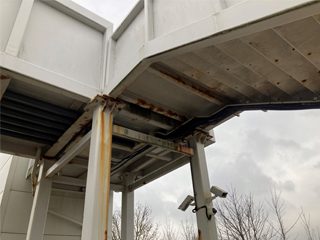
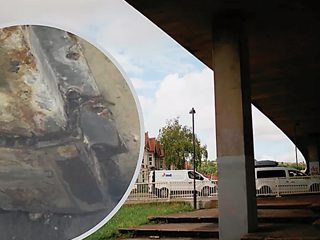
IMAGE FROM: The Concrete Beneath the M32 Flyover, Inset, Some of the Corrosion Found During Safety Checks.

Corrosion Around Us

Under the UK’s Network Rails ‘Access for All’ programme, ongoing over the last 15-20 years, we now have step-free, accessible routes at more than 200 railway stations across Britain to provide an obstacle free, accessible route to and between railway platforms. The improvements have been funded by the Department of Transport, which also selects the stations. In Scotland, ministers recommended stations for inclusion to the Secretary of State for Transport.

In 2006, the DfT published the Railways for All Strategy, outlining the UK government’s intention to improve access to the rail network for disabled people across Britain. A key part of this strategy was the Access for All Fund. The Access for All programme was launched in 2006 to deliver accessible routes at stations. The standard design included new lift shafts and footbridges. Examples of rail inclusivity and accessibility improvements include:

  • 
 
Lifts that are automatic and give an audible tone when the doors open and close.
  • 
Staircases and platform edges that have tactile warning surfaces.
  • New ramps and footbridges with lowered handrails.

Often, these are replacing well maintained historic railway footbridges that have been in place for over 150 years without significant corrosion issues. Dumfries Station is a fine, well-detailed example of a mid-19th century station, built in the Italianate style, a listed structure since 1981.

Refer: Access for All – Improving Accessibility at Railway Stations Nationwide – Network Rail

Unfortunately, many new structures are seen to be failing prematurely due to poor design detailing, e.g. water traps, 
a lack of water drainage points, inferior coatings, and poor material selection. Winter de-icing programmes are 
accelerating structural damage. The salt attracts moisture from the environment to the carbon steel substrate, which speeds 
up the oxidation (rusting) process.

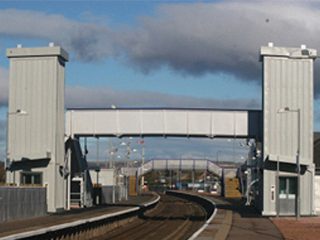
Photo 1: Typical Original Non-Accessible Footbridge without Lifts.

Photo 2: (a) Dumfries-Station-Original Footbridge (b) Dumfries-Station Replacement Footbridge 2024 – Credit: Network Rail.

Photo 3: Corrosion Around Us – Network Rail Footbridge, Dyce, Aberdeenshire (a) Footbridge Stairs, (b) Support Stanchion and  
(c) Underside of Footbridge  – Credit Stephen Tate.

Certification of PFP Inspectors: Impact in the Oil, Gas, and Energy Industry

Certification of PFP Inspectors: Impact in the Oil, Gas, and Energy Industry

Raising the Bar for PFP Certification Standards

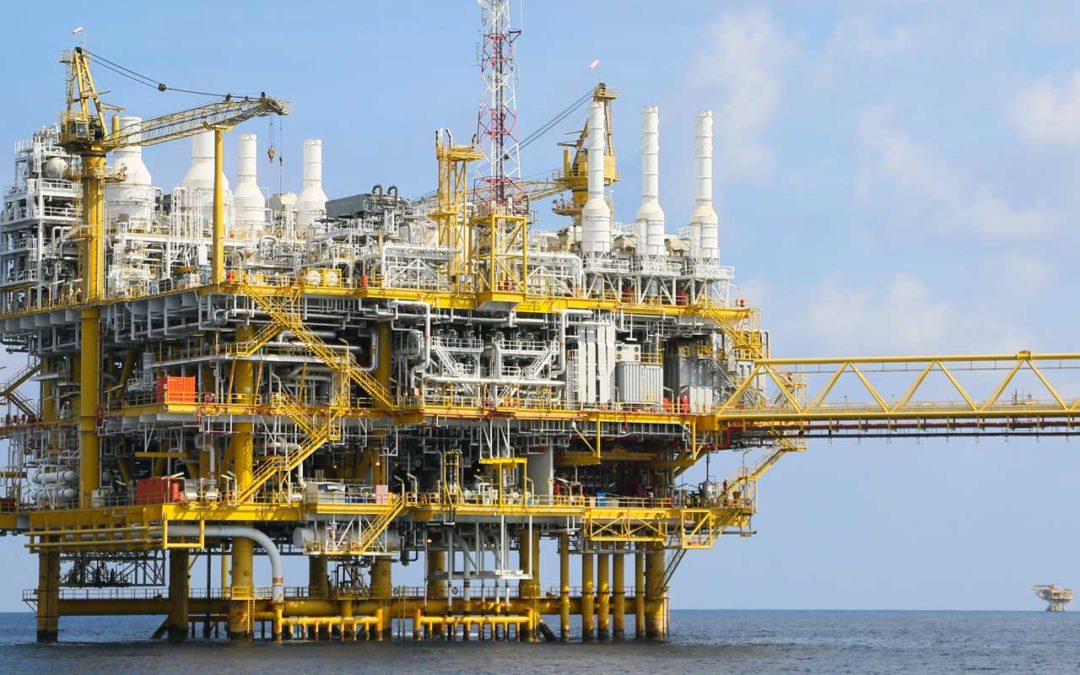
The oil, gas, and energy sector is inherently susceptible to catastrophic fire events. In these environments, passive fire protection systems are critical in the mitigation of risks to assets and personnel. Central to this, the role of the PFP Inspector is crucial for a PFP system’s efficacy relies on the expertise and diligence of PFP inspectors.

Indeed, PFP inspectors might be considered as vanguards of safety, their roles extending beyond mere evaluations to embodying a preventive ethos against fire hazards. Through meticulous assessments, they ensure that PFP systems are not only in place but can perform under all conditions.

Unsurprisingly, certification through qualification in PFP inspection is essential.

Definition and Scope of Certification for PFP Inspectors

Certification for PFP inspectors is a formal process that assesses and acknowledges an individual’s competency to assess, inspect and approve the fire protection installation. It encompasses a comprehensive understanding of safety principles, materials science and application processes along with an understanding of mandatory industry-specific regulations.

How do PFP Inspectors Achieve Certification?

While not an absolute requirement, possessing an educational foundation in engineering, materials science, or a related field can significantly benefit those aiming to become PFP inspectors. This academic background, when augmented with specialised training in PFP, endows candidates with the essential skills and knowledge needed for the role of a PFP Inspector.

Individuals with extensive experience in applying protective coatings for corrosion protection on steel structures within the oil, gas, and energy sectors are particularly well-positioned to undertake further education in PFP inspection.

Moreover, practical experience gained through hands-on application and mentorship proves to be invaluable. Engaging directly with PFP applications in the energy industry not only accelerates learning but also enriches a candidate’s understanding and capabilities. This immersive experience equips aspiring inspectors with a profound grasp of the intricacies involved in the PFP inspector role, preparing them to navigate complexities with greater confidence.

Then it is a question of selecting an elite PFP qualification for the oil, gas, and energy sector, and passing an examination that demonstrates a comprehensive understanding of PFP principles and practices.

Impact of Certified PFP Inspectors on Safety in the Oil, Gas, and Energy Sector

The expertise of certified PFP Inspectors influences operational safety, regulatory compliance, and overall risk management strategies within the sector’s highest risk assets. We can see this in several key areas:

  • Enhanced Skills for Assessment of PFP Installations

Certified PFP inspectors are adept at conducting thorough review of all stages of PFP installation identifying potential installation errors that could compromise the safety of assets and personnel.

By having a thorough understanding of the specification for the PFP system being installed, the requirements for material installation which is generally provided by the material manufacturer and all other aspects relating to environment, contract requirements and other key factors a certified inspector is in the front line of ensuring that the installation is being done correctly and will provide the required fire protection when called upon.

·       Compliance and Regulatory Adherence

By having an understanding of safety regulations, safety standards and the processes used to qualify PFP materials to meet those standards the certified PFP Inspector will be able to interpret project specifications and requirements. This means that they will be able to identify and understand the qualification of materials used and if it is in compliance with project requirements, mitigating risk in terms of installations that do not meet the necessary standards and regulation.

·       Professional Development and Knowledge Sharing

Certified PFP inspectors can serve as invaluable resources for professional development and knowledge sharing within the oil, gas, and energy sector. By sharing their expertise, PFP professionals help to elevate the overall safety knowledge base within the industry.

This culture of knowledge sharing epitomizes one of the Institute of Corrosion’s core principles – to share expertise with the world.

The Path Forward for Enhanced Industry Safety

The path forward is clear: it involves a concerted effort to raise the bar for certification standards, encouraging ongoing education, and fostering a culture of safety that permeates every aspect of the oil, gas, and energy industry. To this end, the Institute of Corrosion has partnered with PFPNet to develop PFP Training specifically for the Oil. Gas, and energy sector.

Whether you are a company in the sector wishing to improve and maintain the highest standards in your PFP design, installation, and implementation, or a professional wishing to enhance your career in this specialised field, you’ll find the industry leading ICorr PFP courses to be invaluable.

To learn more, please reach out to STGB Chair

Algeria-Germany: Signing of A Joint Declaration 
of Intent on Cooperation in the Field of Hydrogen

Algeria-Germany: Signing of A Joint Declaration 
of Intent on Cooperation in the Field of Hydrogen

Algeria and Germany have recently signed, a joint declaration of intent establishing a bilateral task force on hydrogen recently, with a view to strengthening and supporting investments in all the economic sectors (private and public), concerned by the development of hydrogen in the two countries.

The declaration signed by the two ministries plans to strengthen joint cooperation in the field of feasibility studies, production, processing, employment, transportation, storage and marketing of hydrogen, as well as its derivatives produced from renewable energies, beneficial to both countries, especially since the two parties plan to create an Algerian-German Task Force on hydrogen within the framework of the energy partnership, with a view to contributing to the creation of economic opportunities, while promoting the achievement of the goals of the Paris Climate Agreement (year 2015).

Energy sustainability and climate change are major issues in present era, and hydrogen, a clean and adaptable energy source, has drawn a lot of interest as a potential solution for specific situations, e.g. Transportation. The effectiveness of hydrogen production systems depends critically on materials, which also affect system durability, catalyst performance, and reaction kinetics. It will take sustained progress in materials science and engineering to realise large-scale, sustainable hydrogen production systems.

Hydrogen has potential as a medium for storing energy. The effective and secure storage and release of hydrogen for a range of applications is made possible by advancements in materials for hydrogen storage, such as metal hydrides, chemical hydrides, and porous materials. Ensuring the materials’ long-term stability and endurance under harsh operating conditions is one of the major issues in the field of hydrogen production. High temperatures, corrosive surroundings, and cycling between reducing and oxidising atmospheres are all part of many hydrogen production processes, which over time can deteriorate materials. Investigating novel materials and coatings with enhanced mechanical strength, thermal stability, and corrosion resistance have been the main focus of research to date. Furthermore, enhanced characterization approaches and expedited testing protocols have been utilised to assess and forecast material deterioration mechanisms, permitting the development of stronger materials for hydrogen generation.

Source: https://embmoscow.mfa.gov.dz/

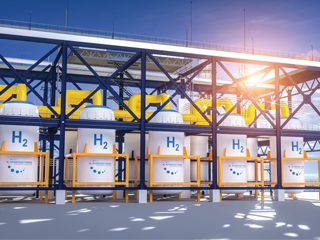
Hydrogen Renewable Energy Production – Hydrogen Gas for Clean Electricity Solar and Wind Turbine Facility.

GPT Industries Launched Next Generation Remote Asset Integrity Monitoring System

GPT Industries Launched Next Generation Remote Asset Integrity Monitoring System

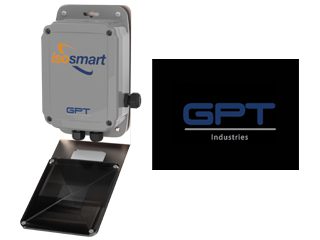
GPT Industries (Wheat Ridge, CO), a provider of Cathodic Protection solutions for over 35 years, has announced the launch of its remote pipeline monitoring system, Iso-Smart™. With nearly four decades focused on corrosion prevention, GPT is leveraging extensive industry expertise to set a new standard for a versatile, user-friendly remote asset integrity monitoring.

Iso-Smart is an all-in-one solution developed based on customer feedback for checking Cathodic Protection (on and instant off potentials), Isolation, Bond currents, AC vs. DC on the line, and more from remote locations. It incorporates True RMS technology to provide reliable data, helping pipeline owners make informed decisions and comply with DOT pipeline integrity regulations.

The Iso-Smart solution seeks to combine corrosion expertise with the latest remote monitoring technology.

Key features of Iso-Smart enabling this remote monitoring capability include:

  • An intuitive dashboard
  • Cellular LTE connectivity
  • Rechargeable battery for 
 multi-year operation
  • Rugged, compact design

Iso-Smart was recently showcased at the 2024 Association for Materials Protection and Performance (AMPP) Conference. Interested parties can request a demonstration or find more information by visiting www.gptindustries.com/products/iso-smart