
Young Engineer’s Programme (YEP)

The Aberdeen Branch hosted the Young Engineer Programme (YEP) 2022 final on 24th November ’22, at the Palm Court Hotel, which was attended by over 40 in person, plus around 15 attendees online.

It was more than 18 months ago that the branch first considered hosting this event in Scotland, after 3 very successful events hosted by London Branch. David Mobbs, Trevor Osborne, and Danny Burkle, all very kindly supported the branch in the early days of YEP 2022.
The Young Engineer’s Programme was conceived some 10 years ago by the ICorr London Branch, and has been generously sponsored since then by BP, with the following in mind, perceived skill shortages in the industry, preparing graduates for entry into the industry with an enhanced skillset, and to be the first stage in achieving MICorr / CEng.
The ICorr YEP remains extremely popular with our younger and aspiring corrosion engineers, and this 4th YEP had 24 candidates, selected from over 50 applicants The Institute is very grateful to the Aberdeen committee who worked hard, especially Hooman Takhtechian (2021-2022 session chair) and Steve Paterson (YEP mentor supervisor / Case study organiser), superbly supported on the night and throughout the YEP by, Muhammad Ejaz / Adesiji Anjorin, the current branch chair and vice chair respectively.

This year’s selection criteria were:
• Early stage of their career related to corrosion.
• 2 to 6 years relevant experience.
• 35 and under.
• Relevant academic background.
• Based in Aberdeen, or willing to travel at their own cost.
The YEP committee had great difficulty in selecting those to go forward. The case study teams were based on their experience, academic background, and employer, to ensure not being in the same company as the other team members or the mentor, with the average experience for each team being 4 to 4.5 years.
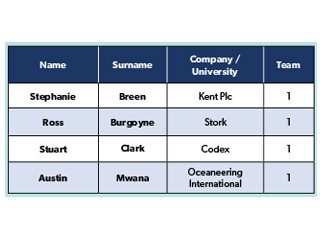
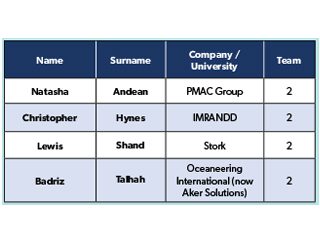
YEP 2022 Participants
The 2022 case study exercise was complex, and focused on good corrosion management approaches under difficult conditions, requiring careful consideration of:
• A 15 year old offshore platform in sweet service.
• Poor corrosion management to date.
• Possible new owner with another 10 years’ service.
• Possible tie-in of new field with slightly sour fluids.
• Dealing with an intermediary integrity services contractor.
• Difficult and demanding client.
• Subsidiary of international operator.
• Based on an actual platform in the North Sea.
• High level assessment (and ranking) of threats.
• Mitigation measures – corrosion management system.
• Material options for required new pipeline.
•
The management and impact of change in operations (MOC).
• Identifying all other relevant factors in dealing with client.

YEP 2022 Participants
The 2022 case study exercise was complex, and focused on good corrosion management approaches under difficult conditions, requiring careful consideration of:
• A 15 year old offshore platform in sweet service.
• Poor corrosion management to date.
• Possible new owner with another 10 years’ service.
• Possible tie-in of new field with slightly sour fluids.
• Dealing with an intermediary integrity services contractor.
• Difficult and demanding client.
• Subsidiary of international operator.
• Based on an actual platform in the North Sea.
• High level assessment (and ranking) of threats.
• Mitigation measures – corrosion management system.
• Material options for required new pipeline.
• The management and impact of change in operations (MOC).
• Identifying all other relevant factors in dealing with client.

Some key aspects of the exercise were to:
• Analyse and discuss the information and data provided.
• Identify any gaps in information and any assumptions that may need to be made.
• Perform a high-level risk assessment to identify key threats to the mechanical integrity of the pressurised systems (structural integrity was excluded).
• Identify what further information or data required for the other tasks in the exercise.
• Propose a systematic approach to manage the key threats including mitigation measures, corrosion control requirements, performance monitoring, and the resources required to manage the process.
• Propose materials of construction for a pipeline, including welding consumables, and any testing requirements to tie-back the new reservoir to the platform, and explain the basis for the materials selection and how any corrosion threats will be mitigated.
• Identify what changes, if any, to the existing facilities would be required should the new sour reservoir be tied-back to the platform.
• Propose a strategy for convincing Capercaillie Energy (the integrity management contractor) that your approach is the optimal solution and that you are the right team to do the job.

The marking criteria for the YEP case study presentation were:
1. Analysis of the scenario and current integrity status of the pressurised systems of the platform (20 marks).
2. Application of a systematic methodology to manage corrosion and surveillance activities (20 marks).
3. Viability of the proposed approach to prolong service life (10 marks).
4. Assessment of material options for the new pipeline (10 marks).
5. Assessment of the impact of change in operation with H2S (10 marks).
6. Identification and assessment of factors in dealing with the client (10 marks).
7. Overall quality and balance of the presentation, plus team coordination as demonstrated by the presentation (20 marks). Only 20mins were allowed per team for their presentation, with strict penalties being applied for those going over.

The Aberdeen committee would like to offer its special thanks to all of the following lecturers, mentors, and judges.
YEP 2022 course lecturers

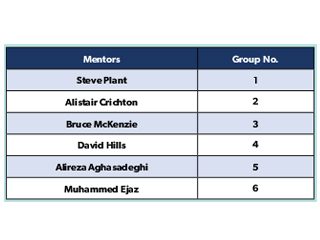
The YEP course mentors were:

The judges on the night were:
• Chris Williams, (BP Sunbury – Key Sponsor).
• Susan Cushnaghan, (formerly of Shell Aberdeen).
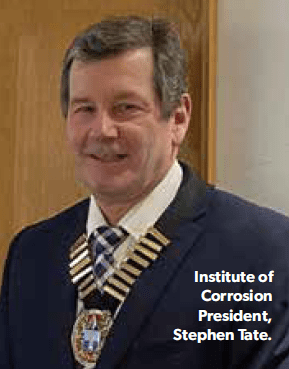
• Stephen Tate (2022-2024 ICorr President).

All the participating teams engaged fully with the brief and gave a tremendous series of presentations providing many different solutions to the task in hand including net zero considerations, their enthusiasm was a joy to watch.
Unfortunately. Teams 2 and 6 were missing colleagues on the night due to illness, but they still performed brilliantly.

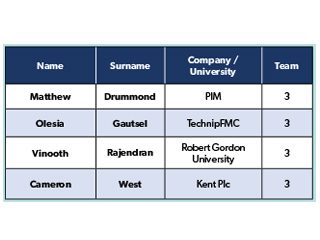
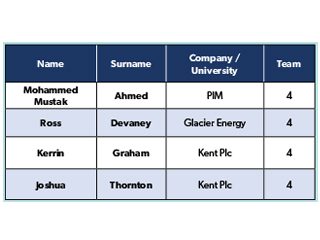
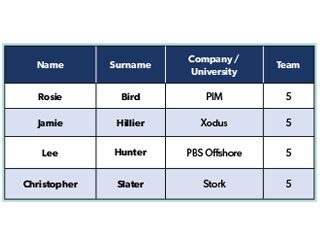
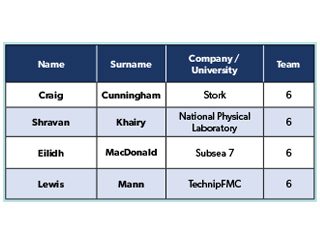
Team members
It was a very hard decision for the judges, but in the end Team 5 stood out as the best all-rounders and enactors of the task in hand. The Institute offers their warmest congratulations to all the Team 5 members, as they head off to AMPP Annual Conference & Expo 2023 19-23 March, all expenses paid courtesy of key sponsor, BP.
Winner of the Leadership Prize
After receiving feedback from all the mentors, judges and committee members, based on the performance during the whole programme, teamwork and presentation skills on the competition evening, Eilidh Macdonald was selected as the outstanding YEP 2022 individual participant. The Institute also offers their congratulations to Eilidh on receiving this recognition, who will also be eligible to attend the AMPP leadership course, all expenses paid. This is very well deserved.

Some key aspects of the exercise were to:
• Analyse and discuss the information and data provided.
• Identify any gaps in information and any assumptions that may need to be made.
• Perform a high-level risk assessment to identify key threats to the mechanical integrity of the pressurised systems (structural integrity was excluded).
• Identify what further information or data required for the other tasks in the exercise.
• Propose a systematic approach to manage the key threats including mitigation measures, corrosion control requirements, performance monitoring, and the resources required to manage the process.
• Propose materials of construction for a pipeline, including welding consumables, and any testing requirements to tie-back the new reservoir to the platform, and explain the basis for the materials selection and how any corrosion threats will be mitigated.
• Identify what changes, if any, to the existing facilities would be required should the new sour reservoir be tied-back to the platform.
• Propose a strategy for convincing Capercaillie Energy (the integrity management contractor) that your approach is the optimal solution and that you are the right team to do the job.

The marking criteria for the YEP case study presentation were:
1. Analysis of the scenario and current integrity status of the pressurised systems of the platform (20 marks).
2. Application of a systematic methodology to manage corrosion and surveillance activities (20 marks).
3. Viability of the proposed approach to prolong service life (10 marks).
4. Assessment of material options for the new pipeline (10 marks).
5. Assessment of the impact of change in operation with H2S (10 marks).
6. Identification and assessment of factors in dealing with the client (10 marks).
7. Overall quality and balance of the presentation, plus team coordination as demonstrated by the presentation (20 marks).
Only 20mins were allowed per team for their presentation, with strict penalties being applied for those going over.

The Aberdeen committee would like to offer its special thanks to all of the following lecturers, mentors, and judges.
YEP 2022 course lecturers

The YEP course mentors were:

The judges on the night were:
• Chris Williams, (BP Sunbury – Key Sponsor).
• Susan Cushnaghan, (formerly of Shell Aberdeen).
• Stephen Tate (2022-2024 ICorr President).

All the participating teams engaged fully with the brief and gave a tremendous series of presentations providing many different solutions to the task in hand including net zero considerations, their enthusiasm was a joy to watch.
Unfortunately. Teams 2 and 6 were missing colleagues on the night due to illness, but they still performed brilliantly.

Team members
It was a very hard decision for the judges, but in the end Team 5 stood out as the best all-rounders and enactors of the task in hand. The Institute offers their warmest congratulations to all the Team 5 members, as they head off to AMPP Annual Conference & Expo 2023 19-23 March, all expenses paid courtesy of key sponsor, BP.

Winner of the Leadership Prize
After receiving feedback from all the mentors, judges and committee members, based on the performance during the whole programme, teamwork and presentation skills on the competition evening, Eilidh Macdonald was selected as the outstanding YEP 2022 individual participant. The Institute also offers their congratulations to Eilidh on receiving this recognition, who will also be eligible to attend the AMPP leadership course, all expenses paid. This is very well deserved.

YEP 2024

The Institute are already planning for YEP 2024, which will be managed by the Young ICorr Division.

Details will be announced later during 2023, however interested parties can register their advance interest
to the new YICorr chair, James McGladdery,
James.McGladdery@uknnl.com
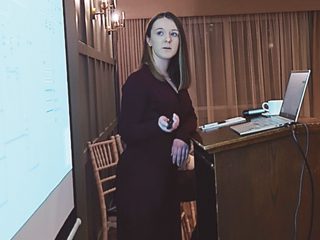
Eilidh MacDonald from Team 6, Winner of the Leadership Prize.

CAPTIONS:
YEP 2022 coordinator, Hooman Takhtechian.

YEP 2022 case study lead, and the ICorr CED All Energy chair, Steve Paterson, explains proceedings.

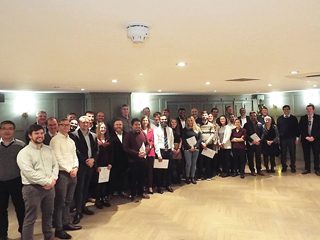
Contestants, mentors, judges and ABZ committee members on the night.

The YEP 2022 winning team 5, Judges, President, and team 5 mentor. From left to right, Rosie Bird, Lee Hunter, Jamie Hillier, Chris Williams (Judge), Susan Cushnaghan (Judge), Stephen Tate (Judge), Christopher Slater, Alireza Aghasadeghi (mentor), and Steve Paterson (Case study lead).
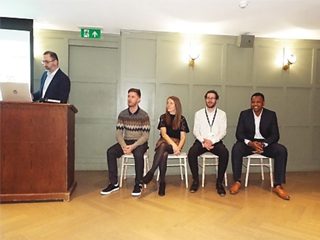

Team 1
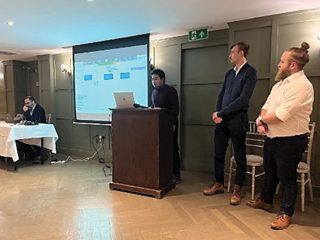

Team2
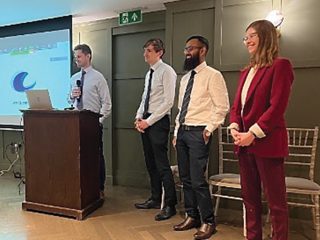

Team 3
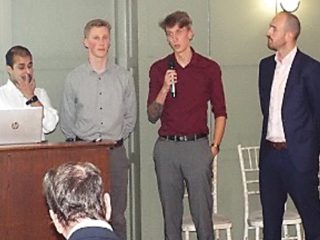

Team 4
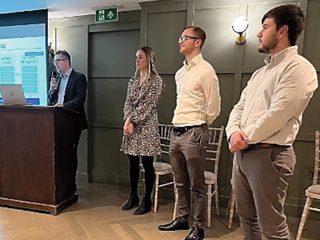

Team 5


Team 6


Young ICorr

Young ICorr

Following the popular festive quizzes of 2020 and 2021, Young ICorr continued this tradition into the holiday season of 2022. Taking advantage of the online forum, the meeting was widely attended with participants from across the world, and consisted of two parts, a talk entitled “A tour of my career and some of the most rewarding challenges” given by Stephen Tate, recently elected as the new ICorr President, and a quiz with a festive twist prepared by Young ICorr committee members, including Izabela Gajewska, Danny Burkle, Harry Wright, and the new Young ICorr chairman, James McGladdery, who also hosted the evening.

During his introductory talk, ICorr’s new President took the participants through various aspects of his career in energy, from the early days of North Sea operations, to his present experiences with both modern and mature assets, covering 42 years of practical experience in the energy sector. Stephen has worked many different roles, including Technical Author, Snr. Corrosion Engineer, Corrosion Technical Authority, and Engineering Manager. He inspired attendees with accounts of his learning opportunities over his long career, as well as its challenges. He emphasised that his present knowledge is built on a foundation of much practical experience from past events and experiences, but corrosion control has been a constant theme throughout.

Following the talk, teams were allocated to enable participants to meet other Young ICorr members, do some networking, and work together answering questions in the festive quiz, comprising multiple-choice questions as well as corrosion, materials, and electrochemistry rounds. The participants learnt what the Christmas tree in the oil and gas industry is, what corrosion mechanisms would affect Santa’s stainless-steel sleigh on the salt covered icy roads, and that “pigs” are not only to be wrapped in blankets but they are also widely used as inspection tools in the Oil and Gas industry to detect issues in pipelines, including corrosion!

In all this was a very successful event, which was well received by everyone. To become part of the Young ICorr community, or for more information
about what they do, and how they can help you, contact the chairman at,
James.McGladdery@uknnl.com

Follow Young ICorr on LinkedIn to ensure you do not miss out on future events:

How the Institute of Corrosion operates – the Governing Boards

How the Institute of Corrosion operates – the Governing Boards

The Surface Treatment Governing Board (STGB) is one of three sub-committees that report to ICorr Trustees. The other sub-committees are the Cathodic Protection Governing Board (CPGB) and the Engineering Training Governing Board (ETGB). STGB is specifically responsible for the Surface Treatment Training Courses, which include all the Coating Inspection courses and their content.

The main responsibility of STGB is to oversee the Requirements Documents (REQ-DOCs) for each of the Surface Treatment schemes, and which describe the training schemes for the Coating Inspection courses. There are currently three main REQ-DOCs for Surface Treatment Courses, one for courses that are normally delivered in the classroom and a separate REQ-DOC for the courses that are delivered on-line. The new Passive Fire Protection Coating Inspector Scheme has a separate REQ-DOC, as there are significant differences in this scheme, in that the Level 3 Inspectors are required to satisfy a Peer Review once they have successfully completed the examination stage. Currently, this is unique to the new PFP Coating Inspector scheme, and it also reflects that some of the training can be delivered on-line as well as in the classroom.

These REQ-DOCs contain all the guidance for operating the courses and the associated examinations and certification, and detail the syllabus for the specific courses. For example, the Protective Coating Inspector scheme, previous known as the Painting Inspector scheme, has three levels, Level 1, Level 2, and Level 3. The REQ-DOC describes the eligibility of potential candidates for the different courses and details the topics that are covered by the three levels. The Protective Coating Inspector scheme also includes the specific training required for Insulation Coating Inspectors (Level 2), Pipeline Coating Inspectors (Level 2) and Hot
Dip Galvanising Coating Inspectors (Level 2).

STGB keep the REQ-DOCs under review so that they can be updated and improved on a regular basis. Once a REQ-DOC has been edited and agreed by STGB, it is submitted to ICorr Trustees  with a recommendation that the updated version of the REQ-DOC be approved and published.

STGB is also responsible for reviewing any new Surface Treatment courses that are submitted to ICorr through ICorr Trustees, who refer such courses to STGB where a reviewer with the relevant experience is identified. The review is used to make a recommendation to PICorr Trustees with regard to the content and quality of the new course and, where appropriate, its conformance with an existing REC-DOC.

In addition to the REQ-DOCs, STGB review applications from the course providers for candidates who wish to become Course Tutors for the classroom courses, or Course Assessors for the on-line courses, and make recommendations to ICorr Trustees regarding approval or rejection of these applications. These applications mainly come from the overseas agents who market the ICorr courses in their countries or regions. In all cases Tutors and Assessors must hold the relevant ICorr certification to be eligible to be considered for these roles.

STGB is made up of about six ICorr members, who have knowledge and experience of coatings and coating related inspections, and STGB is chaired by a Level 3 Coating Inspector.

STGB is always looking for additional members and if you have an interest in joining STGB please contact Chair stgbchair@icorr.org.

CPGB is a sub-committee reporting to ICorr Trustees and Council. Both CPGB and the Cathodic Protection Scheme Manager (CPSM), report to ICorr Trustees, and work closely with one another to ensure an effective running and management of the Cathodic Protection courses and exams. These include CP levels 1 to 4. All members of CPGB are CP specialists in at least one of the four sectors of CP. The CP Scheme Manager is also a member of the CP Governing Board, which meets on a regular basis.

CPGB ensures as a minimum:
• Scheme is run in accordance with BS EN ISO 15257 – Cathodic protection. Competence levels and certification of cathodic protection personnel, and BS EN ISO/IEC 17024.
• the documents detailing the scheme, course material and exams, are up to date and fit for purpose.
• Document control to ensure latest versions are available for each course.
• Audit the syllabi, the course content, and the course delivery of CP courses.
• Audit both the technical content and process of the examinations.

The CPSM, additionally, coordinates course bookings, training centre availability and candidates, and ensures that the course work and examination material is delivered at the appropriate time and location, examinations are booked, completed, and marked, and the results are fed back to ensure that candidates then apply for their certification on time.

The Scheme Manager also ensures that candidate feedback is regularly received by the CPGB as well as the tutors, as this is key to the success of CP courses.

The current CPGB Chair and CPSM may be contacted at:

CPGB Chair cpgbchair@icorr.org

Cathodic Protection Scheme Manager cpsm@icorr.org

We are also proud to introduce the Engineering Training Governing Board (ETGB) – a bold new initiative by ICorr, focused on shaping the future of professional development in corrosion engineering. This launch is especially timely, following ICorr’s recent award of a Professional Engineering Institution (PEI) licence from the Engineering Council (EngC PEI), reinforcing our commitment to delivering internationally recognised, best-in-class training and certification. ETGB will work alongside our existing Cathodic Protection and Surface Treatment Training Governing Boards (CPGB/STGB) reporting to ICorr Council. ETGB Mission • Develop and deliver new ICorr certified and general awareness courses aligned with evolving industry needs • Provide access routes to ICorr membership via dedicated courses • Strategically manage and expand ICorr’s training portfolio of engineering courses globally • Strengthen branch and global engagement within the international corrosion community • Support ICorr’s Continuing Professional Development (CPD) programme and chartership registration

For all general ETGB enquiries or partnership opportunities, reach out to: ETGB Chair: etgbchair@icorr.org

New Members

New Members

Welcome to the 193 new members, 2 Sustaining Company members, and 3 Corporate members, who joined in 2022.

TOGETHER WITH THE CONGRATULATIONS of the Institute to all the following members who have attained Professional status in 2021.

TECHNICIAN
Sadiq Alshehab, Grant
William Wright

PROFESSIONAL
Jamshed Ahamad, Mohsin Behzad Ahmed, Adeleke Akinola, Ali Ahmed Almulla Azri Aziz, Sumedh Dayal, Victor Ime Dickson, Stephen Edgar, Venkateswaran Elangovan, Ahmed Magdy Mohammed Elsayed,Rajkumar Ganapathi, Olesia Gautsel, Veysi Helvaci, Alaaeldin Hikail, Damian Humphreys, Abdul Hakkim Nandankizhaya Jabbar, Nitin Jain, Stephen Harry Jarvis, Kashif Javeed, Nitin Jayaprakash, Stephen Jones, Mohamed Kamoura, Chaitanya Kumar Kanukula, David Kerr, Muhammad Ahmad Khan, Shamsh Tabrez Khan, David Christopher Lawson, Ramesh Manimuthu, Michel Cesar Mbadinga, Mohamed Mohfouz, Ali Mukhtiar, James Richard McGladdery, Yusuf Nasidi, Kelechi Osuoji, Steven William Pennock, Vijay Ramakrishna Perumal, Muhammad Usman Ali Qureshi, Shaik Rafithulla, Vishav Preet Singh Rana, Kannan Sadasivam, Eng Peng Seng, Rabik Raja Sha, Maged Fawzy Ahmed Shams, Muhammad Usman Shouk, Naved Tanveer, Lee Taylor, Muhammed Touheed, Ian Robert Tuck, Doruk Yilmaz

FELLOW
Brian Goldie, Kenneth Paul Griffiths, John Charles Norris, Eugene Ogosi, Padmanabhan Pavithran, Nigel Peterson-White, James Alexander Phipps, Jonathan A Segynola, Devi Selvakkannu, Maqsood Uz Zaman Temuri, David Shaw, Keith Martin Wagner, Richard Weare, Jonathan Wells, Rengeesh M Vijayan, Wo Yu-You

From the Editor

From the Editor

Welcome to the first issue of 2023, and as The President noted, my last issue as editor. It’s time to retire and relax in the sun, well south London anyway. I will work with the new editor, on the next issue, but it will be his decision as to what it contains.
This issue has the usual columns, with some very interesting articles in “Ask the Expert”, and “Fellow’s Corner” The technical articles cover maintenance painting in shipyards, with details of using a robot to increase productivity, and how the use of Big Data can improve pipeline integrity management. There is also a new column aimed at young engineers in our industry, and I would like to hear from readers if this should become a regular column.
I have enjoyed producing this magazine, and working in the industry, and wish all readers success in their careers.


Brian Goldie, Consulting Editor
Email: brianpce@aol.com

The President Writes

The President Writes

Dear Members, firstly, may l add my own welcome and best wishes for the year ahead to all our membership, wherever you may be based. ICorr is expanding Internationally and will continually seek to find ways to serve you in your work, in a friendly and accessible manner.

I am deeply honoured to have been elected to serve you as your President for the next 2 years and to follow in the footsteps of Dr Bill Hedges, who has laid very solid foundations for the Institute going forwards and guided me diligently throughout my vice Presidency. I am also very appreciative of all the goodwill messages l have received from you in recent weeks.

Particular thanks are due to my colleagues of ICorr Aberdeen committee, who have supported me extremely well over the last 10 years in my various roles as Chair, Vice Chair and Secretary. Dr Yunnan Gao, also a previous branch chair will join me as vice President along with Bill as our Immediate Past President, who have vast industry experience. This combined experience has been invaluable in preparing me for my new daily duties as your President and as a member of ICorr Council and its board of Trustees.

I expect by the time you receive this latest edition of the magazine, which sadly may be the very last by our current editor Brian Goldie, we shall be well into the first chapter of 2023 but many more Institute activities still await us through our YICorr organisation, across all our regional branches, and operating divisions.

Over the next few weeks and months, I’ll be meeting teams and visiting our branches to gain a deeper understanding of ICorr. I am really looking forward to spending time with you, learning more about our operating divisions, what is working well, and listening to your ideas and suggestions, around where we can make enhancements together.

We have already made a fantastic start to the year with the signing of our new 10year training agreement in January with Argyll Ruane to deliver ICorr developed courses globally along with Corrodere who continue to support us with our online training course delivery, plus Square One, and Eva Whittaker’s great work in modernising our CP course bookings system.

It was a great pleasure recently to meet with our branch members at the London Branch luncheon in December, a fantastic event as always. Also, to meet with committee members from our reactivated North-East branch in Newcastle, and to see both of these in-person events so well supported. The YICorr Xmas quiz was a great closer to a very active year which included a spectacular Young Engineer Programme final in Aberdeen. Many congratulations to Team 5 on their success.

Please do use all available opportunities to network with ICorr, to learn more about us, learn about each other, and the industries that we all work to serve.
Our Birmingham 1-Day conference on February 9th will bring together many of our award winners, several of our sustaining companies and training providers, in the splendid setting of the City Chambers. April 27th will take us to NPL, Teddington, for four Corrosion Engineering Division Working Day, and June 22nd and 23rd will feature our main 2-day Sustainability and Renewables Conference. August 29th will again see Aberdeen host its well-respected annual 1-day Corrosion Awareness event.

At ICorr HQ our staff – Denise Aldous, Becky Hurst, Patricia Bridge, Melanie Dunn, and Maureen Spittles, will be very active supporting you, and hosting several new ICorr training courses, ICATS seminars and examinations, throughout the year.

Our Hybrid technical programmes will continue over the coming months. Do please check regularly the ICorr Website, Upcoming Events – Institute of Corrosion (icorr.org) and ICorr News – Industry Updates – Institute of Corrosion (icorr.org).

Corrosion management and prevention remains a very specialised field with many sub disciplines, some of which we will strive to become operating experts in, and others that we require a sound understanding of their principles, to engage with others constructively for the preservation of our infrastructure.
ICorr through its activities, seeks to provide a sound and safe basis to all those following careers in corrosion, at all levels and to provide opportunities for advancement to all.

I sincerely hope that you will join me on my journey over the 2 years and l of course welcome any of your suggestions, do please contact me on any aspect of the Institute’s work at, president@icorr.org

With my very best wishes for the weeks and months ahead.


Stephen Tate
President: Institute of Corrosion

Institute of
Corrosion
President,
Stephen Tate.