Mitigating Installation Risk to Keep Assets and People Safe
Asset integrity, health and safety, and PFP (passive fire protection) should be comfortable bedfellows, because PFP primarily works in two ways:
Employing construction elements to contain fire or limit its spread
Fire protection to structural elements to protect from the heat of a fire causing those structures to fail and collapse
By protecting structures from fire using PFP, you protect the integrity of an asset and this helps you achieve what is your first concern – the safety of your people.
PFP – Protection for people
Passive fire protection, such as intumescent epoxy or cementitious coatings, provides protection for people because it provides protection for structures and maintains structural integrity. In an ideal world people who live or work in a building or other installation should be able to escape hazard such as fire.
Indeed, individuals who work in commercial office buildings have become used to unannounced fire drills to test how quickly and effectively they are able to exit the building to a safe location on hearing the fire alarm.
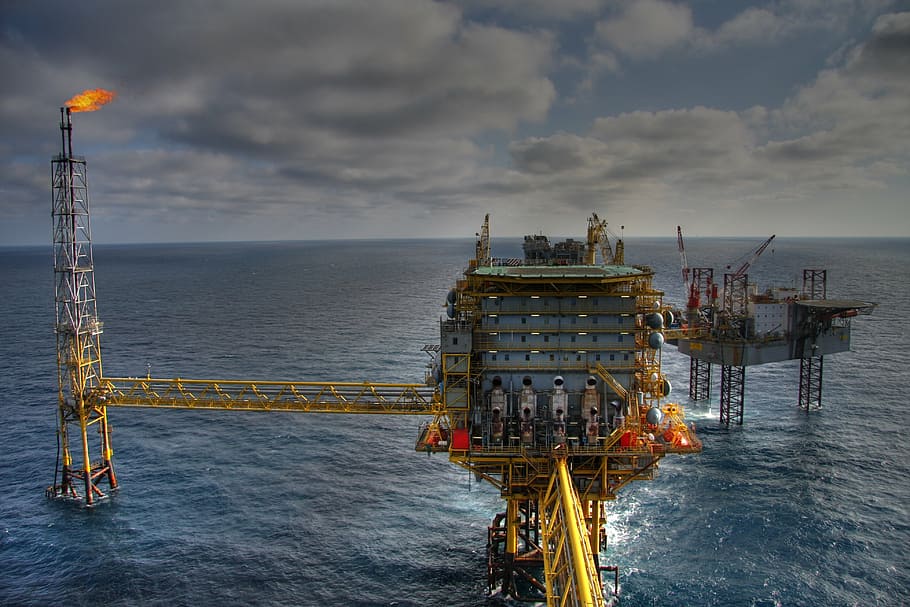
However, what do you do when you can’t simply get away? Imagine an offshore oil and gas installation, most likely hundreds of miles from dry land with the working and living areas of the structure possibly hundreds of feet above the sea, which in cold climates may be cold enough to cause death by hypothermia for anyone entering that environment within a very short time.
In these cases, containment of the fire within the area that is burning and protection of the surrounding structure to allow an orderly abandonment by lifeboat is indeed a matter of life and death.
Unfortunately, over the years a number of offshore fires and explosions have taken the lives of offshore workers, and whilst valuable lessons have been learned on how to prevent fires and put in place rigorous safety practices, these tragic events still occur.
Types of PFP
There are several types of PFP to protect assets and people.
For example, defend-in-place strategies seek to limit the spread of fire and smoke to other compartments. Installations may be designed to restrict the ability of fire and gas to move beyond their point of origin.
In oil and gas installations, steel is treated with PFP products to protect it against hydrocarbon fires which are rapid temperature rise fires that can raise the temperature of unprotected steel to beyond its point of collapse within a few minutes. Epoxy intumescent coatings are commonly used. They need to be adhesive, hard but flexible, tough, and protect against corrosion. When they are exposed to heat, they need to create an insulating carbonaceous char to protect the steel.
In comparison to paint used for anticorrosion, PFP coatings are more complex and may have stages in their application, such as the installation of reinforcing mesh, where specific controls and skills are vital to ensure that the final installation meets design requirements for the lifetime of the asset.
Failure to control the application process and follow the appropriate QA/QC standards for the coating in question can lead to many problems, including:
The final system will not meet the design fire specification in the event of a fire
Flaws in the coating system such as voids, uncured material or other defects can lead to corrosion underneath the coating which is not externally visible
Degradation of the coating over time due to severe weathering which is common in certain environments
Application, maintenance, and safety
Issues with PFP installation can occur well into the lifetime of the asset, as oil and gas installations are often dynamic environments where modification to existing structures and addition of services such as cabling and piping may require removal of or damage to the original PFP installation.
Frequently, those carrying out such works are not aware of the original design PFP requirements. In some cases it has been shown that maintenance staff are not aware that they have removed a fire safety-critical item during modification works.
Thus, having individuals well trained in PFP to supervise and ensure remedial works are carried out to a high standard is extremely important.
Applicators often have no knowledge of PFP
Materials used for PFP are highly regulated in terms of their quality and performance, which is independently verified, but the application and inspection of PFP is less well regulated.
At the time of writing, owner operators typically specify that inspectors of PFP coatings should be Paint Inspector Level 2 qualified – but anticorrosion coatings knowledge and experience is not adequate when it comes to PFP coatings. This is an issue that is putting the integrity of assets at risk, and, most importantly, means that people within high-risk installations have a higher risk to their health and safety.
The Passive Fire Protection Network (PFPNet), together with the Institute of Corrosion, is developing and delivering PFP training courses designed to accredit individuals who are engaged in PFP installation and inspection. The courses may well also be of interest to engineers and professionals who need to have an understanding of the practical elements of PFP installation and maintenance.
Training will be provided by qualified individuals, and an important part of the overall programme is accreditation of the course along with qualification of the individuals who successfully conclude the training. Within the training, there will be elements that cover health and safety while at work – meeting CSCS H&S requirements for UK-based work.
This new training has been developed by drawing on the experience and needs of the industry, and will ensure that best practices are followed to and above current regulations. We expect the PFPNet Competency Framework to be mandated by asset owners and other stakeholders as a requirement for projects and operations.
The following documents have obtained substantial support within the appropriate ISO technical committees during the past two months and have been submitted to the ISO member bodies for voting, or formal approval
ISO/DIS 1463 Metallic and oxide coatings — Measurement of coating thickness — Microscopical method (Revision of the 2003 standard)
ISO/FDIS 2409 Paints and varnishes — Crosscut test (Revision of the 2013 standard)
ISO/FDIS 2810 Paints and varnishes — Natural weathering of coatings — Exposure and assessment (Revision of the 2004 standard)
ISO/DIS 3613 Metallic and other inorganic coatings — Chromate conversion coatings on zinc, cadmium, aluminium-zinc alloys and zinc-aluminium alloys — Test methods (Revision of the 2010 standard)
ISO/DIS 4518 Metallic coatings — Measurement of coating thickness — Profilometric method (Revision of the 1980 standard
ISO/FDIS 8502-15 Preparation of steel substrates before application of paints and related products — Tests for the assessment of surface cleanliness — Part 15: Extraction of soluble contaminants for analysis by acid extraction
ISO/FDIS 11463 Corrosion of metals and alloys —Guidelines for the evaluation of pitting corrosion (Revision of the 1995 standard)
ISO/FDIS 15156-1, 2 and 3 Petroleum and natural gas industries — Materials for use in H2S-containing environments in oil and gas production — Part 1: General principles for selection of cracking-resistant materials ; Part 2: Cracking-resistant carbon and low-alloy steels, and the use of cast irons ; Part 3: Cracking-resistant CRAs (corrosion-resistant alloys) and other alloys (Revisions of the 2015 standards)
ISO/FDIS 22232-2 Non-destructive testing — Characterization and verification of ultrasonic test equipment — Part 2: Probes
ISO/FDIS 22858 Corrosion of metals and alloys — Electrochemical measurements — Test method for monitoring atmospheric corrosion
New international standards published during the past two months
ISO 7539-10:2020 Corrosion of metals and alloys — Stress corrosion testing — Part 10: Reverse U-bend method
ISO 11844-1:2020 Corrosion of metals and alloys — Classification of low corrosivity of indoor atmospheres — Part 1: Determination and estimation of indoor corrosivity
ISO 11844-2:2020 Corrosion of metals and alloys — Classification of low corrosivity of indoor atmospheres — Part 2: Determination of corrosion attack in indoor atmospheres
ISO 15528:2020 Paints, varnishes and raw materials for paints and varnishes — Sampling
ISO 21062:2020 Corrosion of metals and alloys — Determination of the corrosion rates of embedded steel reinforcement in concrete exposed to simulated marine environments
ISO 21809- 3:2016/Amd 1:2020 Petroleum and natural gas industries— External coatings for buried or submerged pipelines used in pipeline transportation systems — Part 3 Field joint coatings — Amendment 1: Introduction of mesh-backed coating systems
ISO 22410:2020 Corrosion of metals and alloys — Electrochemical measurement of ion transfer resistance to characterize the protective rust layer on weathering steel
SSPC
SSPC, The Society for Protective Coatings, has revised one guide and one joint standard practice
SSPC-PA Guide 11, Protecting Edges, Crevices, and Irregular Steel Surfaces by Stripe Coating.
The 2020 revision adds definitions for some previously undefined terms and provides guidance to specifiers for
• Determining when the stripe coat is applied (before or after a full-coat application)
• Determining suitability of a coating for use as a stripe coat (cumulative DFT, compatibility)
• Preparing outside corners and edges for application of a stripe coat
• Treatment of flame-cut edges prior to application of stripe coat.
Additional changes Include, examples of specification language in a non-mandatory appendix, and illustrations of areas that may be considered for stripe coating.
This guide discusses the technique called “stripe coating” or “striping” as a way of providing extra corrosion protection measures on edges, outside corners, crevices, bolt heads, welds, and other irregular
steel geometries, including optional techniques that can be used to improve coating performance. It is not intended to provide all-encompassing guidance but rather offer options when preparing a project specification. The engineer should evaluate and address details on a project-specific basis.
SSPC-CPC 1/NACE SP21412 Corrosion Prevention and Control Planning
This standard defines the key elements/composition of what corrosion prevention and control planning encompasses for design, manufacturing, construction, operation and sustainability of products and facilities. Although intended for use by US Federal agencies, it may be applied to other industries where appropriate. It provides a standardised framework for a supplier’s plan to control corrosion on products and facilities.
The 2020 revision includes:
• Adding two new key elements in the body of the standard that provide critical and desired characteristics for each element in the appendix.
• The addition of an evaluation methodology on how to assess corrosion prevention and control (CPC) planning of a programme/project as a second appendices.
• Now provides the key elements for performing CPC planning, desirable characteristics of each element, and a method for determining the overall adequacy of CPC planning for a given program or projects.
Due to the COVID-19 pandemic, the EUROCORR 2020 organisers have decided to hold this year’s conference as a virtual event, which will take place from 7th-11th September 2020.
So far, more than 380 oral presentations and around 100 posters have been registered for the event. These submissions encompass all of the Working Parties and Task Forces devoted to the various aspects of corrosion and its prevention.Together with this extensive scientific programme, the following renowned colleagues will give plenary lectures.
Prof. Stuart Lyon (The University of Manchester, Corrosion and Protection Centre, Manchester, UK): European Corrosion Medal lecture.
Prof. Maria Forsyth (Deakin University, Institute for Frontier Materials, Burwood, Australia): “Environmentally friendly multifunctional corrosion inhibitor systems”.
Prof. Fabrizio Zucchi (University of Ferrara, Centro di Studi sulla Corrosione e Metallurgia « A. Daccò », Ferrara, Italy): Cavallaro Medal lecture.
Dr. Carol Frances Glover (University of Virginia, Centre for Electrochemical Science and Engineering, Charlottesville, VA, USA) Young EFC proposal: “The many colours of metal-based primers: corrosion protection mechanisms and latest developments”.
Dr Oumaïma Gharbi (Sorbonne Université, Campus Pierre et Marie Curie, Paris, France) Young EFC proposal: “The additive manufacturing of high strength Al alloys: a new challenge in corrosion science”.
Registration for the virtual EUROCORR 2020 is now open. Further details can be found at: www.eurocorr.org.
In conjunction with the Austrian Society for Construction Technology (ÖBV), researchers at Graz University of Technology (Austria), are working on a new method of assessing the condition of concrete structures.
The method, high-resolution luminescent analyses of construction materials, or LumAConM, can enable a detailed assessment of the condition of concrete structures on site, as well as in laboratory measurements.
This method should allow the service life, and any problem areas, to be assessed more quickly and precisely than is possible with currently available methods of analysis, according to the university. The researchers also hope that the new method will provide them with a better understanding of the course of the corrosion processes.
The basis for the research is optical-chemical sensor technology, which until now has been primarily used in biotechnology and medical technology. According to Bernhard Müller, chemist at the Institute of Analytical Chemistry and Food Chemistry, they now want to use the tool to assess the condition of concrete infrastructure and thus develop a completely new generation of sensors for the construction industry. Researchers have used this technique to measure the pH of cement-based materials, a measurement that can usually indicate corrosion, .
According to researchers, the measuring system consists of a plastic film with a water-absorbent polymer layer that contains an indicator dye and a reference dye. The wet film is applied to the sample and the pH distribution images are then generated with the aid of a special camera. This technique has reportedly already been able to detect changes in the pH value in various building materials and, with the LumAConM project, the measurement system is planned to be further developed with the goal that be the end of next year it will result in a versatile measurement technology. However, it has also been reported that researchers are also looking into expanding the measuring system to other parameters, such as chloride.
Repainting of 106-year-old steel hulled sailing ship
According to Nippon Paint Marine, they have completed the extensive re-coating of the four-masted, steel-hulled, Peking, the 1911-built cargo ship. The 115.5m long, full-rigged barque, one of the legendary Flying-P cargo sailing ships built by Blohm+Voss for the F.Laiesz shipping company, is scheduled to leave Peters Werft GmbH in August after a €32 million, three-year restoration project at their yard on the River Elbe, in Germany.
Commenting on the project, Olaf Riecken, Nippon Paint Marine, said: “This is a highly prestigious project, it was also one of the most challenging, as the original steel structure had to be kept wherever possible. This meant we had to assess the compatibility of our coatings with a steel manufactured more than 100 years ago and which used ferrous alloys that are no longer in common use.”
A further challenge was that since the vessel would not be trading, operating only as a stationary structure, a hull coating with a 25-year lifetime and capable of providing three-year overcoating intervals was required. Also to avoid avoid environmental impact at its future berth, the use of an antifouling paint was not permitted, adding to the project’s complexity.
It was agreed that Nippon Paint Marine’s NEOGUARD 100 GF, a durable, high-solid glass flake epoxy, would be the most suitable coating for the underwater areas of the hull, and this was applied in two-coats to provide a total film thickness 350µm.
According to the company, this system was selected because it provides long-term protection with high impact and abrasion resistance. However, the underwater areas had to be completely primed, protected and coated at an early stage of the restoration project to allow the temporary re-floating of the vessel, stated the company, which meant that, prior to application, the hull’s internal and external areas had to be grit blasted to Sa 2 grade to achieve a clean but porous surface, which was not so straightforward given the lower third of hull was filled with concrete ballast.
Blasting was carried out with the entire ship under canvass to safeguard against any environmental pollution when removing any hazardous materials in the older coatings. Once blasted, Nippon’s Uniprotector, a corrosion-resistant two coat epoxy primer pigmented with aluminium, was applied to improve penetration capability and to extend the maximum overcoating interval by an additional 6 months.
The original rivets and plank overlaps, which were to remain as visible as possible, benefitted from an additional stripe-coat of EPOBARR, a solvent-free, fibre-containing epoxy filler, prior to the application of the NEOGUARD topcoat. Finally, two 150µm coats of E-MARINE A/C were then applied to the Peking’s topsides, decks and rigs/masts, to provide an unlimited maximum overcoating intervals before Nippon’s U-MARINE Finish was applied in a semi-gloss shade.
Niklas Pfaff, Project Manager, Peters Werft GmbH, said that when the vessel arrived on the Elbe it was the most run-down vessel the yard had seen. Their task was to carry out the restoration, but not make her seaworthy again, and to keep the original structure where possible, and to make it visible,
In addition to the extensive paint job, Peters Werft restored the original hull form and was able to retain most of the riveted steel plates using contemporary welding and modern ship repair techniques. All decks, compartments and interiors have been restored, however masts and rigging had to be partly restored and renewed.
When restoration works are finally complete, Peking will berth in the Hansahafen opposite to the new opera house, Elbphilharmonie, to undergo final preparations before the move to her final place where she will operate as the museum ship of the future German Harbour Museum in Hamburg.
Before and after restoration Photo Credits: Stiftung Hamburg Maritim.
Once the project engineer has decided there is a need for cathodic protection, how do they decide on which system to use, galvanic (sacrificial) anodes or impressed current, and how do they calculate the current requirement? RS
Answer:
Cathodic protection (CP) prevents corrosion by converting all of the anodic (active) sites on a metal surface to cathodic (passive) sites by supplying electrical current (or free electrons) from an external source. This can take the form of galvanic (or sacrificial) anodes or Impressed Current systems.
The CP current is DC and it flows from the anodes, through the electrolyte (soil, sea, water, concrete) onto the structure being protected. IF sufficient current to all surfaces, the corrosion is effectively mitigated.
Galvanic Anodes are made from metals which are more active (anodic) than the metal structure (normally iron or steel) to be protected from corrosion, they are cast from a metal alloy with a more negative electrochemical potential than the iron or steel. Normally magnesium is used onshore, and aluminium or zinc in seawater for the protection of steel. The galvanic anode will be consumed in place of the metal it is protecting (to which it is galvanically coupled).
Impressed Current systems utilise an external DC power supply to create the electrical current flow. The use of an external power supply enables an impressed current system to generate significantly higher current output with fewer, sometimes longer lasting anodes, than a galvanic anode system. The choice of which cathodic protection system is determined by several factors, primarily the shape and surface area of the structure to be protected, its environment (electrolyte and other physical aspect) plus the quality of any coating applied.
The current requirement is principally determined by the surface area to be protected, the electrolyte conditions (for example water flow rate) and the coating system applied to the structure. These will influence, along with the availability of electrical power supplies, the risk of physical damage if a galvanic anode or impressed current system is possible or preferred. Some Owners will have their own preferences based upon their experience or their ability to maintain and operate an impressed current system.
Galvanic anodes are ideal in low resistivity environments as they simply operate on the electrochemical potential difference. They are normally easy to install and require low maintenance. They are often described as only suitable for low current and short lives, but this is wrong as many offshore oil and gas and renewable energy structures can demonstrate. Some of these systems use hundreds of anodes to deliver many hundreds of amps of CP current for decades of life. However, impressed current systems can deliver higher individual anode currents and do so at high electrolyte resistivity. In such conditions they are the best choice They are more complex to design, they require an external electrical power supply, and they need regular monitoring and maintenance.
All but the very simplest cathodic protection systems need to be designed by a qualified CP Engineer and the installation and commissioning undertaken by experienced personnel. The Institute of Corrosion provides training for CP Technicians and Competence assessment and Certification for Technicians and Specialists. SB
Readers are reminded that they can submit generic (not project specific) questions for possible inclusion in this column. These should be sent to the editor at, brianpce@aol.com
This month the questions being answered by our corrosion technology experts relate to accelerated weathering testing of maintenance coatings and selection of the CP system
Question:
When carrying out accelerated testing to determine the best maintenance coating system to protect a North Sea offshore structure for >5 years, which (cyclic) test provides the best correlation with exposure in this environment? CL
Answer:
Before considering which test gives the best correlation with exposure in an offshore marine environment one needs to appreciate that applying maintenance coatings in such an environment will usually be done under sub-optimal circumstances. Bearing in mind that the air humidity should be <85% and the temperature of the substrate should be at least 3°C above the dew point, then considering that the average annual humidity in Aberdeen is 85%, with only April to June usually below 85%, anytime outside of this period is unlikely to meet the required conditions without using habitats.
Most epoxy paint systems require time to cure and this creates an additional constraint for offshore coating work given the restricted workspace. Typical cure times for epoxy coatings at 15°C, the average temperature offshore Aberdeen, are 7 to 8 hours, which adds to the time pressure for offshore work.
Much offshore coating work is now done using rope access teams. This adds another level of difficulty in obtaining good surface preparation and coating application. If one was to have a truly representative test then the application of the coating for testing should be done by someone hanging from a rope whilst avoiding salt spray!
At least one N. Sea Operator recommends using ISO 12944-9* for the testing of maintenance coating systems to obtain a correlation with practice. This standard superseded ISO 20340:2009 in 2018, and seems to have gained some credibility with discerning Operators. Experience indicates, taking into account the constraints of obtaining a good coating application in an offshore environment, the testing specified in this standard, and in particular the 4200 hour cyclic ageing test, provides a robust assessment of a maintenance coating system. For coating systems that pass the testing specified in the standard, providing they are correctly applied, one can generally expect to get at least 5 to 7 years’ service for a 3-coat system.
With the increasing use of surface tolerant coating systems it’s important to ensure that qualification to ISO 12944-9 is done with the same degree of surface preparation as that applied in practice, although this is not strictly in accordance with the standard which requires Sa2½ minimum surface preparation. However, the standard does allow this option if “agreed between the interested parties”. Also be aware that single and dual coat systems may not have the same level of UV protection. Although UV exposure does form part of the ISO 12944-9 cyclic ageing test protocol, one may not get the same number of years’ service as with a 3-coat system.
And last but not least, it is recommended to always ask for independent testing if there is not a substantial track record for a given coating system. Steve Paterson, Arbeadie Consultants Ltd.
*ISO 12944-9:2018 Paints and varnishes – “Corrosion protection of steel structures by protective coating systems – Part 9: Protective paint systems and laboratory performance test methods for offshore and related structures”
We use cookies to optimize our website and our service.
Functional
Always active
The technical storage or access is strictly necessary for the legitimate purpose of enabling the use of a specific service explicitly requested by the subscriber or user, or for the sole purpose of carrying out the transmission of a communication over an electronic communications network.
Preferences
The technical storage or access is necessary for the legitimate purpose of storing preferences that are not requested by the subscriber or user.
Statistics
The technical storage or access that is used exclusively for statistical purposes.The technical storage or access that is used exclusively for anonymous statistical purposes. Without a subpoena, voluntary compliance on the part of your Internet Service Provider, or additional records from a third party, information stored or retrieved for this purpose alone cannot usually be used to identify you.
Marketing
The technical storage or access is required to create user profiles to send advertising, or to track the user on a website or across several websites for similar marketing purposes.