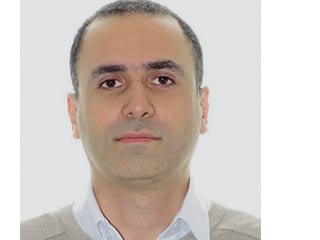
During March, the branch welcomed Dr George Sergi R&D Technical Director at Vector Corrosion Technologies, which, provides corrosion mitigation techniques for the civil engineering and construction industries. He is the author of several international patents for corrosion protection of steel reinforcement and these were discussed in a talk entitled “Galvanic Corrosion / CP Control of Reinforced Concrete; Lessons learnt from 20 years of Site Trials”.
Sacrificial anodes have been used in reinforced concrete structures for up to 20 years. These prototype anodes, designed for a 10-year life, have continued to deliver a reduced but significant current, complying with presently accepted CP criteria. However, there are still issues with patch repair of concrete with the condition of the re-bars not being fully understood, and corrosion re-occurring at the periphery of the repairs termed ‘ring effects’. Studying long term installed conventional sacrificial anodes and identifying the issues, has led to the development of a new Fusion™Anode, which seems to solve the issue of recurring corrosion
at repairs.
In order to prevent the initiation of corrosion in a chloride contaminated environment, the current density needs to be 0.4 to 2 mA/m2, much lower than the amount necessary to stop on-going corrosion activity which is 2 – 20 mA/m2.The zinc anodes used for this new technology are encased in a high porosity mortar (to accommodate migration of corrosion products), and also saturated with lithium hydroxide.
Site trials on a bridge in Leicester 20 years ago involved the removal of concrete to reveal the re-bar area, and attachment of anode discs at the peripheral areas of the patch, but, rather than wiring to the rebar, the anodes were wired back to a junction box wired to the steel reinforcement, which meant the anodes could be turned off and on, current could be measured, and the polarisation could be monitored. The zinc consumption could also be monitored and calculated from the Faraday Equation.
Monitoring showed that the cumulative charge from the anodes is linear w.r.t. time for first 5 years then the charge started to fall, perhaps due to the saturation of the Li hydroxide mortar. Tests showed that by disconnecting the anode for 24 hrs then reconnecting, the mean ‘instant on’ current could be established for the anodes within 5secs of reconnection. This represents the power which remains within the anodes – which was 1-1.5mA. After 14 days the current dropped to 0.5mA; this coincided
with LiOH saturation witnessed in the sections.
Looking at the current density (CD) over the 20 years and plotting on a log scale it was seen that the decline of CD was actually exponential. From this study, an ‘ageing factor’ could be determined as to how quickly the protective current halved; this was ~7 years, it then halved again after 14. The study of many other sites enabled ageing factors from sites to be compared, and by reducing the anode spacing by ~1/2 the ageing factor achieved could almost be doubled.It was concluded that the service life of existing standard galvanic anodes used in concrete repair is expected to be between 15 years and 30 years.
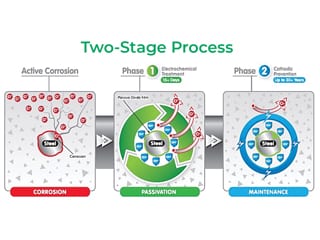
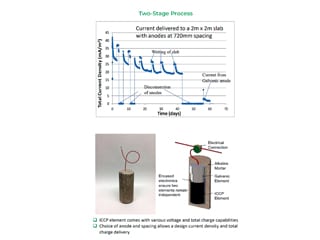
As a result of these long-term studies of standard galvanic disc anodes, the New Fusion™ Technology was further developed to have an anode with two stage protection using a battery which first delivers impressed current to arrest corrosion and passivate the steel and then a galvanic anode using a small ’cathodic prevention’ current to maintain the passive state for the remaining life expectancy.This product is an ICCP element and galvanic element with electronics, encased in a stainless steel can and surrounded by alkaline mortar. In laboratory tests, the installed anodes were switched on and off in the ICCP stage to check the polarisation level and the effect of wetting the slab, seen as an increase in the current density. Similar confirmations can be obtained during the galvanic protection phase. Site tests were also conducted to optimise and monitor the spacing, current levels and configuration of the anodes.
From the development work it was established that the key factors were:
An initial charge at the top end of CP current densities that can arrest corrosion of steel.
The level of applied charge to achieve corrosion arrest depends on the corrosivity of the concrete environment and the level of applied current density.
Confirmation that passivation of steel can be maintained long-term with galvanic anodes.
During polarisation of re-bar in concrete it was witnessed that the chloride ions started to move away from the steel and hydroxyl ions are produced at the steel. This led to a reduced Cl_/ OH_ ratio and a reduced corrosion risk with high alkaline levels at the steel interface and low chloride, increasing with distance from the steel. It was also determined that with higher current densities such as can be produced by impressed current technology, highly alkaline areas, above that of base concrete alkaline levels, can be created at the steel which contributes to reversing the corrosion process. Lab tests using between 1% and 3% chloride showed that it took longer to passivate the steel the more residual chloride in the mix at a current density = 30mA / m2 to the steel reinforcement. By extending the experiments, the charge required to passivate the steel
and arrest corrosion at various chloride levels was established.
In summary, George highlighted the benefits from higher levels of current possible by ICCP in the initial years of installation in order to passivate the steel and create more favourable alkaline conditions at the reinforcement for forward protection by GACP.
Again, due to COVID restrictions, the annual joint conference with the Marine Corrosion Forum (MCF) was reformatted as a lunchtime webinar week, held with great success between 26-30 April 2021. Attendances averaged 77 per day and exceeded all expectations, which suggests that the way forward will most definitely be that of blended learning, possibly with live streaming of ‘face to face’ events to our international audience (ICorr itself having nearly 600 overseas members}.
Day 1 featured, Ray Sivarajan, Senior Integrity Engineer and Bill Hedges. Corrosion & Integrity Management Consultant for ICR – OMNI, presenting their “Novel integrity operating system” which uses machine learning to give integrity engineers a continuous and holistic understanding of their business assets in real time. Organisations today face increasing challenges in the changing geopolitical and industry dynamics, which can have huge impacts on the overall success of the business. Constraints such as resource and experience shortages make it ever more difficult for organisations to achieve the efficiency levels required to maintain profitability, whilst maintaining safety and environmental levels. The software boasts built-in automation between modules, workflow tracking and notifications – a first of its kind for integrity software solutions taking visibility and control of integrity activities to a new level. Each module can be used alone to integrate with existing integrity systems, or seamlessly used together as a complete solution – to support organisations in their efforts of digitising their full integrity lifecycle. Further information is available at, https://icr-world.com/omni
Day 2 saw Michael Smith, Senior Engineer Data Scientist with ROSEN UK discuss “Virtual in-line inspection for corrosion management in un-piggable pipelines”. Over the past 30 years, vast amounts of ILI data have been collected all around the world. Although pipelines are diverse in their characteristics, many share similar risk profiles for common pipeline threats such as external and internal corrosion. This has led the industry naturally towards machine learning as a complementary corrosion monitoring solution for pipelines that cannot be inspected using ILI. The results of a “Virtual ILI” create clear justification for planning actual inspections or maintenance in challenging pipelines and for a given uninspected pipeline, it is possible to now source data for similar inspected pipelines and use machine learning algorithms to generate predictive models.
Day 3 profiled Ross Hubble, Applications Engineer with COMSOL, who gave a very modern insight into “Modelling Corrosion and Corrosion Protection”, and discussed some of the benefits of corrosion modelling and what kind of simulations can be performed, starting out with a brief introduction to corrosion simulations and how the theory can be applied to a simulation in the proprietary Multiphysics® software. After the introduction, several modelling examples within the corrosion and corrosion protection field were presented. Modelling allows engineers and scientists to investigate these processes and gain a better understanding of the extent to which corrosion could occur over the lifetime of a structure, and implement preventative measures to inhibit this.
Day 4 had Hamed Habibi, Lead Engineer with Spier Hunter, deliver a most interesting presentation on “Developments in remote magnetic monitoring of carbon steel pipelines to locate and measure abnormal stress”, highlighting recent developments in an emerging non-intrusive sensing technique developed to detect localised abnormal pipe wall stress, such as corrosion and metallurgical defects by mapping variations in the earth’s magnetic field around pipelines. This presentation explored how measurements of remote magnetic field can be applied to define the location of defects in operational pipelines, quantify the associated abnormal stress, report the position of girth welds and to concurrently report a 3-dimensional map of the pipeline route.
Day 5 concluded with Daniel Sandana, Principal Engineer of ROSEN UK, presenting “Addressing the risk of Hydrogen-Induced Stress Cracking on Pipelines”.The role that hydrogen could play in the transition to low-carbon economy has refuelled the emphasis on hydrogen-related cracking mechanisms, and how these could affect the integrity of the energy infrastructure. Hydrogen-cracking mechanisms can nonetheless occur on our existing pipelines, when the effect of CP or H2S is considered. Such mechanisms will actually occur at a greater scale than what would be considered when looking at the sole effect of gaseous hydrogen. The purpose here was to get a better understanding of the problem of HISC due to CP on materials, used onshore and subsea, and how to address it.
Dr Yunnan Gao (Aberdeen’s Digital Strategy and Communications Officer) kindly compiled an all-encompassing Playlist called “ICorr / MCF Webinar Videos in April 2021”. This may be found on: https://youtube.com/playlist?list=PL-Hz5BsB9C8JB5fGT6Ubsy-rK0ITrYlU2
Looking ahead, the branch is very pleased to announce the return of its annual corrosion forum on 31 August 2021 at TRAC (The Rope Access Company),
an enthusiastic supporter and branch sponsor of Aberdeen for many years.The day will comprise a full range of corrosion awareness talks in the morning and many interesting demos in the afternoon. To register advance interest in this event please contact the ABZ events officer, Amir Attarchi, at amirattarchi@gmail.com, giving your full name and company.
Before that, members of the branch will be supporting the SPE virtual oilfield corrosion conference and exhibition, where industry leaders discuss recent innovations, trends, and concerns as well as practical challenges encountered within the oilfield corrosion community.See http://go.spe.org/lic6268, and for which registrations are now open at: https://www.spe.org/events/en/2021/conference/21ofcs/register.html
Finally, and certainly not least, we are very pleased to welcome our new branch chair, Hooman Takhtechian, who takes up his new role after several years as a committee member, and to thank Dr Muhammad Ejaz for a very successful 2020-2021 season.
Can you present your research or a topic as an elevator pitch in just 3 minutes?Well, these Young ICorr members certainly can.
To celebrate Corrosion Awareness Day 2021, in collaboration with the European Federation of Corrosion and World Corrosion Organisation, four PhD students presented their research. The audience were treated to an informative presentation on hybrid FeCO3-poly(allylamine hydrochloride) deposition on carbon steel to improve corrosion resistance and characterising the associated mechanical properties and wettability by, Dlshad Shaikhah of Leeds University. Mohamed Alhebsi provided an in-depth analysis of pitting corrosion and SCC behaviour of CRAs in sweet and sour environments, to support industry applications. New techniques for understanding the erosion-corrosion phenomena revealing how time-dependent surface-hardening processes affect material loss rates during mechanical-electrochemical coupled corrosion, were presented by Aigerim Omirkhan from Imperial College.
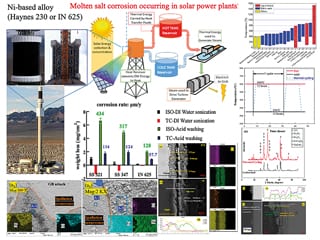
Competition was fierce and the standard of presentation was excellent. However, there had to be a winner, and Qingyan Liu from Leeds University’s whistle stop presentation on corrosion resistance of alloys to molten nitrate salt environments to support their use in solar power plants was the winner! Qingyan described how thermal cycling mitigates the corrosion rate and reduces the spallation behaviour of stainless steels compared with isothermal samples. Further analysis showed the multilayer corrosion products consisting of on the outside, sodium ferrite, and on the inside, iron chromium oxides. It was fantastic to find out about everyone’s research and the standard of presentation was very high. Many thanks to the judges, Bill Hedges, David Mobbs and Trevor Osborne.
Bijan Kermani is the founder and Managing Director of KeyTech and a visiting professor at the University of Leeds. He has been involved in the field of corrosion for over forty years across the materials, metallurgy and corrosion disciplines within the oil and gas, geothermal, carbon capture and steel industries. He has a particular focus on materials optimisation, corrosion mitigation and integrity management. He has combined these activities with roles at various universities including Cranfield, Manchester and UCL.
Bijan is a leading authority on oilfield corrosion and materials and has more than sixty publications on his field of expertise related to environmental sensitive cracking, structural integrity and degradation, materials selection, steel development and corrosion control strategy. He has presented at numerous international conferences with many keynote lectures. He has edited two prominent publications on CO2 corrosion, and established a new methodology in material design for sour service duties which is now included in ISO15156. He has recently published “Corrosion and Materials in Hydrocarbon Production; A Compendium of Operational and Engineering Aspects” and also a “Recommended Practice on Pipeline Corrosion Management”. He has conducted many materials and corrosion control projects and training courses for leading oil companies, and has managed innovative projects for multinational companies globally.
Bijan is a Fellow of Institute of Corrosion and Fellow of Institute of Materials, a NACE Fellow, and the recipient of NACE 2007 Technical Achievement Award, a Chartered Engineer. and Instructor for various NACE International courses.
This one-day meeting was the latest in a series of working days held by the Institute of Corrosion’s Corrosion Engineering Division (CED).This year’s meeting had the theme of ‘Managing Corrosion in Low-Carbon Energy Technologies’.As in 2020, it was originally planned that the meeting should be held at the National Railway Museum, York.However, due to the ongoing coronavirus restrictions, the meeting was again held on-line. Over a hundred people registered for the event, which was also an approved European Federation of Corrosion meeting. As we are all too aware, the topic of low carbon energy generation is an internationally important topic for the future of the planet and humanity, and which is rapidly gaining international importance. Managing corrosion in the evolving low carbon technologies is vital to the future success of such technologies. The symposium covered the management of corrosion in five different
low carbon energy technologies, namely hydrogen, wind, nuclear, biofuels, and carbon capture and storage.
Nick Smart (Jacobs) chaired the meeting, which followed the usual format and published agenda and timetable. Nick explained the operation of the CED, then thanked Ruth Bingham for her work as document editor in support of the CED, and welcomed Josh Zatland who has recently taken over the role. After the talks, the meeting divided into individual CED working groups, using the Zoom breakout room facility. At the end of the morning session, Bill Hedges, the Institute president, presented the 2021 Paul McIntyre Award to Bijan Kermani (see below), who gave an acceptance talk summarising some highlights of his distinguished career, after the main technical talks.
This article gives a brief summary of the talks enjoyed by the on-line audience, and presents some highlights from the working group meetings. The slides used by the presenters will be made available on the Institute’s website, together with recordings of the presentations. Minutes from some working group meetings will also be made
available in the members’ area.
The first talk on “Pipeline Materials in a Hydrogen Environment”, was given jointly by Nancy Thomson (SGN) and Julia Race (University of Strathclyde). SGN are responsible for the operation of many of the
local gas transport networks in the UK, which were originally
established in the 1960s to carry town gas (a mixture of methane, hydrogen, carbon monoxide and a range of other trace gases), but there is a plan to reuse the same transmission system for pure hydrogen in a future hydrogen economy. To achieve this it is necessary to demonstrate that the legacy materials used in the manufacture of the original pipelines will not be susceptible to hydrogen embrittlement, fatigue cracking or uncontrolled fracture. The metallurgy of the carbon steels used for the pipelines was reviewed, and the metallurgical characteristics that might increase susceptibility to cracking were discussed. The current supporting test programme underway at Strathclyde University and NPL was also outlined.
In the second talk, Birit Buhr Jensen (Ørsted) discussed “Cathodic Protection of Offshore Wind Power – Design using upcoming ISO 24656”.The presentation firstly covered an overview of the
remarkable expansion in the development of wind power in Denmark over the last 40 years, with a correspondingly large reduction in the cost of wind power facilities. Concrete gravity structures placed on the seabed are not normally considered to be in need of cathodic protection, however, protection may be needed in cases where premature deterioration has been observed, or if an unacceptable risk of corrosion exists in these offshore installations. Birit described the ongoing development of the ISO 24656 Standard to assist wind power operators to maintain these key assets for future generations, by taking account of critical environmental factors, such as seawater flow patterns and velocities, immersion levels and wave heights, in the design of the
CP system.
In the third talk Francois Ropital (IFP Energies Nouvelles) described corrosion challenges for reliable biorefineries. Biofuels have a key
role to play as part of the energy mix in the decarbonisation of future supplies during the next century. Francois described the background to some of the biofuels that are becoming available, such as ethanol and methyl esters derived from plant-based source materials (e.g. sugar beet and cane, oil from rape seed and sunflower seed), leading on to a discussion of the wide range of corrosion issues associated with the processing such materials. These include stress corrosion cracking (SCC) of carbon steel in ethanol production and alkaline processing media, uniform corrosion of carbon steel in acidic fluids at high temperature and pressure (related to total acid number, TAN, and sulphuric acid concentration), and corrosion in molten salts during gasification processes. The main conclusion was that each novel process for the refining of biomass needs to be considered individually, and that the development of suitable corrosion resistant materials is a significant challenge.
In the fourth talk of the morning, Stuart Medway, Jacobs, described a range of sophisticated advanced testing methods for testing the SCC and corrosion fatigue behaviour of structural materials for use in a pressurised water reactor environment, to support safety regulators in the nuclear industry. He emphasised that similar test methodologies could be applied to evaluating materials in other low carbon energy technologies, in aqueous, gaseous or molten salt-based environments, with strict control of the environmental chemistry required. He showed examples of techniques for testing multiple specimens in a single test, using DC potential drop technology to monitor crack growth, and the application of thermal cycling and thermal shock simulation. He also presented a recent novel development in which it is possible to
simulate multi-axial loading in a uniaxial test machine using
sophisticated specimen design techniques.
The final talk was given by Ivan Gutierrez (OGC Energy) on a methodology for corrosion and environmental assisted cracking risk assessment for industrial carbon capture, utilisation and storage (CCUS). The CCUS technology is important as a means of (i) controlling carbon emissions from energy-intensive industrial processes, where carbon release is unavoidable, (ii) extracting carbon from the atmosphere, and (iii) controlling carbon emissions during hydrogen manufacture. Ivan outlined the risk-based approach that is used to perform corrosion assessments of CCUS technology, by taking account of more than twenty possible corrosion mechanisms.
In the afternoon there was a set of parallel working group meetings
for all the CED working groups, namely nuclear, coatings, oil and gas, cathodic protection and corrosion in concrete, together with a general discussion group on the topic of corrosion in low carbon energy technologies. Highlights of the main working group discussions are summarised below.
At the end of the afternoon, Nick Smart thanked all the participants and contributors, and he looked forward to holding the next CED working day in person at the National Railway Museum next Spring!
Working group meetings (chairman):
Corrosion in Concrete (Chris Atkins): A summary of the current work by the structural concrete alliance was presented, plus an update of BS EN ISO 12696 (CP of reinforcement). Following this the floor was opened to discussion, with topics such as coating concrete and aggressive carbon dioxide attack discussed.
Coatings (Phillip Watkinson): The coatings group discussed the review and update of the nine coatings guidance documents that are currently on the Institute’s website in the member’s area. The chair will contact the original authors in the first instance, or seek alternatives if they are not available, to action the review and update. The group discussed possibilities and suggestions for the future direction of the group and reviewed recent news from the industry, such as the effect of Brexit on the activities of members. It aims to have an interim meeting before the next CED working day to progress the actions.
Oil and Gas (Alistair Seton): The status of the working documents was reviewed and the future direction of the group was discussed. It was decided to change the title of the working group from ‘Oil and Gas’ to the ‘All Energy’ Working Group, to encompass the current status of renewable energy and the alternative energy strategy. There was a brief discussion on the status of API 510 and API 570 in the UK. Steve Paterson agreed to take over chairmanship of the newly named working group, as Alistair Seton was stepping down as chairman after four years in the position. Stephen Tate, the Institute’s vice president, expressed the Institute’s gratitude to Alistair for his contributions to the group since joining as chair.
Cathodic Protection (Bryan Wyatt)
Brian Wyatt chaired the meeting on an interim basis, as Pablo Merino had stood down as chair at short notice. It was noted that there are many other forums for discussions about CP and the main discussion was around the future role of the CED CP working group. The consensus was that there may be a role to interface between the younger Institute members with some interest in CP and more experienced practitioners. There was a proposal for a small number of half-day seminars to be run by the Institute every year, comprised of a CP Design Tutorial and an ‘Ask the Experts’ session. The arrangements for such events are under discussion. There was also some technical discussion regarding the morning presentation on the new EN ISO 24656 Offshore Wind CP Standard.
General discussion group (Steve Paterson)
Following the presentations on the day, a discussion forum was held in the afternoon to review key points arising from the morning presentations, and to gauge interest in forming a working group to cover this emerging theme. The discussion covered reusing existing pipelines for hydrogen transport, cathodic protection for offshore wind turbines, issues with production of biofuels, and corrosion concerns with carbon capture and storage. The discussion was supplemented with information about other ongoing initiatives in this field including: (i) a new EFC task force set up to promote information exchange around corrosion in green and low carbon energy technologies, (ii) a workshop on this topic at the virtual Eurocorr 2021 conference, and (iii) a guidance document being developed by the World Corrosion Organisation. It was also agreed during the discussion forum that the theme of corrosion in low-carbon energy technologies should be developed further as a specific focus area within the CED Oil & Gas Working Group because of the many synergies and current industry trends relating to low carbon energies (see above).
I would like to thank our clients for their continuing support during a very difficult period for us all.
While we have been unable to carry out face to face training, online training has worked very well and continues to do so.It remains our intention to continue with ICATS online and to develop that concept going forward through 2021, whilst also to begin face to face training at Corrosion House later this year, providing restrictions continue to be lifted, and additional safety procedures can be put in place at Corrosion House.Once a decision is made dates will be added to the ICATS website.
Trainer training has been very popular during Covid 19, with companies using ‘down time’ to update and increase qualifications, and increase the numbers of their ICATS trained operatives. The ICATS ‘managers course’ has also been very popular with multiple managers, engineers, specifiers, taking the one-day course and increasing their knowledge as to what is actually done on site.
I often get asked about CSCS cards and how they work. Upon successful completion of the ICATS, ICA, Industrial Coating Applicator course, a person then gets awarded their ICATS card with the CSCS logo embossed onto the card for identification on site. This is the approved method of CSCS recognition for them as painters on site. The cards are considered a “T Level” card, of which our category is ‘building services’. Cards can be checked on the ICATS website by using our card checker for validation using
smart technology’.
At some point in the first quarter of 2022, smart cards may be introduced, so that they can be read at multiple locations, for easier identification purposes.
We are due to have trainer seminars in accordance with the ICATS Requirements, however even with current restrictions gradually being lifted, it would not be appropriate to hold seminars at this time. Therefore, I will be considering an online portal containing new and pertinent information that can be accessed by trainers, supervisors, managers etc, that will be available later this year.
We use cookies to optimize our website and our service.
Functional
Always active
The technical storage or access is strictly necessary for the legitimate purpose of enabling the use of a specific service explicitly requested by the subscriber or user, or for the sole purpose of carrying out the transmission of a communication over an electronic communications network.
Preferences
The technical storage or access is necessary for the legitimate purpose of storing preferences that are not requested by the subscriber or user.
Statistics
The technical storage or access that is used exclusively for statistical purposes.The technical storage or access that is used exclusively for anonymous statistical purposes. Without a subpoena, voluntary compliance on the part of your Internet Service Provider, or additional records from a third party, information stored or retrieved for this purpose alone cannot usually be used to identify you.
Marketing
The technical storage or access is required to create user profiles to send advertising, or to track the user on a website or across several websites for similar marketing purposes.